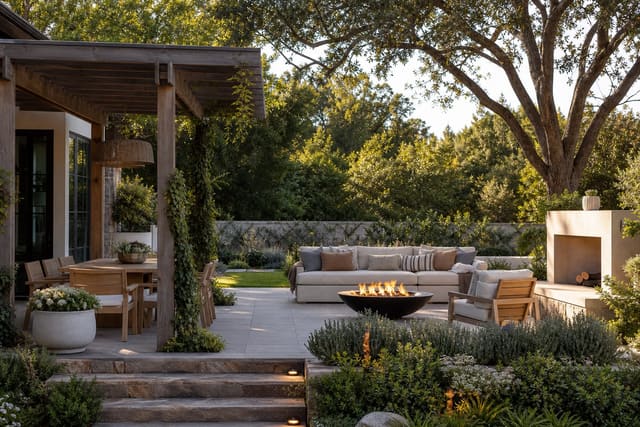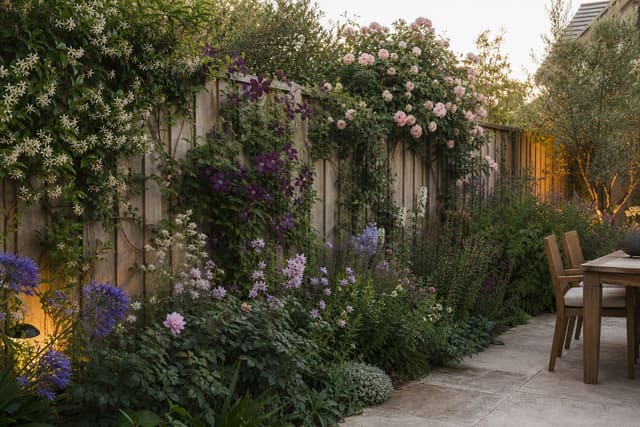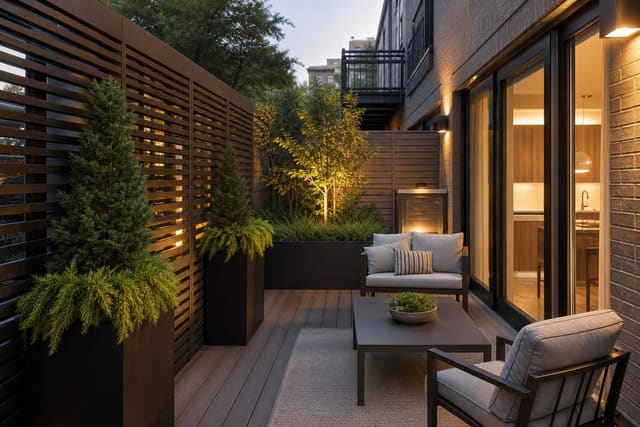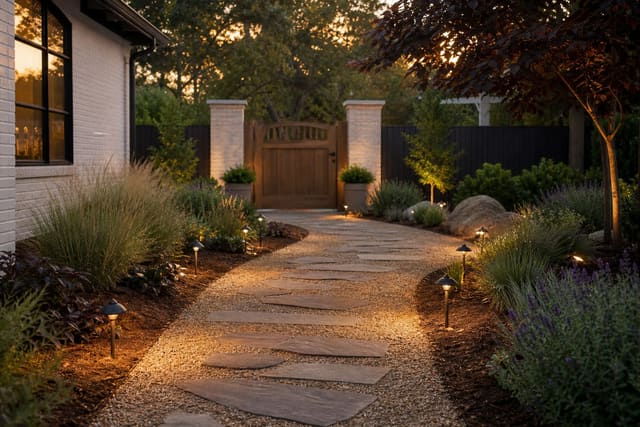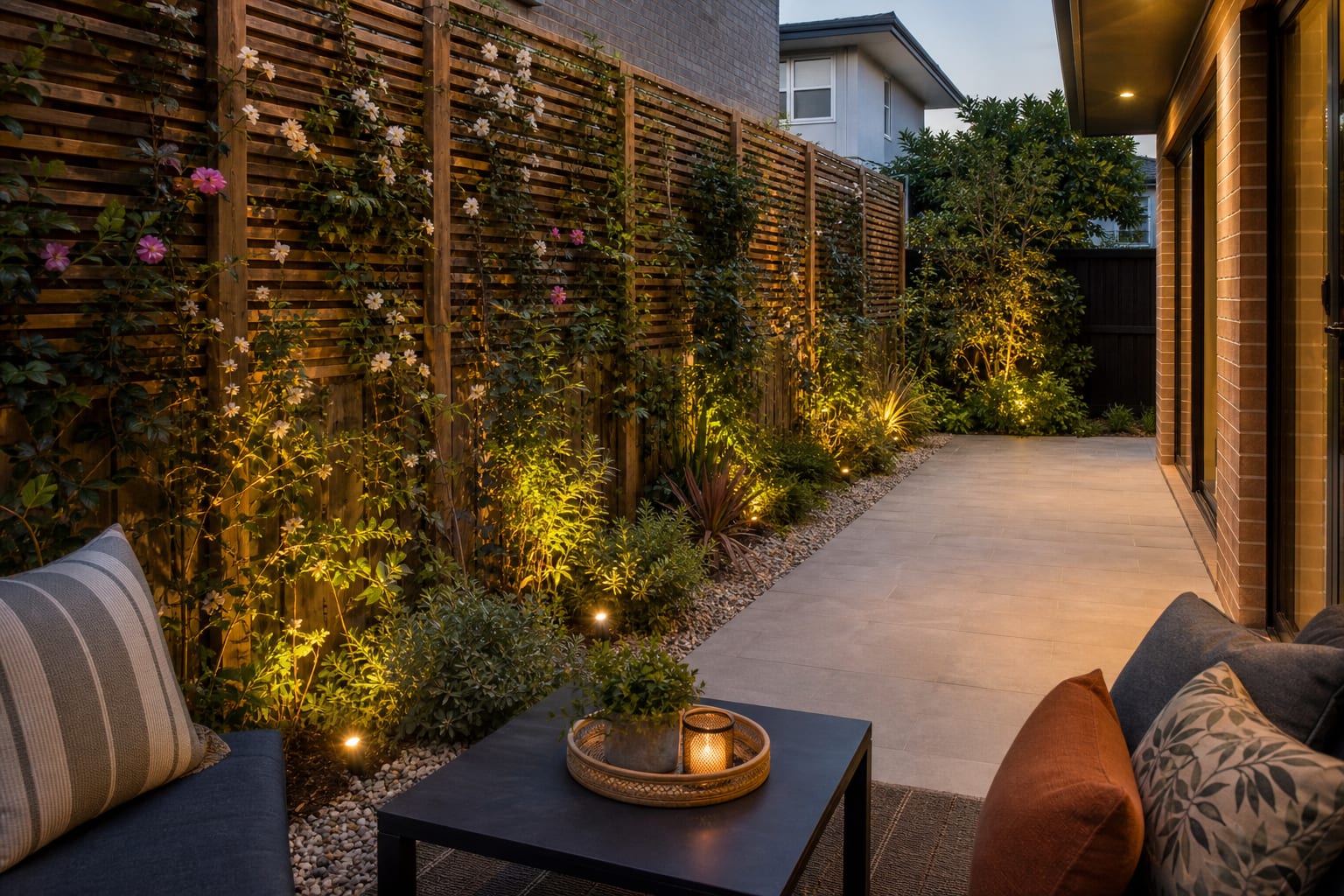
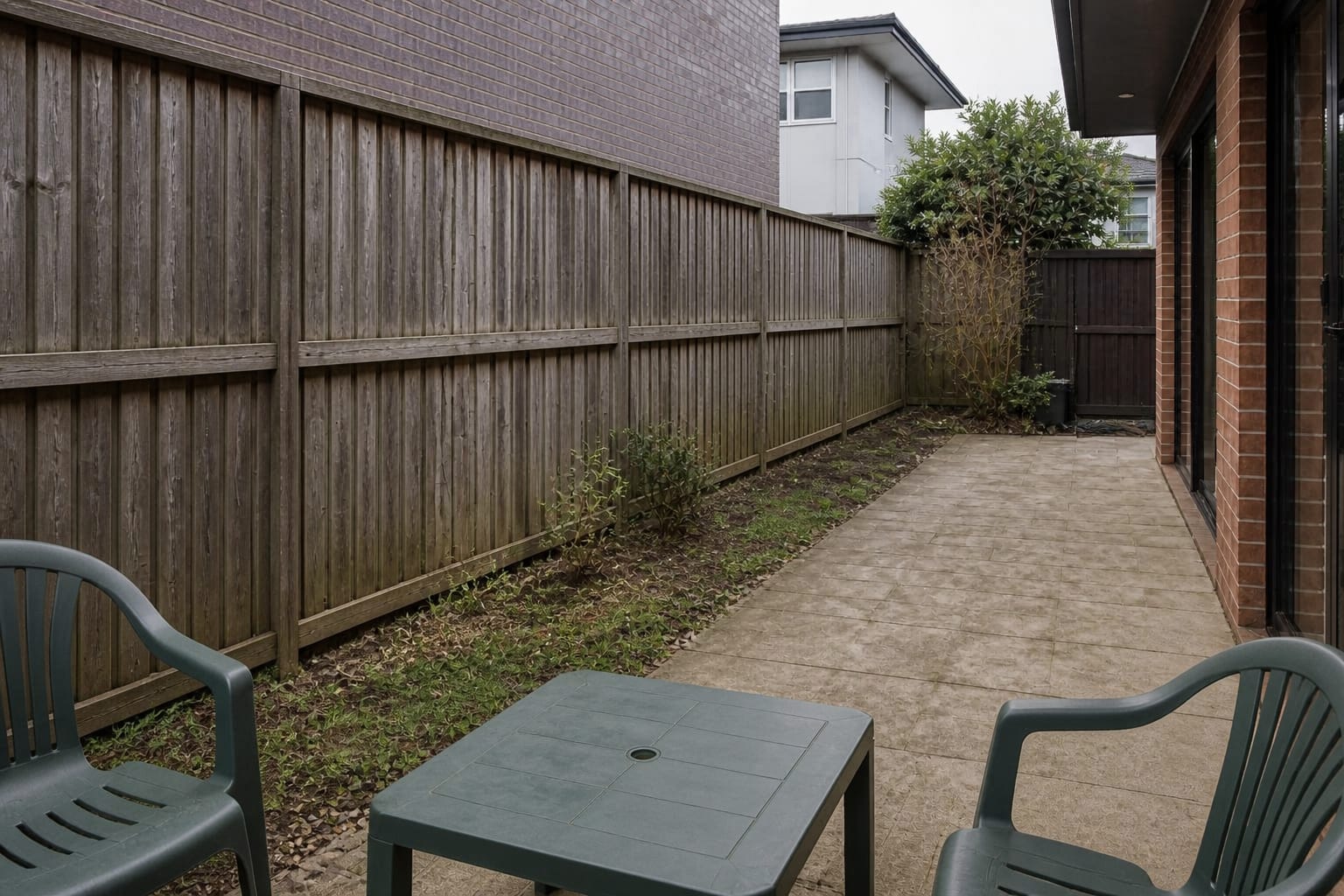
The best privacy trellis plant ideas pair evergreen or dense flowering climbers with a trellis built to hold their mature weight, mounted 2-3in off any wall for airflow. Match plant height to the view you need blocked, size the frame with real posts or wire (not flimsy lattice), and pick species suited to your sun and winter coverage needs.
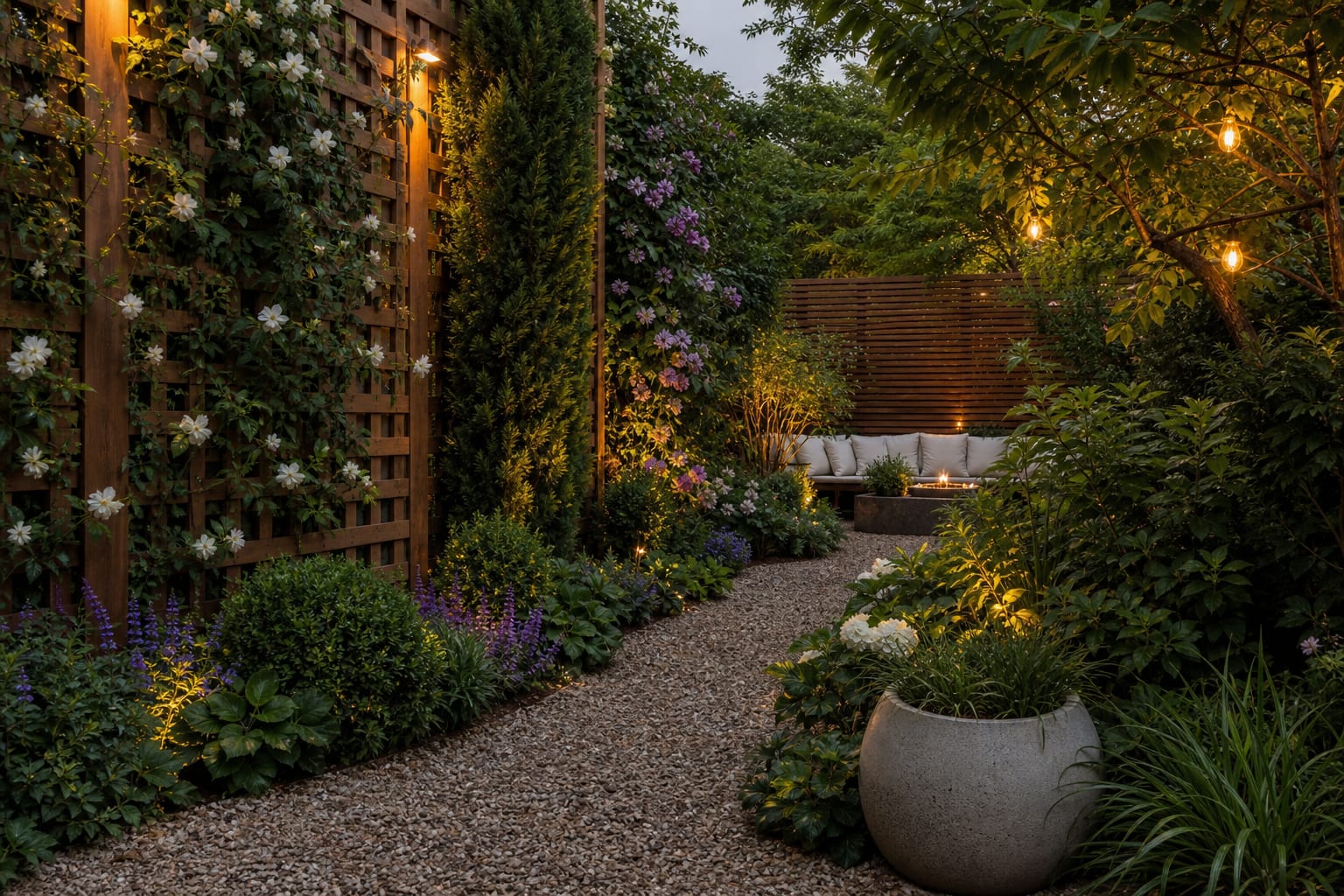
Which plants work best on a privacy trellis?
Evergreen climbers, dense flowering vines, and trained shrubs matched to sun exposure, wind, and trellis strength perform best. For year-round screening, use star jasmine, evergreen clematis, climbing hydrangea in shade, pyracantha, or trained bay and holly on a sturdy structure. For seasonal beauty, choose climbing roses, deciduous clematis, honeysuckle, grapevine, or passionflower, accepting thinner winter privacy.
Decide what you need blocked before picking the fastest-growing vine. A neighbor's upstairs window needs a 6-8ft screen with density in the upper half. A patio needs foliage from about 30in to 72in, since seated privacy matters more than trellis height. A street-facing garden often looks better semi-transparent: enough leaves to soften the view without hiding the path.
Give roots real soil. A climber in a 10in decorative pot won't build a convincing screen. In-ground, allow a planting strip at least 18-24in deep. In containers, use a trough at least 18in deep and 24in wide with drainage, and fix the trellis to a wall, planter, or posts rather than balancing it in loose compost.
Test this on your own photo with ReDesign before choosing a direction; keep the house edge, horizon line, hardscape, planting beds, and main path visible so the preview solves the space you actually have.
How strong should the trellis be before plants go in?
A privacy trellis is outdoor architecture, not plant jewelry. Wet foliage is heavy, wind turns leaves into a sail, and woody stems thicken every year. If a panel wobbles when shaken by hand, it isn't ready for a privacy climber.
For freestanding screens, use posts at least 4x4in set in concrete or proper anchors for the site's exposure. Keep post spacing around 6ft for framed timber panels; wider spans can bow as the plant matures. Against masonry, mount horizontal battens or a wire grid with stand-offs holding foliage 2-4in from the wall for airflow.
| Trellis setup | Best plant match | Design note |
|---|---|---|
| Framed timber panel, 6-8ft high | Star jasmine, clematis, honeysuckle | Suits patios where the screen should look intentional from day one. |
| Galvanized wire grid on a wall | Climbing hydrangea, roses, grapevine | Keep 2-4in off the surface so stems can be tied and pruned. |
| Heavy posts with horizontal rails | Pyracantha, trained holly, espalier fruit | Better for long boundaries needing structure through winter pruning. |
Dense foliage can make a path feel narrower at night, so use low-glare fixtures and avoid pointing beams into a neighbor's windows. Pair planting beside a walkway with low path lighting that guides the garden edge rather than a floodlight aimed at the leaves; 2700K warm-white light flatters green foliage and timber better than cool blue-white.
Which privacy trellis plant ideas fit real gardens?
- Star jasmine for a sunny patio trellis: plant 12-18in from the base, tie stems every 8-12in, and prune after flowering so growth thickens instead of throwing bare whips.
- Climbing roses with clematis for seasonal, romantic coverage: train rose canes horizontally for more flowers and fuller coverage, then add clematis once the rose framework is established.
- Climbing hydrangea for shaded walls where flowering vines sulk: treat the first 2-3 years as structure-building and avoid weak fencing that can't hold mature woody growth.
- Pyracantha or trained holly where security and winter density matter: clip into a living wall about 12-18in deep, but keep thorny stems away from play areas and tight seating.
- Grapevine or passionflower over a pergola-side trellis for summer shade: expect a more open screen in winter, and use the bare season to prune the framework cleanly.
Lighting makes a green fence feel designed rather than accidental. Near seating, consider subtle landscape uplighting for shrubs and climbers placed 12-18in in front of the planting and angled across the leaves. Beside deck stairs or a raised threshold, outdoor step lighting for safer circulation matters more than dramatic shadows.
Common mistakes to avoid
- Vigorous vine, weak fence. Fast growers pull at loose panels and trap moisture — reinforce the boundary first or choose a lighter climber with annual pruning built in.
- Ignoring winter privacy. Mix evergreen climbers with trained shrubs or clipped hedging if year-round coverage matters; deciduous roses, grapevine, and wisteria go bare.
- Trellis flush against the wall. Leave 2-4in of stand-off space for wires or battens, plus hand-width access at the sides for guiding stems.
- Overplanting the base. Keep the first 12in around each rootball clear of aggressive groundcover, then mulch with bark or gravel.
- Forgetting the neighbor-facing side. Clip a living boundary from both sides when possible, and keep thorny or messy fruiting growth off shared paths and gates.
Preview your garden screen before you plant
Upload a straight-on photo of the boundary to Re-Design and test privacy trellis plant ideas before buying panels, posts, or mature climbers. The key question is visual: does the space want a dark evergreen wall, a lighter flowering screen, or a semi-open trellis that filters the view?
Use the preview to compare trellis height, plant density, and whether lighting should skim the leaves or mark the path. Then verify with a tape measure: sun hours, soil depth, post spacing, mature plant width, gate swing, and pruning access. Design the look first, then plant with discipline.
Frequently Asked Questions
What is the best climber for a privacy trellis?
Climbing hydrangea, akebia, and clematis montana give dense leaf coverage for residential trellises. Pick wisteria only for heavy-duty steel or 4x4 frames, since it will pull thin trellises apart as it matures.
How tall should a privacy trellis be?
Use 6-8ft for shoulder-height screening from neighboring patios, and 8-10ft for full second-story screening. Match the trellis height to the climber's mature reach rather than guessing.
Do I need a strong trellis structure?
Yes for woody climbers. Wisteria, climbing hydrangea, and akebia can weigh 50-200 lbs at maturity and pull apart thin diamond lattice, so use steel cable, cedar 2x2 grids, or framed lumber instead.
How fast will a trellis cover?
Annual vines like morning glory or sweet pea cover in one season but die at frost. Perennial climbers take 2-4 seasons to fill in but become permanent privacy once established.
Can I install a trellis on a fence?
Yes. Bracket the trellis 2-3in off the fence face so air moves between the fence and trellis, preventing the climber from trapping moisture against the fence surface.
> Try this: Ready to see this on your own outdoor space? Open ReDesign and run the preview before you buy materials, plant, drill, or move furniture.
Three transformations to try
1. Trellis with climbing hydrangea screen 2. Steel cable trellis with clematis 3. Cedar grid trellis along side yard