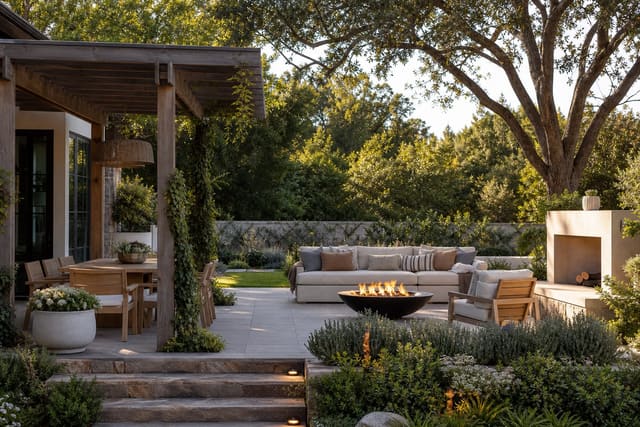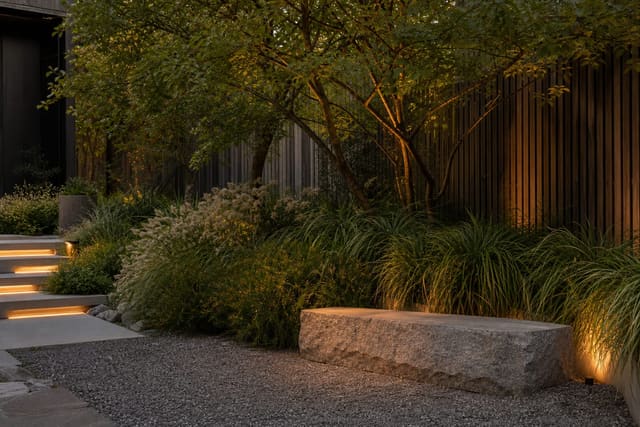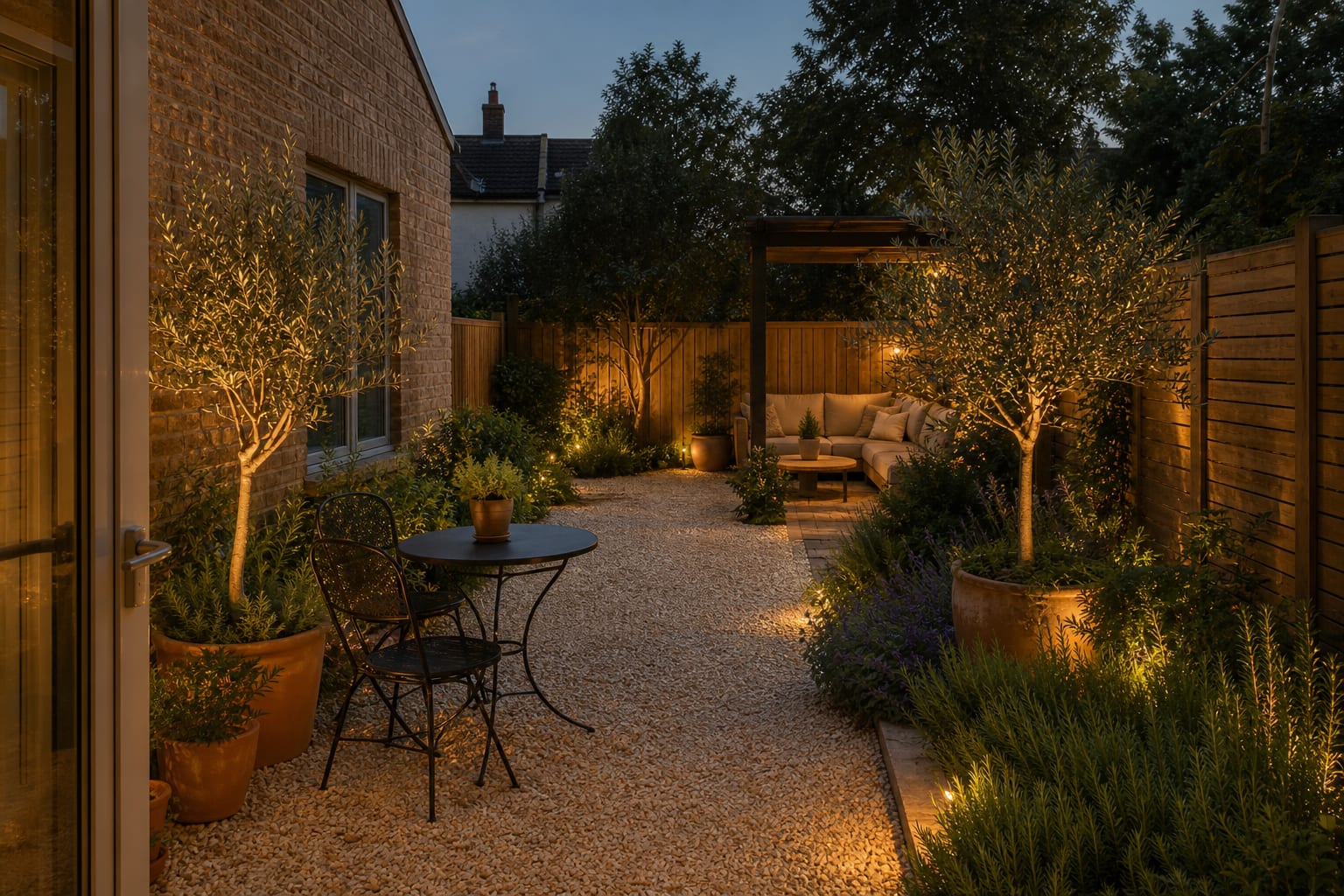
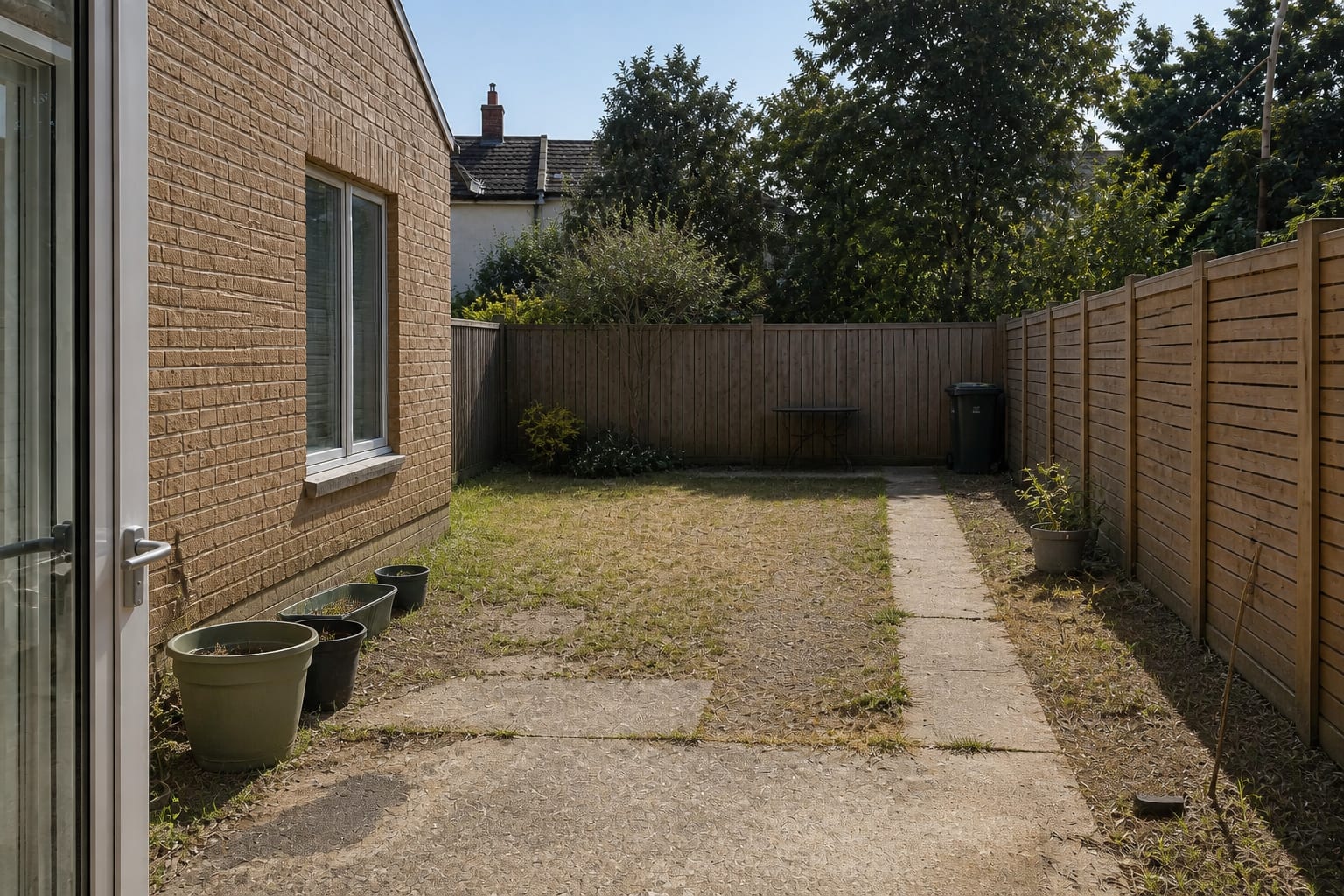
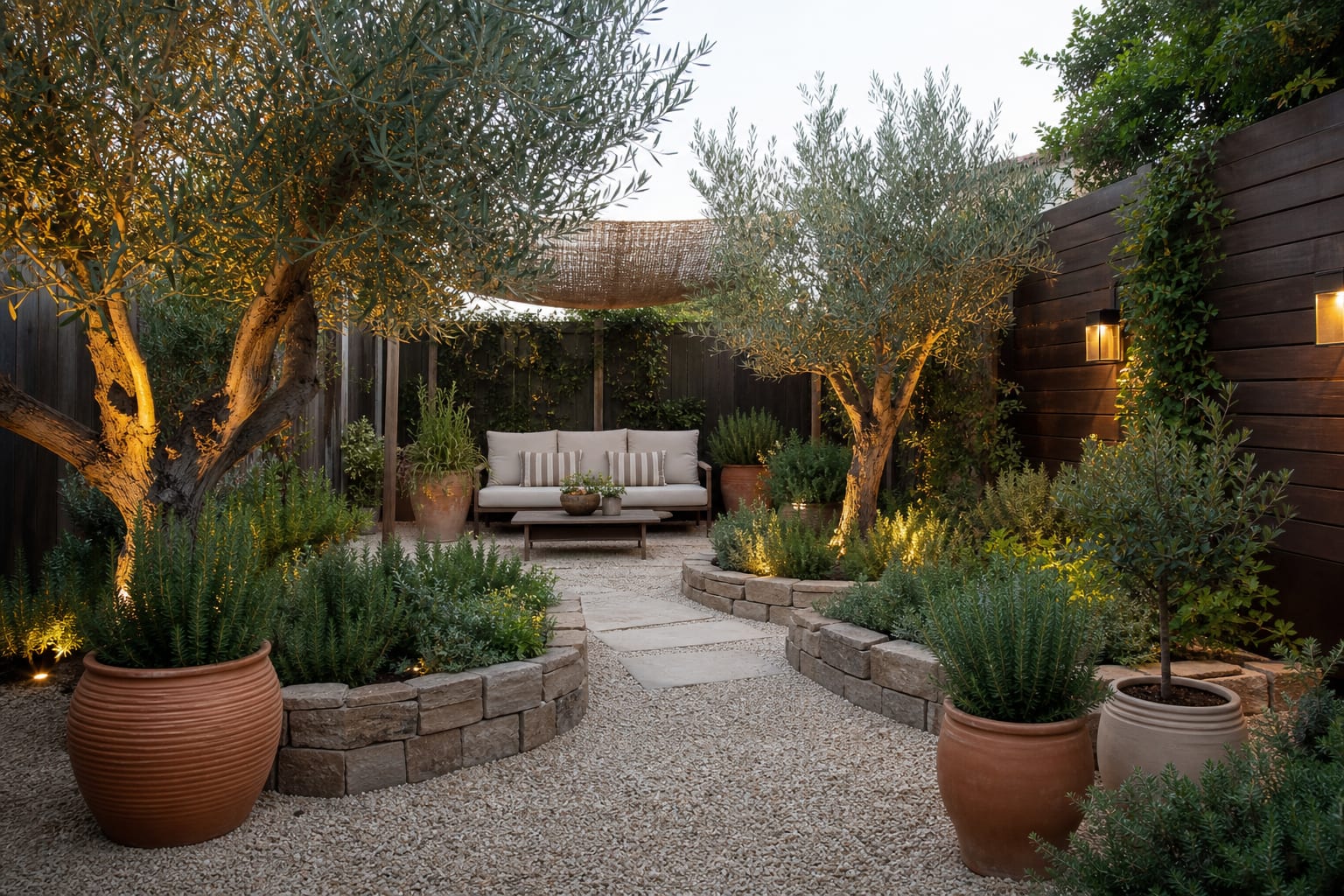
A Mediterranean garden pairs pale gravel or limestone paths, terracotta pots, one olive or cypress anchor, and drought-tolerant herbs like rosemary and lavender with shaded seating. The result should feel warm, dry, and settled with very little water — one honest olive in a generous clay pot beats twenty fussy plants that need constant attention.
What makes a garden feel Mediterranean instead of just dry?
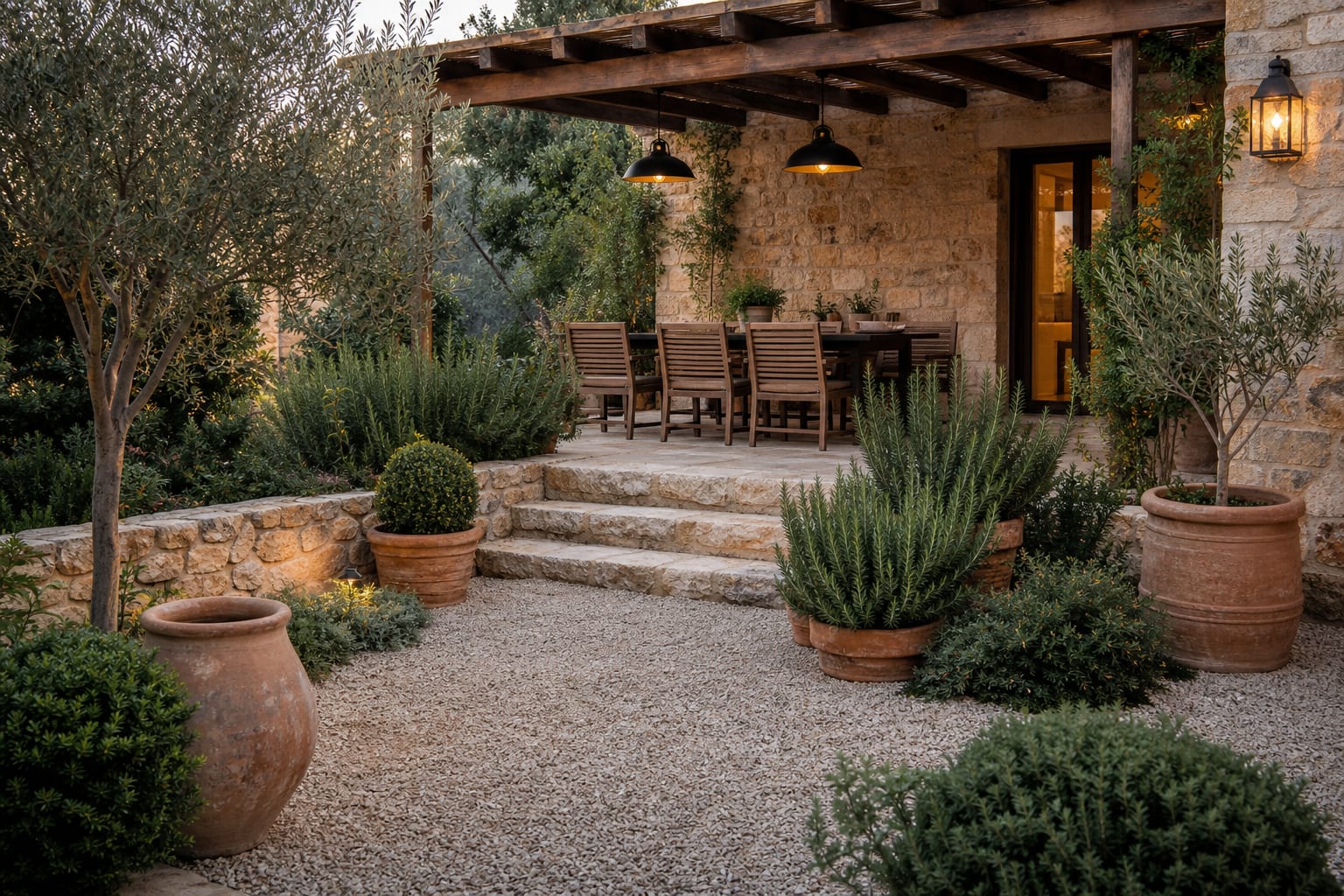
A Mediterranean garden convinces when hardscape, containers, planting, and shade all suggest a place designed for sun, not rescued from it. Avoid treating "Mediterranean" as a shopping list — a blue pot, a citrus tree, a lantern. Choose two hard materials, one warm metal or timber accent, and a plant list that could survive a hot week unattended.
Contain gravel with steel, brick, or stone edging set 1/2 inch proud of the surface so it doesn't migrate into beds. Paths need at least 36 inches of width for one person, 48 inches if someone carries a tray through the garden. Seating areas need room to breathe: budget roughly 8 by 10 feet for a small table and four chairs, or chairs will scrape into the lavender every time someone stands.
Lean on terracotta, sand, ochre, faded olive, chalky white, rust, and deep green. Blue works as a small accent — a glazed bowl or tile riser — not across every cushion. If your garden has warm brick, lean into warmer gravel and clay; if it has cool gray fencing, restain it a muted taupe so planting doesn't look stranded.
For a quieter outdoor room rather than a show garden, borrow the calm spacing from outdoor meditation space ideas. Even a sociable Mediterranean garden needs negative space around the olive, bench, or dining table so the eye has somewhere to rest.
Which Mediterranean garden ideas are worth copying first?
- Trade thin lawn for a pale gravel courtyard. A 2-inch compacted gravel layer over a stable base gives dry brightness that turf can't, and planting through the edges leaves the center open for a table or large pot.
- Put one architectural tree in the right container. An olive, bay, or citrus in a frost-safe terracotta pot at least 24 inches wide gives height and shadow; raise it on hidden pot feet so drainage holes clear the paving.
- Plant a herb edge near the path. Space rosemary and lavender 24 to 30 inches apart so the garden smells right without crowding for an instant photo.
- Add water only if the rest is restrained. A narrow rill, bowl fountain, or wall spout at 18 to 30 inches wide works as a small sound source; a large feature can turn a modest yard theatrical.
- Choose furniture with simple silhouettes. A black metal bistro set, teak bench, or woven lounge chair on a level pad with 30 inches of clearance behind each seat keeps the space usable.
- Light low and warm. Path lights around 2700K, shielded pergola downlights, and one table lantern make terracotta and olive leaves glow without flattening the garden.
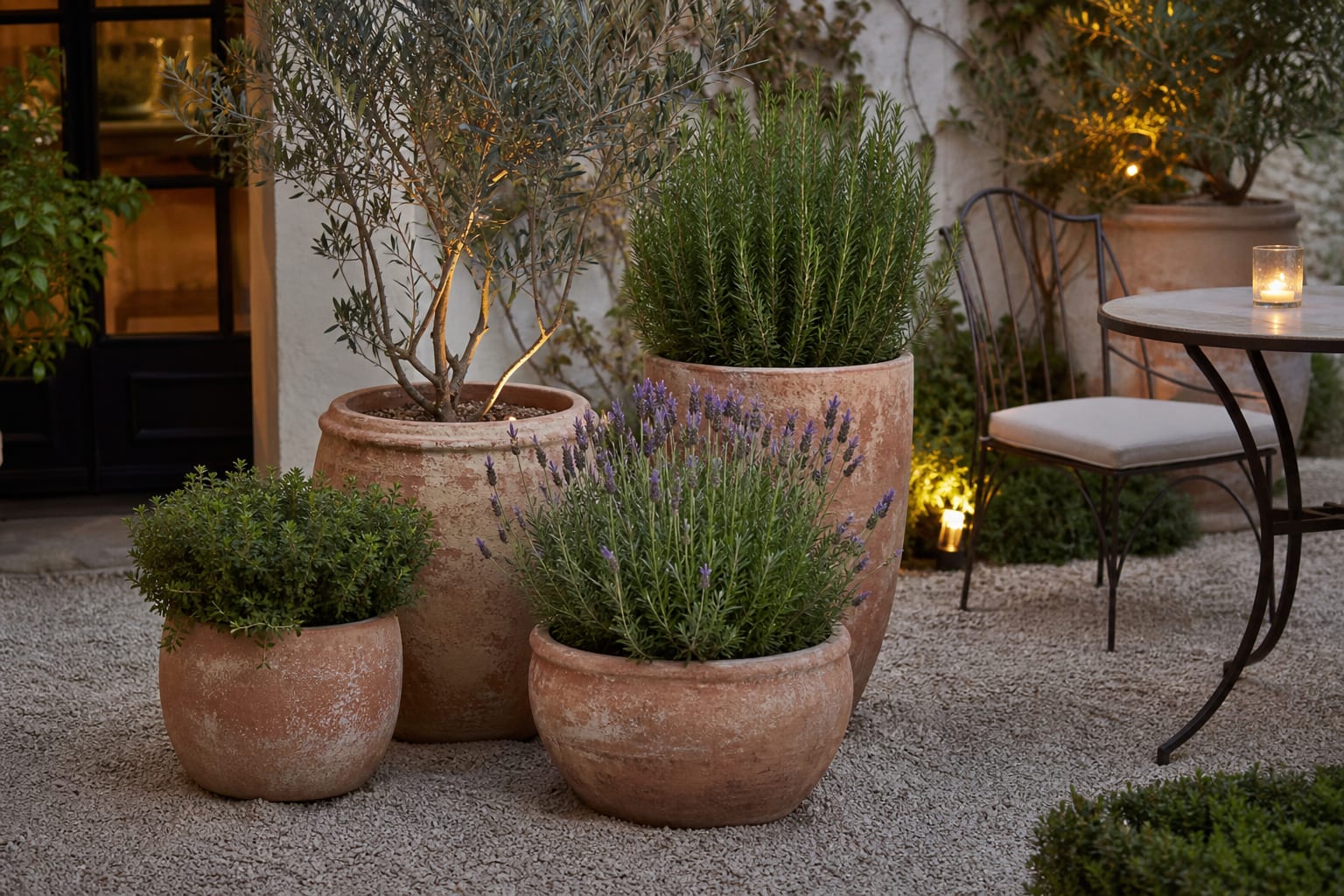
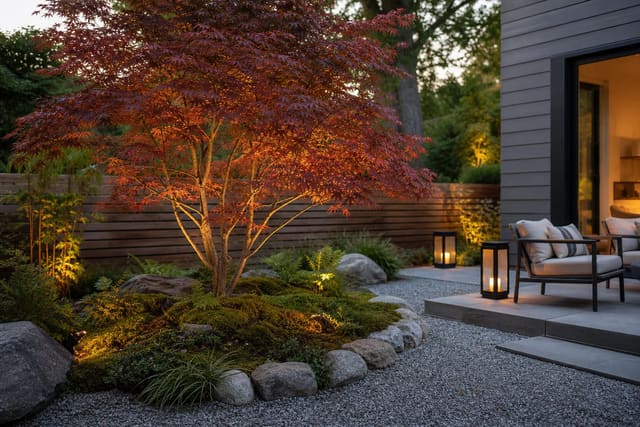
Italian garden planting often looks strongest repeating clipped forms against loose texture — bay balls beside feathery grasses, or rosemary mounds against upright cypress where the climate allows it. For a dramatic single specimen, borrow the idea from Japanese maple design ideas, but keep the palette tight: silver leaves, matte greens, and warm clay age better than a crowded collector's bed.
Common Mediterranean garden mistakes to avoid
- Buying tiny terracotta pots. Small clay pots dry out fast, tip in wind, and clutter the space — use fewer, larger vessels in a repeated clay tone.
- Skipping irrigation because plants are "drought-tolerant." New rosemary, lavender, olive, and bay still need regular water while establishing, especially in containers. A drip line or deep hand-watering routine is how the garden survives its first hot season.
- Mixing every Mediterranean reference at once. Moroccan lanterns, Tuscan urns, Spanish tile, Greek blue, and Provençal lavender fight each other at full volume. Pick one lead influence and let the rest show up in smaller details.
- Pairing white gravel with a white house. The glare can feel harsh on a south-facing patio; break it with terracotta, honey limestone, teak, rusted steel, or ochre cushions for depth.
- Ignoring where people actually sit. Angle seating toward the best planted view, keep it within 10 to 15 feet of the kitchen door for meals, and give it shade before expecting anyone to linger.
Use AI design to preview your Mediterranean garden before you commit
Mediterranean garden ideas depend on proportion more than shopping, which makes previewing worthwhile. Upload a straight-on photo of your garden and test the big moves first: gravel instead of lawn, one olive in a large pot, a pergola over the dining zone, or a tighter herb palette along the fence. The goal isn't letting software design the garden — it's catching expensive mistakes before a pallet of stone arrives.
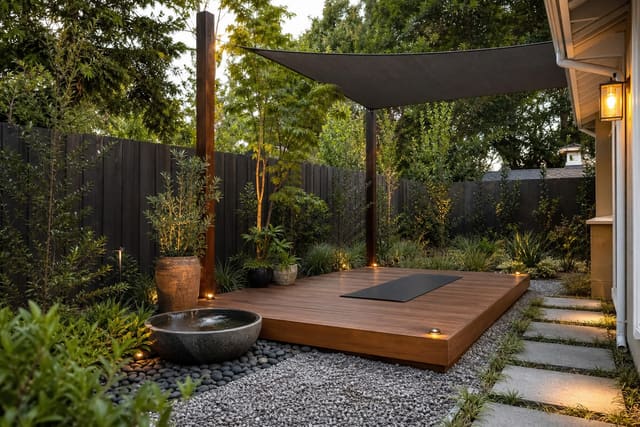
Compare warm gravel against existing brick, terracotta against your fence color, and clipped herbs against looser grasses in the preview. If the garden also needs a movement zone or quiet morning corner, the spacing logic in outdoor yoga space ideas can keep a mat, bench, or lounge area clear of planters. Once the main viewpoint looks calm, measure the real site and adjust for drainage, access, and plant hardiness.
Frequently Asked Questions
What are the essential Mediterranean garden plants?
Olive, rosemary, lavender, cypress, santolina, agave, and bearded iris form the core list. Pick five from this group and the garden reads correctly even without trellised wisteria or citrus.
Does a Mediterranean garden need irrigation?
Yes, in year one. New plantings need drip irrigation to establish roots; from year two onward most Mediterranean plants survive on rainfall in zones 7–10 with one supplemental soak per heat wave.
What hardscape suits a Mediterranean garden?
Crushed limestone or pea gravel paths, terracotta pavers, dry-stack stone walls, and stucco planters all work well. Avoid wet-laid concrete and pressure-treated softwood, which read as the wrong climate entirely.
Can I grow a Mediterranean garden in a cold climate?
Yes, with substitutions: Russian sage replaces lavender below zone 6, Spartan juniper replaces cypress, and crushed limestone still works for the floor. The silver-leaf palette is the through-line regardless of hardiness zone.
How do I add a Mediterranean feel without a full redesign?
Add three terracotta pots with olive, rosemary, and lavender along an existing path, then switch the path edging to crushed limestone. That single weekend project shifts the whole garden toward Mediterranean.
Three transformations to try
- Mediterranean garden with olive and gravel
- Mediterranean herb border with stucco wall
- Mediterranean courtyard with cypress accents