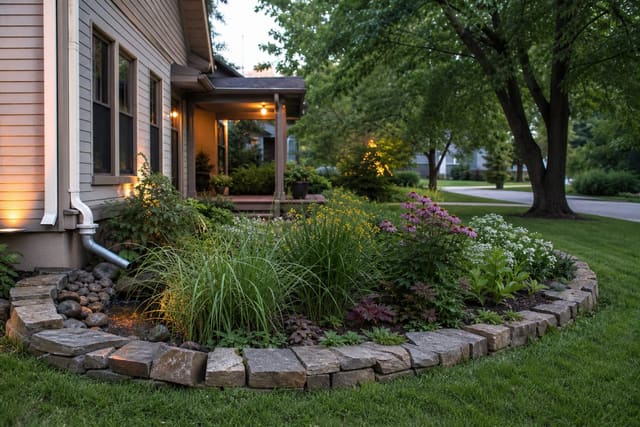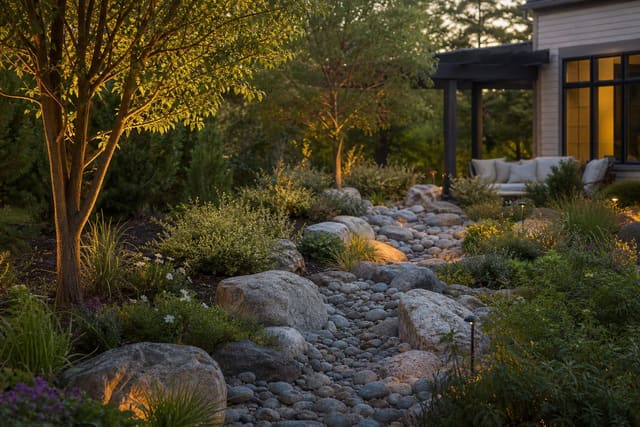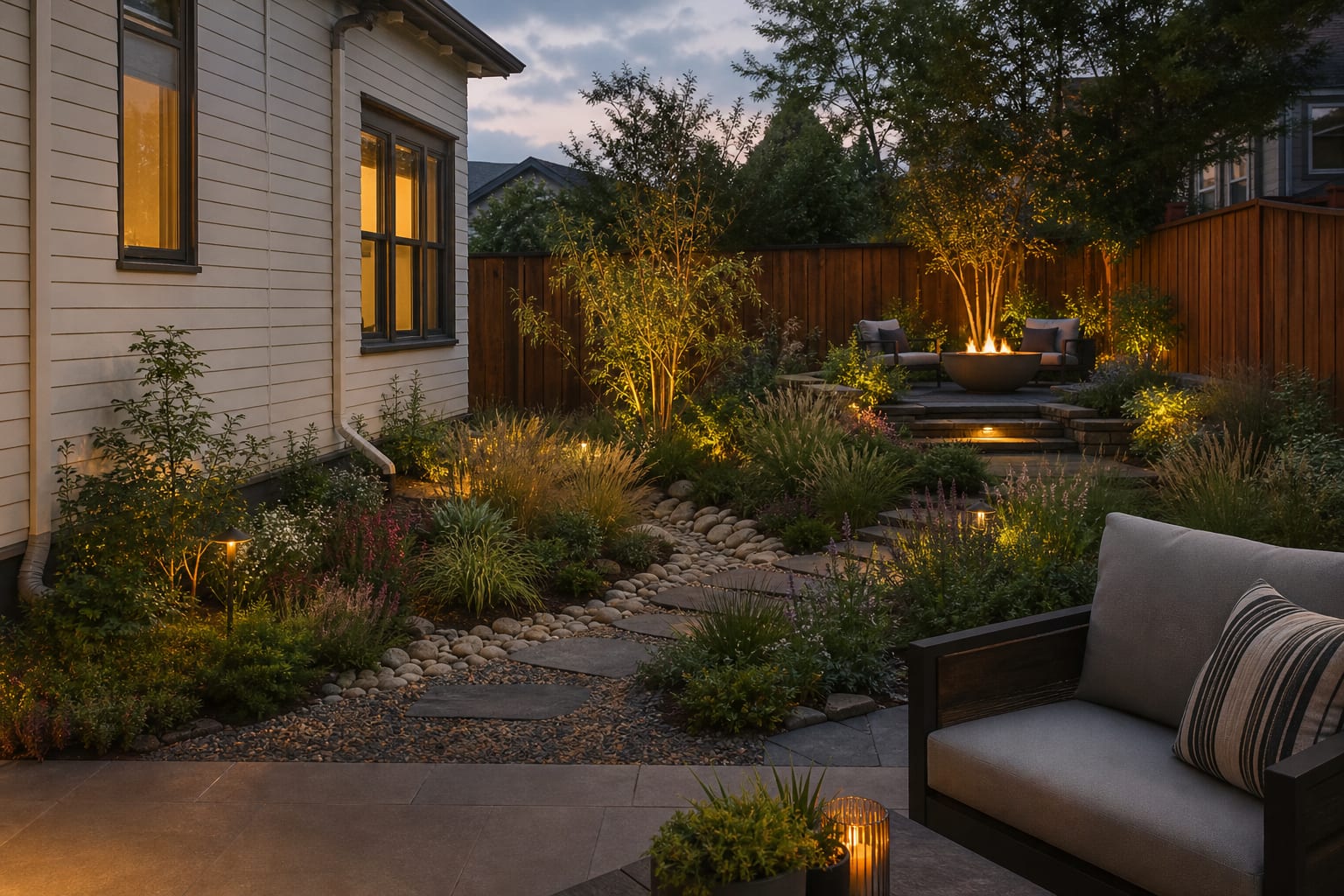
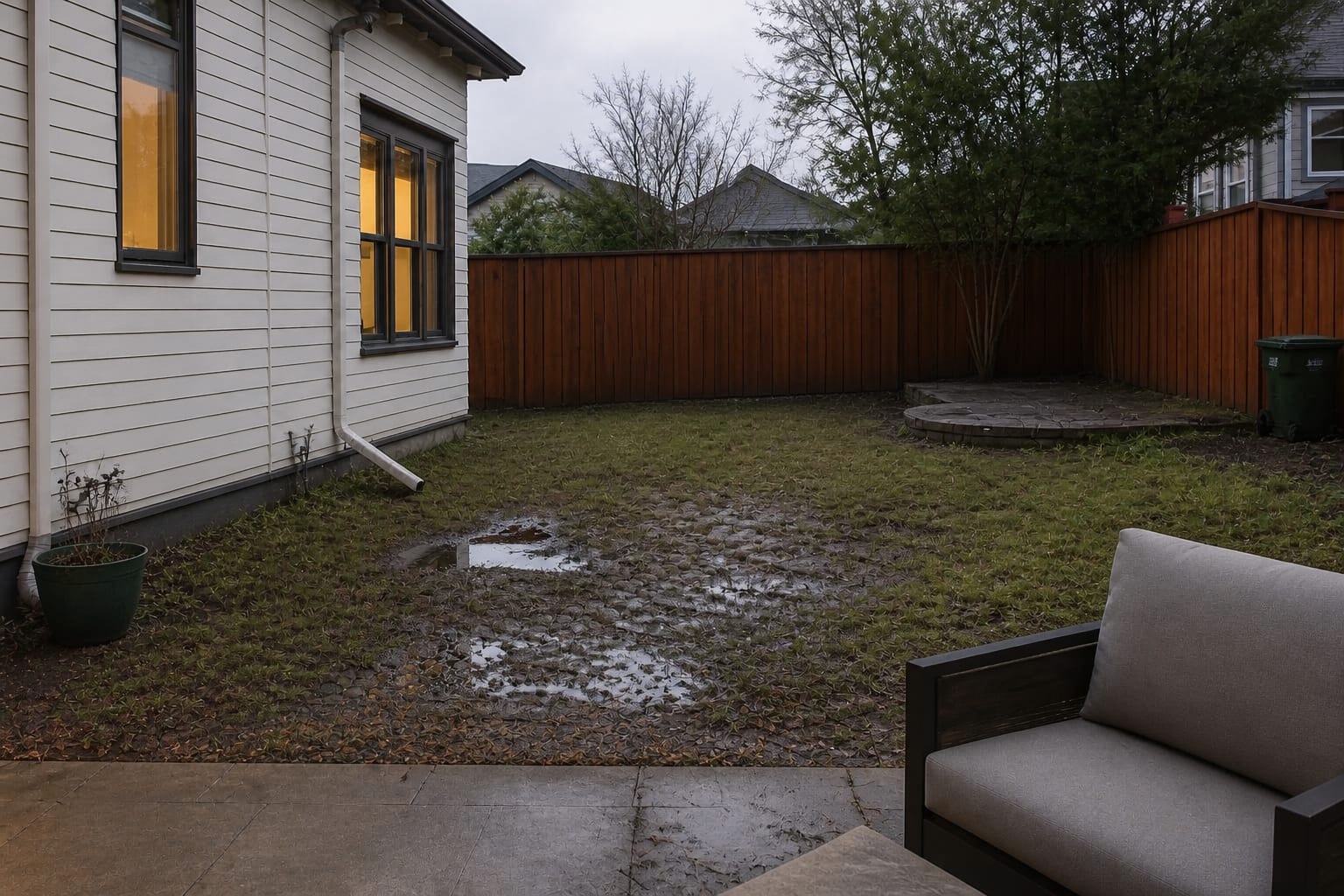
Backyard drainage solutions work by mapping the low line, redirecting downspouts at least 6 to 10 feet from the foundation, regrading low spots to a 1-2 percent fall, and adding a swale or French drain only when surface fixes can't carry the volume. Standing water is a grading and exit-route problem, not a lawn problem — grass seed won't fix a yard that pitches the wrong way.
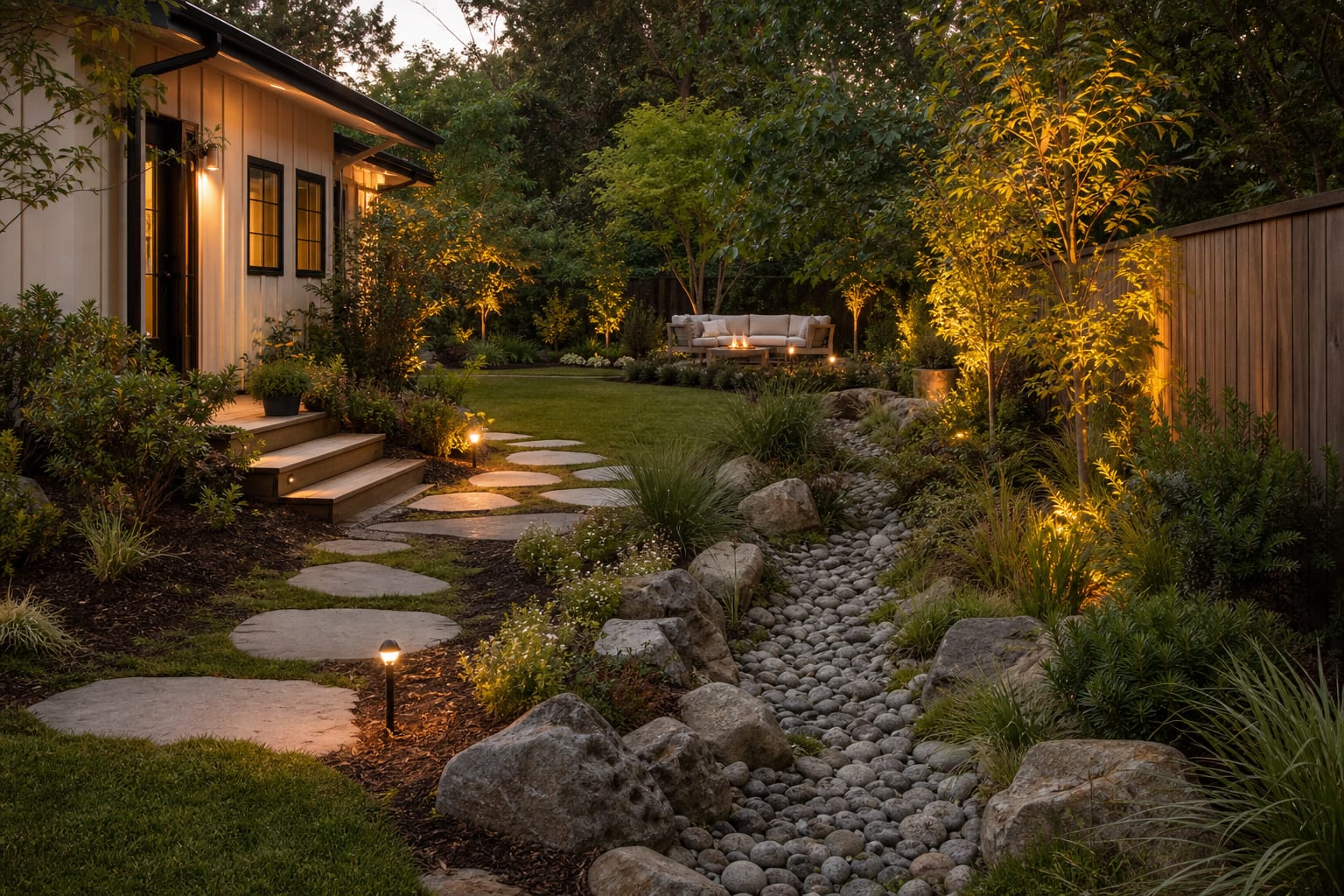
What is actually causing the standing water?
Standing water comes from one of four causes: slow-draining soil, hard surfaces shedding runoff into turf, roof water with nowhere to go, or a low pocket with no outlet. Walk the yard within 24 hours after steady rain and flag the wettest edges. If water sits in a flat saucer for two days, shape is the issue as much as soil texture; if it flows off a patio into the lawn, hardscape pitch is the culprit; if a soggy stripe starts under a downspout, the roof is the source.
Check grade with a 10-foot board, a level, or a string line. Ground near the house should fall away, not roll back toward the foundation. Patios and walks should slope 1/8 to 1/4 inch per foot; lawn areas need only a 1% to 2% pitch to move water without feeling tilted underfoot.
To test soil, dig an 8-inch hole in the wet area and another in a dry spot, fill both with water, and compare drain time. If the wet hole drains much slower, plan for soil improvement and possibly a subsurface drain. If both drain similarly but only one area floods, the yard's shape is trapping runoff, not the soil.
Test this on your own photo with ReDesign before committing to a direction; keep the house edge, horizon line, hardscape, planting beds, and main path visible so the preview solves the space you actually have.
Which backyard drainage solution fits the wet spot?
The right fix depends on whether water is moving across the surface, rising from below, or arriving from the roof. One correct intervention beats five shallow fixes that fight each other.
| Drainage choice | Best for | Core spec |
|---|---|---|
| Regrading | Water sloping toward the house or a low lawn pocket | Build a 1% to 2% fall across lawn areas where possible |
| Downspout extension | Roof water dumping into beds or turf | Discharge 6 to 10 feet from the foundation onto a splash block or buried solid pipe |
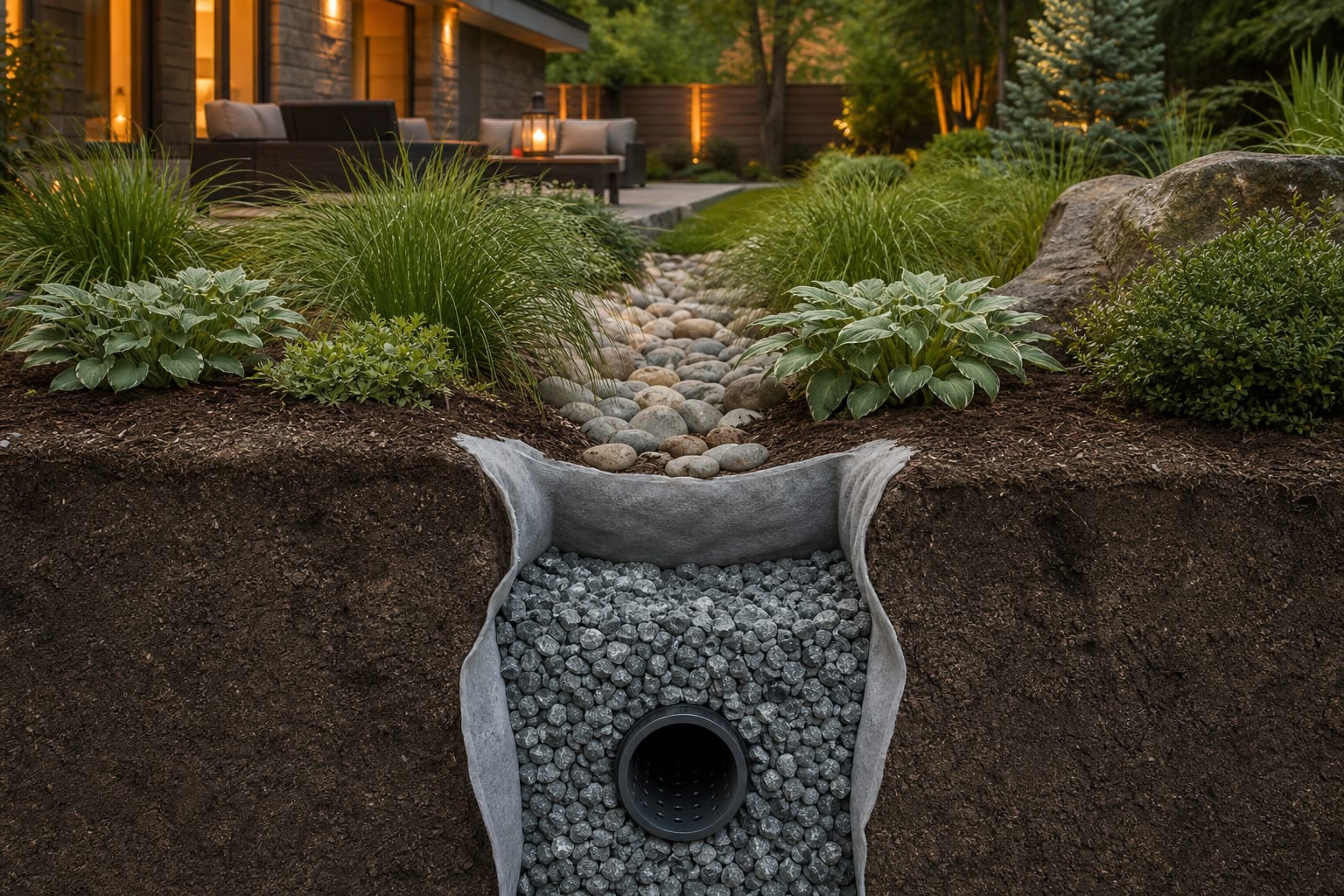
| French drain | Subsurface water or a consistently wet strip | 4-inch perforated pipe, washed stone, and filter fabric in a 12- to 18-inch-deep trench |
| Swale | Broad surface runoff across the yard | Shallow channel with 3:1 side slopes, mowable or planted |
| Rain garden | Temporary water collection away from structures | Place at least 10 feet from the house in a naturally low area |
| Catch basin | Water collecting at a patio, stair, or hardscape edge | Grate slightly below surrounding grade, connected to a legal outlet |
Five lawn drainage ideas worth trying:
- Recut the high edge blocking runoff. A raised bed, compacted path, or old edging often traps a soggy lawn; lowering that lip 1 to 2 inches can reopen the yard's natural exit.
- Add a gravel trench at the patio edge. Use angular 3/4-inch stone set 1/2 inch below the paving edge so runoff drops in instead of sheeting across it.
- Turn a wet fence line into a planted swale. Use moisture-tolerant plants staggered 18 to 30 inches apart so the strip reads as designed, not abandoned.
- Replace compacted turf with stepping stones. Repeated foot traffic seals soil and worsens puddling; set stones 24 to 28 inches on center with gravel joints along worn paths.
- Split a large yard into dry and wet zones. Keep dining, fire pits, and play areas on the higher third; see large backyard layout ideas for making the lower drainage zone feel intentional.
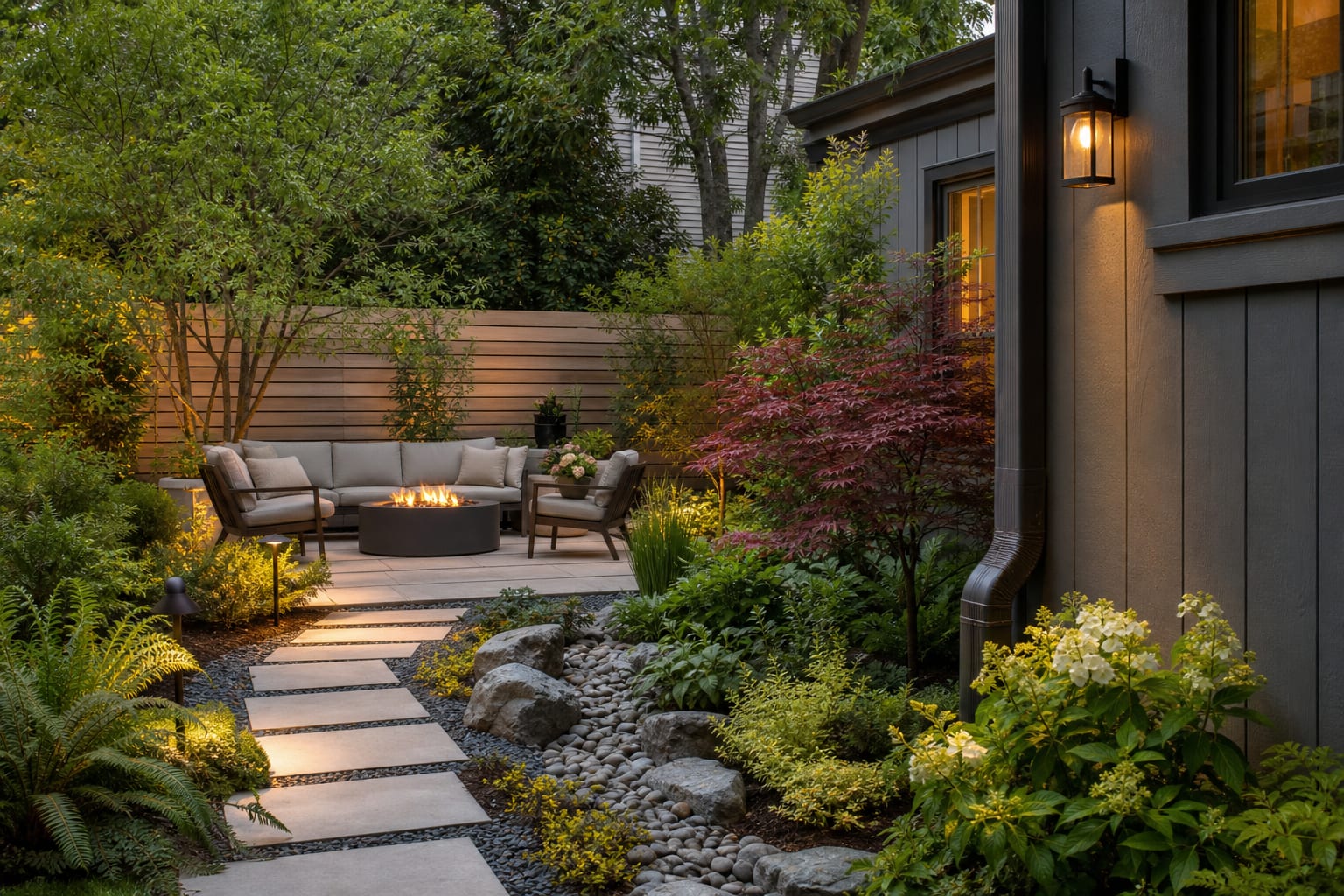
Never route a French drain toward a neighbor without checking local rules — many municipalities restrict stormwater discharge, and some sites need a dry well, curb connection, or professional civil plan. If the yard floods near the house after every heavy rain, bring in a drainage contractor before any cosmetic design work.
Design-check shorthand: Depth before decoration. Repetition before variety. Maintenance before novelty.
Common backyard drainage mistakes
- Skipping filter fabric on a French drain. Fine soil migrates into the gravel and clogs it; wrap the stone bed in nonwoven fabric and orient pipe holes down or sideways per manufacturer instructions.
- Filling the wet spot with topsoil alone. Water still needs somewhere to go; reshape the surrounding grade for an overflow path before adding soil or sod.
- Installing a catch basin with no outlet. Every basin needs a pipe, dry well, daylight discharge, or approved storm connection sized for the water it receives.
- Planting screens in saturated soil. Wet roots stress and gap exactly where coverage is needed; resolve drainage first, then compare bamboo privacy screen ideas.
- Treating mulch as a drainage fix. 2 to 3 inches of mulch reduces splash and erosion but can't correct a low grade, roof discharge, or compacted subsoil.
Maintenance is part of the design: clean catch basin grates after leaf drop, keep swales free of buildup, and inspect downspout outlets after the season's first hard rain. A drainage plan that can't be maintained with a rake, hose, and occasional gravel top-up is too fragile for a real backyard.
How AI design helps you see the fix
Drainage work changes the shape of the yard, not just the surface finish. Upload a straight-on photo of the wet area with the downspout, low point, and preferred seating zone marked, then preview a planted swale, gravel edge, raised patio, or rain garden before cutting into the lawn.
The preview won't calculate pipe capacity or replace a drainage professional, but it shows whether the practical fix still feels like a backyard you'll use. The best outcome isn't a hidden drain — it's an outdoor room that stays dry enough to live in.
Frequently Asked Questions
How do I know if my backyard needs drainage work?
Standing water 24+ hours after rain, persistent moss on the lawn, mud at downspout terminations, or basement seepage on the same wall every storm are the four diagnostic signals that surface fixes alone won't solve.
What is the cheapest backyard drainage fix?
Regrading and downspout extensions handle most small-yard drainage problems for under $300 in materials. Reserve French drains for cases where surface flow can't reach a daylight outlet on its own.
Do I need a French drain or a swale?
Use a swale where there's 30+ feet of run to a daylight outlet. Use a French drain only when hardscape blocks that path or the volume exceeds what a 2-foot-wide swale can carry.
Where should downspouts discharge?
At least 6 to 10 feet from the foundation, onto a sloped splash zone or into a buried solid pipe that daylights at a planted basin. Never let them empty into a bed flush against the house.
Will plants alone fix a wet backyard?
Plants help at the margin but can't move standing water uphill. Pair a rain garden or swale with planted edges rather than relying on greenery to absorb a grading failure.
> Try this: Ready to see this on your own outdoor space? Open ReDesign and run the preview before you buy materials, plant, drill, or move furniture.
Three transformations to try
1. Backyard swale with planted edge 2. French drain with river stone topcoat 3. Downspout to dry well with rain garden