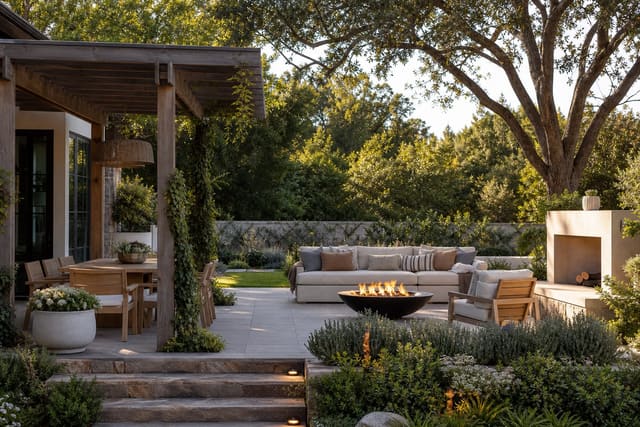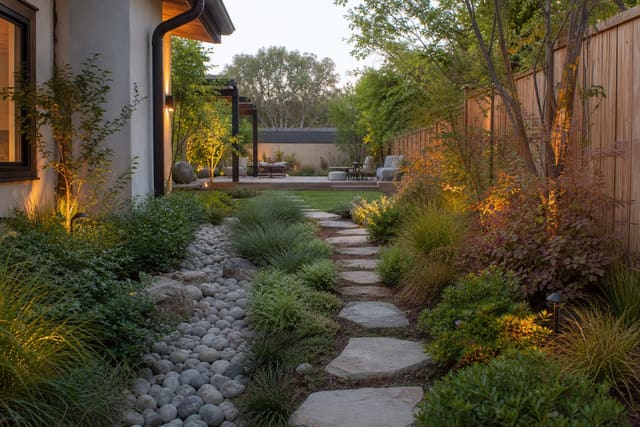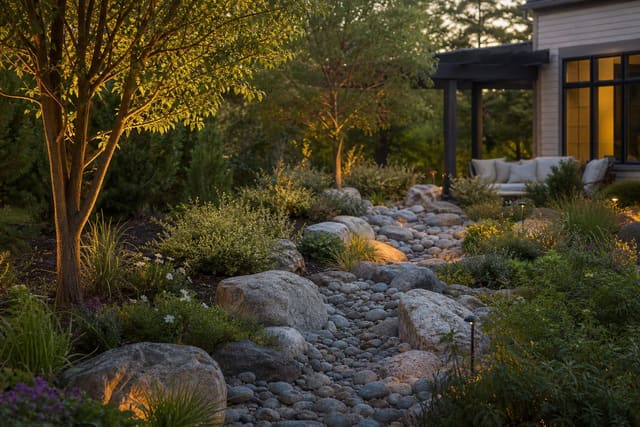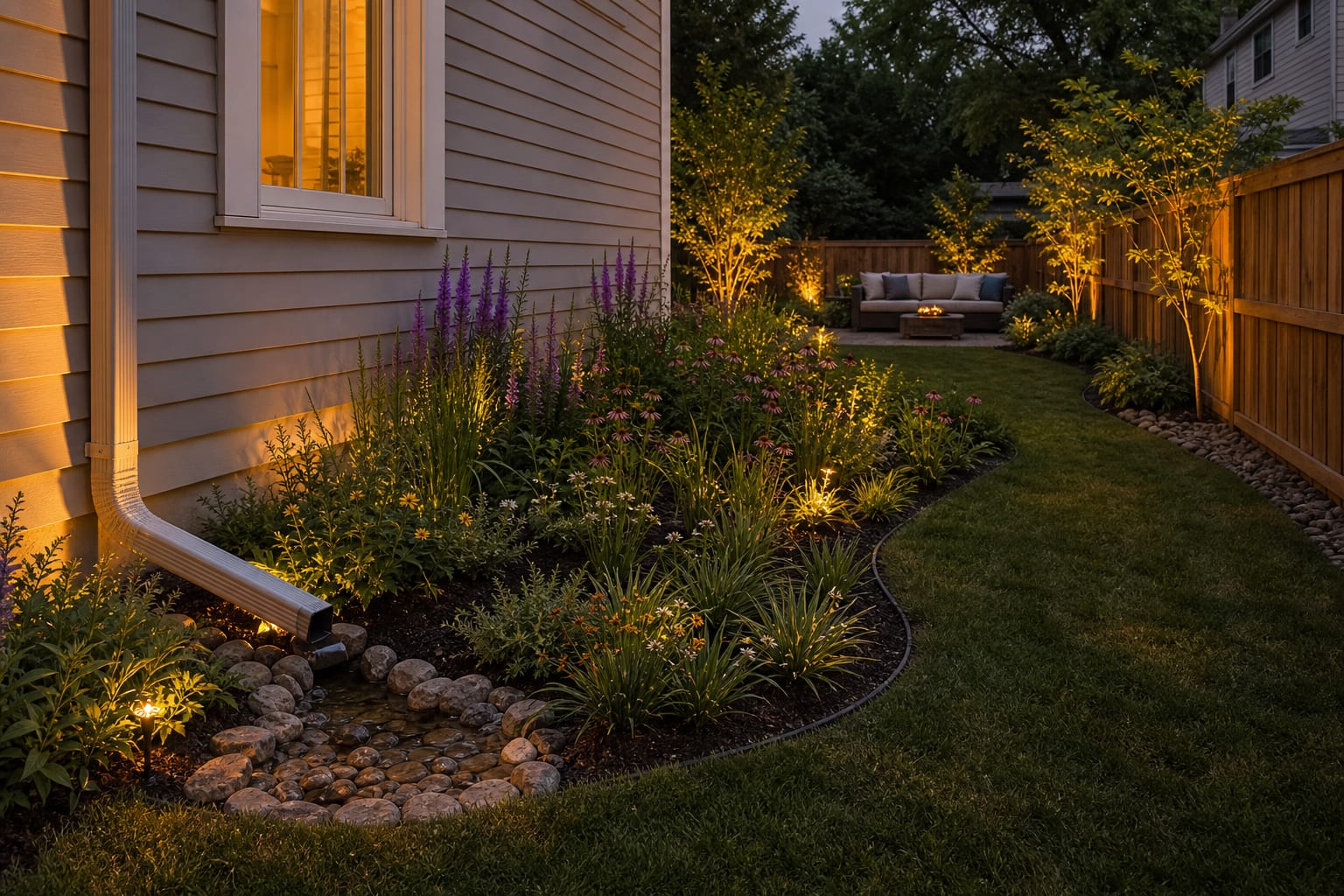
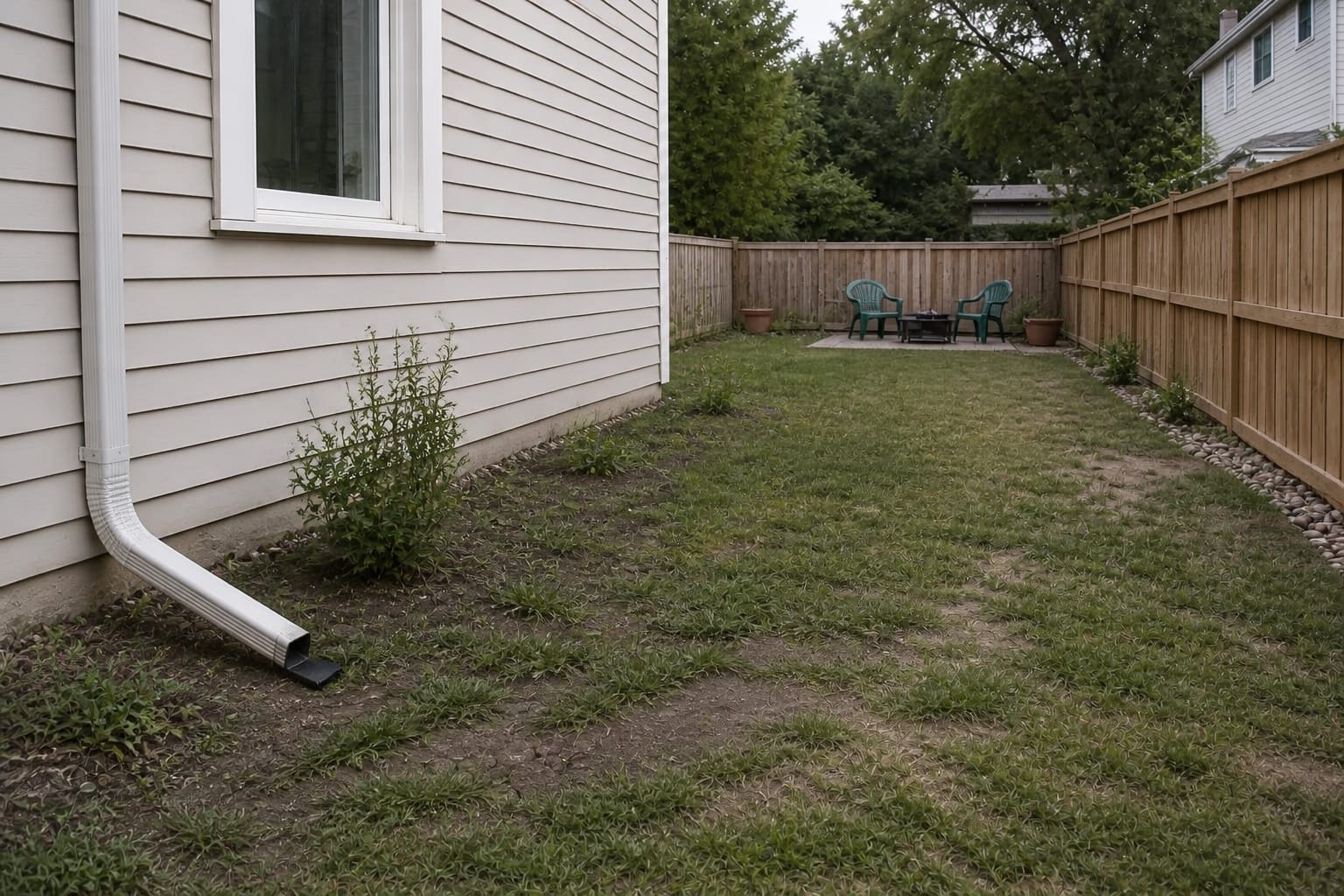
A rain garden is a shallow 6 to 8 inch basin, sited at least 10 feet from the foundation along the yard's natural drainage path, sized at roughly 20 to 30 percent of the impervious area feeding it, and planted in wet-to-dry zones with native, deep-rooted species. Treat it as stormwater infrastructure first and a garden second, or it will end up muddy and too deep.
How do you build and plant a rain garden that works?
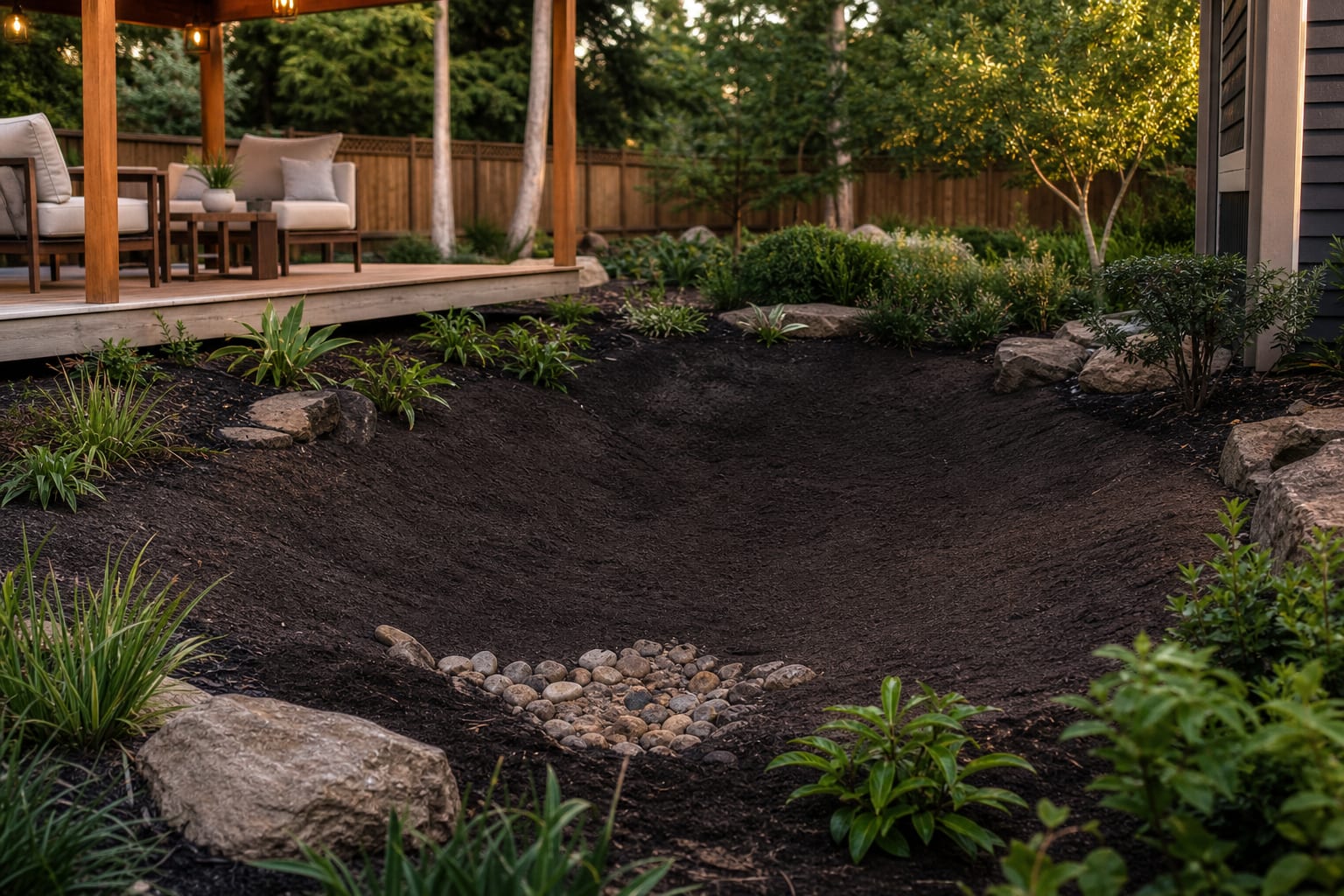
Choose a low area at least 10 feet from the house, shape a shallow basin 6 to 8 inches deep, improve the soil so it drains within 24 to 48 hours, and plant moisture-tolerant species from wet center to drier rim. The basin should collect runoff from a roof, patio, driveway edge, or compacted lawn, but never trap water against a foundation, septic field, or neighbor's property.
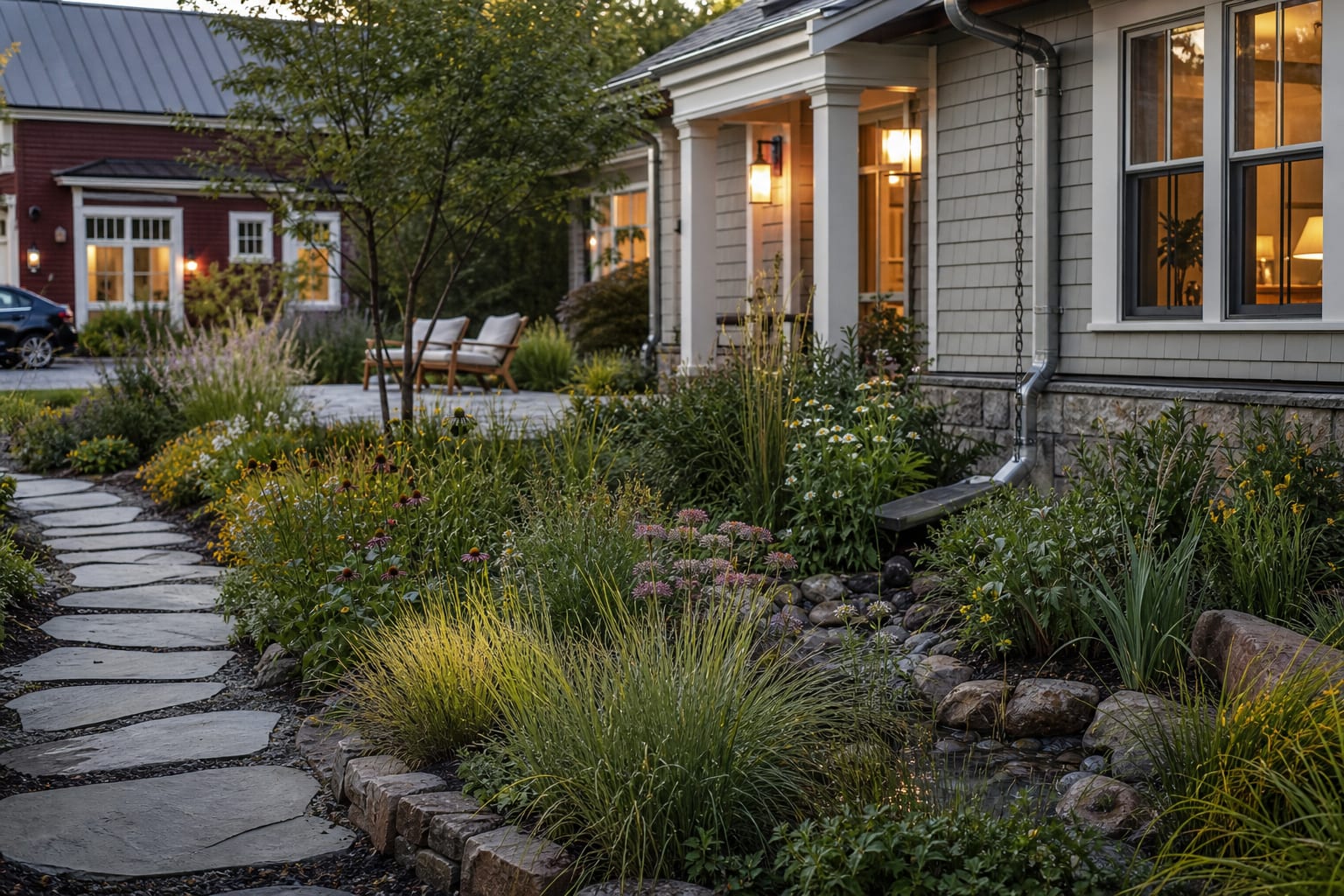
Watch the yard during a real rain before shopping for plants. Mark where water enters, slows, and would overflow if the basin filled — without an overflow route, a rain garden is just a nicer-looking puddle. If roof water is the main source, extend the downspout with a solid pipe or runnel so it enters cleanly instead of eroding the mulch.
Use a native soil test to gauge how aggressive the build needs to be. Dig a hole 8 to 12 inches deep, fill it with water, let it drain once, then refill and time the second drain-down. If water still sits after two days, plan for more soil replacement, a shallower basin, or professional drainage advice.
Where should the rain garden sit in the yard?
The best location intercepts runoff, sits low enough to collect it naturally, and stays far enough from structures that temporary ponding cannot cause damage — for example, between a downspout and the sidewalk, or below a patio. Avoid the dead-lowest point if it has no exit; a bowl with no outlet stays saturated too long. A better site catches water on the way through, slows it, and releases overflow across a protected edge, with a nearly level bottom so water spreads rather than racing to one corner.
Most residential rain gardens read best at 6 to 10 feet across with gentle side slopes you can step into for weeding. A sudden drop-off like a soup bowl causes mulch to slide and plants to lean. On steeper sites, use a series of smaller terraces instead of one deep pit.
Coordinate the basin with the rest of the landscape. If the yard also needs screening, place taller shrubs outside the basin rather than inside the wet center — see living fence hedge ideas for a boundary that doesn't block drainage. For noise, avoid berms that dam runoff and check garden sound barrier planting with drainage gaps built in.
| Rain garden decision | Better choice | Working spec |
|---|---|---|
| Distance from house | Place basin away from foundation walls | Keep ponding area at least 10 feet out |
| Basin depth | Use a shallow, planted depression | About 6 to 8 inches of temporary water |
| Soil blend | Loosen or amend compacted soil | Work the top 12 to 18 inches for roots |
| Inlet | Slow water before it hits mulch | Stone, cobble, or splash pad at entry |
| Overflow | Create one controlled low edge | Direct excess to lawn, swale, or approved outlet |
Test this on your own yard photo with ReDesign before finalizing the layout; keep the house edge, horizon line, hardscape, and main path visible so the preview solves the space you actually have.
Which plants belong in each rain garden zone?
Arrange plants by water tolerance, height, and root habit rather than a single shopping-cart mix — the center gets wet and drains, then has to handle ordinary garden stress like any other bed.
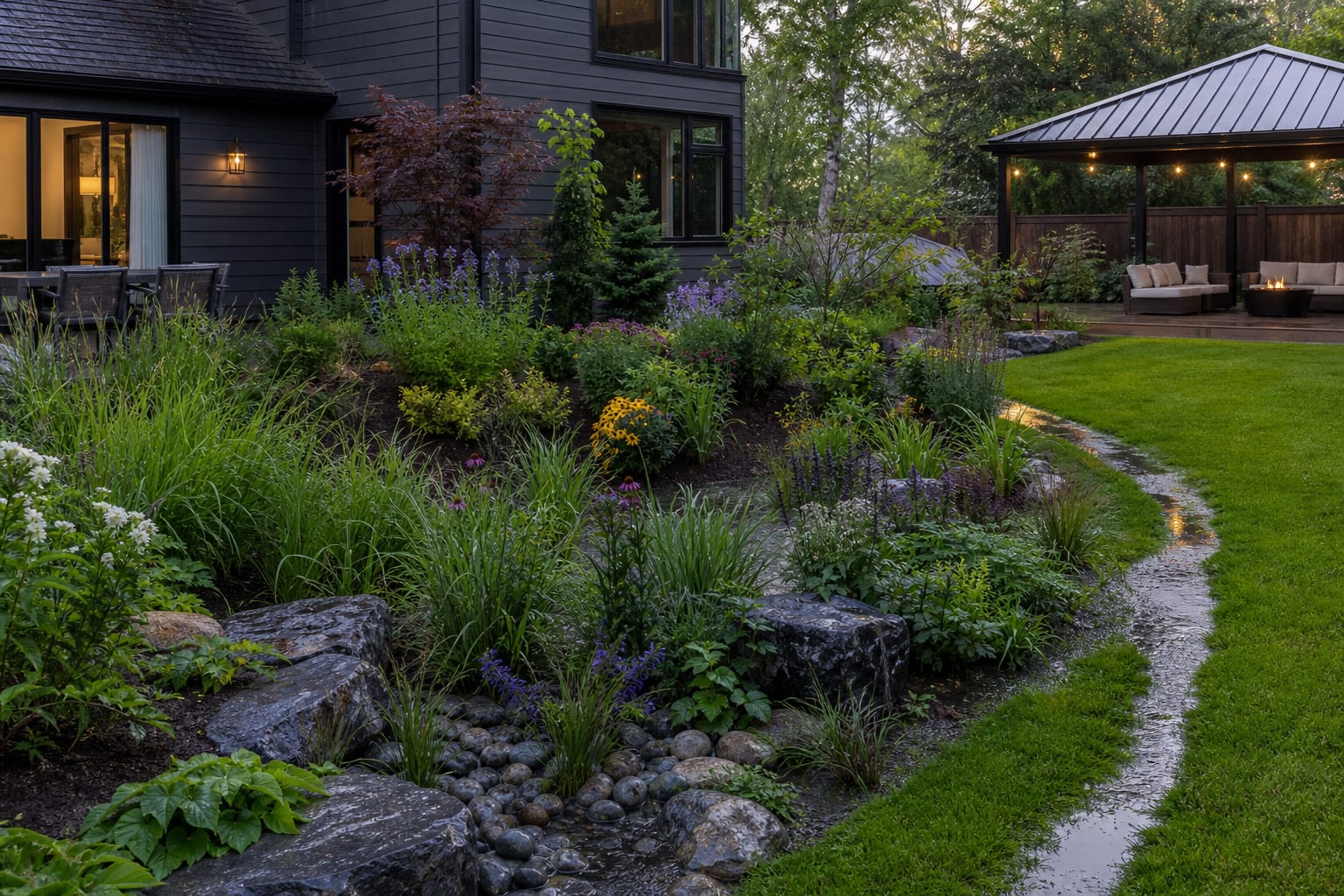
- Basin floor: the toughest wet-footed plants go here since this area ponds longest; sedges, rushes, swamp milkweed, and blue flag iris spaced 12 to 18 inches apart cover soil quickly.
- Side slopes: flexible perennials handle brief wetness and longer dry spells; plant in staggered groups of 3, 5, or 7 so the slope reads as intentional from a distance.
- Upper rim: plants that tolerate ordinary dryness hold the shape between storms; low shrubs, grasses, and durable ground covers work well here — borrow ideas from low-maintenance ground cover that can handle occasional splash.
Keep woody shrubs on the rim, not the wet center, so the low middle stays easy to cut back and divide. Mulch matters more here than in a standard border: fine bark floats to the overflow notch, so use stone or dense planting at the water path and keep mulch about 2 inches deep, pulled back from crowns.
Design-check shorthand: depth before decoration, repetition before variety, maintenance before novelty.
Common rain garden mistakes to avoid
- Digging too deep leaves plants sitting in standing water too long and the feature reads as a ditch. Keep the depth modest with gentle slopes and a wide, level bottom.
- Placing the basin against the foundation sends water exactly where the house doesn't want it. Move it outward and route downspouts with solid pipe at least 10 feet from the building.
- Skipping the overflow route turns a good rain garden into a storm surprise. Cut a stone-lined notch so excess water leaves predictably instead of jumping the rim.
- Planting only for bloom leaves the bed thin for half the year. Mix sedges, grasses, flowering perennials, and rim shrubs for winter structure and root density.
- Using compost-heavy soil holds too much water and can wash nutrients into runoff. Keep the root-zone mix mineral and loose rather than rich and potting-style.
Use AI design to preview your rain garden before you dig
AI design helps with the hard visual decisions before the shovel work: basin shape, stone color, planting height, downspout route, and how much lawn the garden should take. Upload a straight-on photo of the wet area and preview a curved basin, a stone inlet, a planted overflow swale, or a more formal planting scheme.
The preview won't calculate infiltration rate, local stormwater rules, or pipe capacity, but it will show whether the garden looks too small, whether tall grasses block a window, or whether a stone edge clashes with the patio. That's a cheap check before excavation, since changing a curve on screen is easy and reshaping a planted basin is not.
Frequently Asked Questions
Where should a rain garden be located?
Along the natural low line of the yard, at least 10ft from the foundation and 25ft from any septic field, where downspouts or a swale can reach it without a pump.
How big should a rain garden be?
Plan for 20-30 percent of the impervious area draining into it; a 1,000 sqft roof feeding one downspout calls for a 200-300 sqft basin at a 4-8in depth.
What plants belong in a rain garden?
Deep-rooted native sedges and grasses in the center wet zone, perennials like blue flag iris and joe-pye weed in the transition, and drier-tolerant species like little bluestem at the edge.
Do rain gardens breed mosquitoes?
No — a properly sized rain garden drains within 24-48 hours, well under the 4-7 days mosquito larvae need to mature.
How long does a rain garden take to install?
A weekend for a 200 sqft DIY basin if the soil drains; clay soils need amendment plus a French-drain underdrain that adds 1-2 days and roughly doubles the budget.
> Try this: Ready to see this on your own outdoor space? Open ReDesign and run the preview before you buy materials, plant, drill, or move furniture.
Three transformations to try
1. Front-yard rain garden with native perennials