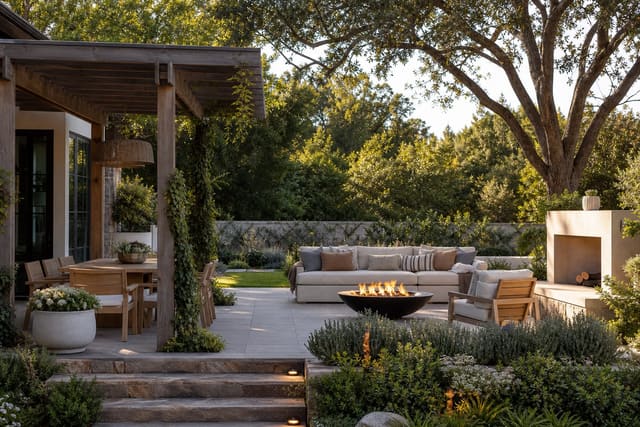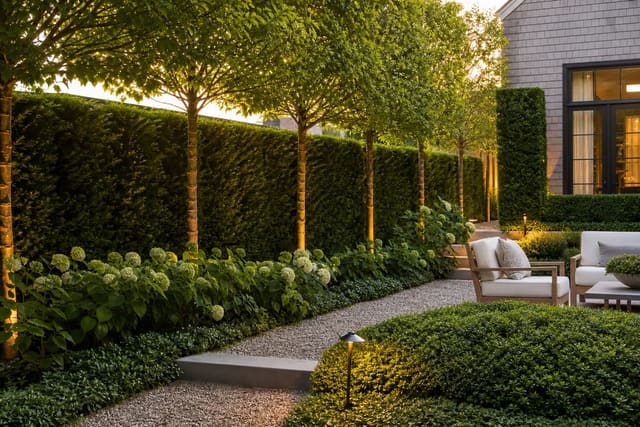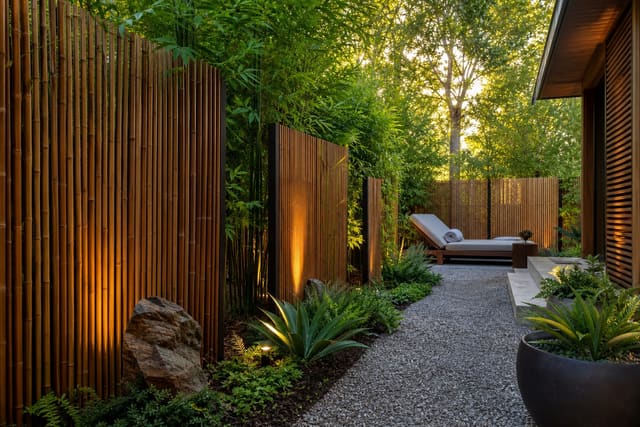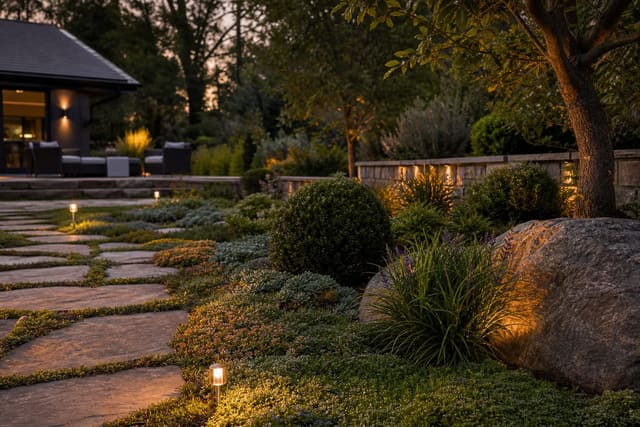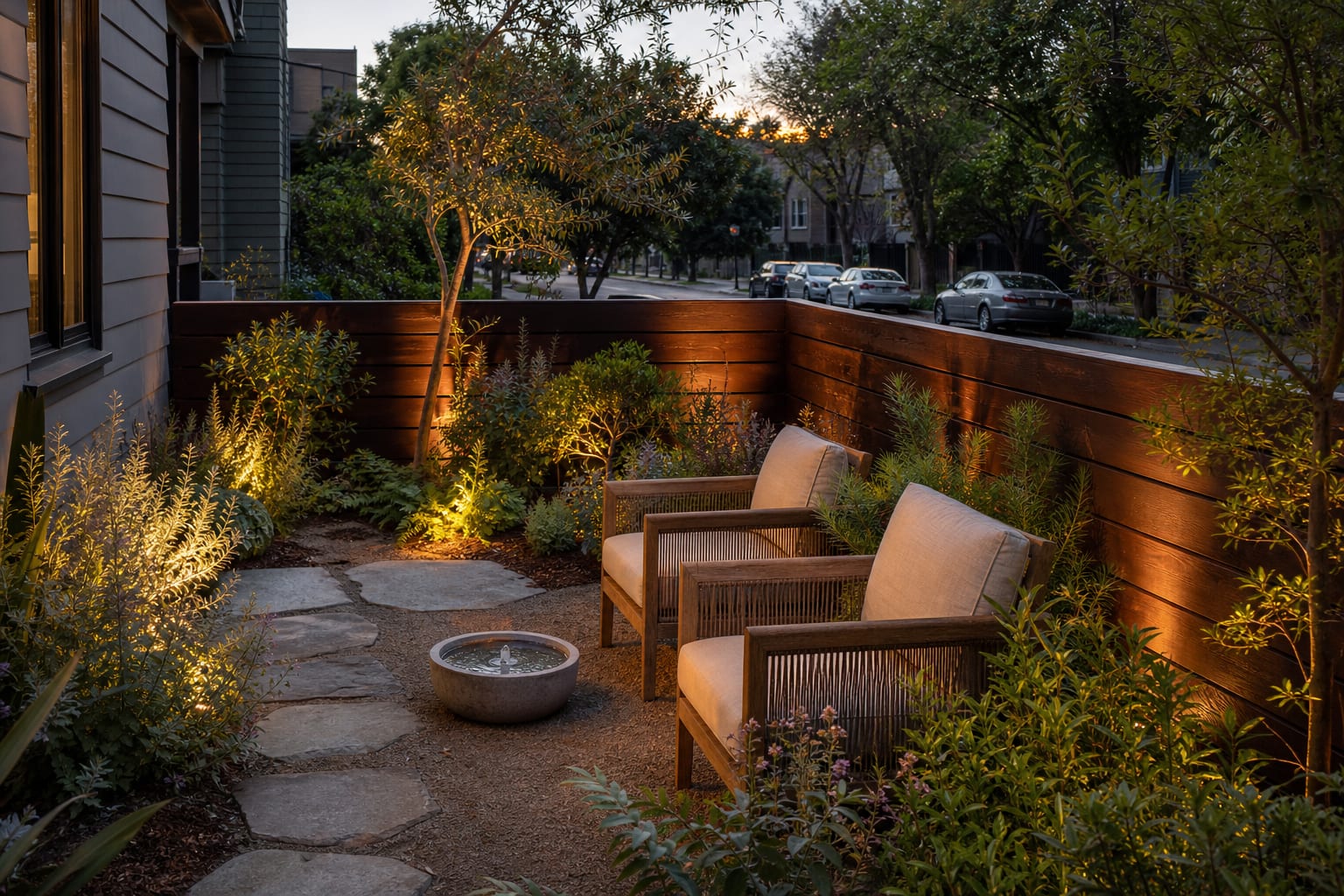
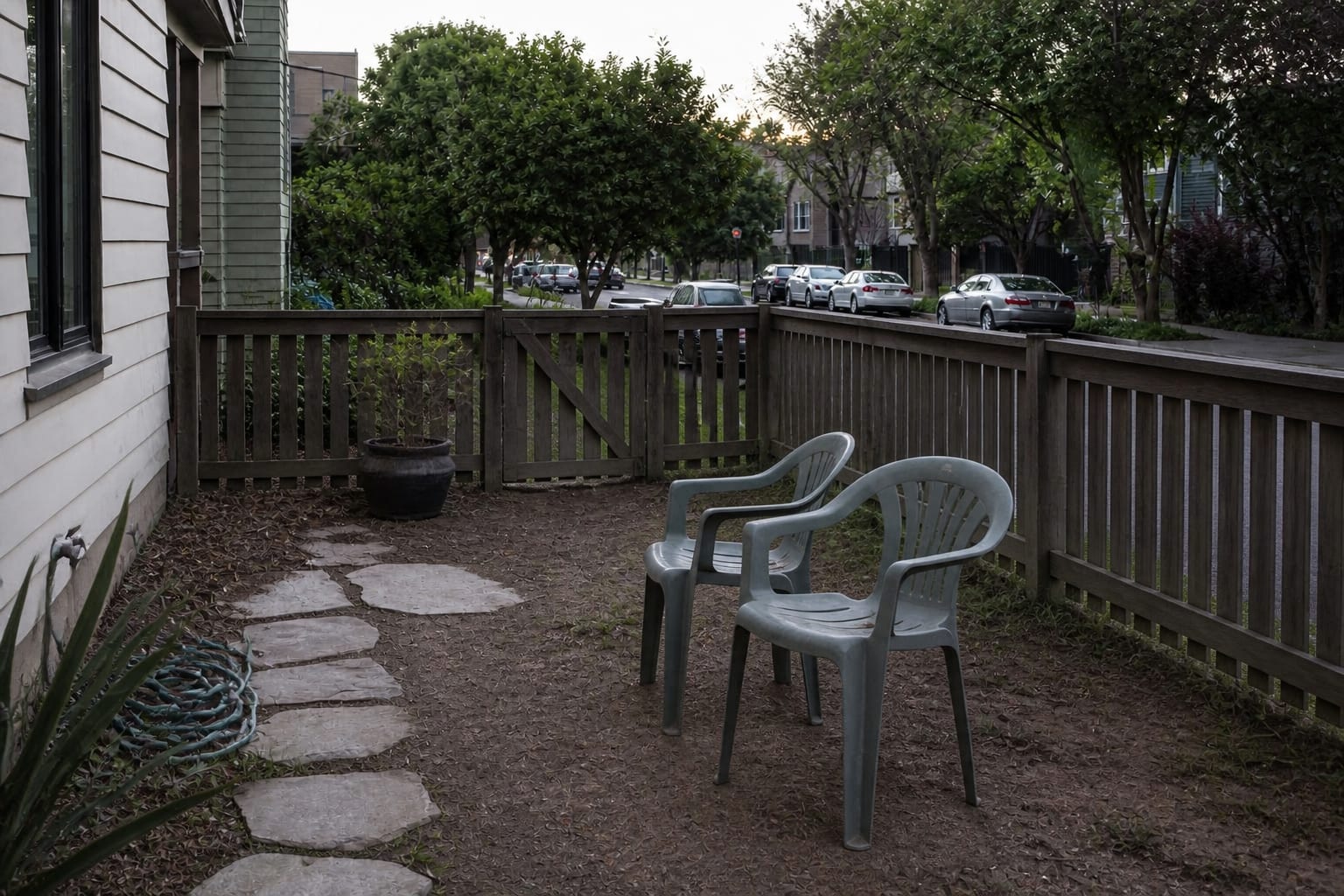
A sound-barrier garden cuts perceptible noise by 4-8 dB when you combine a solid 6ft wall or berm, a 6-10ft layered hedge of dense evergreens, and a fountain near the seating area to mask residual noise. Blocking the sound path, absorbing hard edges, and repositioning quiet zones matters more than plant choice alone.
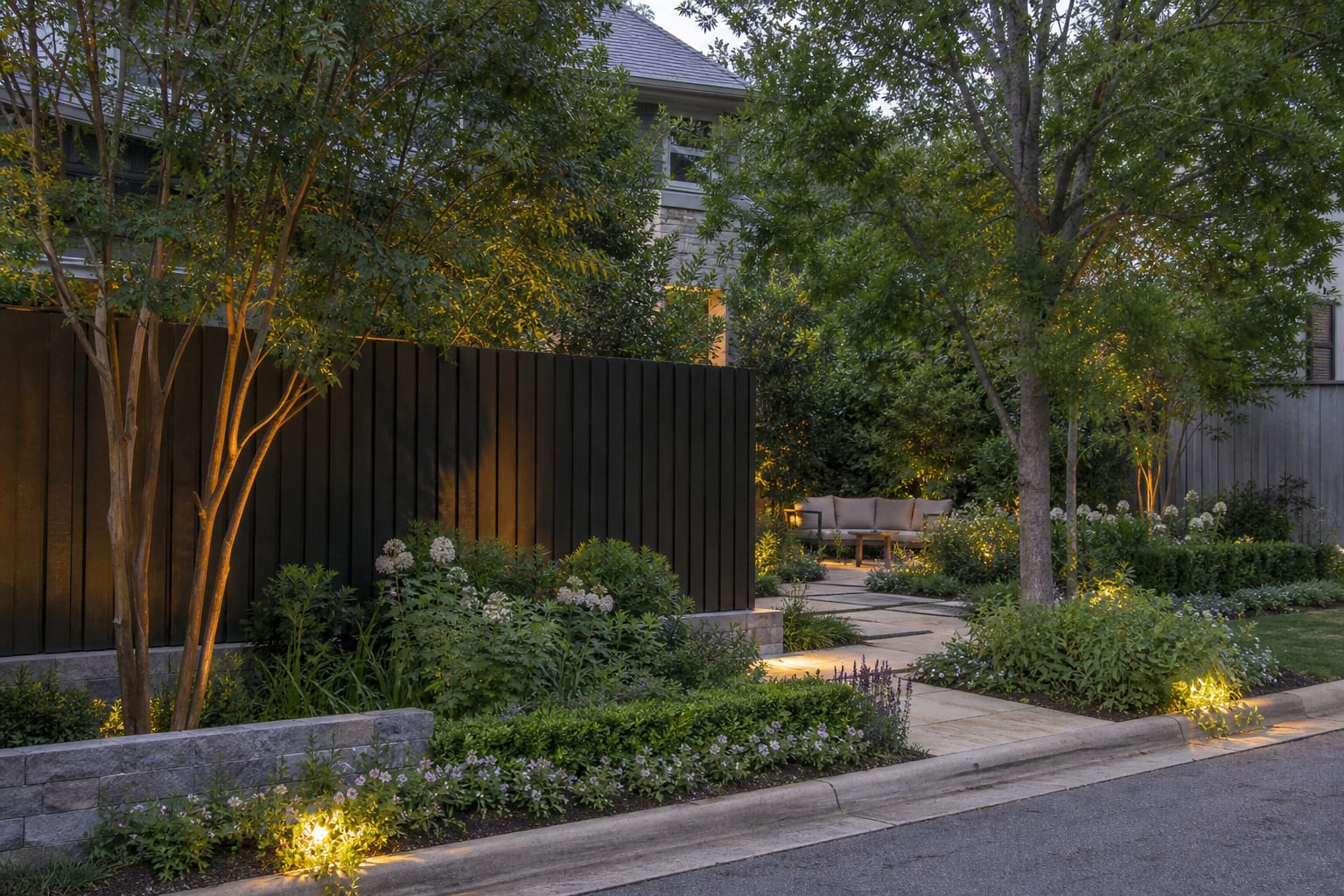
How do I reduce noise in my garden?
Reduce noise by placing a solid barrier between the source and your seating area, then layering in dense planting, textured ground, and a smarter layout. A true acoustic fence should be continuous, heavy, and tall enough to break the direct line from the noise source to your ears — check this at seated ear height, roughly 42"–48" above the ground.
A 6'–7' solid timber, composite, masonry, or rendered block screen usually beats a taller open trellis because gaps leak sound. Keep joints tight, skip decorative cutouts at ear level, and return the screen 3'–4' around the side if noise slips past the end. Add planting only after the barrier has mass — layered shrubs, grasses, and vines soften reflected sound and look better than bare fencing; borrow the structure of living fence and pleached hedge ideas, but keep the hard blocking plane behind or within the greenery.
Test this on your own photo with ReDesign before you commit — keep the house edge, horizon line, hardscape, planting beds, and main path visible so the preview solves the space you actually have.
Which barrier decision matters before you buy plants?
Most noisy gardens need at least two of four moves: blocking, absorbing, masking, or repositioning seating. Picking the wrong single move is why expensive landscapes still feel loud.
| Noise problem | Best first move | Spec to copy |
|---|---|---|
| Road or alley noise | Solid fence or masonry screen | 6'–7' high, tight boards or sealed panels |
| Neighbor conversations | Localized patio screen | 5'–6' high beside the seating zone |
| HVAC or pool equipment | Equipment enclosure plus planting | Solid on listener side, vented for airflow |
| Echo from paving walls | Softer surfaces and planting | 30"–48" deep beds along reflective edges |
A barrier doesn't have to sit on the boundary. If the loudest moment happens at the dining table, a screen 24"–36" behind the bench can protect better than a fence 20' away. Keep 36" clear behind dining chairs, 30" clear on secondary paths, and avoid building a wall that makes the quiet corner unusable.
Materials change the mood as much as the sound: timber feels warmer near planting, masonry gives the most visual weight, and matte composite reads better than shiny finishes. If you add climbers on a fence, leave an air gap and pick plants you can prune — the practical rules behind climbing plants on fences matter more when the fence is also doing acoustic work.
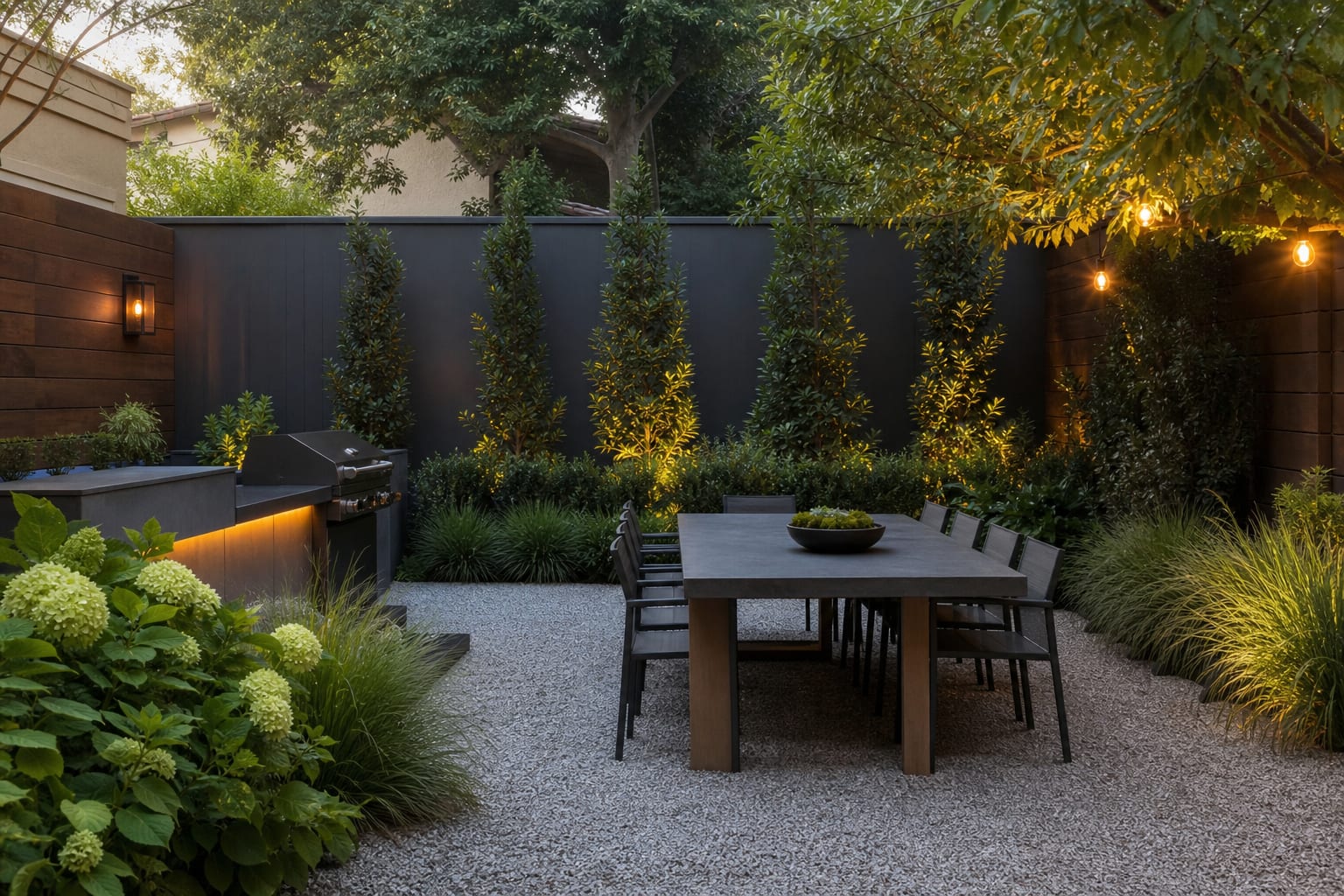
Five sound barrier garden design moves that actually help
- Build a solid screen before a soft one. Tight horizontal boards, tongue-and-groove panels, masonry, or dense composite work; slats wider than 1/4" behave like decoration, not a barrier.
- Add a planted buffer with real depth. Taller evergreens at the back, mid-height grasses or flowering shrubs in the middle, and dense ground cover planting at the front so no bare soil shows.
- Break up hard paving where sound feels sharp. A gravel strip, planted joint, timber deck inset, or outdoor rug reduces harshness in courtyards walled on two or three sides.
- Use a berm only when width allows. An 18"–36" planted mound can screen wheels and low road noise but looks forced in a narrow side yard unless it blends into surrounding beds.
- Place water near the listener, not the noise. A bubbling bowl, rill, or wall fountain works best 3'–6' from the chair, since the ear favors a nearby pleasant sound over distant traffic.
Common sound barrier garden mistakes
- Relying on plants alone. Leaves add texture and comfort, but a thin hedge with open stems won't stop a direct sound path — add a solid plane behind the planting or accept it's visual screening only.
- Choosing a decorative open fence. Lattice and widely spaced battens are attractive but weak for sound; use them above a solid lower section or in quieter parts of the garden.
- Forgetting the reflected side. A solid barrier can bounce sound back if the opposite surface is also hard — add planting, timber, gravel, or upholstered furniture on the listening side.
- Boxing in equipment without airflow. HVAC units and pool pumps need manufacturer clearance; screen solid on the listener side and leave vented, open access where the machine needs intake.
- Letting the barrier dominate the view. Soften a necessary 7' wall with 30"–48" of planting, staggered shrubs, wall-mounted planters, or a canopy tree so the garden reads as a room, not a defensive edge.
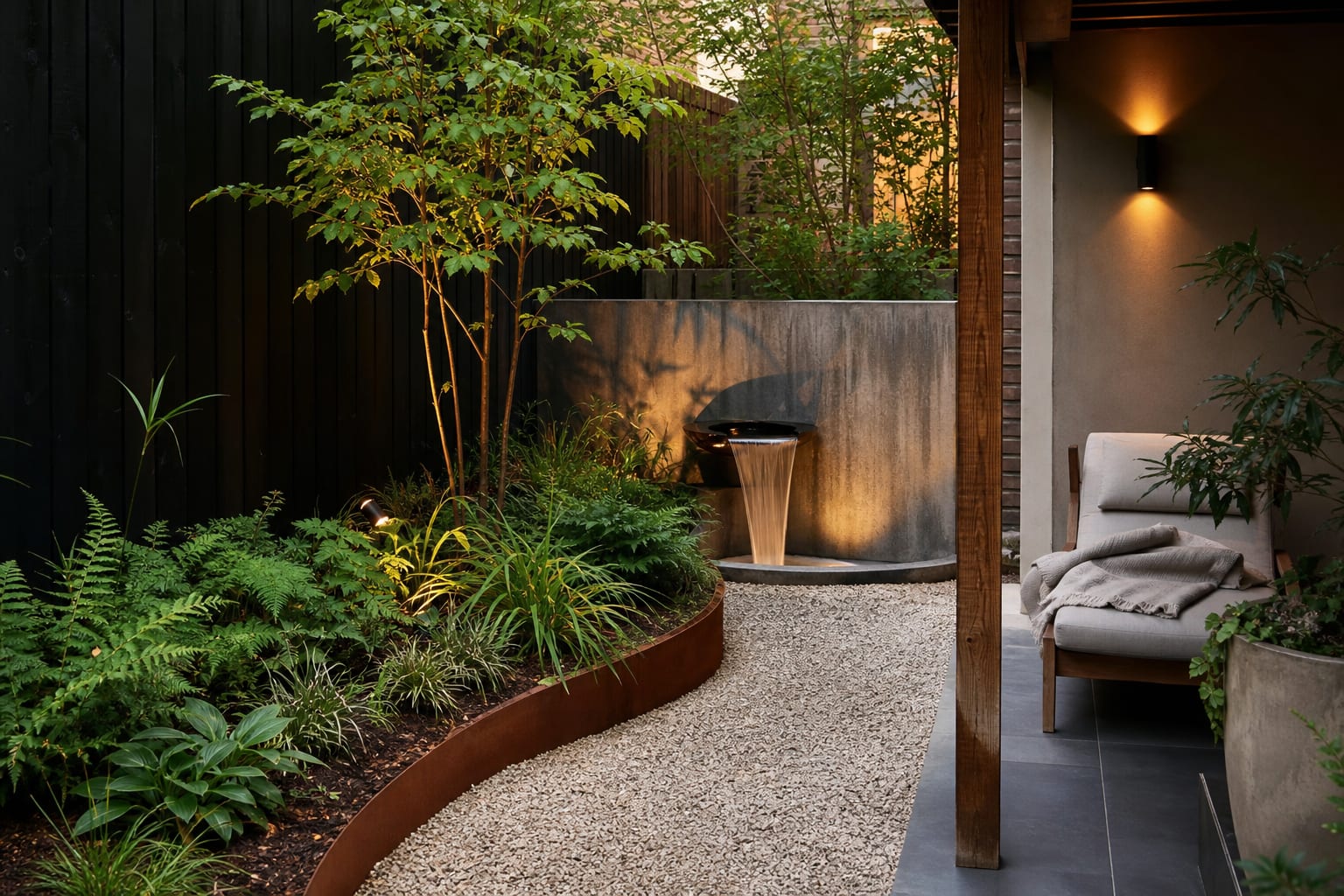
Use AI design to preview your noise reducing garden before you build
A sound barrier is expensive enough to test before ordering posts, panels, stone, or mature shrubs. Take one straight photo from the chair or dining spot where the noise bothers you, keeping the boundary, ground plane, and furniture in frame. Then preview a few versions: a 6' timber screen with layered evergreens, a masonry wall with grasses, a lower fence plus berm, and a planted equipment enclosure.
The preview won't calculate acoustics, but it will show whether the fix looks too heavy, steals usable space, or leaves the seating exposed. Test barrier height, planting depth, and water feature position in the same view so you're judging the whole outdoor room. The best version should make the noisy edge feel less visually active before anyone sits down.
Frequently Asked Questions
Can plants really block sound?
Plants alone block 2-5 dB at best — meaningful but modest. Layered plantings combined with a solid wall, berm, or fence cut 8-12 dB, which crosses the perceptible-quietness threshold for most listeners.
What plants block noise best?
Dense-leaved evergreens — arborvitae, holly, hicks yew, and Eastern red cedar — combined with mid-height broadleaf shrubs like viburnum and rhododendron work best. Deciduous-only plantings lose about half their performance in winter.
How wide does a sound-barrier planting need to be?
Plan for 6-10ft minimum from outer edge to inner edge, planted in at least two staggered rows. Thinner strips look like a hedge but won't deliver the dB reduction.
Do water features actually reduce traffic noise?
Yes. A flowing fountain or recirculating wall fountain masks high-frequency tire and engine noise by 4-8 dB in the seating zone, even though it doesn't reduce the absolute sound level at the property line.
How tall should a sound-barrier wall or fence be?
At least 6ft to break line of sight to the noise source. Eight feet performs meaningfully better but usually requires zoning review — choose a solid, gap-free material either way.
> Try this: Ready to see this on your own outdoor space? Open ReDesign and run the preview before you buy materials, plant, drill, or move furniture.
Three transformations to try
1. Sound barrier with berm and arborvitae