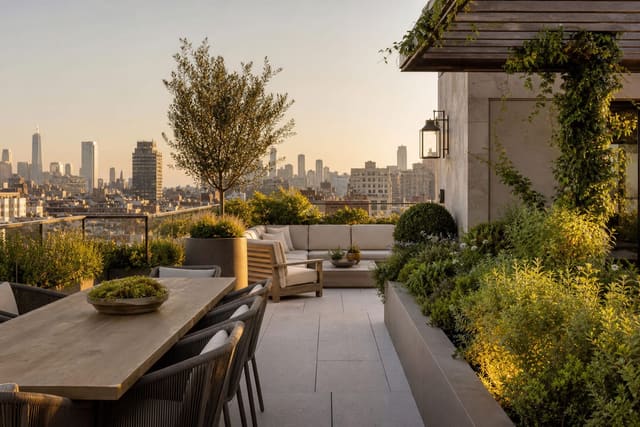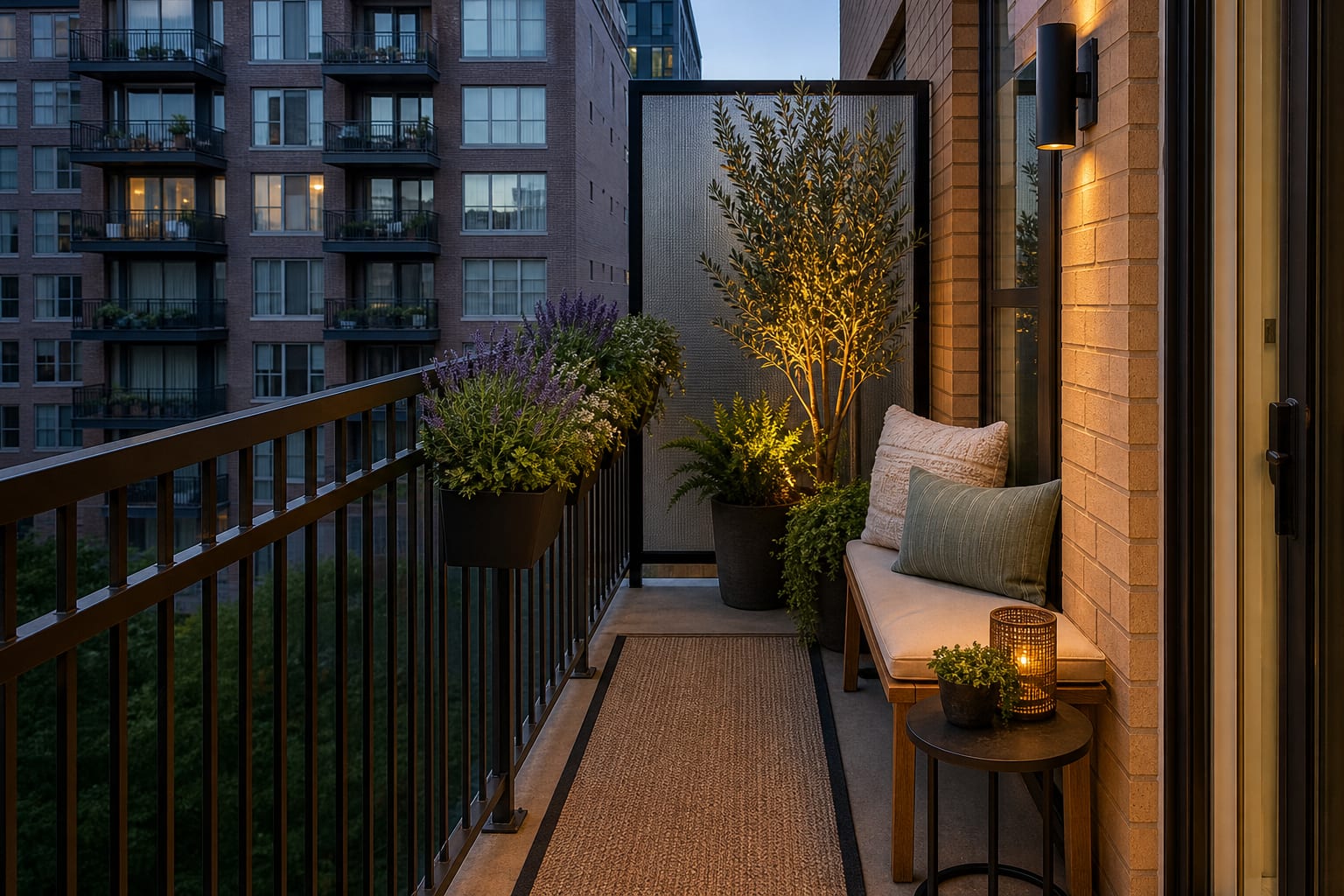
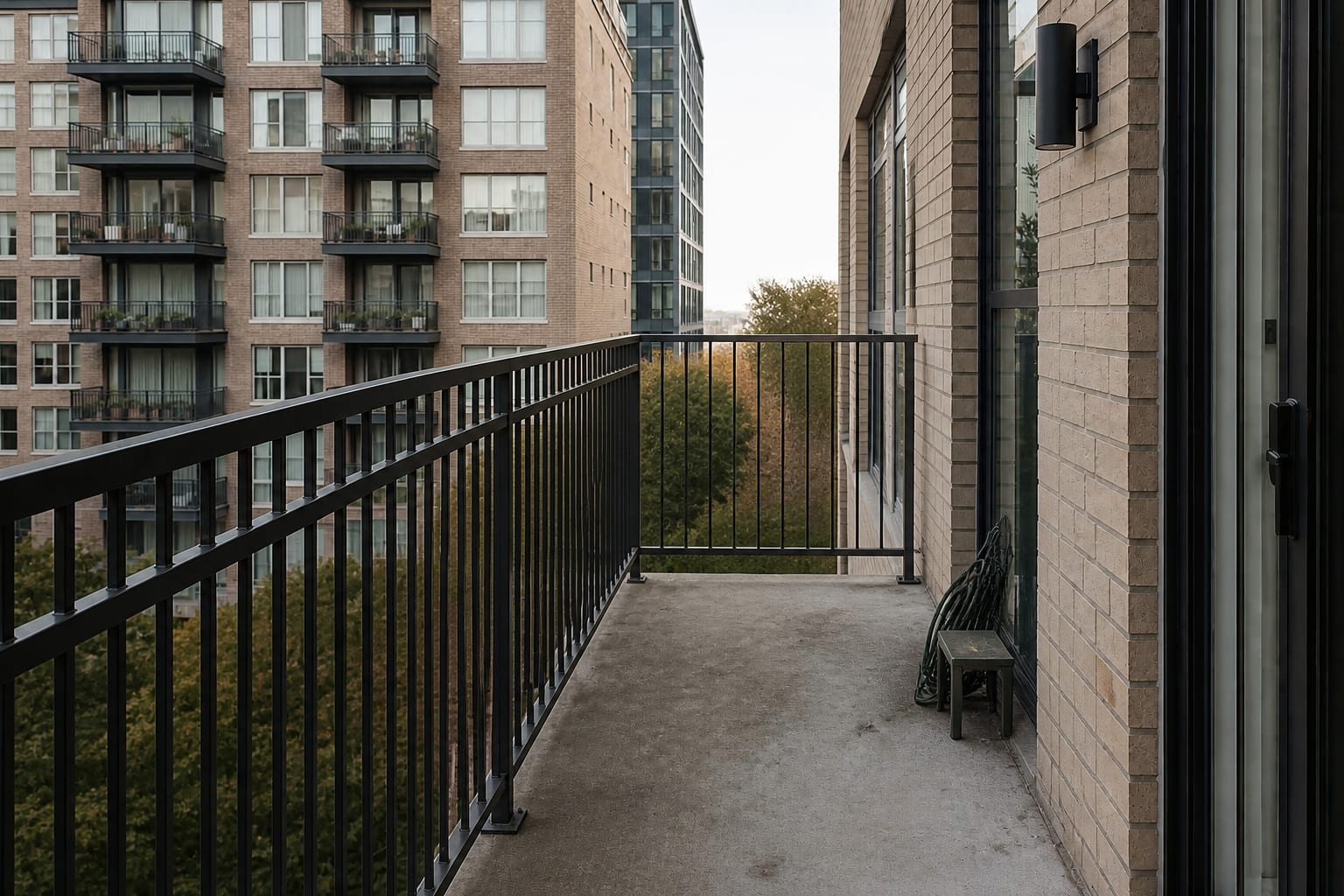
Balcony design ideas for small outdoor spaces start with scaling furniture to actual depth (a bistro set for 5ft, a compact loveseat for 7ft), adding a 4in-deep railing planter across the full width, and defining overhead space with a curtain rod or shade sail. A balcony should do one job beautifully rather than mimic a full backyard.
What makes a small balcony feel like an outdoor room?
A small balcony feels like a real room when seating, flooring, privacy, planting, and lighting all support one clear use within the actual depth of the slab. Most apartment balconies run 3 to 6 feet deep, so scale isn't a styling detail, it's the whole project. A 42-inch-deep balcony can't fit a deep lounge chair, but a folding bistro chair, 16-inch bench, or wall-hugging loveseat keeps the door usable.
- Protect a 30 to 36 inch route through the balcony before choosing furniture or planting.
- Repeat one visual cue three times (a metal finish, planter shape, or trim color) to tie the scene together.
- Solve the layout problem first; let accessories support the plan instead of covering for weak planning.
Start with the door swing and rail height. Many rails sit 36 to 42 inches high, so low furniture can stay private from your seat while disappearing from the street. If you face another building, angle the seat 15 to 30 degrees off the direct sightline instead of screening the whole rail; it usually feels more open.
| Balcony choice | Best when | Watch out for |
|---|---|---|
| Folding bistro set | Under 5 feet deep, used for coffee or a laptop | Tables under 24 inches wide barely hold a mug and a book |
| Built-in-style bench | Rail side or end wall can hold a long seat without blocking the door | Cushions need outdoor fabric and dry storage |
| One lounge chair | View is good, balcony is at least 5 feet deep | Add a 12 to 16 inch side table or it's impractical |
If borrowing ideas from larger patios, edit hard. The same zoning logic used in patio design ideas for compact layouts applies, but balcony furniture needs to be thinner, lighter, and foldable.
Test this on your own photo with ReDesign before committing to a direction; keep the house edge, horizon line, hardscape, planting beds, and main path visible so the preview matches the space you have.
Five balcony design ideas that use every square foot
- One excellent seat beats a crowded set. A 26 to 30 inch lounge chair with a 14 inch side table feels more luxurious than two stiff chairs and an unusable table on a 4-foot-deep balcony.
- Turn the railing into a planting strip. Rail boxes 6 to 10 inches deep keep floor space open while herbs, trailing flowers, or grasses sit where they matter visually.
- Use a narrow rug to pull the eye lengthwise. A 2x6 or 3x8 foot runner makes a long balcony feel deliberate; leave a few inches of exposed floor at the edges.
- Add privacy only where the view is uncomfortable. A single 3 to 4 foot panel behind the seat is usually enough; wrapping the whole rail blocks breeze, light, and any borrowed view.
- Plan dining around chair movement. See outdoor dining area ideas for narrow spaces and keep 30 inches from table edge to rail wherever a chair pulls back.
- Layer plants at three heights. Combine rail planters, one 18 to 22 inch floor planter, and a hanging basket or trellis so even basic nursery plants read as a composition.
Pick two materials that already match the building exterior: black metal with concrete, warm wood with brick, woven resin with stucco, or terracotta with painted siding. Mixing too many finishes makes the balcony look like a clearance aisle.
What mistakes ruin a small balcony?
- Indoor-looking furniture. Balcony moisture, sun, and pollen aren't gentle; use powder-coated metal, teak, acacia, resin wicker, or polypropylene with removable cushion covers.
- Ignoring weight and drainage. Several large concrete planters can violate building load rules; use lightweight fiberglass or resin planters with saucers underneath.
- Bright white lighting. Warm light near 2700K flatters concrete and metal after dark; use one outdoor-rated lamp, a clean line of string lights, or a rechargeable lantern instead of lighting the whole rail.
- Treating plants as decoration only. Full-sun balconies suit rosemary, lavender, sedum, dwarf olive, lantana, or ornamental grasses; shade balconies do better with ferns, hosta, ivy, heuchera, or caladium. Above the third or fourth floor, skip top-heavy plants and use broader, wind-stable pots.
- Forgetting the indoor sightline. The balcony sits in view of your sofa or kitchen table, so it should look composed even unused. Borrow rhythm from backyard landscaping ideas and repeat one plant shape rather than collecting random pots.
How can I preview balcony changes before buying?
Balconies are hard to design from product photos alone since no listing shows your exact railing, brick color, door swing, or shade pattern. Upload a straight-on photo to Re-Design and test the big calls: bistro set versus bench, black metal versus warm wood, rail planters versus floor planters, open railing versus partial screen.
Run one version with the simplest furniture that fits your measurements, one with more planting than feels necessary, and one with the privacy screen you're considering. If a screen darkens the apartment from inside, swap in plants or a lower panel. Catch proportion mistakes as pixels, not after a box is wedged sideways in the hallway.
For renters, favor removable upgrades: clip-on planters, freestanding screens, outdoor rugs, rechargeable lights, folding tables, cushion swaps. For owners, use the preview to decide if a permanent floor tile system, custom bench, or built-in planter is worth the investment.
Frequently Asked Questions
What furniture fits on a small balcony?
A 24in x 24in bistro table with two sling chairs fits a 5ft-deep x 6ft-wide balcony. On a 4ft-deep balcony, use a fold-down wall-mounted table instead so the surface stows away when not in use.
How do I add privacy to an apartment balcony?
Hang a bamboo reed screen or cedar slatted panel on one or both side walls using hook-and-eye clips on the top rail. This adds visual privacy without drilling; confirm railing attachments are allowed under your lease first.
What plants grow best on a balcony?
Wind-tolerant plants like lavender, ornamental grasses, agapanthus, and calibrachoa perform best. Railing planters with a built-in water reservoir work well since balconies dry out faster than ground-level containers due to wind and sun exposure.
How do I protect a balcony floor?
Interlocking wood deck tiles, teak or composite, laid over the existing surface protect the waterproof membrane and add warmth underfoot. Confirm weight loading with building management before installing any tile system.
Can I put a BBQ on an apartment balcony?
Most leases prohibit propane and charcoal grills on balconies, so check your lease first. An electric infrared grill, such as a Kenyon or Weber Q electric model, is typically permitted since it produces no smoke or open flame.
> Try this: Ready to see this on your own outdoor space? Open ReDesign and run the preview before you buy materials, plant, drill, or move furniture.
Three transformations to try
1. Bistro set with railing planter on small balcony 2. Deck tile and loveseat on mid-size balcony 3. Shade sail and privacy screen on urban balcony