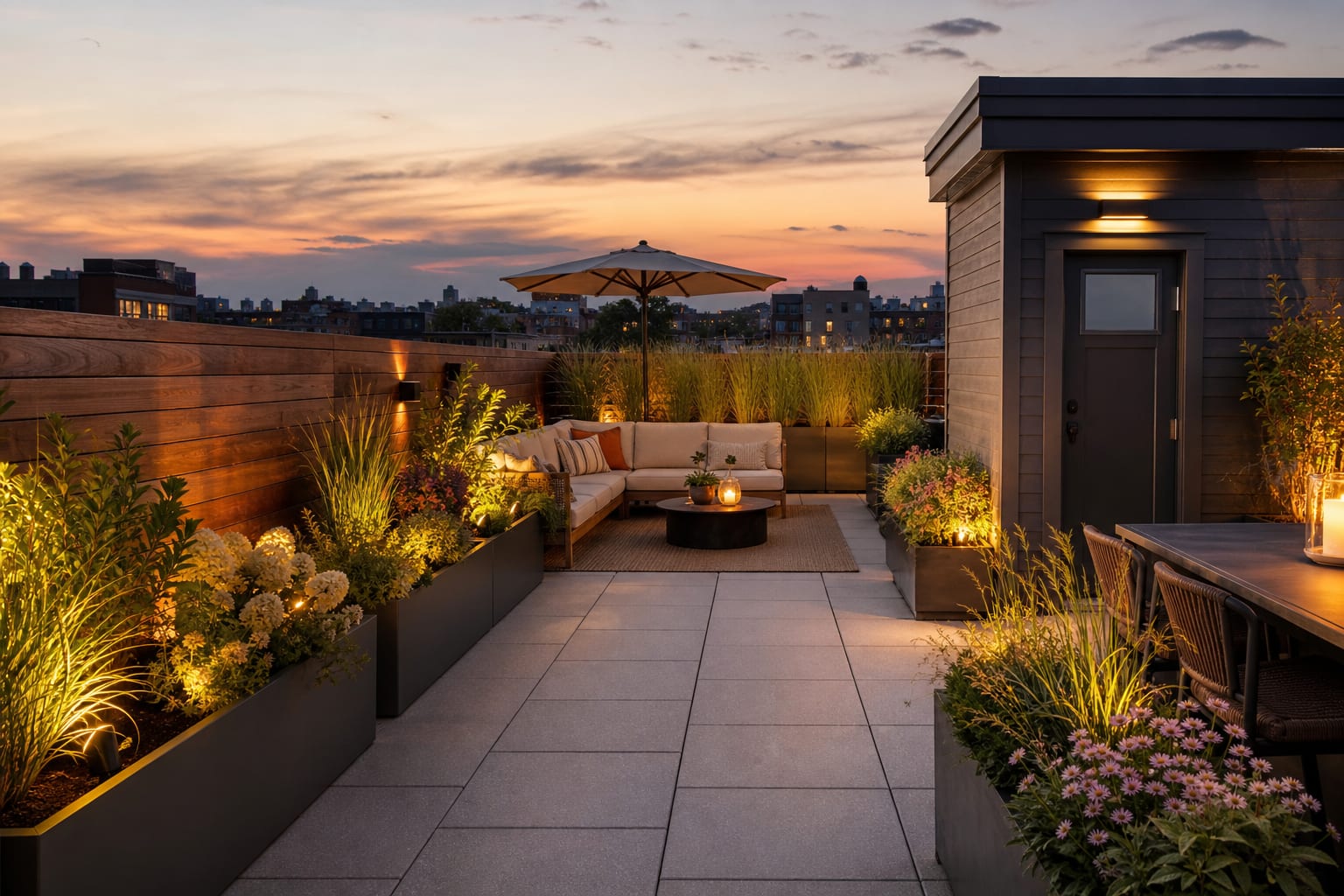
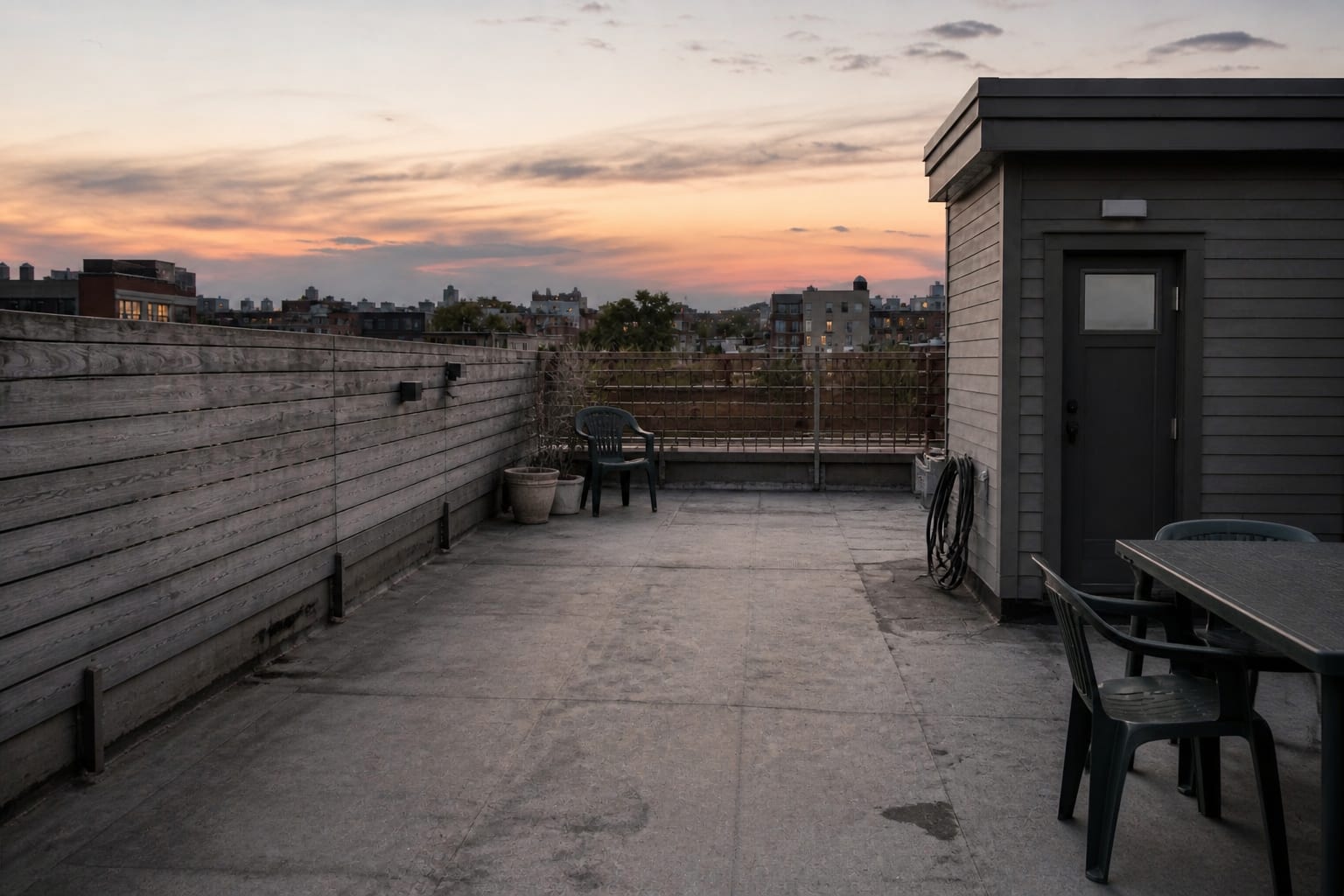
Rooftop terrace ideas should start with the roof's structural limits, not furniture. Confirm the slab's live-load capacity (typically 40-60 psf for residential roofs), install flooring on pedestals with a 2-3 inch drainage gap, choose wind-stable furniture, add low warm lighting, and use shallow self-watering planters to soften edges without adding weight or blocking drains.
What makes a rooftop terrace feel like a room instead of a roof?
A rooftop feels like a room when the floor, edges, furniture, and lighting create one clear activity that feels sheltered from the city. Three moves make that happen:
- Protect a 30-36 inch route through the space before choosing furniture or planting.
- Repeat one finish - a metal tone, planter shape, or paving joint - three times to unify the scene.
- Solve the core layout problem with the first permanent upgrade; accessories should support the plan, not compensate for weak planning.
Choose a surface that suits the roof assembly and drainage pattern: composite deck tiles, porcelain pavers on pedestals, or sealed decking approved for roof use. Keep drains visible and skip loose gravel, which can migrate into scuppers. If the membrane is exposed, use a system rated for roof decks so furniture legs don't grind into it.
A code-compliant guardrail keeps people safe but doesn't automatically make a terrace feel enclosed. Add low planters inside a glass rail for a sense of shelter, or add plant height near a solid parapet so the space doesn't feel like a service well.
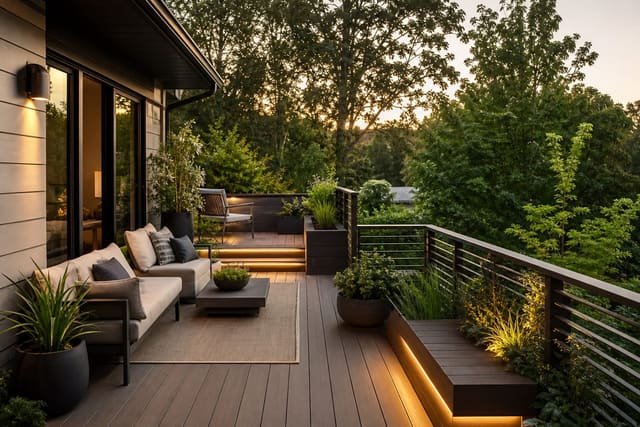
Light low and warm: 2700K shielded fixtures aimed at surfaces, not faces. Step lights, rechargeable table lamps, and narrow uplights in planters beat a bright string-light canopy fighting the skyline.
How should you zone a rooftop terrace?
The core decision is dining, lounging, gardening, or a modest mix of two. Roof decks fail when planned as if there's unlimited ground around them.
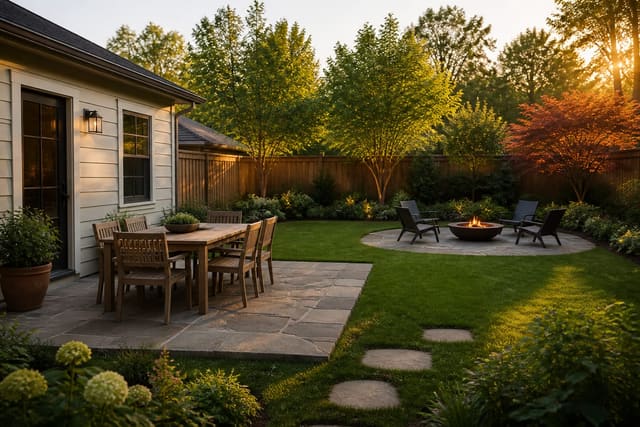
- Dining: a 36x72 inch table needs roughly a 10x12 ft zone once chairs pull back. Keep a 36 inch path from the door to the table clear.
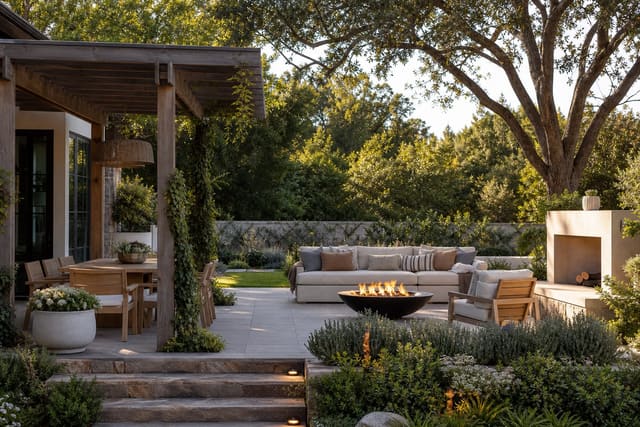
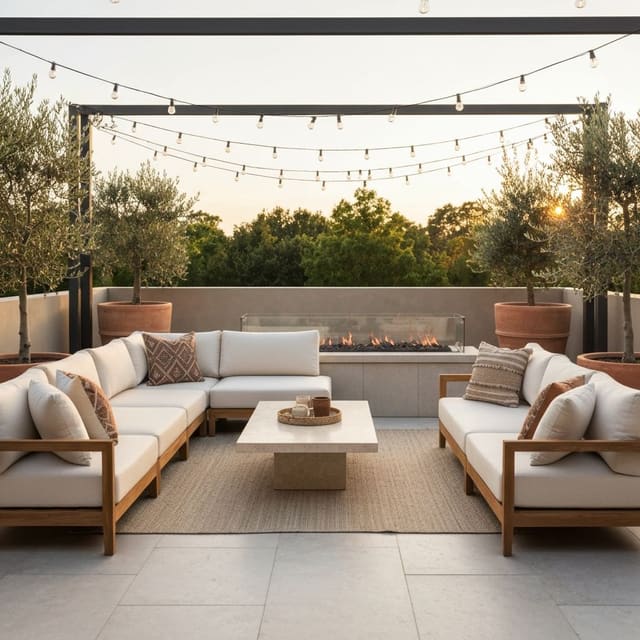
- Lounging: a compact sofa, two lounge chairs, and a coffee table often fit an 11x13 ft footprint better than one oversized sectional. The same discipline used in patio design ideas for compact layouts applies: place the biggest seat first, then make every other piece justify its space.
- Gardening: use lightweight fiberglass, resin, or fiberstone containers with soil mixes designed for containers, not dense garden soil. Keep heavy wet planters clear of drain access and check wind exposure before placing anything tall.
| Rooftop use | Best layout move | Concrete check |
|---|---|---|
| Dining | Put the table closest to the kitchen or stair door. | Keep 30-36 inches behind occupied chairs. |
| Lounging | Face the best view and protect the back of the seating. | Use a rug zone around 8x10 ft or larger if the roof allows. |
| Gardening | Line planters along weak views or blank walls. | Choose containers at least 18 inches deep for shrubs and grasses. |
| Entertaining | Split standing and sitting areas instead of overfurnishing. | Preserve one 36 inch route from entry to the far edge. |
Test this on your own photo with ReDesign before choosing a final direction; keep the house edge, horizon line, hardscape, planting beds, and main path visible so the preview solves the space you actually have.
Seven rooftop terrace ideas worth the square footage
- Build one wind-aware lounge instead of scattering small chairs. A low outdoor sofa with two heavier lounge chairs resists gusts better than folding seats; keep the coffee table within 16-18 inches of the sofa.
- Use long planters to hide the bad view. A run of 24 inch deep planters with feather reed grass, boxwood, rosemary, or dwarf pine screens a service wall while keeping the skyline open where it matters.
- Add shade that covers people, not just furniture. A pergola, tensioned canopy, or large cantilever umbrella should extend 2-3 feet beyond the table or sofa edge where sun hits hardest.
- Treat outdoor dining like a real room. Borrow ideas from outdoor dining area ideas for narrow spaces: stackable chairs, a rectangular table, and a serving ledge use tight roof corners better than a round table.
- Choose flooring that drains cleanly. Pedestal pavers, modular deck tiles, or removable outdoor rugs define zones, but leave inspection points accessible and avoid rugs large enough to trap moisture under planters.
- Layer planting by height. Low herbs near seating, 24-36 inch shrubs along the rail, and one or two taller container trees (where weight allows) look more settled than identical pots dotted around.
- Light the path from door to seat. Step lights on level changes, table lamps for faces, and secondary overhead lighting keep the roof from looking like a café set once the novelty fades.
Common rooftop terrace mistakes to avoid
- Shopping before checking roof rules. Building policies, structural limits, fire access, railing height, and membrane warranties all affect what belongs up there.
- Ignoring wind because one afternoon was calm. Cushions need ties or storage, umbrellas need serious bases, and tall screens need approved attachment.
- Blocking drainage with the prettiest design element. Planters, rugs, deck tiles, and benches should never hide the spots that need inspection after rain.
- Copying backyard planting too literally. Use drought-tolerant herbs, ornamental grasses, compact evergreens, sedum, or lavender before attempting thirsty plants that want deep ground and shelter.
- Forgetting the view from inside. If a bedroom or stair landing looks out mostly on railing and furniture backs, repeat one strong plant shape along the edge, as in backyard landscaping ideas.
Should you preview a rooftop terrace with AI before you build it?
Yes. Rooftop mistakes are usually about proportion: a sofa that reads too bulky, a shade frame that darkens the door, or planters that wall off the view. Test a photo of the roof before ordering heavy items.
Run one version with only essentials - safe flooring, one seating zone, a clear path, simple planters - then test a second version with more shade and a third with stronger edge planting. If a preview looks crowded, remove something; rooftop space shrinks fast once people, cushions, and wind-stable bases arrive.
A preview doesn't replace structural advice, waterproofing rules, or building approval. It's a fast way to confirm the design has visual logic before the practical checks begin: make the roof look like a believable outdoor room first, then confirm it can support the plan.
Frequently Asked Questions
What is the load limit for a rooftop terrace?
Most residential roofs are designed for 20-40 psf dead load plus a live load rating typically between 40-60 psf for assembly occupancy. A structural engineer must confirm capacity before placing anything heavier than lightweight furniture.
What flooring is best for a rooftop terrace?
2cm porcelain pavers or Ipe decking on adjustable pedestal supports, set 2-3 inches above the waterproof membrane, are the top choices. Both allow drainage underneath and let the membrane be inspected without removing the floor.
How do I create privacy on a rooftop terrace?
Lightweight slatted cedar or powder-coated steel privacy screens in 18x72 inch panels, attached to post sockets in the parapet wall, add privacy without significant structural load.
What plants work on a rooftop terrace?
Low-weight plants in self-watering containers work best: ornamental grasses like Carex or Festuca, lavender, compact Phormium, and annual color. Avoid large shrubs or trees since a 30-gallon container of wet soil adds 200+ lbs of point load.
Do I need a permit for a rooftop terrace?
Yes. Adding a permanent waterproof membrane, permanent flooring, railings, or utilities constitutes a structural change requiring a building permit and structural engineering review in virtually all jurisdictions.
> Try this: Ready to see this on your own outdoor space? Open ReDesign and run the preview before you buy materials, plant, drill, or move furniture.
Three transformations to try
1. Porcelain paver terrace on pedestal with privacy screen 2. Ipe deck rooftop with container garden row 3. Rooftop lounge with shade sail and city view