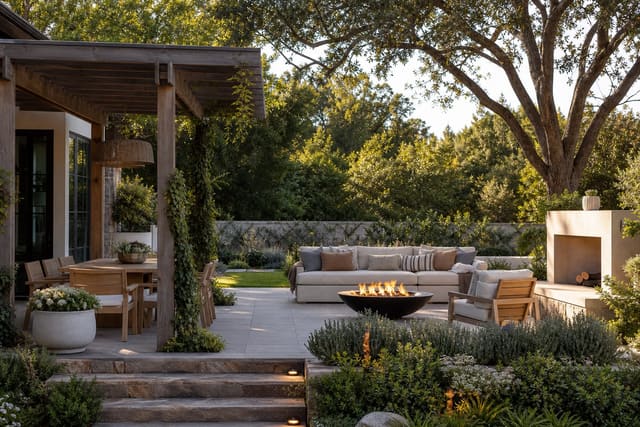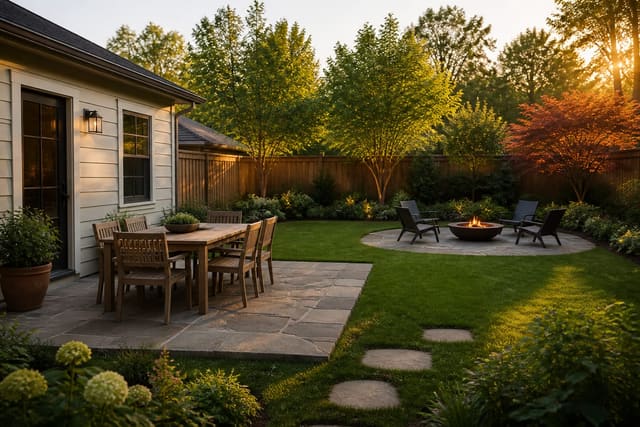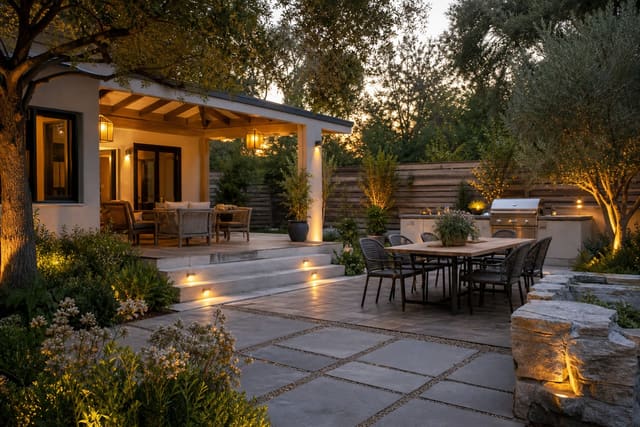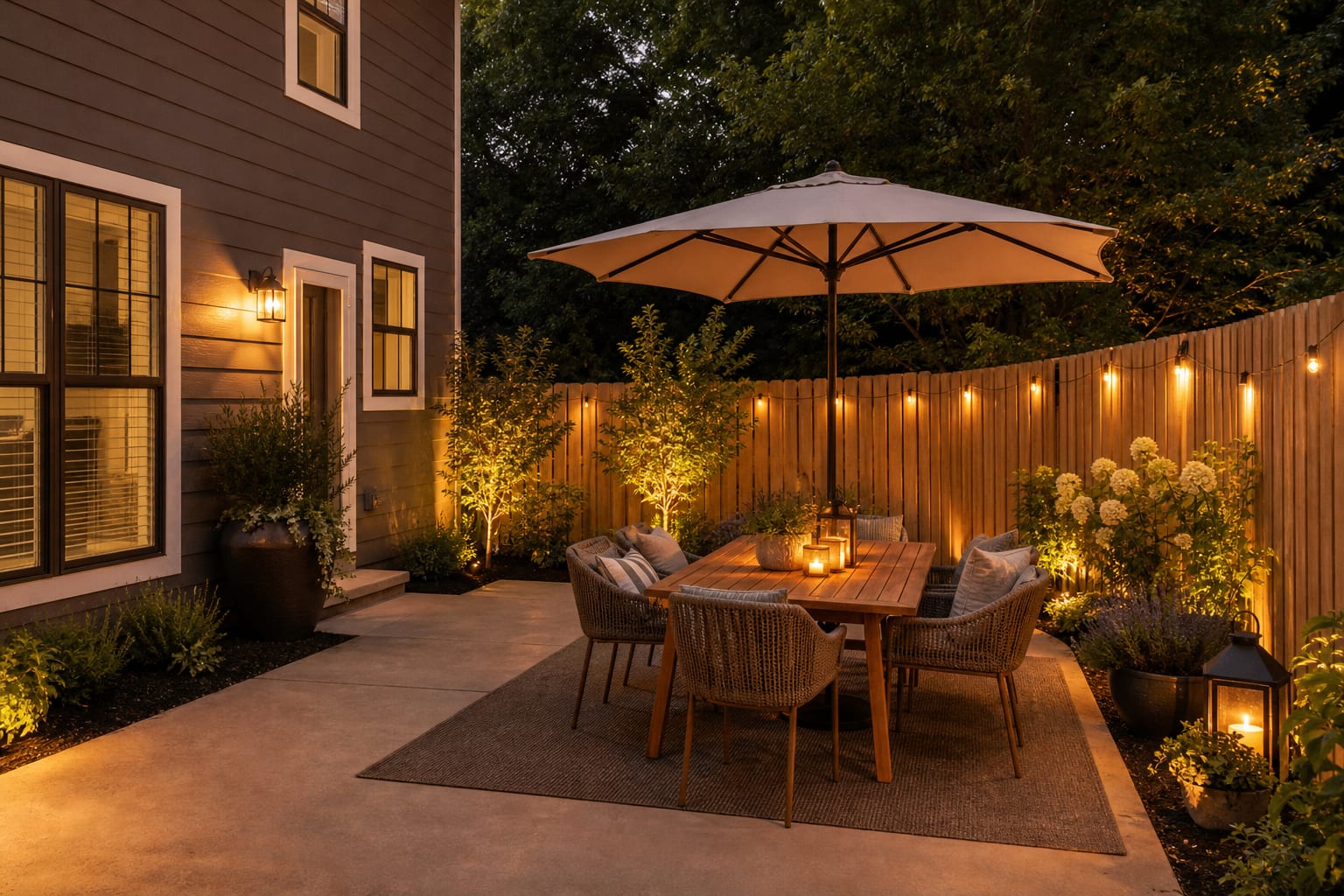
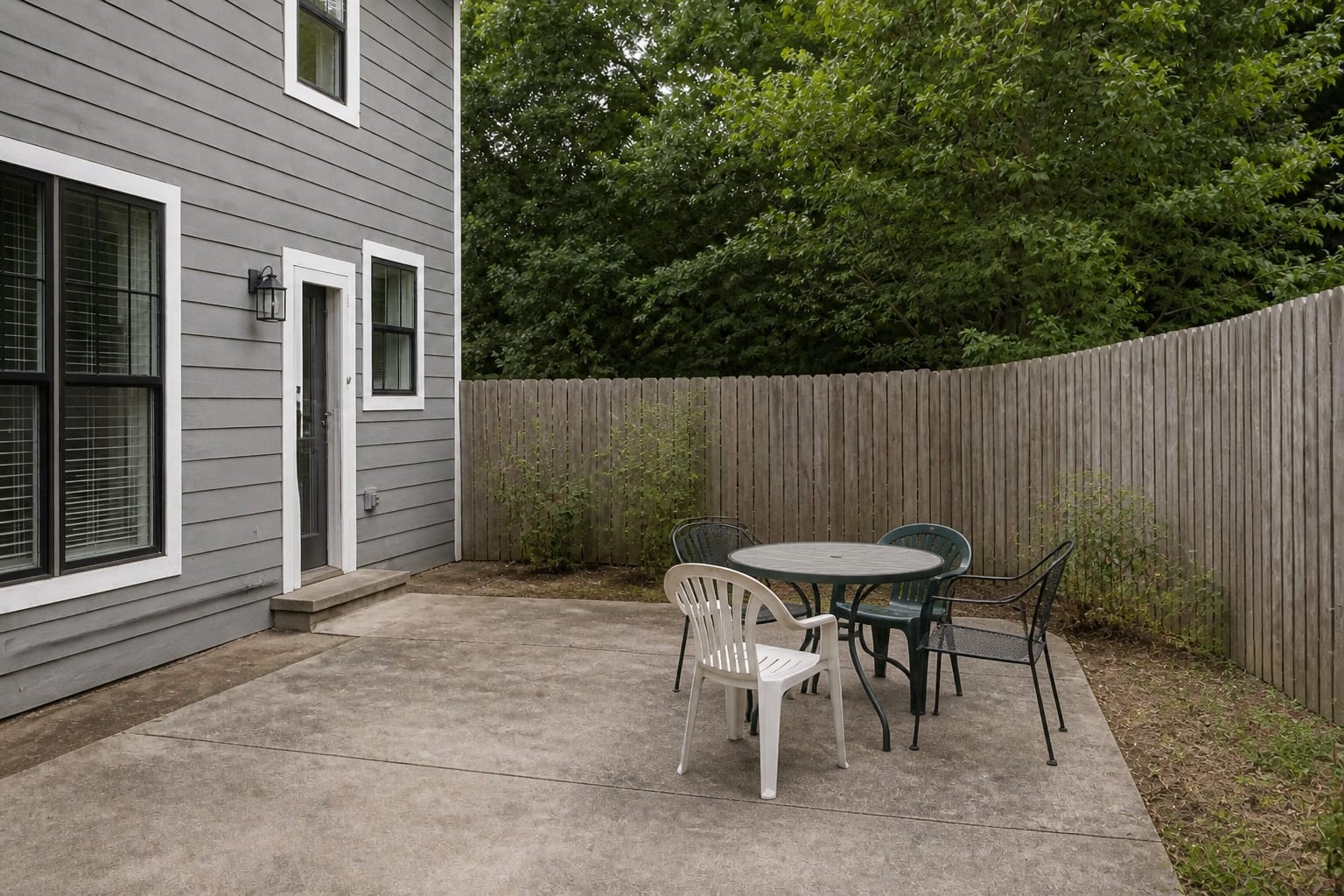
An outdoor dining area works when it sits on a 12 by 12ft minimum footprint, chairs slide back 24in without hitting the edge, a cover sized 2ft larger than the table provides shade, and the floor is paver, stone, or wood instead of grass. The table-and-four-chairs package is rarely the interesting answer; shade, circulation, and lighting decide whether the space gets used.
What makes a patio dining area feel like a real outdoor room?
A patio dining area feels finished when the table, shade, floor, lighting, and planting read as one composition. The test: can two people carry food out, pull out chairs, and linger after dark without bumping planters or squinting into a bare bulb?
Think in zones, not sets. A six-person rectangular table needs roughly 10 by 12ft once chairs and circulation are counted. A round 48in table suits a tighter garden dining spot since chair movement radiates outward but still needs a clear ring around it. For layout beyond the table, see these patio design ideas for real outdoor layouts.
| Decision | Better when you choose it | Spec to copy |
|---|---|---|
| Rectangular table | Family-style meals or a long wall | 24in of table width per diner |
| Round table | Square, small, or garden-wrapped patio | 42 to 54in for four to six people |
| Built-in bench | One side backs to a wall or planter | Seat height 17 to 19in |
| Umbrella | Flexible shade in a rental | Canopy at least 2ft wider than the table |
An 8 by 10 outdoor rug under a four- or six-person table looks intentional; a 5 by 7 traps chair legs at the edge. If the floor is already stone, brick, or porcelain paver, skip the rug entirely.
Test this on your own photo with ReDesign before choosing a direction — keep the house edge, horizon line, hardscape, planting beds, and main path visible so the preview solves the space you actually have.
Five outdoor dining area ideas that make meals feel planned
- Put the table where the house supports the meal. A serving route under 20 feet, at least 36in wide, gets used more than a prettier spot across the yard.
- Build shade to match your climate. Cantilever umbrellas struggle in wind; a pergola with slatted rafters or a fixed sail holds up better. Leave 7ft of head clearance below any hanging shade.
- Use planting as the room's wall. Tall planters, espaliered shrubs, or a narrow hedge shield the table from a fence or neighbor view; 18- to 24-inch planters hold enough soil to survive summer heat.
- Mix one dining function with one lounge function, not five. Separate zones with a planter, rug, or 30in walking lane; see outdoor living room ideas for layered seating if the table shouldn't do every job.
- Make the tabletop feel permanent even with movable furniture. A weatherproof tray, two lanterns, and a low herb pot under 10in tall keep sightlines open across the table.
Let one material dominate — warm wood, pale stone, black metal, or woven texture — and repeat it twice. A teak table with teak planter boxes feels deliberate; black aluminum furniture with black sconces does the same in a modern yard.
Common outdoor dining mistakes that make a patio feel temporary
- Buying the maximum chair count. Eight chairs sound useful until nobody can pull them out; under 12ft of width, six generous seats beat eight cramped ones.
- Ignoring the sun angle. Sit outside at your actual dinner hour and mark where shade falls before drilling a pergola bracket or ordering a 9ft umbrella.
- Choosing indoor-looking furniture with outdoor maintenance needs. Painted wood peels fast when exposed; powder-coated aluminum, resin wicker on aluminum frames, teak, and porcelain tops handle wet-dry cycles better.
- Treating small patios like they need tiny furniture. More legs and gaps read as clutter; one 30 by 72in table with a bench can beat a bistro table plus stools plus a side cart. More space-saving moves are in Patio Design Ideas.
- Leaving lighting until the end. One harsh security light kills the mood; put light where the meal happens — string lights 8 to 10ft up, a shaded console lamp, or downward path lights.
Use AI design to preview your patio dining area before you commit
AI design helps most with real constraints: a narrow slab, a blank fence, an exposed western corner, or a door that forces the table into one spot. Upload a photo and test two or three versions that change only the big decisions — table shape, shade type, planter placement, lighting.
Use the preview to answer practical questions, not to chase a random style. Does a rectangular table block the grill path? Does a round table soften a garden dining area? Does a pergola overpower the house? Photograph the patio from standing height with the door, fence line, and full footprint visible, clearing loose clutter but leaving steps, hose bibs, and trees in frame.
Frequently Asked Questions
How big a patio do I need for outdoor dining for six?
A 12 by 12ft minimum patio holds a 36 by 72in dining table with 24in chair pull-back on every side; below that footprint, chairs catch the edge or land on grass.
What shade structure works over a dining table?
A 10 by 12ft pergola or louvered cover sized 2ft larger than the table on every side keeps midday sun off plates; cantilever umbrellas work for movable shade on smaller patios.
Can outdoor dining work on grass?
Only short term. Chair legs sink, the table never sits level, and one rainstorm makes the lawn unusable, so lay pavers, stone, or a deck under any permanent dining setup.
What table material lasts outdoors?
Teak and powder-coated aluminum last 15-plus years uncovered; stained eucalyptus and concrete need annual sealing; live-edge wood and untreated steel don't survive outdoor seasons without a cover.
How do I light an outdoor dining area?
Hang a single fixture or string-light bundle 30 to 36in above the table center for ambient light, add 2700K perimeter sconces for face lighting, and use rafter downlights to avoid shadows on plates.
> Try this: Ready to see this on your own space? Open ReDesign and run the preview.
Three transformations to try 1. Pergola-covered teak dining table for six 2. String-lit patio with bistro table seating 3. Sail-shaded concrete dining slab