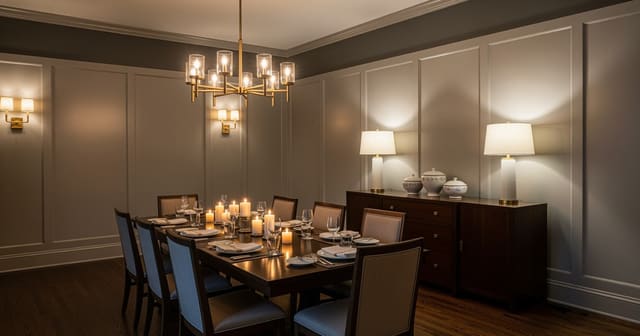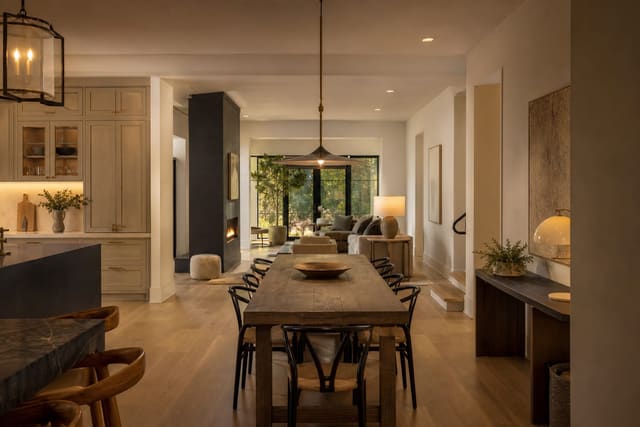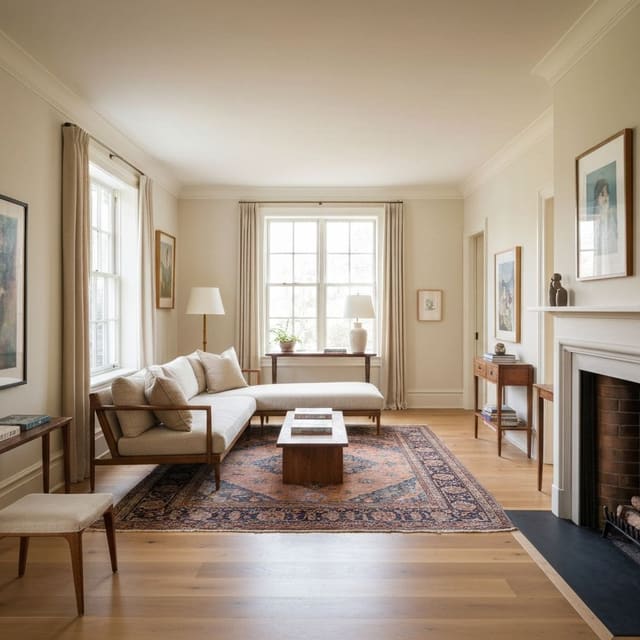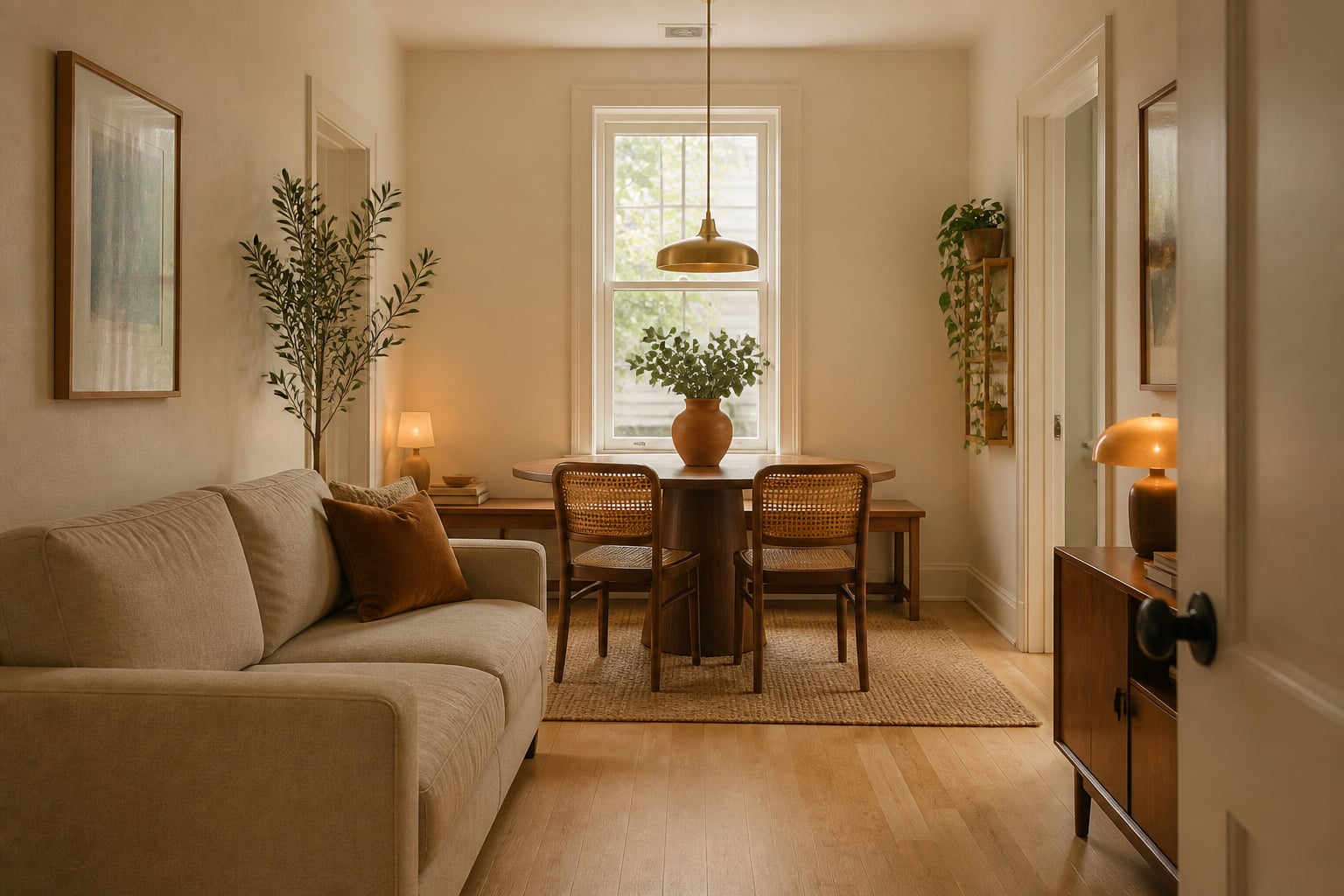
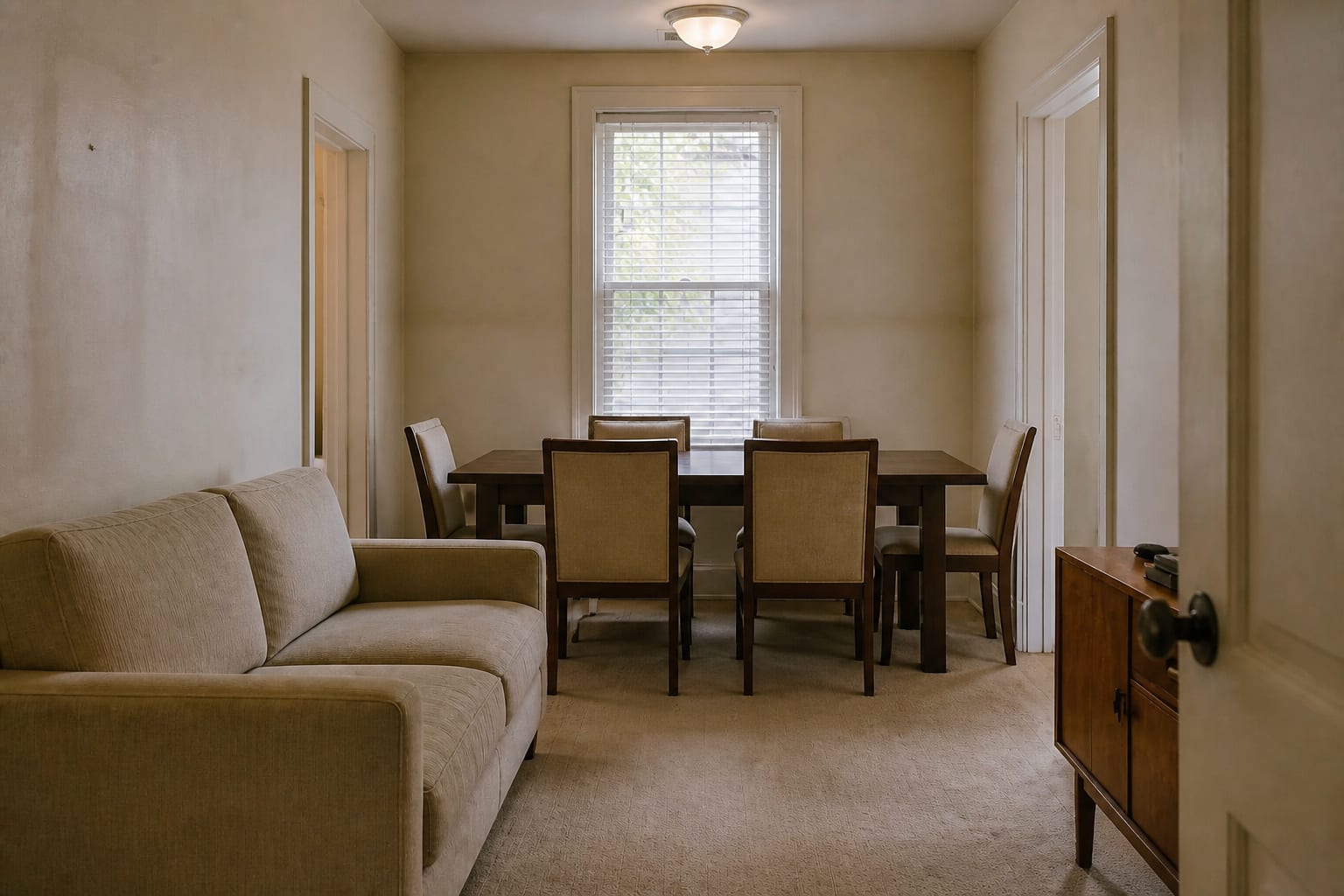
A dining table fits in a small living room when it commits to a wall instead of floating, protects a 30- to 36-inch walking path, and doubles as a console or workstation between meals. The table doesn't need its own room — it needs a chair that tucks fully underneath and enough clearance that circulation never stalls.
How do you fit a dining table in a small living room?
Start with the route you use most: kitchen to sofa, door to hallway, balcony to seating. Keep 36 inches on paths people use to carry plates or groceries; a quieter side path can compress to about 30 inches. A 24-inch squeeze behind a chair should be the exception, not the plan.
Choose the table by chair behavior, not tabletop looks. A chair needs about 24 inches to pull out for sitting; if someone must walk behind it, budget closer to 36 inches from table edge to wall or cabinet. If the room can't give that space, use a bench, backless stools, or push the table to the wall for everyday use.
Scale is what actually controls the room. Run the same check used in living and dining furniture scale rules: sofa, rug, table, chairs, and storage should read as one plan.
Which table shape actually works?
Shape is the decision that controls the whole layout. A rectangle is efficient parallel to the longest wall; a round table softens a corner or bay; a drop-leaf gives weekday compactness with occasional flexibility.
| Table Type | Size Range | Best For | Space Saved |
|---|---|---|---|
| Round pedestal | 30-42in diameter | 2-4 people, corner spots | No corners to bump; base lets chairs tuck freely |
| Rectangular (wall) | 28-32in wide | Wall-anchored daily use | Pushes flush to wall, one side needs no pullout |
| Drop-leaf | 18-48in closed to open | Daily meals + occasional guests | Compresses to console width when closed |
| Bench + wall | Table 28-30in H, bench 17-19in H | Doubling seat count | Removes chair pullout on one full side |
A standard 36-inch dining table often looks generous in a showroom but eats directly into a small room's walking lane. For four people, a 42-inch round table works only if the surrounding chairs don't block the room's main route.
Test this on your own room photo with Re-Design before deciding — keep the doorway, windows, and main furniture visible so the preview solves the room you actually have.
Which small dining area ideas earn their inches?
A dining zone earns its space when it adds real function — eating, working, sorting mail — without stealing the living room's comfort.
- Anchor to a wall in narrow rooms; push one long side flush for daily use and pull it out for guests, especially with a drop-leaf or gateleg style.
- Center the pendant over the table, not the room, using a warm 2700K-3000K bulb hung 30-36 inches above the surface.
- Pick chairs that disappear. Armless chairs 18-20 inches wide tuck more cleanly than broad upholstered ones.
- Keep storage shallow. A 12- to 15-inch-deep cabinet or ledge holds napkins and glasses without narrowing the room — see small dining rooms under 100 square feet for corner-scale ideas.
- Size the rug correctly or skip it. A dining rug should extend at least 24 inches beyond the table on the chair-pullout sides; if that collides with the sofa rug, rely on lighting and shape instead.
What mistakes shrink a living-dining combo?
- Centering the table in open floor. If it blocks the kitchen-to-sofa path, shift it to the quieter wall.
- Choosing chairs with too much depth. Wing chairs and heavy arms make a small corner feel theatrical; keep silhouettes slim.
- Letting the table become the only work surface. Add one wall shelf or basket within reach so the table resets fast.
- Ignoring light quality. A shaded corner feels temporary — test wall color and bulbs as in north-facing living room color and lighting choices.
- Buying for the biggest dinner you imagine. If two people eat there daily and four only twice a year, buy for the daily version and keep folding chairs in a closet.
How can AI preview the layout before you commit?
Upload one photo from the kitchen or entry, one from the sofa toward the proposed dining spot, and one wide shot showing the main path. Keep sofa, windows, doorways, and fixtures visible so the preview handles your real constraints.
Request specific tests: a 36-inch round pedestal table with two armless chairs and a clear 36-inch path to the sofa, versus a 30-inch rectangular table against the wall with a bench and pendant centered overhead. Check whether the chair blocks a door, whether the pendant sits in the traffic lane, and whether the dining zone makes the sofa area feel complete or squeezed.
AI won't confirm exact chair dimensions or hinge quality — use the preview to pick direction, then tape the tabletop, chair pullout, and walking path in the real room before buying.
Frequently Asked Questions
What is the smallest dining table that still seats four?
A 36in square or 32x48in rectangle seats four with bench or chair seating. Drop-leaf tables that open from 18in to 48in pack the smallest footprint when closed for daily use.
Where do I put a dining table in a small living room?
Push the table against one long wall so it works as a console between meals. Banquette seating against the wall plus two chairs facing it doubles seat count without adding floor footprint.
Can a coffee table double as a dining table?
Yes — a 24in tall convertible coffee table that lifts to 30in works for one or two people occasionally. It does not replace a real table for daily family dining.
How much clearance does a small dining setup need?
Keep 30in clear behind every used seat, or 24in behind a banquette since people slide in rather than pull a chair out. These clearances are non-negotiable for the table to stay usable.
Round or rectangle for a tight space?
Round tables read open but can't push flush to a wall. Rectangular or drop-leaf tables push tight to a wall and seat more per linear foot — choose rectangle if floor space is the real constraint.
> Try this: Ready to see this on your own room? Open Re-Design and run the preview.
Three transformations to try
1. Banquette and table along one wall 2. Drop-leaf console table against living room wall 3. Round bistro table with two chairs in living corner