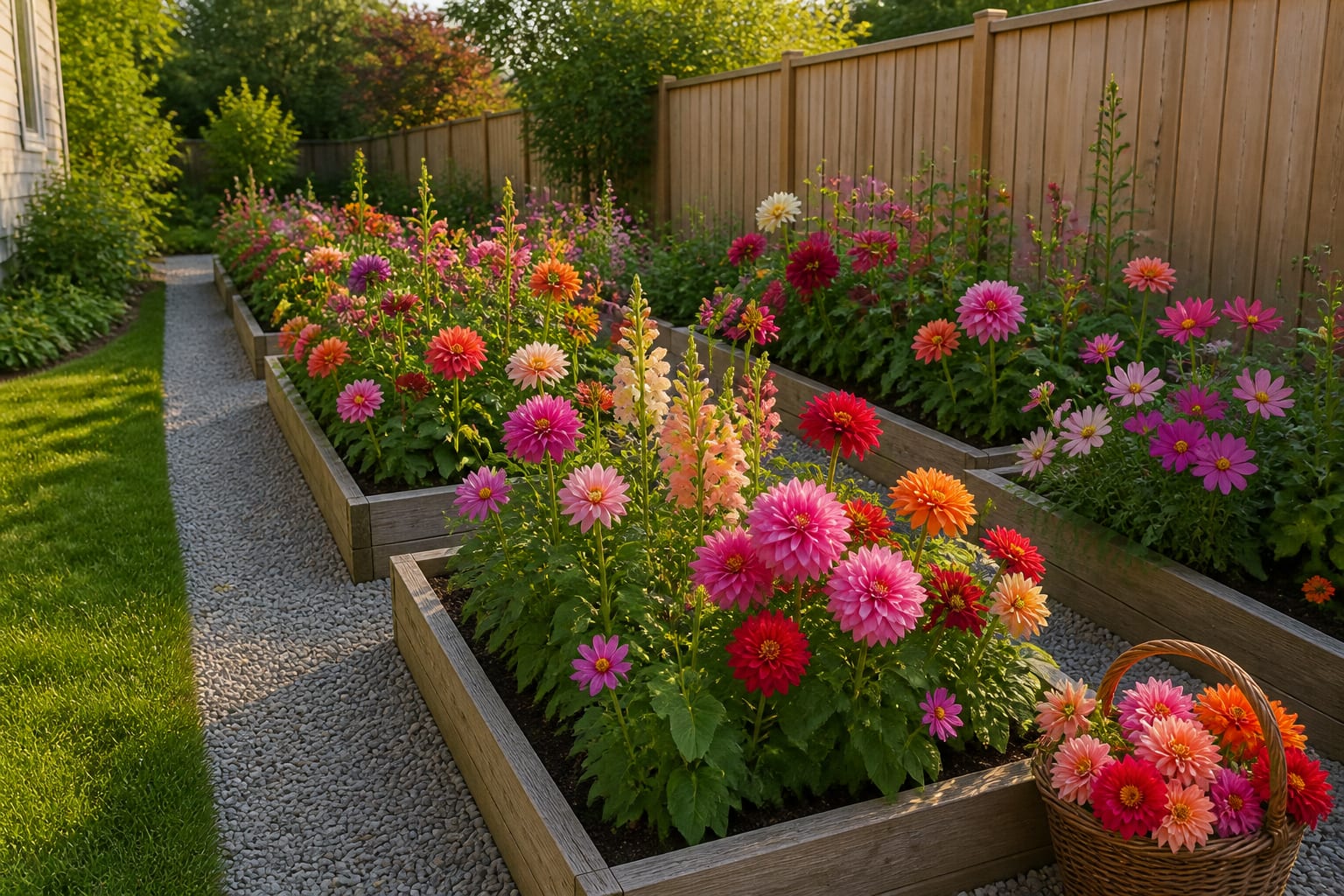
A cutting garden is a bed grown specifically for harvesting bouquets rather than for display. Rows of productive bloomers — zinnias, dahlias, cosmos, snapdragons, lisianthus — are organized in accessible three- to four-foot-wide beds, planted at density for yield, and cut regularly to encourage more flowers. It is a small flower farm in backyard scale.
What is a cutting garden, and how is it different from a flower border?
A cutting garden is optimized for yield, not year-round visual display. A traditional herbaceous border is designed to look beautiful in the garden from a viewer's perspective — plants are spaced for visual effect, mixed heights are considered from the front, and flowers are left on the plant for their contribution to the bed. A cutting garden is the opposite: you want stems, you want volume, and you are perfectly happy for the bed to look raggedy because you are regularly removing its best-looking flowers.
This production orientation changes everything: plant spacing is tighter (to maximize stems per square foot), varieties are chosen for stem length and vase life rather than garden presence, rows are preferred over naturalistic drifts for ease of access, and beds are narrow enough to reach the center without trampling soil. The flower-farm aesthetic that has swept social media over the past several years has made the cutting garden one of the most searched garden types — a space that is both beautiful and useful, with seasonal content built in every year.
What are the easiest cut flowers to grow for beginners?
The easiest cut flowers are direct-sown annuals that tolerate heat, bounce back from repeated cutting, and are difficult to kill once established in decent soil. The three most beginner-friendly are zinnias, cosmos, and annual sunflowers — all direct-sow crops that germinate quickly and begin flowering within six to eight weeks of sowing.
Zinnias are the foundation of any beginner cutting garden. They flower prolifically, cut-and-come-again enthusiastically, and tolerate heat that kills more delicate flowers. Tall varieties ('Benary's Giant', 'Oklahoma') produce long stems suitable for serious arrangements.
Cosmos (both the pink-white bipinnatus types and the orange-gold sulphureus types) are feathery, airy, and add movement to bouquets. They self-sow readily and tolerate poor soil — almost too easy.
Annual sunflowers bring scale and impact. Single-stem varieties ('ProCut' series) produce one large head per plant; branching varieties produce multiple smaller stems over a longer period.
Snapdragons are technically cool-season crops — they thrive in spring and fall, go dormant or die in summer heat, but provide the most elegant, spike-form stems for spring cutting. Start transplants early.
Dahlias are a step up in complexity (tubers must be lifted in cold climates, spacing and staking are required) but offer unparalleled flower variety and cutting productivity from midsummer through hard frost.
Lisianthus is the most demanding beginner choice — slow-growing, temperamental as a seedling — but produces long-stemmed flowers that rival florist quality and last two weeks in the vase.
How do you lay out a cutting garden bed?
The layout of a productive cutting garden follows a small number of firm design rules, then leaves the rest to plant selection and personal preference.
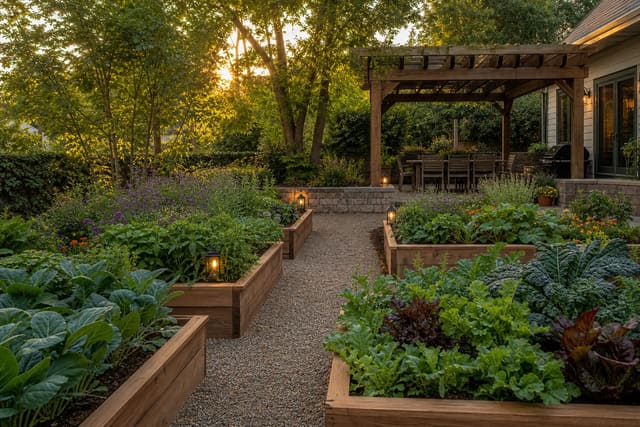
Bed width: Three to four feet, full stop. This is the dimension that lets you reach the center from either side without stepping into the bed. Wider beds are only practical if you install a central path or stepping stones.
Bed length: Flexible. A 4×8-foot raised bed is the minimum meaningful size. A 4×20-foot in-ground row produces serious volume. Multiple parallel beds with 18- to 24-inch paths between them scale as space allows.
Orientation: North-south orientation distributes light more evenly across the bed as the sun moves east to west. Taller plants (dahlias, sunflowers) go at the north end so they don't shade shorter neighbors.
Path width between beds: 18 inches is the workable minimum; 24 inches is comfortable; 36 inches allows wheelbarrow access. Mow-able grass paths are low-cost; gravel or mulch paths reduce mud and maintenance.
Support structures: Plan for staking at design time. Dahlias need individual stakes or a grid of netting stretched over the bed at planting time. Tall zinnias and snapdragons benefit from the same horizontal net support.
What is the right size for a cutting garden?
Size is almost always a beginner's first question, and the honest answer is: start smaller than you think, because maintenance scales with area more steeply than production does.
| Cutting Garden Size | Best For | Expected Yield | |---|---|---| | One 4×8 bed (32 sq ft) | First-year beginner; apartment with garden access | Bouquets for one household, some to share | | Two to three 4×8 beds (~96 sq ft) | Established home gardener | Weekly household bouquets plus occasional gifts | | 400–800 sq ft of planted beds | Serious hobbyist or micro-flower-farm | Regular farmers market or CSA flower share | | 2,000+ sq ft | Part-time cut flower business | Commercial-scale production |
For most home gardeners, two to three parallel 4×8 raised beds represent the sweet spot: enough variety to always have something interesting cutting, small enough to maintain on a weekly schedule without burning out.
How much does it cost to start a cutting garden?
A single-bed cutting garden typically costs $300–$700 to start, a multi-bed home garden runs $800–$2,500, and a serious hobbyist plot ranges $2,500–$8,000+. The bed and the soil to fill it are the largest costs; seeds are inexpensive, while dahlia tubers and drip irrigation add the most as the garden scales.
| Component | Typical cost | Notes | |---|---|---| | One 4×8 raised bed (kit + soil + compost) | $250–$700 | Frame $150–$350; soil and compost $100–$350; cedar or metal kits cost more | | Seeds for zinnias, cosmos, sunflowers | $10–$60 | Seed packets $3–$8 each; transplants run $3–$8 per plant | | Dahlia tubers | $8–$20 each | Named cultivars at the top end; a 6-tuber starter set is ~$50–$120 | | Drip irrigation (1–3 beds) | $100–$500 | Basic kit from ~$100; add a timer, regulator, and filter for more | | Staking / netting support | $30–$200 | Stakes and twine at the low end; horticultural netting and posts higher |
A single-bed starter — one 4×8 bed, a modest seed selection, minimal irrigation, and basic staking — is a $300–$700 project and the right scale for a first season. A multi-bed home garden of three to six beds with better irrigation and more support material runs $800–$2,500. A serious hobbyist plot with several beds or a larger in-ground area, full drip irrigation, a wider tuber collection, and sturdier supports reaches $2,500–$8,000+. Because maintenance scales with area faster than yield does, most home growers get the best return by starting at the lower end and expanding only after one full season.
When and how do you plant for summer bouquets?
Succession planting — making multiple small sowings over a period of weeks — is the most important technique in a productive cutting garden. A single sowing of zinnias will flush, produce heavily for four to six weeks, then slow down. Three sowings three weeks apart keep production continuous from midsummer through frost.
Spring cool-season crops: Start snapdragons, sweet peas, and larkspur as transplants or direct sow six to eight weeks before last frost. These bloom in late spring and early summer before heat arrives.
After last frost: Direct sow zinnias, cosmos, and sunflowers. Transplant dahlias (after tubers have been started indoors or purchased as established plants). This is the core summer-production planting.
Summer succession: Sow a fresh round of fast annuals (zinnias, cosmos, basil for foliage) every two to three weeks through midsummer. The last sowing of zinnias in your area might be six to eight weeks before first fall frost.
Fall cool-season crops: Where climate permits, a late-summer planting of snapdragons, statice, or ornamental kale for foliage extends the season into autumn.
Dahlia timing: Dahlia tubers go in the ground after last frost date, no earlier. In cold climates they must be dug after the first frost blackens the foliage, dried, and stored in a cool dry place through winter.
Cutting Garden vs. Display Border: Which Is Right for You?
| Factor | Cutting Garden | Display Border | |---|---|---| | Primary goal | Stem and bouquet yield | Year-round visual display in the garden | | Plant spacing | Tight, production-oriented | Generous, designed for viewer experience | | Bed layout | Narrow rows with working paths | Curved or naturalistic, often deeper | | Variety selection | Long stems, long vase life | Best garden presence and seasonal interest | | Maintenance style | Regular harvest (a chore that is also the reward) | Deadheading, dividing, seasonal editing | | Best location | Out of primary sightlines is fine | Should be visible from main viewing angles | | Beginner friendliness | High (fast annuals are forgiving) | Moderate (perennial mix requires multi-year patience) |
How can you preview a cutting garden design before you plant?
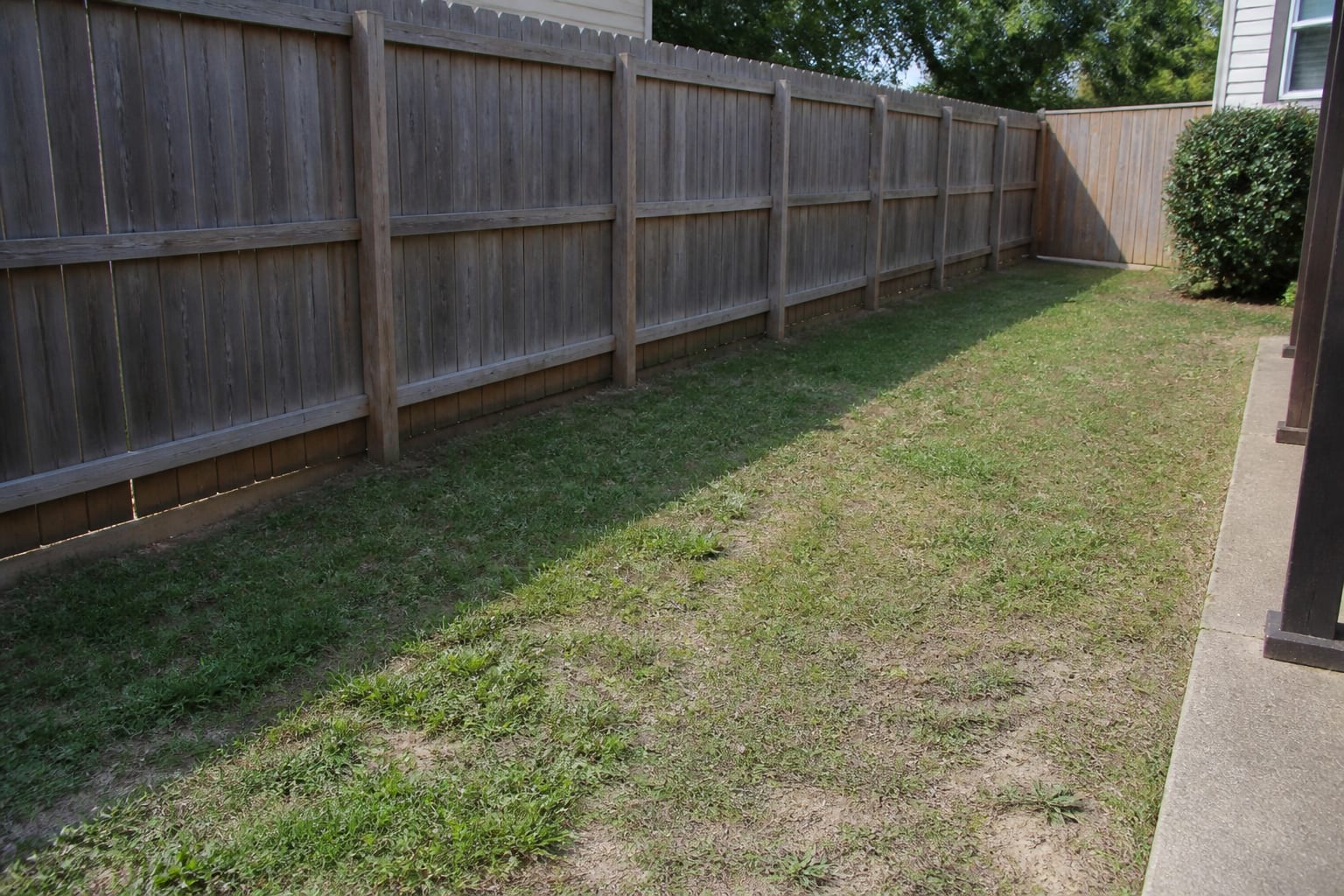
Seeing a blooming cutting garden in your actual fence line or lawn strip — before you turn a single shovel of soil — is possible with [Re-Design](https://re-design.app). Upload a photo of your outdoor space and describe what you want the AI to render.
Suggested prompts to try: - Blooming cutting garden along a wooden fence with rows of zinnias, dahlias, and cosmos - Raised-bed cutting garden with dahlia tubers, snapdragons, and a gravel path between beds - Flower farm aesthetic: parallel beds of mixed annuals, lush and overgrown, summer peak bloom
The emotional impact of seeing your actual fence line transformed into rows of dahlias in peak bloom — as opposed to browsing someone else's garden on Pinterest — is what motivates the project from imagination to action.
Frequently Asked Questions
How do you harvest cut flowers to maximize vase life?
Cut stems in the early morning when they are fully hydrated, using clean sharp scissors or pruners. Cut at a 45-degree angle to increase the stem's water-uptake surface, and immediately plunge the stem into a bucket of room-temperature water. Strip any foliage that would sit below the waterline in the vase — submerged leaves rot quickly and foul the water. Recut stems before arranging and change vase water every two days.
Do deer eat cutting gardens?
Deer will eat many common cutting-garden plants, particularly dahlias, zinnias, and sunflowers, all of which are highly palatable. If deer are present in your area, the most reliable solutions are a fence at least seven to eight feet high, row covers at night during vulnerable stages, or choosing deer-resistant species: snapdragons, larkspur, foxglove, and most herbs are much less appealing to deer than the top cutting-garden annuals.
Can you grow a cutting garden in raised beds?
Yes, and raised beds are often the best setting for a cutting garden — they warm faster in spring (extending the season), drain well, and keep bed soil from being compacted by foot traffic. Standard 4×8 raised beds at 10–12 inches deep are ideal. The main limitation is water: raised beds dry out faster than in-ground beds and may need daily watering in hot summer weather, which makes drip irrigation or soaker hose a worthwhile investment.
What is the best soil for a cutting garden?
A rich, well-draining loam amended with compost is ideal. Cutting-garden plants are hungry — they produce stems at high volume throughout the season and need consistent nutrition to sustain that output. Amend beds with a balanced granular fertilizer at planting and supplement with a liquid fertilizer higher in phosphorus and potassium (rather than nitrogen) once plants begin to flower, which encourages stem production over leaf growth.
When should you deadhead versus cut back a cutting garden plant?
In a cutting garden, you rarely deadhead — you harvest. The act of cutting a stem for a bouquet is functionally identical to deadheading for the plant: both remove a spent or maturing flower head and signal the plant to produce more. Where you do need to cut back is when plants become exhausted mid-season (zinnias especially can mildew or exhaust themselves). A hard cutback by a third often triggers a second flush within three weeks.