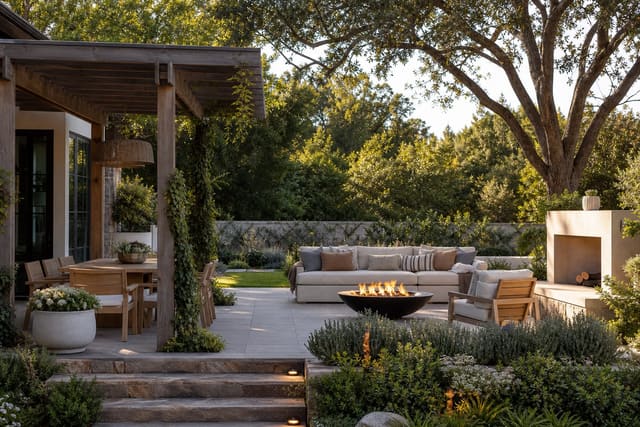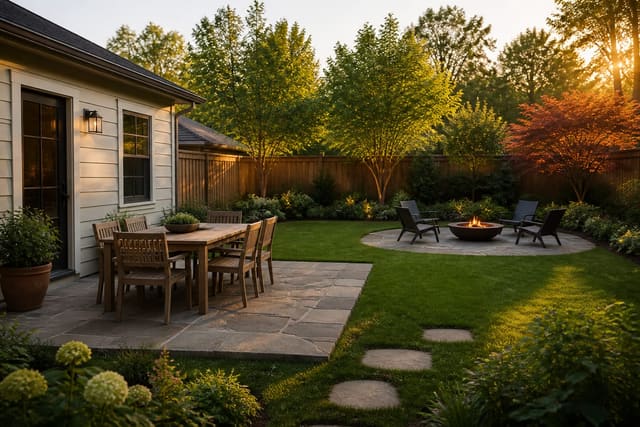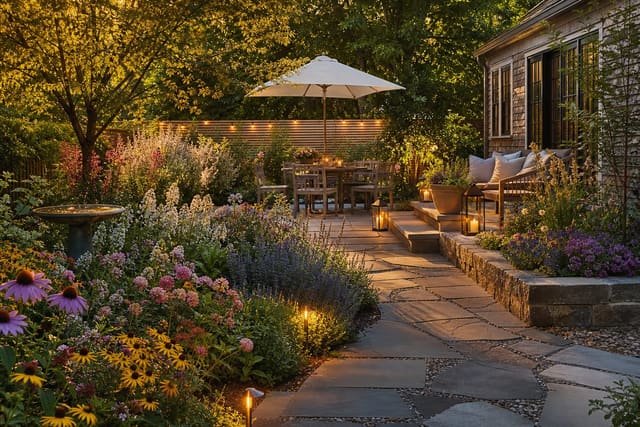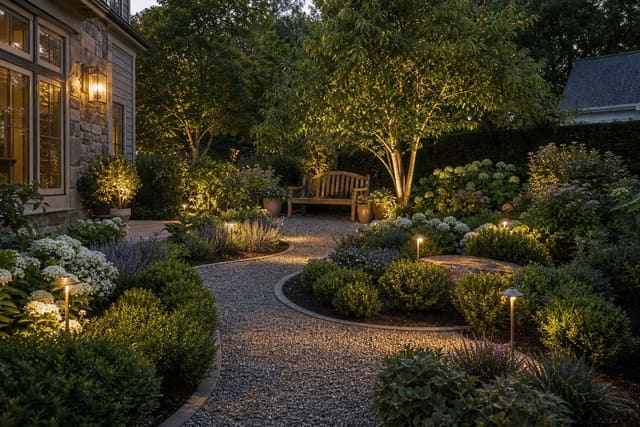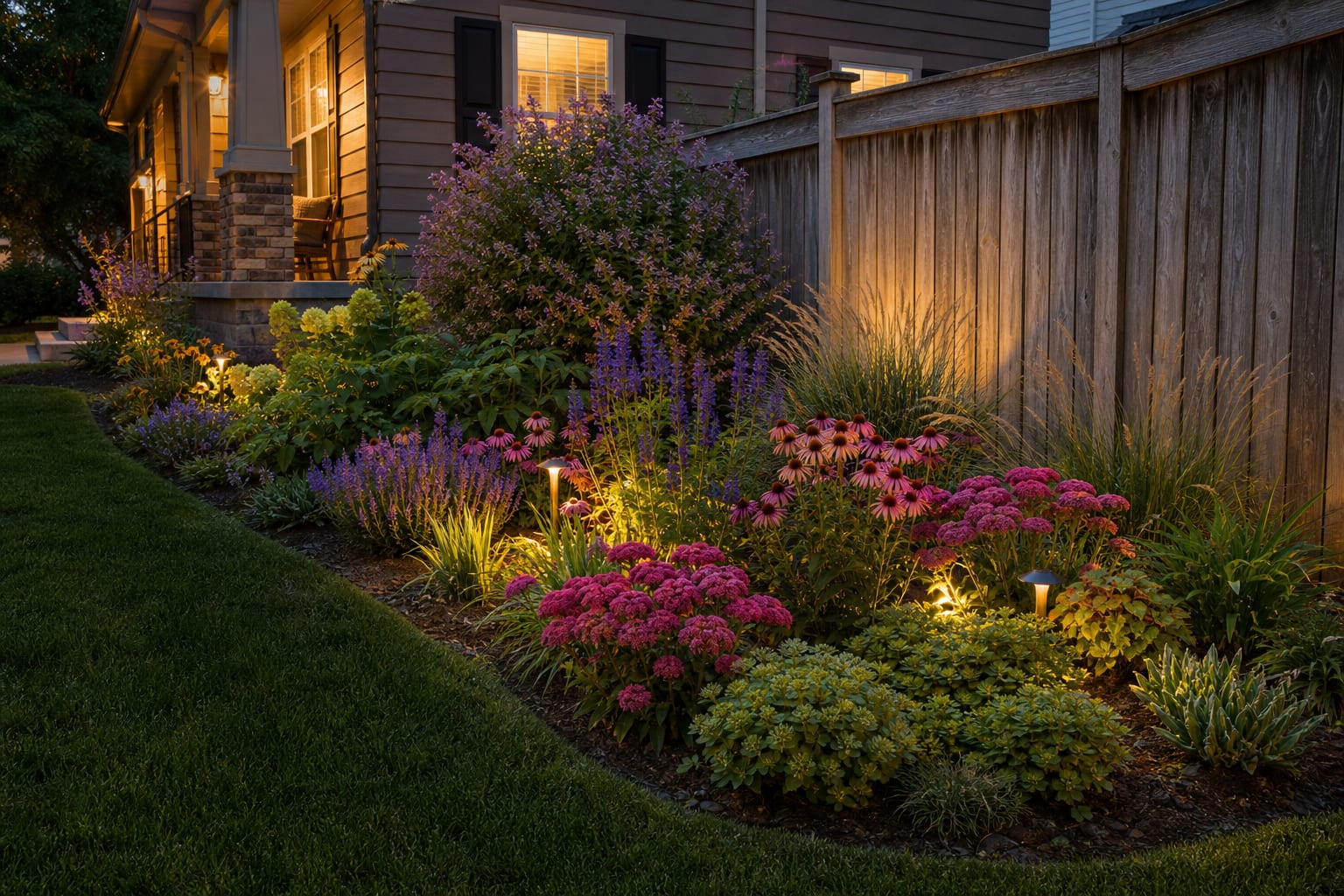
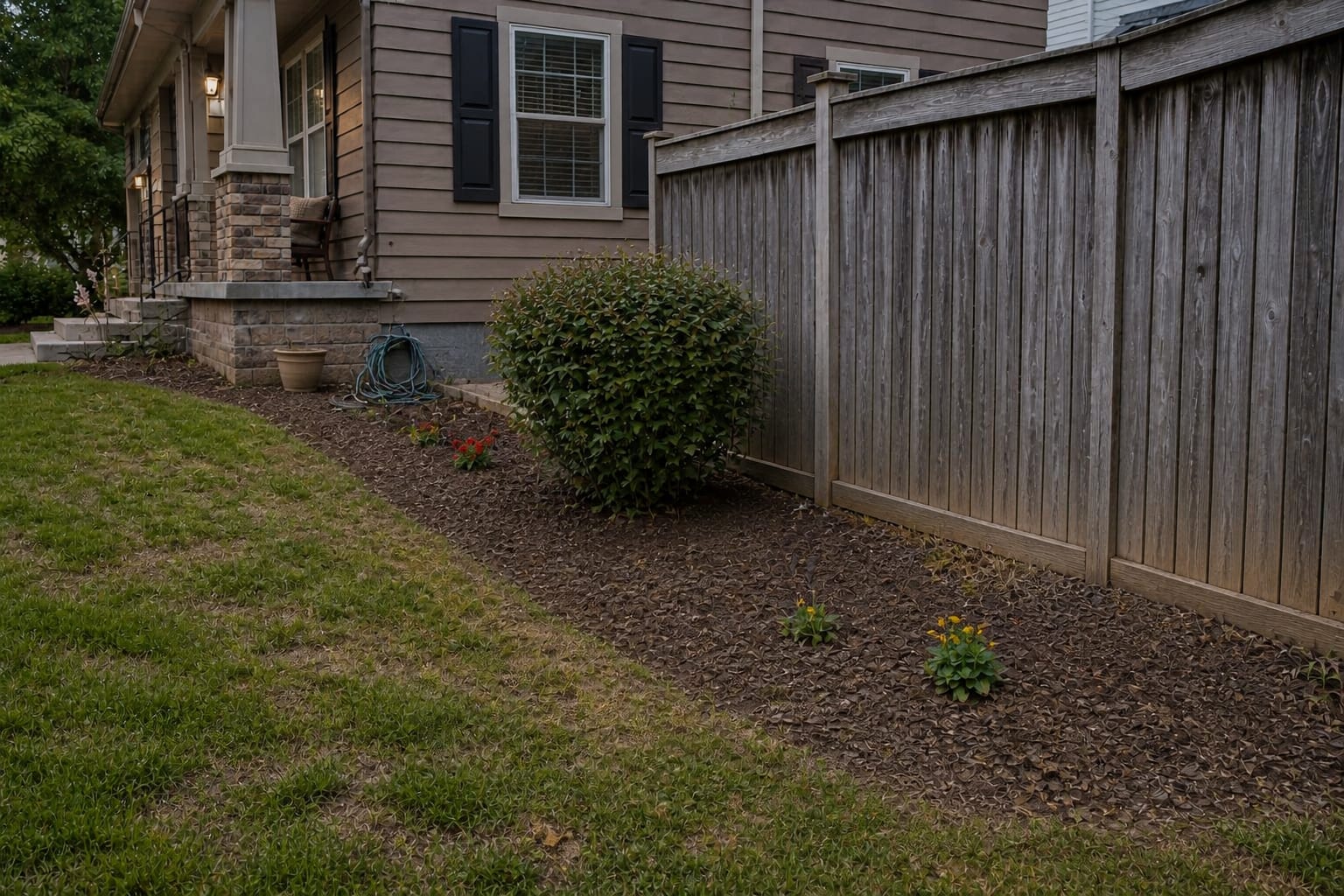
A perennial garden bed gets low-maintenance, season-long color by combining long-blooming perennials (salvia, coneflower, sedum, asters) with shrubs, grasses, and bulbs layered by height and repeated in drifts. Treat butterfly bush as a single summer anchor rather than filler, and the bed keeps structure in spring, color in summer, and texture into fall.
What makes a perennial bed feel full all season?
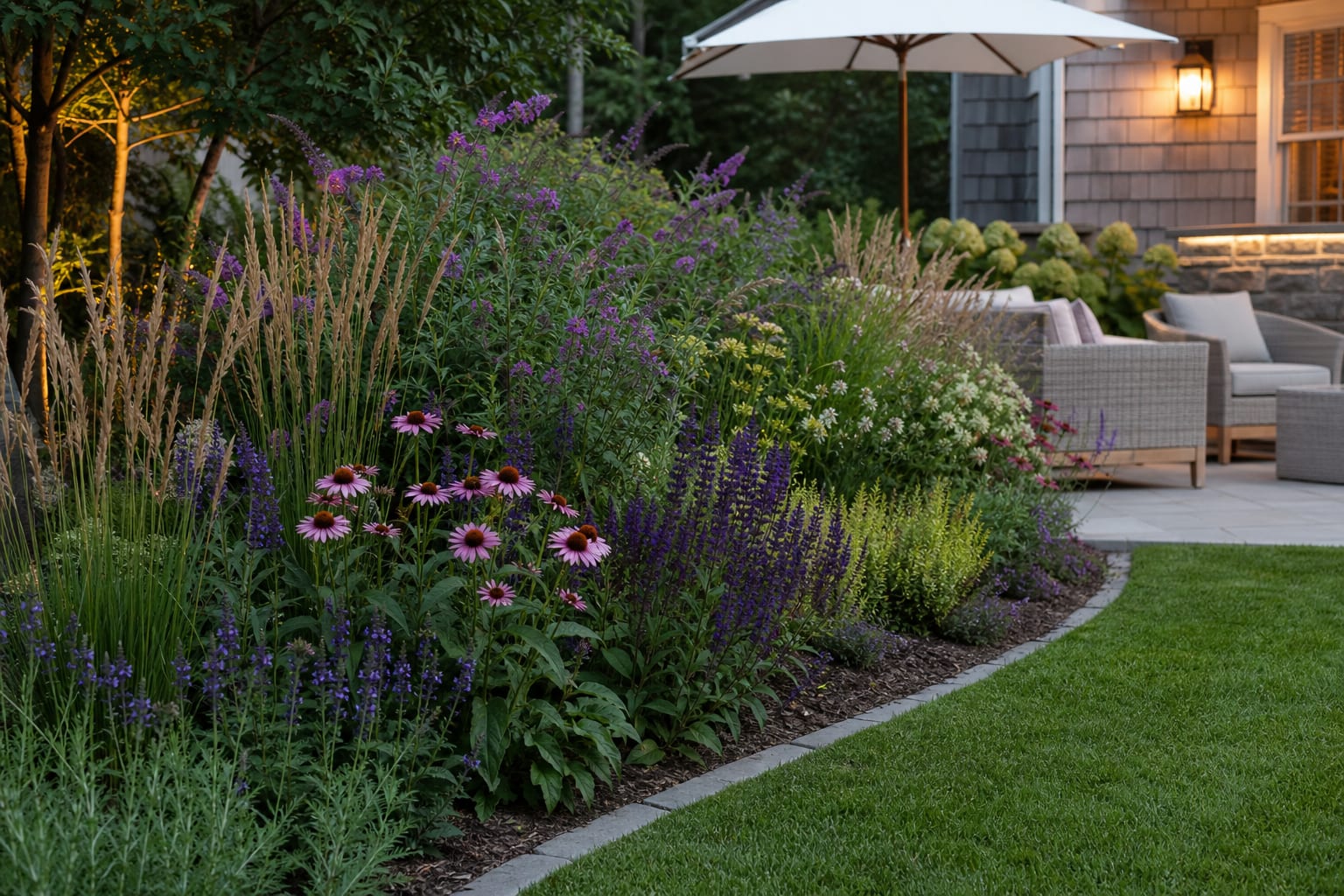
Structure that doesn't depend on flowers alone: shrubs, foliage, and ornamental grasses that hold shape after petals drop. Aim for 4-6ft of bed depth minimum, and 8ft or more if you're fitting shrubs, a butterfly bush, grasses, and an edging layer. A 2ft strip forces everything into a single flat line.
Leave 18-24in of access behind deep borders for pruning, and keep the 2in mulch layer off plant crowns so nothing rots at the base. For whole-yard layout decisions — curves, sightlines, path connections — see garden design ideas.
Which perennials and shrubs should lead the planting design?
Start with reliable anchors, then use flowers as rhythm around them.
| Plant role | Good choices | Spacing/placement rule |
|---|---|---|
| Summer shrub anchor | Butterfly bush, compact hydrangea, shrub rose | Back or center of an island bed, 3-5ft clear mature spread |
| Early color | Salvia, catmint, allium, hardy geranium | 3-plant clumps near the front; cut back after flowering |
| Midsummer color | Coneflower, yarrow, bee balm, phlox, coreopsis | 18-30in apart for airflow in humid beds |
| Late-season structure | Sedum, asters, switchgrass, little bluestem | Middle or back so seedheads carry the border into fall |
| Edging | Creeping thyme, lamb's ear, low sedum, heuchera | Under 12-15in tall along paths or lawn |
Match plants to sun and water. Full sun handles salvia, yarrow, coneflower, sedum, and Russian sage; part shade needs astilbe, hellebore, hosta, fern, and heuchera. For hot, dry, or low-irrigation sites, borrow logic from drought-tolerant landscaping ideas instead of planting thirsty phlox.
Butterfly bush looks best with companions hiding its bare lower stems — catmint, salvia, or low grasses at the base, coneflower or sedum in front, so the shrub reads as nested in the border, not stuck in mulch.
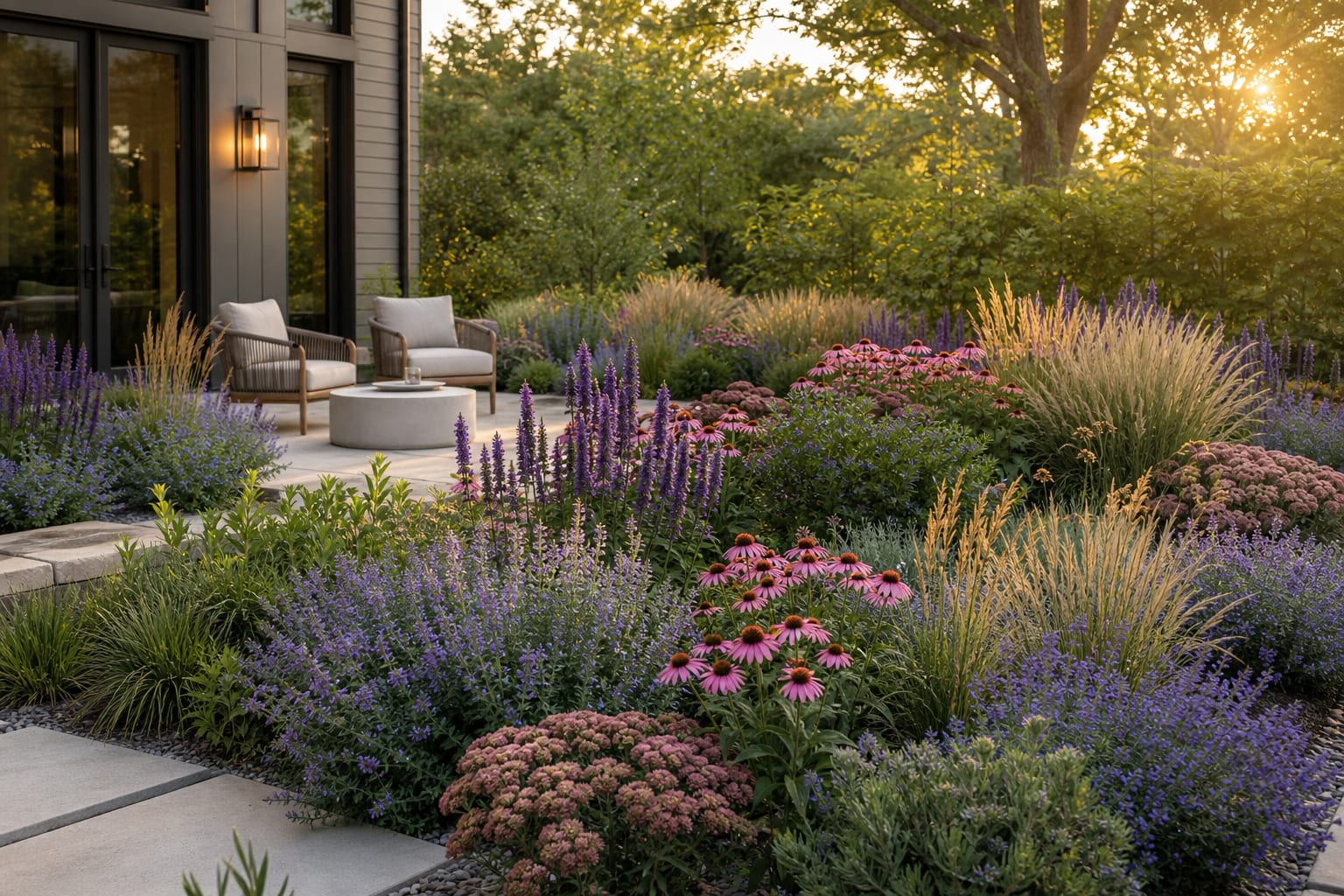
Test this on your own photo with ReDesign — keep the house edge, horizon, hardscape, beds, and main path visible so the preview solves the space you actually have.
How do you arrange the bed so it stays low maintenance?
Low maintenance means the planting isn't fighting itself every month, not that it needs no care.
- Cut one clean edge, not several wiggles. A 4-6in steel, brick, or stone edge keeps mulch and lawn from trading places after rain.
- Place tall plants where they won't shade the bed. A 6ft butterfly bush goes behind 24in perennials in a one-sided border; in an island bed, put it near the center.
- Plan a simple bloom calendar first. Pick two spring performers, three summer workhorses, and two late-season plants so the bed doesn't ride on one July weekend.
- Add stepping stones every 30-36in in beds deeper than 6ft for deadheading and dividing access.
- Group by water need. Keep lavender, yarrow, and sedum in the dry zone; put phlox, bee balm, or hydrangea where watering and airflow are better.
A sunny border near the kitchen can mix pollinator perennials with chives, thyme, and compact vegetables, using the same spacing discipline as a vegetable garden layout.
What mistakes should you avoid?
- Planting for the pot, not the mature width. Small nursery pots make gaps look alarming, leading to crowding 8in apart that turns into a thicket by year two.
- Letting butterfly bush dominate. Three oversized shrubs in a narrow bed become a wall of stems with flowers only at the tips; choose a dwarf cultivar in beds under 5ft deep.
- Ignoring foliage color. Add silver lamb's ear, blue-green catmint, burgundy heuchera, or fine grasses so the bed has contrast between bloom cycles.
- Forgetting winter and early spring. Leave grasses and seedheads standing until late winter where climate allows so bare mulch doesn't dominate the off-season.
- Skipping maintenance planning. Deadhead heavy bloomers, divide congested clumps every few years, and cut back floppy plants after their first flush.
Can AI help preview a perennial border before you plant?
Yes — the expensive mistake is usually composition: bed width, shrub scale, and whether the planting reads full or cluttered from the house. Upload a straight photo of the bare bed or fence line, then test a butterfly bush border, a drought-tolerant scheme, and a cottage-style mix from the same angle.
If a shrub makes the bed look top-heavy, swap in a dwarf cultivar or move it back. If the planting looks spotty, repeat one perennial in a larger drift. If the bed still looks thin, widen it 12-24in rather than adding another tray of small plants. Still confirm hardiness, invasive behavior, and pollinator value with a local nursery or extension source before buying.
Frequently Asked Questions
How many perennials do I need per square foot?
1-gallon perennials at 18in spacing fill at about 0.5 plants per square foot. Plant in drifts of odd numbers (3, 5, 7) and the bed reads cohesive rather than spotty even before it fills in.
When should I plant perennials?
Fall planting in zones 5-7 gives roots 6-8 weeks to establish before frost and produces stronger first-year bloom. Spring planting works better in zones 3-4, where fall planting risks frost heave.
How do I prevent a perennial bed from looking messy mid-summer?
Use the Chelsea chop: cut back the front two-thirds of the mid-border to half height in late May. This staggers bloom time and prevents flopping without staking.
What are the best low-maintenance perennials for a sunny bed?
Salvia nemorosa, Echinacea purpurea, Rudbeckia fulgida, and Agastache tolerate drought, rarely flop, and largely self-clean spent blooms without regular deadheading.
How deep should a perennial garden bed be?
Four feet is the minimum for access from one side. Six to eight feet is the design sweet spot, allowing three-tier height layering without the back tier overhanging the edge.
> Try this: Ready to see this on your own outdoor space? Open ReDesign and run the preview before you buy materials, plant, drill, or move furniture.
Three transformations to try
1. Three-tier sunny perennial border 2. Drift planting in repeated odd-number clusters 3. Late-summer perennial bed with Echinacea and grasses