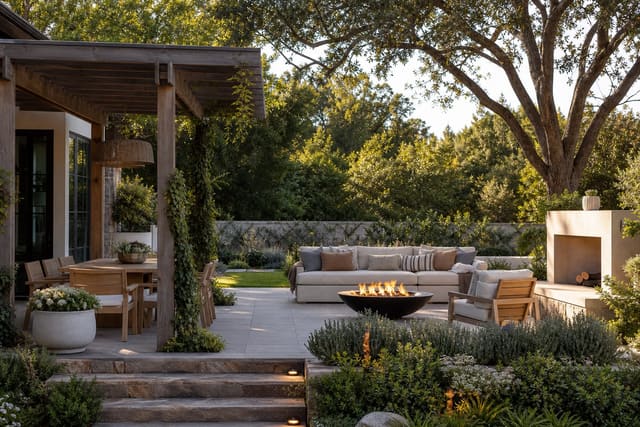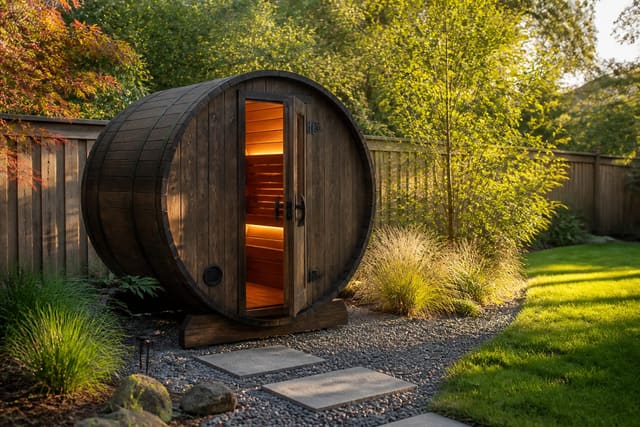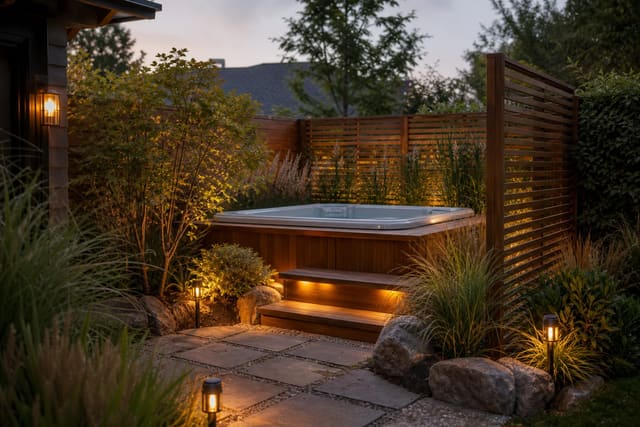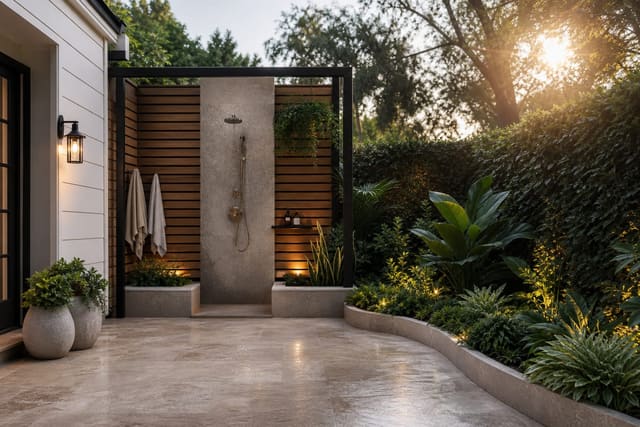
A backyard cold plunge is a chilled water tub kept at 38–55°F for cold-exposure therapy. Options range from a converted stock tank at roughly $200 DIY to chiller-equipped commercial units costing $3,000–$8,000, all the way to a built-in plunge pool at around $28,000. Most homeowners place the plunge near a sauna or patio to create a complete recovery circuit.
How Much Does a Backyard Cold Plunge Cost?
Backyard cold plunge costs range from roughly $200 for a DIY stock tank to around $28,000 for a built-in plunge pool, with most homeowners landing in the $3,000–$8,000 range for a commercial chiller unit. Here is the full cost spectrum:
| Tier | Setup | Typical Cost | |---|---|---| | DIY stock tank | Galvanized or plastic stock tank, ice | ~$200 | | Ice barrel | Insulated barrel, manual ice, no chiller | $500–$1,200 | | Commercial chiller unit | Plunge, Ice Barrel Pro, or equivalent with built-in chiller | $3,000–$8,000 | | Built-in plunge pool | Gunite or fiberglass, dedicated chiller, decking | ~$28,000 |
Add $200–$600 for a cedar surround or deck frame to make any stock tank or commercial unit look intentional. Non-slip composite decking around the rim adds another $300–$800 depending on the perimeter you want to cover. Budget for a GFCI outdoor outlet installation — typically a few hundred dollars — if one is not already near your planned placement.
The gap between a commercial chiller unit and a built-in plunge pool is not just cost; it is commitment. A commercial unit can move if you relocate, sell the house, or want to reconfigure the yard. A built-in pool is permanent infrastructure in the same category as an in-ground swimming pool.
DIY Stock Tank vs. Commercial Unit vs. Built-In: Which Is Right for You?
A stock tank works immediately and costs almost nothing; a commercial unit maintains a consistent temperature without daily ice and looks finished; a built-in pool is permanent infrastructure. Choose based on your commitment level, maintenance tolerance, and aesthetic standard.
| Option | Cost | Temperature Control | Maintenance | Aesthetic | |---|---|---|---|---| | DIY stock tank | ~$200 | Manual ice | High (daily in summer) | Utilitarian unless styled | | Commercial chiller unit | $3,000–$8,000 | Automatic chiller | Low-moderate | Designed | | Built-in plunge pool | ~$28,000 | Dedicated chiller | Low | Architectural |
Commercial units like the Plunge and Ice Barrel are the most popular choice for homeowners who want cold exposure consistently but are not ready to commit to built-in construction. They include filtration so the water does not need to be changed daily, and a chiller that holds the tank at your target temperature year-round without ice management.
Built-in plunge pools make the most sense when you are already undertaking a major backyard renovation — adding a pool, a large deck, or an outdoor kitchen — and want the plunge to be integrated into the hardscape design from the beginning rather than placed after the fact.
How Do You Set Up a Cold Plunge Outside?
A basic backyard cold plunge setup requires a level surface, a water source, a drain path, and a non-slip mat or deck around the tub. For commercial units, add a dedicated electrical circuit for the chiller — most run on standard 110V, but larger units may need 220V.
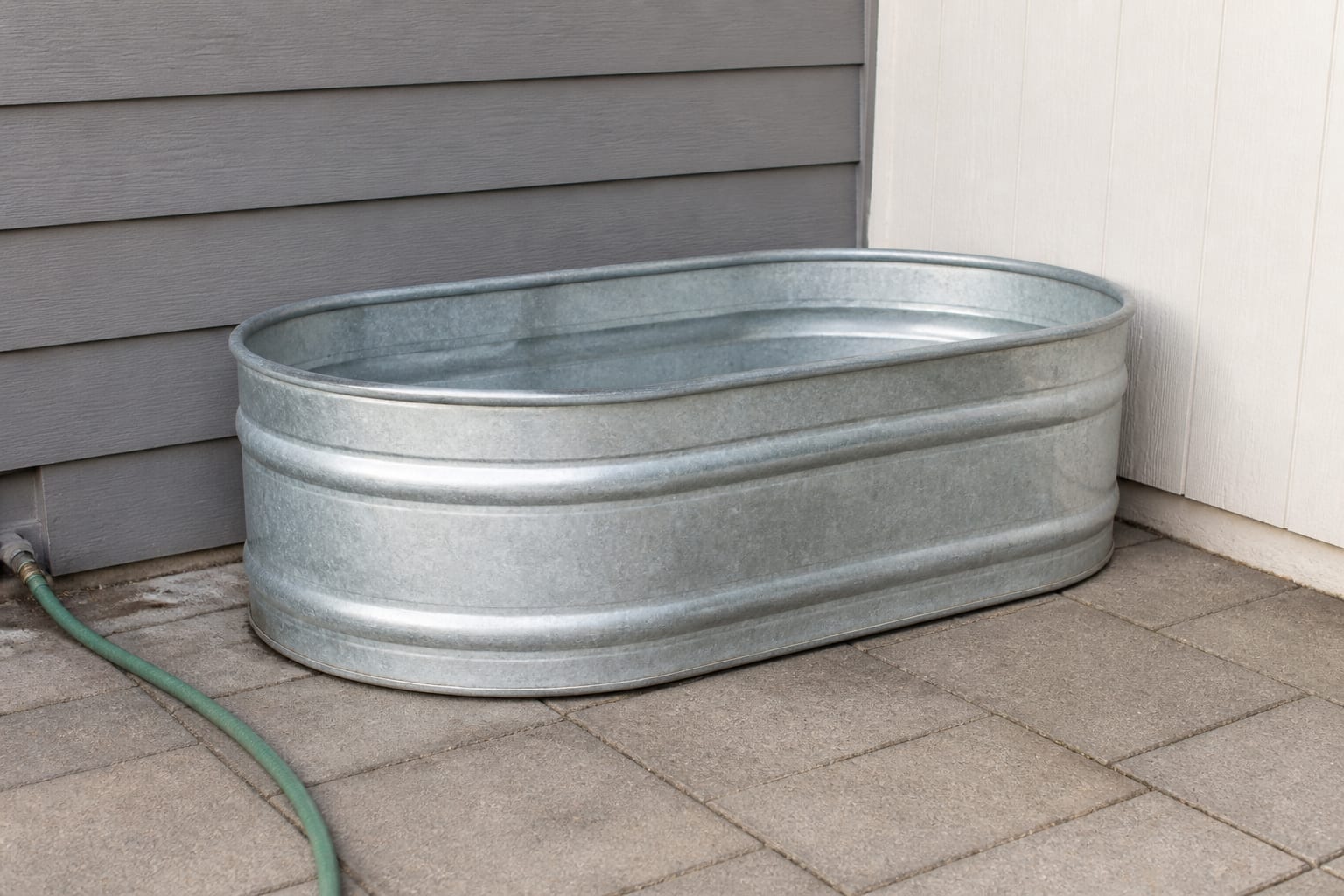
Setup steps for a stock tank cold plunge:
- Level a gravel pad or paver base large enough for the tank plus 18 inches of walking clearance on at least two sides
- Place the tank; fill with a garden hose
- Add ice to reach your target temperature (38–55°F); a full bag drops temperature by roughly 5–10°F depending on tank volume
- Lay a no-slip rubber or composite mat at the entry point
- Add a cedar surround or lattice screen for privacy and aesthetics
Setup for a commercial chiller unit follows the same surface and drainage logic, plus: position the unit within reach of an outdoor GFCI outlet, route the chiller power cable through conduit if it will be permanently installed, and leave 6 inches of clearance around the chiller intake for airflow. Check the manufacturer's spec sheet for minimum clearance — some units require more space on the mechanical side.
Drainage is the most commonly neglected part of the setup. Plan where the water goes when you drain or change the tank. A gravel bed absorbs overflow naturally; concrete pavers need a slope toward a lawn edge or a floor drain. Without a clear drain path, a full stock tank drained at once can flood a patio or undermine a gravel pad.
Where Should You Place a Cold Plunge in Your Backyard?
The best placement puts the cold plunge within 10–30 feet of the sauna or house exit, on a non-slip surface, with visual privacy from neighbors and easy drainage to a lawn, gravel bed, or storm drain. Place it where daily access is effortless, because friction kills the habit.
Privacy is the most overlooked placement factor. You will be stepping in and out of a small tub, often in minimal clothing, and neighbors at a fence line will notice. A cedar lattice panel, a bamboo screen, or a well-placed hedge solves the problem without a full privacy fence. Even a large potted ornamental grass placed strategically provides a visual block.
Surface materials matter for both safety and aesthetics. The moment you climb out of 38–45°F water, your footing is everything.
| Surface | Non-slip | Drainage | Aesthetic | |---|---|---|---| | Gravel pad | Moderate | Excellent | Rustic | | Composite decking | High | Good with gaps | Modern | | Concrete pavers | Moderate (with texture) | Good if sloped | Neutral | | Cedar deck platform | High with grip strips | Good | Warm, designed |
Orient the tub so the entry step faces away from neighbor sightlines and toward the sauna or house door. A simple cedar bench nearby — to set a towel and a warm drink — turns the cold plunge from a bare utility into a recovery station.
How Do You Make a Stock Tank Cold Plunge Look Good?
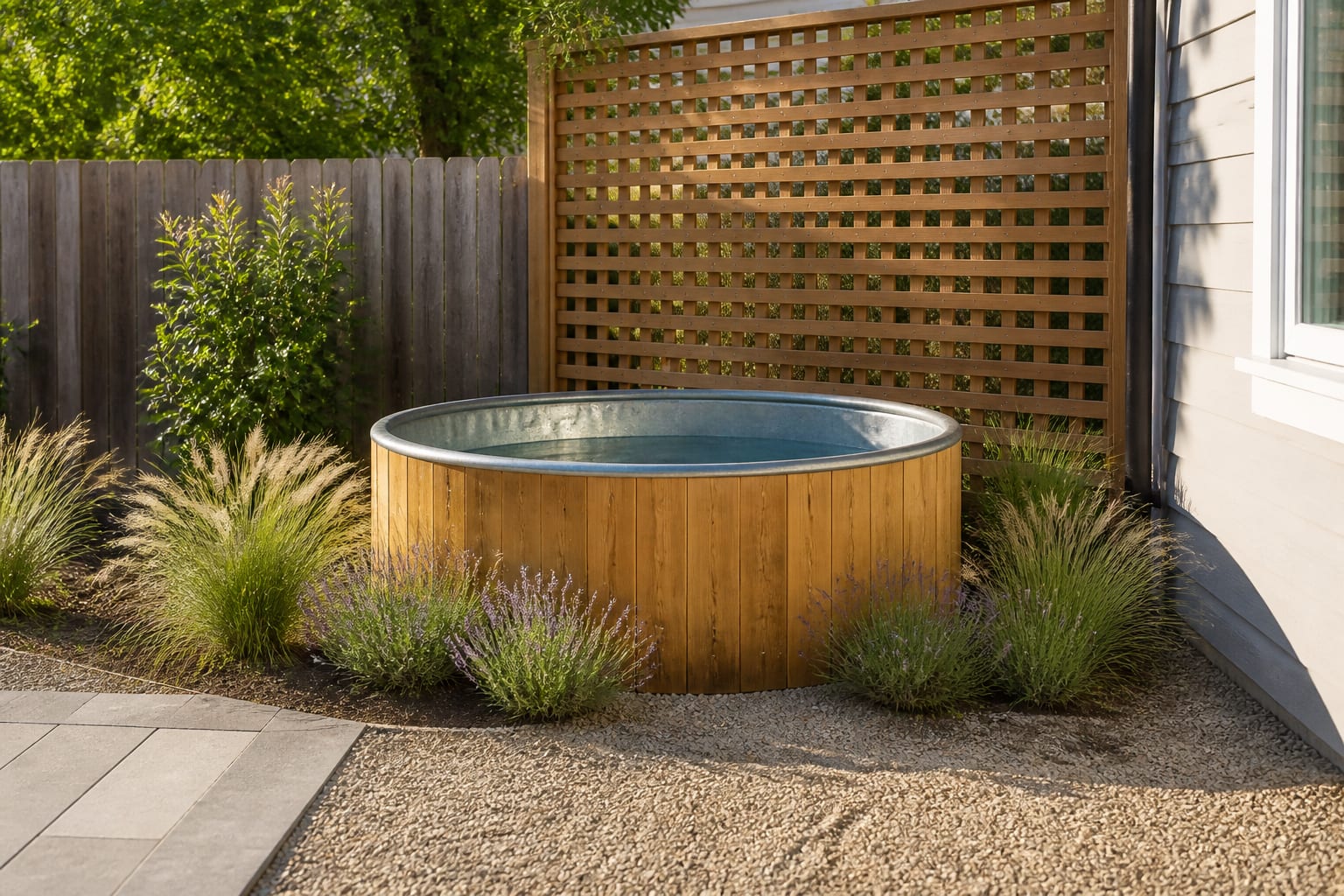
A stock tank becomes a designed wellness feature with four additions: a cedar or composite surround frame, a planted or graveled base, a no-slip step or dock plate at the entry, and a simple privacy screen. None of these require a contractor, and all four can be done in a weekend.
The cedar surround is the highest-impact single upgrade. Cut pressure-treated 2×4s to frame the exterior of the tank, then clad with vertical cedar boards for a spa-like look. Sand and apply a clear exterior sealant to make it weather-resistant. The frame also conceals utility hoses and the tank's utilitarian metal exterior, making the installation look permanent and intentional.
For plants, keep selections low-maintenance and non-invasive near the water. Ornamental grasses, lavender, and low junipers soften the surround without dropping leaves into the water during sessions. A gravel bed around the base ties the plunge into the broader yard rather than leaving it looking placed at random on an open lawn.
A simple cedar step box at the entry — essentially a two-step platform — makes entry and exit safer and gives the installation a finished quality that distinguishes it from a farm supply store display. Use grip tape on the step surface for traction when wet.
Do Cold Plunges Work in Winter?
Yes — cold plunges work in winter, and in climates where outdoor temperatures regularly drop below freezing, a chiller-equipped commercial unit with insulation may actually require less energy because the ambient air is doing much of the cooling. Stock tanks in cold climates need a submersible heater set to a minimum of 38°F to prevent freezing solid when not in use.
For built-in plunge pools, winter operation mirrors a year-round pool: insulate the plumbing lines, keep the chiller circulating on a low-temperature setting, and cover the pool surface when not in use to reduce heat exchange with cold air. A hard pool cover rated for snow load is worth the investment in climates with significant snowfall.
Cold-climate contrast therapy — stepping from an outdoor sauna into a cold plunge while snow surrounds both — is among the most searched wellness imagery in fitness communities and a major driver of the outdoor cold plunge trend in northern states.
How Can You Preview a Cold Plunge Setup Before You Buy?
Upload a photo of your yard to Re-Design and visualize exactly where a stock tank, commercial unit, or built-in plunge fits — styled with cedar surrounds, gravel paths, privacy screens, and companion sauna or outdoor shower. The render makes the recovery corner feel real before any money changes hands.
The recovery-corner render — sauna, cold plunge, and outdoor shower in one styled zone — is one of the most shared design images in fitness communities. Use the tool to see the full circuit in your actual yard, not a generic stock photo.
Try these prompts:
- Stock tank cold plunge with cedar surround on gravel pad
- Commercial cold plunge unit next to barrel sauna recovery zone
- Built-in plunge pool with composite decking and privacy hedge
Bringing a photorealistic render to a contractor conversation also shortens the quoting process — they can see exactly what you want rather than working from a verbal description.
Frequently Asked Questions
How much does a backyard cold plunge cost?
A backyard cold plunge costs roughly $200 for a DIY stock tank, $3,000–$8,000 for a commercial chiller unit such as a Plunge or Ice Barrel, and around $28,000 for a built-in plunge pool with dedicated chiller and decking. Most homeowners start with a stock tank and upgrade once they confirm the habit sticks.
Do cold plunges need electricity?
DIY stock tanks and basic ice barrels do not require electricity — they rely on ice to cool the water. Commercial chiller units require power, typically from a standard 110V outdoor GFCI outlet, though some larger units need 220V. Built-in plunge pools use a dedicated chiller circuit similar to a pool pump or heat pump.
How do you make a stock tank cold plunge look good?
A cedar surround frame is the single biggest aesthetic upgrade, followed by a gravel or paver base, a no-slip entry step, and a simple privacy screen. Ornamental grasses and lavender planted around the base integrate the tub into the yard rather than leaving it looking like improvised farm equipment.
What temperature should a cold plunge be?
Most cold exposure protocols target 38–55°F. The lower end (38–45°F) is recommended for shorter, high-intensity sessions; the upper end (50–55°F) is more accessible for beginners. Commercial chiller units hold your target temperature automatically; stock tanks require ice management to stay in range throughout the day.
Can I use a cold plunge year-round?
Yes. In cold climates, ambient winter temperatures reduce or eliminate the ice needed to chill a stock tank, and commercial units with insulation run efficiently year-round. Built-in pools need insulated plumbing and a cover to prevent freezing during hard-freeze periods. A submersible heater set to 38°F prevents stock tanks from freezing solid when not in active use.