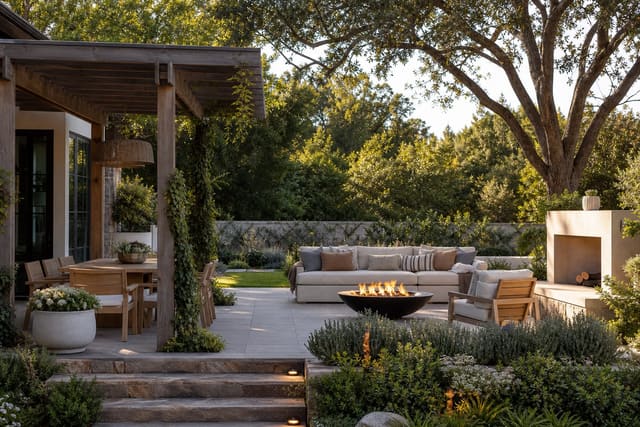
A backyard wellness space is a small, intentionally designed outdoor zone for physical and mental recharge — a turf yoga pad, shaded reading nook, stretching deck, or quiet garden seat. It does not require a large yard: an 8×8-foot footprint is enough to create a functional, restorative corner. Relaxation is the number-one stated motivation for backyard upgrades, cited by 62% of homeowners.
What Is a Backyard Wellness Space?
A backyard wellness space is any outdoor zone intentionally designed for rest, movement, or sensory recovery — from a simple turf pad used for morning yoga to a full recovery circuit with a sauna, cold plunge, and meditation garden. The defining quality is intention: every material, plant, and surface choice serves the experience of slowing down rather than the logic of utility or storage.
The concept started on the West Coast with turf yoga areas installed beside pools and patios, where designers noticed that clients who had a designated movement surface actually used it. It has since spread nationally as homeowners recognize that a well-designed 8×8-foot corner can change the way they experience their yard every single day. Wellness is now the fastest-growing outdoor design search cluster nationally.
The distinction between a wellness space and a general seating area is specificity of purpose. A pair of lawn chairs is not a wellness corner. A cedar platform with a grip-surface yoga mat area, screened on two sides, with lavender planted at the border — that is a wellness corner, and it signals to your nervous system that this zone has a different purpose from the rest of the yard.
What Are the Best Surfaces for an Outdoor Yoga or Meditation Space?
Soft artificial turf and cedar or composite deck platforms are the two most practical surfaces for outdoor yoga and meditation; turf cushions joints and works barefoot, while a deck provides a stable, level plane that also supports furniture and accessory pieces. The right choice depends on how you plan to use the space most.
| Surface | Feel | Best Use | Maintenance | |---|---|---|---| | Artificial turf | Soft, cushioned | Yoga, stretching, barefoot movement | Rinse periodically, brush pile | | Cedar deck platform | Firm, warm | Meditation, furniture, multi-use | Annual seal or oil | | Composite decking | Firm, durable | Multi-use, modern aesthetic | Low, hose clean | | Natural stone or pavers | Hard, cool | Meditation seat, surrounding path | Low | | Decomposed granite | Moderate, textured | Zen garden paths, border area | Rake as needed |
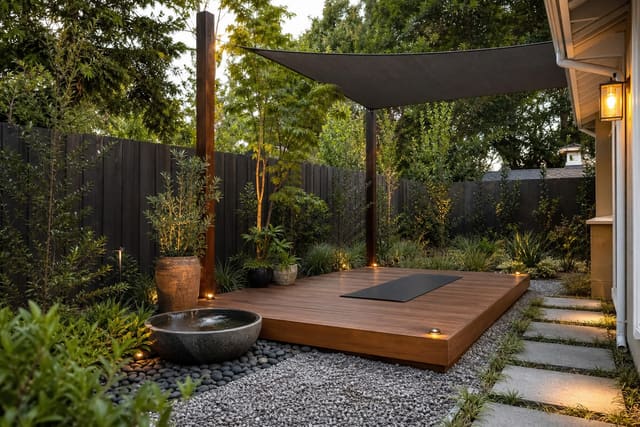
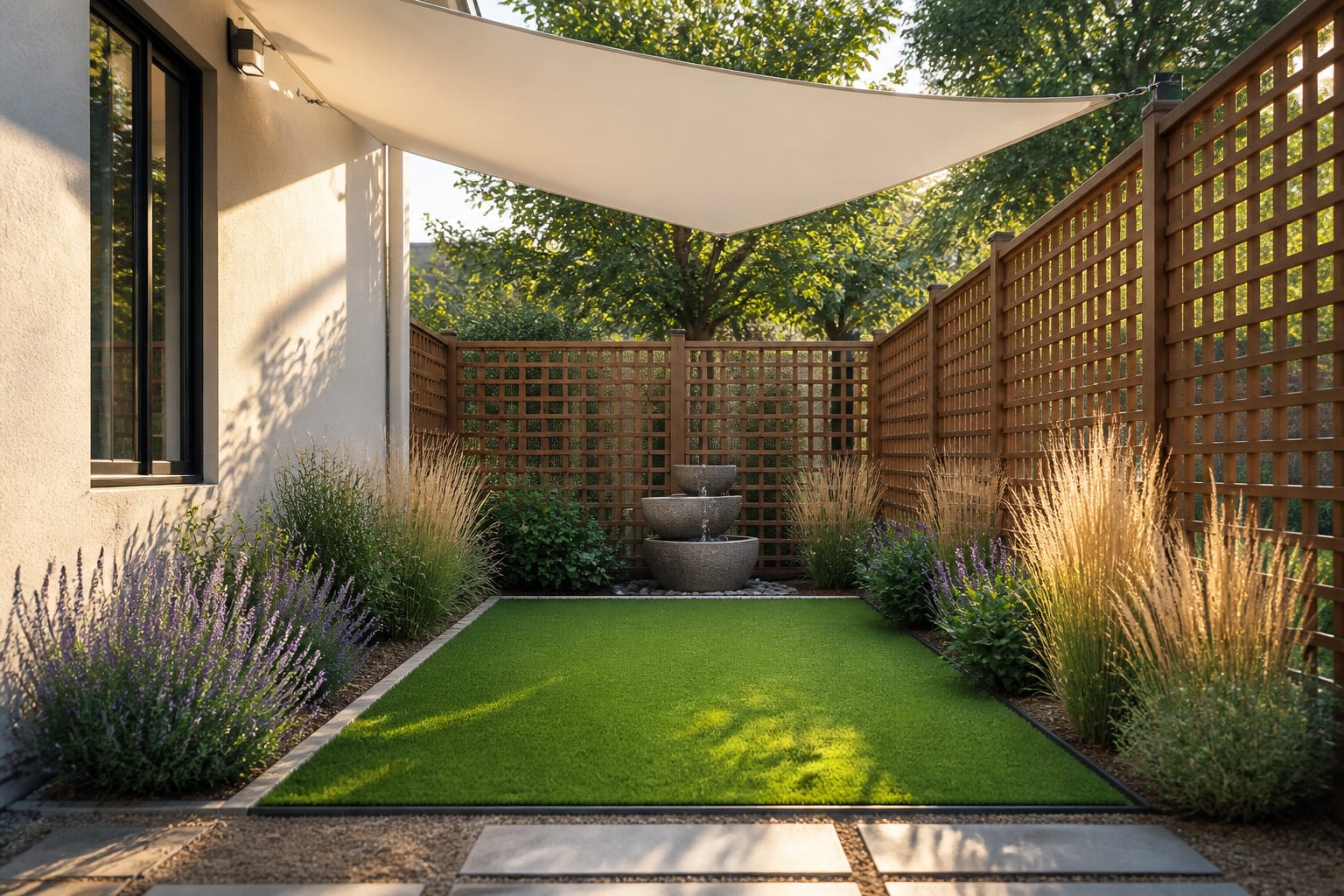
For a yoga-primary space, a 6×8 to 8×10-foot turf pad gives a single practitioner room for a full mat and comfortable transitions between poses. Pair it with a 2-foot border of decomposed granite or rounded river gravel to define the edge and create a clean visual frame between the turf and the surrounding lawn or planting beds.
For meditation-primary use, a small cedar platform — even a 4×4-foot square elevated just 4–6 inches off the ground — creates an above-grade seating point that reads as a room threshold. The slight elevation matters psychologically: it signals that you have stepped into a different space.
How Much Space Do You Need for an Outdoor Wellness Area?
An 8×8-foot footprint is the functional minimum for a solo yoga, stretching, or meditation space; a 10×12-foot zone accommodates a mat area plus furniture; a 12×16-foot or larger layout supports multiple elements — a yoga pad, a meditation seat, and a small water feature — simultaneously.
| Use | Minimum Footprint | Comfortable Footprint | |---|---|---| | Solo yoga / stretching | 6×8 ft | 8×10 ft | | Meditation nook with seating | 6×6 ft | 8×8 ft | | Reading nook with shade | 6×6 ft | 8×10 ft | | Multi-element wellness corner | 10×12 ft | 12×16 ft | | Full recovery zone (sauna + plunge + wellness) | 16×20 ft | 20×30 ft |
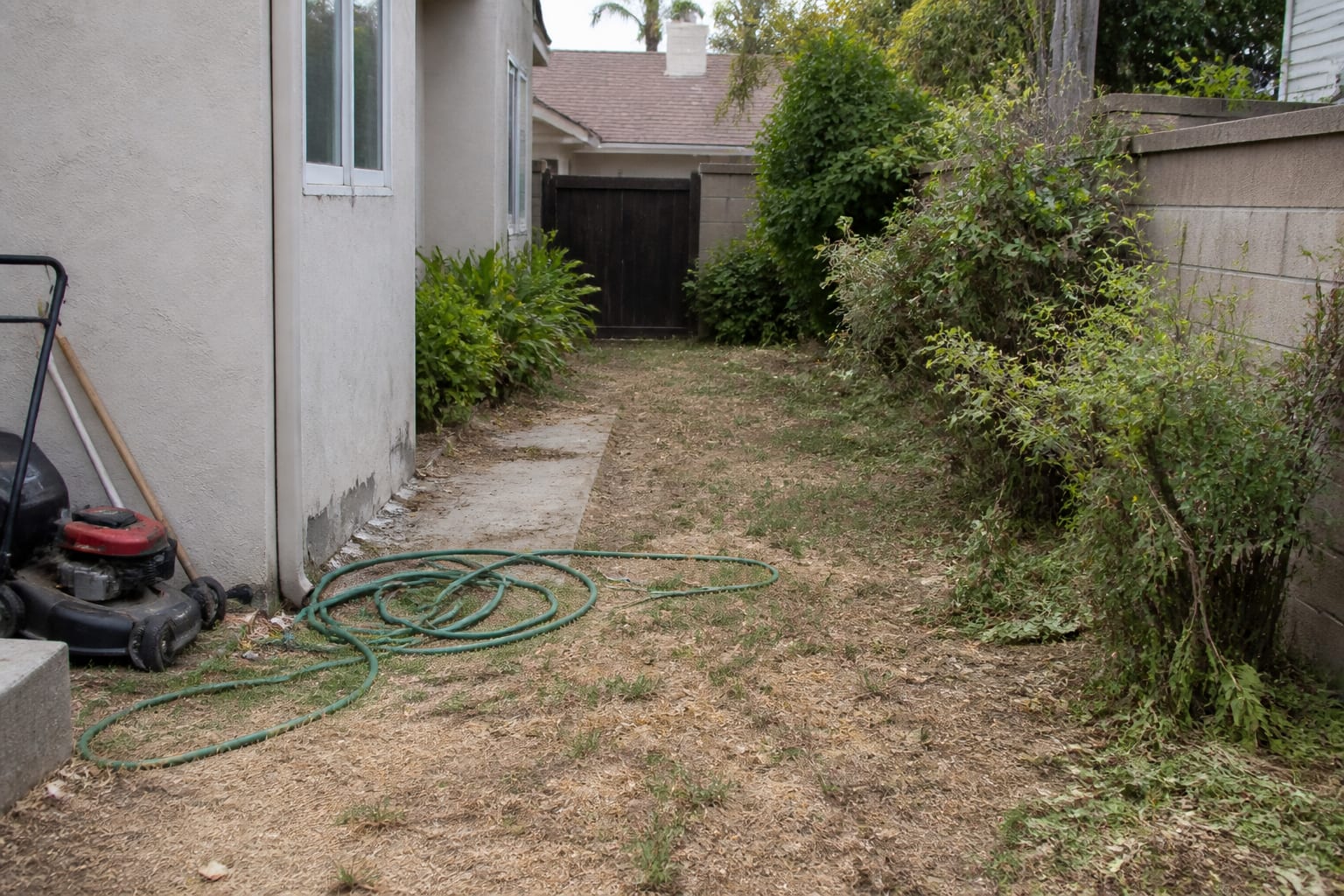
Most urban and suburban backyards have at least one 8×8-foot zone that is currently underused — a side yard strip, a far corner behind the garage, or the shaded area beside a fence. These overlooked spaces are often the best candidates for a wellness corner because they already have partial natural seclusion from the main yard activity areas.
The key insight from designers who have built these spaces is that the wellness corner works best when it is slightly removed from the main entertainment area. You do not want to do yoga in the middle of the patio; you want a corner that takes a few steps to reach, creating a micro-transition that primes the mind for a different mode.
How Much Does a Backyard Wellness Space Cost?
A simple turf yoga pad with a border and a privacy screen costs a few hundred to a few thousand dollars; a full recovery zone that adds an outdoor sauna and a cold plunge is a larger investment because those two elements carry the bulk of the cost. The wellness corner is one of the few backyard upgrades that scales smoothly from a weekend project to a multi-element installation.
| Element | Typical cost | Notes | |---|---|---| | Turf yoga pad (6×8 to 8×10) | A few hundred–$3,000 | Varies with turf grade, base prep, and border material | | Cedar or composite deck platform | $1,000–$5,000+ | Depends on size, material, and whether it is elevated | | Privacy screen or pergola corner | $500–$5,000+ | Lattice and planting at the low end; a built pergola higher | | Recirculating water feature | $100–$1,500 | Tabletop fountain to a pondless waterfall | | Outdoor sauna (optional) | $3,000–$10,000+ | Barrel kit to custom cedar cabin | | Cold plunge (optional) | $200–$28,000 | Stock-tank DIY to a built-in chiller plunge |
A wellness corner is best phased. Start with the surface and one privacy element — the two changes that make a space feel like a room — then add a water feature or sensory planting. The sauna and cold plunge are the largest line items and the ones most homeowners add later, which is why planning the full recovery-zone footprint up front (even if you build it in stages) protects the final layout.
How Do You Create Privacy for a Backyard Meditation Space?
The fastest privacy upgrade is a pergola corner or an L-shaped lattice screen with climbing plants; the most enduring solution is a planted hedge of fast-growing arborvitae, bamboo in planters to prevent spreading, or tall ornamental grasses. You do not need a full privacy fence to feel contained in a wellness space — partial screening on two sides is often enough.
The psychology of enclosure is central to why privacy matters. A space with overhead coverage — a pergola, sail shade, or tree canopy — plus two screened sides reads as an outdoor room rather than an exposed patch of yard. That sense of enclosure is what shifts the space from functionally adequate to genuinely restorative.
Sensory privacy planting options that also serve the wellness dimension:
- Lavender — fragrant, low-maintenance, pollinator-friendly; plant in mass along the border of a meditation nook for fragrance that carries in warm weather
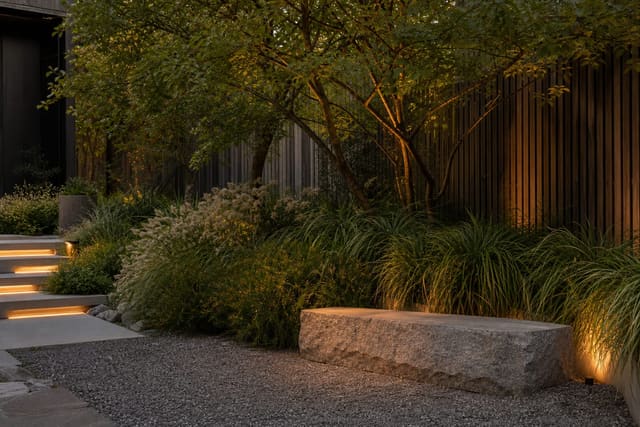
- Ornamental grasses — Miscanthus and Calamagrostis varieties rustle in light breezes, producing a natural white-noise effect that masks traffic and neighbor sounds
- Arborvitae or Italian cypress — fast-growing vertical privacy without significant ground footprint; plant 3–4 feet apart for a solid screen within two seasons
- Native flowering shrubs — seasonal color and fragrance without high maintenance; species selection varies by climate zone
A pergola corner is the most versatile structure for a wellness zone because it provides overhead enclosure, supports climbing plants for additional privacy, and creates a shade canopy that makes the space usable through midday heat in summer.
How Do I Create a Meditation Space in My Backyard?
Start with a level 6×6-foot base surface — turf, pavers, or a small deck platform — add one focal element such as a stone seat, a small water feature, or a planted pot arrangement, and screen at least two sides for enclosure. A meditation space becomes functional with three elements: a comfortable seat, visual privacy, and one sensory anchor — fragrance, sound, or moving water.
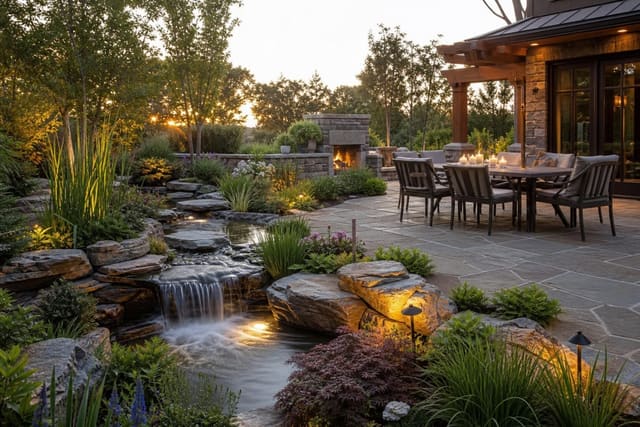
The water feature is the highest-impact single addition. A small recirculating fountain or a low pondless waterfall provides ambient sound that masks traffic and neighbor noise without requiring significant space or plumbing. A 12-inch tabletop-scale recirculating feature placed on a stone plinth is enough to anchor the sensory experience and create an acoustic boundary around the space.
For a complete wellness garden, layer these elements outward from your meditation seat:
- Center: comfortable low seat or cushioned platform, oriented toward your preferred focal direction — a water feature, a specimen plant, or open sky
- Immediate surround: fragrant ground cover such as creeping thyme or low lavender — plants that release scent when brushed
- Middle ring: taller sensory plants including ornamental grasses and flowering shrubs that provide movement and sound
- Edge: privacy screen, planted hedge, or pergola corner with climbing vines
- Optional addition: a small recirculating water feature to anchor ambient sound
How Does a Wellness Space Combine With a Sauna and Cold Plunge?
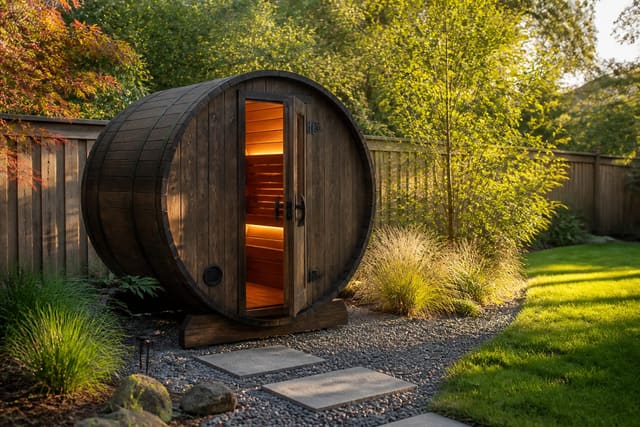
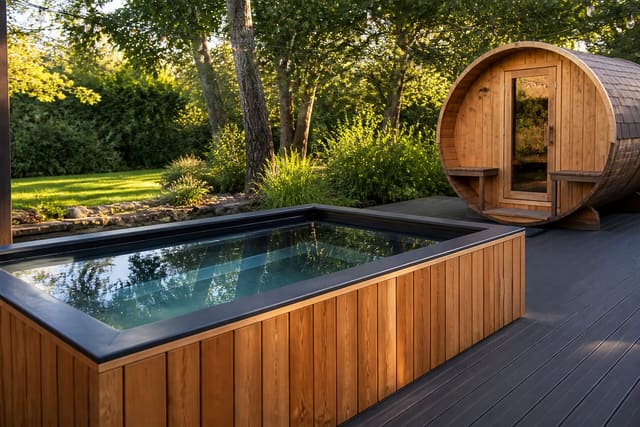
A full backyard recovery zone connects the sauna, cold plunge, and wellness corner in a single circulation loop — move from heat to cold to quiet restoration in the same outdoor zone. The wellness corner serves as the cool-down and integration phase after contrast therapy, where a lounger or low platform between the other stations gives the body time to return to baseline temperature.
This is the most aspirational version of the outdoor wellness concept and the layout that generates the most design interest in fitness and wellness communities. Plan a 16×20-foot minimum footprint for the three-element recovery zone, with non-slip pathways connecting each station and a consistent material palette — cedar, composite, and gravel — tying them together visually.
For the wellness corner within a recovery zone, prioritize these elements:
- A low platform or lounger at near-ground level for post-plunge rest; elevated lounges feel less grounded than floor-level platforms in this context
- Overhead shade — a pergola or sail shade ensures the zone functions through midday summer heat when recovery sessions are most common
- Proximity to the outdoor shower so the transition from plunge to rest is clean and comfortable without tracking water across the yard
- Sensory planting at the perimeter — lavender and ornamental grasses at the edge of the recovery zone create a fragrant, sound-buffering boundary
How Can You Preview a Backyard Wellness Space Before You Build?
Upload a photo of your yard — including that overlooked side yard or bare corner — to Re-Design and see a photorealistic render of a turf yoga pad, meditation garden, or full recovery zone in place. The emotional before/after is one of the most shareable formats in home design: cluttered side yard to serene wellness corner in a single image.
The render is especially useful for persuading partners or family members who cannot picture the transformation from a verbal description alone. A photorealistic image of the proposed space — in your actual yard, not a styled stock photo — shortens the decision conversation from weeks to an afternoon.
Try these prompts:
- Turf yoga pad with lavender border and shade sail
- Meditation garden corner with water feature and ornamental grasses
- Full recovery zone with sauna cold plunge and wellness lounge corner
The full recovery zone render — all three elements styled together in one image — is the version most likely to be shared in fitness and home design communities, bringing organic reach back to your project and giving contractors a clear brief to quote against.
Frequently Asked Questions
How do I create a meditation space in my backyard?
Start with a level 6×6-foot surface — turf, pavers, or a small cedar platform — add a comfortable low seat or cushioned platform, and screen at least two sides for enclosure. A small recirculating water feature or fragrant plantings such as lavender complete the sensory experience. The space does not need to be large to feel genuinely restorative.
What is a wellness garden?
A wellness garden is an outdoor space designed around sensory restoration — fragrant plants, sound from moving water or rustling grasses, shade for thermal comfort, and surfaces suited to movement or quiet sitting. It prioritizes how the space makes you feel over how it reads from a distance, and typically features plants like lavender, ornamental grasses, and native flowering shrubs.
How much space do I need for outdoor yoga?
A solo yoga practice requires a minimum of 6×8 feet for a full mat plus comfortable transitions; 8×10 feet is more comfortable and allows free movement without hitting walls or planters. Most overlooked backyard spaces — a side yard strip, a shaded corner — meet this minimum footprint requirement.
How much does a backyard wellness space cost?
A simple turf yoga pad with a border and privacy screen can be installed for a few hundred to a few thousand dollars depending on size, surface material, and screening method. A full recovery zone with an outdoor sauna ($3,000–$10,000+) and a cold plunge ($200–$28,000 depending on type) plus the wellness-corner landscaping is a larger investment, but it addresses multiple backyard goals within a single coherent design.
What plants work best in a wellness garden?
Lavender, ornamental grasses including Miscanthus and Calamagrostis, arborvitae, and native flowering shrubs are the most practical choices across a range of climates. They provide fragrance, rustling sound, visual privacy, and seasonal color without demanding intensive maintenance. Always choose species suited to your local climate zone and sun exposure.