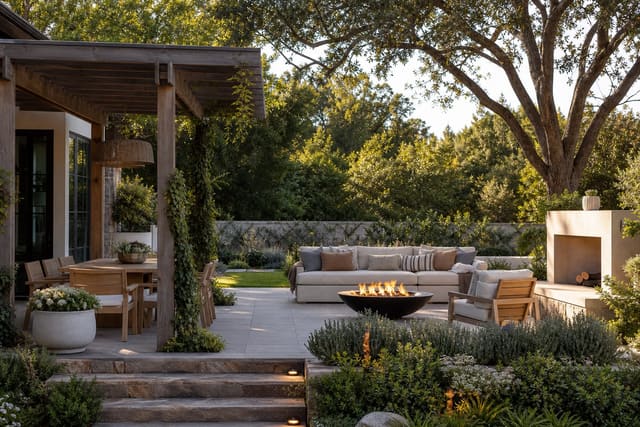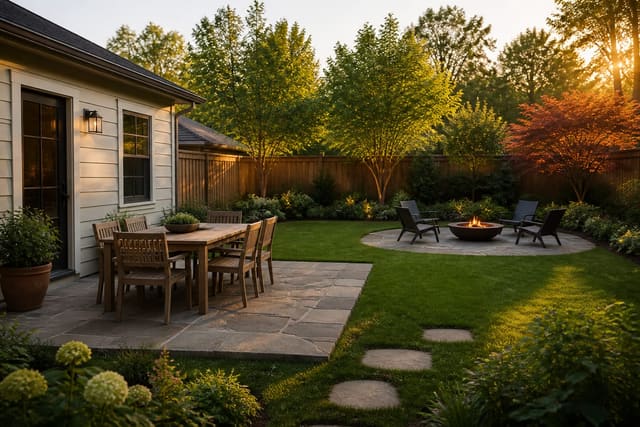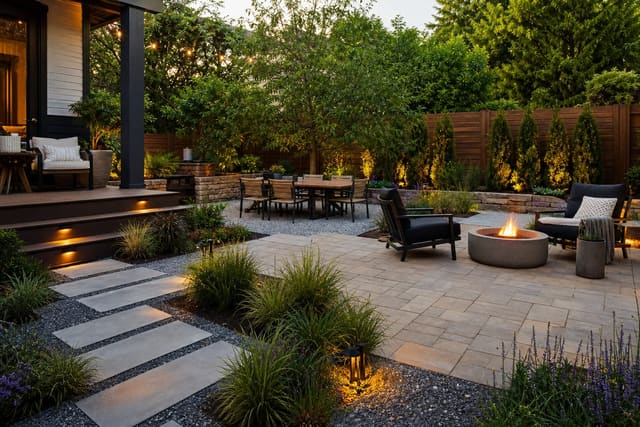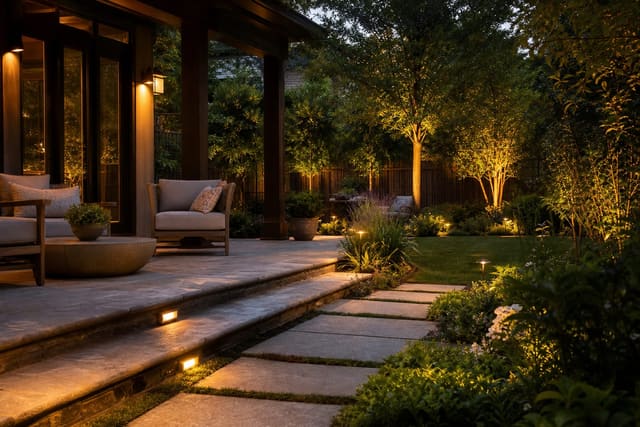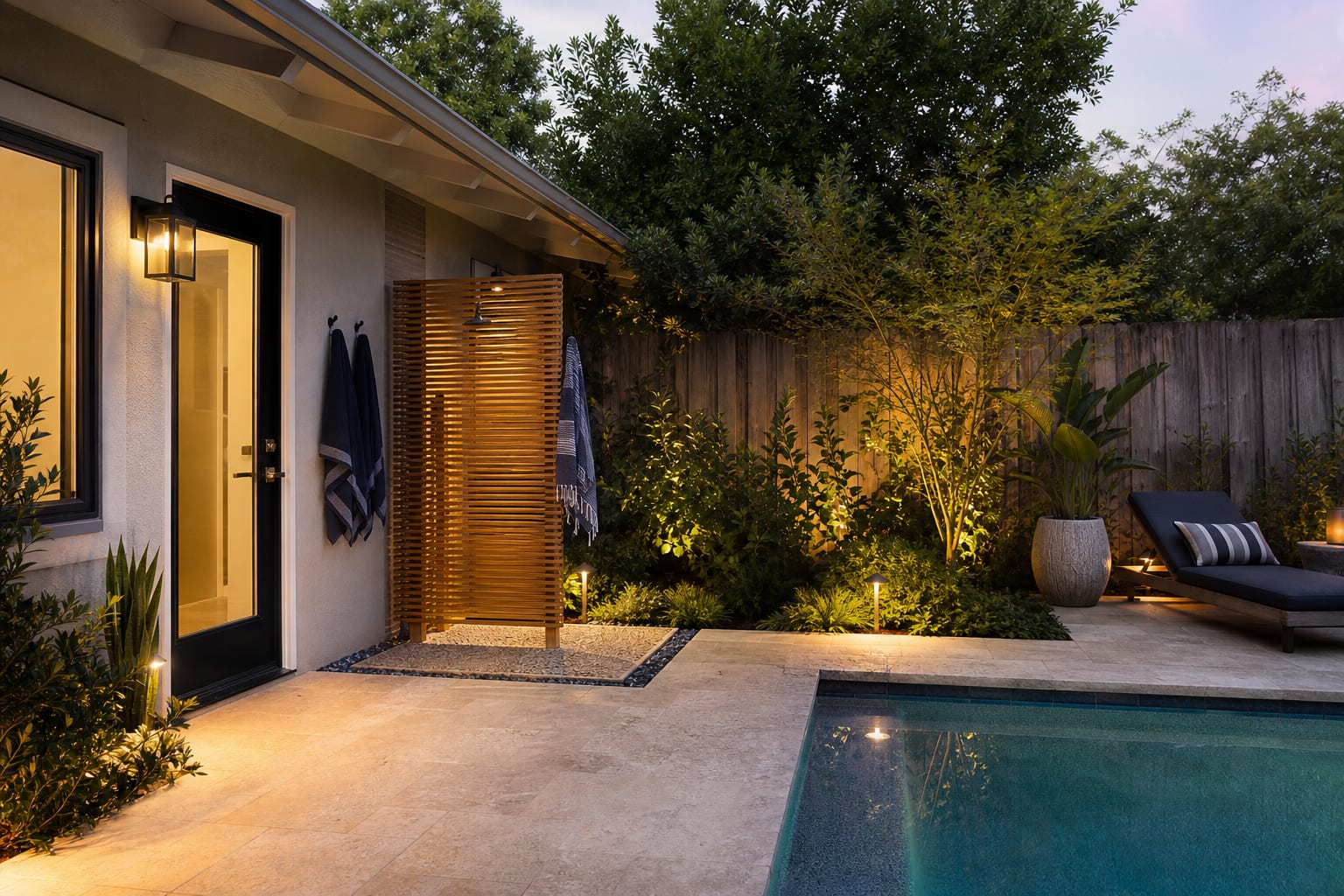
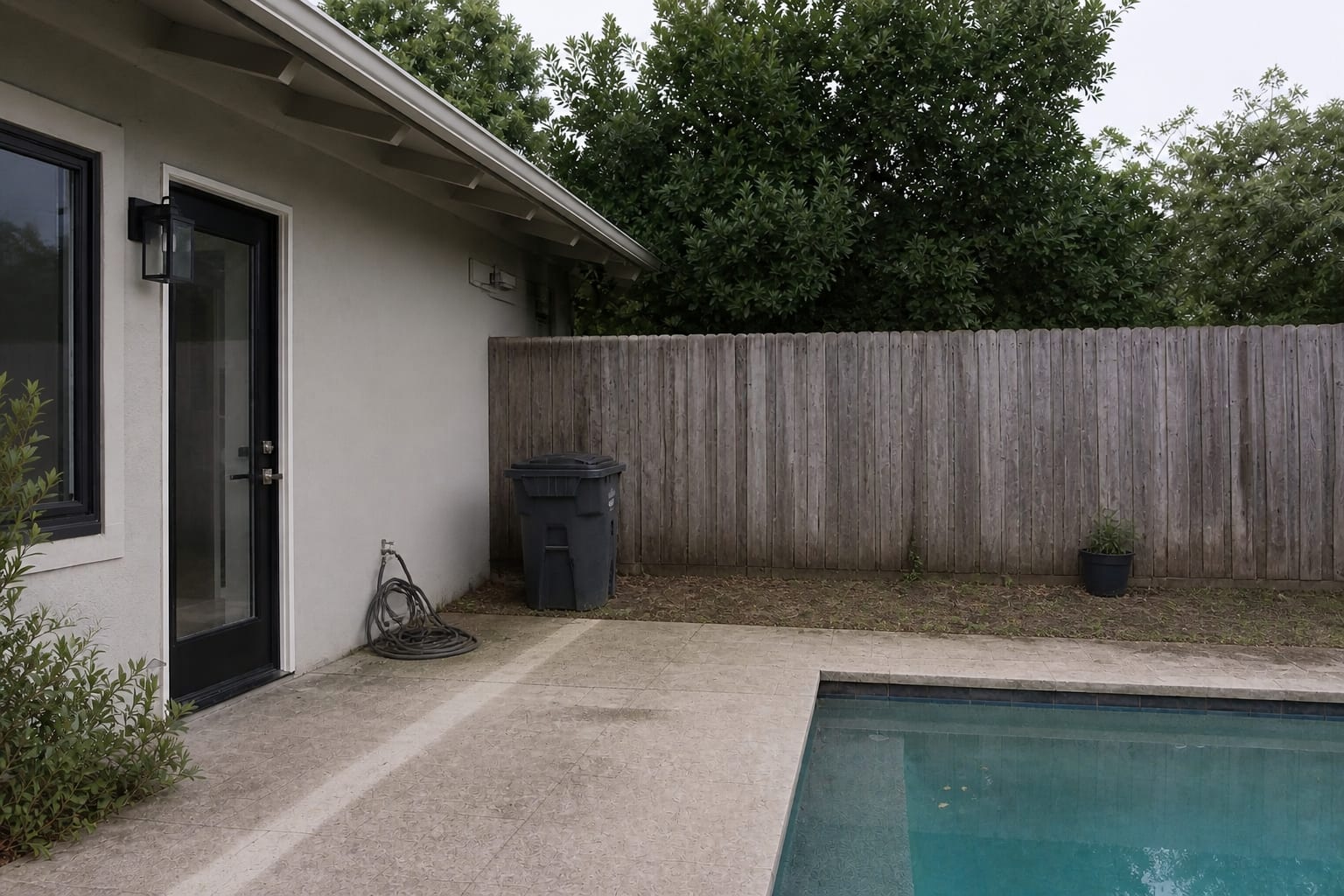
An outdoor shower works best when a concrete or composite deck slopes 2% to a French drain, a teak or stainless fixture sits at least 6in off the back wall, and a privacy screen runs 7ft tall on at least two sides. Get the site, plumbing, drainage, and privacy right first, and the backyard becomes far easier to keep clean.
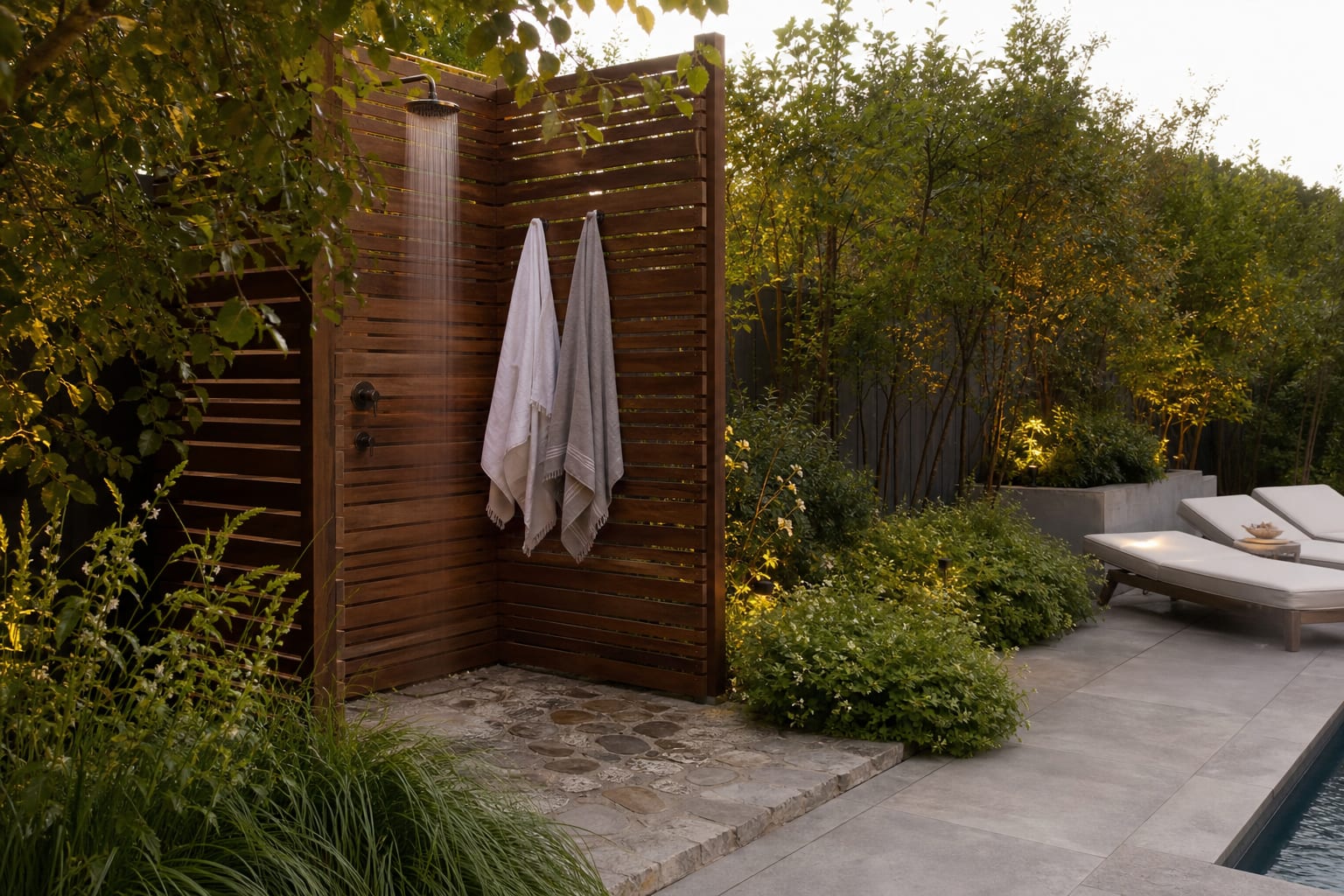
How do you install an outdoor shower that works every day?
Install by choosing a drainable location, confirming code requirements, running cold-only or hot-and-cold lines, building a stable non-slip floor, adding privacy, and placing controls where wet hands can reach them. For a pool shower, the best spot is usually 6 to 12 feet from the pool edge or along the route to the house, not hidden in a far corner. Keep 36 inches of clear approach space and a wet-zone floor of at least 3 by 3 feet.
Drainage separates a useful shower from a soggy patch. Some sites can drain to gravel or a planted dry well; others need a permitted connection. Local plumbing rules decide the answer, especially with soap, hot water, or a roofed enclosure involved.
Which location should lead the garden shower design?
Let the mess you're stopping choose the spot: pool water and sand belong near towel storage, muddy boots belong near the side gate or vegetable beds, and a dog rinse station needs a tougher floor and a shampoo ledge. Keep the shower on a connected path — crossing wet lawn after rinsing defeats the purpose. A short run of textured pavers or deck boards between shower and door beats a pricier valve trim. If the yard also hosts games, check circulation against backyard bocce court planning ideas so the shower doesn't block play.
Layer privacy instead of sealing it like a closet. Slatted cedar, painted battens, corrugated metal, tall grasses, or evergreen shrubs all work, but leave gaps for air movement so a boxed-in shower doesn't stay damp.
| Outdoor shower location | Best use | Spec that keeps it practical |
|---|---|---|
| Pool edge rinse station | Chlorine, sunscreen, wet kids | Keep near towel hooks with a direct dry path to the house. |
| Side yard shower | Beach gear, dogs, muddy boots | Use a handheld sprayer and a grit-tolerant floor. |
| Garden shower | Post-gardening rinse, visual focal point | Place near a hose bib, not behind delicate planting. |
| Deck shower | Small lots, limited ground work | Confirm drainage and waterproofing before daily use. |
| Enclosed spa-style shower | Frequent hot-water rinsing | Plan code, venting, and soap drainage before finishes. |
Test this on your own photo with ReDesign before choosing a final direction — keep the house edge, horizon line, hardscape, and main path visible.
Five outdoor shower ideas worth testing before plumbing starts
- Slatted wood shower beside the pool path. Use cedar or teak with 1/4 to 1/2 inch gaps so the screen breathes, and keep hooks on the dry side.
- Cold-water post shower for muddy garden days. A powder-coated or stainless standpipe over a 4 by 4 foot gravel pad works near raised beds.
- Handheld sprayer for kids, dogs, or surfboards. Mount the bracket 42 to 48 inches high, with a higher hook for adult rinsing.
- Fence-corner shower with stone underfoot. Textured porcelain paver or rough-cut stone gives wet feet grip, sloped so water won't pool at the fence base.
- Evening lighting paired with the shower. Shielded fixtures along the approach, coordinated with warm outdoor lighting ideas, keep it safe without glare.
Match the finish palette to the yard: stainless and teak suit pool decks, black fixtures pop against pale stucco or cedar, and aged brass fits a softer garden. Skip shiny indoor-style chrome unless the house exterior already leans crisp.
Common outdoor shower mistakes to avoid
Don't treat installation like a hose with prettier hardware — plan a legal supply, secure shutoff, freeze protection where needed, and a wastewater route before burying lines. Avoid slick floors: smooth tile and polished stone turn treacherous with sunscreen and bare feet, so choose textured, cleanable surfaces and skip loose stones that travel into the pool.
Don't skimp on storage — add at least two hooks per regular user and a shelf 48 to 54 inches up for goggles or dog shampoo. Check privacy from every real vantage point, including upstairs windows, before fixing screen height. And connect the shower to the rest of the yard's rhythm; if movie nights or pool parties happen nearby, compare the shower path with outdoor movie night layout ideas before fixing pipes in the wrong corner.
Use AI to preview your outdoor shower before you commit
The hard choices here are spatial: where the shower sits, how tall the screen feels, and whether the rinse zone cleans up the yard or crowds it. Upload a straight photo of the pool edge or side yard, then test a wood-screen shower, a masonry wall, and a compact post shower from the same angle. Check whether the shower blocks a gate swing or the screen makes the side yard feel narrow, then adjust placement or enclosure depth accordingly.
Plumbers, electricians, and local code officials still handle supply lines, drains, and freeze protection. The preview just helps you reject the wrong idea before trenching and tile make a mistake expensive.
Frequently Asked Questions
What is the best flooring for an outdoor shower?
Teak decking over an aluminum frame drains instantly and stays cool underfoot. Concrete with a broom finish and 2% slope toward a central drain is cheaper, longer lasting, and takes tile over the top.
Do outdoor showers need a drain?
Yes — a 4in French drain or a surface drain connected to a drywell or the landscape handles runoff. Connecting to the sanitary sewer requires a permit in most municipalities.
How tall does an outdoor shower privacy screen need to be?
Use 7ft on the two sides facing the house and neighbor. The open side facing the garden is acceptable if the user stands more than 10ft from the fence line.
Can you use an outdoor shower year round?
In USDA zones 8 and warmer, a conventional outdoor shower runs year round. In zones 5-7, winterize by draining the supply line and installing a freeze-proof wall hydrant as the shut-off.
What is the best material for an outdoor shower wall?
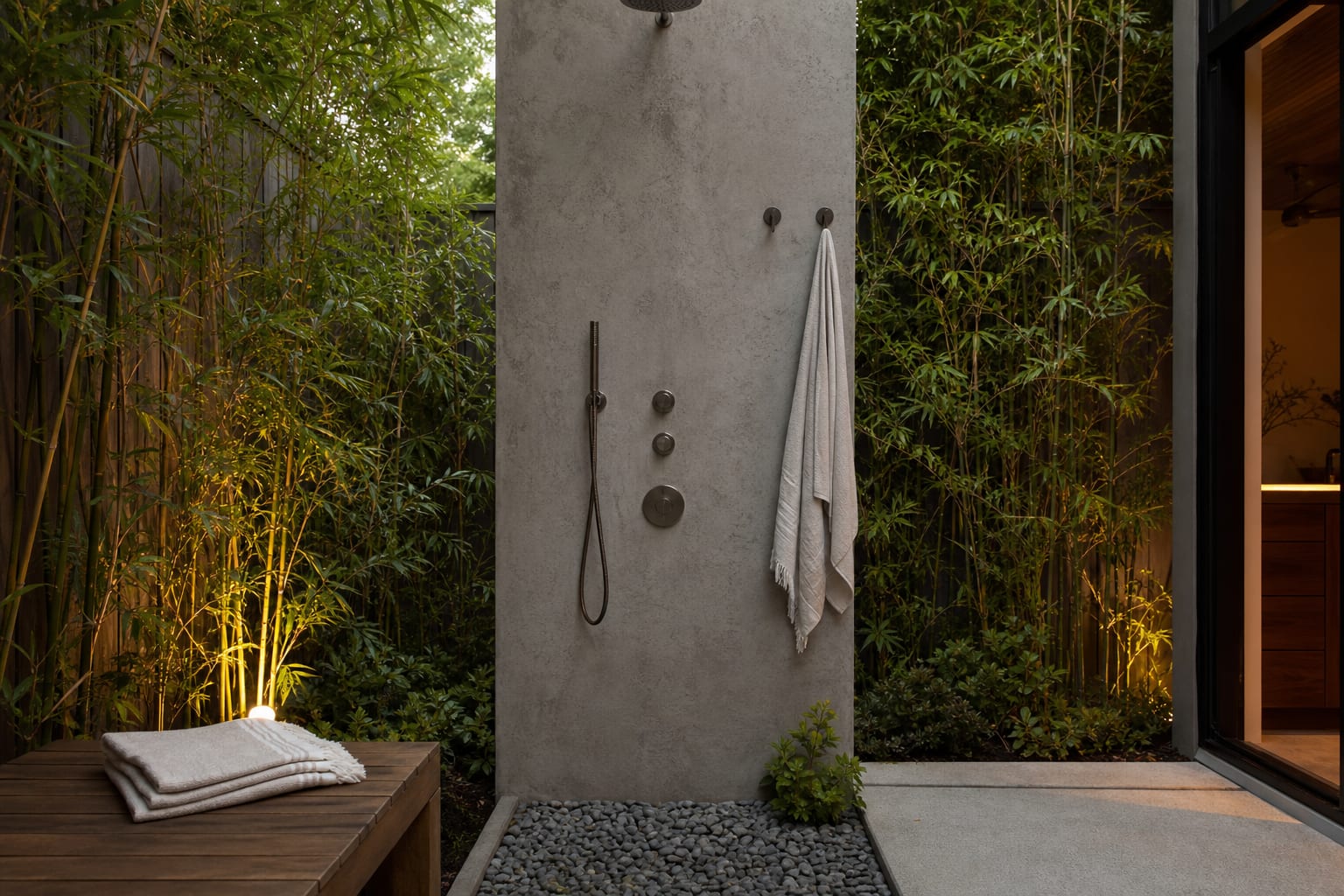
Large-format porcelain tile on a cement-board backer is the most durable option. Teak panels look warmer but need annual oiling, while cedar slatted screens weather well in rain.
> Try this: Ready to see this on your own outdoor space? Open ReDesign and run the preview before you buy materials, plant, drill, or move furniture.
Three transformations to try
1. Teak deck with stainless wall fixture 2. Concrete base with privacy screen 3. Cedar slat screen with open-sky roof