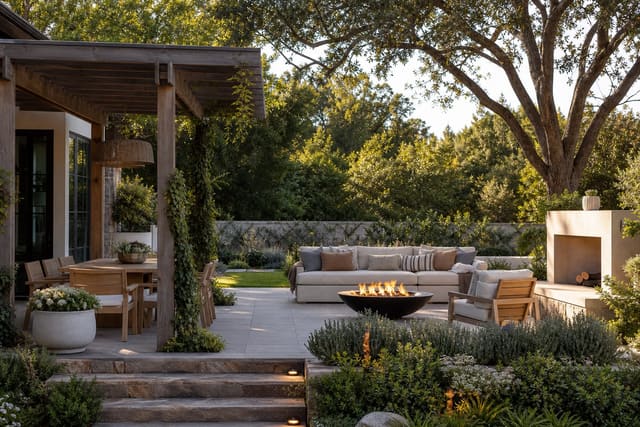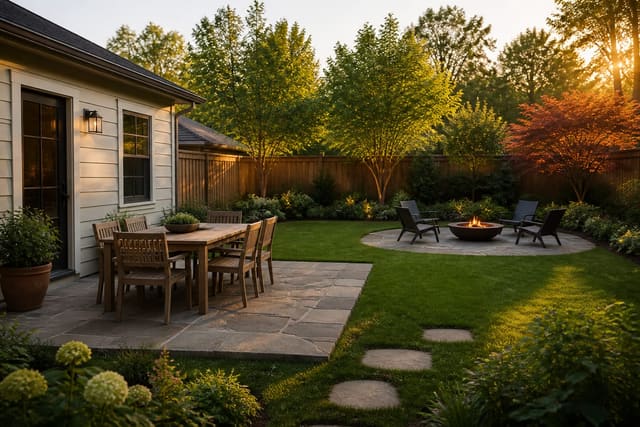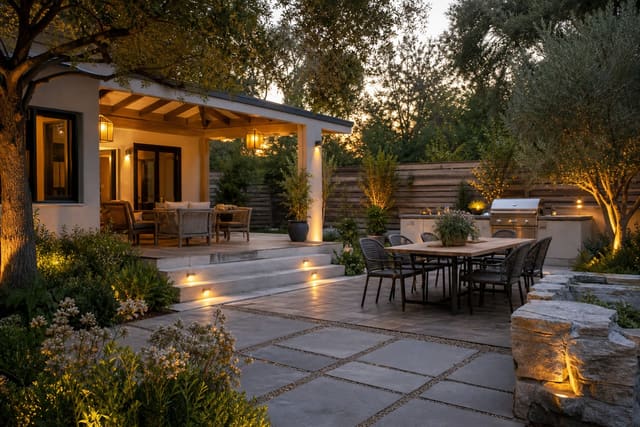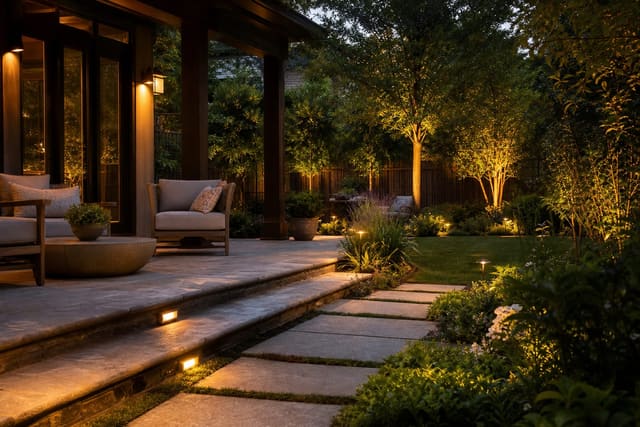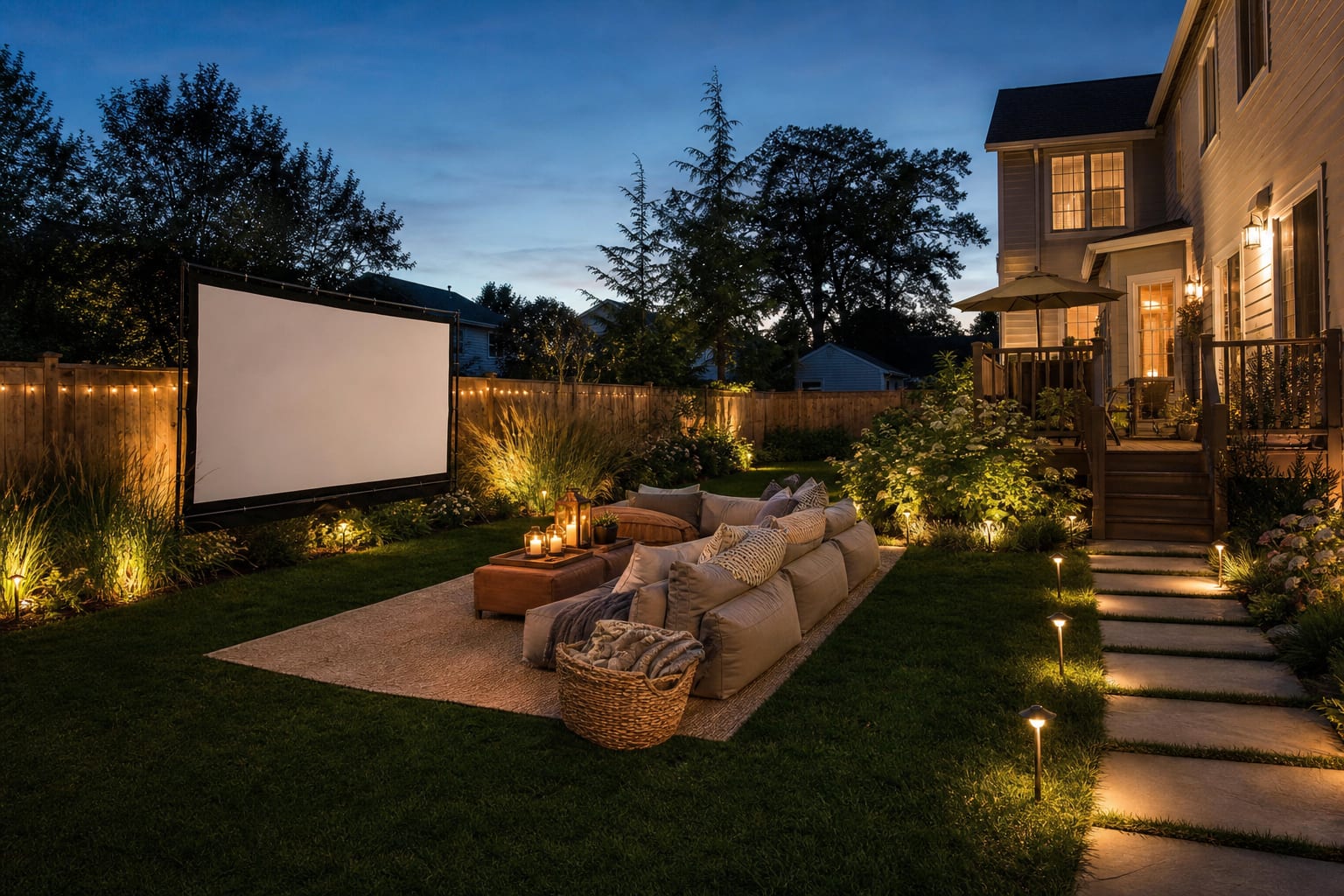
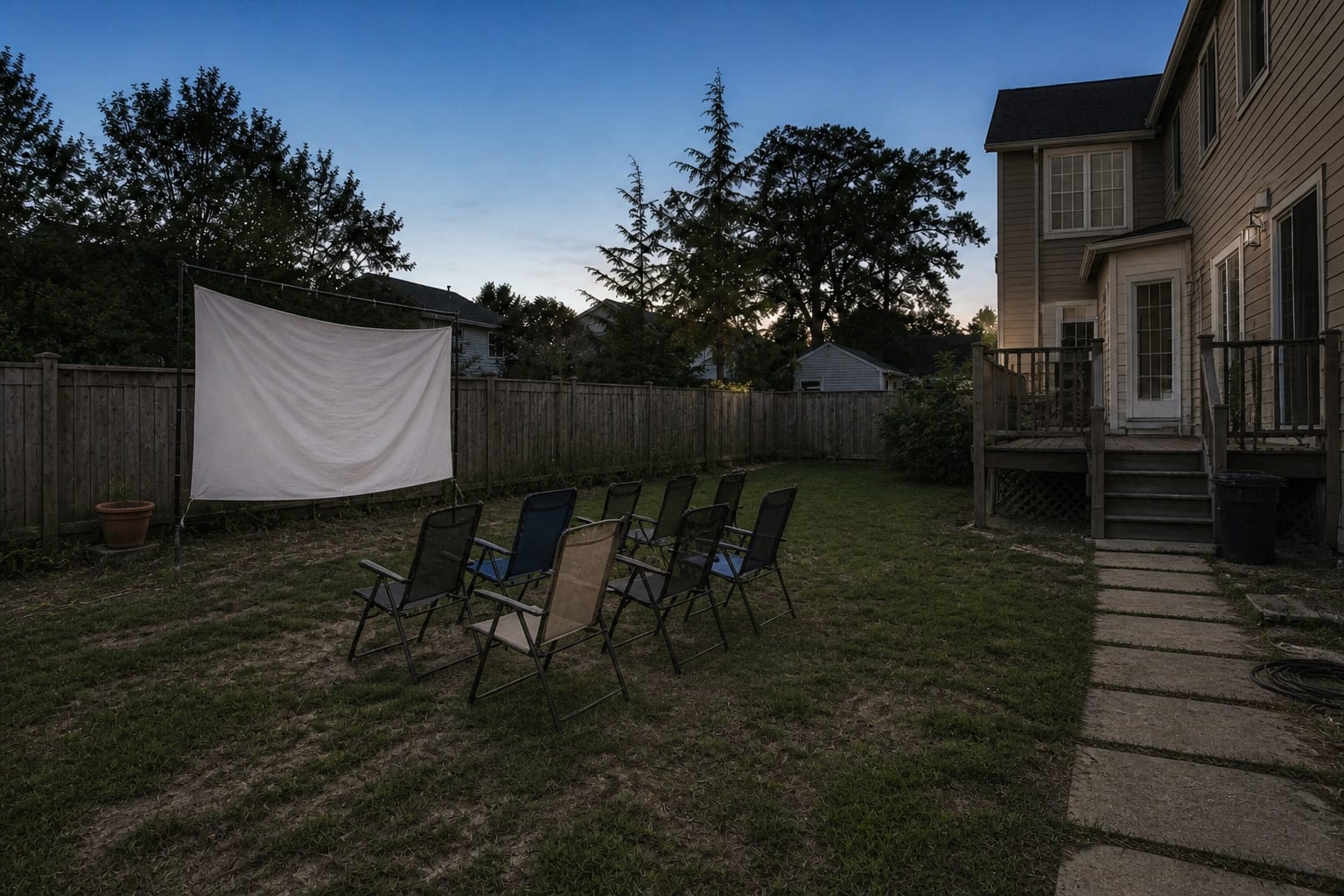
You build a convincing backyard movie theater by projecting onto a 100-120in tensioned screen at least 8ft off the ground, using a projector rated 3,500+ lumens, and seating guests 1.5-2x the screen width back. Get the screen, seating, sound, power, and lighting to agree with the shape of your yard, and you skip the concrete, permanent mounts, and tech-closet clutter.
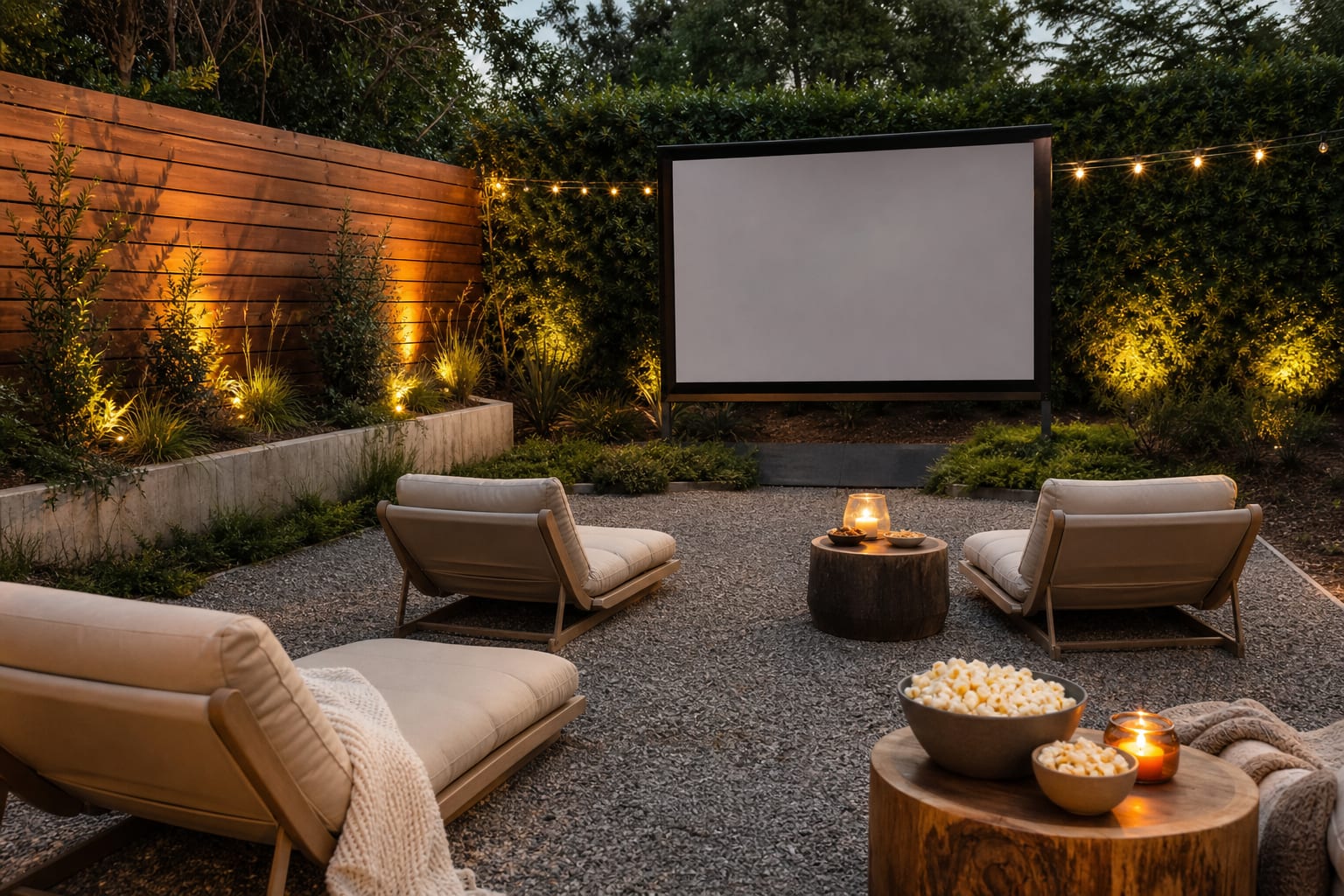
What makes a backyard movie theater feel designed instead of improvised?
The best location isn't the biggest lawn patch — it's the spot where the screen sits flat, the projector lines up cleanly, guests reach seats without crossing cables, and stray light won't wash out the picture. A blank stucco wall, garage door, fence panel, or portable frame can all work if the surface is stable and mostly perpendicular to the projector. A screen tilted even a few degrees looks trapezoid-shaped and forces digital correction that softens the image. On a sloped yard, put the screen at the low end so viewers look level or slightly down, not up.
If the movie area shares space with games or dining, make it the evening anchor and let other zones support it. A side yard already set up for games can double as a pre-show hangout — see these backyard bocce court planning ideas for fitting recreation near the movie zone without blocking play.
Which screen and projector setup should lead the plan?
Brightness, screen size, throw distance, and ambient light all need to be chosen together. A 100in screen (about 87in x 49in at 16:9) suits most streaming films and sports without pushing the projector past its comfort zone; a 150in screen often overwhelms a small yard.
| Setup choice | Best backyard use | Spec that keeps it realistic |
|---|---|---|
| Freestanding fabric screen | Renters, lawns, patios, occasional hosting | Use a frame with guy lines or weighted feet so wind doesn't turn the image into a sail. |
| Inflatable screen | Large lawns and parties | Allow extra setup time; keep blower noise behind the seating. |
| Garage or wall projection | Tight patios and driveways | Test surface texture first — siding seams and stucco bumps can make faces look dirty. |
| Short-throw projector | Shallow patios, close seating | Confirm the throw ratio before buying; placement is less forgiving than ads suggest. |
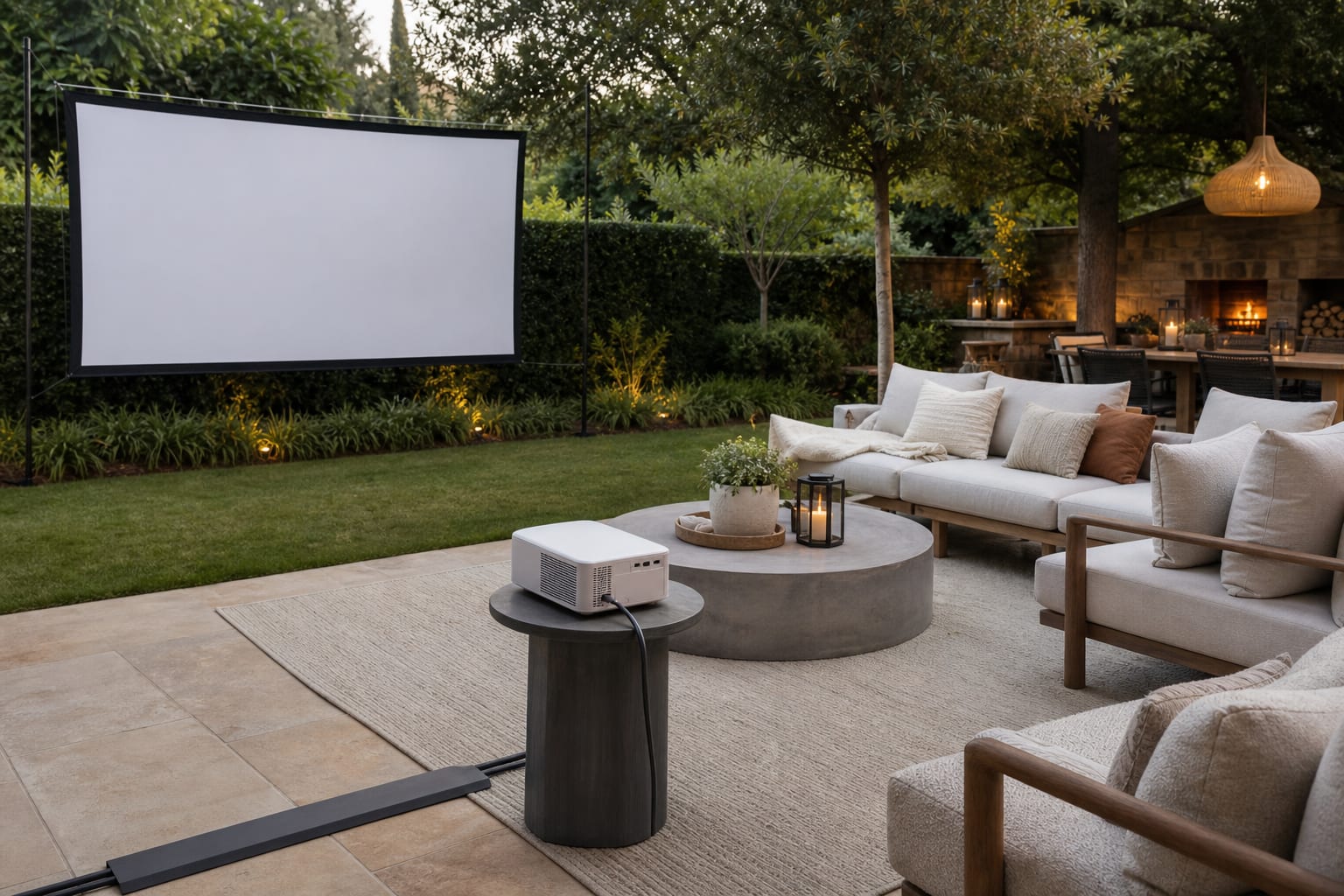
| Standard portable projector | Flexible movie nights | Measure lens-to-screen distance; give it a stable table 24-30in high. |
Outdoor projection needs darkness more than a powerful spec sheet. Start after dusk, kill porch lights facing the screen, and avoid placing it under a bright soffit fixture. For safe routes after dark, borrow ideas from warm outdoor lighting for patios and paths: light the ground and edges, never the screen or the viewer's eyes.
Sound needs placement, not just volume. A Bluetooth speaker parked at the projector often makes dialogue feel detached from the picture. Put the main speaker near or under the screen, raised 18-30in off the ground so voices don't vanish into grass and blankets. Near neighbors, lower the bass rather than the whole mix — low frequencies carry through fences faster than dialogue does.
Test this on your own photo with ReDesign before committing — keep the house edge, horizon line, hardscape, planting beds, and main path visible so the preview solves the space you actually have.
How should seating, snacks, and power be arranged?
Seating creates the real geometry of the setup, so arrange it before running cables. A sofa plus two lounge chairs needs roughly 10 by 12ft; blankets and floor cushions compress that footprint if adults still have chairs behind them. Keep low seating up front, taller chairs behind, and side tables at the edges so no one crosses the projector beam for popcorn.
- Screen zone: keep 2-3ft clear behind the frame for stakes, weights, or adjustment access, away from planting beds and sprinkler heads.
- Projector placement: use a rigid table or stand, lens near the lower third of the screen, weighted base on uneven pavers.
- Snack table: set 6-10ft off the main viewing axis so wrappers and late arrivals don't become the show.
Keep power boring and safe: use outdoor-rated extension cords, protect connections from damp grass, and never daisy-chain power strips across the lawn. Cover any cord crossing a walking route with a low-profile cable ramp. Frequent hosts should ask an electrician about an exterior GFCI outlet near the movie zone instead of running one cord from the kitchen every weekend.
Comfort keeps guests through the credits — washable throws, a lidded cushion bin, smoke-free mosquito control, and one trash station near the house route. If the zone sits near a pool, coordinate wet traffic with outdoor shower placement and privacy ideas so damp feet don't cross the projector cables.
Common outdoor movie night mistakes to avoid
- Screen too large for the yard. A huge image sounds exciting until the front row sits 7ft away straining their eyes — reduce the size or move seating back first.
- Wrinkled sheet with no tension. Fabric needs clips, a frame, or taut lines top and bottom, or wind ripples through every face.
- One bright floodlight ruins contrast. Motion sensors, pool lights, and string bulbs flatten the image — shield fixtures and keep ambient light behind or beside guests.
- Ignoring weather and dew. Projectors, speakers, and fabric screens hate damp grass and sudden drizzle; keep gear on a dry surface and never leave it out overnight.
- Designing only for the photo. No bathroom path, no drink table, no blanket storage makes a pretty setup annoying after twenty minutes — leave that 36in route open.
Use AI design to preview your backyard cinema before movie night
The expensive-feeling choices here are visual: screen location, seating shape, lighting mood, whether the yard reads cozy or cluttered once equipment appears. Upload a photo from the house door or patio edge, then test a fence-mounted screen, a freestanding lawn screen, and a garage-wall setup from the same angle. Check whether seating blocks the grill route, whether the screen sits too high, and whether the snack table lands where guests will actually use it — a tighter layout with one screen, one seating group, two side tables, and restrained path lighting usually beats a yard full of props.
Professionals still matter for permanent outlets, wall-mounted gear, built structures, and anything near pools or weather exposure. The preview just helps you reject the wrong location while changing your mind is still easy.
Frequently Asked Questions
What size screen do I need for an outdoor movie night?
A 100-120in diagonal screen (about 87in x 49in at 16:9) works for up to 20 seated guests. Sit no farther than 2x the screen width for comfortable viewing — roughly 14-15ft back for a 100in screen.
How many lumens does an outdoor projector need?
3,500 lumens is the minimum for viewable dusk projection; 5,000+ lumens is better if you can't wait until full dark, such as summer evenings before 9pm.
What is the best outdoor movie screen material?
PVC tensioned frame screens (1.0 or 1.1 gain) look sharpest because they stay taut. Inflatable screens are convenient but billow in wind and have lower gain that washes out the image.
How do I get good sound for an outdoor movie?
Two battery-powered Bluetooth speakers flanking the screen at 45-degree angles produce better stereo imaging than one unit. Wired outdoor speakers on a dedicated amplifier are the permanent upgrade.
What seating works best for an outdoor movie?
Zero-gravity loungers 8-10ft back give the best sightlines; floor cushions and bean bags suit kids closer in. Skip standard dining chairs — the upright position gets uncomfortable over a 90-minute film.
> Try this: Ready to see this on your own outdoor space? Open ReDesign and run the preview before you buy materials, plant, drill, or move furniture.
Three transformations to try
1. 100in frame screen with projector on post mount 2. Lounge seating ring with string-light canopy 3. Pergola movie screen with ceiling-mount projector