A backyard outdoor gym is an open-air or covered training zone — rubber tile or turf flooring, a steel pull-up rig or rack, free weights, and optionally a sled lane — that lets homeowners train outside year-round using weather-resistant equipment. Unlike a garage gym, an outdoor setup benefits from fresh air, natural light, and the psychological shift that comes with training outside the house.
Can gym equipment stay outside permanently?
Yes — gym equipment can live outdoors year-round if it is specified and maintained correctly. The key variables are material and storage practice. Powder-coated or galvanized steel frames resist rust far better than bare steel or chrome. Bumper plates, which have a rubber outer shell, handle outdoor exposure well. Cast-iron plates and traditional barbells are more vulnerable and need a weatherproof storage box or covered alcove when not in use.
Stainless hardware on pulleys, carabiners, and adjustment pins is non-negotiable in wet climates — standard zinc hardware corrodes quickly. Cable systems and rigs should be inspected seasonally: check welds, tighten hardware, and treat any bare steel exposed by scratches with a rust-inhibiting primer before corrosion takes hold.
How much does an outdoor gym cost?
A backyard outdoor gym typically costs $3,000–$8,000 for a budget build, $8,000–$18,000 for a mid-range setup, and $18,000–$40,000+ for a premium covered build. The largest cost variables are the surfacing area, the grade of steel in the rig, how complete the plate set is, and whether you add a pergola or roof.
| Component | Typical cost | Notes | |---|---|---| | Rubber tile flooring | $4–$12 per sq ft (~$770–$2,300 for a 12×16 pad) | Material-only; subfloor prep and install add cost | | Steel pull-up rig / squat rack | $250–$1,500 | Outdoor-rated, heavy-gauge coated steel sits at the top end | | Barbell + plate set | $400–$1,500 | Bumper plates cost more than cast iron but tolerate weather | | Synthetic turf sled lane | $6–$15 per sq ft installed (~$1,150–$2,880 for a 12×16 strip) | Varies with pile quality and site prep | | Pergola / covered roof | $3,000–$20,000+ | Basic pergola at the low end; engineered roofed structures much higher |
A simple open-air gym — a coated rack, a basic bar-and-plate set, and rubber tiles or turf on a modest pad — lands in the $3,000–$8,000 range. A mid-range build at $8,000–$18,000 buys better outdoor-rated steel, a fuller plate selection, a longer turf lane, and cleaner installation. A premium $18,000–$40,000+ build adds heavy-duty equipment, high-end surfacing, and a covered structure. The single biggest swing is that roof: adding a pergola or panel roof can double the project cost, but it is what turns a fair-weather pad into an all-weather training space.
What is the best flooring for an outdoor gym?
Interlocking rubber tiles are the best flooring for an outdoor gym because they absorb impact from dropped weights, provide a stable, non-slip surface, and drain quickly after rain. A thickness of 3/4 inch is the minimum for general training; 1.5 inches or more is appropriate for heavy barbell work where drops are frequent.
Flooring options compared
| Flooring type | Thickness range | Best for | Drainage | Durability | |---------------|----------------|----------|----------|------------| | Interlocking rubber tiles | 3/4 in – 1.5 in | All-purpose lifting, dumbbell work | Excellent | Very good | | Synthetic turf strips | 1/2 in – 3/4 in pile | Sled lanes, agility, stretching | Very good | Good | | Concrete pad (bare) | — | Sub-surface, base layer | Excellent | Excellent | | Poured rubber (seamless) | 1/2 in – 1 in | Fixed installation, clean aesthetic | Good | Excellent | | Compacted gravel / decomposed granite | 3–4 in depth | Budget base, tire flips, sled | Excellent | Moderate |
For most outdoor gyms, the practical solution is a rubber tile pad for the main training zone with an adjacent synthetic turf strip for conditioning work. This combination costs less than a full poured-rubber installation and covers both strength and cardio training surfaces.
How do you design an outdoor gym layout?
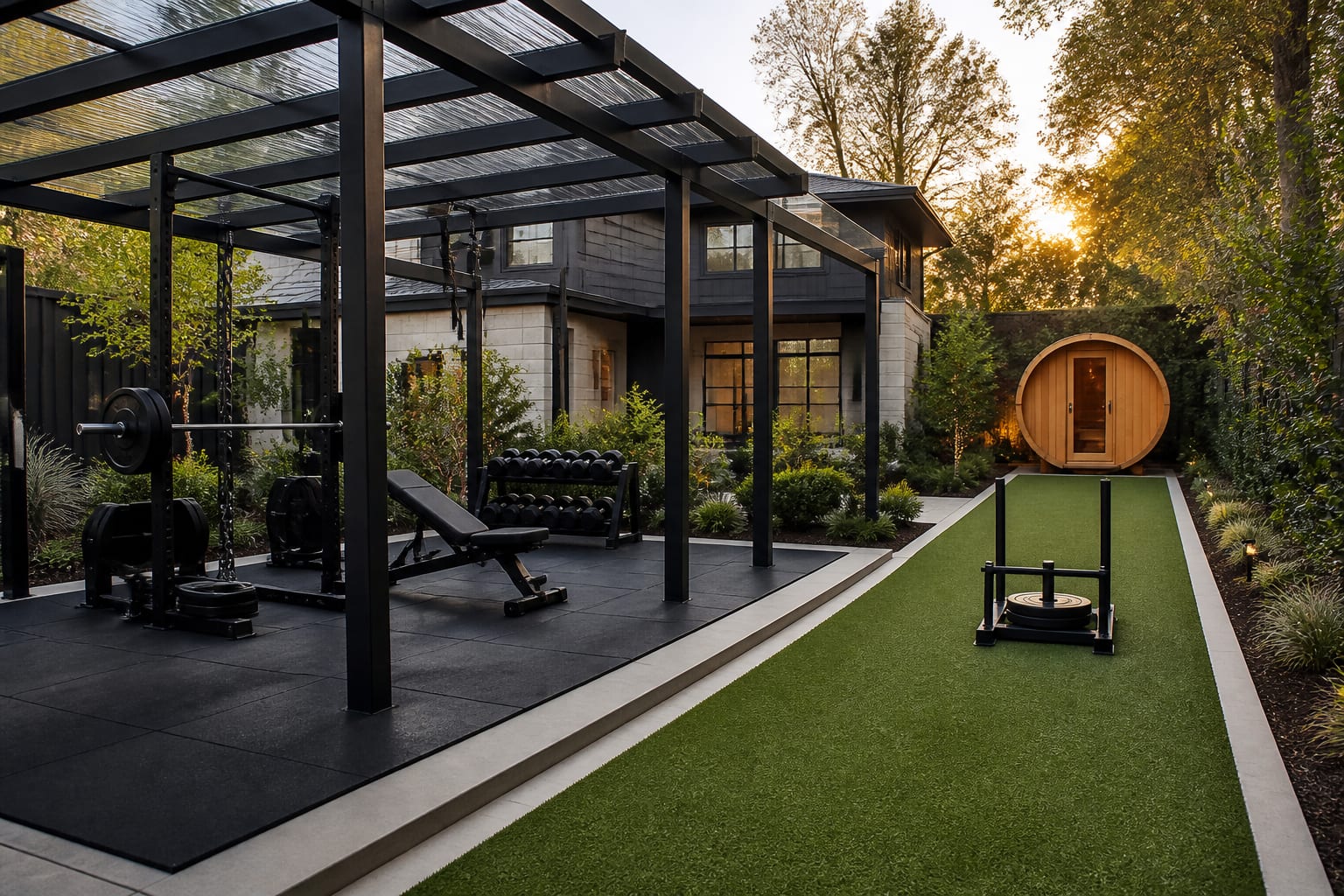
Start with the rig or rack as the structural anchor, then work outward. Position the pull-up rig or squat rack at one end of the rubber tile pad so the barbell can load laterally without overhang constraints. Leave a minimum of 6 ft in front of and behind any barbell rack for safe approach and bar loading. Dumbbell storage goes along one side of the pad; a weight bench sits centrally facing the primary movement direction.
The sled or turf lane runs parallel to the main pad — 20–30 ft long and 6–8 ft wide is enough for effective conditioning work. If you have a pergola or shade structure, center it over the main lifting zone rather than the sled lane, which benefits from open air for heat dissipation during sprint sets.
Outdoor gym layout dimensions
| Zone | Recommended footprint | Notes | |------|-----------------------|-------| | Main lifting pad (rubber tile) | 12 × 16 ft minimum | Accommodates rack, bench, dumbbells | | Expanded pad with dumbbell area | 16 × 20 ft | More comfortable for multiple users | | Sled / turf conditioning lane | 6–8 ft wide × 20–30 ft long | Runs alongside main pad | | Covered pergola gym | 12 × 16 ft to 16 × 20 ft | Same pad size, add 8–10 ft roof height | | Full backyard campus | 20 × 30 ft and up | Gym + recovery + social zone |
Covered vs. open outdoor gym — which is better?
A covered outdoor gym under a pergola or shade sail is better for most homeowners because it eliminates the weather limitation while preserving the feel of training outside. Solid polycarbonate or corrugated metal roof panels on a pergola frame turn an open structure into an all-weather training space — you can use it during light rain and in summer heat without direct sun exposure.
Covered vs. open outdoor gym
| Factor | Covered (pergola gym) | Open outdoor gym | |--------|-----------------------|------------------| | Year-round usability | Excellent | Climate-dependent | | Equipment weathering | Slower degradation | Faster without storage discipline | | Cost | Higher (adds structure) | Lower | | Aesthetics | Designed, intentional look | Minimal, utilitarian | | Permit likelihood | More likely (structure) | Less likely (just flooring) | | Best for | Most climates, serious investment | Mild climates, budget-first |
A pergola gym is the direction most landscape designers now specify because it elevates the space from functional to designed — it reads as an intentional architectural feature of the yard rather than equipment sitting on a pad.
How do you prevent outdoor gym equipment from rusting?
Rust prevention in an outdoor gym follows three rules: specify the right materials from the start, protect exposed steel proactively, and store vulnerable pieces when not in use. Specify powder-coated or hot-dip galvanized steel for all structural components. Use stainless hardware throughout — bolts, pins, carabiner clips. Bumper plates resist water naturally; cast-iron needs a dry home.
Seasonal maintenance matters: inspect all welded joints in spring after winter moisture exposure. Touch up any chipped coating with a rust-inhibiting primer and matching spray. A simple weatherproof storage box alongside the gym — used consistently for barbells, bands, and accessories — makes the difference between equipment that lasts a decade outdoors and equipment that begins flaking in the second year.
How do you combine an outdoor gym with a sauna and cold plunge?
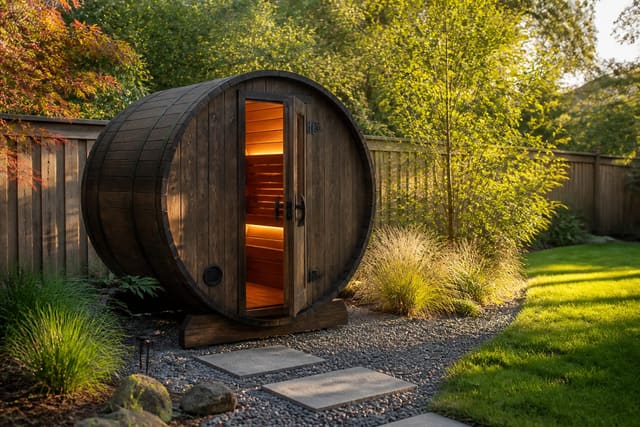
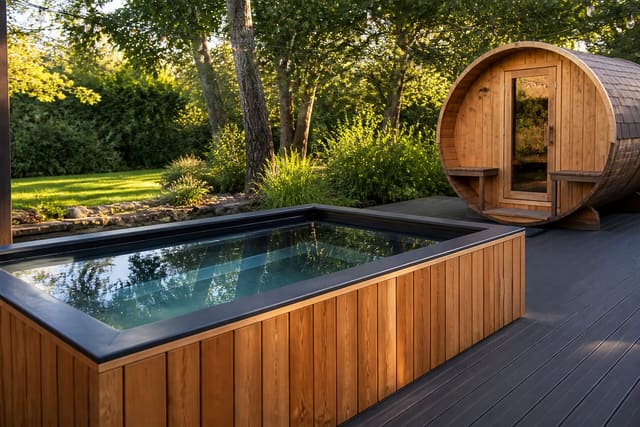
The outdoor gym becomes a full backyard recovery campus when it is positioned in sequence with a sauna and cold plunge. The design logic is straightforward: train on the rubber tile pad, transition to the sauna for heat exposure, then finish with the cold plunge. Spacing these three zones within 20–30 ft of each other keeps the transition short enough to be practical.
The gym zone typically anchors one end of the wellness corridor, the sauna sits centrally or in a sheltered corner, and the cold plunge — which can be as compact as a purpose-built plunge tub — occupies a nearby corner with shade overhead. Connecting the zones with a compacted gravel or hardscape path keeps bare feet off wet grass between sessions. This "backyard athlete campus" layout is increasingly what fitness-forward homeowners plan from the start rather than adding components over years.
Lighting matters in a wellness campus more than it does in a single-function gym. LED strip lighting under the pergola roof keeps the lifting zone usable during early-morning sessions before sunrise. Warm-toned pathway lighting between the gym and the sauna sets a deliberate, decompression mood. Cool-white accent lighting near the cold plunge signals the contrast and keeps the area safe for late-evening use. Plan lighting circuits alongside the initial electrical rough-in rather than retrofitting exterior fixtures afterward — the coordination saves both cost and conduit work on a finished structure.
How can you preview an outdoor gym design before you build?
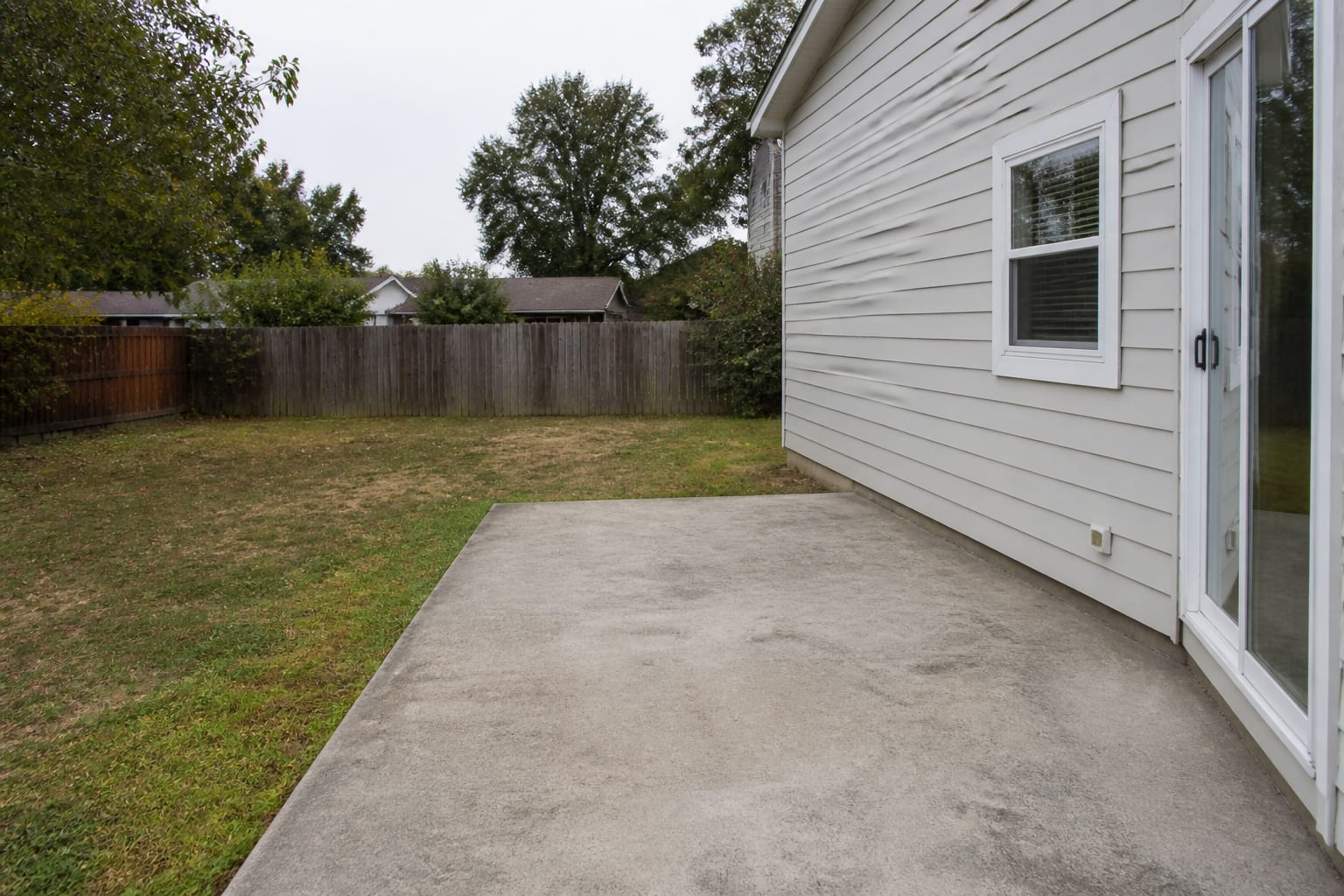
The design decision that most homeowners struggle with is how a gym zone reads visually in the yard — whether a pergola structure will feel intrusive, how the rubber tile footprint relates to surrounding lawn, and whether a sled lane will look intentional or haphazard. Re-design.app answers all of this from a single backyard photo.
Upload a photo of your yard and try one of these directions:
- Preview a covered pergola gym with rubber tile pad, pull-up rig, and adjacent turf sled lane
- See a full backyard wellness campus with outdoor gym, sauna, and cold plunge in sequence
- Visualize an open-air minimalist outdoor gym on a concrete pad with weatherproof rack and bumper plates
The render shows you how structure, scale, and material interact in your specific yard before any concrete is poured or any equipment is ordered.
Frequently Asked Questions
Can outdoor gym equipment stay outside year-round?
Yes, if it is properly specified. Powder-coated or galvanized steel frames, bumper plates, and stainless hardware tolerate permanent outdoor exposure. Traditional cast-iron plates and chrome bars should be stored in a weatherproof box when not in use. Seasonal inspection of welds and hardware keeps everything safe and rust-free.
What is the best flooring for an outdoor gym?
Interlocking rubber tiles at 3/4 in to 1.5 in thickness are the best choice for most outdoor gyms — they absorb dropped-weight impact, drain quickly, and hold up to UV exposure. Pair a rubber tile main pad with an adjacent synthetic turf strip for sled and conditioning work.
How big should an outdoor gym be?
A minimum functional outdoor gym fits on a 12 × 16 ft rubber tile pad — enough for a rack, bench, and dumbbell area. Adding a 6–8 ft wide by 20–30 ft long turf sled lane alongside the main pad creates a full training setup. A covered pergola gym typically covers the same pad dimensions with an 8–10 ft clearance height.
Do outdoor gyms require a building permit?
A rubber tile pad on existing concrete typically does not require a permit. A pergola or shade structure above the gym usually does — most jurisdictions treat any permanent roofed structure as an accessory building with setback and height requirements. Check local codes before building any covered structure.
How do you combine an outdoor gym with a sauna and cold plunge?
Position the three zones within 20–30 ft of each other in sequence: gym pad for training, sauna for heat exposure, cold plunge for recovery. Connect the zones with a hardscape or compacted gravel path so the transition is comfortable barefoot. This integrated layout is increasingly planned as a single design rather than assembled piecemeal.