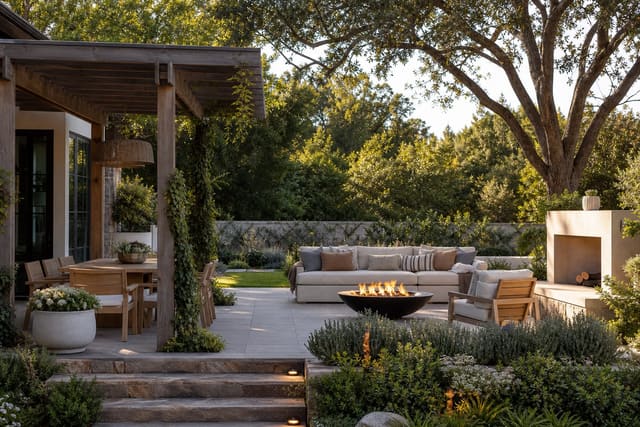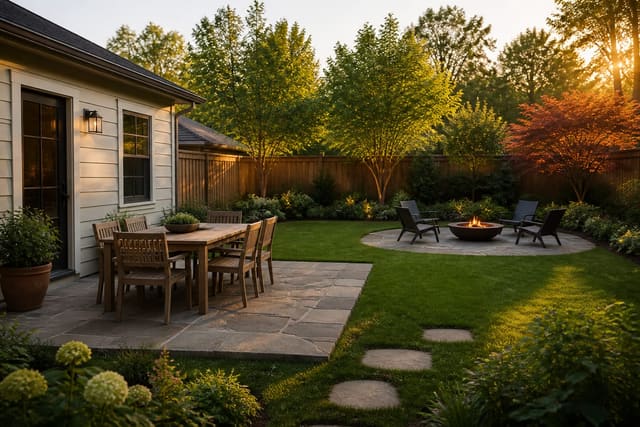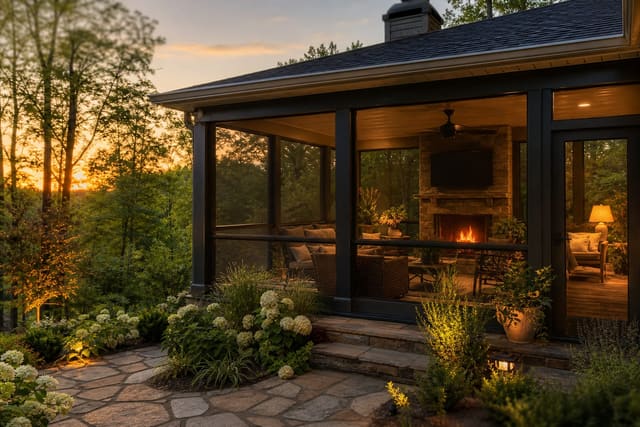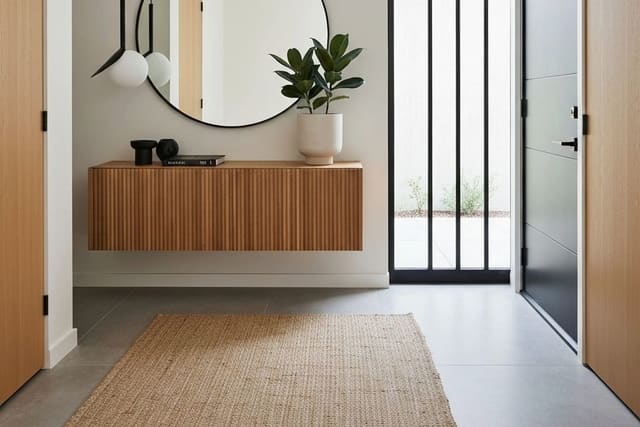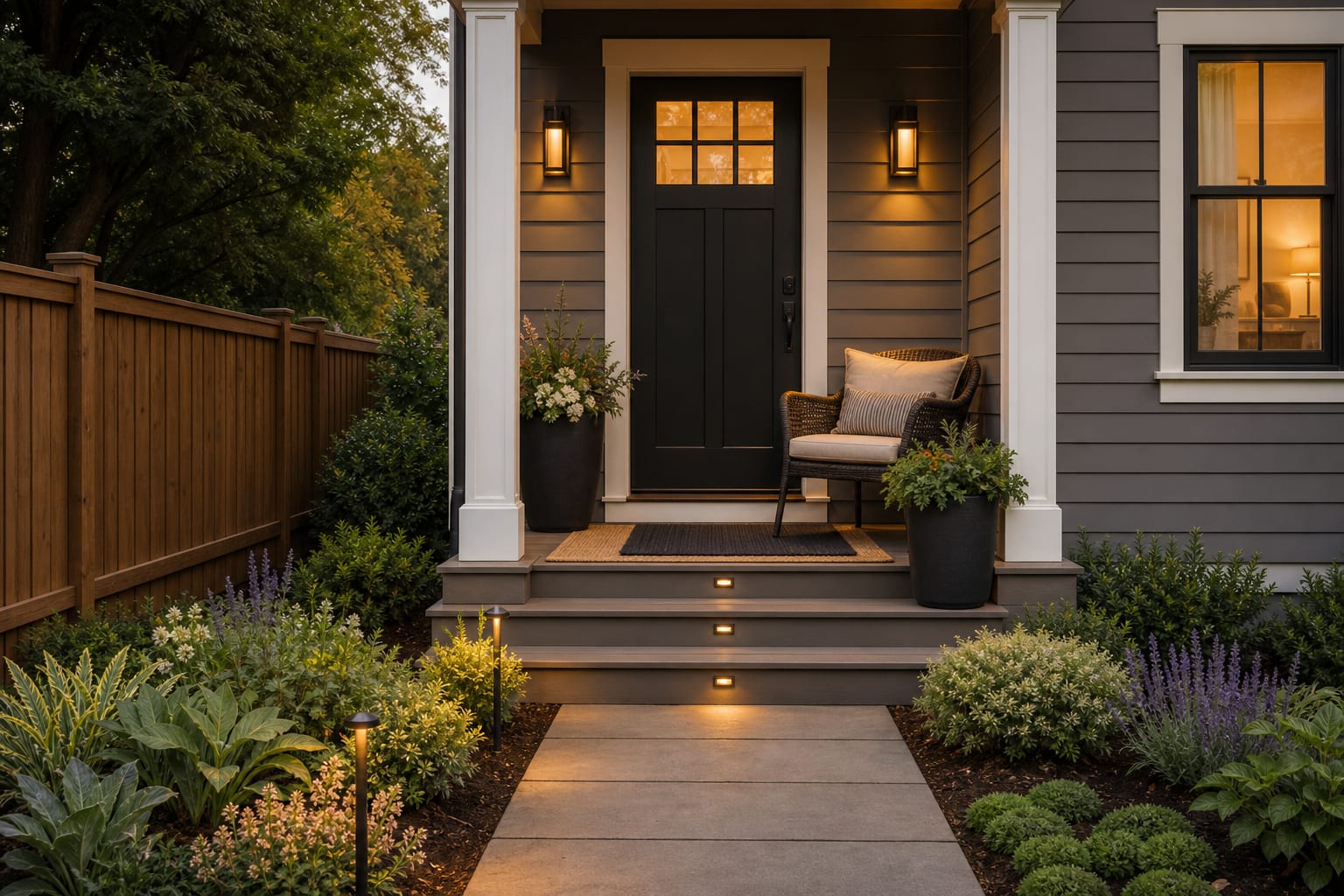
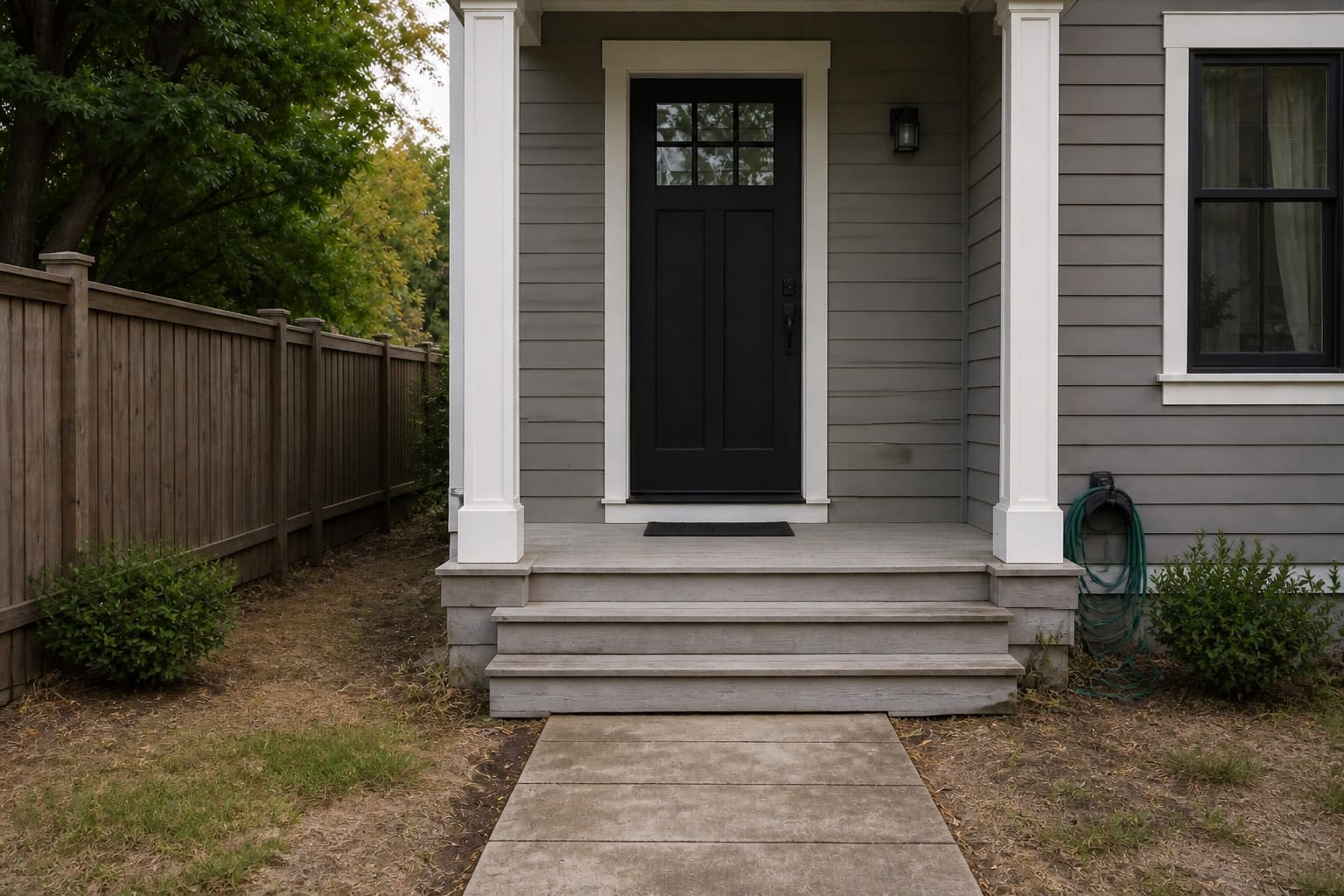
A porch reads designed when it's at least 8ft deep, the floor color contrasts with the house trim, lighting comes from flanking wall sconces rather than a single ceiling fixture, and seating is scaled to the porch width instead of blocking the door. To design a front porch: fix the depth and clear path first, add shade and warm lighting, then repeat the home's materials in planters, rugs, and rail details. One comfortable chair that fits beats two cute chairs that block the entry.
What makes a porch feel like a real outdoor room?
A porch feels finished when it has a job, a clear path, and one reason to linger. Decor ideas like wreaths and pillows only work after seating, lighting, and the threshold are right.
- Protect a 30-36 inch route through the porch before choosing furniture or planting.
- Repeat one visual cue three times, such as a metal finish, planter shape, or trim color, to tie the scene together.
- Solve the core layout problem with your first permanent upgrade; accessories should support the plan, not cover for weak planning.
Measure depth from the house wall to the inside edge of the railing or step, then subtract 30-36 inches for movement. If the leftover zone is under 24 inches deep, skip chairs and use a wall bench, a pair of planters, or a narrow console shelf instead. A 42-inch-wide walk and a landing at least 48 inches deep let someone stand clear of the door swing, and one repeated material echo from the house ties the porch to the architecture.
Which porch layout fits your actual depth?
Porch depth decides the layout more than house style does. A narrow farmhouse porch, a brick colonial stoop, and a bungalow veranda can't all hold the same furniture plan.
- Front stoop: One strong vertical move, like a 20-inch planter on each side of the door or a 30-36 inch bench against the wall, keeps the center open around the lockset and storm door.
- Sitting porch: Two chairs facing slightly inward with a 14-18 inch side table between them, on a porch at least 6 feet deep so knees and the walking path have separate room.
- Wrap-around porch: Break the perimeter into quiet zones instead of lining furniture around every rail: rockers near the entry, a swing on the side bay, a small dining table on the shadier run.
If insects, wind, or privacy make the porch hard to use, compare your plan with screened porch ideas for outdoor comfort before buying furniture. Screening changes the mood, and also the best lighting, rug material, and plant choices.
For deep porches connected to a yard, borrow circulation logic from patio design ideas for outdoor rooms: keep a main path open and anchor each sitting zone with a rug or ceiling fan instead of cramming dining, lounging, and storage into one corner.
Test this on your own photo with ReDesign before choosing a final direction; keep the house edge, horizon line, hardscape, planting beds, and main path visible in the shot.
Five front porch design ideas worth copying
- Paint the ceiling soft blue, pale green, or warm off-white on porches that feel heavy; it bounces daylight under 8-9 foot ceilings, dark brick, or deep overhangs.
- Use one oversized doormat at least as wide as the door, or layer a 24x36 inch coir mat over a 3x5 foot outdoor rug when the landing is deep enough.
- Add a swing only when structure and clearance allow it: sturdy ceiling framing, about 3 feet of front clearance, and enough side clearance to clear railings, windows, or planters.
- Build a small dining corner on a wide porch with a 30-36 inch round table and two slim chairs; see outdoor dining area ideas for small patios for layouts that translate well to a sheltered porch.
- Repeat one plant form at least three times near the entry, like boxwood balls or upright grasses in matching containers, since mixed little pots often look temporary.
Common porch decor mistakes that shrink the entry
Porches fail when the prettiest item outranks the daily route to the door. Good decor should make arrival easier, not turn the entry into an obstacle course.
- Tiny furniture makes a porch look less inviting. Use 24-30 inch seat widths and a real side table on a large porch; on a small one, choose one substantial piece over a miniature set.
- Too many seasonal accessories weaken the architecture. One wreath, two planters, and a proper mat beat lantern clusters, signboards, and stacked crates fighting for the same 4 square feet.
- Bright white bulbs expose the porch at night. Swap to 2700K-3000K bulbs and aim path or step lighting downward.
- Ignoring the railing wastes a frame that's in every porch photo. Keep pillows and rugs quiet against busy balusters; add a striped rug or textured planter to a plain railing for pattern without repainting.
Use AI design to preview your porch before you commit
Upload a straight-on photo of the entry, test seating, lighting, color, and planting changes, then compare views before ordering outdoor furniture or paint. Keep prompts specific: ask for a black front door, two 18-inch planters, a woven bench, warm sconces, and a 3x5 foot outdoor rug instead of a general "porch makeover."
Take one photo from the sidewalk and one from the top step looking back toward the seating area. The sidewalk view checks curb appeal; the closer shot checks whether chair depth, mat size, and planter height will crowd the actual entry.
AI previews are especially useful here because scale is hard to judge from product photos alone. A preview shows whether a swing overwhelms a small stoop, whether a dark door makes the entry too heavy, or whether a wrap-around porch needs fewer pieces and better zones.
Frequently Asked Questions
How deep should a front porch be?
Aim for 8ft minimum, enough for a rocking chair with 30in of depth plus 36in of clearance to the railing line. A 10-12ft depth is comfortable for entertaining and lets two people pass behind a seated occupant.
What is the best material for a porch floor?
5/4in x 6in pressure-treated decking in gray is the most durable, low-maintenance choice. Ipe is the premium option that never needs painting, while poured concrete with a painted floor coat is cheapest upfront but the most maintenance-heavy over 10 years.
How do I add privacy to a front porch?
Install lattice panels with climbing hydrangea or clematis on the two side walls, paired with a porch swing angled away from the street. This adds visual privacy without blocking breeze or natural light.
What lighting works best for a front porch?
Two flanking wall sconces at 6.5ft height on either side of the door, rather than one centered ceiling fixture, give shadow-free even light and make the facade read more symmetrical.
What porch furniture fits a small porch?
A two-seat bench (36-42in wide) with one side table fits a 6ft-wide porch without blocking the entry path. Swap in two rocking chairs if the porch is 8ft or wider and 8ft or deeper.
> Try this: Ready to see this on your own outdoor space? Open ReDesign and run the preview before you buy materials, plant, drill, or move furniture.
Three transformations to try
1. Deep porch with rocker and hanging sconce 2. Painted porch floor with lattice privacy screen 3. Porch swing with side table and planter