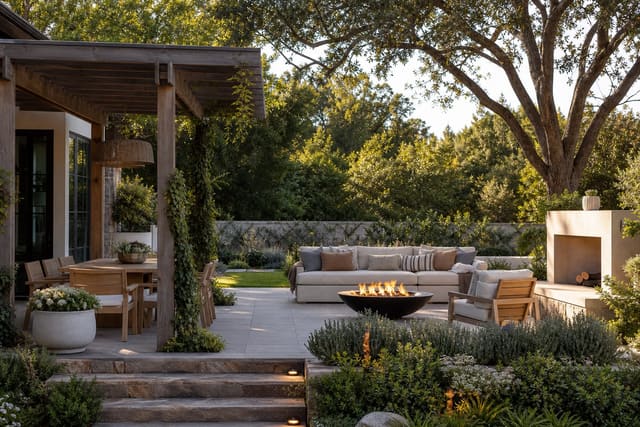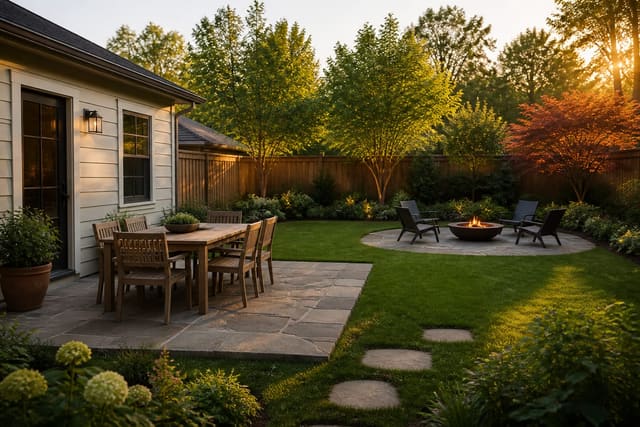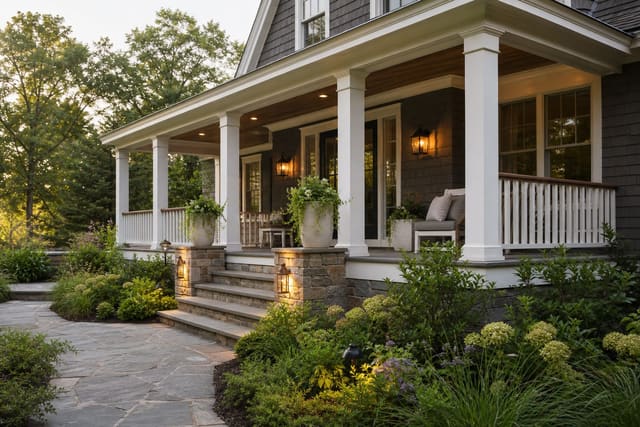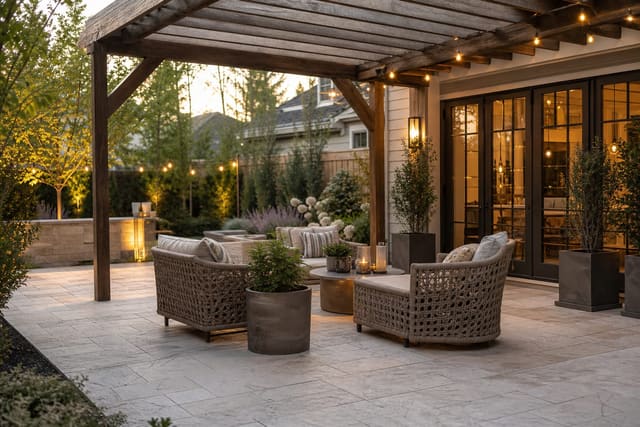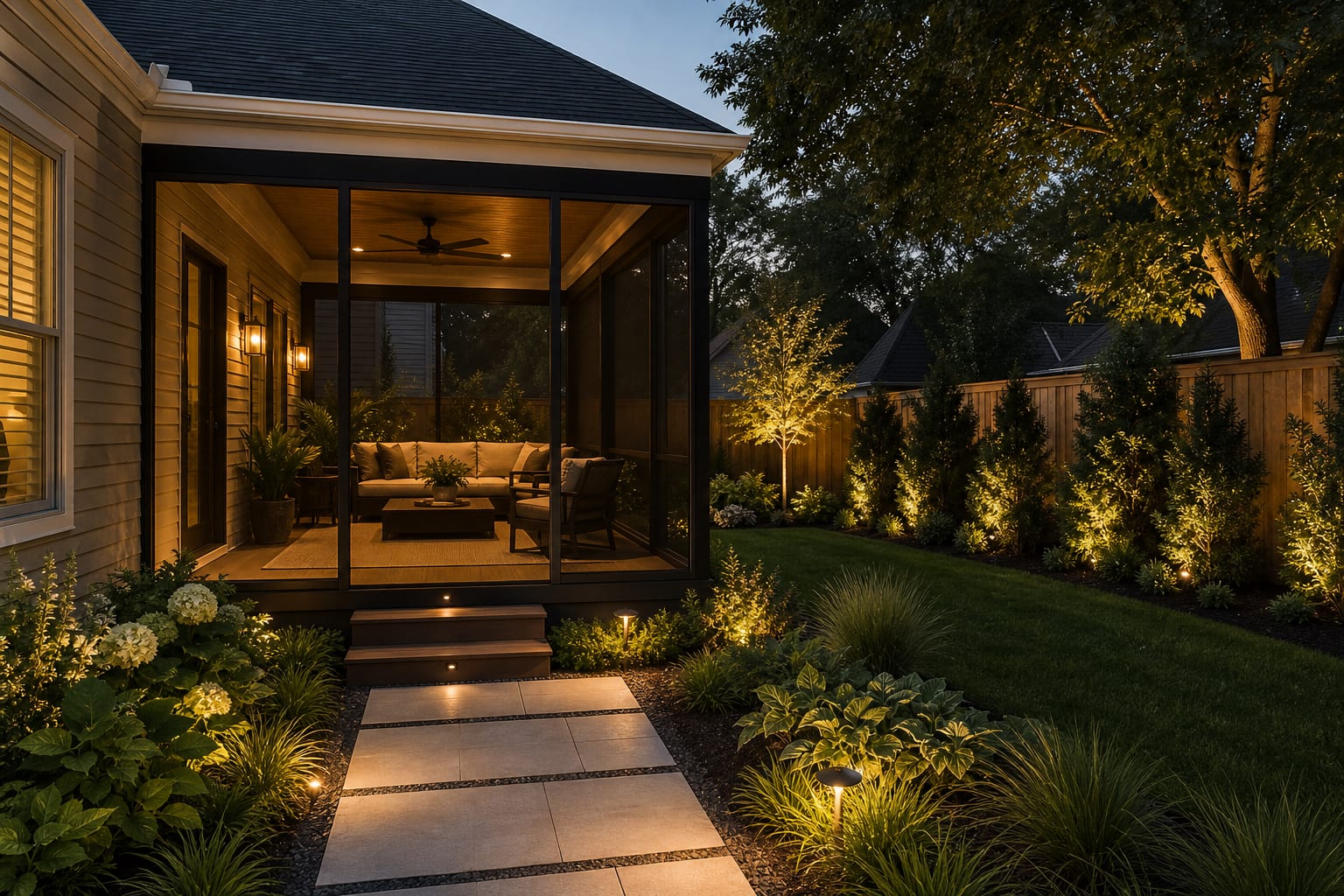
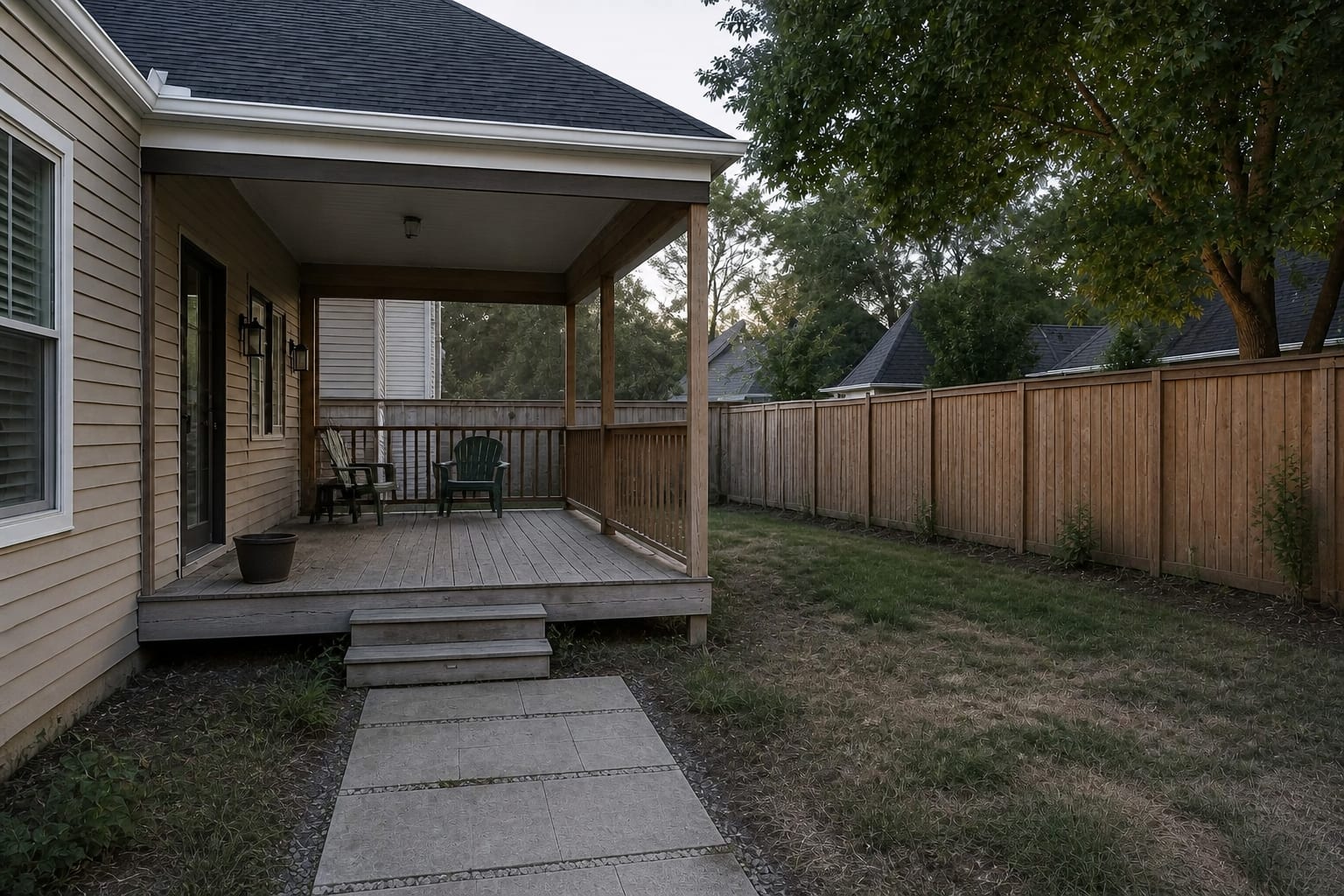
A screened porch works year-round in mild climates when it uses 18x14 fiberglass mesh (not window screen), a fan-rated 12 inch drop paddle fan over the seating, condensation-tolerant flooring like sealed concrete or Ipe, and wiring for a fan-light combo plus two outlets. Treat it as an enclosed outdoor room, not a patio with mesh stapled around it: plan the view, airflow, shade, door swing, furniture clearances, lighting, and screen type before choosing pillows. Comfort beats charm, since a pretty porch that traps heat or blocks the breeze sits empty by July.
What makes a screened porch feel like a real outdoor room?
A screened porch feels finished when the structure, airflow, and furniture agree on one purpose. Decide first whether it's a coffee porch, dining porch, nap porch, or second living room, since each needs a different footprint. A two-chair coffee setup fits a 6 by 8 foot zone; a dining table for six wants closer to 10 by 12 feet once chairs pull out.
- Protect a 30 to 36 inch route through the porch before choosing furniture, lighting, or surface upgrades.
- Repeat one visual cue three times, such as a metal finish, planter shape, or trim color, to tie the room together.
- Solve the core layout problem with your first permanent upgrade; let accessories support the plan, not cover for weak planning.
Screen color changes how the porch reads from inside the house. Black mesh tends to disappear visually and sharpen the view, while bright or silver mesh can catch light and make the wall look hazy. If privacy matters, use planting, shade cloth, or deeper window muntins before choosing mesh so dense the porch feels dim at noon.
Ceiling height matters too. Under 8 feet, keep the fan compact and skip bulky lanterns that eat headroom. At 9 to 10 feet, a wider fan and pendant can make the porch feel intentionally furnished.
The floor bridges indoor and outdoor life. Painted tongue-and-groove boards are classic but need drainage and upkeep. Porcelain pavers, composite decking, sealed concrete, and outdoor tile clean up faster when pollen, muddy paws, and leaves come through the door. If the porch connects to a visible front entry, borrow scale and threshold logic from front porch design principles so the screened room still reads as part of the architecture.
Test this on your own photo with ReDesign before finalizing the direction; keep the house edge, horizon line, hardscape, planting beds, and main path visible so the preview solves the space you actually have.
Which screened porch layout fits how you actually use it?
Layout separates a porch you admire from the kitchen from one you use with wet hair, bare feet, and a dog. Start at the doors: the house door, yard door, and any sliders need swing room, and none should open into the back of a chair.
- Lounge porch: Place a sofa or two chairs at least 30 inches from the screen wall so knees and the walking path don't collide; angle seating toward each other instead of lining it against the perimeter.
- Narrow porch (under 7 feet deep): Use a 20 to 24 inch deep bench, slim rocker, or armless chair rather than a full sectional, which can steal the circulation lane.
- Dining porch: Leave about 36 inches behind each chair for passing, use a pedestal or trestle base when legroom is tight, and choose a 42 to 48 inch round table on a square porch.
- Sleeping or reading nook: A porch swing or hanging daybed needs solid ceiling structure and roughly 3 feet of front clearance; a freestanding daybed gives the same effect without loading the joists.
- Outdoor connection: Align the door with the main path to a grill, pool, or lawn, and use a flatweave polypropylene rug that leaves 6 to 12 inches of floor visible at the edges.
If your porch opens into a roofed patio or deck, compare sightlines with covered patio planning so the two zones don't compete for dining, lounging, and shade. The screened room can stay quiet and soft while the uncovered zone handles grilling and sun-tolerant furniture.
Think twice before adding fire near a screened enclosure. Many screened porches aren't built for open flames, and codes, ventilation, and clearances matter. For evening warmth, fire pit seating ideas may belong outside the screened walls, with the porch as the bug-free retreat nearby.
Common screened porch mistakes that make it hot, buggy, or awkward
The most common mistake is treating mesh as the only bug barrier. Gaps under doors, loose spline, unsealed corners, and floor-to-wall cracks invite insects even with new panels. Fix door sweeps, tight screen channels, and clean thresholds before blaming the mesh.
Ignoring airflow is another. A porch facing a still side yard may need two fans or a door alignment that encourages cross-breeze. Center the fan over the seating area, not the ceiling's geometric middle, if everyone sits off to one side.
Weak lighting makes the porch feel like storage after dark. One dim ceiling bulb glares on the screen and shadows faces. Use wall sconces, low-glare step lights near level changes, and dimmable warm bulbs so the room glows instead of buzzing.
Overfilling is common because screen walls make the space feel room-like. A sectional, coffee table, dining table, plant stand, and dog bed may fit on paper, but the porch feels tense if the path narrows below 30 inches. Pick the one job that matters most and let the room breathe.
Material choices fail quietly too. Indoor rugs mildew, cotton cushions hold dampness, and untreated steel rusts where rain blows through the screen. Outdoor-rated materials aren't indestructible, but they're a far better starting point for humidity and cleanup.
Use AI design to preview your porch before you commit
Upload a straight-on photo from the house door and test screen color, furniture layout, fan size, lighting, and flooring before ordering materials. Keep prompts concrete: ask for black mesh panels, a 52 inch ceiling fan, two teak lounge chairs, a washable outdoor rug, warm wall sconces, and potted ferns rather than a vague refresh.
Shoot one photo toward the yard and one back toward the house wall. The yard-facing shot checks views and screen visibility; the house-facing shot reveals door swing, outlets, and whether a sofa blocks the main route inside. On a deep porch, add a corner shot so the preview doesn't flatten into one wall.
Previews matter here because a dark mesh, bold ceiling color, or larger fan can look dramatic in isolation and feel heavy once shown against your actual siding, trim, and floor color. Test the quiet version first, then try the bolder move.
Frequently Asked Questions
What screen mesh size is best for a porch?
18x14 mesh blocks most flying insects including no-see-ums (biting midges). Upgrade to 20x20 pet-resistant screen if large dogs will press against it repeatedly.
How do I keep a screened porch cool in summer?
Run a ceiling fan counter-clockwise at high speed for a wind-chill effect, and pair it with a shade sail or roof extension on the sun-facing side to cut direct solar gain by roughly 60% at peak afternoon heat.
What is the best flooring for a screened porch?
Painted concrete is the most durable and cheapest option. Ipe decking looks best and needs only annual oiling. Outdoor-rated luxury vinyl plank is the softest underfoot and installs directly over existing concrete.
Do I need a building permit for a screened porch?
Yes in most US jurisdictions. A screened enclosure attached to the house counts as a habitable addition requiring a permit, engineer letter, and inspection. Unattached screen rooms under 200 square feet may be permit-exempt.
How much does a screened porch cost to add?
Converting an existing covered porch to screened typically runs $1,500-3,500 in materials and labor. Building a new screened porch addition from scratch runs $18,000-40,000 depending on size, foundation, and finishes.
> Try this: Ready to see this on your own outdoor space? Open ReDesign and run the preview before you buy materials, plant, drill, or move furniture.
Three transformations to try
1. Screened porch with Ipe floor and ceiling fan 2. Painted concrete screened porch with wicker furniture 3. Screened porch with louvered shade on south wall