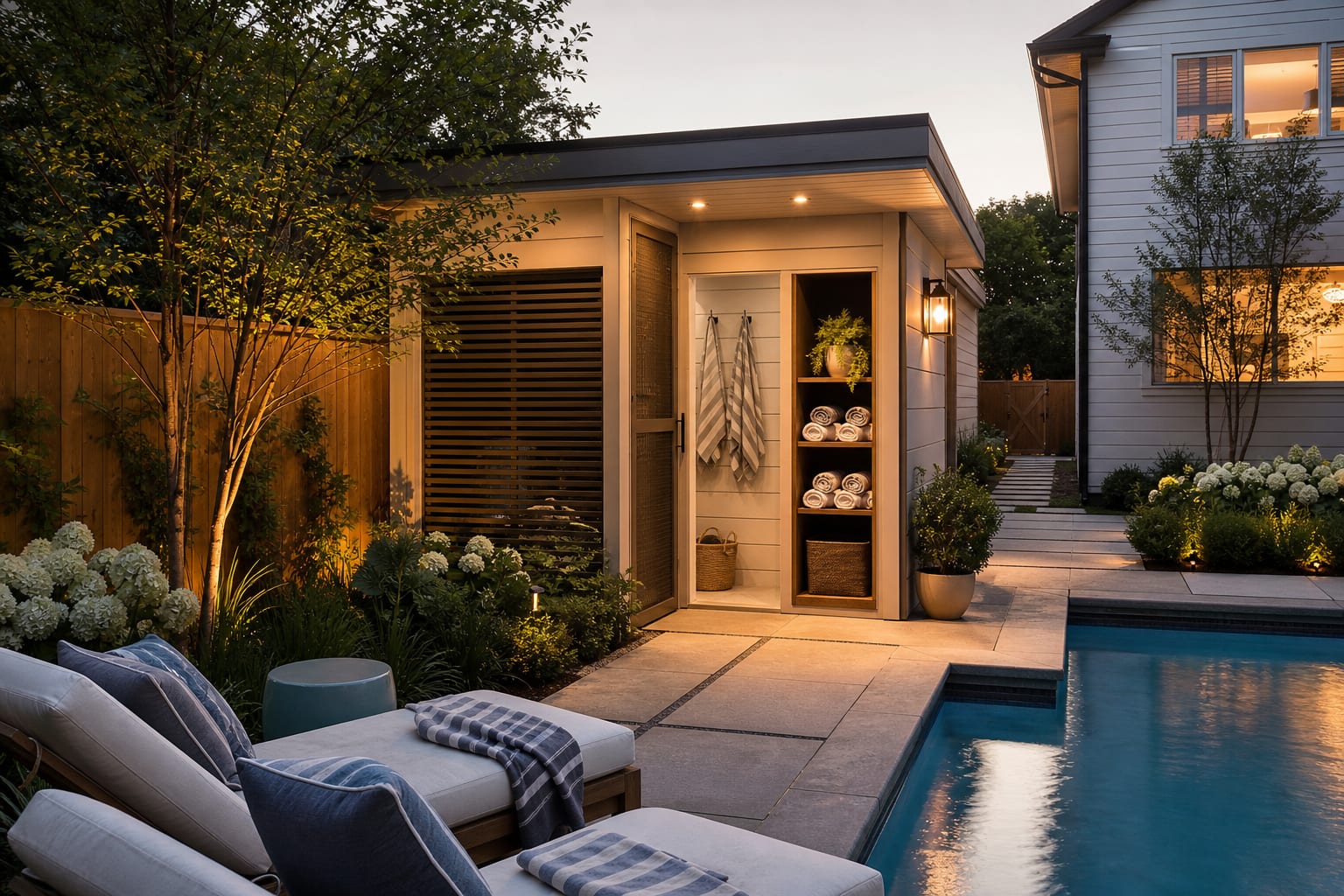
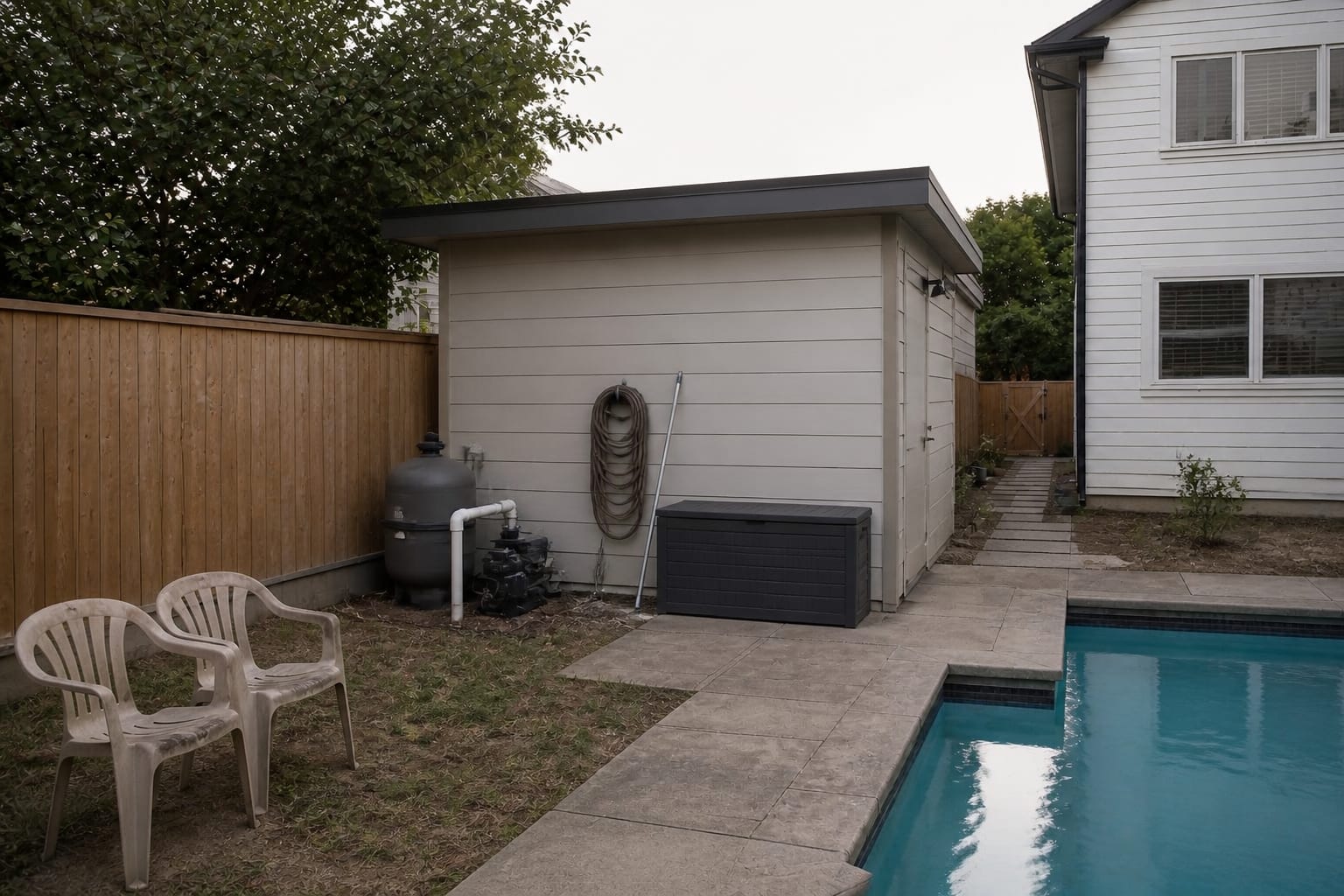
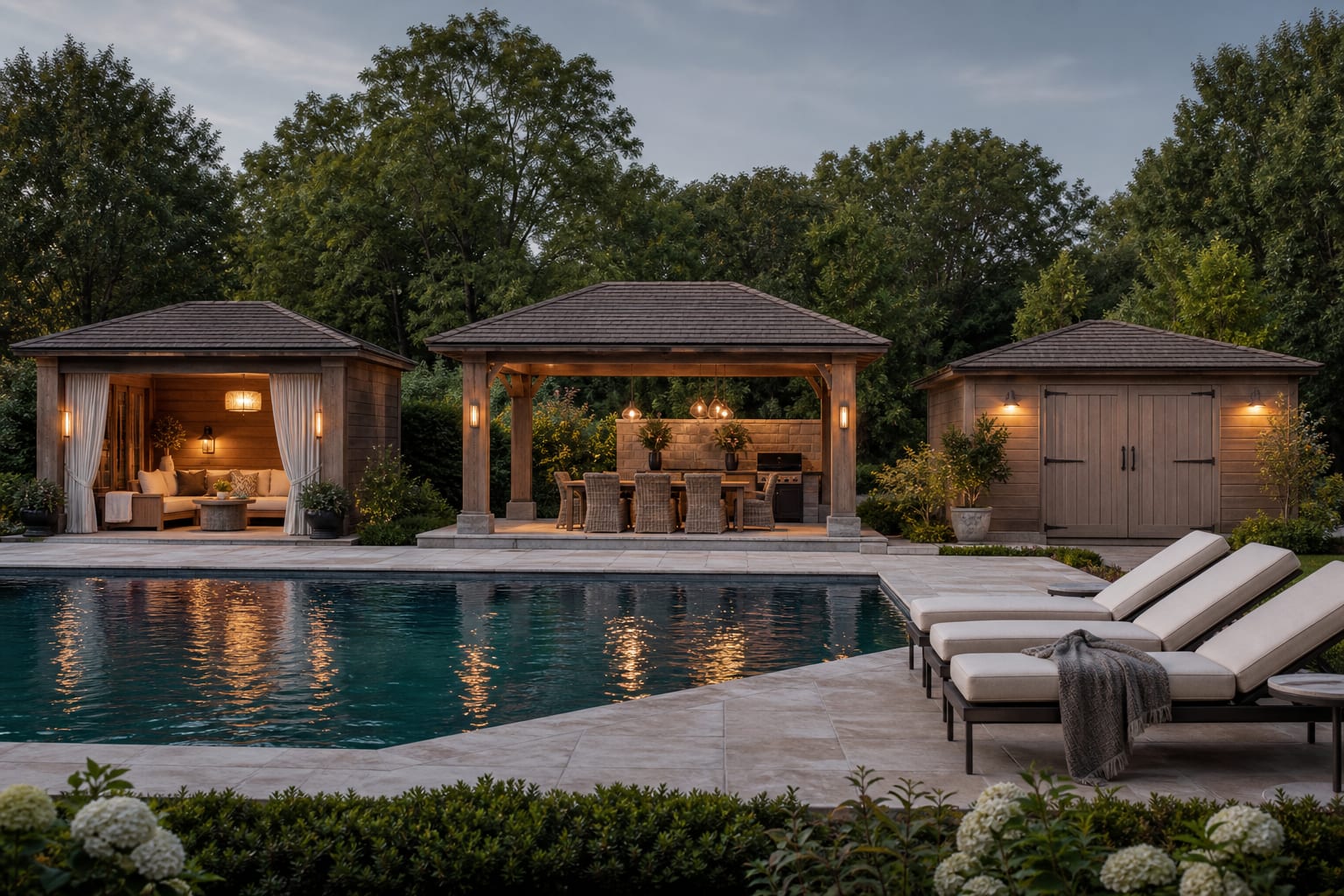
Pool house design ideas succeed when the structure organizes shade, storage, and wet traffic before it earns any style points. Keep the footprint under 200 sqft, sit it 12-18ft from the coping, echo the main house roofline at a smaller scale, and route swimmers to towels, a bathroom, and dry storage without ever crossing the kitchen.
What should a pool house do before it looks pretty?
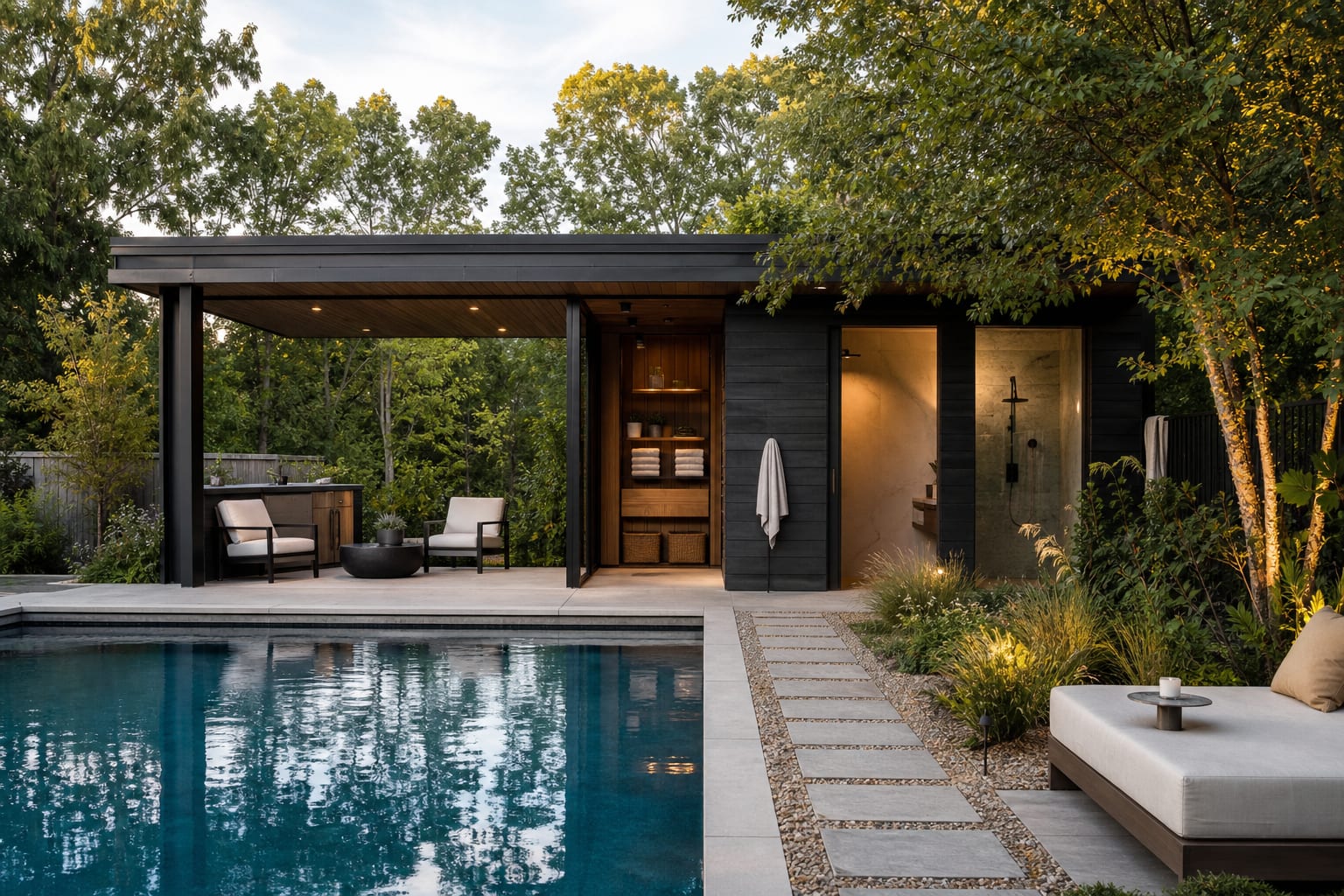
A pool house should organize changing, storage, shade, and wet traffic before you pick siding, doors, or furniture. Route swimmers from pool edge to towels and a changing area without crossing a dining zone or stepping onto slick indoor flooring, and keep the main entry 8-20 feet from the deck. A 3-6 foot roof overhang turns a plain box into a cabana people actually use at noon. If you're adding a bathroom, plan a real wet wall, ventilation, and an exterior-rated door threshold; without plumbing, a screened alcove with a bench, hooks, and a bare-foot-friendly floor covers the same need.
Which pool house layout fits your pool area?
The layout call is really a privacy call. If the pool is visible from neighbors or the street, put the changing room and shower on the exposed side so the building doubles as a screen. If the yard already feels private, place the structure where it shortens daily movement between the pool, outdoor kitchen, and house.
| layout | best for | spec to copy |
|---|---|---|
| Compact cabana | Small pools and narrow side yards | 6-by-8 feet for changing, hooks, and a bench |
| Storage wall with overhang | Families with floats, toys, and towels | 18-24 inch deep cabinets under a 4 foot roof projection |
| Bath-and-bar pool house | Larger yards that host often | Separate wet door from serving counter by at least 36 inches |
| Pavilion with rear storage | Sunny decks that need shade first | 10-by-12 foot covered zone plus lockable back room |
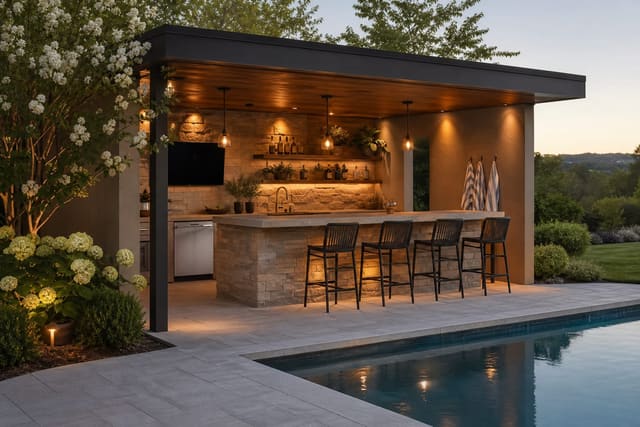
A serving counter only works if it doesn't block the changing route. If entertaining matters, borrow the clear counter-and-stool spacing from poolside bar ideas that suit wet zones, then keep the towel wall separate from the drink station so no one reaches across glassware for a dry towel.
Check how the path connects to your code-compliant enclosure before finalizing a door swing, and review pool fence ideas for safer backyard layouts if the pool house sits near a boundary. A beautiful shortcut isn't worth a confusing gate sequence.
Test this on your own photo with ReDesign before you commit; keep the pool edge, horizon line, hardscape, planting beds, and main path visible so the preview solves the space you actually have.
Pool house design ideas that earn their footprint
- Build a towel-and-toy wall, not a random closet: 18 inch deep shelves for folded towels, 24 inch bins for floats, and a ventilated lower bay for wet noodles.
- Add an outdoor shower on the side wall: a non-slip landing at least 3-by-3 feet, with the robe hook mounted outside the splash zone.
- Choose sliding or pocketing doors on tight decks: keep the opening at least 32 inches wide so a cooler or storage bin doesn't force a shoulder turn.
- Use a deep roof overhang as the cabana move: a 4-6 foot projection paired with an outdoor-rated fan, avoiding low pendants where towels get snapped around.
- Screen the pool equipment: leave a 30 inch working path to pumps and filters, use slatted wood or metal for airflow, and skip thorny shrubs near the access gate.
Lighting can make the whole deck feel safer at night. Put warm sconces near doors, low-glare step lights along level changes, and task lighting inside storage bays so goggles aren't hunted in the dark. Coordinate the structure with pool lighting ideas for safer evening swimming instead of adding one floodlight that flattens the yard.
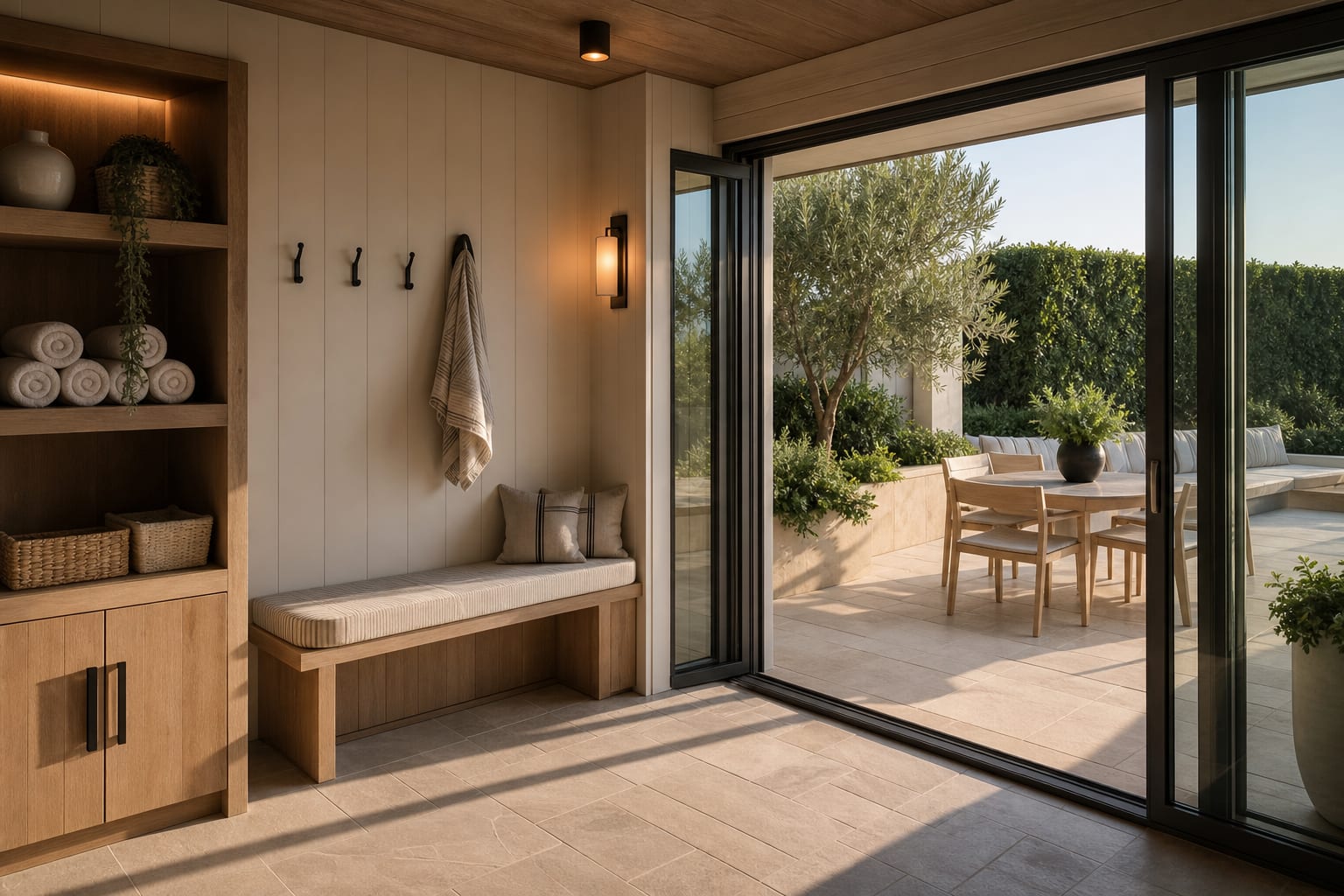
Design-check shorthand: depth before decoration, repetition before variety, maintenance before novelty.
Common pool house mistakes to avoid
- Building a mini guest cottage instead of a wet utility room. A bed and delicate rug don't solve sunscreen and dripping swimsuits; separate any sleeping zone from the pool entry with a door and washable flooring.
- Under-sizing the overhang. A flat wall with a door isn't a cabana; add enough covered depth for two chairs and a side table, or shrink the enclosed room to keep shade generous.
- Skipping ventilation. Damp towels and pool chemicals need operable windows, louvered vents, a fan, or a vented transom so the room can dry between swims.
- Over-precious storage. Mix closed cabinets (exterior hardware, wet-tolerant surfaces) for chemicals with open shelves for the towels people grab every day.
- Ignoring off-season storage. Reserve one tall bay at least 24 inches wide for covers, stacked chairs, and umbrellas, or the structure looks tidy only in summer.
Use AI design to preview your pool house before you build
Scale is hard to judge from a blank pool corner, which is where AI rendering earns its keep. Upload a deck photo showing the pool edge, fence, house wall, gates, and any equipment to hide, then preview three versions: a compact changing cabana, a pavilion with rear storage, and a bath-and-bar layout with deeper shade.
Use the renderings to test proportion, roof depth, door placement, and material color against the real yard — a white cabana can glare beside pale pavers, while a dark structure can feel too heavy for a small pool area. If the preview pinches the pool deck, shrink the enclosed room before sacrificing the walking path. The visual test doesn't replace permits, plumbing, electrical work, or safety codes, but it stops the common mistake of building a pretty box in the wrong spot.
Frequently Asked Questions
What is the minimum useful pool house size?
120-160 sqft handles a half-bath, a changing nook, and storage for floats and chemicals; under 80 sqft it becomes a shed with a door.
Do I need a permit for a pool house?
Most jurisdictions require a permit once the structure exceeds 120 sqft or includes plumbing, so check setbacks before placing it within 10ft of a property line.
Should a pool house match the main house?
Match the roofline, primary cladding, and trim color; the pool house can run a lighter window-trim or accent door color so it reads as an outbuilding rather than a kit copy.
Where should the pool house sit relative to the pool?
Place it 12-18ft from the coping on the prevailing-wind side so towels and shade carry toward the deck, and avoid siting it directly behind the diving end.
Is a covered porch worth it on a pool house?
Yes. A 6-8ft covered porch on the pool-facing wall doubles as the changing transition and a shaded rest zone, and it costs roughly 30 percent of an equivalent conditioned addition.
> Try this: Ready to see this on your own outdoor space? Open ReDesign and run the preview before you buy materials, plant, drill, or move furniture.
Three transformations to try
1. Compact pool house with covered porch 2. Modern pool house with louvered screen 3. Cedar pool house with green roof