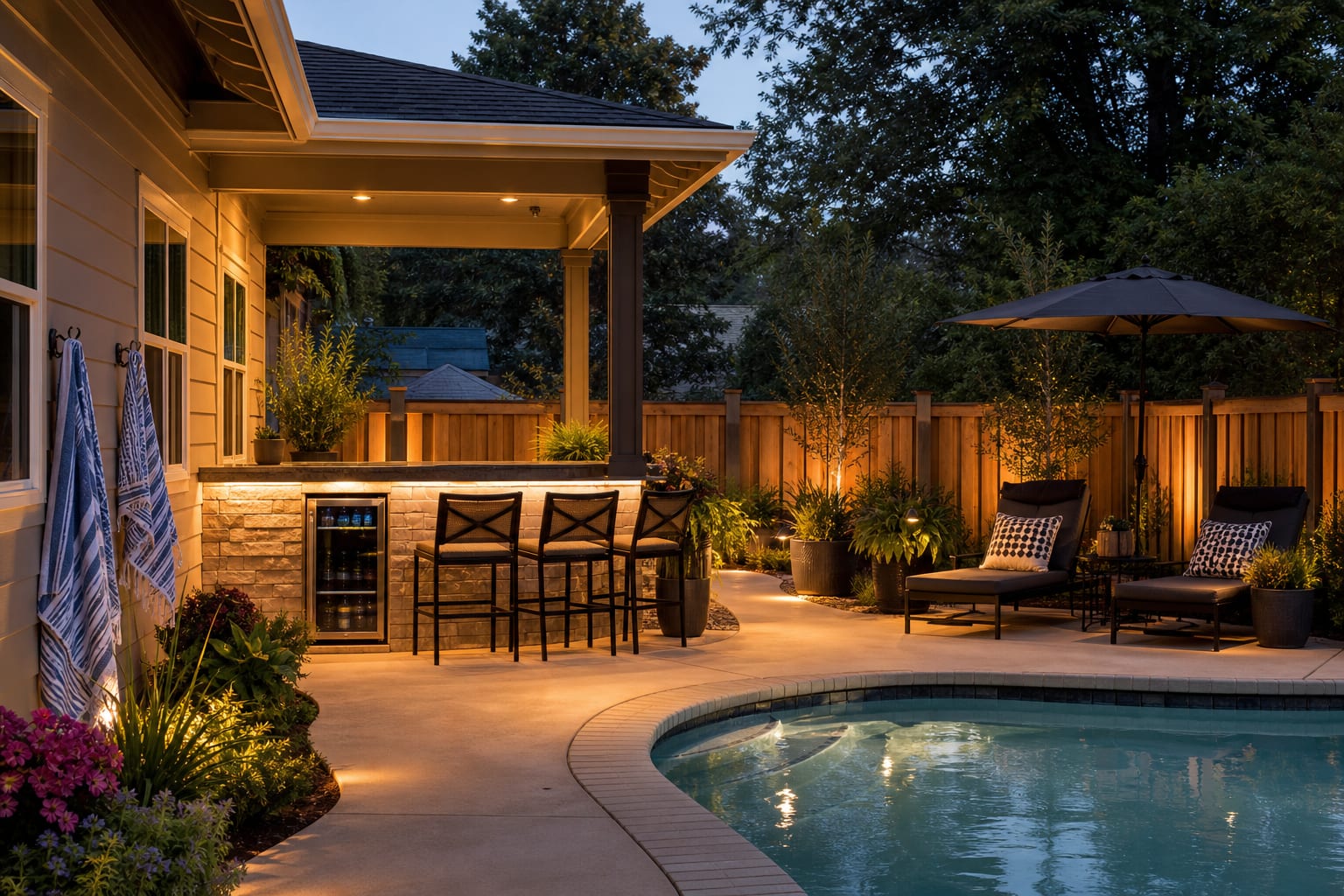
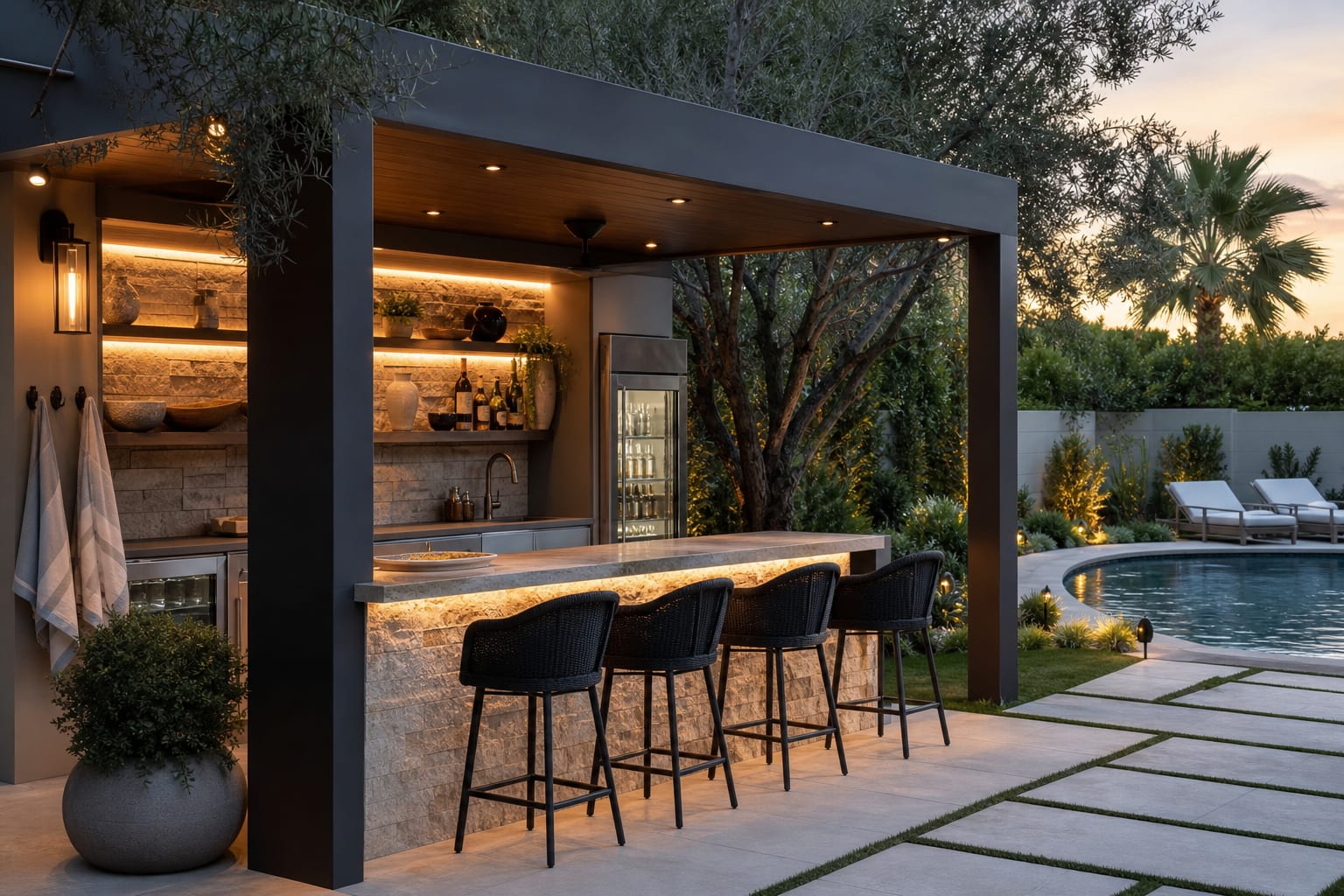
A poolside bar works when the standing or seating line sits 6-8ft from the pool edge, the counter survives splash with a sealed or naturally-resistant top, and the layout includes a small fridge plus three to four stools. A 6-10ft run is enough for most home backyards.
What makes a poolside bar feel intentional instead of improvised?
Good poolside bar ideas start with circulation, not bottles. The bar should sit where people naturally pause: near the shallow end, beside the main lounge zone, or along the path from the kitchen door. Too far from the water and it becomes decoration; too close to the edge and it blocks traffic.
A solid outdoor pool bar layout has three working zones:
- The wet edge — where swimmers step out and grab a towel or drink.
- The service counter — 24-30in deep, about 36in high, for mixing and pouring.
- The social edge — stools, benches, or standing room where guests talk without leaning over the prep surface.
Keep electrical, refrigeration, and ice realistic. A small outdoor-rated fridge only makes sense with power, ventilation, shade, and a level base. If utilities are expensive, use a built-in cooler drawer, insulated ice chest, or rolling cart tucked under the counter instead. If the bar connects to a larger structure, borrow cues from pool house design ideas that support outdoor entertaining — a serving window or pass-through counter can do more work than a freestanding bar that fights the architecture.
Which poolside bar layout fits your yard?
| Layout | Best fit | Watch the clearance |
|---|---|---|
| Freestanding counter | Rectangular pools, open patios, yards without a pool house. | Keep 36in clear on the working side; avoid stools where swimmers exit the water. |
| Wall bar | Fence lines, retaining walls, or house walls near the pool. | Use exterior-rated surfaces; don't trap hoses, outlets, or equipment behind it. |
| Pass-through bar | Pool houses, cabanas, kitchens facing the pool. | Needs weather protection and landing space on both sides of the opening. |
| Swim-up bar | New builds or major remodels with raised walls or in-pool stools. | Structural work — seat height, water depth, waterproofing, and code need professional design. |
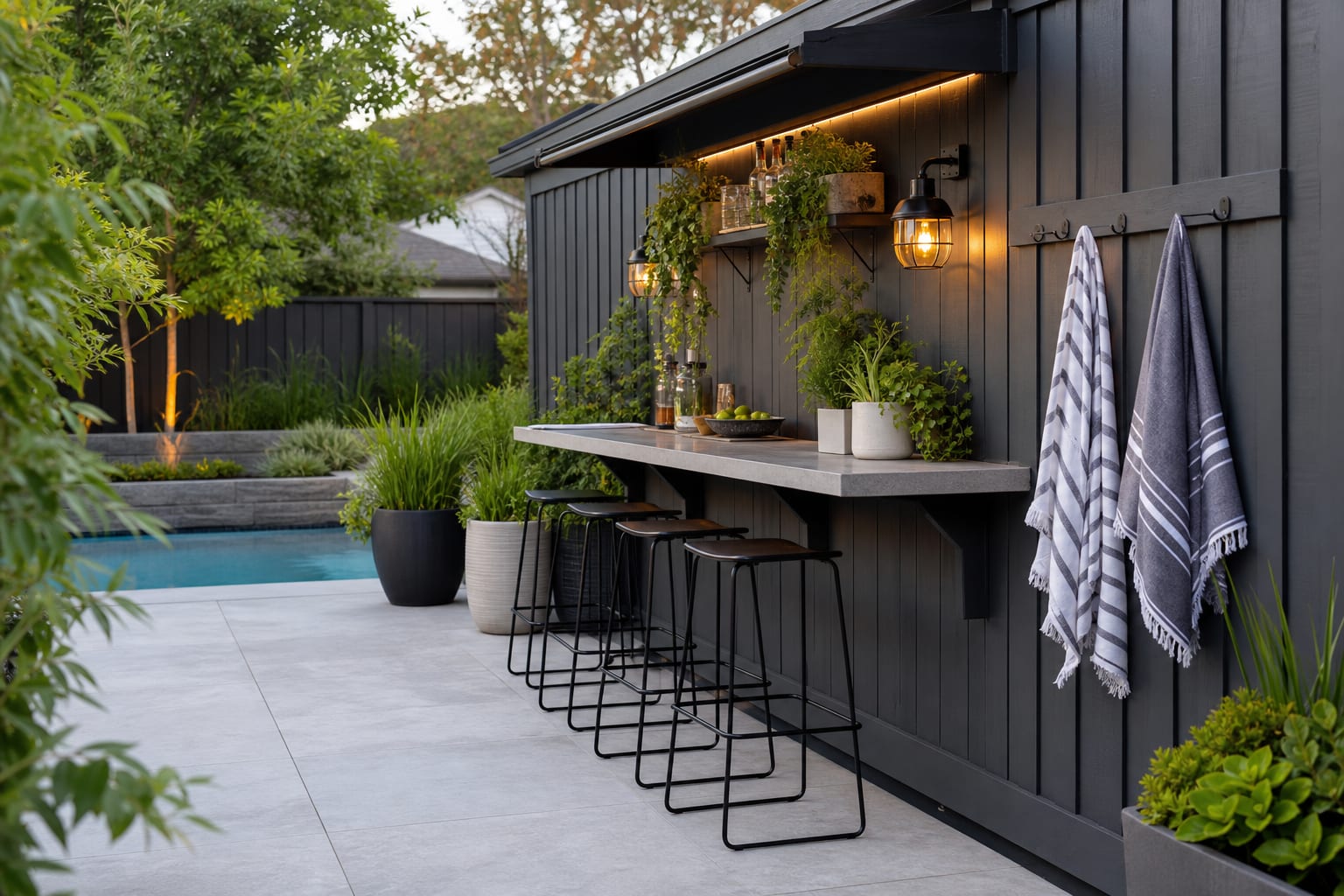
A freestanding bar is the most flexible choice. Align it with a pool edge, paver joint, or planting bed rather than floating it at a random angle — for three stools, plan 6-7ft of counter length, about 24in per person plus elbow room. A wall bar suits narrow pool areas: use a 12-18in ledge for drinks alone, or a 24in counter for snacks and prep, with towel hooks kept clear of the splash zone.
A swim-up bar belongs in a different budget category. It pairs well with an outdoor kitchen or sunken lounge, but requires serious planning around structure, waterproofing, and pool maintenance. A dry-side bar with stools delivers most of the social benefit without opening up the shell.
Poolside bar ideas that earn their footprint
- Shaded stone or stucco corner bar. Keep the counter about 36in high and 24in deep, faced in a material that repeats the pool coping or patio pavers.
- Narrow fence-line drink ledge. A 14-16in shelf holds glasses and sunscreen without stealing patio width; mount on sturdy brackets and keep the 36in walking lane open.
- Pool house pass-through. A counter projecting 12-18in outside gives guests a landing spot while indoor storage hides glassware and backup drinks.
- Relaxed tiki bar. Use one tropical cue — a thatch-style roof panel, bamboo screen, or rattan stools — and keep everything else disciplined so the pool still feels grown-up.
- Rolling beverage cart. Choose one at least 20in deep with locking wheels and a lower shelf for ice; park it under shade, off the pool path.
- Built-in towel and trash storage. A lidded bin within 6ft of the counter, three to five towel hooks, and one closed cabinet for sunscreen keep the bar from becoming a pile of wet fabric.
Lighting decides whether the bar works after sunset. Use shielded sconces, under-counter strips, or low-voltage path lights around 2700K so faces and drink surfaces stay readable. Coordinate with pool lighting ideas that make night swimming safer — a bright bar beside a dark waterline feels unsafe.
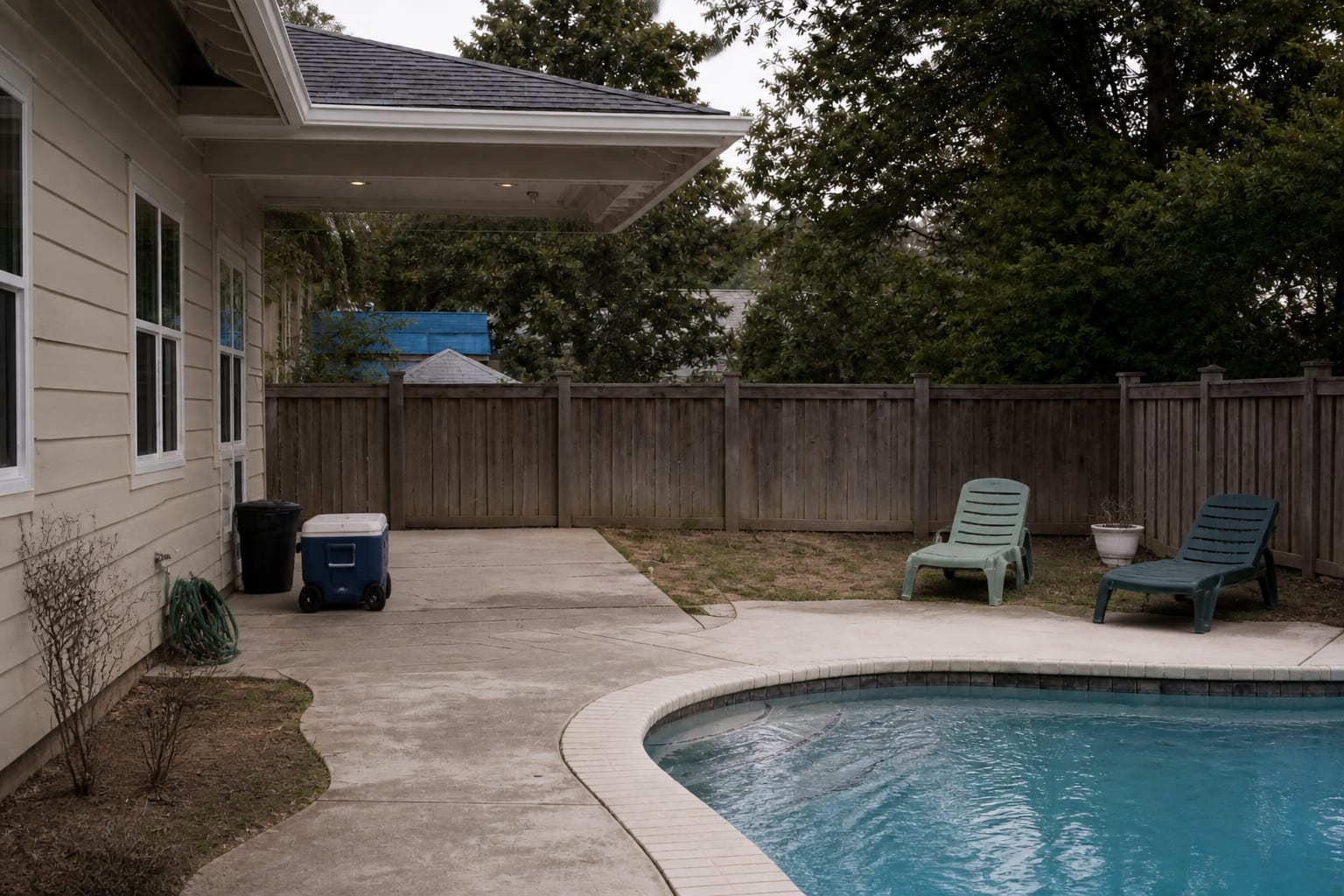
Use AI design to preview your pool bar before you pour a slab
The expensive decisions here are about placement, scale, and visual weight before finishes. Upload a photo from the house door, main lounge chair, or pool gate, then preview the bar in two or three real positions: the shallow end, along the fence, or beside the pool house.
Keep fixed objects visible in the photo — coping, fence, gate swing, equipment screen, lounge chairs, and planting beds all affect whether the bar reads as natural. Test massing first: compare a slim ledge, a 6ft freestanding counter, and a wider bar with three stools before choosing tile or stone. If the pool perimeter needs privacy too, preview the bar beside pool fence ideas that balance safety and style so the counter and barrier don't compete.
Common poolside bar mistakes to avoid
- Sunniest-corner placement. This makes the bar unpleasant exactly when people want cold drinks — shade the working side with an overhang, umbrella, or pergola.
- Indoor finishes. Regular wood cabinets, interior tile, and basic hinges swell, crack, or rust near chlorine and weather; use exterior-rated boxes and marine-grade hardware.
- No trash plan. Cups, peels, and wrappers need a lidded bin close enough that guests actually use it — hide it behind a matching door but keep it easy to hose down.
- Wrong-facing stools. Angle seating toward the water if that's the best view, or use an L-shaped return if conversation happens behind the counter.
- Overdecorated theme. Pick one playful element and let materials, shade, and lighting carry the rest.
Frequently Asked Questions
How close can a bar be to a pool?
Plan the bar 6-8ft from the pool edge so splash doesn't reach drinks while you can still walk between the two. Closer than 4ft puts bottles, electronics, and unsteady walkers at risk.
What bar counter material works near a pool?
Granite, porcelain paver, or sealed concrete tops handle chlorine splash. Teak or ipe wood works if oiled twice a year. Avoid laminate and untreated softwood entirely.
How many stools fit at a backyard poolside bar?
Allow 24in of bar length per stool: a 6ft bar fits 3, an 8ft bar fits 4, a 10ft bar fits 5. Corner returns add one extra seat at the elbow.
Do I need a fridge in a poolside bar?
An outdoor-rated undercounter fridge or beverage cooler is the highest-value add. Standard indoor fridges void their warranty outside and rust within two summers.
How do I shade a poolside bar?
A 10x10ft cantilever umbrella, a small pergola, or a permanent shade sail above the bar keeps drinks and electronics cool. Place shade so it doesn't block the main pool view from the bar.
Three transformations to try
- Poolside bar with thatch shade
- Modern poolside bar in concrete and stone
- Swim-up poolside bar with seat ledge