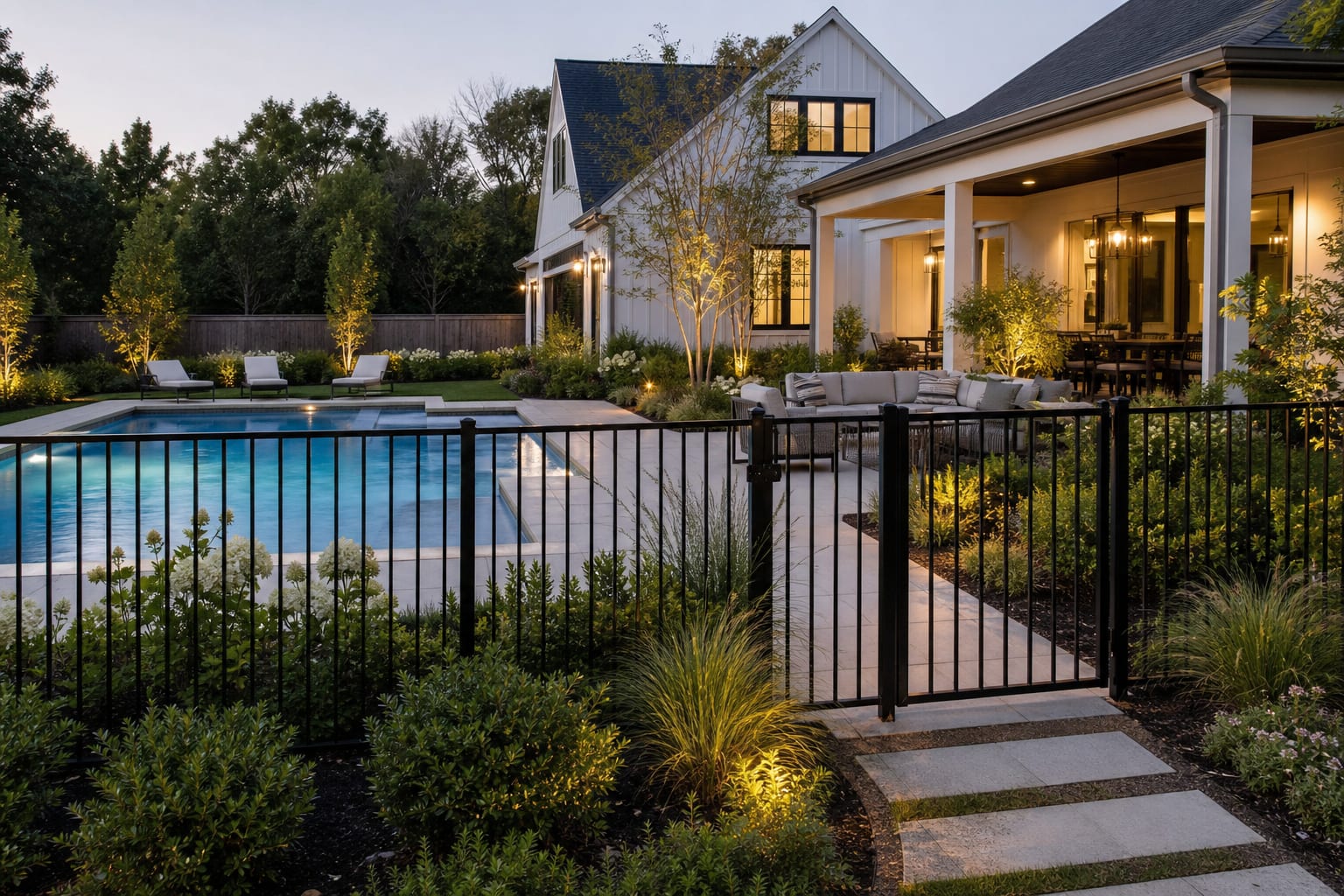
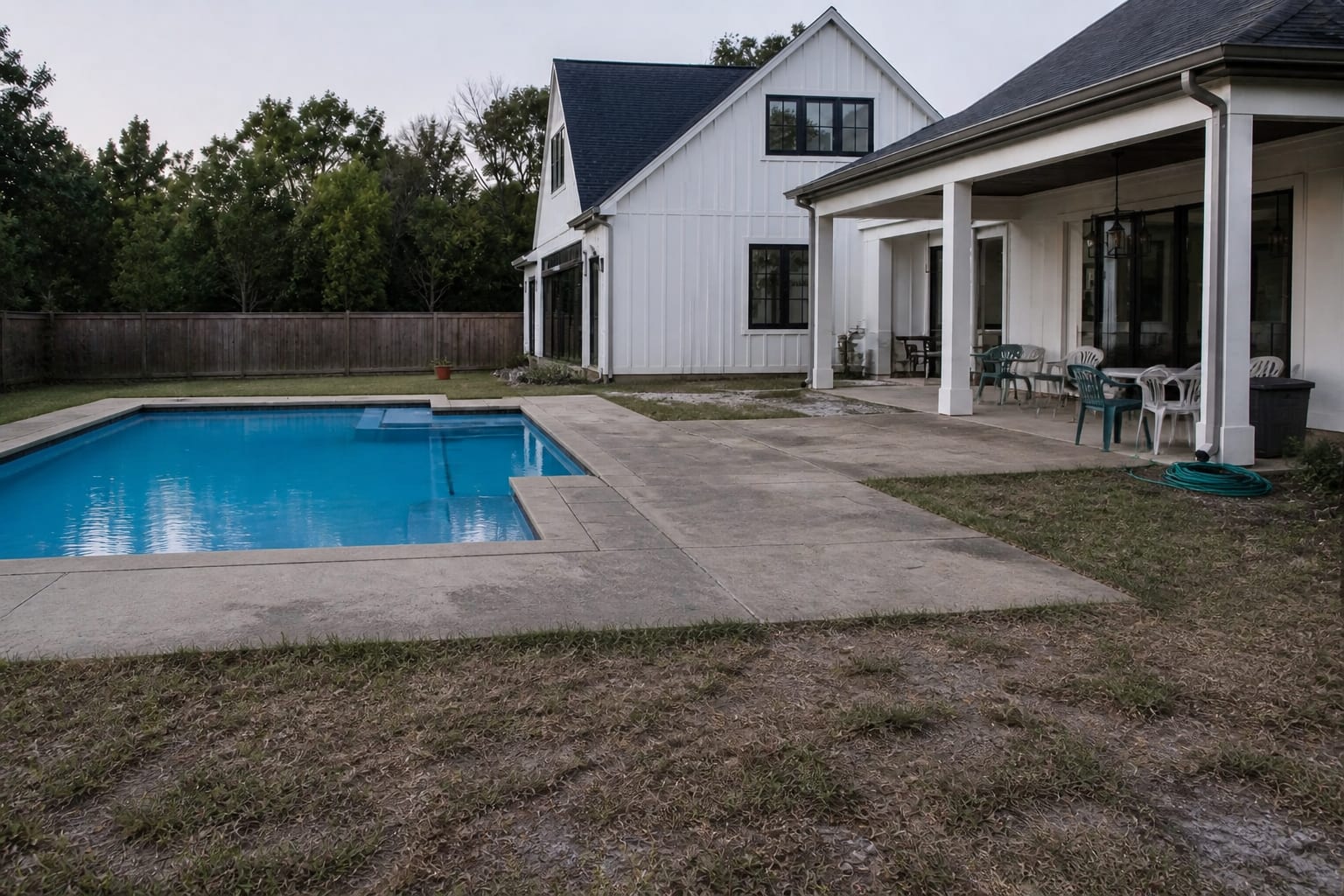
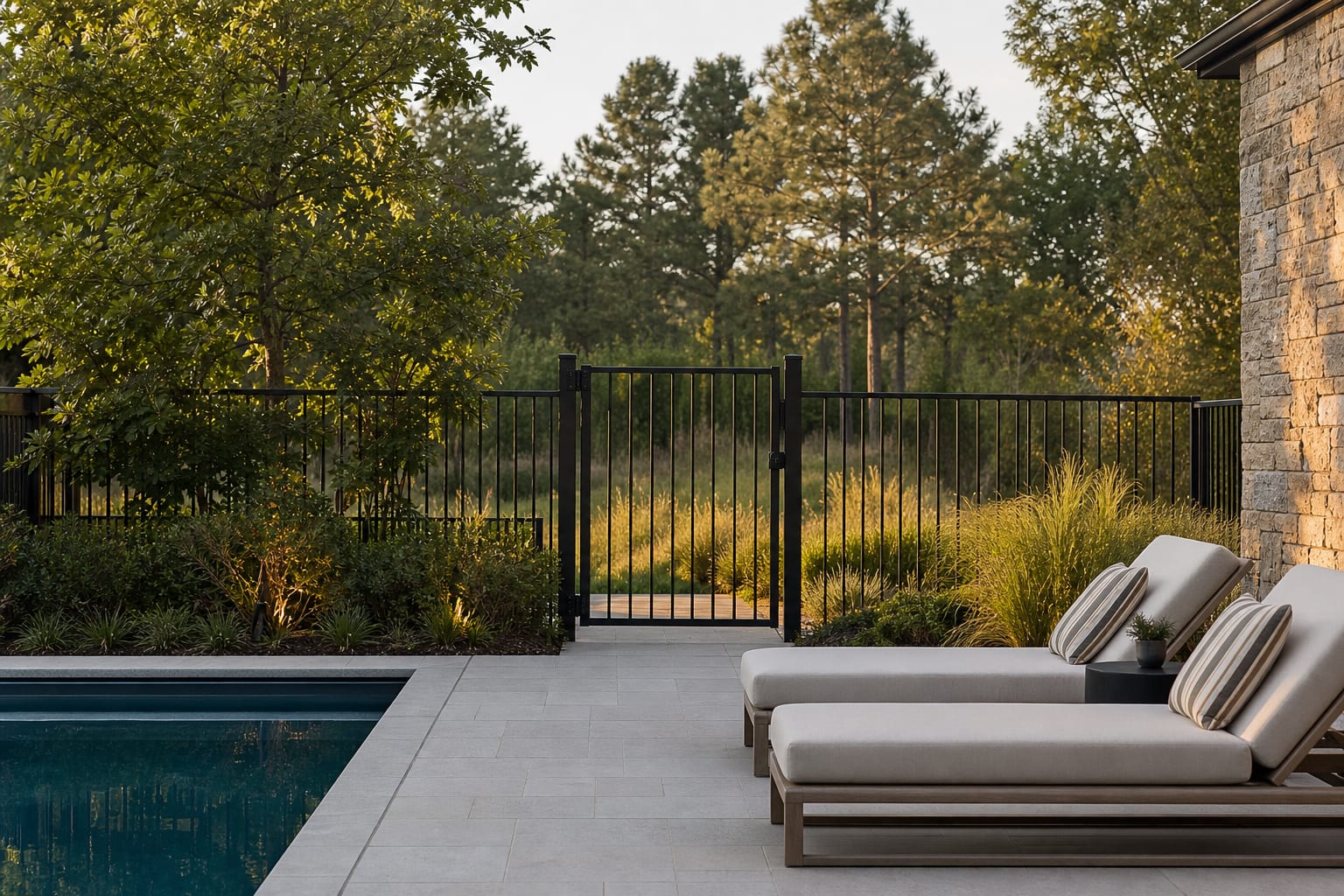
A compliant pool fence is at least 48in tall, self-closing and self-latching, and non-climbable on the pool side. The best versions hit every code point while staying visually quiet: black aluminum that recedes into planting, frameless glass that preserves a view, or removable mesh for a toddler season. Gate hardware matters as much as the fence style, since the prettiest enclosure fails if the entry is easy to defeat.
What pool fence meets safety codes and still looks good?
Start with the baseline before choosing a material. Most residential barrier codes require roughly 48 inches minimum height, no gaps larger than about 4 inches, gates that swing outward from the pool, and latches placed or shielded so children can't reach them. Some cities, insurers, and HOAs set stricter rules, so confirm exact requirements before ordering panels.
The design goal is to make the fence read as an edge, not a punishment. Dark aluminum disappears against trees, frameless glass preserves a view, and removable mesh protects a season without pretending to be permanent architecture. Pick the option that keeps the pool secure while respecting sight lines, deck circulation, and house style.
Which fence material fits your yard?
Each material changes the view, maintenance rhythm, and mood of the yard. Instead of asking which fence is "best," ask which one solves your worst pool-area problem.
| Fence type | Best backyard use | Spec to verify before buying |
|---|---|---|
| Frameless or semi-frameless glass | Modern pools, scenic views, small yards needing openness | Tempered/laminated safety glass, compliant gate hardware, verified wind/load rating |
| Black aluminum picket | Traditional and transitional yards, budget-aware projects | 48in+ height, under 4in picket spacing, no horizontal climb rails on the pool side |
| Removable mesh | Young children, seasonal protection, flexible ownership | Self-closing gate, secure sleeves, taut panels, full coverage of every access point |
| Steel or wrought-look | Formal homes, masonry walls, strong architecture | Rust-resistant finish, compliant spacing, hardware rated for pool exposure |
| Solid privacy fencing | Exposed lots where privacy overlaps with safety | Non-climbable face, base drainage, enough setback to avoid a boxed-in deck |
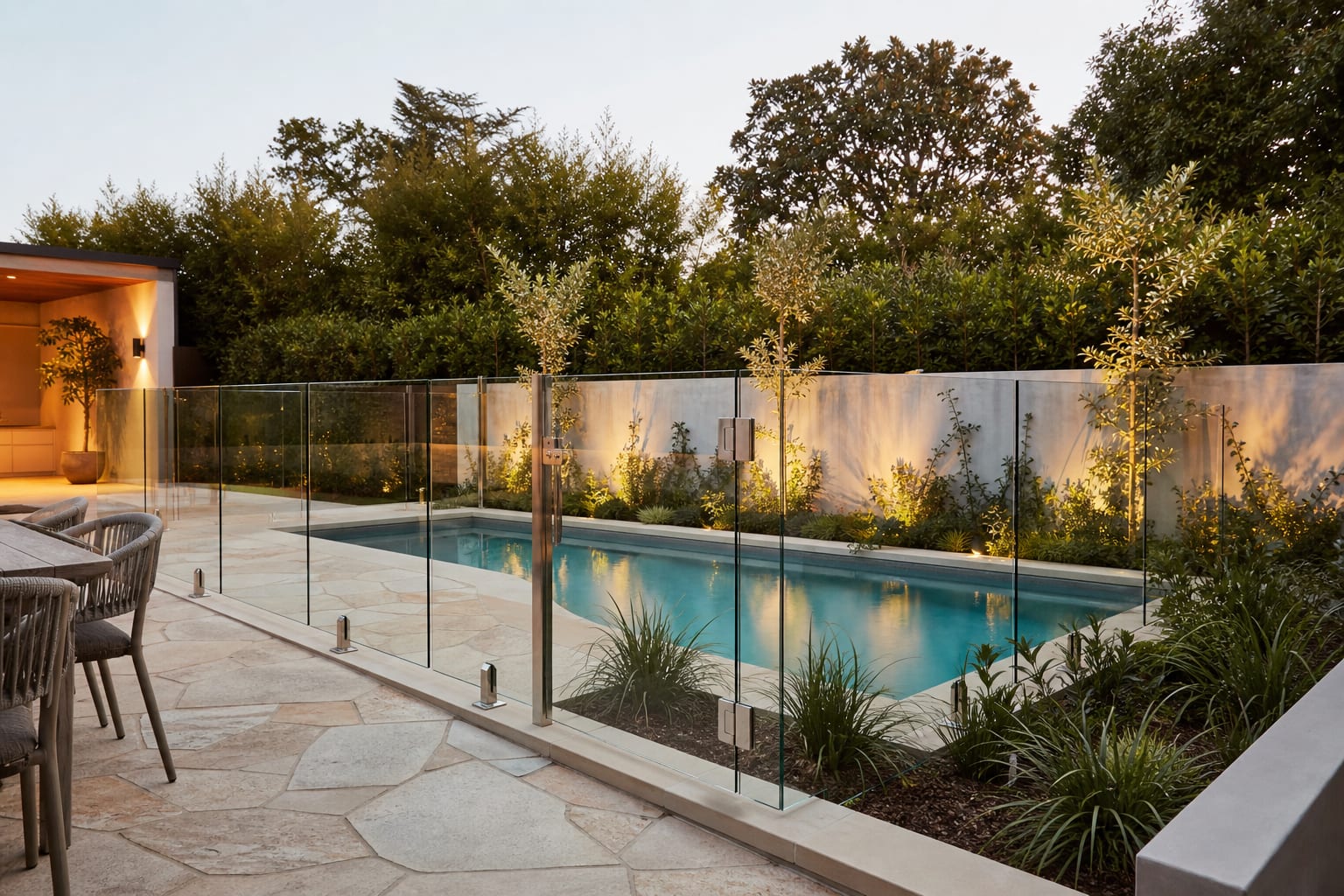
Glass is the cleanest visual option when the water or view deserves to stay visible, but it's unforgiving: fingerprints and hard-water spots show fast in sun. Use it where the view is a real asset, not just because it photographs well. Aluminum tends to age better in everyday family yards, especially black or bronze pickets near hedges or tree shadows. If the pool sees evening use, coordinate gate locations and low-glare fixtures with pool lighting ideas for safer night swimming rather than relying on one floodlight.
How do you make a fence feel intentional, not like a cage?
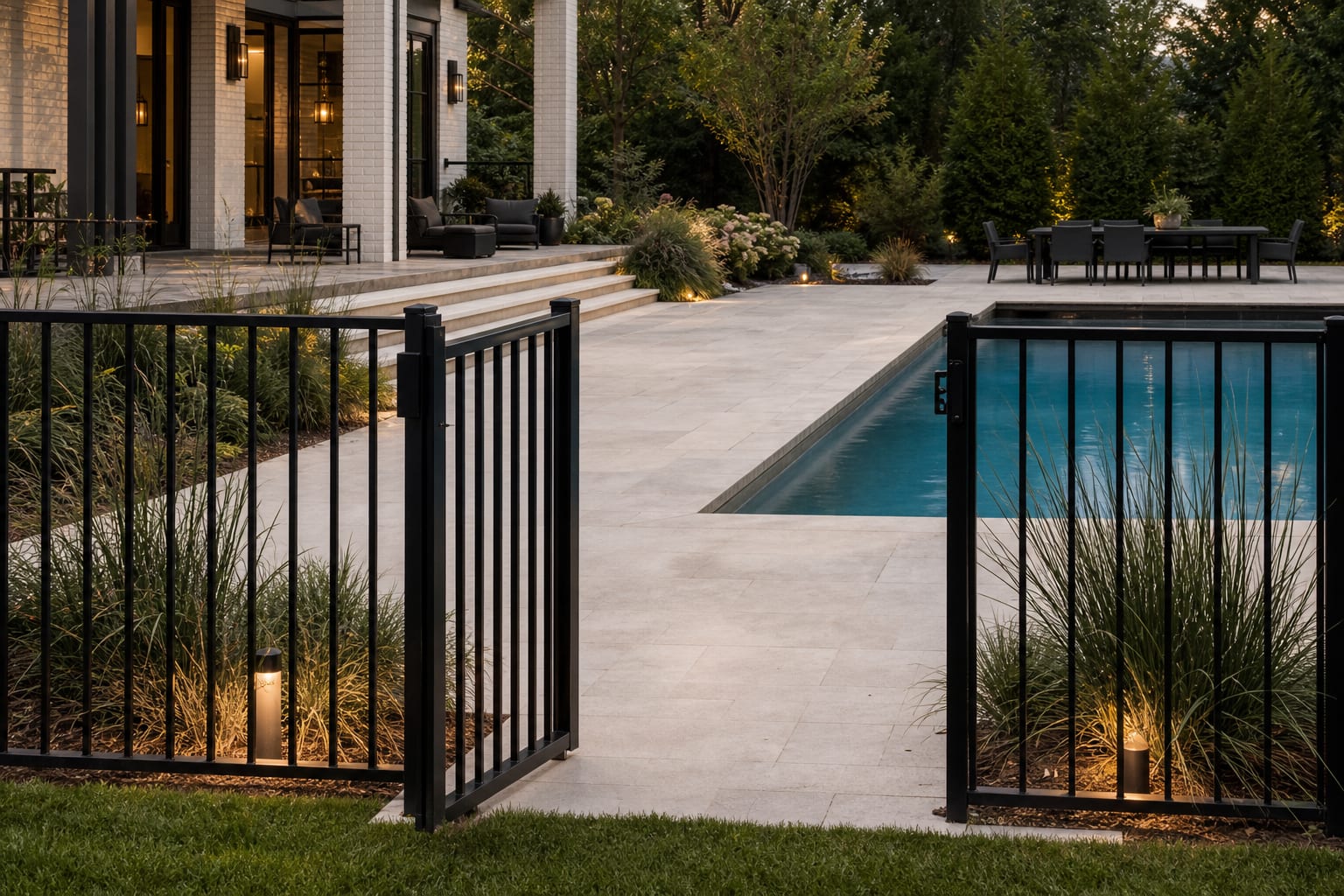
The best enclosures combine one main fence material with small landscape moves. Use the fence to define the pool zone, then let paving, planting, and lighting soften it.
- Slim black aluminum works where trees or dark window frames already exist; keep pickets vertical and hold furniture 36in back from the gate swing.
- Glass on the view side only avoids the cost of a full glass perimeter; pair it with aluminum or masonry-backed fencing on service sides.
- Low planting outside the barrier (18–30in mature height near narrow decks) softens the line without blocking sightlines to the water.
- Solid privacy panels should cover only the exposed side; break long runs with planting pockets or battens that repeat the house trim.
- Align the gate with the house-to-pool path so guests aren't zigzagging around lounge chairs; borrow circulation logic from pool house design ideas for wet traffic if a cabana is involved.
Entertaining yards need one more layer of discipline: keep a bar, grill, or fridge away from the latch so guests don't gather at the gate. Check poolside bar ideas with safe clearances to keep the serving zone clear of the gate swing and hardware.
Design-check shorthand: depth before decoration, repetition before variety, maintenance before novelty.
What mistakes make a pool fence less safe?
- Treating the fence as a finish, not a system. Pick the compliant gate package with the panels and test the latch from fully open, half open, and barely open.
- Ignoring climbability outside the fence. Horizontal rails, stacked planters, retaining walls, and boulders near corners or gates reduce real safety.
- Choosing glass without a maintenance plan. Splash zones, sprinklers, and salt systems leave marks fast; keep irrigation heads away from panels and leave room to clean both sides.
- Fighting the pool coping. A stark white fence beside warm stone or glossy black beside faded decking looks patched together; repeat one exterior cue like window color or paving tone.
- Hiding the gate behind planting. Privacy matters, but the latch should stay visible and reachable; use layered shrubs beyond the access zone, not against the hinge post.
How can you preview a pool fence before committing?
Upload a straight-on photo of the pool area including the deck, house doors, fence line, planting beds, and any gate location. Preview three realistic options: glass on the view side, black aluminum around the perimeter, and a privacy-panel section where the yard feels exposed.
Judge the renderings on proportion, not code. If glass looks too reflective beside pale paving, test aluminum; if black pickets feel busy, add planting and simplify furniture; if a privacy panel boxes in the pool, limit it to the one exposed side. Before ordering, verify local barrier rules, permits, door alarms, and any special requirements for spas, slopes, or boundary fences — the preview picks the look, the code check makes it legal.
Frequently Asked Questions
How tall does a pool fence have to be?
Most US jurisdictions require 48in minimum measured from the ground; some areas require 60in and HOA rules can push it higher. Vertical gaps must stay under 4in apart in nearly all codes.
Can a pool fence be removable?
Yes, mesh removable fences meet code in most jurisdictions for residential pools. They install in sleeves drilled into the deck, come down in under an hour, and still need a code-rated self-closing gate.
Is a glass pool fence safer than aluminum?
Both meet the same safety code. Glass gives the clearest view and easiest cleaning but costs 2–3x as much, while aluminum offers the lowest visual weight at a reasonable price and remains the popular default.
Can my house wall serve as part of the pool fence?
In most jurisdictions, yes, but every door from the house opening to the pool zone must have a self-closing latch, an alarm, or both per code. Check your local pool safety act for specifics.
What pool fence color disappears in the landscape?
Matte black aluminum or bronze fencing visually recedes against most planting backgrounds. White or beige fencing pops forward and reads heavier, while glass disappears entirely until it gets dirty.