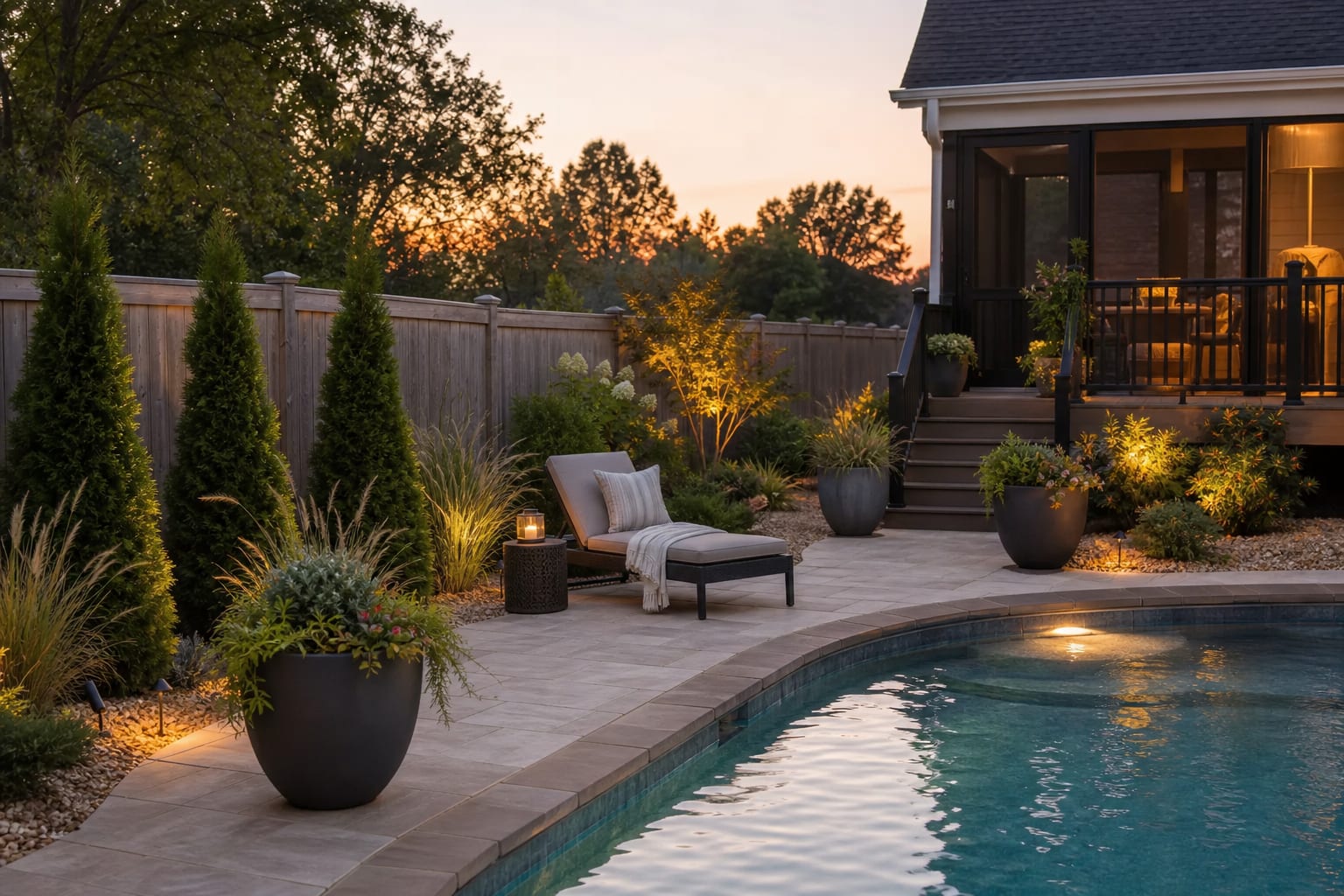
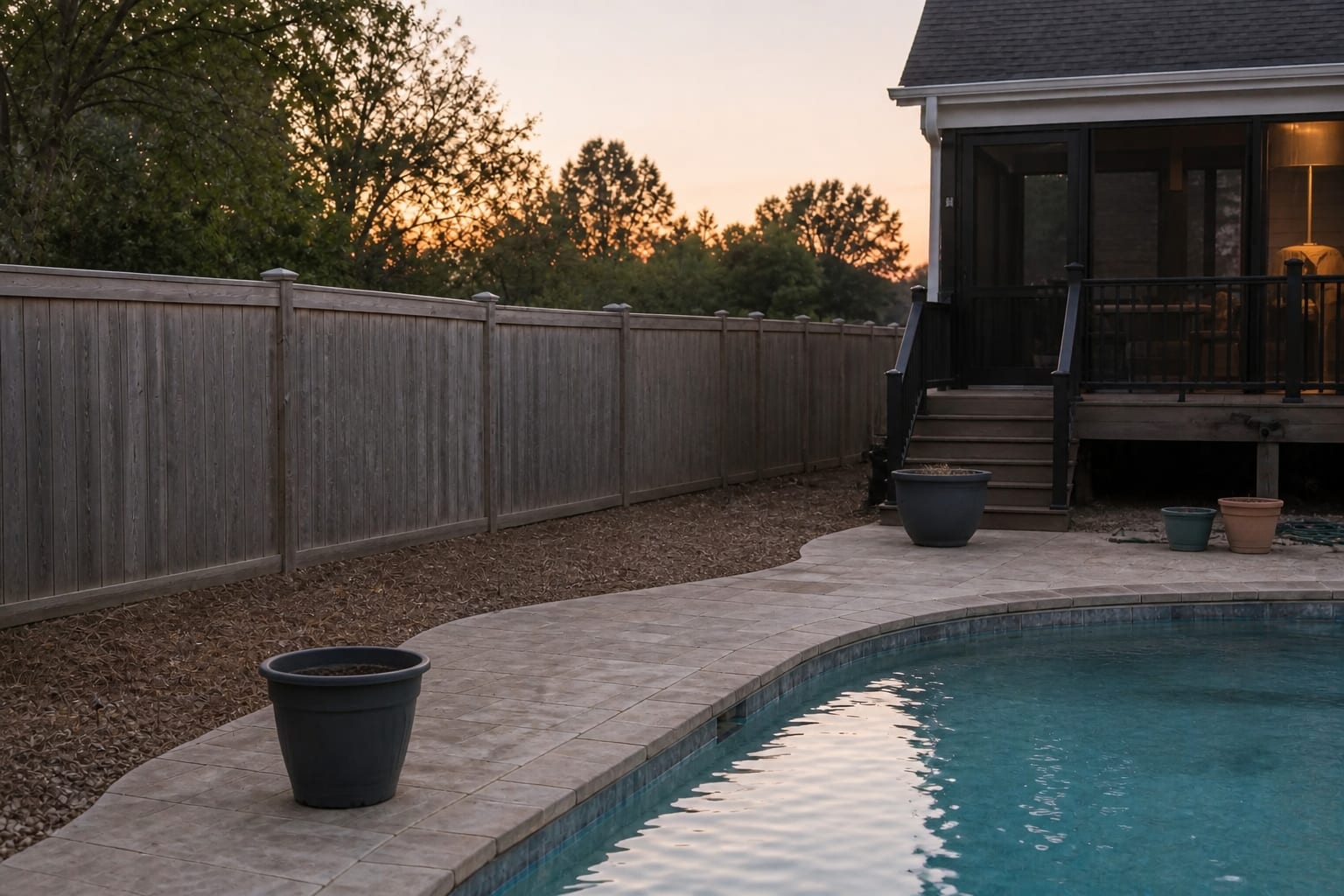
Pool landscaping plant ideas that work best combine ornamental grasses, compact evergreens, and succulents kept back from traffic — plants that shed little debris, tolerate chlorine splash and reflected heat, and stay low enough near seating to protect sightlines and bare feet around the coping.
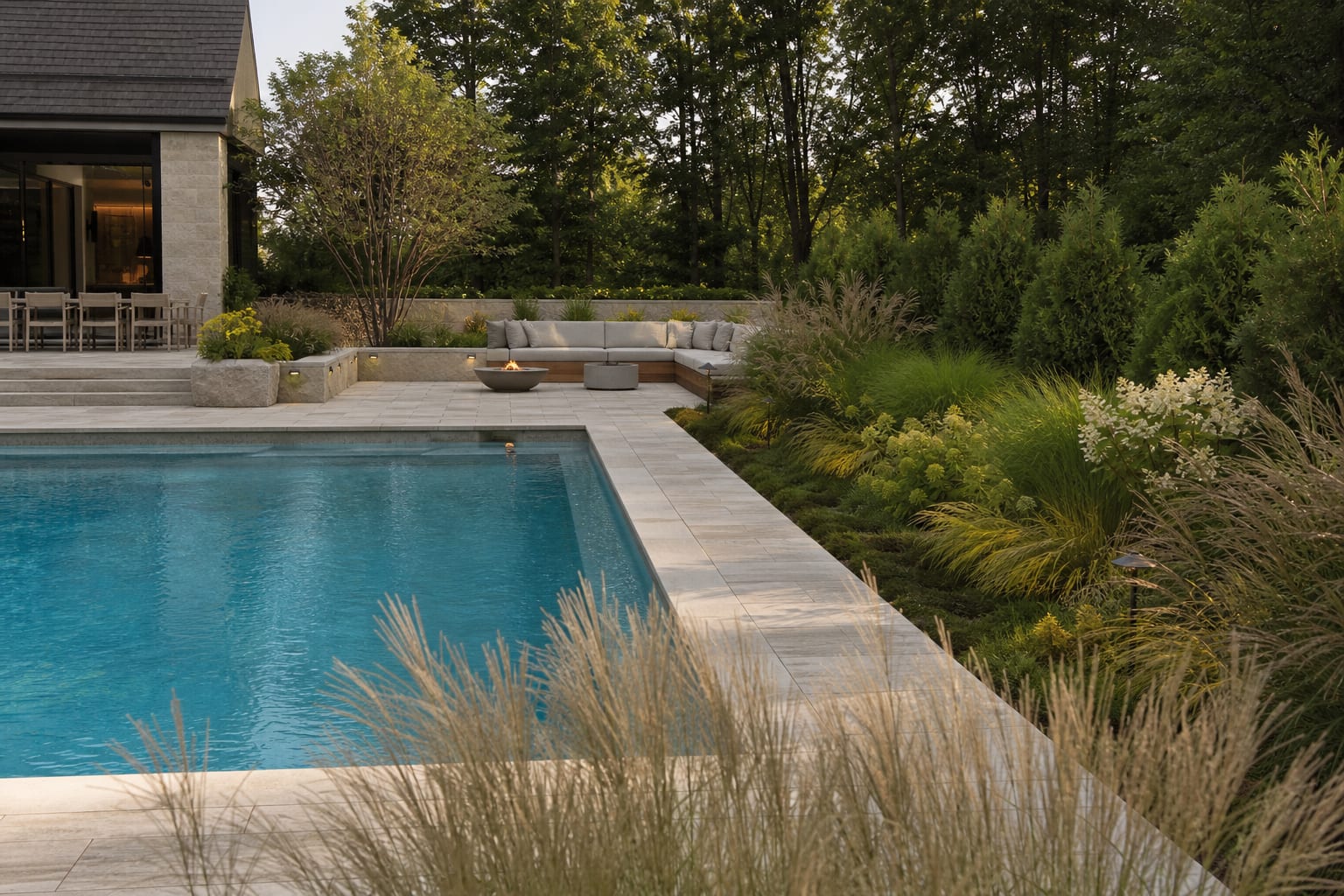
What plants should you use around a pool?
Separate planting into three zones. The 12–18 inches beside coping should stay cleanest: pavers, gravel, low groundcovers, or movable containers. The next 36–48 inches can hold shrubs, grasses, and perennials for softness. Taller screening plants belong farther back — often 4–8 feet from coping depending on mature width — so leaves and roots never become the main feature.
Use three plant types confidently instead of twelve timidly. One upright plant, one rounded shrub, and one soft grass, repeated around the deck, frame the water without creating a cleanup problem.
Tropical, Mediterranean, or structured evergreen: which style fits your pool?
The real decision isn't a single pretty plant — it's which climate mood your pool can sustain without constant cleanup. Tropical planting feels lush but needs warmth, water, and wind protection. Mediterranean planting handles sun and glare well but can look sparse if every plant stays tiny. Structured evergreen planting is the most forgiving option in many yards because it holds winter shape and drops less debris.
| Planting direction | Best near a pool when | Watch the tradeoff |
|---|---|---|
| Tropical broad-leaf plants | Reflected heat, irrigation, and a sheltered corner | Large leaves shred in wind |
| Mediterranean shrubs and grasses | Hot, bright, dry site with pale paving | Some silvery herbs dislike wet feet |
| Structured evergreens | Privacy, year-round shape, low debris | Too many clipped forms feel stiff without grasses |
A pool with glare from pale concrete needs plants with substance: dwarf olive, westringia, rosemary forms, lomandra, agave (kept off traffic paths), and compact pittosporum handle bright, dry conditions in most mild climates. In colder regions, swap in the same idea rather than the exact plant — boxwood alternatives, inkberry holly, switchgrass, little bluestem, sedge, or compact juniper.
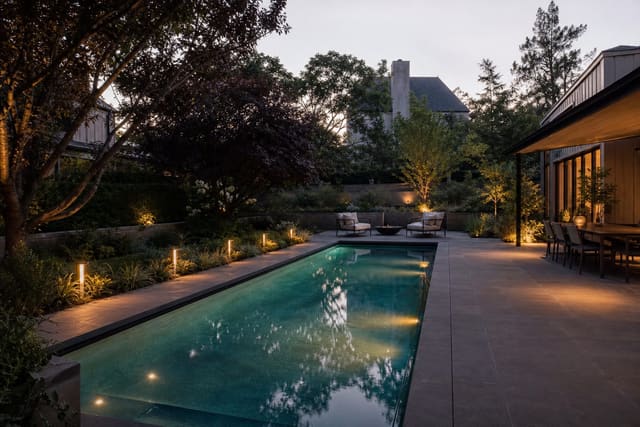
If the pool is visible from the house, align planting with the architecture: a run of grasses opposite the patio door, planters flanking the shallow end, or a hedge lined up with the fence. Coordinate planting with warm pool lighting ideas so grasses glow from the side rather than throwing glare at swimmers; 2700K–3000K fixtures are usually the sweet spot outdoors.
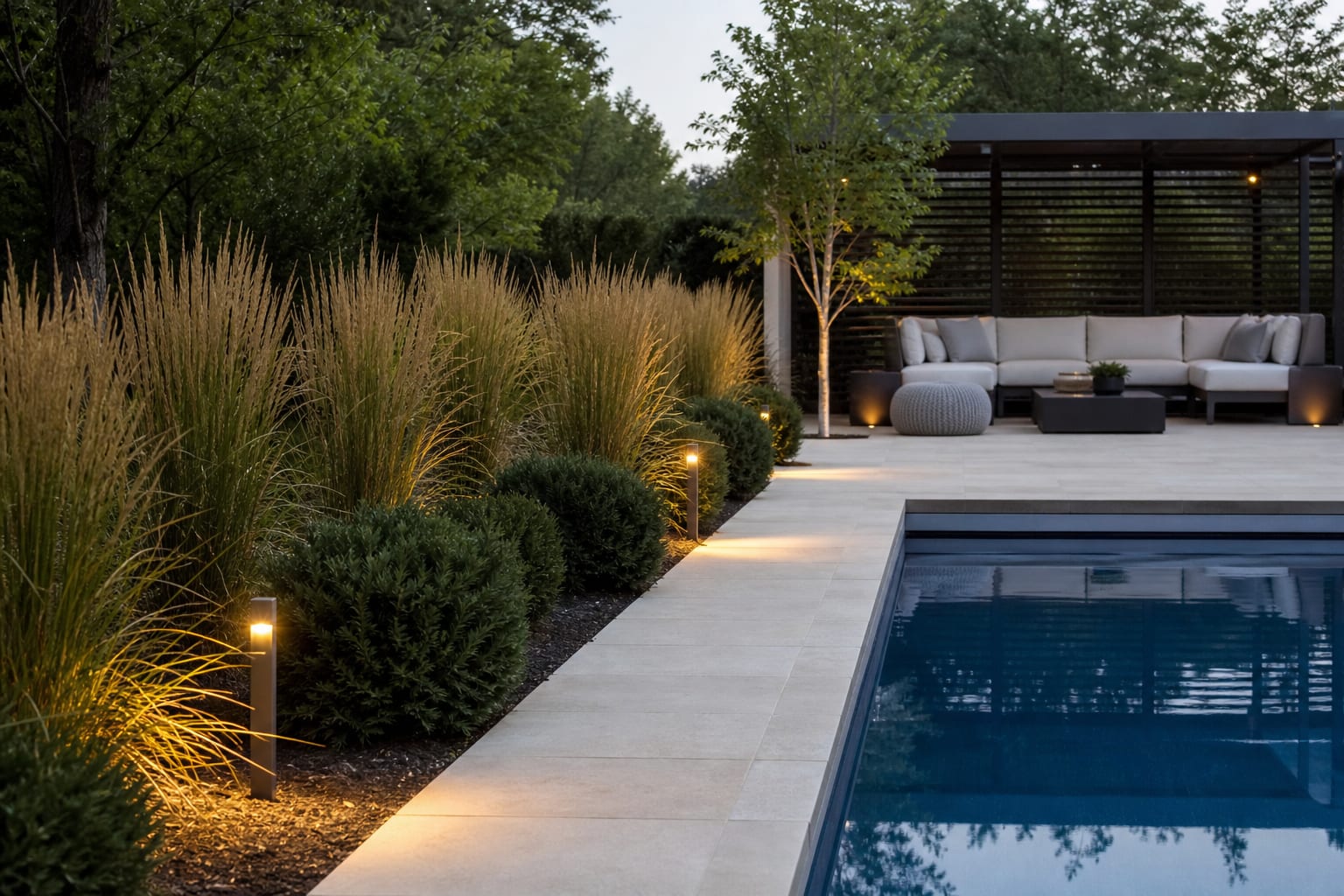
Which specific plants work best around a pool?
- Ornamental grasses in groups of three, five, or seven add movement. Choose clumping regional varieties, keep mature height below sightlines, and plant at least 24 inches back so blades and seed heads stay clear of the water.
- Compact evergreen shrubs give winter structure. A 3-gallon shrub may need 3–5 feet of mature width — crowding it against coping guarantees extra pruning.
- Broad-leaf tropicals in containers suit marginal climates. A 20–24 inch pot buffers roots and lets you move the plant away from wind.
- Succulents and agaves work as sculptural accents, but sharp tips should stay beyond towel paths, ladders, and play areas.
- Low groundcovers (2–6 inches) tolerate reflected heat and splash without hiding coping edges.
- Small ornamental trees should keep trunks several feet beyond coping; skip fruiting or heavy-flowering varieties directly over water.
- Large planters contain messy favorites — grow high-maintenance plants there on the far side of the deck instead of near the waterline.
What pool landscaping mistakes should you avoid?
Planting messy trees directly over the water is the classic failure — flowers, berries, and small leaves become daily skimmer chores. Put higher-debris trees downwind and keep the cleanest plants closest to the water.
Ignoring bare feet ruins an otherwise good design. Thorny, spiky, resinous, or bee-heavy plants don't belong beside steps, ladders, or loungers; move them behind a bed or swap for something softer.
Planting too close to the fence often hurts privacy instead of helping it. A 36–48 inch bed allows staggered planting with real depth. Pair planting with pool fence design ideas so board spacing, plant height, and sightlines solve the same problem together.
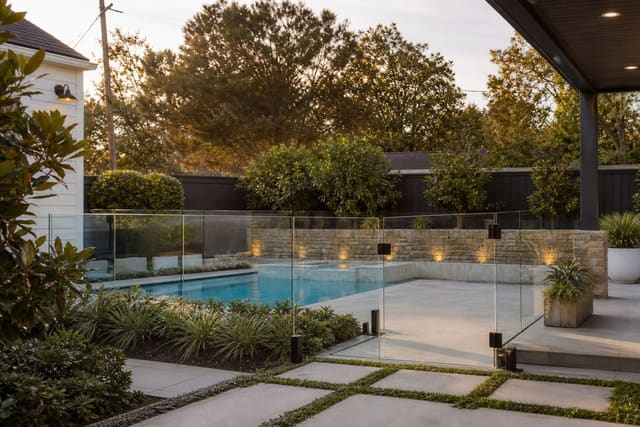
Skipping irrigation is an expensive oversight — pool paving reflects heat and planters dry out fast. Drip irrigation stays cleaner than overspray, since it keeps decking and glass fencing free of water spots.
Buying every pretty nursery plant makes the pool feel busy. Water already reflects sky, umbrellas, and movement, so a tight palette — one paving tone, one mulch or gravel tone, three to five plant forms — keeps the space calm.
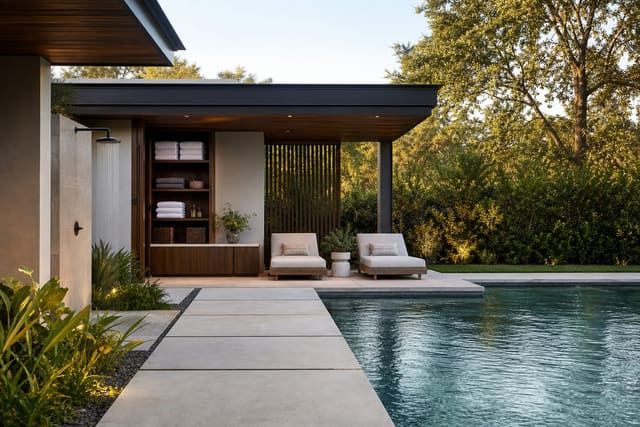
Equipment deserves the same planning as plants. Pumps, hoses, and chemical storage need a spot that doesn't block service access. If the yard also has a cabana or bar, connect planting to smart pool house design ideas so the path from water to towel to shade feels intentional.
How can AI design help you preview pool planting before buying?
Plant scale is hard to judge from nursery tags, which is where AI previewing helps. Upload a clear photo of your pool area to Re-Design and test a tropical version, a Mediterranean version with grasses and pale gravel, and a structured evergreen version with fence-line privacy planting.
Photograph the area from the door or seat you use most, include the coping, fence, and deck width, and add one object of known size — a lounge chair or 24 inch planter — for scale. State constraints plainly: keep 36 inches of walking space, preserve ladder access, use low-debris plants, add 20 inch planters near the shallow end, and avoid trees over the water.
The preview won't replace a local landscape designer or pool professional, but it catches the ugly version early — the hedge that narrows the deck, palms fighting the fence, or gravel that makes water look harsh — while it's still pixels, not roots.
Frequently Asked Questions
What plants should I never plant near a pool?
Avoid bougainvillea (thorns), large oaks and pines (heavy debris), bamboo (invasive roots), oleander (toxic), and crepe myrtle (sap stains decking) within 8ft of the pool edge.
What plants tolerate chlorine splash?
Agave, sedum, ornamental grasses (miscanthus, fountain grass), dwarf juniper, daylily, and salt-tolerant lavender all handle regular chlorine splash without leaf burn.
How far from the pool should I plant a tree?
Plant trees at least one mature canopy radius away from the pool edge — typically 12–20ft for medium trees and 25–40ft for large shade trees; closer than that and roots can damage the shell or coping.
What is the best low-maintenance pool border plant?
Mondo grass, dwarf mondo, blue fescue, and creeping thyme give a tidy edge with minimal trimming; lavender adds scent and pollinators for less than 30 minutes of pruning twice a year.
Can I have flowers near a pool?
Yes — choose flowers with sturdy stems and few dropped petals: daylily, agapanthus, kniphofia, and salvia stay attractive without filling the skimmer every weekend.
Three transformations to try
- Pool border with ornamental grasses
- Pool surround with agave and gravel
- Tropical-look pool border without messy palms