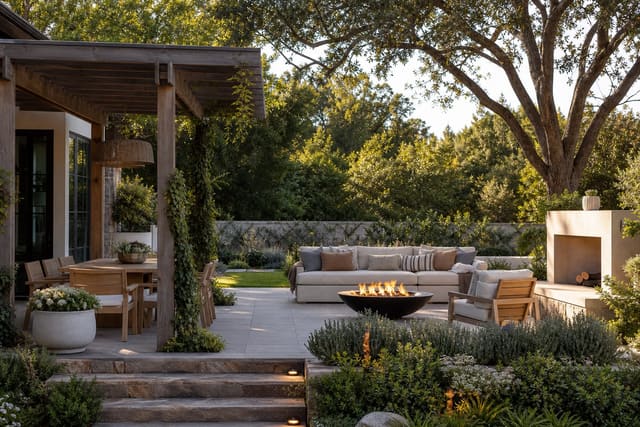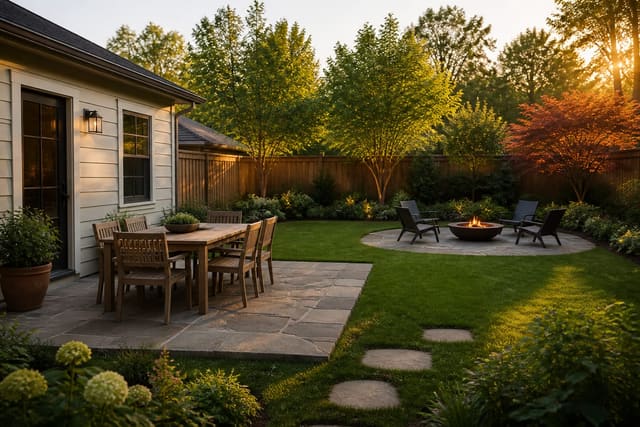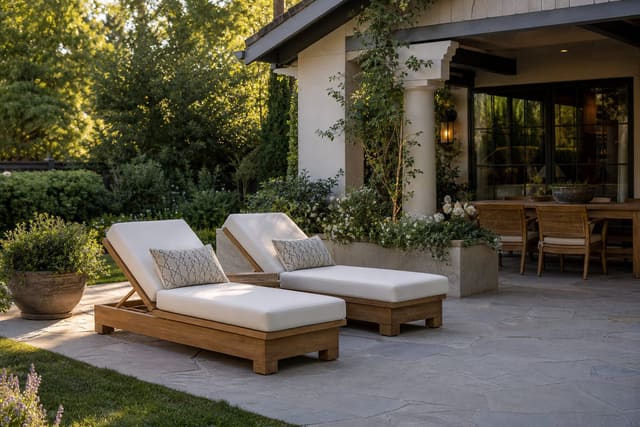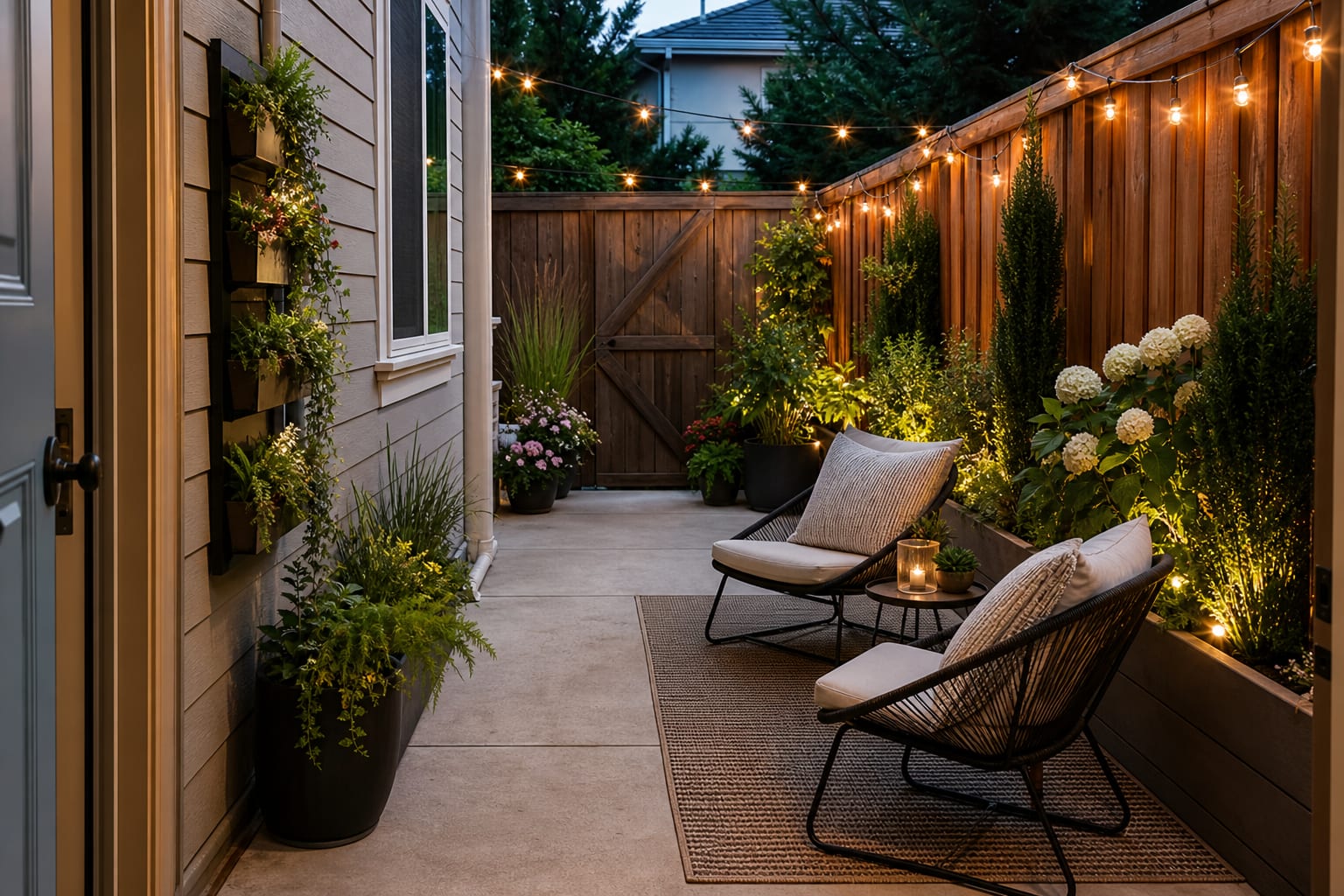
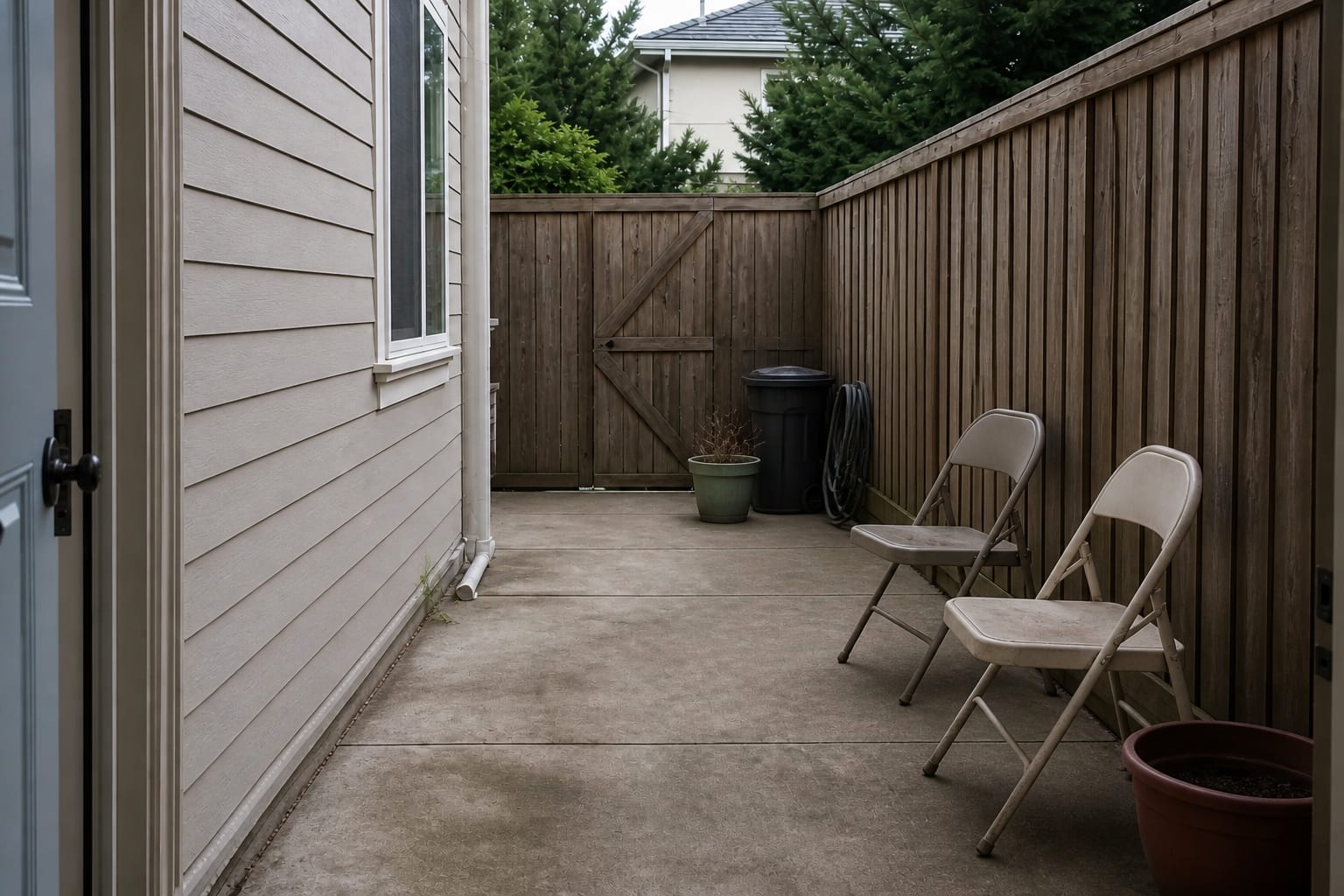
Design a small patio by choosing one main use, keeping a 30-36 inch walking path, scaling furniture tightly, adding vertical planting, and layering shade and light. A compact outdoor space can feel generous, but only if every piece earns its footprint. These small patio ideas make the space feel intentional instead of crowded.
What makes a small patio feel like a real room?
A small patio feels like a real outdoor room when it has a clear center, defined edges, comfortable circulation, and one believable reason to sit there. The center might be a 30-inch round bistro table, a 42-inch fire bowl zone, or two low lounge chairs angled around a planter. Edges can be a fence, a trellis, a row of 18-inch-deep planters, or a washable outdoor curtain panel; without them the patio reads as leftover pavement.
Draw the slab or deck on paper first, marking the door swing, hose bib, drain, steps, and AC equipment, then block the usable rectangle, not the theoretical one. A 9-by-10-foot patio with a door swing and grill clearance may only have a 6-by-8-foot furnishing zone. Scale comes before style: a loveseat deeper than 32 inches works on a wide terrace and fails on a narrow balcony patio, and a dining chair needs about 24 inches of pull-back, so a full rectangular table usually needs at least 8 feet of depth. For the bigger layout logic, see patio design ideas for outdoor rooms.
Which layout should a tiny patio use: dining, lounge, or garden?
The hard choice is whether the patio is mainly for eating, lounging, gardening, or entertaining two extra people. You can borrow from the other categories, but the main use gets the best footprint.
- Dining-first: Use a 28-32 inch round table with armless chairs that slide fully under the top; a bench against a fence can save 8-12 inches over freestanding chairs.
- Lounge-first: Choose two lounge chairs no wider than 28 inches with a shared 14-18 inch side table; angle chairs 15-30 degrees instead of lining them flat. Size the rug to hold at least the front legs of both chairs, often 5-by-7 feet.
- Privacy-first: Screen at the actual sight line with a 60-72 inch trellis, a tall narrow planter, or a slatted panel rather than piling furniture toward the center. See patio privacy ideas with planting and screens for placement guidance.
Test this on your own photo with ReDesign before you commit; keep the house edge, horizon line, hardscape, planting beds, and main path visible so the preview solves the space you actually have.
Which small patio ideas earn their square footage?
- Round bistro table over square when the patio is under 8 feet wide, since chair pull-back is the real constraint. A 30-inch round table seats two while letting traffic curve around it.
- Wall planters over floor pots. 6-8 inch deep railing boxes free up knee and chair-leg room; keep the heaviest pots on the ground for stability and stack herbs or trailing plants above waist height.
- A storage bench, only if it's comfortable. Aim for a 17-19 inch seat height with a 2-3 inch cushion, and keep the lid easy to open without moving the table.
- Shade that hugs an edge, not a center umbrella base. A 20-inch base becomes a shin trap; a wall-mounted umbrella, sail shade, or pergola panel set outside the walking lane works better. Compare covered patio ideas for shade and structure if sun control is driving the project.
- Lighting at three heights: low path lights near steps, string lights or a plug-in pendant overhead, and a 2700K table lantern so faces look warm, not gray.
What small patio mistakes waste space?
Matching furniture sets are built for showroom clarity, not your exact door swing or grill clearance. Buy the largest piece first, tape its footprint on the patio, and live with it a day before ordering.
Lining every item against the perimeter creates a furniture moat with an empty middle. Pull one chair or table 6-10 inches inward and use plants behind it for depth instead.
Too many tiny pots look busy and need more watering. Three 16-20 inch planters usually beat nine small containers, especially mixing one upright, one mounding, and one trailing plant per pot.
Don't ignore drainage: never cover a patio drain with a rug, and avoid saucers that trap water against wood or porous stone. If the patio slopes, add adjustable glides so chair legs stop rocking.
How can AI design help preview a small patio?
AI design is most useful for testing proportion, not just style. Upload a straight-on photo from the door or main approach, then preview a lounge version, a dining version, and a plant-heavy version before buying anything. The winning image usually has the clearest path and the fewest heroic pieces.
Shoot in even daylight, clear clutter from the frame, and include the full floor edge, door, fence, and steps. State the real width in your prompt so the preview doesn't invent a resort-sized sectional. Try naming materials and measurements: "small concrete patio with two 27-inch woven lounge chairs, 18-inch side table, vertical herb wall, 2700K string lights, and terracotta planters along the fence."
The preview should expose bad ideas early, like a chair blocking the grill or a planter wall stealing knee room, before your Saturday disappears into returns.
Frequently Asked Questions
What is the smallest workable patio size?
8 by 10 feet (80 sq ft) holds a bistro set or one loveseat plus a side table. Below 60 sq ft the patio tends to read as a landing pad rather than a destination.
How do I make a small patio feel bigger?
Run the flooring continuous to the house with no transition, anchor with a single 8x10 outdoor rug, and pick lighter-colored hardscape. Busy patterns and small pavers chop the eye and shrink the perceived size.
Sectional or separate pieces on a small patio?
A modular loveseat-plus-chair setup almost always beats a sectional on patios under 150 sq ft, because the pieces can rotate for sun, conversation, or a fire pit while a sectional locks the layout in place.
Do small patios need a privacy screen?
Yes. Small patios sit close to neighbors and benefit most from a 6.5-foot-tall screen on one side, even a single panel. Without it, the patio reads exposed and tends to get used less.
What plants work for small patio borders?
Use columnar evergreens like Sky Pencil holly or Italian cypress for vertical screening, dwarf boxwood for a low border, and one specimen tree in a 24-inch planter overhead. Avoid sprawling perennials that creep into the seating area.
> Try this: Ready to see this on your own space? Open ReDesign and run the preview.
Three transformations to try
1. Bistro set patio with planter border 2. Two-chair lounge patio with single tree 3. Round dining patio with overhead pergola