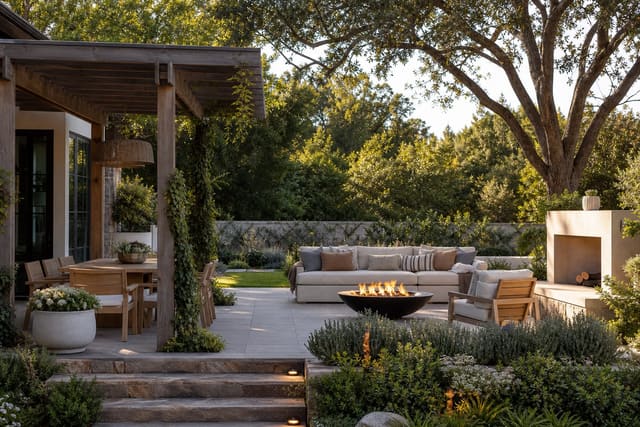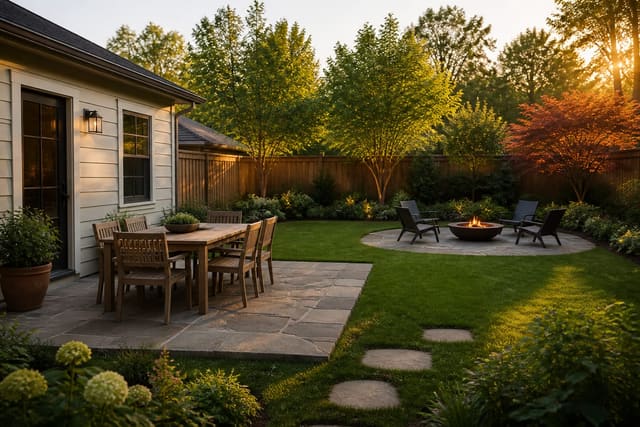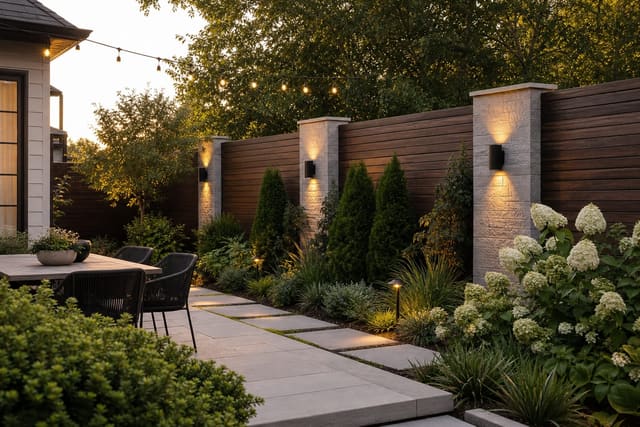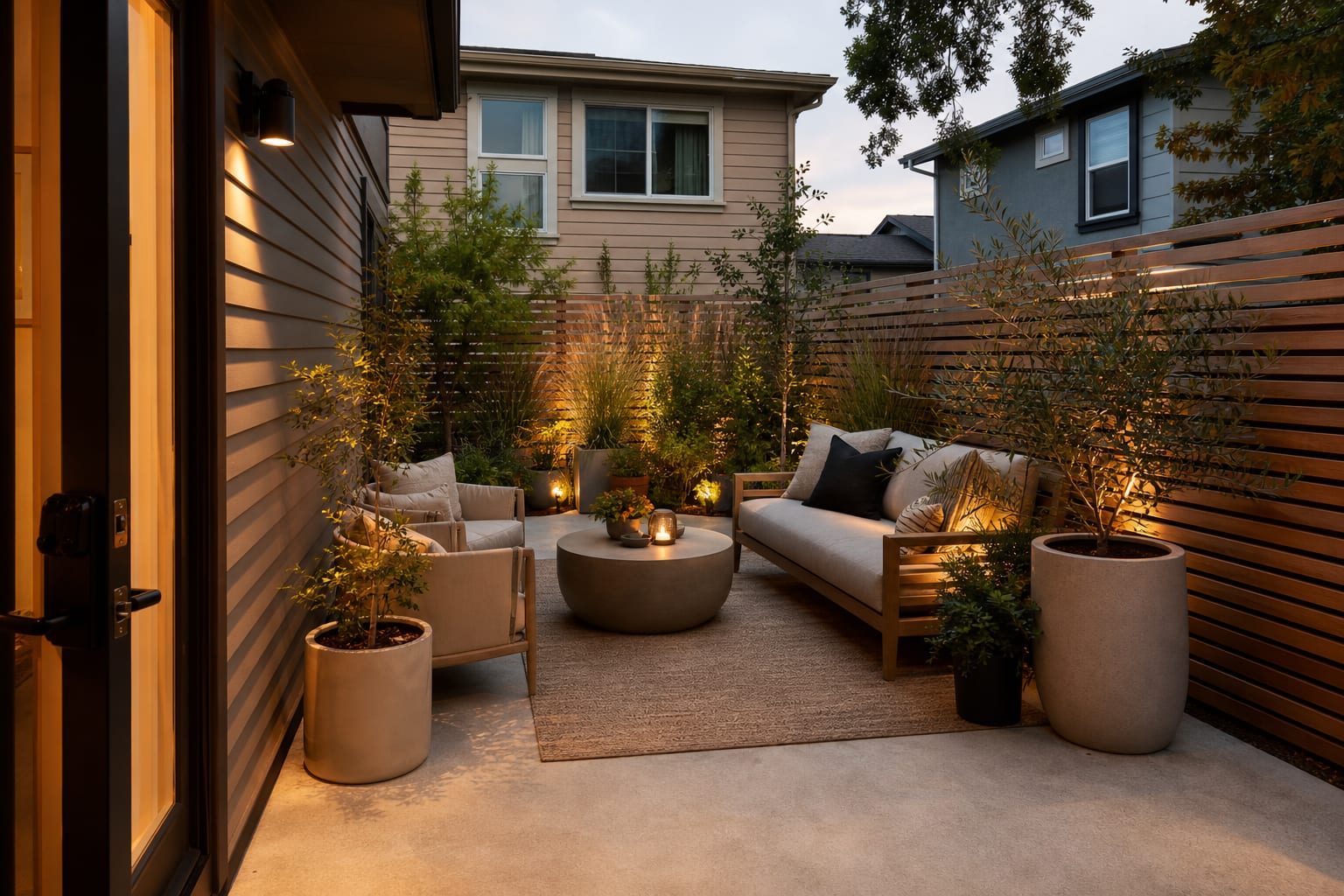
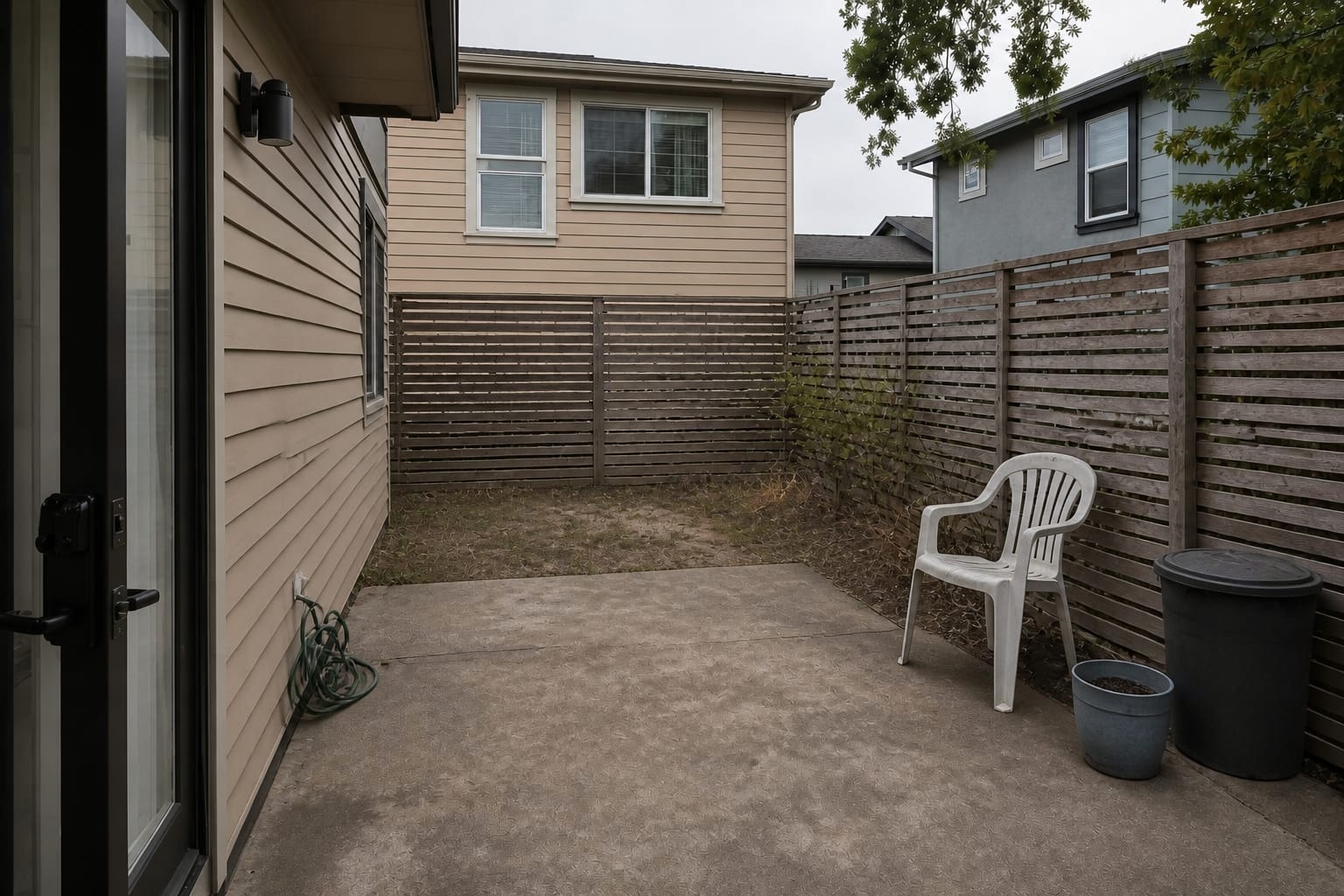
Add privacy to a patio by identifying the exact sight lines that expose you, then layering screens, fences, planters, and soft planting so the space feels protected, not walled off. The best patio privacy ideas are rarely the tallest: a 42 inch planter and a 72 inch slatted panel placed correctly can hide more than a continuous 6 foot fence.
What makes patio privacy feel calm instead of fenced in?
Good patio privacy protects the seated body and filters the background, it doesn't enclose the whole slab. A little visibility is often more pleasant outdoors than total enclosure, since breeze, sky, and borrowed greenery are part of the room.
Start with seated eye height. At 42-48 inches, a planter with grasses can interrupt a neighbor's view. For a second-story window, you may need 72-84 inches, but only across the narrow cone of sight, which is why a diagonal screen often beats a long fence.
Good privacy layouts borrow from patio design ideas for outdoor rooms: define a center, protect one or two edges, keep the main path clear. Leave 30 inches for normal circulation, 36 inches where people carry trays or push strollers.
Use one dominant privacy material (slatted cedar, powder-coated mesh with vines, painted lattice) and one supporting plant texture. Too many screens, pots, and trellises make a patio look like it's hiding from itself.
What screen do you need for your specific sight-line problem?
The first decision is whether the unwanted view is low, side-facing, or overhead, since each needs a different tool.
| Privacy problem | Best first move | Practical spec |
|---|---|---|
| Neighbor window facing your chair | Vertical screen between chair and window | 60-72 inches tall, 12-24 inches behind or beside seating |
| Side yard or gate exposure | Fence return, planter wall, or trellis at the open edge | 36-48 inches wide blocks the direct approach view |
| Upstairs view into dining area | Overhead filtering: vines, sail shade, pergola slats | Keep finished clearance near 8 feet where people walk |
| Open railing on a small patio | Railing planters or a narrow slatted panel | Use 6-10 inch deep boxes when floor space is tight |
Don't guess from the patio door. Sit in the exposed chair and have someone stand at the source of the view; if you can see their face, they can see yours. Mark the line with a stake or painter's tape.
On a compact slab, privacy competes with circulation, the same discipline covered in small patio ideas for tight layouts. A 24 inch planter is fine along a wide fence but can ruin a 7 foot wide patio sitting in the only walking lane; use a 10-12 inch trough or a bench-mounted screen instead.
Test this on your own photo with ReDesign before you decide, keeping the house edge, horizon, hardscape, and main path visible in the preview.
Which patio privacy ideas solve real exposure problems?
- Slatted screen beside the main chair group. Angled side views often bother people more than straight-across views. Use 1/2-1 inch board gaps for airflow and keep panels 60-72 inches tall unless solving an overhead view.
- Planter-backed screen for height plus softness. Use an 18 inch+ deep trough for shrubs or grasses, then mount a trellis behind it so vines climb without cramming roots into a small pot.
- Clumping bamboo for fast green privacy. Choose a non-running clumping type in a large container (20-24 inches wide) for height without a fence-heavy look; plan for consistent watering.
- Outdoor curtains on real structure. Fabric needs tension and a place to stack, so hang it on a pergola or covered beam with the hem about 1/2 inch off the floor. If shade is the real issue, check covered patio ideas for outdoor shade before adding fabric to a weak frame.
- Mixed privacy border for a yard-facing edge. Combine one evergreen backbone, one airy seasonal plant, and one low mounder; repeating three plant types reads calmer than a collection of nursery finds.
What mistakes make patio privacy backfire?
Choosing the tallest option first is the most common misstep. A high solid fence can make a patio feel smaller, hotter, and echo-prone, especially against concrete or stucco. Test a narrower fix first: one screen at the exposed corner, one tall planter, or one trellis aligned with the neighbor's window.
Planting for tag height instead of container reality is another trap. A shrub rated for 8 feet may sulk in a shallow box, and a vine that looks delicate in spring can swallow a trellis by August. Match the plant to soil depth and your pruning habits.
Materials also age outdoors: reed fencing fades fast, thin softwood warps, and black metal mesh gets visually heavy on small patios without planting to break it up. Choose what you're willing to maintain.
Finally, don't block the good view while hiding the bad one. If the patio faces a garden bed or sunset, screen only the ugly angle. Privacy should edit the view, not erase the reason you sit outside.
How can AI design help you preview patio privacy first?
AI previews are useful because screens and planting change the feeling of a patio before they change the budget. Upload a straight photo from the patio door and preview three versions: a slatted screen, tall planters, and a mixed fence-and-planting approach, keeping the same furniture footprint so the comparison is fair.
Give the prompt real limits: patio width, fence height, sun direction, neighbor view location, and furniture you're keeping. Example: "10 by 12 foot concrete patio, neighbor window on left side, 72 inch cedar slatted screen behind sofa, two 24 inch planters with tall grasses, warm lanterns, clear 36 inch path from sliding door to yard."
Then verify outside: tape the screen width on the paving, stand a pole at the proposed height, and sit down. If the patio feels protected from the chair but still open to sky and garden, you have the right plan.
Frequently Asked Questions
How tall does a patio privacy screen need to be?
6.5 to 7ft above the patio surface blocks seated eye line at the neighbor's side of the fence. Standing-eye privacy at 8 to 10ft requires a tree canopy or a tall pergola with infill panels.
Will a tall planter block neighbor views?
A 36in planter with a 4ft plant on top gets you 7ft of screen at the patio edge. Place planters in a continuous run, not as gaps, so the eye can't slip between them.
What climbs fastest on a privacy trellis?
Clematis and annual hyacinth bean reach 8 to 10ft in one season. Star jasmine and climbing hydrangea take 2 to 3 years to fill in but last for decades without replanting.
Do outdoor curtains work for patio privacy?
Solar-grade outdoor curtains on a pergola track read soft, block sightlines on demand, and survive 5+ years with UV-rated fabric. They only cover what they hang in front of, so pair them with planted edges elsewhere.
Bamboo or board-on-board for a permanent screen?
Clumping bamboo (Fargesia) grows a 10 to 15ft screen in 3 years with no fence permit needed. Board-on-board goes up faster but requires a structural fence permit and lasts 12 to 18 years before refinishing.
> Try this: Ready to see this on your own space? Open ReDesign and run the preview.
Three transformations to try
1. Cedar slatted privacy panel on patio edge 2. Bamboo screen with planter base 3. Pergola with retractable outdoor curtains