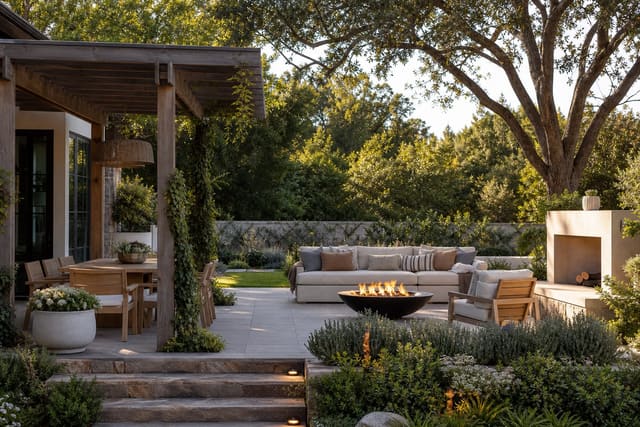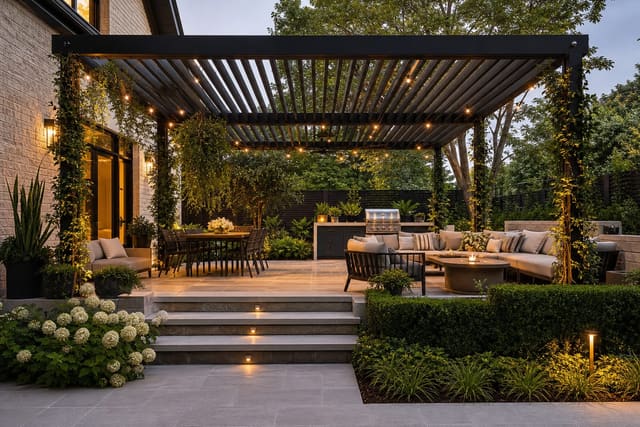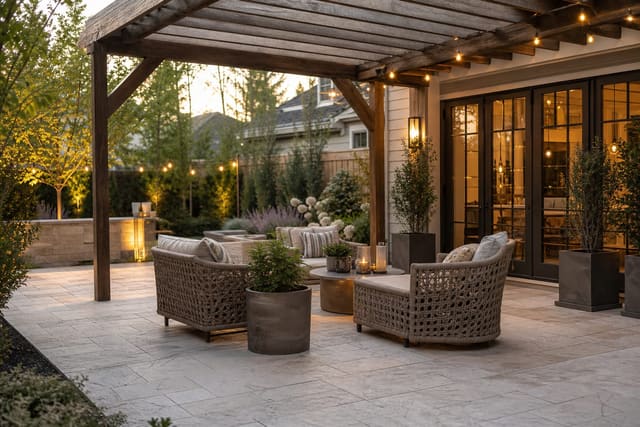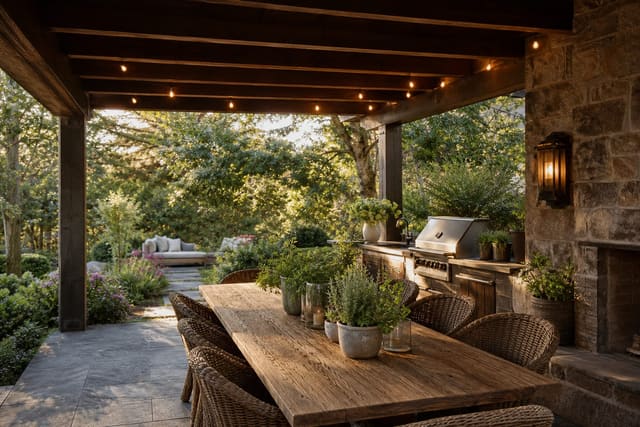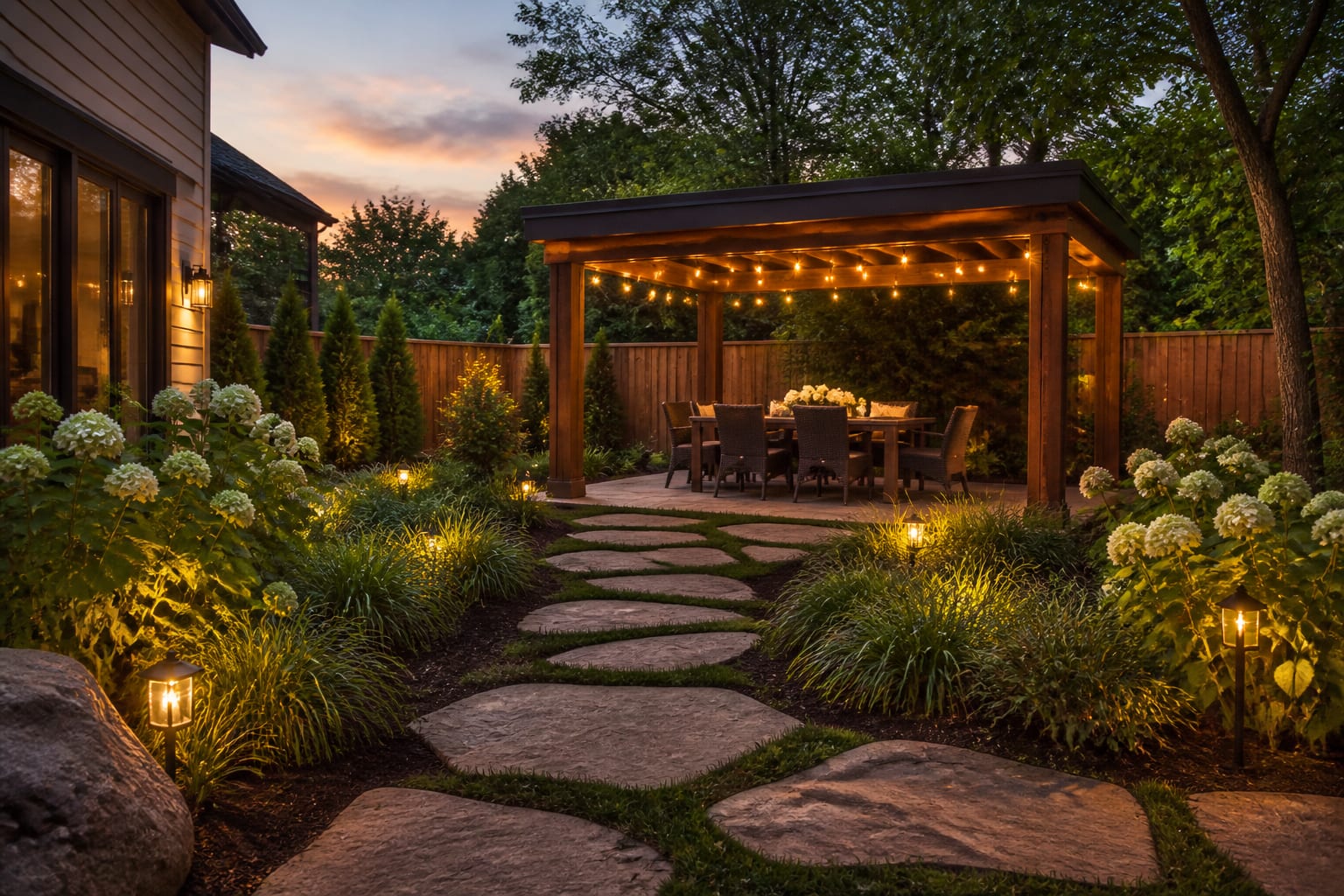
A gazebo is a freestanding, fully roofed outdoor structure — traditionally octagonal, now commonly rectangular hardtop aluminum — that provides complete shade and rain cover for a dining or lounge zone. Costs run from $2,000 for an off-the-shelf kit to $15,000 or more for a custom-built wood or metal structure with footings.
What is the difference between a gazebo, a pergola, and a pavilion?
A gazebo has a fully enclosed roof — typically peaked, domed, or flat hardtop — that provides complete shade and rain protection. A pergola has an open-beam overhead structure with no weatherproof roof; it filters light but does not keep you dry. A pavilion is a roofed, freestanding structure like a gazebo but is typically rectangular, larger, and open on all sides without decorative railings or octagonal shape. The three structures overlap in purpose and cost but differ meaningfully in weather protection, aesthetics, and typical scale:
| Feature | Gazebo | Pergola | Pavilion | |---|---|---|---| | Roof type | Fully enclosed (peaked, flat hardtop, or dome) | Open beams / lattice — no weatherproof roof | Fully roofed (gable, hip, or flat) | | Rain protection | Yes — complete | No (unless panels added) | Yes — complete | | Typical shape | Octagonal, round, or rectangular | Rectangular | Rectangular, often larger span | | Typical kit cost | $2,000 – $8,000 | $1,500 – $6,000 | $3,500 – $12,000 | | Custom-built cost | $8,000 – $15,000+ | $5,000 – $20,000+ | $10,000 – $30,000+ | | Best use case | Dining or lounge destination in yard | Shade over patio or walkway | Large entertainment area, pool house | | Screening option | Yes — mesh kits widely available | Limited (side panels required) | Yes — screen panels available | | Requires footings | Often — especially in wind | Typically — post footings required | Yes — engineered footings required |
For most homeowners choosing between the three, the decision comes down to: do you need rain protection (gazebo or pavilion) or just shade and aesthetic (pergola), and what scale and budget fits your space?
How much does a gazebo cost?
Gazebo costs span a wide range depending on materials, size, and whether you buy a kit or build custom:
| Tier | Cost Range | What You Get | |---|---|---| | Soft-top kit (fabric or polycarbonate roof) | $300 – $1,500 | Lightweight aluminum or steel frame; seasonal use; not wind-rated | | Entry hardtop aluminum kit | $2,000 – $4,000 | Powder-coated aluminum frame; metal or polycarbonate hardtop; DIY-assembled | | Mid-range hardtop kit (Yardistry, similar) | $3,500 – $6,000 | Cedar or aluminum frame; heavier hardtop; better wind rating | | Premium hardtop kit | $6,000 – $8,000 | Heavy-gauge aluminum or wood; larger footprint; built-in gutters | | Custom wood or steel gazebo | $8,000 – $15,000+ | Site-built; engineered footings; electrical rough-in option; decorative detail |
Kit prices are as described in the brief ($2,000–$15,000+ range). Installation, footings, and any electrical work are separate costs.
Are hardtop gazebos worth it?
Hardtop gazebos are worth it for most buyers who plan to leave the structure up year-round and want genuine rain protection without seasonal fabric replacement. The hardtop roof — typically powder-coated aluminum panels or polycarbonate — does not sag, does not need to be replaced seasonally, and is far more wind-resistant than a soft-top canopy. The trade-off is weight and cost: a hardtop kit starts around $2,000 versus a few hundred dollars for a soft-top, and setup requires two people and several hours.
Soft-top gazebos make sense for occasional summer use, renters who cannot put in footings, or buyers on a strict budget. The fabric roof typically lasts one to three seasons before fading or tearing depending on UV exposure and climate, so the lower upfront cost comes with a recurring replacement cost.
What are the standard dimensions and specs of a gazebo?
Gazebo sizes are driven by intended use — dining versus lounge — and available yard space:
| Size / Configuration | Footprint | Typical Capacity | Notes | |---|---|---|---| | Small kit gazebo | 10 × 10 ft (100 sq ft) | 4-person dining set | Minimum useful size; fits most yards | | Medium hardtop gazebo | 10 × 12 or 10 × 13 ft | 6-person dining or small lounge | Most popular kit size | | Large hardtop gazebo | 12 × 14 or 12 × 16 ft | 8-person dining + lounge chairs | Requires more anchoring; heavier kit | | Custom octagonal gazebo | 12–16 ft diameter | 6–10 people | Traditional shape; custom build | | Clearance around structure | Min. 3 ft all sides | — | For access, airflow, and building code setbacks | | Anchor bolt spacing | Per manufacturer spec | — | Typically 4–8 concrete footings or anchor plates |
Check local building codes for setback requirements from property lines before placing a permanent structure — most jurisdictions require at least 5 to 10 feet from property lines, but this varies.
How do you anchor a gazebo?
Anchoring a gazebo correctly is the step most DIY installers rush or skip, and it is the reason unanchored structures fail in wind. There are three common anchoring methods:
- Concrete footings. For permanent installations, dig post holes to the frost line, pour concrete, and set anchor bolts or post bases while the concrete cures. This is the most secure option and is required in most jurisdictions for a permitted structure.
- Anchor plates into an existing concrete slab or patio. Most hardtop kit manufacturers supply or sell anchor bracket kits that bolt through the existing concrete slab. This is the most common approach for homeowners with an existing patio.
- Heavy ballast bags or ground stakes. Acceptable for temporary soft-top canopies on grass; not appropriate for hardtop structures intended for year-round use.
Manufacturer specs always include minimum anchor requirements — follow them. In areas with high wind events, exceed the minimum.
Can a gazebo stay up in winter?
Hardtop aluminum and quality wood gazebos are designed for year-round installation in most climates. The considerations are snow load and wind. Metal hardtop panels have a snow load rating — typically expressed in pounds per square foot — and most quality kits are rated for reasonable snow accumulation. Very heavy or wet snow should be cleared from the roof. In climates with heavy freeze-thaw cycles, anchor bolts should be checked each spring for frost heave.
Soft-top fabric canopy gazebos should be taken down for winter in cold climates: the fabric is not rated for snow load, and a wet-snow event can collapse the frame.
How do you furnish a gazebo?
Furnishing a gazebo well means working with the structure rather than against it. The two most common configurations are a dining setup — a round or rectangular table with chairs sized to fit within the footprint while leaving 18 to 24 inches of clearance around the table edge — and a lounge setup with a sectional or two loveseats facing each other with an outdoor coffee table. For a 10×12 or 10×13 foot kit gazebo, a 6-person dining set fills the space comfortably; a 48-inch round table with four chairs leaves more circulation room and works well for a smaller footprint.
Overhead string lights draped inside the peaked roof or wrapped around the frame perimeter are the single most effective finishing touch: they make the gazebo feel like an enclosed room after dark and extend its use into evenings. Outdoor rugs are the second most effective layer — they define the seating zone visually and add warmth underfoot on a bare concrete or paver floor.
For screened gazebos, furniture with a smaller footprint is preferable since screen panels reduce the open feeling; lighter-weight chairs that can be stacked against a wall when not in use preserve flexibility.
How can you preview a gazebo placement before you buy?
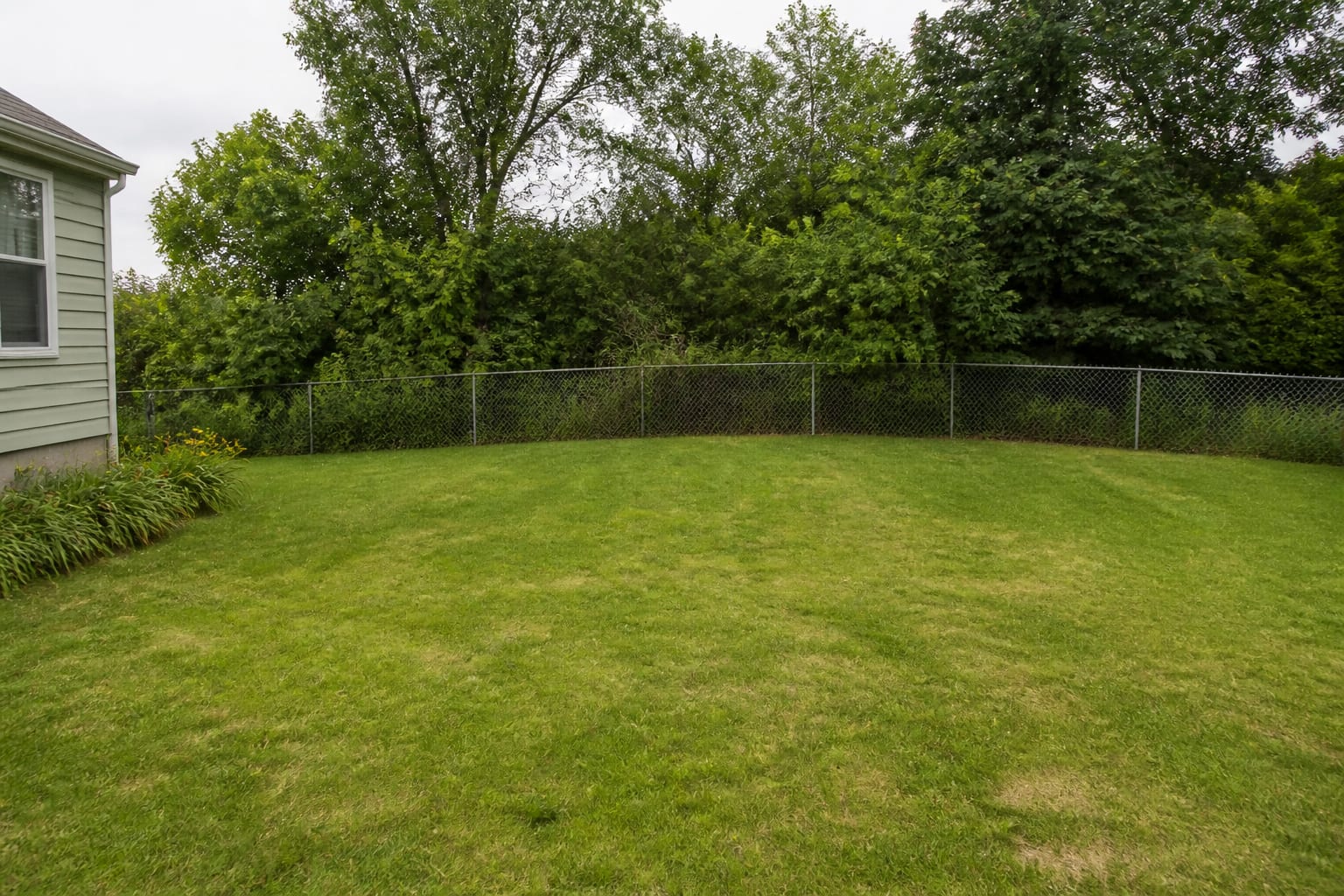
Placement is one of the most consequential decisions — a gazebo at the back of the yard as a destination reads very differently from a gazebo adjacent to the patio as a shade extension. Before purchasing a kit, upload a photo of your yard to Re-Design and try freestanding hardtop gazebo as a destination dining room at the back of the yard to see the destination placement. For the patio-adjacent version, try hardtop gazebo adjacent to patio as covered outdoor lounge extension. If you're comparing structures, gazebo vs pergola side by side backyard comparison can show both options in your actual space.
Seeing a photorealistic render of your yard with the structure in place — and checking sight lines from the house — costs nothing and takes a few minutes.
Frequently Asked Questions
What is the difference between a gazebo and a pergola?
A gazebo has a fully enclosed roof — peaked, domed, or flat hardtop — that provides complete shade and keeps you dry in rain. A pergola has open beams with no weatherproof roof and filters light but does not provide rain protection unless polycarbonate panels or a louvered cover is added. Gazebos are typically freestanding destination structures; pergolas are often attached to the house over a patio.
Are hardtop gazebos worth the extra cost over soft-top?
For most homeowners planning year-round use, yes. A hardtop roof does not sag, does not need seasonal replacement, and is significantly more wind- and weather-resistant than a fabric canopy. Soft-top gazebos make sense for occasional summer use or renters who cannot put in permanent footings; otherwise the fabric replacement cost erodes the initial savings.
How do you anchor a gazebo to a concrete patio?
Most hardtop kit manufacturers supply anchor bracket kits designed to bolt through an existing concrete slab. You drill holes at the post locations, insert concrete anchors, and bolt the post bases down. This is more secure than ground stakes on grass and is appropriate for permanent installation on an existing patio. For new concrete, footings with embedded anchor bolts are the preferred approach.
Can you screen in a hardtop gazebo?
Yes — magnetic mesh screen kits designed to fit standard hardtop gazebo frames are widely available and convert the structure into a bug-free outdoor room without permanent walls. They attach with magnets and can be removed seasonally. More permanent screen panel systems with framed tracks are also available from specialty suppliers for a more finished look.
How much clearance does a gazebo need from property lines?
Most jurisdictions require permanent outdoor structures to be set back at least 5 to 10 feet from property lines, but local codes vary significantly. Check with your municipality before purchasing or placing a kit, particularly if you plan to pour concrete footings — permitted structures typically require a site plan showing setbacks.