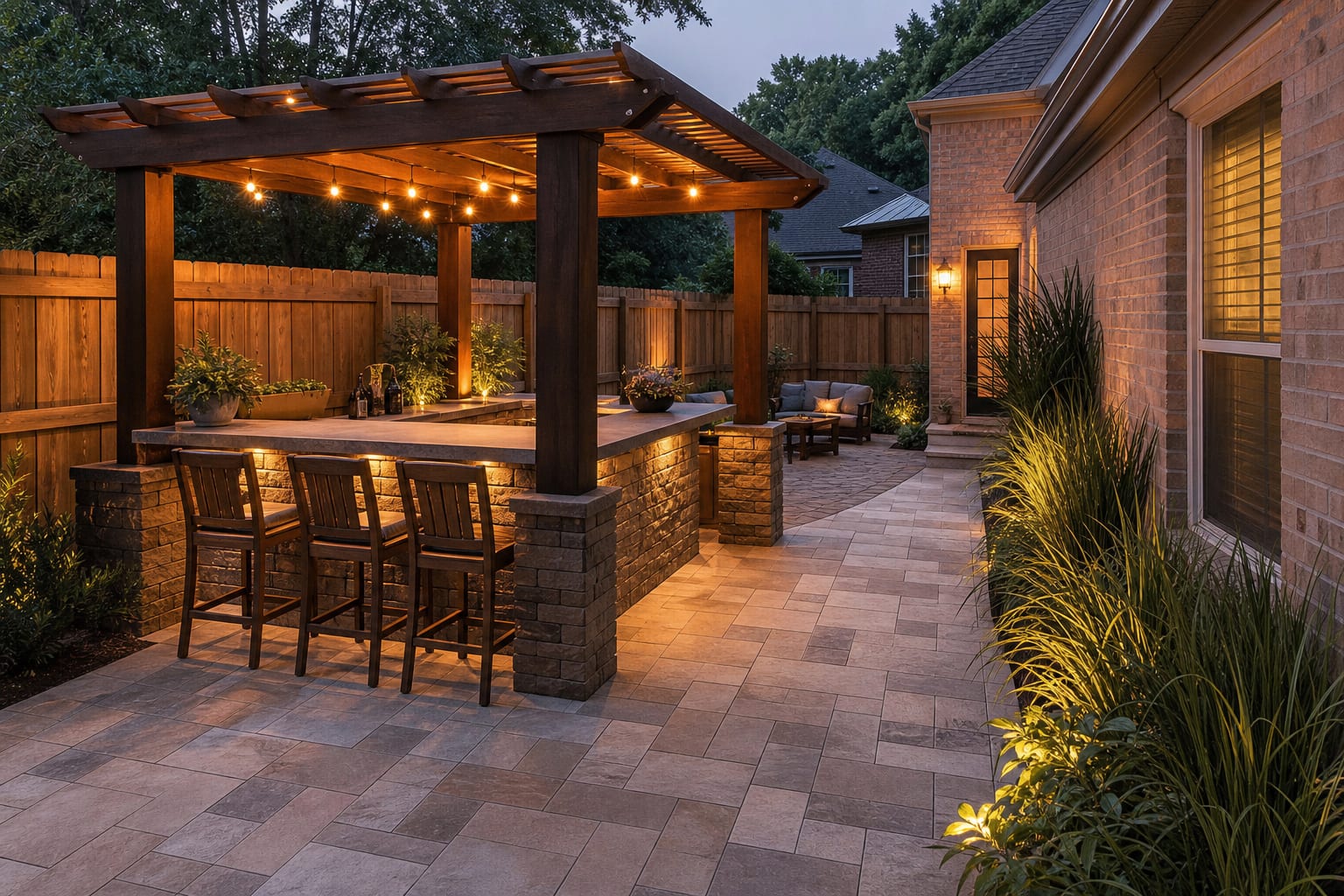
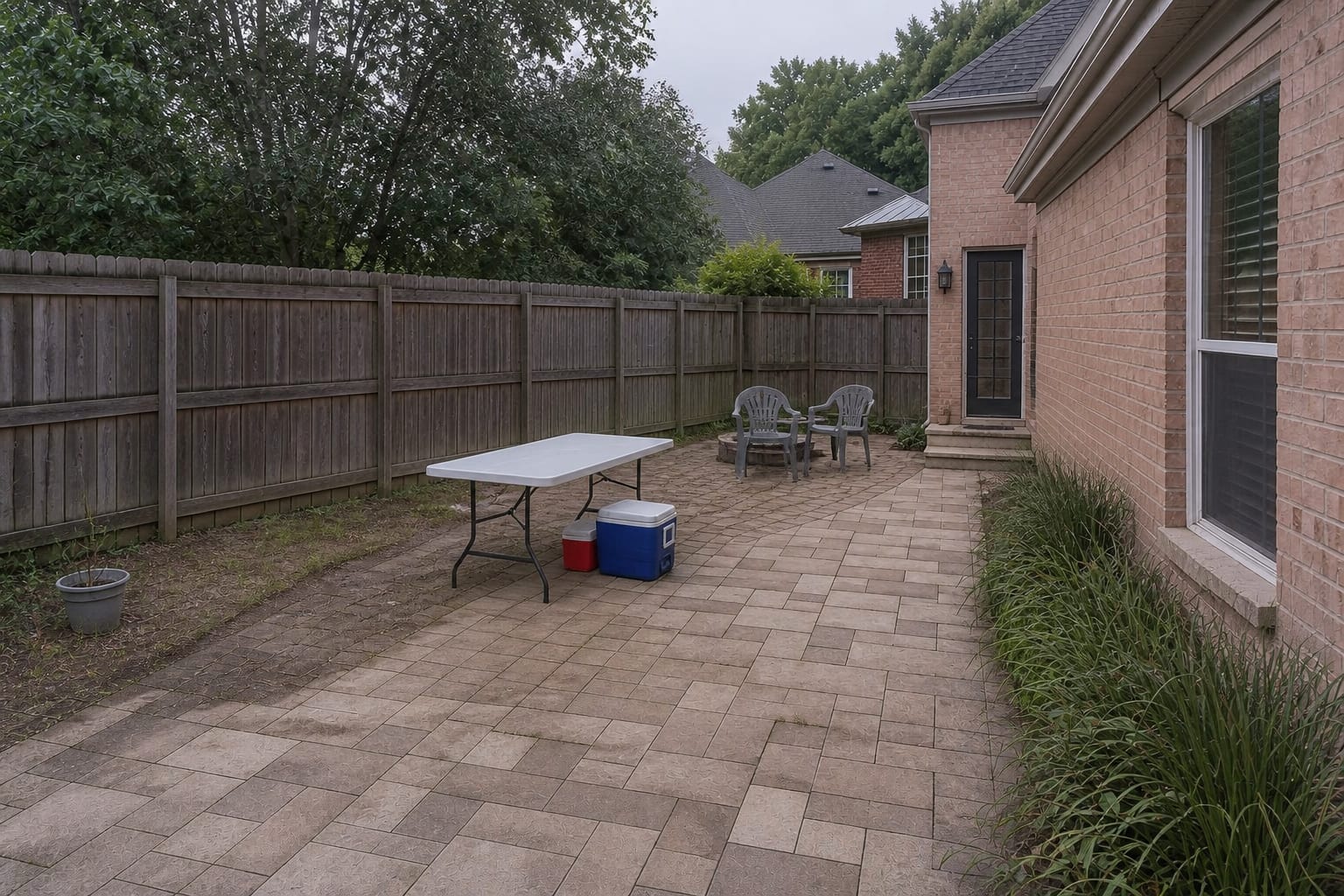
You build an outdoor bar by planning the serving flow first, then sizing the counter, seating, shade, utilities, and storage around it. A backyard bar should make hosting easier, not create a second kitchen nobody wants to clean. Get the counter depth, stool spacing, and shade right and even a compact patio bar feels generous.
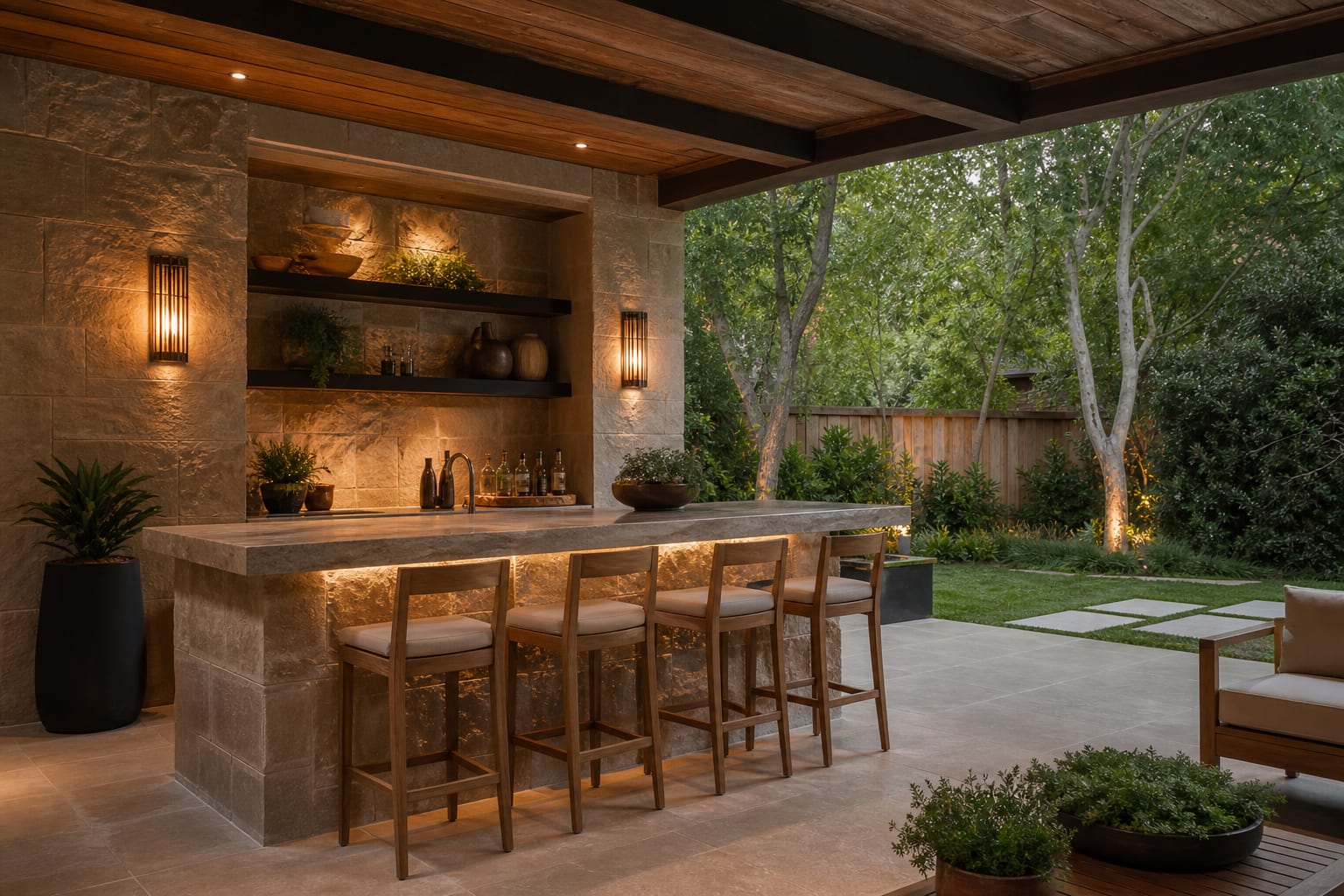
What makes an outdoor bar feel like a real entertaining zone?
The counter, stools, shade, and traffic lanes need to support the same social moment. A bar shoved against the fence can look fine empty, then fail once four guests arrive with plates and drinks. Face the counter toward the best part of the patio, not the blankest wall, so the host can talk while still reaching ice, the grill, or the kitchen door.
Scale matters first. A straight 6-foot bar seats three comfortably; an 8-foot run fits four adults if the supports don't steal knee space. Leave 36 inches behind seated guests for a basic pass-through, and closer to 48 inches if people will shuttle between the bar and a dining table all evening.
The surface has to behave outdoors. Dense porcelain, sealed concrete, granite, and stainless steel all work, but the wrong finish can glare, stain, or crack in freeze-thaw climates. Keep polished dark stone out of brutal sun. If the bar sits under a roof, check these covered patio shade ideas before ordering counters, since post placement and roof edges can shift the bar's best orientation.
Which bar layout should lead the backyard bar design?
The right layout depends on how the patio is used: a straight bar for narrow spaces, an L-shape for serving and prep, a peninsula for social seating, and a built-in kitchen bar when cooking is part of the party.
| Outdoor bar layout | Best use | Spec that keeps it comfortable |
|---|---|---|
| Straight wall bar | Small patios, fence lines, covered terraces | 18-24in counter depth, 36in clear behind stools |
| L-shaped bar | Grill zones and serving corners | One leg for prep, one for seating |
| Peninsula bar | Patios opening to lawn or pool | 42in clearance around the open end |
| Outdoor kitchen bar | Frequent cooking and full meals | 24-30in depth; separate hot equipment from guests |
| Portable bar cart | Rentals, decks, seasonal use | Locking wheels, footprint under 24x36in |
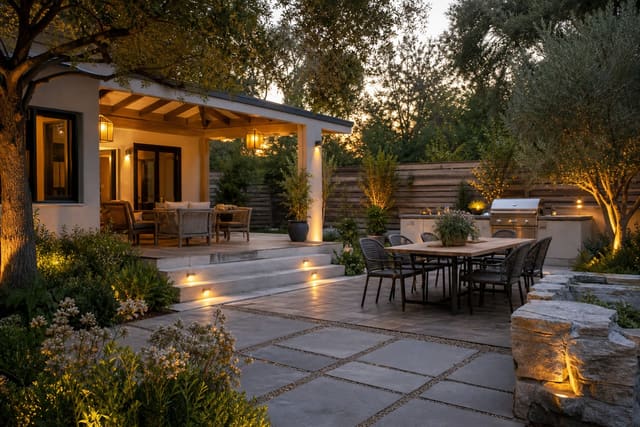
A straight bar is often the smartest choice for tight geometry, since it can sit against a wall or covered edge without eating the center of the patio. An L-shape earns its keep when the short return hides propane or prep clutter. A peninsula works when guests can approach from two sides without standing in the cook's work zone.
If the bar sits near a fire feature, decide which one is the anchor first. A bar too close to flames turns into a jam of stools and knees; these fire pit seating ideas keep the bar social without crowding the warmest part of the patio.
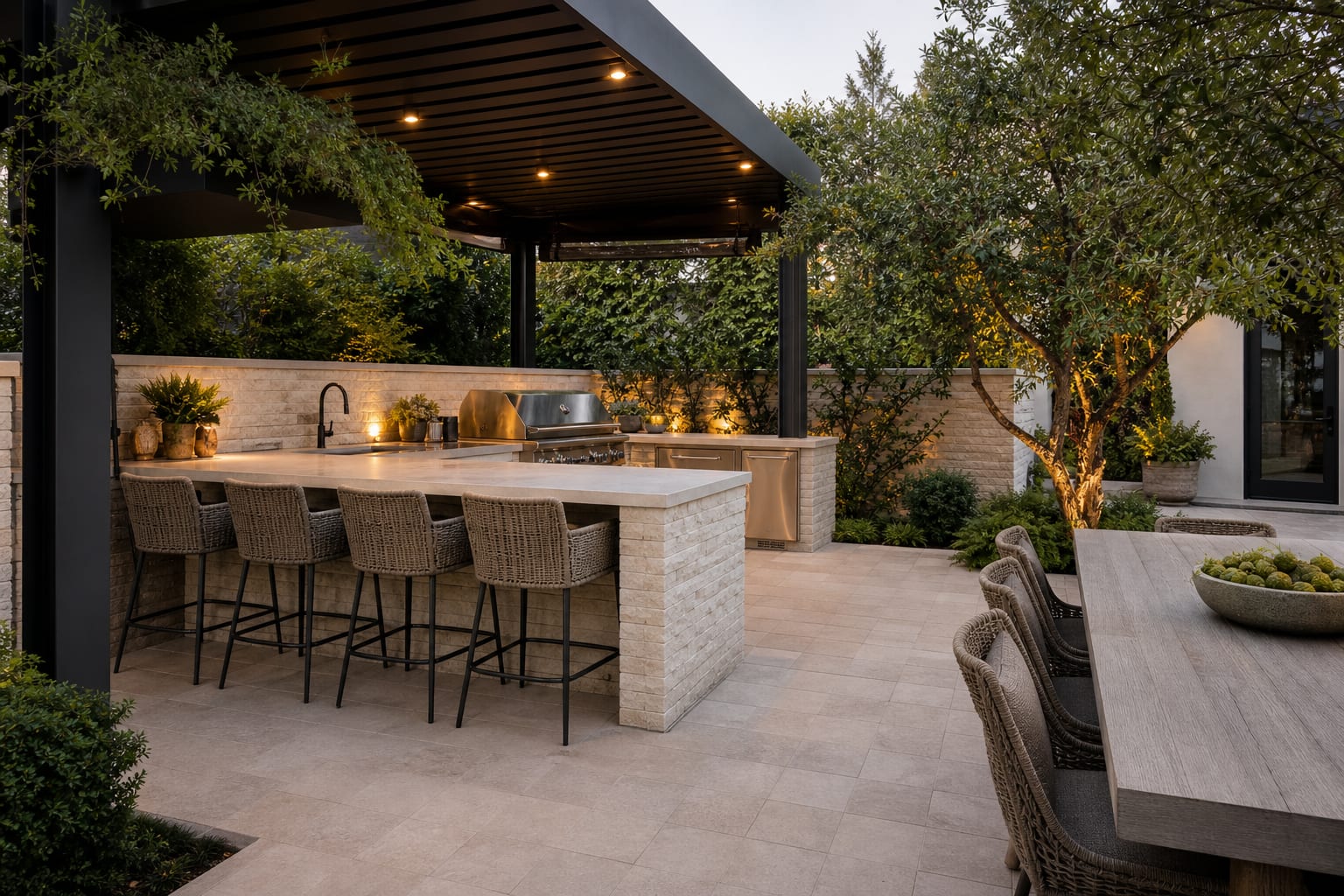
Test this on your own photo with ReDesign before choosing a final direction; keep the house edge, horizon, hardscape, and main path visible so the preview solves the space you actually have.
Five outdoor bar ideas worth testing
- Window bar: if the kitchen wall faces the patio, keep the exterior counter about 18 inches deep and use folding or sliding windows only where weatherproofing and code allow it.
- Freestanding pergola bar: build a 6-8 foot bar under a pergola for patios lacking a focal point; leave 7 feet of head clearance, and see these pergola design ideas for an integrated shade frame.
- Masonry bar with stone or porcelain top: repeat a hardscape color already in the yard and ease the counter edge so forearms don't hit a sharp corner.
- Compact drink station: a 30-36 inch cabinet with ice, bottle storage, and a small prep surface often serves a crowd better than a huge wet bar with no landing space.
- Movable cart: teak, powder-coated aluminum, or stainless carts suit rental patios; keep wheels large for pavers and leave 24 inches of clear side space for opening doors.
A wet bar sounds glamorous, but it's rarely the first upgrade worth making. If the kitchen is a few steps away, spend on shade, counter quality, lighting, and trash storage before trenching plumbing across the yard. Add a sink only when the bar sits far from the house, gets constant use, or is part of a larger permitted outdoor kitchen.
Common outdoor bar mistakes to avoid
- Counter too shallow. A 12-inch ledge holds a drink but not plates or elbows; move to 18-24 inches with real stool overhang.
- Ignoring the sun. A west-facing bar with dark stone and no overhead protection becomes unusable exactly when people want a drink; add a roof, pergola, umbrella, or sail.
- Host facing away from guests. A counter set up for a nice photo but with the host's back to the patio makes conversation awkward; put the guest side toward the view.
- Harsh lighting. One bright security fixture flattens faces; use shielded sconces or under-counter strips near 2700K instead.
- No closed storage. Open shelves collect pollen and dust; use closed outdoor-rated cabinets or a lidded bin for towels and cushions.
Use AI design to preview your outdoor bar before you commit
AI design helps most here because the expensive decisions are spatial: counter length, stool spacing, shade coverage, and whether the bar makes the patio feel lively or cramped. Upload a straight photo of the patio corner or kitchen wall, then test a straight bar, an L-shape, and a compact cart from the same angle.
Check relationships, not construction details: does the bar block the route from the slider to the grill, or crowd dining chair clearance? If the layout feels tight, shorten the bar by 2 feet, move seating to one side, or switch to a movable station. Contractors, electricians, and local code still govern gas, water, and structure — the preview just lets you reject the wrong idea before it's concrete and stone.
Frequently Asked Questions
What is the best countertop material for an outdoor bar?
Poured concrete with a sealer and porcelain tile are the two most durable options. Both resist UV and freeze-thaw cycles that crack natural stone and discolor composite materials over time.
Does an outdoor bar need a sink?
A cold-water prep sink on a ¾-inch supply line with a push-to-drain floor drain is the minimum practical setup. Hot water needs a dedicated run and rarely justifies the cost unless the bar sits next to the kitchen.
How do I weatherproof outdoor bar cabinets?
Use marine-grade teak or HDPE polymer cabinet boxes with stainless hinges and push-to-open latches; these outlast powder-coated steel in coastal climates. Never use MDF or particleboard outside.
How wide should an outdoor bar be?
Allow 24 inches of stool width per seat plus a minimum 24-inch bartender space behind the counter. A two-seat bar starts around 72 inches total, plus 12 inches on each end for the side return.
Can I put a mini fridge in an outdoor bar?
Yes, but use an outdoor-rated undercounter refrigerator with UL Outdoor certification or equivalent, built for 110°F ambient heat. A standard kitchen fridge typically fails within one season in direct sun.
> Try this: Ready to see this on your own outdoor space? Open ReDesign and run the preview before you buy materials, plant, drill, or move furniture.
Three transformations to try 1. Concrete counter bar with teak lower cabinet 2. Tile-top bar with bar-stool overhang 3. Built-in bar with outdoor fridge and sink