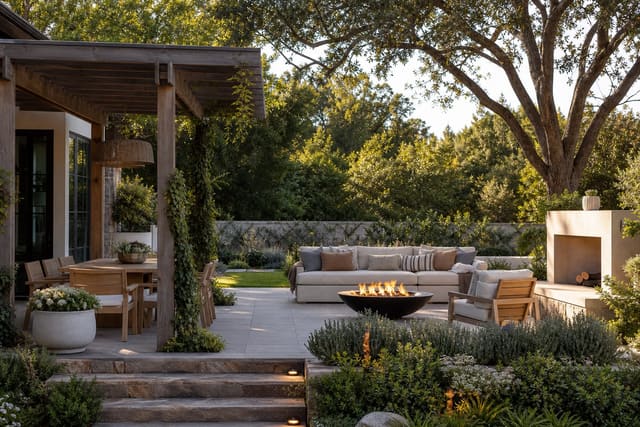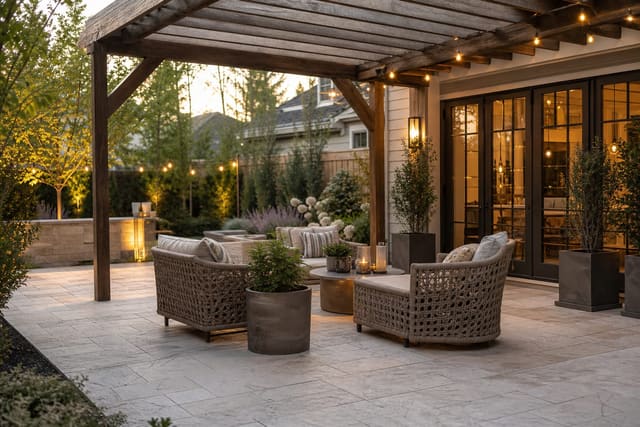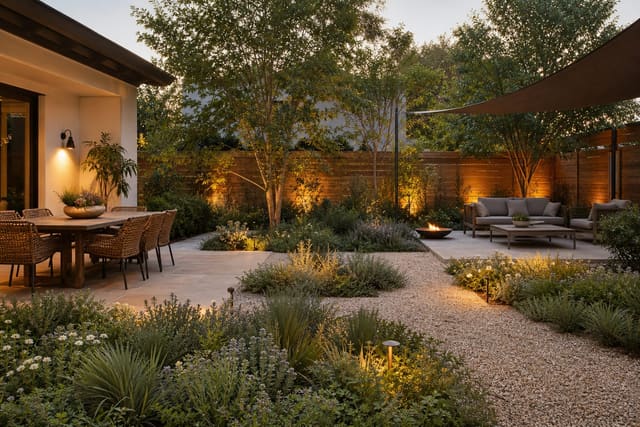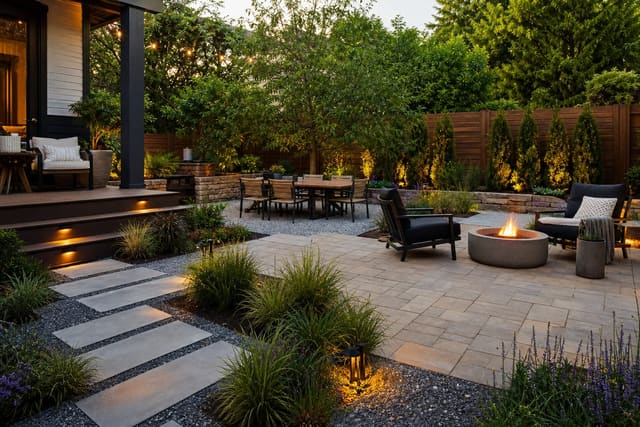
Indoor-outdoor living design erases the boundary between house and yard by replacing solid walls with large sliding or folding glass door systems, aligning interior and exterior flooring materials, matching color palettes, and adding a covered transition zone — so the patio reads as a seamless extension of the interior rather than a separate space.
How much do folding glass walls cost?
Folding glass wall systems — also called bifold or multi-slide door systems — typically run $5,000 to $50,000 installed, with the range driven by panel count, glass thickness, frame material, and whether the threshold is recessed into the slab. At the lower end, a two- or three-panel bifold unit in aluminum covers a modest opening and suits a breakfast room or bedroom transition. At the upper end, a full-width multi-slide system spanning a great room wall, with thermally broken frames, low-e glass, and a flush sill set into poured concrete, approaches the $50,000 ceiling. Labor and any structural work to remove a load-bearing wall are additional.
Beyond bifold panels, there are two other common door systems worth comparing:
| System | Typical Installed Cost | Best For | |---|---|---| | Bifold glass wall | $8,000 – $35,000 | Openings up to 20 ft; full-fold stacking | | Multi-slide / pocket | $12,000 – $50,000 | Wide spans; panels disappear into wall pocket | | Large sliding glass door (single or paired) | $5,000 – $15,000 | Budget-conscious; partial opening only | | Fixed glass + operable panels | $6,000 – $20,000 | Maximizing glass area with one operable section |
Those cost ranges come from the brief and represent installed pricing including basic framing adjustments. Structural modifications, permit fees, and custom glass specs will add to any tier.
How do you create indoor-outdoor flow?
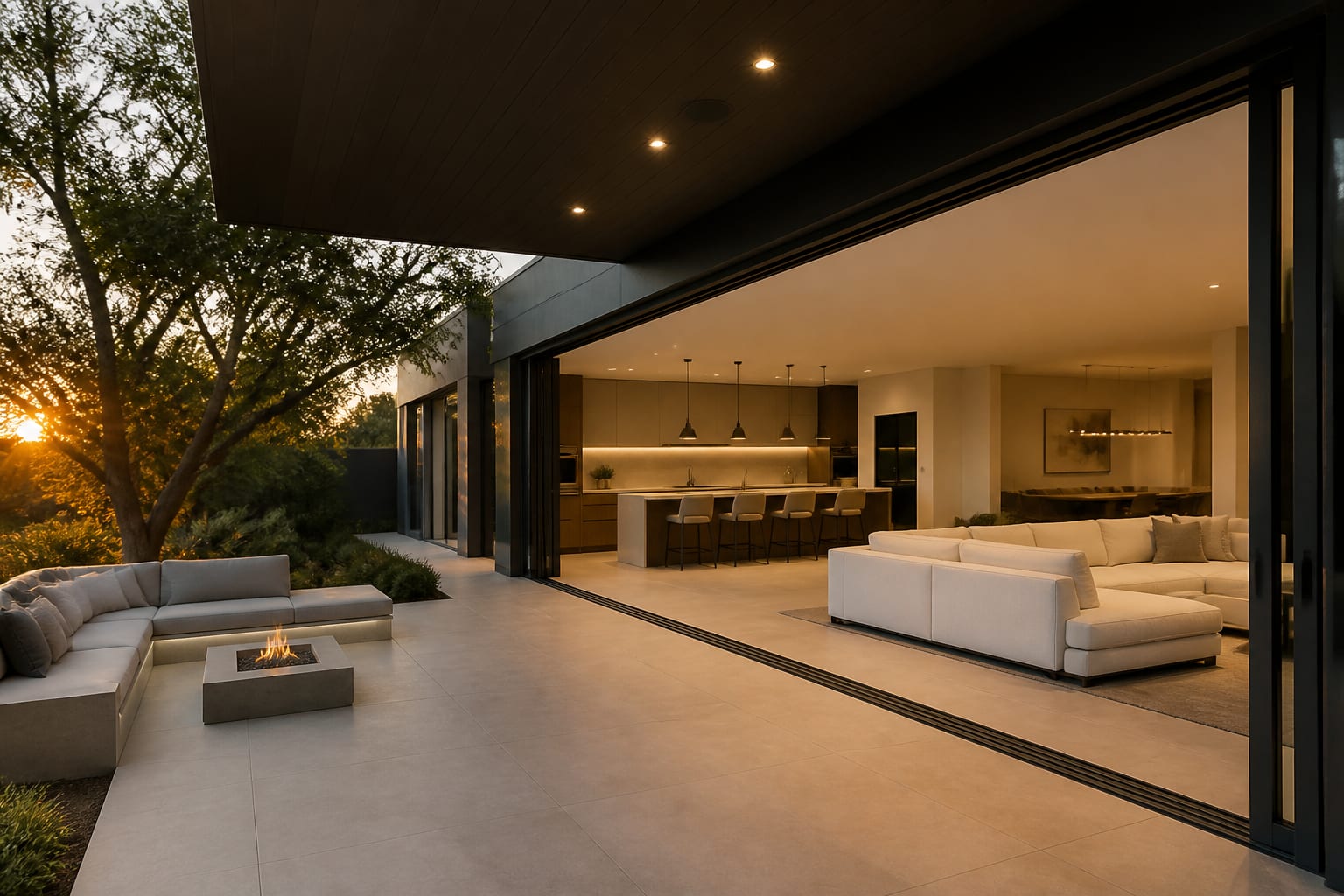
True indoor-outdoor flow depends on aligning four elements simultaneously: the opening, the floor plane, the roofline, and the palette. Remove any one of them and the effect degrades. The opening — whether a door system, a full window wall, or even a wide cased opening with removable screens — establishes the physical connection. The floor plane maintains it at ground level: when the flooring material stops at the threshold and a different deck board picks up, the eye registers a boundary even if the door is wide open. The roofline preserves it overhead: an overhang or attached pergola that extends the interior ceiling line outward shelters the immediate outdoor zone and creates the sense that the rooms share a single plane. The palette ties it together: furniture tones, textiles, and planting colors that echo interior finishes prevent the backyard from feeling like a different design universe.
Practically, the sequence most designers follow is: confirm the structural opening first, pour or cut a flush threshold into the slab, lay flooring from inside to outside in one continuous run, then address shade and furnishings.
What flooring works inside and outside?
Large-format porcelain pavers — typically 24×24 or 24×48 inches — are the top choice for continuous indoor-outdoor flooring because they are rated for exterior freeze-thaw cycles, resist staining, and can be matched precisely across interior and exterior installations. The same tile body and finish runs from the living room slab out to the covered patio, with a nearly invisible grout line at the threshold. Alternatives include stained or polished concrete (poured as one continuous slab), natural stone such as limestone or travertine (subject to sealing requirements outdoors), and engineered hardwood rated for covered exterior use in low-moisture climates.
Two installation details matter more than material choice: 1. Slope. Exterior runs must pitch slightly away from the house (typically 1/8 inch per foot) for drainage; this means either setting interior tile dead flat on a flat slab or accepting a micro-ramp at the transition. 2. Grout and setting bed. Exterior tile requires a latex-modified thinset and an appropriate grout for freeze-thaw; mismatching interior and exterior products causes cracking at the seam.
What is a covered transition patio and why does it matter?
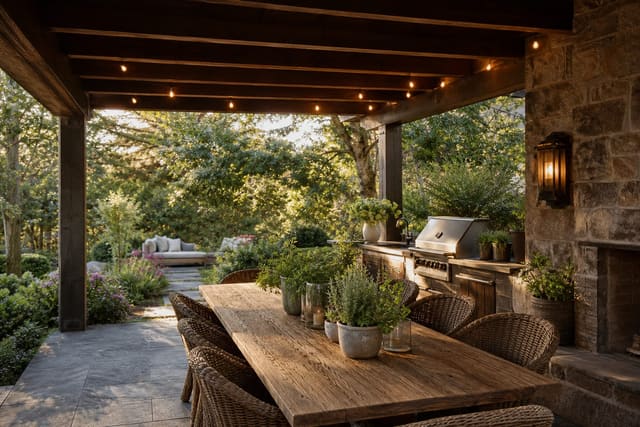
A covered transition patio is the roof-covered zone immediately outside the glass wall — typically a 10- to 16-foot-deep overhang, attached pergola, or loggia — that bridges the conditioned interior and the open yard. It matters because it is the space that remains usable on overcast or lightly rainy days, it reduces direct sun load on interior furniture and floors, and it provides a visual intermediate zone that makes the yard feel like another room rather than "outside." Most designers size the covered zone to accommodate a dining table or lounge grouping so that the furniture arrangement flows naturally from interior seating through the transition into the yard beyond.
Covering materials range from solid roofing that matches the house (most weather-resistant), to louvered aluminum pergolas (adjustable light and rain control), to polycarbonate panels (translucent but weatherproof). The connection between the house roofline and the transition structure is a waterproofing detail that should be flashed and sealed by a licensed contractor.
How do climate and orientation affect the design?
Climate is the single biggest constraint on how far an indoor-outdoor living scheme can push the connection. In mild climates — coastal California, the Pacific Northwest from spring through fall, much of the Southwest — the glass panels can be fully opened for months at a time and the transition zone can be minimally covered. In colder climates, the glass wall stays closed through winter but still delivers the visual connection and borrowed light that is a large part of what the design achieves. Orientation amplifies or complicates either scenario: a west-facing opening captures afternoon sun and warmth but risks glare on screens and fading on upholstery; a south-facing opening provides winter solar gain; a north-facing opening delivers consistent cool diffuse light year-round.
Shading devices — exterior roller shades, motorized screens, operable louvers — are worth budgeting alongside the door system in any climate where direct sun penetrates the opening.
How do you choose furniture and finishes that bridge inside and outside?
Furniture selection is where indoor-outdoor living schemes succeed or fail at the finish line. The goal is not matching — buying identical sofas in outdoor fabric — but visual continuity: a palette, material weight, and scale that reads as one design environment from the interior through the transition zone and into the yard. In practice, this means selecting outdoor cushion fabrics in the same tone family as interior textiles, choosing outdoor dining chairs with a leg profile and finish similar to interior dining chairs, and using outdoor planters and pots as an extension of interior decor rather than a different design language entirely.
Material continuity in fixed finishes matters too. If interior cabinetry is white oak, bringing a white oak–finish outdoor dining table into the covered transition zone ties the two spaces together more convincingly than any paint color. If the kitchen countertop is a warm gray quartz, choosing a similar-toned outdoor bar surface echoes it across the threshold. The effect is most convincing when the continuous flooring material — the porcelain pavers or concrete slab — is the visual baseline that both interior and exterior furnishings sit on.
Lighting continuity is the element most often overlooked: matching exterior pendant or soffit light fixtures to interior pendant styles brings the ceiling plane into the same design vocabulary, completing the illusion of a single extended room.
How can you preview indoor-outdoor living before you renovate?
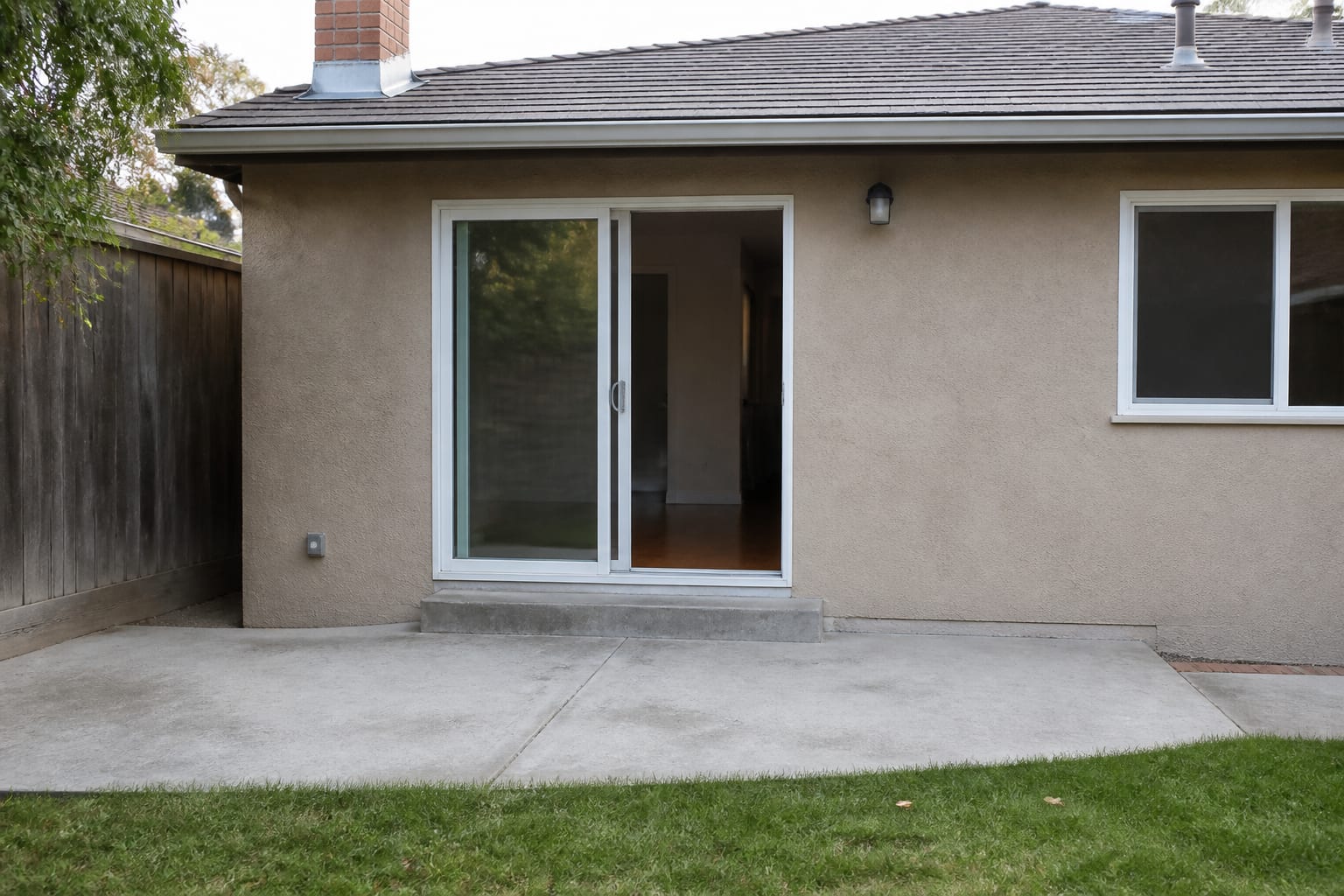
The most useful thing you can do before spending on a door system or flooring is to render the view through the opening — showing your actual living room extending into a redesigned patio beyond. Upload a photo of your interior or exterior to Re-Design and try a prompt like bifold glass wall opening onto a covered transition patio with continuous porcelain pavers or multi-slide pocket door wall open to an outdoor lounge with matching palette. You can also test the covered transition zone separately with a prompt like attached loggia over patio with continuous flooring from interior.
Seeing the view from inside — furniture, flooring, and the yard beyond all in one frame — is what moves a project from wish list to decision.
Frequently Asked Questions
Can you add a folding glass wall to an existing house?
Yes, but it typically requires a structural engineer to assess the existing wall and, in most cases, a new header beam to carry the load that the wall panels no longer carry. The cost of that structural work varies by span and wall construction. Budget for permits and plan check time in addition to the door system itself.
Are folding glass walls energy-efficient?
Modern bifold and multi-slide systems with thermally broken aluminum frames and low-emissivity (low-e) glass perform reasonably well, but a large glass wall will always conduct more heat and cold than an insulated stud wall. In climates with extreme winters or summers, the glass area and HVAC load should be discussed with an energy consultant. Exterior shading devices help significantly in hot climates.
What is a flush threshold and how is it achieved?
A flush threshold is a door track or sill set at the same height as both the interior floor and the exterior surface, eliminating any step or raised rail at the transition. Achieving it typically requires recessing the track hardware into the slab during construction, or in retrofits, cutting and lowering the slab at the opening. It is one of the more labor-intensive details of the project.
How do you match interior and exterior paint or palette?
The most effective approach is to bring exterior cushion fabric, planting pot colors, and hardscape tones into the same color family as the dominant interior tones — not necessarily identical, but harmonious. Many designers take a paint chip and cushion sample from the interior and use them as the anchor when selecting exterior furniture and pots. Crisp white trim and natural stone tones translate well across the boundary.
Does indoor-outdoor living add resale value?
The brief does not supply a specific resale percentage, so the honest answer is qualitative: homes with well-executed indoor-outdoor transitions are consistently described by real estate professionals as more marketable in mild climates, and the feature is associated with the luxury and move-up segments. The value depends heavily on local buyer preferences and how well the transition integrates with the rest of the home.