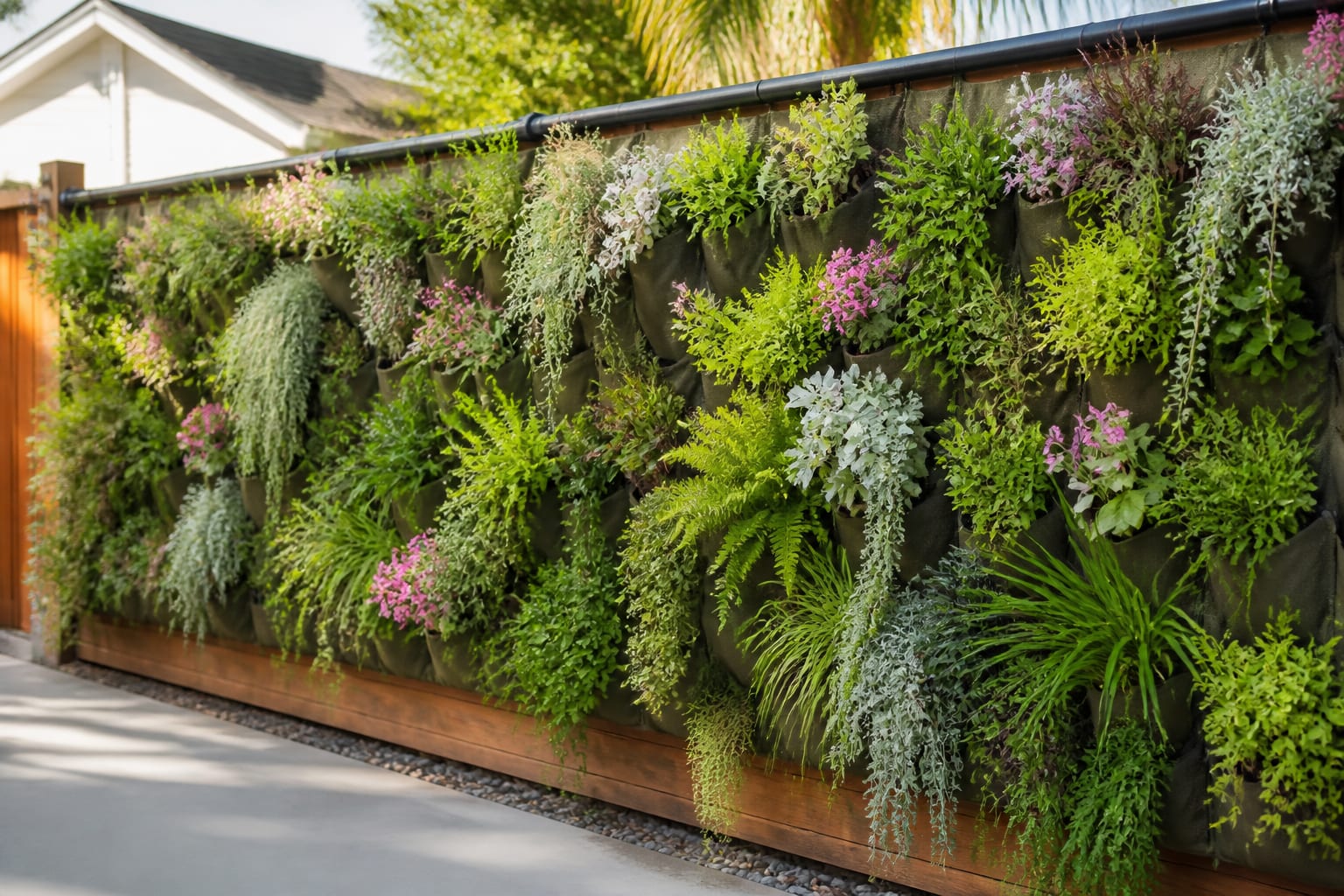
A vertical garden grows plants on an upright structure — pocket panels, trellis systems, stacked planters, or fully irrigated living wall modules — adding greenery where ground space is scarce and transforming bare fences and blank walls into layered design features. It is the highest-impact change-per-square-foot move in small-space garden design.
What is a vertical garden, and what types are available?
A vertical garden is any system that allows plants to grow on an upright plane rather than spreading horizontally in the ground. The term covers a spectrum from a simple trellis with a climbing vine to a complex modular living wall with integrated drip irrigation, grow medium, and plant pockets dense enough to cover a surface in continuous greenery. Understanding the types helps you match system to situation:
Trellis and wire systems are the oldest and most proven approach. A grid of wood, metal, or wire fixed to a fence or wall provides attachment points for climbing plants. They are inexpensive, lightweight, and require no special growing medium — the plant roots in the ground or in a large pot at the base.
Pocket panels (felt, fabric, or rigid pocket planters) attach to a wall and hold individual plants in pockets filled with growing medium. They are modular, relatively inexpensive, and easy to replace. Irrigation is by hand or by a simple drip manifold threaded through the pockets.
Stacked-planter systems use tiered or cascading planters that mount on a wall or fence, each holding a small pot. They are particularly common for herbs and edibles where individual plant maintenance (watering, harvesting, replacing) is frequent.
Modular living wall panels are the premium tier: interlocking frames that hold a grow medium (felt mat, mineral wool, or proprietary substrate) and are connected to an integrated drip irrigation system. These are the systems professional designers specify for lobby walls, restaurant features, and high-end residential projects.
Green facades use climbing plants (ivy, climbing hydrangea, Virginia creeper) to cover a wall surface organically over time. They are the slowest approach but the most naturalistic and, in the right conditions, the most durable.
How do you build a DIY vertical garden on a fence?
Building a basic vertical garden on a fence is achievable in a day for under $100 in materials if you choose a pocket panel or trellis approach. Here is the sequence that avoids the common mistakes:
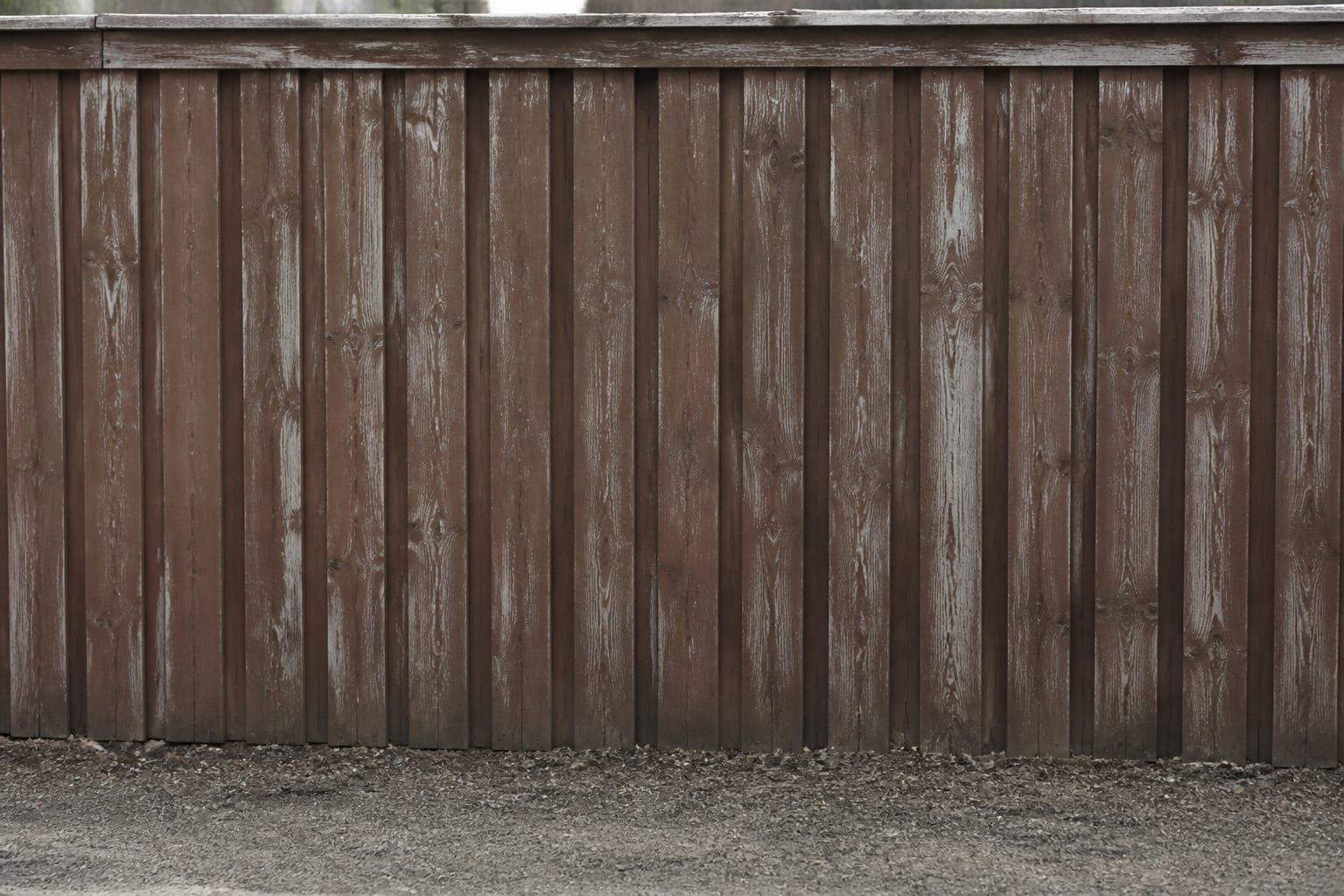
Step 1: Assess the fence or wall. Determine what the structure can hold. A standard timber fence panel can support modest loads if fixings go into the fence posts rather than the panels themselves. Solid masonry walls offer the most reliable anchoring. Brick walls require appropriate masonry fixings; timber panels may need reinforcement. A waterproofing membrane between a wet planting system and a timber fence or wooden wall significantly extends fence life.
Step 2: Choose the system for your exposure. South- and west-facing walls receive more sun and dry out faster — choose drought-tolerant plants (sedums, lavender, herbs in individual pots) and plan for more frequent irrigation. North- and east-facing walls suit ferns, hostas, begonias, and shade-tolerant ivy.
Step 3: Install irrigation before plants. Running drip lines or a soaker tube along the top of a panel, with emitters dripping down through pockets, is dramatically easier before the wall is planted. Connect to an outdoor tap via a timer.
Step 4: Plant from the top down. Fill pockets or shelves beginning at the top of the system. Water displaced by irrigation runs downward and benefits lower plants; top pockets need the most attention in the early weeks before roots establish.
Step 5: Establish and maintain. Water daily for the first two weeks. Once roots are established and irrigation is calibrated, weekly checks suffice for most systems. Replace individual plants as needed rather than treating the wall as a single unit.
What plants work best on a vertical garden or living wall?
Plant selection is the most location-specific decision in any living wall project. The brief guide below organizes by the two most important variables: light exposure and system type.
Full-sun vertical gardens: Drought-tolerant succulents (sedum, echeveria, sempervivum) are ideal for south-facing pocket panels because they tolerate dry-out between irrigations. Mediterranean herbs — thyme, oregano, rosemary — thrive in full sun and produce an edible wall. Trailing geraniums and calibrachoa add color.
Part-shade vertical gardens: This is the widest plant palette. Ferns, heuchera (coral bells), begonias, impatiens, trailing petunias, herbs including mint and parsley, and most climbing roses do well with morning sun and afternoon shade.
Full-shade vertical gardens: Ferns, moss, climbing hydrangea, English ivy, creeping fig, and shade-tolerant hostas (in stacked planters) are the reliable choices. Moss walls are possible where humidity is consistently high.
Edible walls: Herbs are the most successful edible vertical garden crop — compact, productive, and tolerant of the slight stress of vertical growing. Strawberries work well in pocket panels in full sun. Compact salad greens (lettuce, spinach, arugula) succeed in spring and fall when temperatures are moderate.
Do living walls damage fences or exterior walls?
They can, and this is the most important structural question to resolve before building. The risks are specific:
Moisture: A constantly irrigated pocket panel pressed against a timber fence creates sustained moisture contact that accelerates rot. Mitigation: install a layer of heavy-duty waterproof membrane or a standoff bracket system that holds the panel one to two inches away from the fence surface, allowing air circulation.
Weight: Saturated growing medium in a large living wall system is heavy. A full modular living wall with mature plants can impose significant loads on fixings and the fence or wall structure. Assess fixing points carefully; distribute weight across fence posts rather than panels.
Root intrusion: Climbing plants like ivy and creeping fig can find their way into mortar joints, timber seams, and window frames over many years. Regular perimeter trimming prevents intrusion. Virginia creeper and wisteria are particularly aggressive and need monitoring on masonry.
On solid masonry or concrete walls with appropriate waterproofing, living walls present minimal structural risk and can actively protect the wall surface from UV and thermal cycling.
How much does a vertical garden cost?
The cost range is the widest of any garden feature category — from a weekend afternoon and a small materials budget to a significant professional installation.
| System Type | Cost Range | Notes | |---|---|---| | DIY trellis + climbing plant | From approximately $100 | Trellis panel plus one or two established climbers; fills in over one to two seasons | | DIY pocket panel or pallet garden | From approximately $100 | Materials from a home center; pocket felt panels available online | | Mid-range modular system (self-installed) | Several hundred dollars | Pre-engineered kits with included irrigation components | | Professional living wall installation | $150 or more per square foot | Includes design, waterproofing, substrate, irrigation, planting, and establishment | | High-end interior or feature living wall | Varies significantly above $150/sq ft | Custom substrate, automated irrigation, sensor monitoring, professional maintenance contract |
The jump from DIY to professional is not merely a labor cost difference — it also reflects waterproofing quality, irrigation engineering, and plant density. A professional wall at $150-plus per square foot includes design and structural assessment that protects both the wall and the planting investment.
DIY vs. Professional Living Wall: Which Is Right for You?
| Factor | DIY Trellis / Pocket System | Professional Living Wall | |---|---|---| | Upfront cost | From approximately $100 | $150+ per square foot | | Installation | Weekend DIY, hand tools | Professional crew, 1–3 days | | Irrigation | Hand-water or basic drip | Integrated automated system | | Plant density | Moderate — depends on system | Very high — full coverage possible | | Structural risk | Low if fixings into fence posts | Assessed and managed by installer | | Maintenance | Owner-managed, weekly checks | Often includes service contract | | Best use case | Fence softening, herb wall, privacy screen | Feature wall, commercial space, permanent residential display | | Lifespan | Variable — annual systems need replanting | Long-term with maintenance |
How are living walls watered?
Irrigation is what separates a thriving living wall from a dead one, and every long-term living wall installation uses some form of automated watering. The options scale with system complexity:
Top-feed drip systems run a supply line along the top of the panel and allow water to percolate downward through the growing medium, dripping from pocket to pocket. This is the standard approach for felt and fabric pocket panels and for most modular systems. A battery-powered timer on the outdoor tap automates the schedule.
Integrated drip manifolds are built into premium modular panels, with individual emitters at each plant pocket. These provide the most even distribution and the most reliable coverage but require professional installation and occasional emitter maintenance.
Reservoir systems use a sump at the base of the wall that recirculates water upward via a pump, capturing drainage and reducing waste. They are common in interior living walls where external drainage is not available.
Greywater use is increasingly popular for outdoor living walls in water-conscious climates — laundry rinse water or rainwater harvesting can supply the system at minimal operating cost.
How can you preview a vertical garden before you build?
Seeing your actual fence or wall transformed into a living wall — before purchasing a single pocket panel or roll of trellis wire — is exactly what [Re-Design](https://re-design.app) makes possible. Upload a photo of your current space and describe the effect you want.
Try these prompts: - Lush green living wall of ferns, trailing plants, and herbs on a wooden fence - Vertical succulent and sedum wall on a sunny south-facing masonry wall - Privacy screen of climbing roses and jasmine on a trellis fence
The AI render lets you test plant density, color palette, and structural approach against your actual fence proportions and surrounding context before committing to any system.
Frequently Asked Questions
Do vertical gardens work indoors?
Yes, with important caveats. Indoor living walls require a light source adequate for plant growth — either a south-facing window with very strong natural light or supplemental grow lighting. Irrigation must capture drainage to protect floors and walls. Preserved or high-quality artificial panels are honest alternatives for indoor spaces with insufficient light — they deliver the aesthetic without the horticultural demand.
How long does it take for a vertical garden to fill in?
DIY pocket systems planted at full density can look substantially complete within a few weeks as plants settle. Trellis systems depend on the climbing plant: fast-growing annuals like morning glory fill a trellis in a single season; perennial climbers like climbing hydrangea or roses develop more slowly but become more structural over three to five years. Professional modular living walls are typically planted at close to full density and look complete from day one.
What is the difference between a living wall and a green facade?
A living wall (also called a vegetated wall or planted wall) grows plants in an attached medium — pockets, panels, or modules — mounted directly to a wall surface. A green facade uses climbing plants rooted in the ground or in large planters at the base of a wall, with the plant's own stems climbing and attaching to the wall surface. Living walls are denser and more immediate; green facades are slower but structurally independent of the wall.
Can vertical gardens survive winter?
Outdoor vertical gardens with perennial plants can survive winter with the right plant selection and some preparation. Tender succulents and tropicals in pocket systems must be moved inside or replaced annually. Hardy ferns, sedums, and climbing roses handle cold well if roots are protected. In very cold climates, the growing medium in exposed pocket panels can freeze solid and damage roots — wrapping the system or transitioning to ground-level containers for winter is advisable.
How do you prevent a vertical garden from smelling bad?
Odor in a living wall is almost always caused by waterlogged, anaerobic growing medium — the same condition that causes root rot. Prevention is straightforward: ensure adequate drainage so growing medium wets and then dries between irrigations, don't overwater, and choose a free-draining substrate (perlite-amended potting mix, mineral wool, or purpose-made living wall media) rather than dense garden soil, which compacts and stays wet in vertical applications.