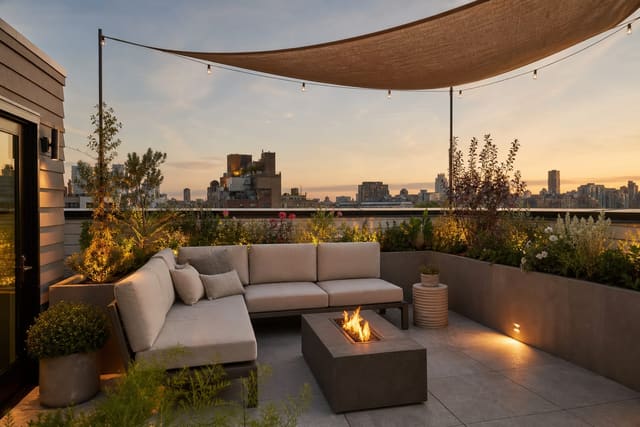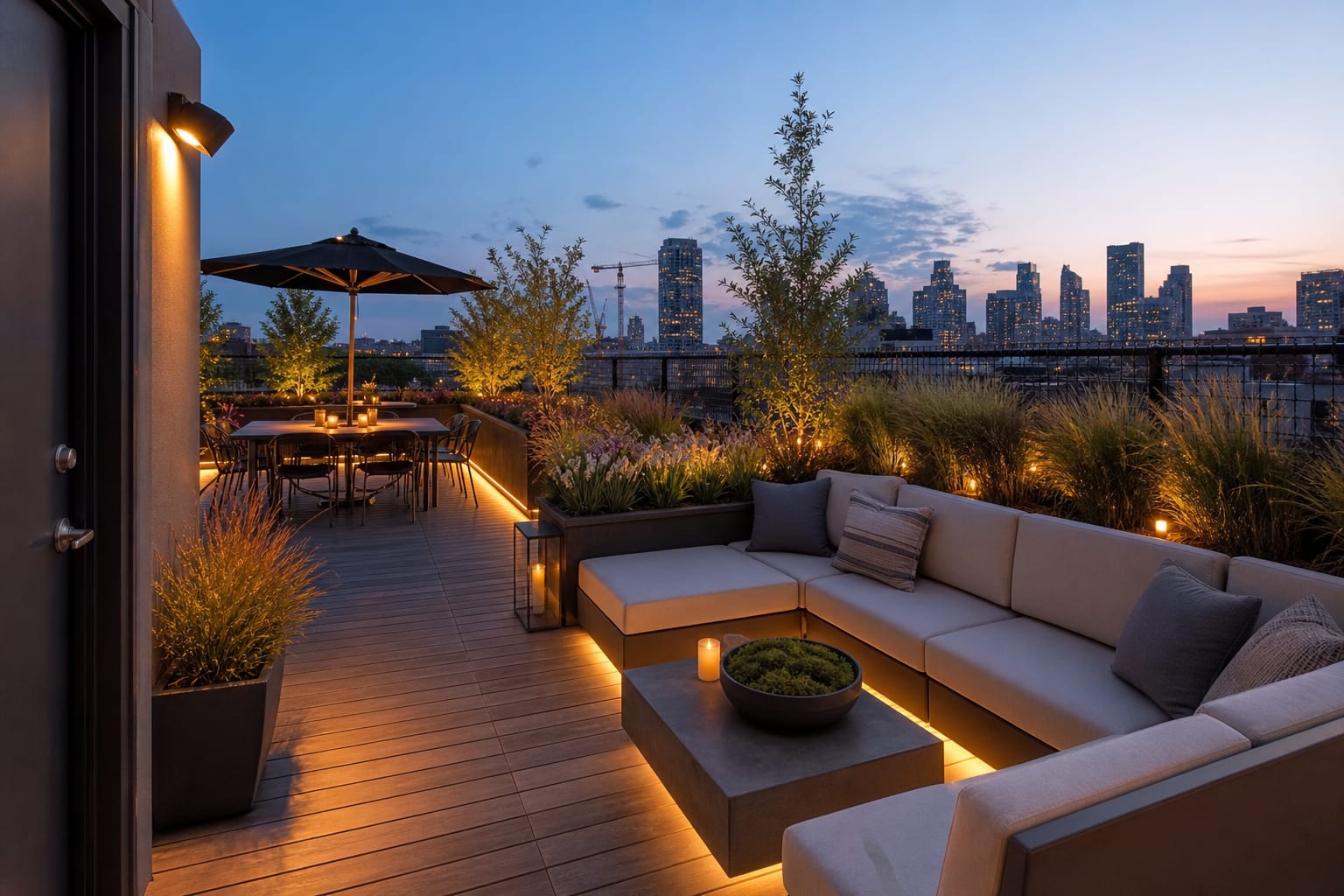
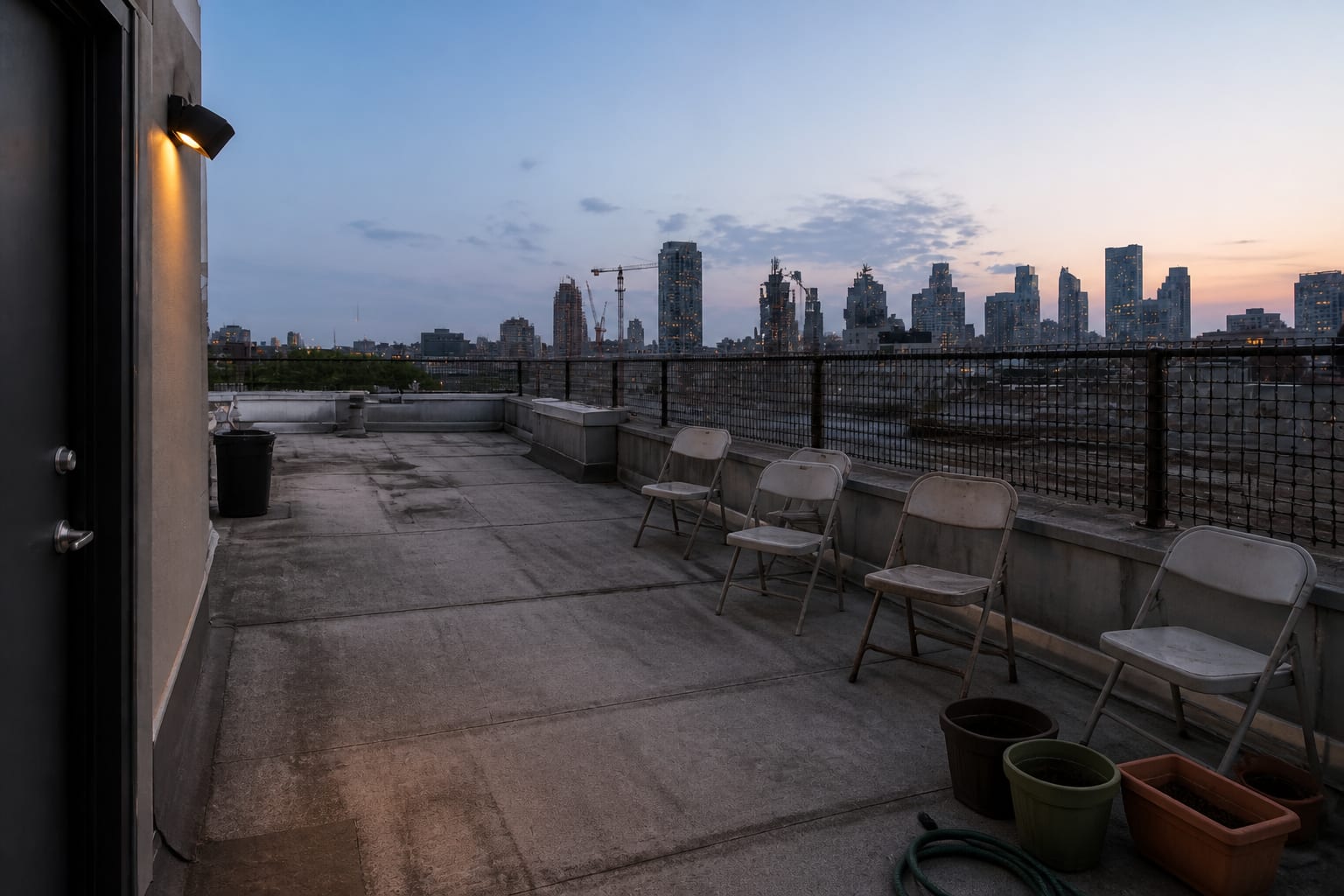
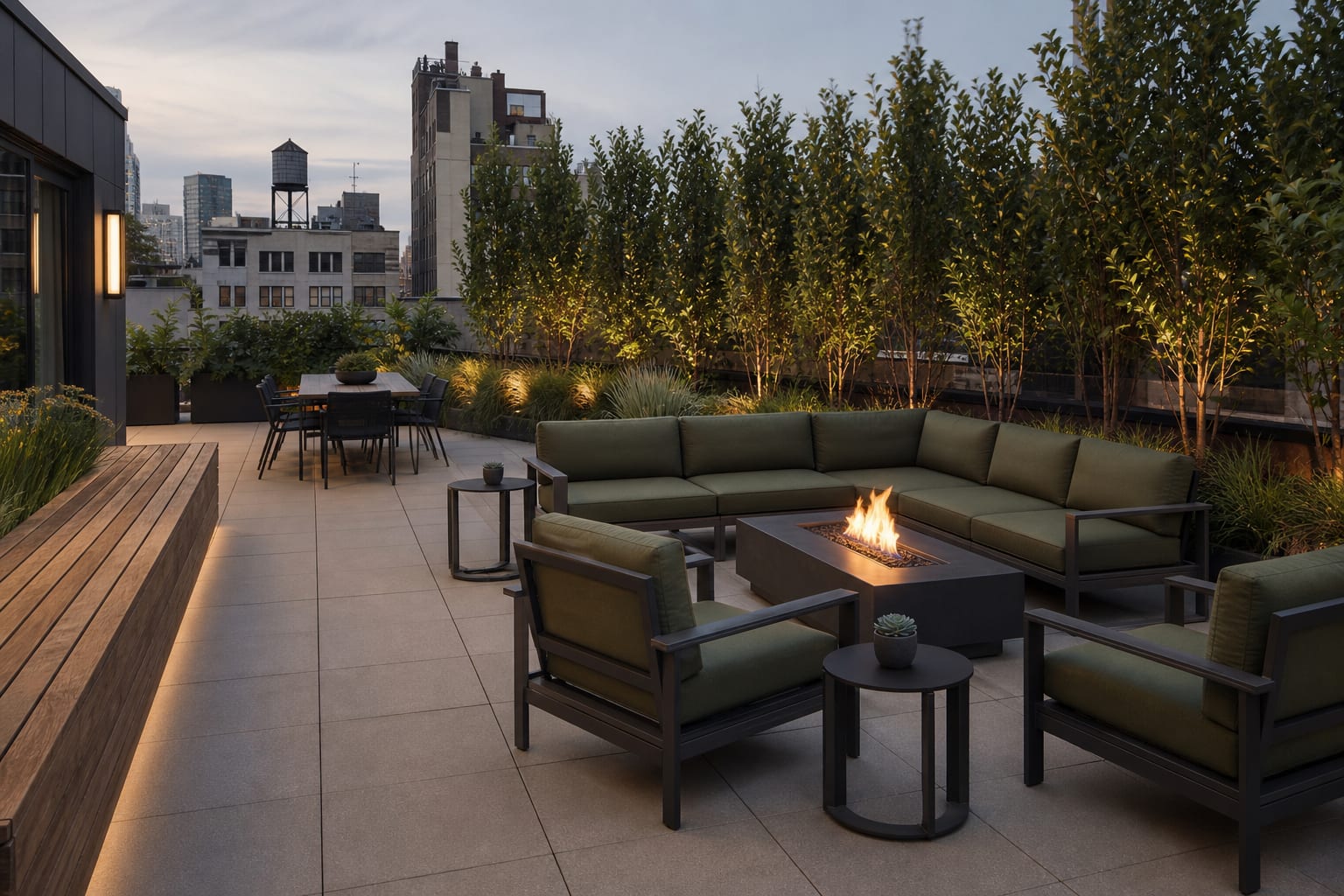
An urban rooftop deck works when it sits on a pedestal-paver system over a protected membrane, zoned into distinct 6x8ft dining and lounge areas, buffered by a low planter wall, and kept under the roof's load limit. Structure is what separates a finished deck from leftover building space.
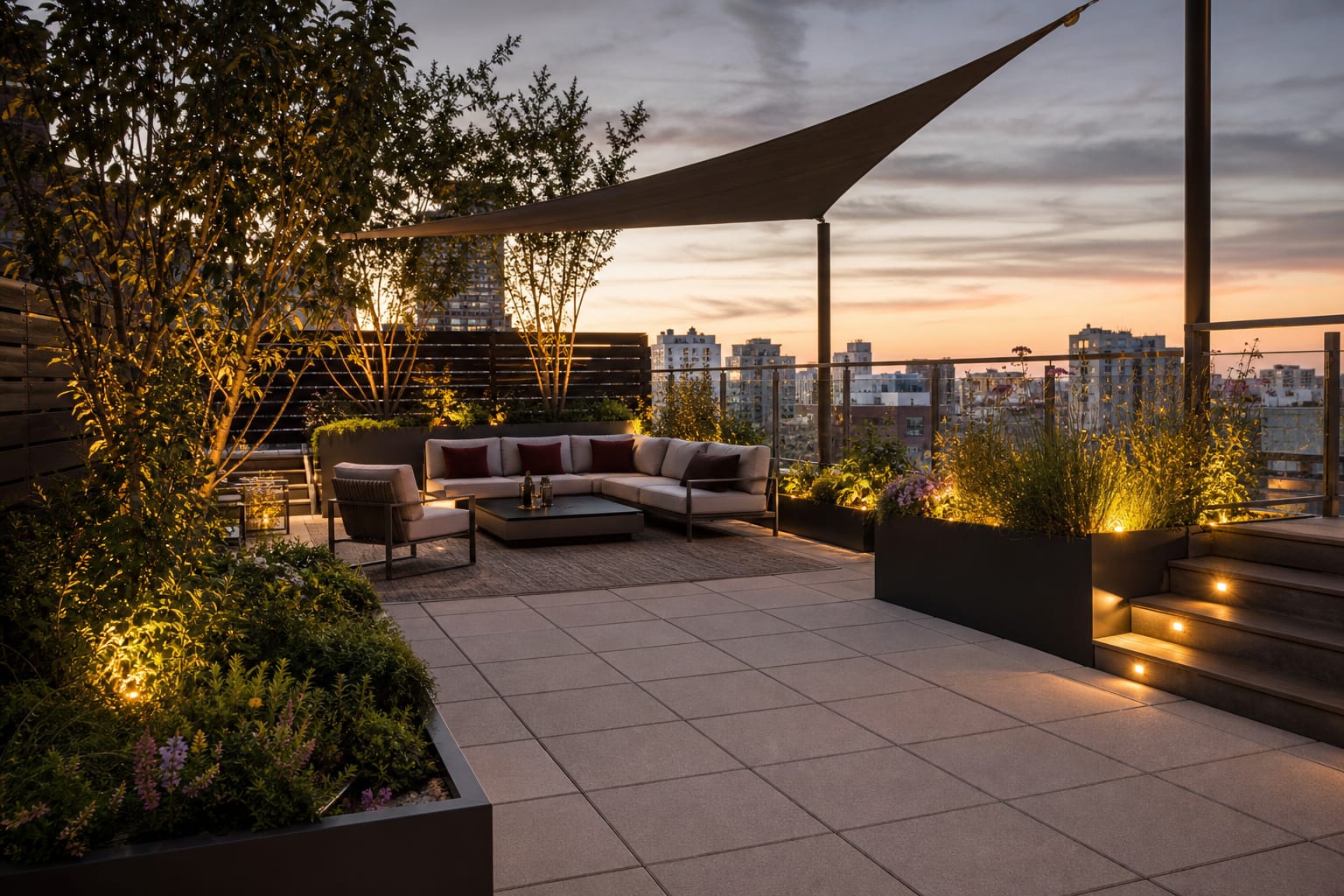
What makes a city roof feel like a deck, not leftover space?
A rooftop reads as a real deck when the hardscape creates edges, rooms, and routes instead of one exposed platform. Decide where each zone begins and stops before choosing materials.
- Keep the main route about 36" wide, routed away from cooking, water, planting, and seating edges.
- Limit the first palette to three finishes: one floor, one vertical edge, one repeated accent.
- Test the layout from two viewpoints, the roof door and the main seat, before buying anything.
A layered hardscape works best: pedestal pavers or modular tiles under the main seating zone, a tougher service path near drains, and planters used as low architecture. One material end-to-end reads commercial; a warmer surface in the lounge zone with a simpler maintenance strip reads intentional.
Leave 18" behind movable chairs for sliding in and out, and give dining chairs closer to 30" of clearance against a wall, planter, or railing. A compact lounge can work inside a 6x8ft footprint if the coffee table stays narrow and doesn't block the door swing. On longer roofs, pull one planter, bench, or screen inward instead of pushing everything to the perimeter.
For planting that does more than decorate, borrow the layering logic from rooftop garden design ideas, then simplify with fewer varieties, larger containers, and clean repetition.
What layout decision controls the whole rooftop deck?
The real decision isn't sofa versus dining table, it's whether the roof is a lounge deck, dining deck, garden deck, or mixed-use terrace. Most city roofs can't perform every role equally well, so choose the main ritual first.
| Deck priority | Best layout move | Watch point | Practical spec |
|---|---|---|---|
| Lounge first | Put the sofa in the most protected corner and wrap it with planters | A floating sofa can feel stranded | Keep the coffee table 14"-18" from seat fronts |
| Dining first | Place the table closest to the door or outdoor kitchen wall | Carrying food across a windy roof gets old | Allow 36" clear on the chair side when possible |
| View first | Keep the skyline edge open, seat perpendicular to it | Tall backs can block the best sightline | Choose lounge backs under about 34" high |
| Entertaining first | Create two zones sharing one service path | Too many chairs can choke circulation | Preserve one 36" route from door to rail |
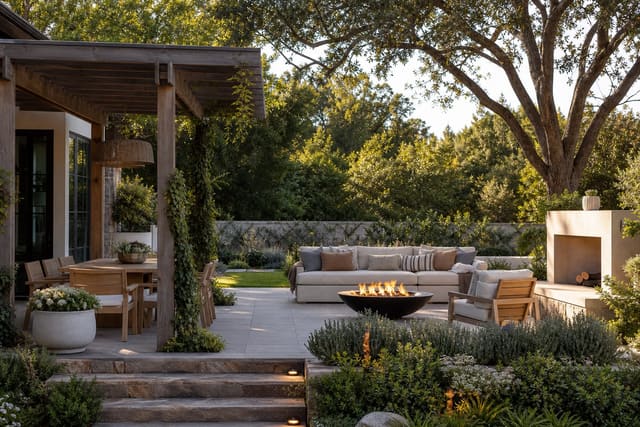
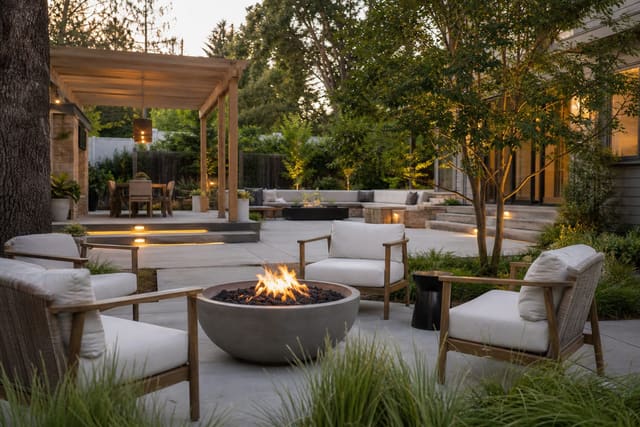
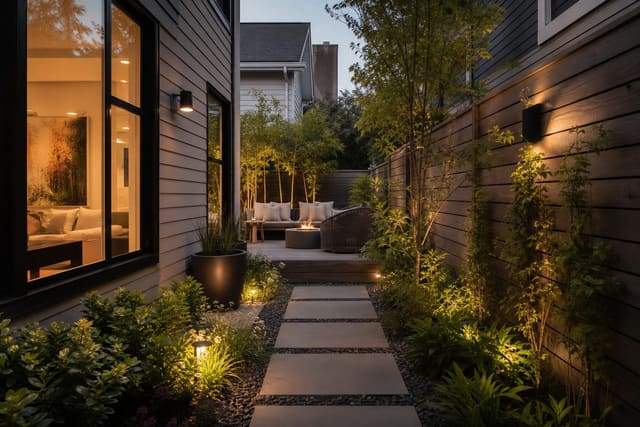
A fire feature is tempting, but it belongs only where building rules, fuel storage, clearances, and wind exposure allow it. If permitted, keep it low and centered within the seating group; spacing principles from fire pit seating area ideas still apply, but rooftop wind and code get final say. On narrow roofs, think side-yard: one generous path, objects tight to one edge, as in side-yard ideas for narrow outdoor spaces.
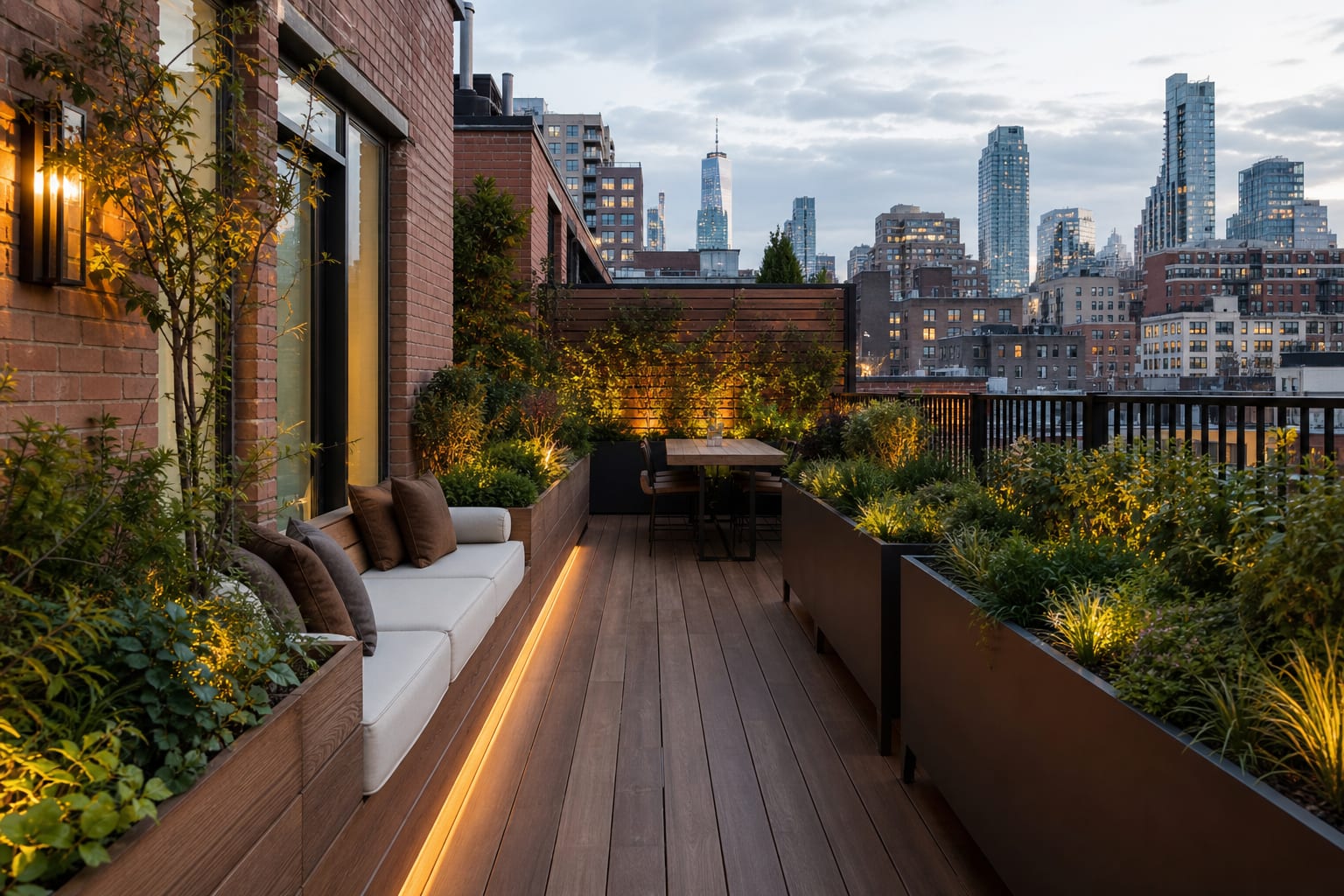
Which rooftop hardscape ideas survive real weather?
- One long built-in bench along a protected wall gives the roof a strong edge without scattered loose chairs. Keep seat height around 17"-19" and leave storage access for cushions before storms.
- Large-format pavers or tiles (24"x24" on an approved pedestal system) in the lounge zone read calmer than small busy units, while keeping drain access visible.
- A slatted screen, not a solid wall, behind seating, around 48"-60" high, lets air through and protects privacy without creating a wind trap; pair with grasses or clipped shrubs.
- A dining table sized to real use: a 36" round table handles two to four in a tight corner, while a 72" rectangular table needs a larger roof and serious chair clearance.
- Low, warm lighting, 2700K outdoor-rated fixtures at steps, planter bases, and table height, avoids glare off the exact view you paid for.
- Weight that earns its keep: a big trough planter can anchor privacy, calm wind, hide storage, and frame seating, while a random heavy pot just steals floor space.
What rooftop deck mistakes should you avoid?
Don't buy furniture before taping the walking route. Outdoor sofas look smaller online than beside a parapet, and a 32" deep lounge chair can swallow a narrow roof fast.
Don't ignore glare. Pale pavers, white cushions, and glass railings can feel harsh at midday; warmer gray, taupe, charcoal, olive, clay, or sand tones handle rooftop light better, with one stronger cushion color if the context allows it.
Don't treat planters as accessories. Fewer containers with more soil volume look better and dry out slower than scattered small pots; start shrubs at 18"-24" deep with proper drainage or roof-safe bases.
Don't let the grill dominate the deck. It needs clearance and a route that doesn't cut through the lounge; a compact station near the door beats turning the best view into a utility corner.
Don't choose indoor-looking pieces because they photograph well. Skinny legs and glossy pale finishes look flimsy in rooftop sun; choose powder-coated metal, teak, concrete-look composite, marine-grade polymer, or outdoor fabrics with removable covers.
How can AI preview your rooftop deck before you commit?
AI design tools are useful here because the big choices happen at once: flooring tone, furniture scale, planter height, shade shape, and the skyline backdrop. Upload a straight photo from the roof entry or main seating position, then test three versions of one plan instead of three unrelated fantasies.
Try a lounge-first deck with long planters, a dining-first roof with a shade sail, and a mixed plan that keeps the view edge open. Use the same camera angle each time to judge whether the sofa blocks the view, whether dark pavers feel too heavy, and whether the shade element protects or cramps the space.
The preview won't confirm structural load, waterproofing, wind anchoring, or code compliance. It will show whether the roof wants warm decking, pale pavers, a planted perimeter, or a cleaner hardscape plan before you order furniture. Bring home real samples afterward and leave them out through bright afternoon light, damp morning air, and one breezy day.
Frequently Asked Questions
What kind of decking works on a rooftop?
Porcelain pavers on pedestals or ipe tiles on adjustable feet are the two systems that combine drainage, level adjustment, and roof-membrane protection; solid wood decking installed flush is rarely allowed.
How heavy can urban rooftop deck furniture be?
Most rooftop limits are 40-80 psf. Spread weight using planter perimeters and avoid stacked stone or large stone tables that concentrate more than 100 lbs on a single point.
Do I need permission to build a rooftop deck?
In almost every city, yes. Landmark, zoning, building, and HOA approvals are typical, and pedestal-paver systems removable without modifying the roof have an easier approval path.
How do I keep an urban rooftop deck private?
Use a 5-6ft planter wall with bamboo, grasses, or evergreens on the most overlooked side. Fabric screens are tempting but can be flagged as fire risk in many jurisdictions.
What lighting suits a rooftop deck?
Use battery-powered or solar low-voltage lights with no exposed wiring, 2700K warm white for seating zones, and downcast bollards for circulation. Skip uplighting that's visible from a neighboring tower.
Three transformations to try
- Urban rooftop deck with pedestal pavers
- Rooftop deck with planter wind buffer
- Rooftop deck with pergola and string lights