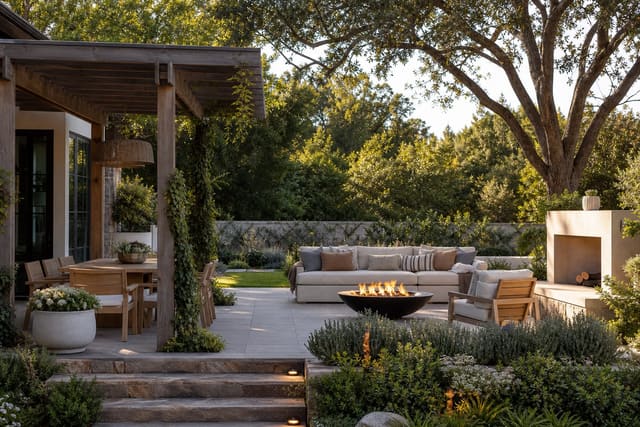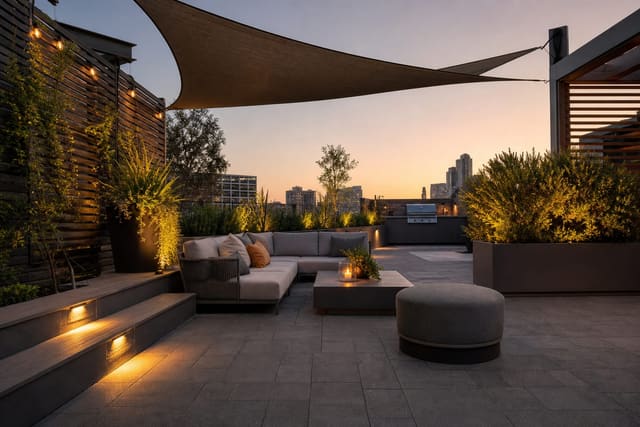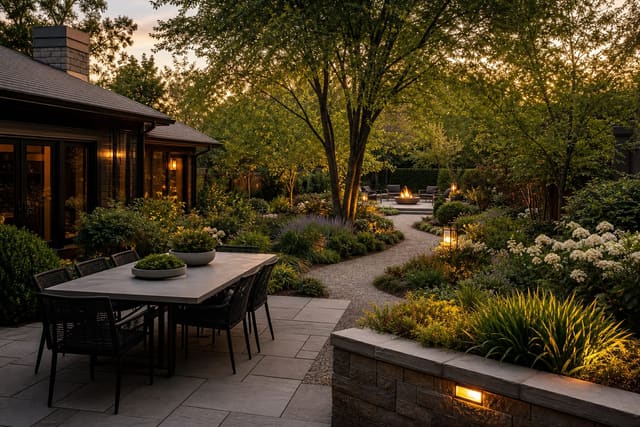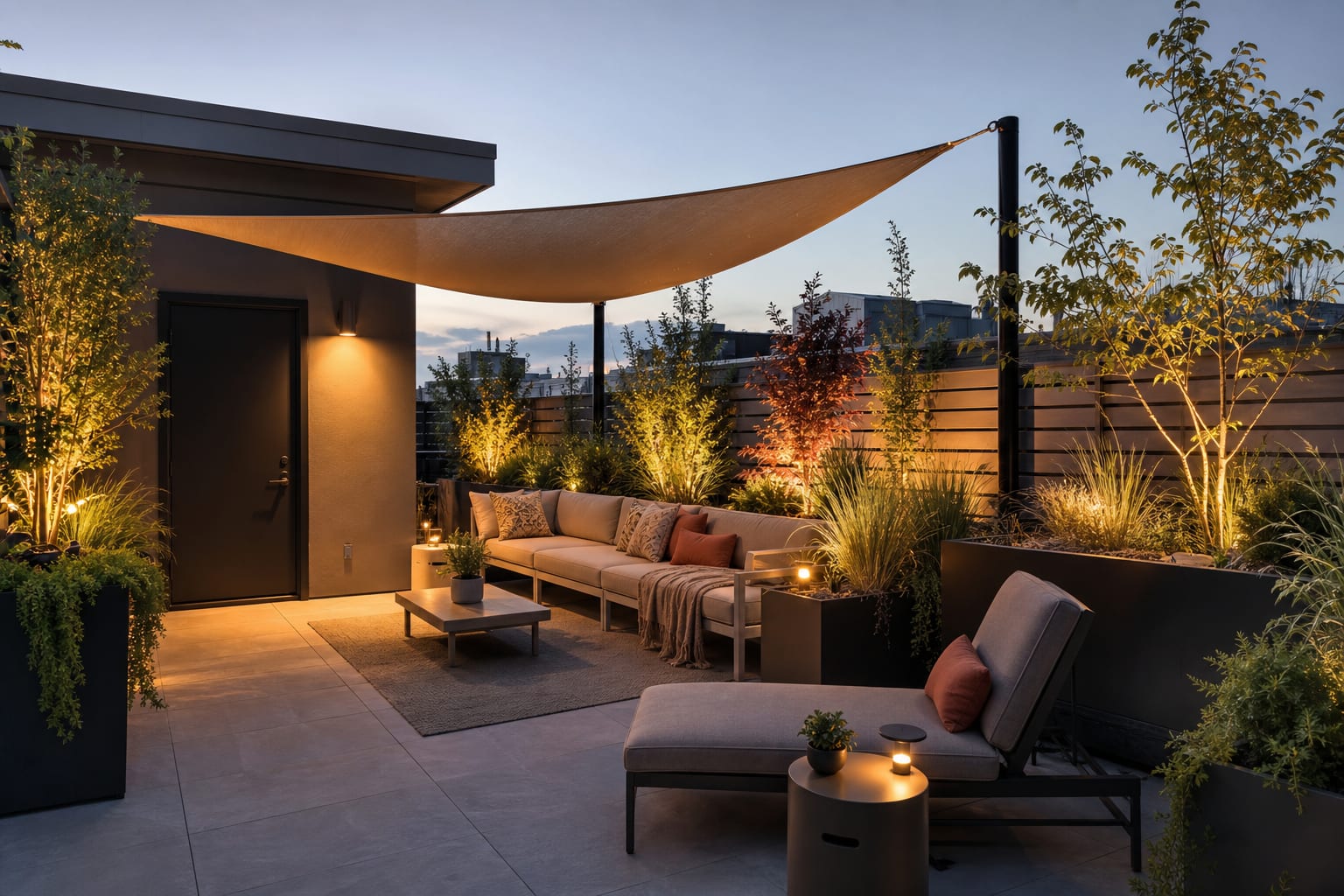
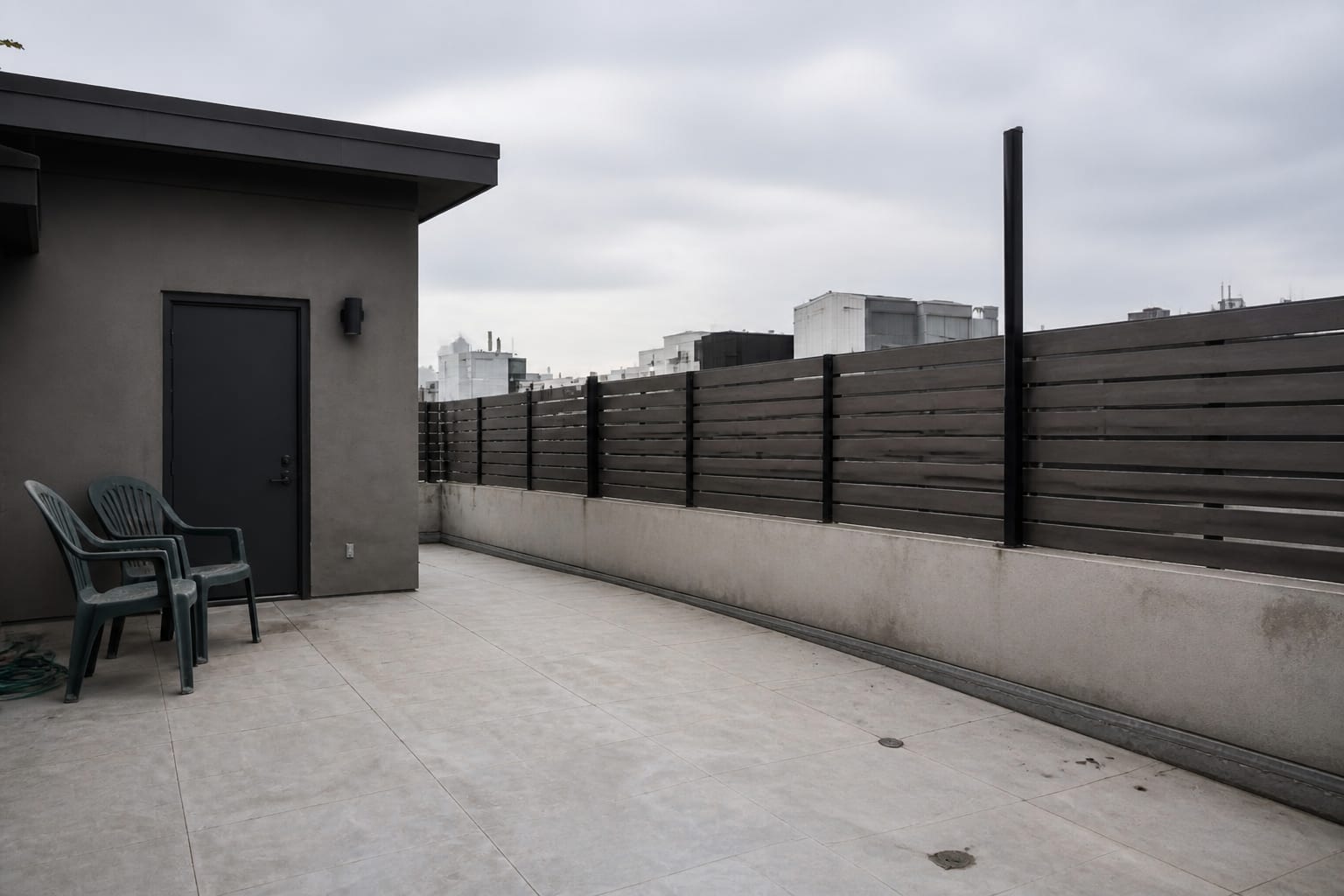
A rooftop garden works when you confirm the structural load (40–80 psf live load is typical), drain through a protected membrane, plant in deep wind-tolerant containers, and zone the roof into seating, planting, and circulation. Every other choice — furniture, privacy, lighting — follows from those four constraints, not the other way around.
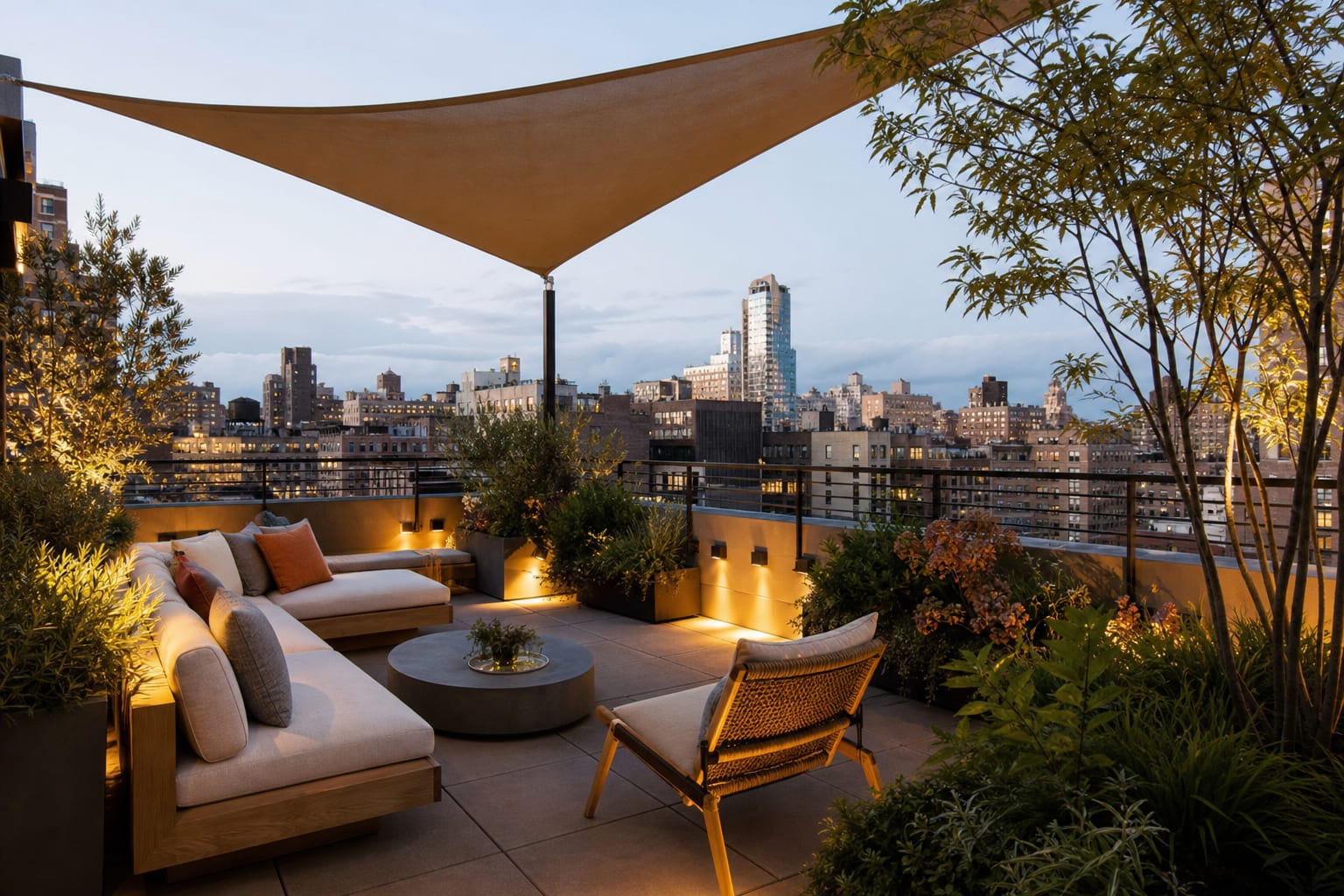
What makes a rooftop garden work above the city?
Rooftop planting is more exposed than ground-level planting: soil dries faster, tall stems whip in the wind, and there are fewer walls to anchor the space. Before buying anything heavy, ask the building owner, engineer, HOA, or property manager what the roof can carry and where water must flow.
Start with circulation. Keep the main route at least 36" wide, especially from the stair or roof hatch to the seating area, grill, or door. On a small roof, keep one uninterrupted service path along the drain side so planters and furniture don't turn maintenance into a wrestling match. On larger rooftops, borrow the room-planning discipline from urban rooftop deck ideas: one dining zone, one lounge zone, and one planted edge beats furniture scattered across every corner.
Planters are the architecture of a rooftop garden — use them to build edges, not just hold plants.
- A trough planter 30" to 42" high creates privacy while staying lower and safer than a flimsy screen panel.
- Shrubs and small ornamental trees need at least 18" to 24" of soil depth; shallow bowls suit herbs, sedum, and seasonal flowers.
- Leave 4" to 6" between planter backs and parapet walls so air can move and debris can be cleared.
Which plants, privacy screens, and materials work on a roof?
A rooftop needs a tougher plant palette than a courtyard garden. Wind-tolerant grasses, dwarf evergreens, lavender, rosemary, sedum, thyme, compact hydrangeas in protected spots, and small multi-stem trees all work, but placement decides whether they thrive. Put the tallest planting where it's most sheltered by parapets or adjacent walls, then step down toward the open edge, and skip delicate annuals as the main story on fully exposed roofs.
The strongest layouts use three planting heights: low groundcover or herbs in 10"-14" pots near seating, mid-height shrubs or grasses in 18"-24" troughs along the perimeter, and one or two structural trees in large containers placed only after load and wind are checked. For layering ideas at a bigger scale, see large backyard planting strategies, then translate them into lighter containers instead of ground beds.
Privacy deserves the same restraint. A 6' solid screen catches wind like a sail; a planted trellis, slatted panel, or staggered row of tall planters is calmer and usually safer. Keep screens within local code and secure them without puncturing the roof membrane — renters and condo owners should stick to weighted, freestanding options.
| Rooftop choice | Best use | Watch point | Practical spec |
|---|---|---|---|
| Fiberglass trough planters | Long planted edges and privacy | Cheap thin walls can bow | Use 30"-42" high troughs with drainage holes and saucers where required |
| Powder-coated aluminum furniture | Dining or lounge zones | Lightweight pieces can move in wind | Choose low profiles and add weighted bases or storage anchors |
| Porcelain pavers on pedestals | Owner-led roof upgrades | Installation must protect waterproofing | Keep pedestal access open near drains and inspection points |
| Slatted privacy panels | Neighbor-facing edges | Solid panels catch too much wind | Leave narrow gaps and combine with planting instead of one flat wall |
| Outdoor-rated string or path lights | Atmosphere and safe movement | Glare ruins skyline views | Use warm 2700K bulbs and shield light away from neighboring windows |
Five rooftop ideas worth copying:
- Plant two sides, not all four, so the roof keeps its views and airflow; leave at least one skyline side open.
- Put the dining table closest to the door — carrying plates across a windy roof gets old fast.
- Anchor any shade sail, pergola, or umbrella properly, and keep clearance around 7'6" at the walking route.
- Repeat one hardscape color across planters, furniture, and edging; check outdoor color palette choices before mixing cushions.
- Add one water-safe focal point, visible from the door and stable in wind, only after the layout works.
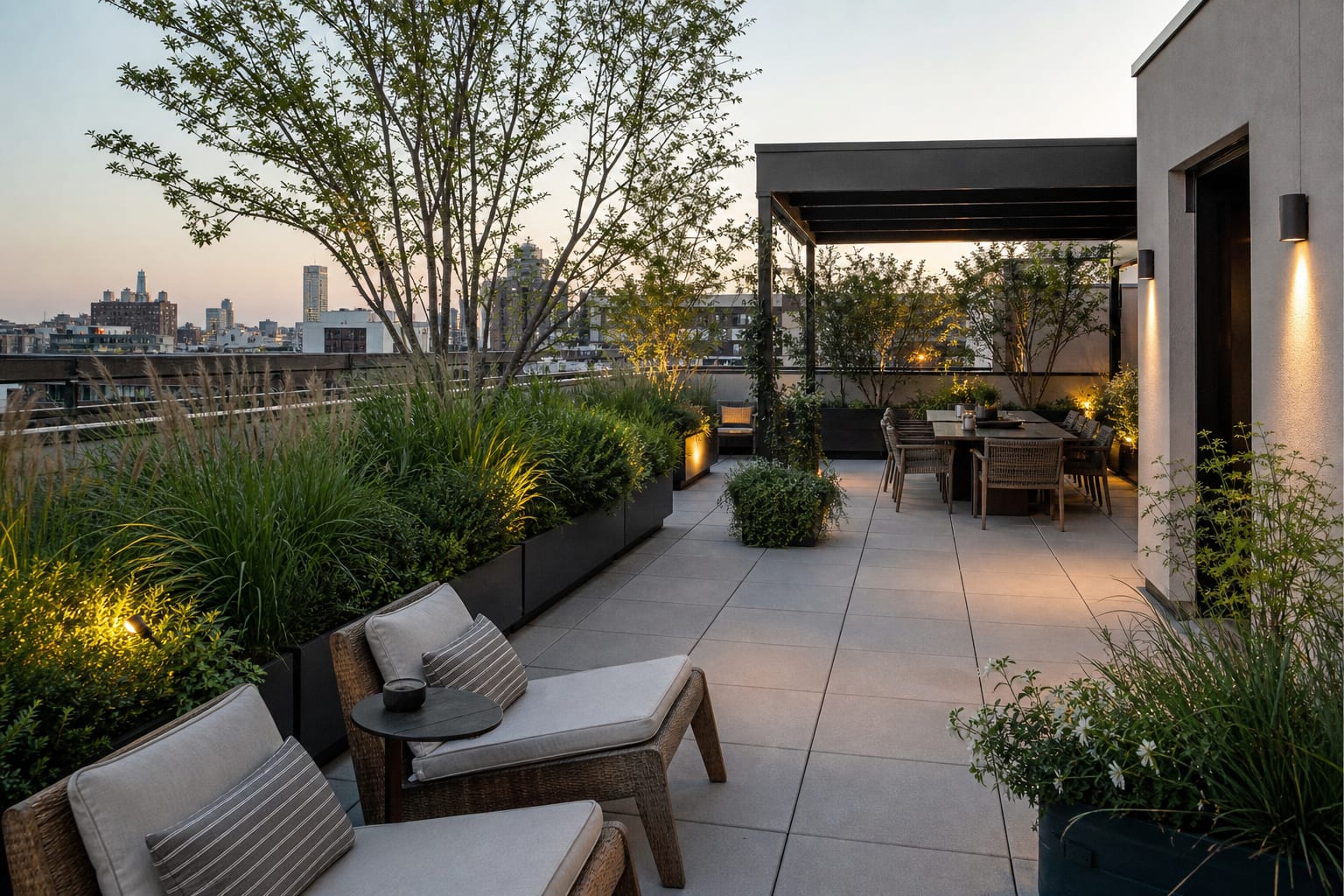
What are the most common rooftop garden mistakes?
Buying mature trees before understanding structure is the biggest one. An instant canopy looks appealing, but large containers, wet soil, and wind load can overwhelm a roof never designed for it — use smaller multi-stem trees and an engineered growing medium once limits are confirmed.
Placing every planter against the parapet creates a green border around an empty, barren center. Pull one or two planters inward to shape a corner or frame the lounge zone instead.
Ignoring irrigation catches up fast in August heat. Use a discreet drip line with a timer if hose access is allowed; otherwise choose drought-tolerant planting and self-watering containers with visible fill indicators.
Treating privacy as a wall problem misses the point. A rooftop needs layered screening at seated eye level (42" to 60") more than a tall standing barrier; mixing grasses, shrubs, and slatted panels feels more relaxed than one opaque fence.
Using indoor-looking furniture outdoors backfires in rooftop light. Choose outdoor foam, removable UV-resistant cushion covers, and frames built to handle exposure.
How can AI help preview a rooftop garden before you commit?
AI previewing helps most when the roof has competing decisions: planter height, privacy placement, furniture scale, and color. Upload a straight photo from the roof access point and test three directions — a dining-first terrace with planted edges, a lounge-first garden with a shade sail, and a greener layout with taller privacy planters — using the same camera angle each time.
Use the preview to catch mistakes early: a dark planter line that makes the parapet feel heavy, a white umbrella that glares against the sky, or seating that looks stranded because planting sits only at the perimeter. AI won't replace engineering advice, drainage checks, or climate-specific plant selection, but it shows whether the roof wants a calm planted room or a lighter deck-like terrace before you order expensive containers.
Then sample before you commit fully: one planter finish, one cushion fabric, one paver sample, left on the roof through a sunny afternoon and a damp morning. Rooftop light is harsher than indoor light, and the final design should make you want to bring coffee outside on an ordinary weekday.
Frequently Asked Questions
Can my building handle a rooftop garden?
Most flat residential roofs handle 40–80 psf live load, which supports light planters and a few people. Intensive green roofs with deep soil need 100–150 psf and an engineering review before installation.
Which plants survive on a rooftop?
Sedum, ornamental grasses, junipers, hardy succulents, dwarf pines, and drought-tolerant perennials thrive on exposed roofs. Avoid broadleaf trees, thirsty annuals, and anything that needs daily watering in hot, windy conditions.
How do I protect the roof membrane from planters?
Use a protective rubber pad or root barrier under every container, raise planters on pedestals or feet for airflow, and avoid heavy boxes that hold standing water against the roof surface for days at a time.
Does a rooftop garden increase HOA insurance costs?
Sometimes. Adding a garden with seating, a pergola, or amenities may require a building amendment and an engineer's letter, so check with your HOA before installing anything heavier than potted plants.
How much wind can rooftop plants handle?
Most rooftops above six stories see 20–40 mph sustained winds. Choose low, dense, wind-rated plants and avoid tall narrow conifers, sail-like trellises, and umbrellas without serious anchoring.
Three transformations to try
- Rooftop garden with sedum and grasses
- Rooftop garden with pergola seating
- Container rooftop garden on a small terrace