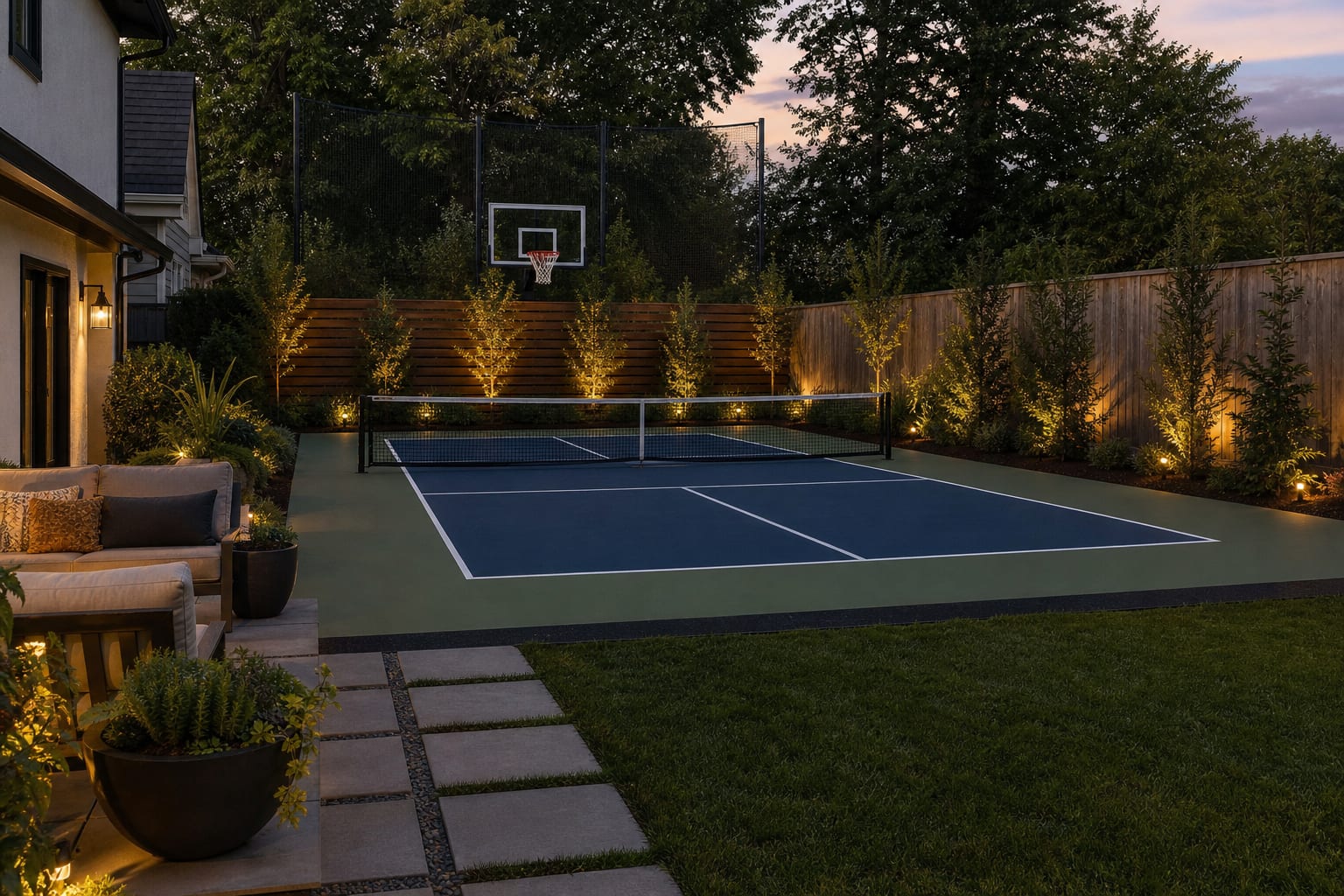
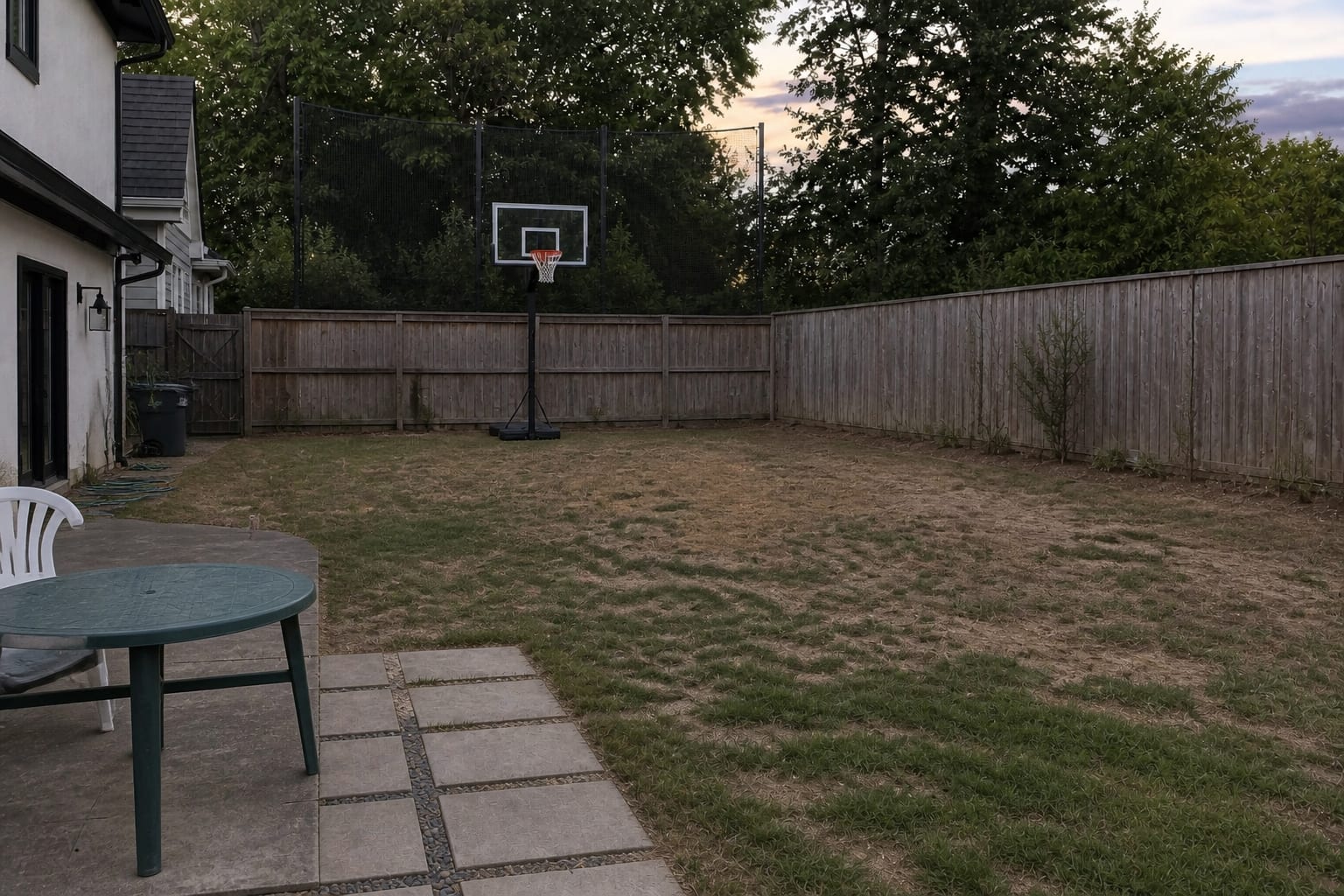
A backyard sports court works best when you pick the primary sport first, reserve regulation play space plus 5-10ft of runoff, build a draining surface, and protect the edges with fencing or planting. A too-small court becomes a noisy patio; an overbuilt one swallows the yard and turns every window toward chain link.
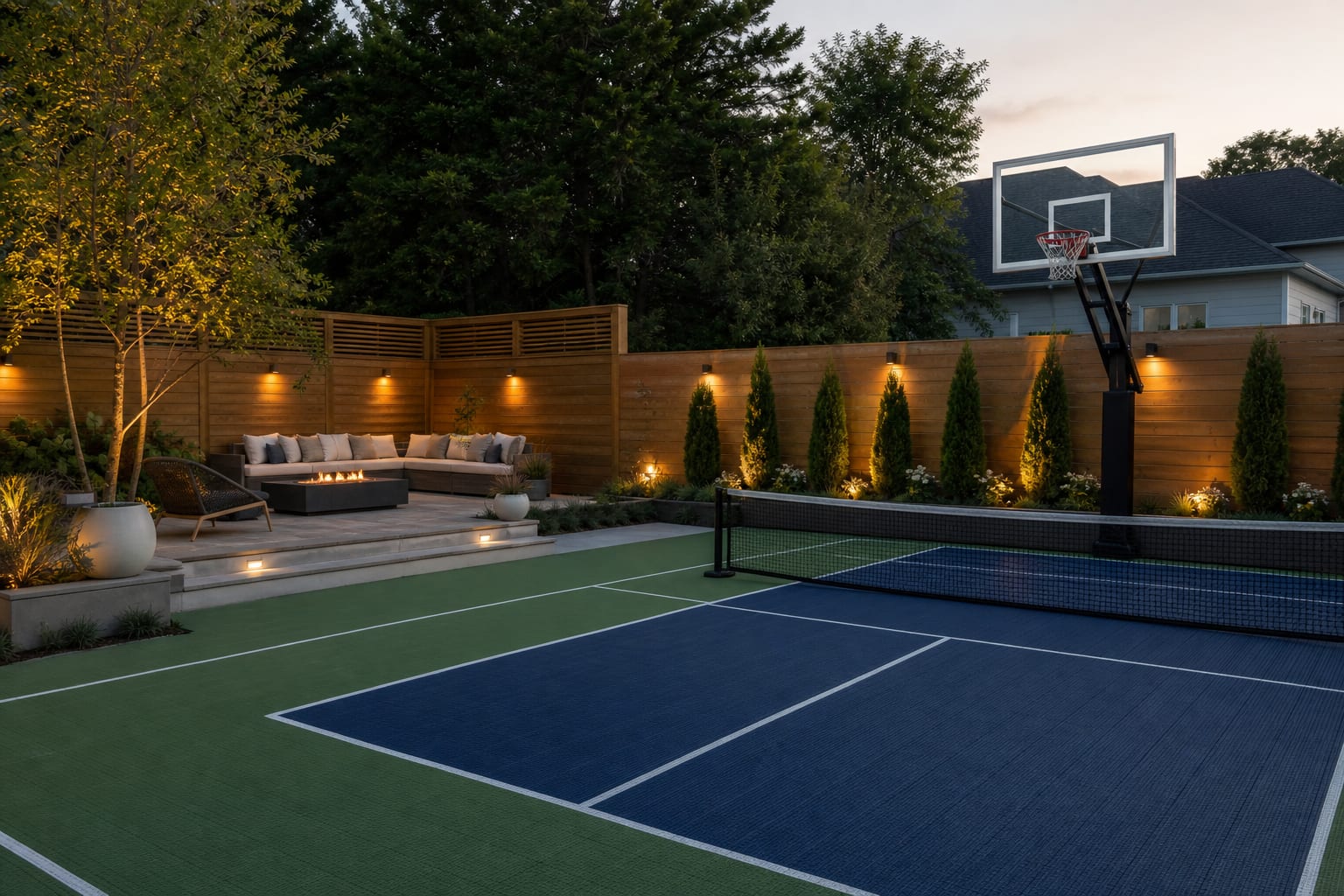
How do I design a backyard sports court that gets used?
Order matters: a court that looks tidy from the patio can still be miserable if players are chasing balls into shrubs or stopping short of a fence. Set the main circulation route at roughly 36 inches wide, and keep it clear of the sharpest seating, planting, or equipment edges. Limit the material palette to three finishes — one floor, one vertical edge, one repeated accent — and check the layout from the house door and the main seat before buying anything.
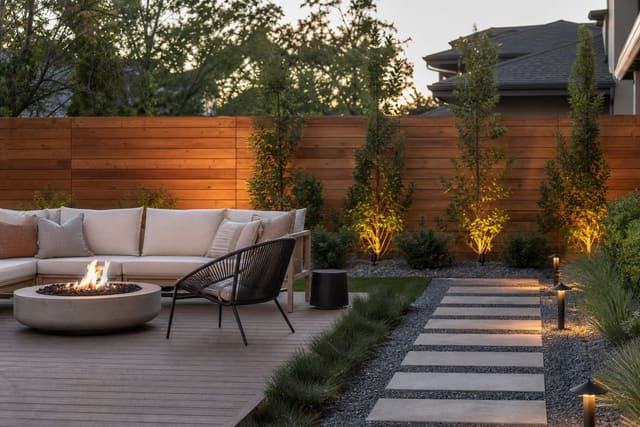
Keep the loudest edge away from bedroom windows, and avoid placing a hoop where missed shots hit a neighbor's fence daily. Layered screening often beats one hard wall: a cedar fence, tall grasses, and a netted end zone can work together. See cedar fence design ideas for outdoor privacy before defaulting to chain link on every side.
Which backyard sports court ideas fit a real yard?
- Dedicated pickleball court: use the 20x44ft painted interior, but aim for a 30x60ft paved zone so serves and side movement clear furniture and planting.
- Half basketball court: a 30x35ft pad covers free throws, wing shots, and drills; a 54-60 inch backboard reads more realistic in a yard than an arena-size board.
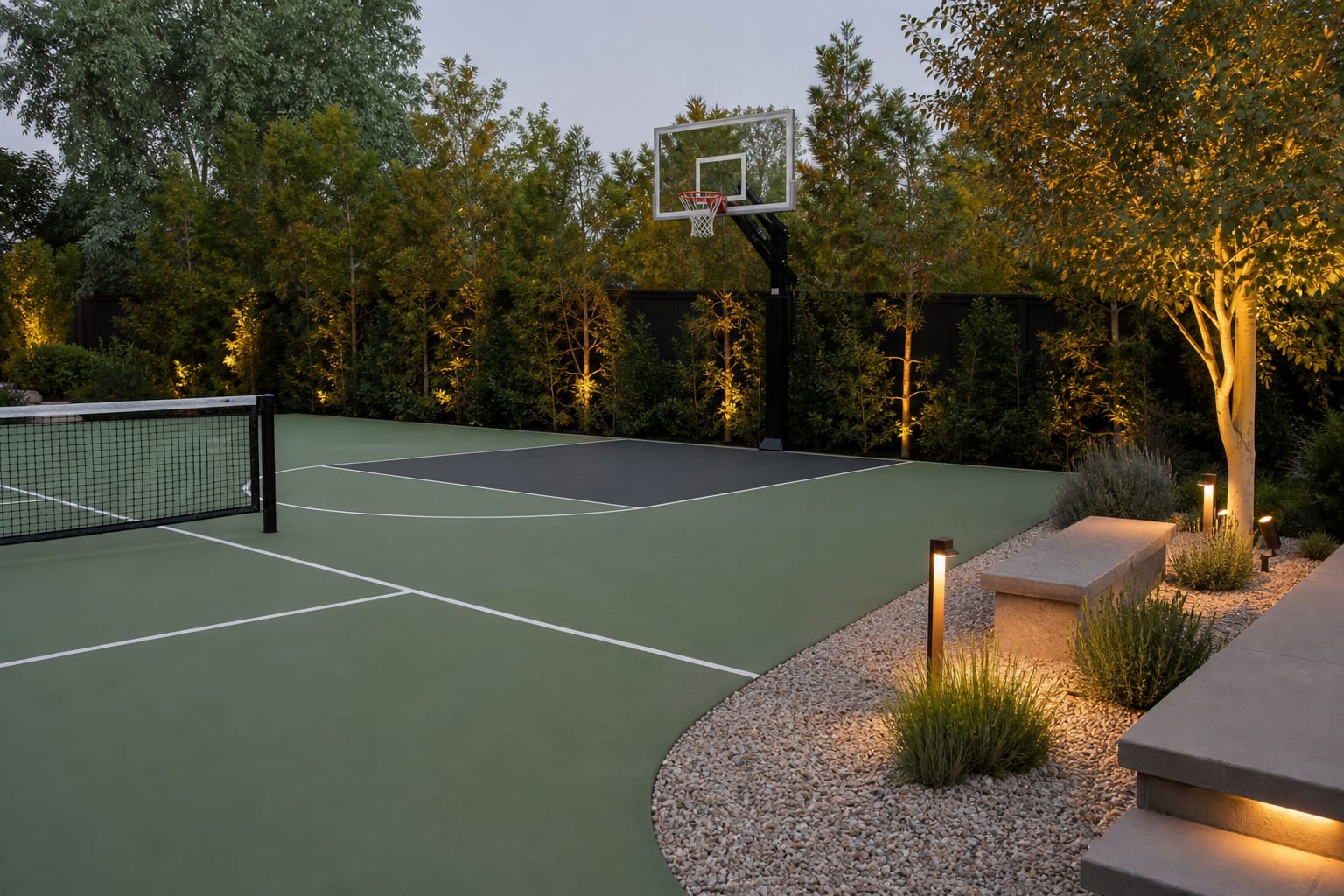
- Multi-sport striping: pick one dominant line color (white for pickleball) and muted blue, green, or charcoal secondary lines so basketball and other zones stay legible.
- Rebound wall: a 10ft practice wall helps tennis, lacrosse, and solo drills, but keep it off shared fences and back it with planting to cut echo.
- Recovery edge: a 3-4ft planted strip of grasses, shrubs, or gravel catches balls and gives spectators a place to stand off the court.
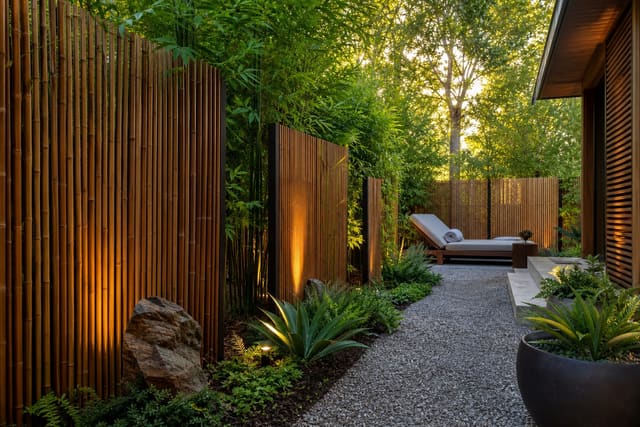
If the yard is tight, pair the court with vertical screening instead of bulky shrubs — see bamboo privacy screen ideas for backyards. In larger yards, run the court's long side parallel to the main view and keep seating, water, and storage along one short end.
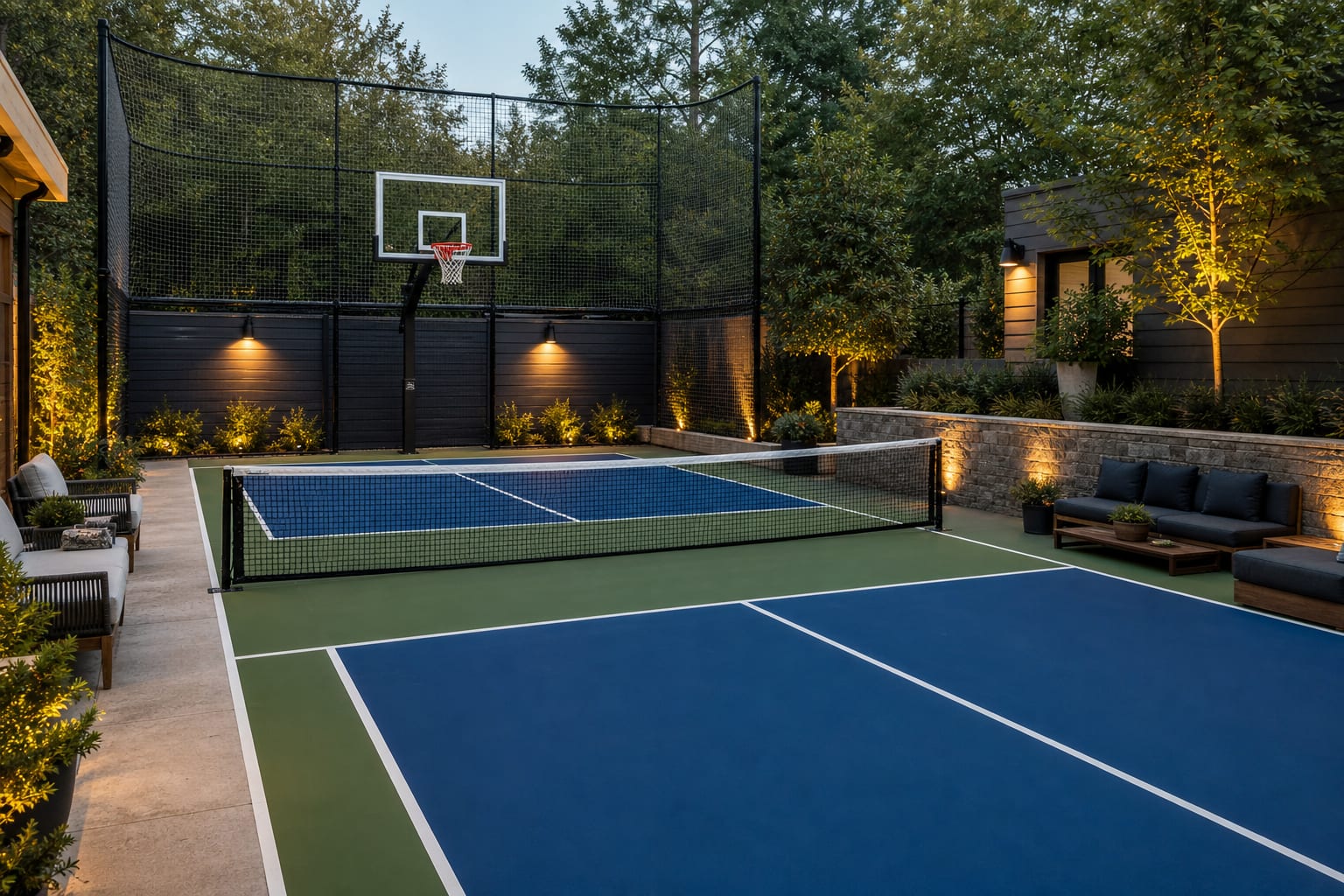
Which surface, lines, and lighting are worth paying for?
The surface decides whether the court feels deliberate or punishes ankles. Reinforced, grip-finished concrete works well; asphalt offers a little give but needs a stable base and periodic coating; modular sport tiles over a prepared slab add drainage and softer footing.
| Court choice | Best fit | Spec to plan around |
|---|---|---|
| Painted concrete | Clean modern yards, tight budgets | Broom or sport finish; avoid glossy sealers that turn slick after rain |
| Asphalt with acrylic coating | Pickleball- and basketball-heavy yards | Compacted base plus a sport-grade color coat, not porch paint |
| Modular sport tile | Families with several games, younger kids | Flat slab; tiles rated for outdoor UV and drainage |
| Synthetic turf border | Ball-catching edge, not the main court | Keep turf outside active play if true ball bounce matters |
Deep green, blue-green, graphite, and muted blue sit better beside lawns and fences than bright red or electric blue; save higher contrast for the active playing rectangle so lines stay readable at speed. Mount lights around 12-16ft for small residential courts, aim them down, and use warm-neutral 3000K LEDs so the ball stays visible without blasting the house or a neighbor's window.
What mistakes should I avoid?
- Shrinking the runoff to fit. A 20x44ft pickleball rectangle squeezed against a fence looks efficient but leaves no stopping room behind the baseline.
- Ignoring water. A court in a low lawn pocket puddles, fails coatings faster, and turns slick in shaded corners — grade the base before choosing colors.
- Placing the hoop where misses hit something fragile. Keep windows, grills, thin fence panels, and pool gear out of the miss zone, or add a backstop or tougher wall.
- Using the sideline as storage. Loose chairs, scooters, and ball bins near the edge are trip hazards; give equipment a bench or wall rack a few steps away.
- Forgetting the rest of the yard. If the court eats the only dining spot or shade tree, it reads as a takeover, not an upgrade.
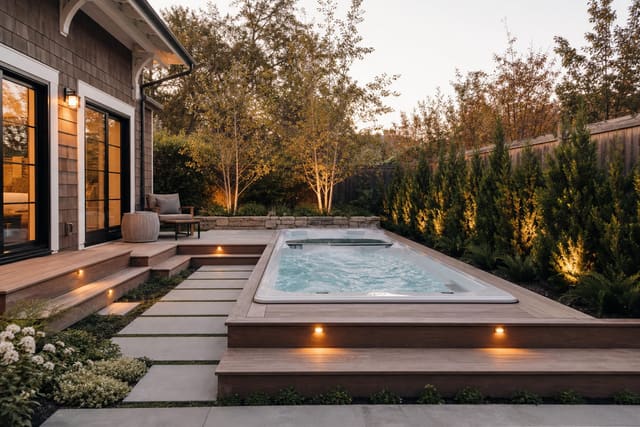
If the yard already has a pool or outdoor kitchen, don't route the court through the same circulation path — see swim spa ideas for compact backyards for spacing discipline near water and equipment.
Should I preview the court with AI before building it?
Yes — test the court on a photo of your real yard before ordering excavation, surfacing, fencing, or lighting. A clear preview shows whether a 30x60ft court overwhelms the lawn, whether a hoop blocks the patio view, or whether cedar screening reads private instead of boxed in.
Shoot the photo from the house, deck, or gate where you most often see the yard, and keep fixed constraints visible: trees, slope, fences, sheds, patio edges, windows, and drains. Ask for specific versions — a pickleball court with 5ft runoffs, a half-court with a 10ft backstop, or a multi-sport layout with muted green surfacing and cedar borders. The best preview is the one that makes the court look playable while the yard still feels like a yard.
Frequently Asked Questions
What is the minimum backyard size for a pickleball court?
A painted court needs 20x44ft, but plan a 30x60ft total zone to include 5ft runoffs. Smaller yards can compromise at 24x54ft and still play well for casual games.
Can I share a basketball and pickleball court in the same backyard?
Yes. Use one dominant white pickleball line set with a contrasting muted blue or charcoal basketball key on a 30x60ft pad; the overlapping half-court keys work fine for casual play.
Does a backyard sports court hurt resale value?
It hurts resale if it replaces the only lawn or dining zone, but it can help in markets favoring active families, especially when the court is integrated with planting and screening rather than left bare.
What surface is cheapest for a residential sport court?
Painted concrete with a broom finish is the cheapest durable option. Modular sport tile costs more upfront but installs faster and is easier to repair section by section.
How do I keep neighbors happy about a backyard court?
Aim the hoop and serving line away from shared fences, add a layered cedar-and-planting screen as a backstop, and limit lighting to 3000K downlit fixtures used before 9pm.
Three transformations to try
- Pickleball court with cedar screening
- Half-court basketball with planted edge
- Multi-sport court with muted green surfacing