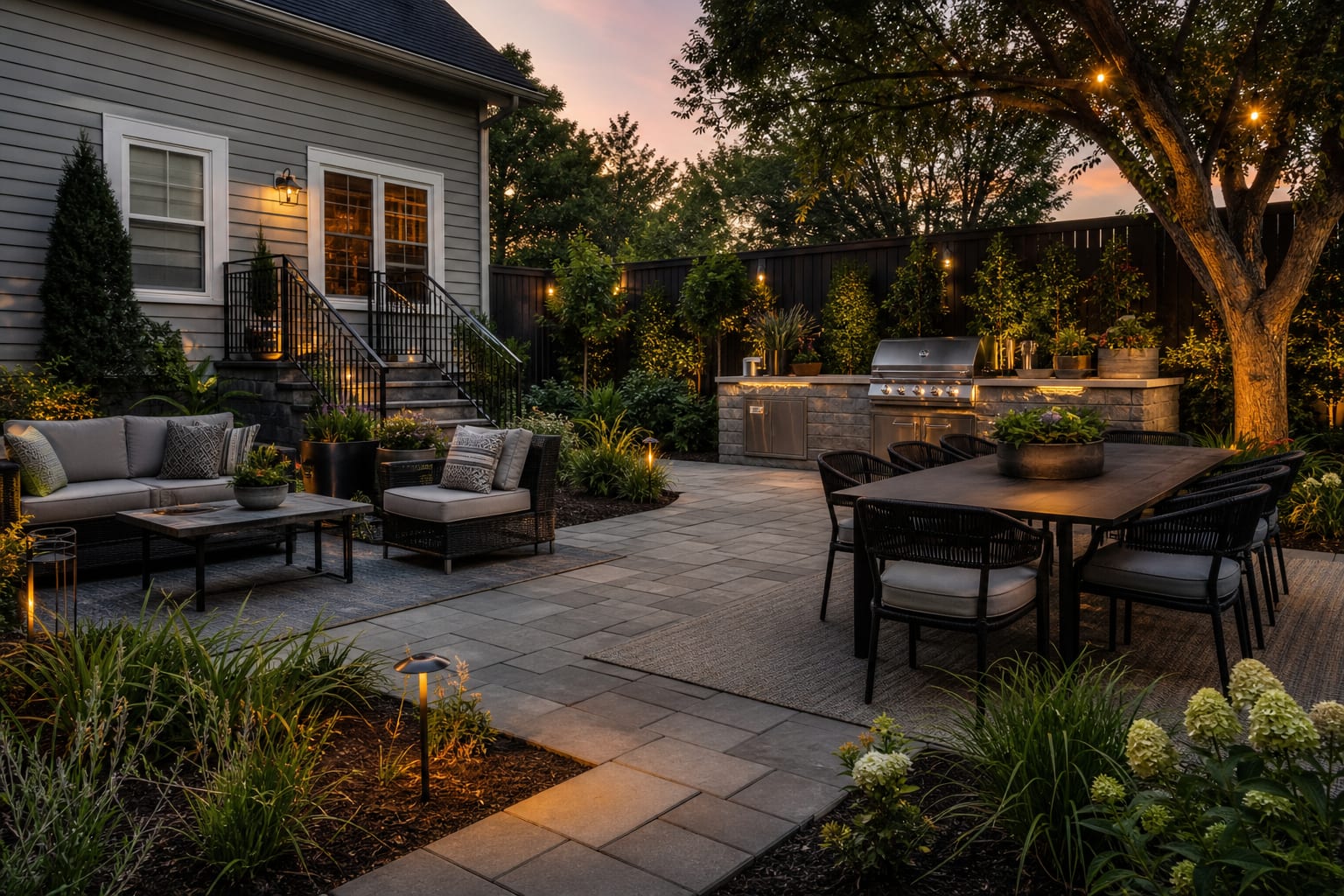
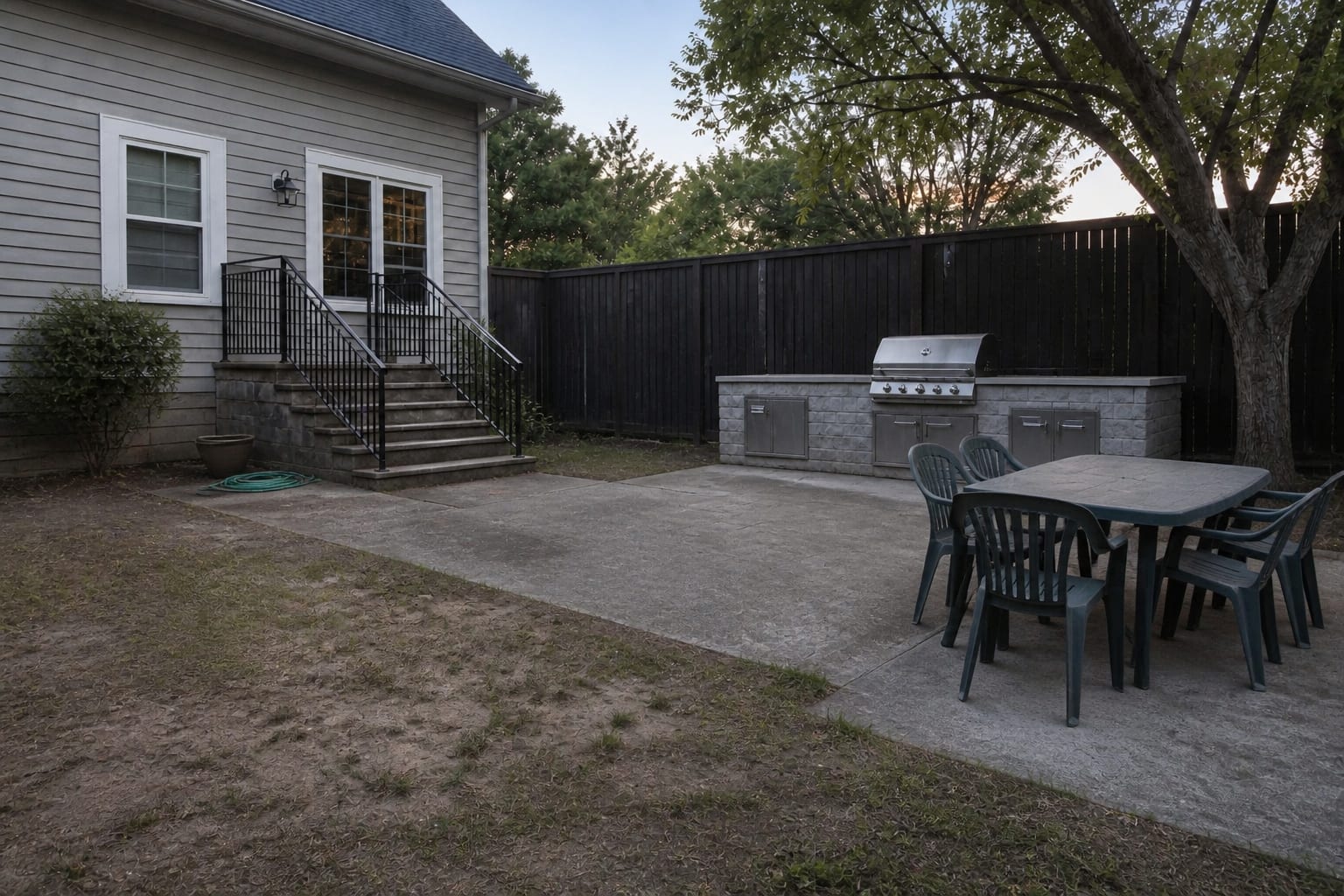
An outdoor kitchen works when it has four zones on one axis — cooking (grill plus side burner), a prep counter at least 36in wide, cold storage, and a sink or water line — so the cook never turns across plates. If you only have a basic grill now, spend first dollars on layout and counter space, not the fanciest burner package. This guide turns outdoor kitchen ideas into decisions you can measure before a contractor starts selling parts.
What makes an outdoor kitchen work harder than a basic grill?
A built-in grill earns its cost only when the surrounding station gives you somewhere to land raw food, season vegetables, stack plates, and pull hot trays without crossing the patio. Start with the cooking triangle: house door, grill, serving surface. Keep that route direct — a grill far from the kitchen looks great in photos and gets annoying fast on a weeknight.
The key numbers: 36in of clear walking space in front of the grill, 12in of counter on one side, 24in on the other where the layout allows. Bar seating needs 24in of width per stool and 15in of knee overhang. Standard counters sit near 36in; bar height counters land closer to 42in.
| Outdoor kitchen decision | Better choice when the yard is tight | Better choice when you host often |
|---|---|---|
| Grill position | Against a solid wall with side counter space | On a longer run with landing space on both sides |
| Counter shape | Straight run, 7 to 10 feet long | L-shape with a serving return |
| Seating | Two stools at the edge, not in the cook path | Four stools outside the hot zone |
| Shade | Wall-mounted cover or compact umbrella | Roof, pergola, or pavilion over prep and dining |
If your cooking wall bakes in afternoon sun, borrow the shade logic from AI Patio Design Ideas: Outdoor Spaces Redesigned From a Photo before spending on masonry. Shade decides how often the space gets used and protects finishes and the person doing the cooking.
Which outdoor kitchen layout fits the way you cook?
The best layout starts with the meal you cook most, not the appliance catalog. Quick weeknight dinners need landing space and easy cleanup; hosting twelve people needs separation between fire, drinks, and guests leaning on the counter.
A straight run is cleanest for most patios: grill in the middle third, counter on both sides, storage below the prep side. A 30in grill plus two 24in landing zones already needs roughly 6.5 feet before end panels or a sink.
An L-shape works when the patio has depth for guests to stand outside the cooking lane — the short leg can hold a bar ledge or beverage fridge, but keep 42in between opposing counters if two people pass behind each other. Island kitchens need circulation on all four sides plus gas, electric, and drainage access; if the patio is narrow, a wall-hugging run with a separate dining table usually beats a squeezed island.
Flooring matters as much as cabinet color — porcelain pavers, concrete, brick, and stone hold up better near grease and ash than soft decking. For a nearby seating zone, use outdoor rug ideas for patio seating away from the grill face so chair legs and grease splatter don't share one surface.
Test this on your own photo with ReDesign, keeping the house edge, hardscape, planting beds, and main path visible so the preview solves the space you actually have.
Five outdoor kitchen ideas worth the budget
- Build a real prep counter, not a decorative cap. A 24-by-36in landing area holds a cutting board, tray, and tongs without balancing food on the grill lid.
- Add a trash pullout before a second appliance. A weather-resistant bin within 3 feet of the prep counter keeps packaging off the dining table.
- Add a sink only if plumbing is realistic. A cold-water sink needs a winterizable, drainable line; otherwise a large tray plus hose access may be lower-maintenance.
- Use closed storage for tools. Stainless or powder-coated doors protect brushes and skewers from weather; keep open shelving minimal since it collects dust fast outside.
- Light the cook surface and guest edge separately. A task sconce or grill light should hit the counter, while patio string lights sit 8 to 10 feet up and away from rising heat.
Materials should follow exposure. Cabinet bodies can be powder-coated aluminum, masonry, concrete, marine-grade polymer, or detailed wood under cover. For countertops, porcelain, granite, concrete, and dense stone all work, but glossy dark tops get brutally hot in full sun — pale stone or porcelain is kinder on uncovered patios.
Common outdoor kitchen mistakes to avoid
- Building around a grill model before checking clearances. Every built-in grill has required cutout dimensions and ventilation rules; follow the appliance manual, not a generic online drawing.
- Putting stools directly behind the cook. Keep at least 48in behind the grill zone when seating is present, or move seating to the return counter.
- Assuming a fridge alone solves hosting. An outdoor beverage fridge needs proper outdoor rating, shade, and ventilation or it fights heat and grime.
- Copying an indoor backsplash outside. Tile and stone veneer need exterior-rated installation and drainage or they trap water and fail fast.
- Ignoring smoke direction. Cook on a temporary grill in the planned spot first and watch where smoke drifts toward doors, windows, and seating.
A modest setup — one reliable grill, a 9-foot counter run, two storage doors, a trash drawer, a sconce, and a nearby table — beats a crowded appliance wall with nowhere to set down a platter.
Use AI design to preview your outdoor cooking area before you commit
Outdoor kitchens are expensive to move once gas, electric, or plumbing enters the picture. Upload a straight-on patio photo and test a straight run, an L-shape, a covered prep area, and a separate serving counter, keeping the grill location, door swing, steps, fence line, and trees visible.
Judge proportion first: does the counter run overwhelm the house? Does the shade cover feel protective or boxed in? Do stools crowd the walkway? Once the direction feels right, confirm every measurement against appliance specs, contractor drawings, and local code.
Frequently Asked Questions
What are the four essential outdoor kitchen zones?
Cook, prep, cold, and clean: a grill plus side burner, 36 to 48in of prep counter, a 24in undercounter fridge or ice well, and a sink with hose or supply line. Skipping any zone forces the cook to improvise mid-meal.
How much counter space do I need around an outdoor grill?
Plan 24in on the right of the grill for plating and 18in on the left for tools and seasoning. Without that buffer, plates and tongs end up landing on the deck floor.
Do outdoor kitchens need a permit?
Any gas line, water supply, drain, or 120V electrical circuit needs a permit. A freestanding grill on portable propane does not, but a built-in island with hookups always does.
What counter material works best for an outdoor kitchen?
Sealed granite, dense porcelain, and stainless steel survive freeze-thaw and UV exposure well. Marble stains, poorly mixed concrete cracks, and butcher block rots outdoors, so pick material by climate, not just looks.
Should the outdoor kitchen be covered?
A 10 to 12ft deep cover over the cooking and prep run typically extends usable months by 4 to 6. Uncovered kitchens get used in-season and abandoned in shoulder months once rain hits the cook.
> Try this: Ready to see this on your own space? Open ReDesign and run the preview.
Three transformations to try
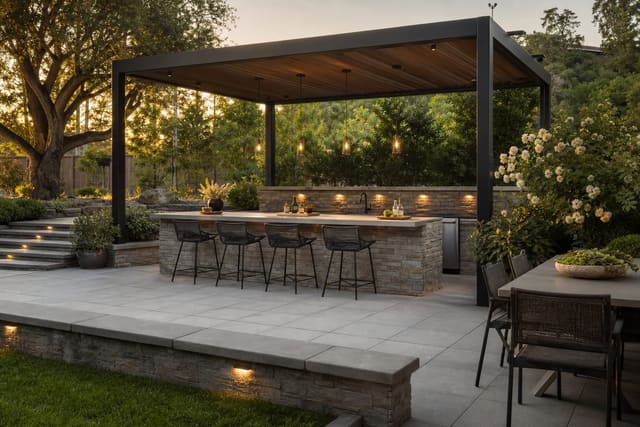
1. L-shaped outdoor kitchen with grill, sink, and fridge 2. Linear bar-style outdoor kitchen under pergola 3. Island outdoor kitchen with seating overhang