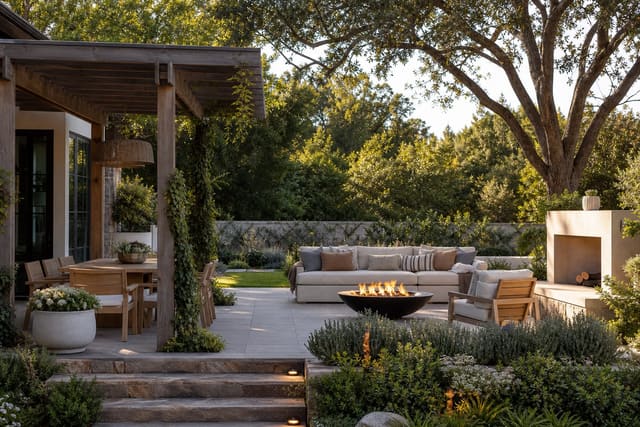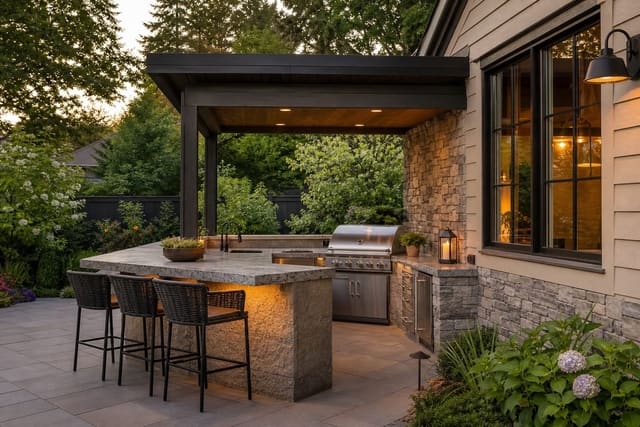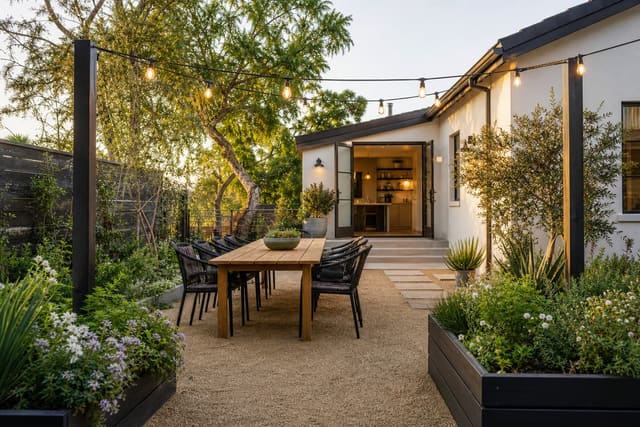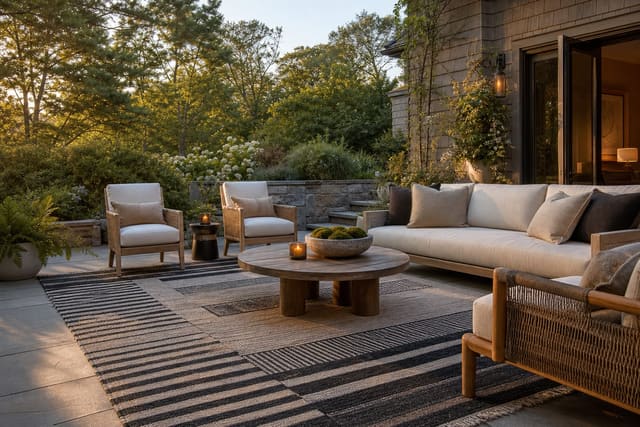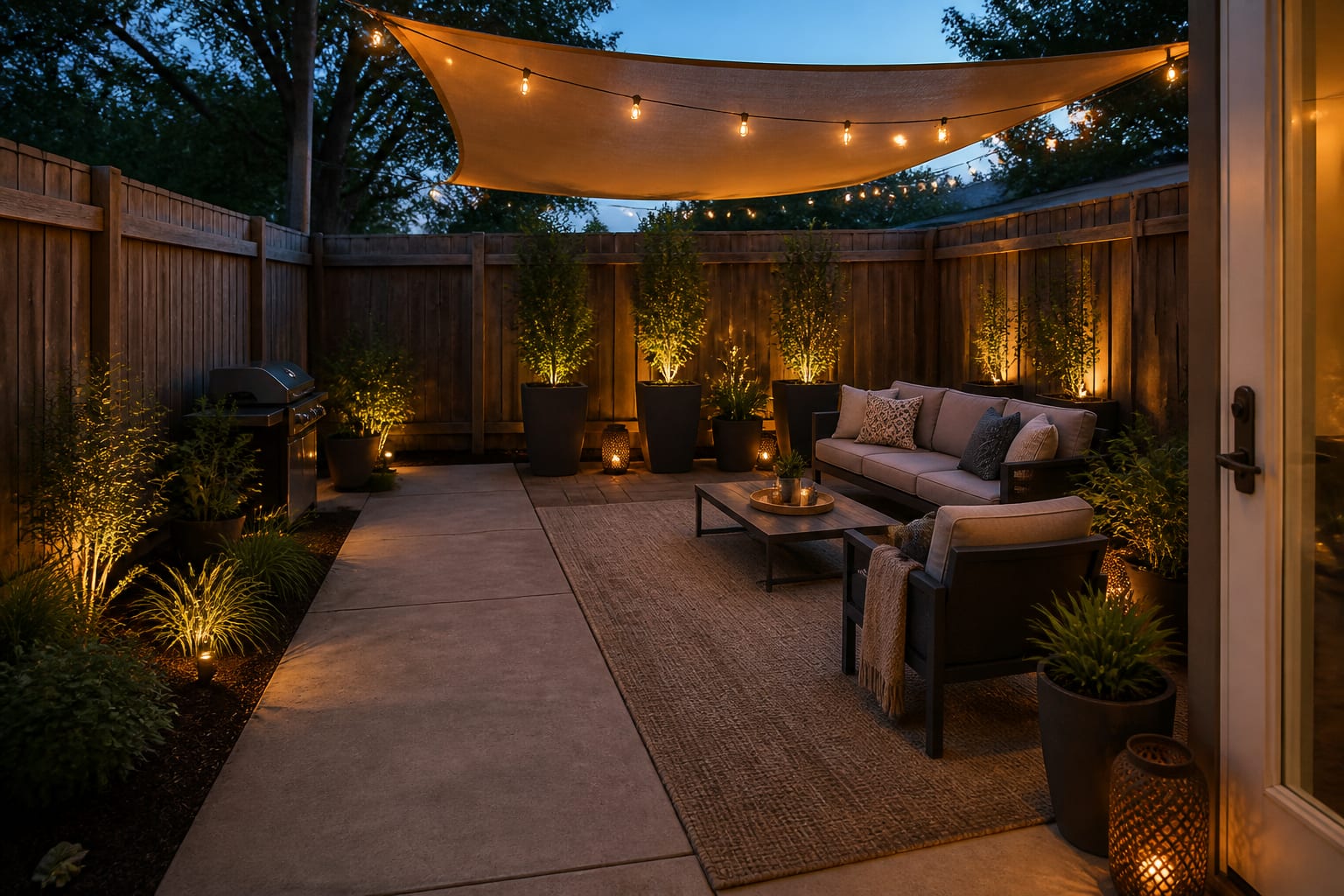
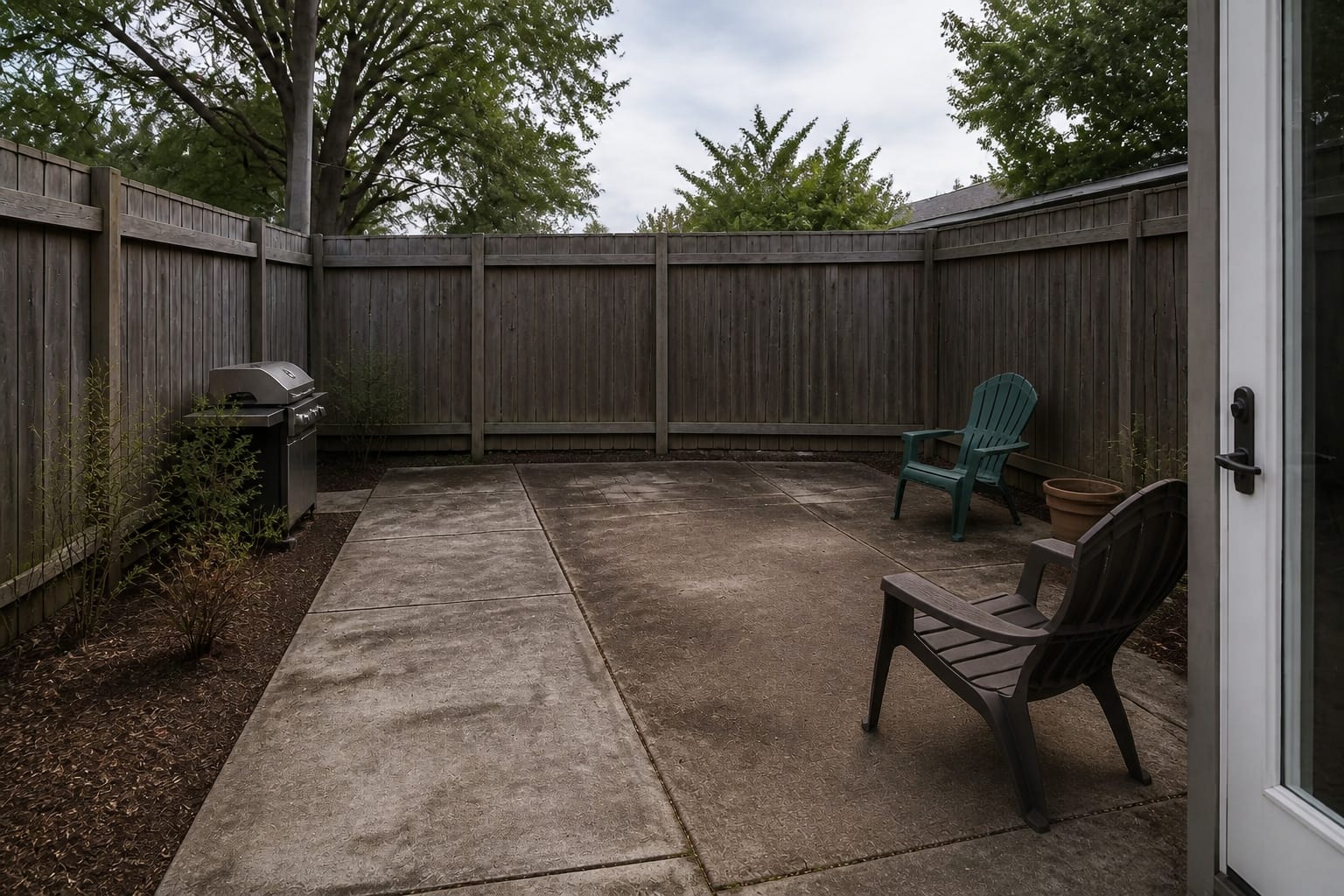
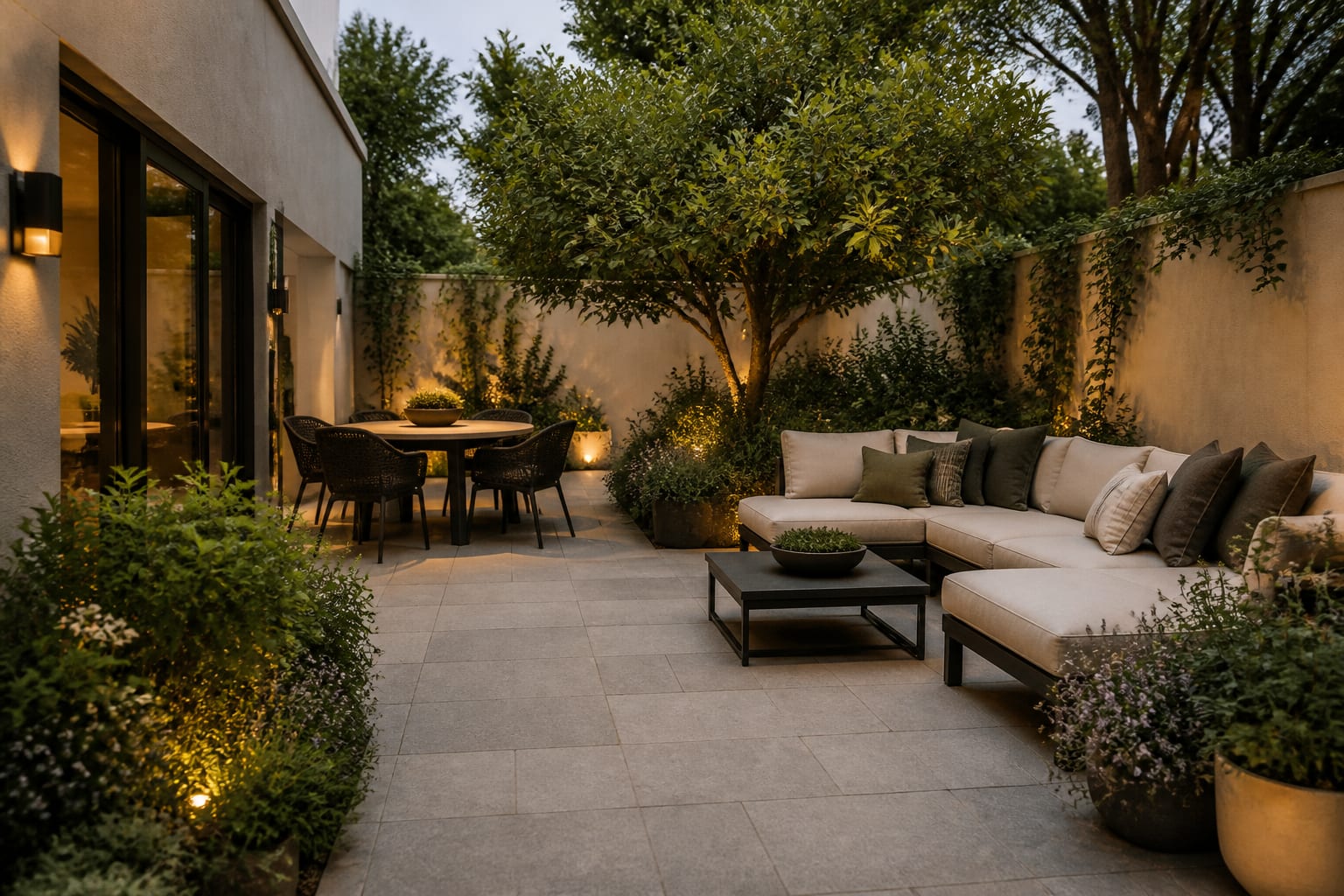
AI patio design ideas let you test layout, shade, furniture scale, lighting, and planting on a photo of your actual patio before spending a dollar. Upload a straight shot of the slab, fence, and door, then generate a few directions - dining-first, lounge-first, or mixed - to see which one solves your space's real problems.
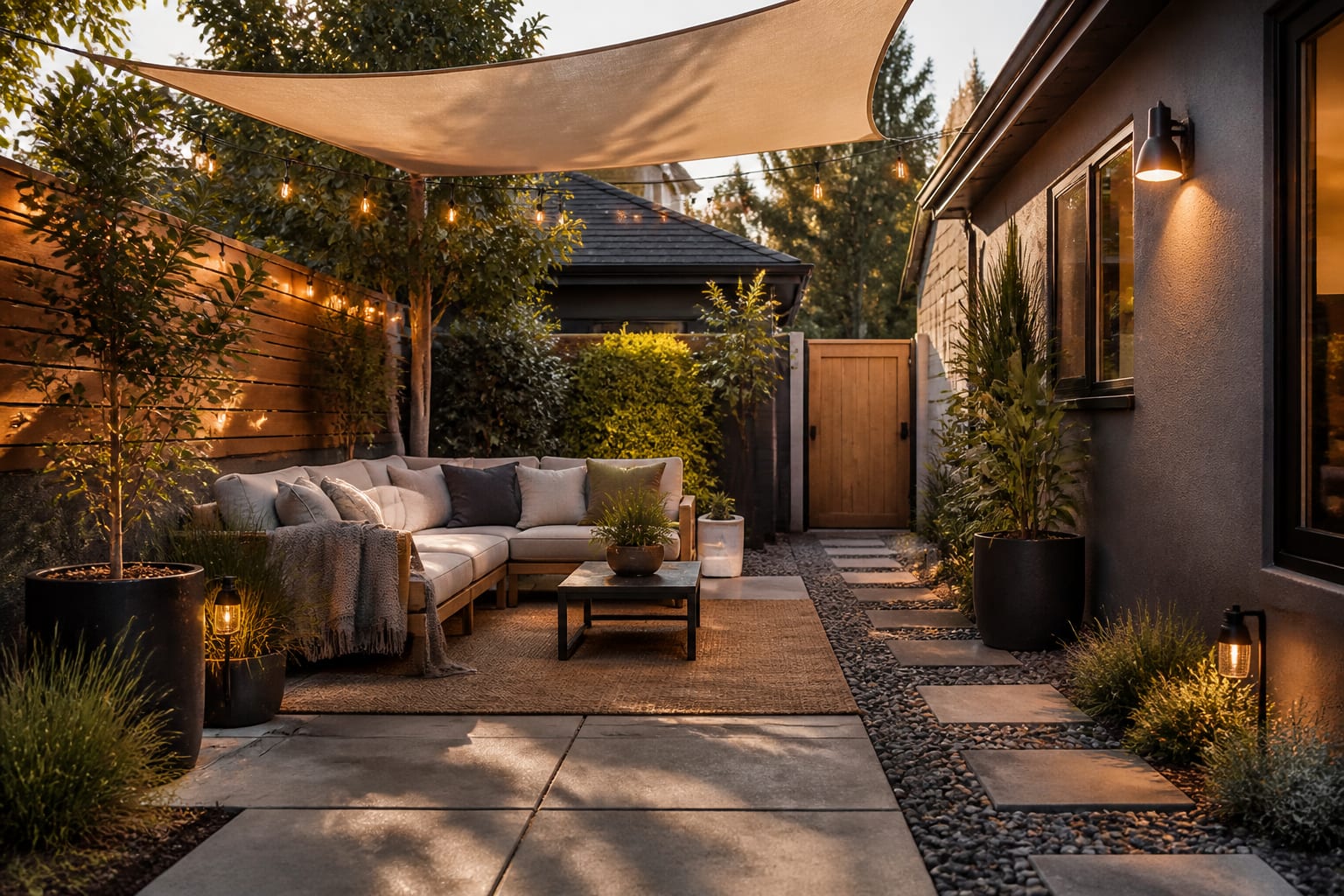
Can AI Actually Design a Patio From a Photo?
Yes. AI can preview furniture scale, shade, lighting, planting, rugs, and surface options directly on your patio photo. It cannot confirm drainage, structural loads, electrical safety, or local permits, but it can show whether the space wants a dining-first, lounge-first, or mixed layout.
Start with a straight-on photo from the door you use most, showing the fence, steps, grill, hose bib, outlets, and existing trees. Keep the awkward corners in frame; the preview only works if it respects the real slab and constraints.
If the patio connects to cooking space, keep the grill visible and compare layouts using these outdoor kitchen layout ideas before placing the dining table. A table that blocks the grill lid or trash route will annoy you every weekend.
What Makes a Patio Feel Like an Outdoor Room?
A patio feels intentional when the center has one clear job and the edges carry enough visual weight to hold it. Bare paving with floating furniture reads as temporary no matter how expensive the pieces are.
- Keep the main path from the house to the yard, gate, or grill near 36 inches wide.
- Give the patio one dominant use: a 6x8 foot corner fits two lounge chairs and a small table; an 8x10 foot zone fits a compact sofa, two chairs, and a rug.
- Budget real pullback for dining chairs, about 30 inches beyond the table edge.
- Soften the edges with 18-24 inch deep planters or 4-6 foot shrubs in large containers for privacy.
Which Patio Ideas Are Worth Previewing Before Buying?
Test one concrete move at a time rather than asking for a vague "beautiful backyard." Each preview should prove the patio still works from the back door.
- Size the rug to the furniture. Try an 8x10 rug for a compact conversation area or a 9x12 rug so all the front legs land on the textile.
- Add shade that covers the seat, not just the photo. A 9-foot umbrella may shade two chairs at noon; a sail or pergola may work better against low side sun.
- Repeat one planter style in multiple sizes. Mixed leftover pots look improvised; larger containers at corners and low pots at walking edges look designed.
- Give the grill a landing surface. A 30-36 inch console or cart solves the "no place to put a plate" problem.
- Plan lighting at human height. Test warm 2700K exterior-rated lamps, shielded sconces, and patio string lights with measured spacing instead of one glaring security fixture.
- Use storage that looks like furniture. An 18-24 inch deep bench or cabinet hides cushions and tools without swallowing a narrow slab.
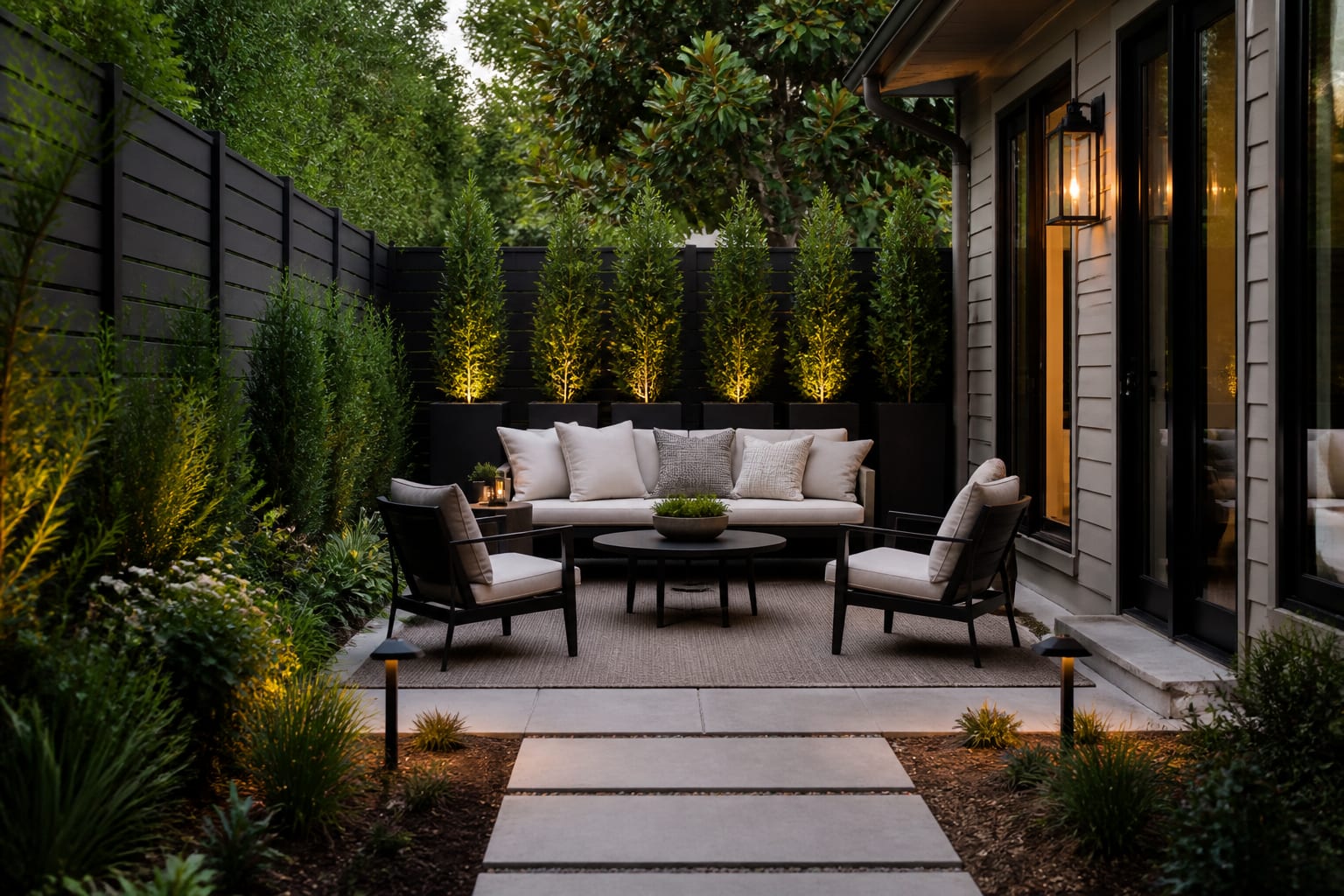
What Patio Design Mistakes Should You Avoid?
The biggest mistake is buying furniture before deciding the patio's job. A sectional that blocks the back door or the path to the grill will frustrate you no matter how good it looks.
- Under-sizing everything on a small patio. One proper loveseat and two slim chairs usually beat four tiny chairs crammed around a tiny table.
- Ignoring the ground plane. Choose an outdoor rug sized to the seating zone that drains well and can be lifted for cleaning.
- Planting too close to circulation. Keep spiky plants and heavy pots 18-24 inches back from tight walking routes.
- Designing only for the first sunny photo. Patios live through rain, pollen, wind, and dark weeknights, so the plan needs a place for the hose and the cushions.
How Do You Use AI to Preview Your Patio Before You Commit?
Treat AI outdoor design as a measured concept test, not permission to ignore the yard. Upload the clearest photo and ask for one direction at a time: dining patio, lounge patio, shaded reading corner, or small-space entertaining setup.
A strong prompt gives the image rules it must obey, for example: "Redesign this 10x14 foot concrete patio with a 36-inch path from the back door, one 78-inch outdoor sofa, two lounge chairs, an 8x10 rug, a 9-foot umbrella, tall planters along the fence, and 2700K warm lighting. Do not change the door, steps, or deck."
Run at least three versions, each prioritizing a different factor: shade, seating, or planting. The winner should keep the same door, fence, and slab while making the space easier to use.
Before buying anything, check the AI image against a tape measure: furniture depth, chair pullback, rug size, umbrella clearance, planter width, grill lid swing, and outlet locations. A good plan makes the first five minutes outside obvious - where to sit, where to walk, and how it looks after sunset.
Frequently Asked Questions
Can AI design my patio from just one photo?
Yes, one clear photo is enough if it shows the full slab, fence lines, door, and any grill or steps. AI uses that image to preview furniture scale, shade, lighting, and planting while keeping the real dimensions and constraints intact.
How wide should the main walking path on a patio be?
Keep the primary path from the house to the yard, gate, or grill near 36 inches wide. A secondary, less-used route can narrow to about 30 inches, but never make that the main traffic lane.
What size umbrella or shade works for a small patio?
A 9-foot umbrella typically shades two chairs at noon but may miss low, side-angled sun. For patios with harsh afternoon light from the side, a sail, pergola, or existing tree canopy usually performs better than an umbrella alone.
Does AI patio design account for drainage and permits?
No. AI previews can show layout, furniture, and style options, but they cannot confirm drainage, structural loads, electrical safety, or local permit requirements. Always verify those details on-site or with a professional before building or installing anything permanent.
What is the most common patio design mistake?
Buying furniture before deciding the patio's main purpose. A sectional or dining set chosen for looks alone often blocks the back door, the path to the grill, or leaves no functional walking route.