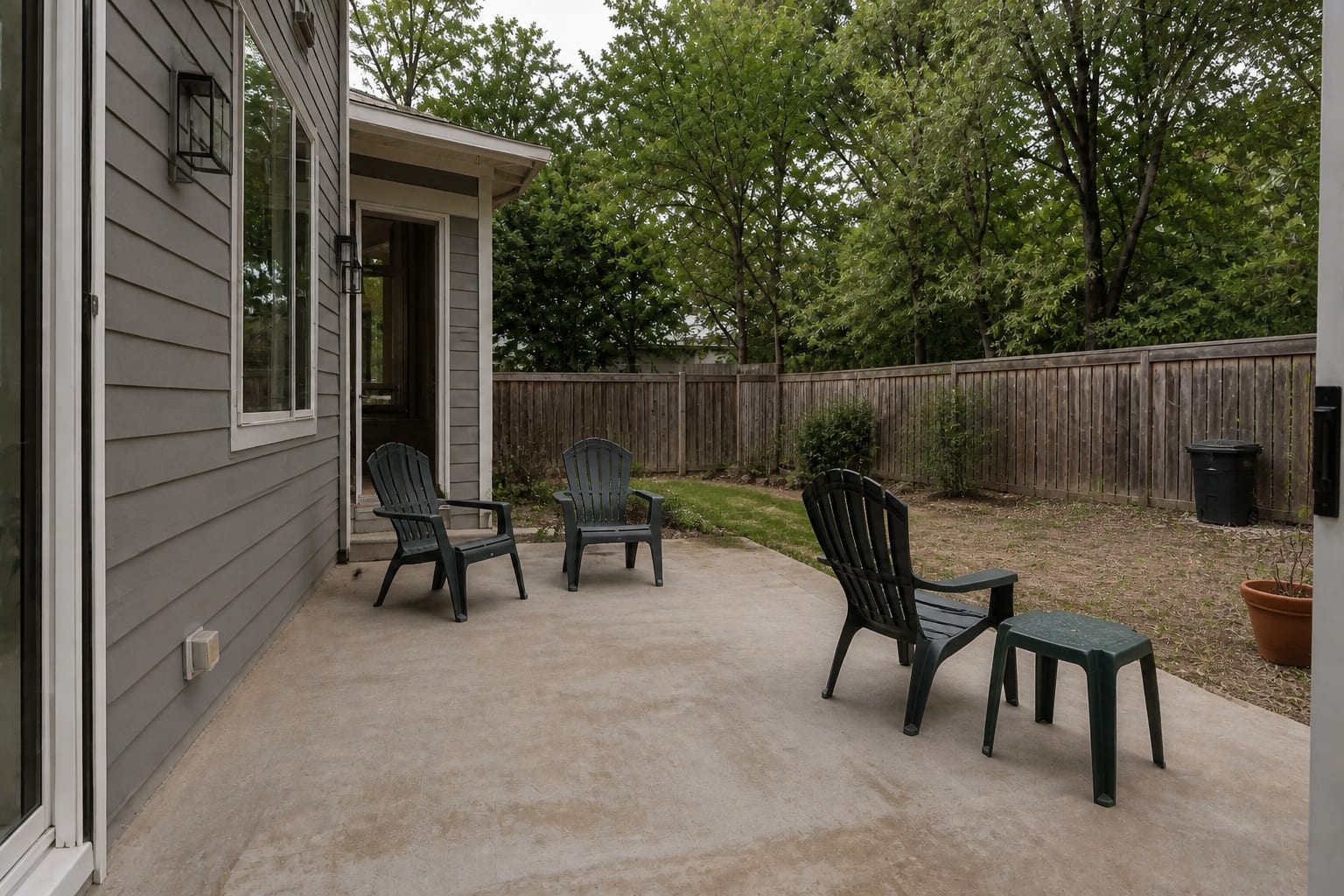
An outdoor rug ideas plan works when the rug is sized so every front leg of the furniture group sits on it, woven from a weather-safe fiber that dries fast, and laid without an underlay that traps moisture. A rug too small makes every chair look stranded — the fastest way to keep a patio from feeling like a finished room.
What makes an outdoor rug actually work outside?
Choose an outdoor rug by matching size to the furniture footprint, picking a weather-safe material for your exposure, and letting pattern define the zone without blocking drainage. Most patio rug mistakes happen because the rug gets chosen like a throw pillow: cute first, functional later.
A good patio rug does three things: it anchors enough furniture to feel deliberate, dries quickly after rain, and repeats a color already present on the house, cushions, umbrella, or trim. A rug that introduces a brand-new palette nowhere else in the scene reads like a clearance-bin experiment.
For uncovered patios, favor flatweave polypropylene, recycled plastic, or PET yarns with a pile under 1/4 inch. A wool-look indoor rug photographs well once, then holds moisture against decking and traps grit under chair legs. If a listing says "waterproof," check the construction — most rugs shed water well, but the patio still needs slope, airflow, and somewhere for water to go.
What size outdoor rug do I need?
Measure the furniture zone first, then pick the rug to support it. For a conversation area, the rug should run at least 6 inches beyond the front chair legs and 12 inches beyond the coffee table where space allows.
| Setup | Recommended rug size |
|---|---|
| Bistro set or two lounge chairs | 5' x 7' |
| Sofa, two chairs, coffee table | 8' x 10' |
| Deep patio with a sectional | 9' x 12' |
| Dining table with chairs pulled out | 9' x 12' (add 24-30 in. beyond table edge) |
Dining rugs need extra allowance: pull every chair out as if someone is sitting down, then add 24 to 30 inches beyond the table edge on all sides. A 72-inch rectangular table with armchairs often needs 9' x 12' rather than 8' x 10'. Skimping here creates chair legs half on the rug, half grinding against pavers.
Keep circulation clear — leave at least 30 inches for the route from the door to the grill, steps, or garden path, and don't let the rug create a tripping lip at a threshold. If the patio doubles as the route to a cooking zone, coordinate clearances with your outdoor kitchen layout, since grease and trays are less forgiving outside.
Test rug sizes on your own patio photo before committing — keep the house edge, hardscape, planting beds, and main path visible so the preview reflects the actual space.
Which outdoor rug ideas solve real patio problems?
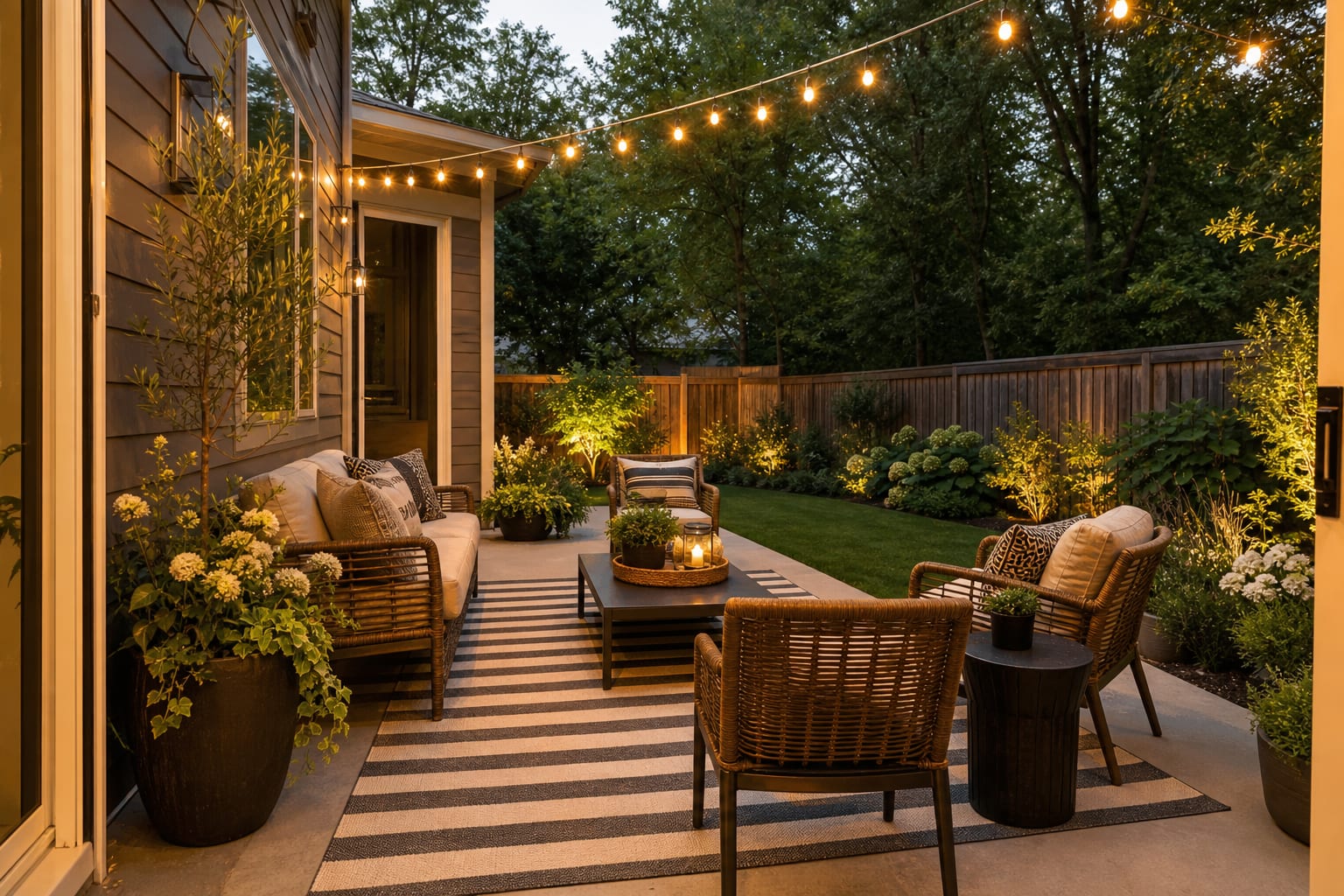
- Widen a skinny patio by running stripes across the narrow dimension, not down the length; keep stripes 3-6 inches wide so they read as architecture, not a beach towel.
- Hide daily wear with a dark ground and lighter pattern — charcoal, indigo, olive, or clay hide tracked soil better than ivory.
- Layer texture, not rugs. A single woven rug over wet concrete can dry; two stacked rugs trap moisture. Add texture through teak, powder-coated metal, or terracotta instead.
- Tie the patio to the house by repeating one exterior color — black trim pairs with a black-and-sand geometric, warm brick pairs with rust or tobacco tones.
- Define an open patio with a bordered pattern (4-8 inch visual edge) to create a "room edge" on a slab with no walls.
- Match round rugs to round layouts only. A 6' or 8' round rug suits a circular dining table or curved lounge chairs, but fights a rectangular sofa.
Covered patios allow softer fibers but still need washable materials and airflow to dry after wind-driven rain. If your seating sits under a roof or pergola, connect the rug choice to the shade and furniture plan the same way you would in covered patio design.
What outdoor rug mistakes should I avoid?
Buying too small is the classic error — a 4' x 6' rug floating under just the coffee table makes chairs look unrelated. Size up until at least the front legs of the main seating pieces touch the rug.
A pale solid rug fails fast on a high-use patio, showing pollen and paw prints immediately; heathered beige or patterned tan gives a light look with more forgiveness. Rough concrete can abrade a rug's underside, slick tile lets it slide, and decking needs airflow — use a thin, outdoor-rated pad only where slipping is a real problem.
Letting the rug cover a drain or low spot causes musty smells even in weather-safe fiber; keep the edge several inches clear of any water path. And don't forget night use — light the seating zone with warm 2700K bulbs hung 8-10 feet up, following the same logic as patio string light placement.
How can I preview a rug before buying?
Upload a straight-on photo from the door or patio corner, then test the same furniture with 5' x 7', 8' x 10', and 9' x 12' rugs at a fixed camera angle to compare real coverage. Change one variable at a time — size, then pattern, then color — since a striped sand-and-black rug and a rust geometric can make the same patio feel entirely different while still preserving door clearance and hardscape border.
Frequently Asked Questions
What size outdoor rug do I need for a patio?
All four legs of the sofa and chairs should sit on the rug — 9ft × 12ft for a standard three-piece seating set, with 8ft × 10ft as the functional minimum that still anchors the group.
What is the best material for an outdoor rug?
Solution-dyed acrylic and flat-woven polypropylene are the two best materials. Both dry in 2-3 hours, resist UV fading for 5-7 years, and can be hosed off and left in the rain.
How do I stop an outdoor rug from blowing away?
Furniture weight alone holds most rugs in still conditions. In exposed, windy spots, use snap-down anchors at all four corners or choose a heavy flat-weave rug rated around 3 lbs/sq ft.
Do outdoor rugs cause mold under paving?
Flat-weave polypropylene rugs dry quickly and rarely cause mold. Thick pile rugs or moisture-trapping underlay pads are the real culprits, causing mold within weeks in humid climates.
How do I clean an outdoor rug?
Hose it off monthly, scrub stains with mild dish soap and a soft brush, then prop it vertically against a fence to fully air-dry. Never leave an outdoor rug rolled up while still wet.
> Try this: Ready to see this on your own outdoor space? Open ReDesign and preview it before you buy materials, plant, drill, or move furniture.
Three transformations to try
1. Striped polypropylene rug under sofa grouping 2. Natural fiber-look rug with lounge chairs 3. Bold geometric rug anchoring dining table