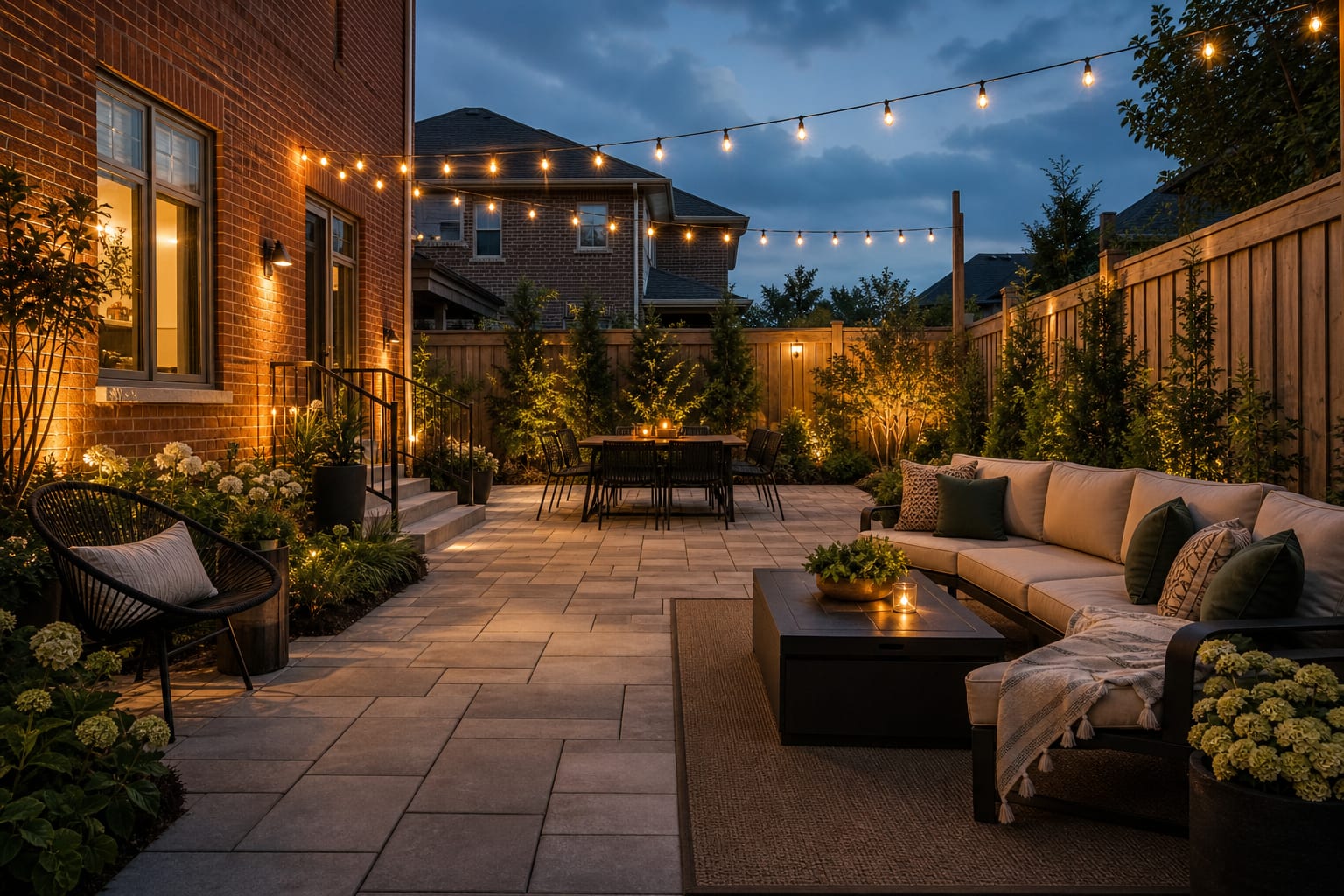
The best patio string light ideas hang strands in a defined geometry — parallel rows, a single diagonal, or a perimeter loop — at 9 to 10ft height on 1/8in stainless cable anchored to posts or beams, using warm 2700K bulbs so the patio feels finished instead of strung together like holiday leftovers.
What makes patio string lights feel intentional instead of temporary?
String lights feel intentional when they form a ceiling over the space people actually use, not an outline traced along the fence because it's easy. On a 10 by 12 foot patio, one clean rectangle or soft V beats four random diagonals crossing the slab.
Start with the furniture footprint. A dining table wants light centered over the top and slightly past the chair backs. A lounge area works well with two parallel strands running above the seating, with the outer lights sitting 18 to 24 inches beyond the furniture edge. Keep bulbs away from the grill zone where heat and smoke will fight the cord.
Height matters more than most expect. Keep the lowest point above your tallest regular user's head, with 8 feet as a minimum and 9 to 10 feet reading more polished on a larger patio. A gentle swag is part of the look; a deep belly over a doorway just gets in the way.
Which mounting setup should you use?
The project depends on whether the patio already has overhead structure. A covered porch, pergola, or beam gives obvious anchor points. An open slab needs posts, poles, or a house-to-fence run that can handle tension without leaning the fence over.
For wood posts or beams, use exterior-rated screw eyes and pre-drill the hole so the wood doesn't split. For masonry, use proper anchors rather than forcing a screw into mortar. Be cautious with stucco — water intrusion from a casual hole isn't worth one strand of lights.
Freestanding poles work when the patio sits away from the house. A common setup is a 4x4 post set in a heavy planter with gravel and concrete; windy yards may need posts set directly in the ground. Renters should consider a weighted pole kit instead of attaching lights to siding they can't repair.
Use guide wire for long spans. Any run past about 20 feet looks cleaner clipped to a 1/8 inch stainless cable instead of carrying its own weight, which also keeps the strand from stretching like a clothesline.
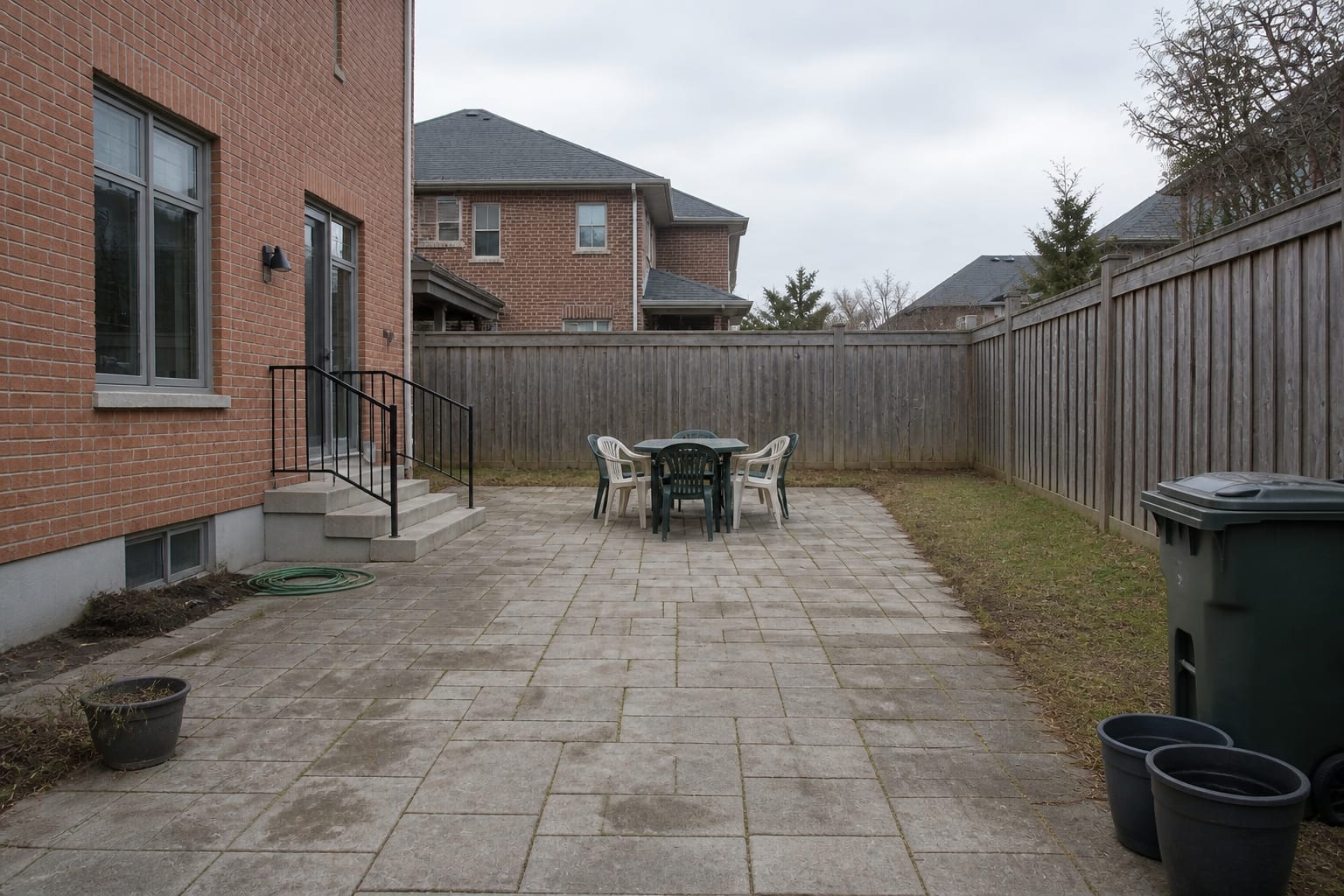
Test this on your own photo with ReDesign — keep the house edge, hardscape, planting beds, and main path visible so the preview solves the space you actually have.
Five patio string light layouts that solve real problems
- Perimeter rectangle over the dining zone for a flat-feeling patio. Keep it 18 to 30 inches wider than the table footprint so people stay in the glow when they push back their chairs.
- Soft zigzag over a narrow patio to make a skinny space feel wider. Anchor each turn to solid structure and use 6 to 8 foot spans instead of nervous 3 foot turns.
- House-to-post cafe run when the patio backs onto open yard. Set the rear posts just outside the furniture zone so the cord frames seating instead of slicing across the walkway.
- String lights plus a rug when furniture floats on a large slab. A 6 by 9 foot outdoor rug suits a four-seat grouping; see outdoor rug ideas for patios for weaves that dry instead of trapping damp.
- String lights as secondary light near an outdoor kitchen. Let sconces or under-counter fixtures handle the grill and run warm strands over the dining edge only; check outdoor kitchen ideas before placing posts where a counter may go later.
What mistakes ruin the look?
Buying overly bright bulbs is the fastest way to kill the mood — high-output bulbs make skin look harsh and draw attention to bugs. Choose lower-output warm bulbs for seating and add task lighting only where you cook or climb steps.
A cord pulled too tight rarely stays straight outdoors and stresses the socket joints in wind. Build in a controlled swag and support longer runs with cable so the dip looks designed, not defeated.
Don't run an extension cord across a door threshold or under a chair leg because the outlet is far away. Use an outdoor-rated cord where needed and call an electrician for a new exterior outlet or switching.
Mixing bulb styles — globes, Edisons, fairy lights, lanterns — across one small patio looks chaotic. Pick one main bulb shape for the overhead run and let lanterns or candles add a lower layer if you want more texture. Check replacement bulb availability before buying a specialty strand, since one dead socket at the center will bother you nightly.
How can AI design help preview the layout?
Upload a straight photo from the door or main seating approach, then preview a rectangular canopy, a house-to-post V, and a parallel run over the same furniture. The useful result is the one where the lights hold the seating without blocking the path, window view, or grill lid.
Give the prompt real limits: patio size, outlet location, fence height, furniture footprint, and bulb warmth. For example: 10 by 12 foot concrete patio, black cafe lights on guide wire, 2700K bulbs, two wood posts behind the sofa, dining table near the house, clear 36 inch path from sliding door to yard. It won't replace measuring, but it reveals awkward lines before you buy three strands and spend Saturday moving hooks.
Frequently Asked Questions
How high should patio string lights hang?
Hang strands 9 to 10ft above the patio surface so bulbs clear seated and standing heads while still pooling warm light on the table. Below 8ft people walk into bulbs; above 11ft the light scatters and loses its warmth.
What bulb color reads warmest on a patio?
S14 or G40 incandescent-look LED bulbs at 2200 to 2700K read warm and golden. Cool-white 4000K bulbs read like a parking lot and cancel the ambient effect most patios are going for.
Do string lights need their own circuit?
A single 100ft LED string draws under 60W and runs fine from a standard 120V outdoor outlet. If you add four or more strands plus a heater, plan a dedicated 15A circuit so the GFCI doesn't trip.
Cafe lights or fairy lights for a patio?
Cafe-style S14 or G40 bulbs read finished and intentional, while fairy lights read holiday and disappear in daylight. Most patios want cafe lights as the primary system, with fairy lights only as a garland accent.
How do I anchor string lights without trees?
Mount 4x4 cedar or steel posts in concrete-set buckets or surface brackets, then run 1/8in stainless cable post-to-post and hang lights from the cable. This looks engineered and holds up in wind.
> Try this: Ready to see this on your own space? Open ReDesign and run the preview.
Three transformations to try
1. Parallel rows of cafe lights over dining patio 2. Single diagonal string from house to corner post 3. Perimeter loop string lights on cedar posts