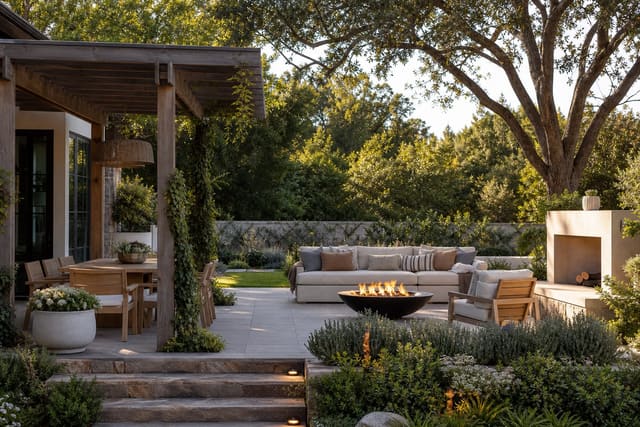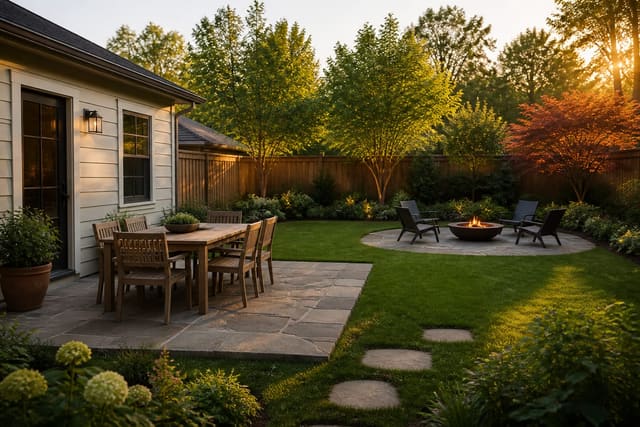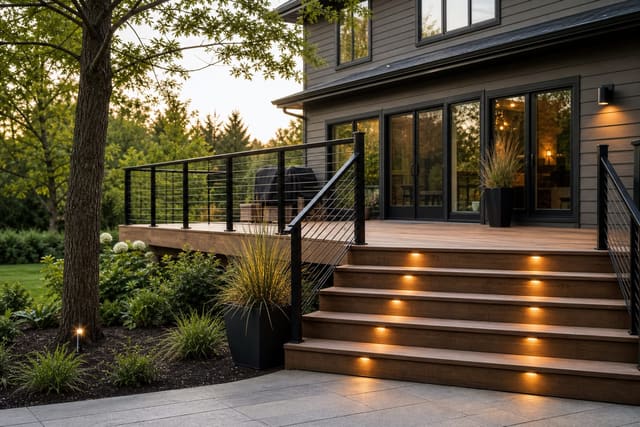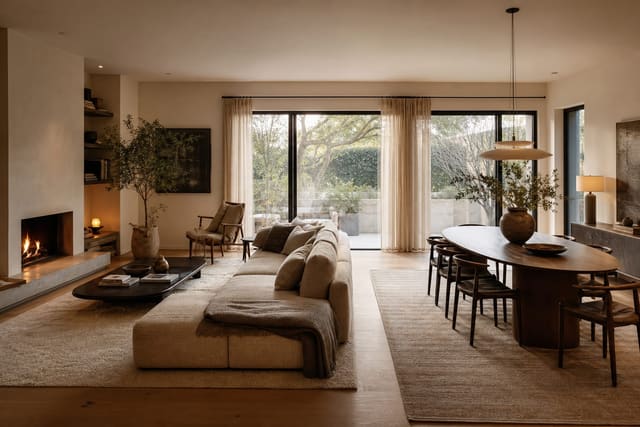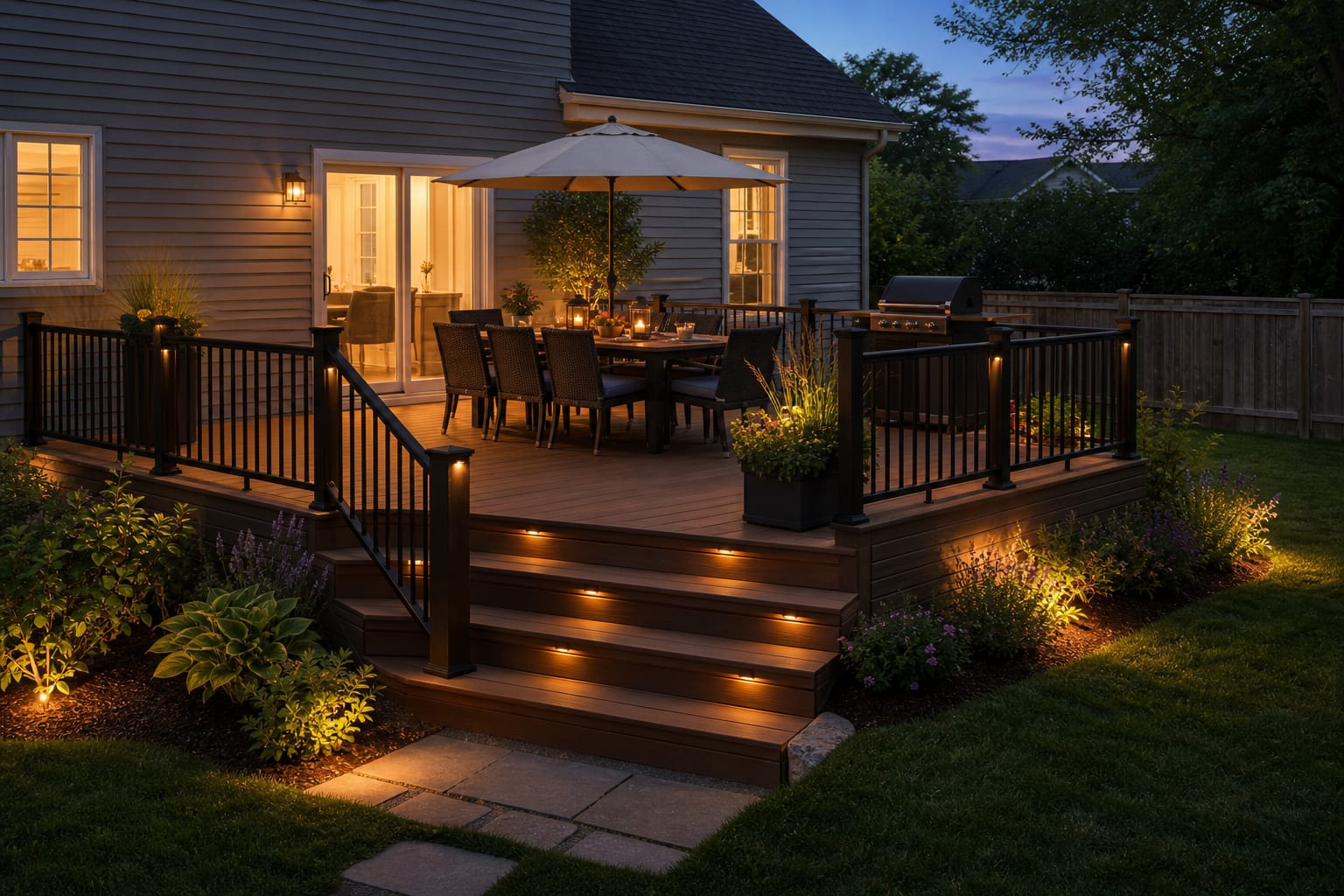
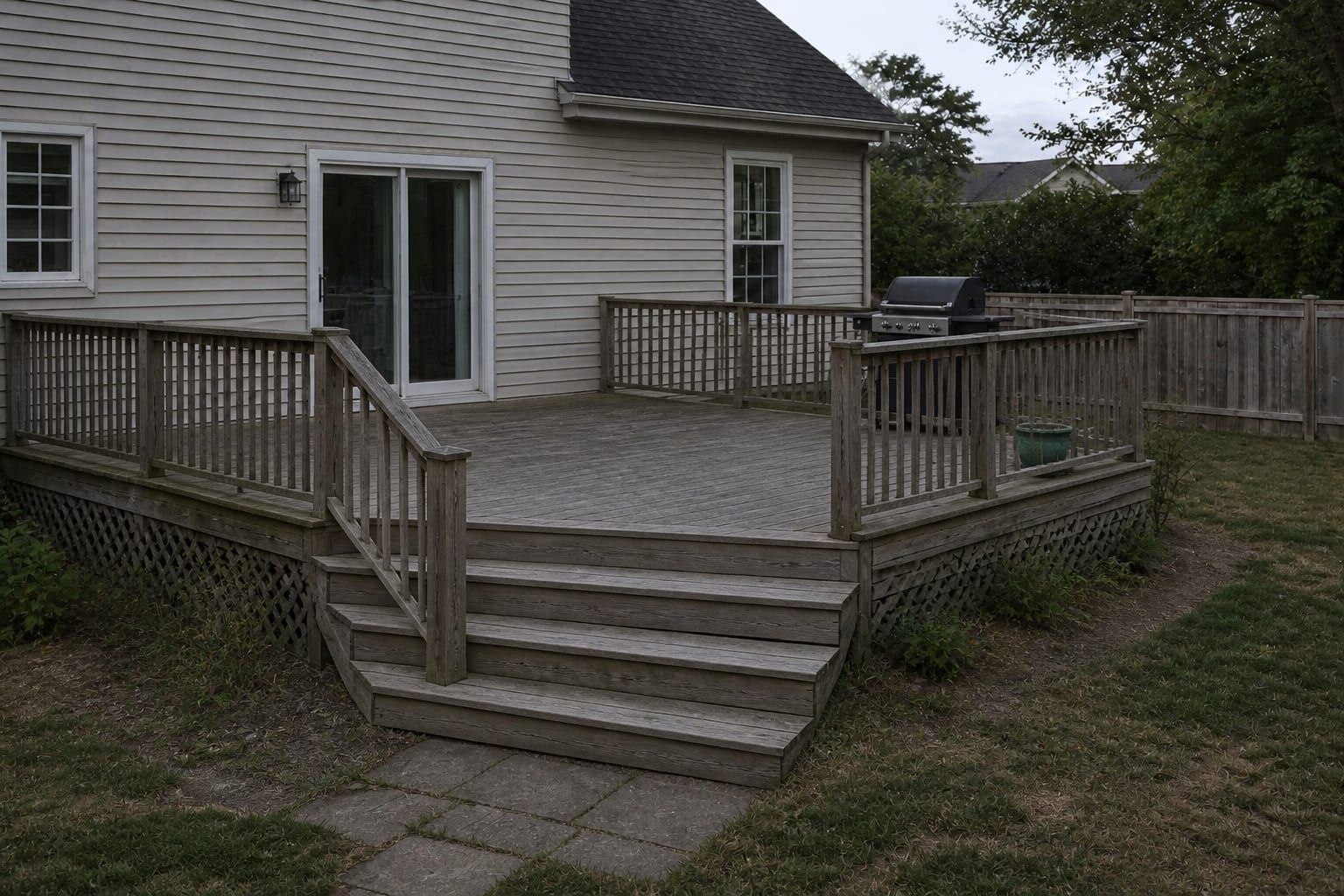
A deck reads as designed when the surface sits no more than 24in below the interior floor, the railing reads as architecture rather than an afterthought, and dimensions follow seating math (12 by 16ft minimum for dining and lounge zones to coexist). The best deck design ideas start with how the deck meets the house, not the color of the boards — get that connection right and materials, furniture, and lighting fall into place.
What makes a deck feel connected to the house and yard?
A deck feels connected when the door, floor height, stairs, railings, and furniture zones read as one route from inside the house to the best part of the yard. Most homes need a deck that handles coffee, dinner, a grill, wet towels, kids, and one quiet chair outside the traffic lane — not a viewing platform.
Start by mapping the path from the kitchen or living room door. If the grill sits 22ft away and guests must cross through dining chairs to reach the stairs, the layout will irritate no matter how nice the boards look. Keep the main route wide and obvious; let furniture sit beside it, not in it.
Railing is the second connection point. A thick railing can box in a small deck; a too-light one can look flimsy against a heavy house. Overlooking a garden, pool, or long lawn calls for a look at deck railing sightlines before defaulting to balusters — repeating the house trim color with a thinner infill often reads calmer than contrast.
Stairs matter too. A single narrow run can make a big deck feel like an exit ramp, while wide steps or a landing aimed at the lawn pull the deck into the landscape. Where grade allows, a 48 to 60in wide stair feels more generous than a minimum-width run and leaves room for planters, pets, and guests.
Which deck material should carry the design?
Choose material for exposure, maintenance tolerance, budget, and house style — board color is only one factor. Wood brings warmth and variation; composite deck design gives consistency and lower upkeep. The wrong choice is whichever one you'll resent maintaining.
| Deck material | Better fit when | Spec to check before buying |
|---|---|---|
| Pressure-treated wood | Budget matters and you accept staining/sealing | Board grade, fastener type, maintenance schedule |
| Cedar or redwood | You want a softer look in covered or shaded areas | Exterior-rated fasteners that won't stain the wood |
| Capped composite | You want consistent color, lower maintenance | Heat gain, slip rating, board span, fascia match |
| PVC decking | Heavy moisture or pool traffic | Joist spacing, manufacturer expansion guidance |
Color matters most where the deck meets the house. Bring samples outside and hold them against siding, trim, stone, and the door threshold at noon and near sunset — sun shifts undertones fast. Board direction is a quiet design lever: boards parallel to the house widen the deck visually, while boards running toward the yard pull the eye outward. Keep the palette to two board tones; a third usually reads busy before a chair arrives.
Test a layout on your own photo with ReDesign, keeping the house edge, horizon, hardscape, planting beds, and main path visible so the preview solves the actual space.
Which deck features actually deserve space?
Good backyard deck ideas earn their footprint by solving comfort, circulation, or storage — decorative extras come after the deck works.
- Built-in bench: Use one to replace loose furniture, not to trap movement. A seat 18in high and 18-22in deep can wrap a corner or hide storage, but keep a clear walking lane in front.
- Partial pergola: Cover the dining or lounge zone rather than the whole deck. Keep 7ft head clearance and choose rafters or louvers for your actual sun direction.
- One clear grill station: Give landing space on both sides. For layout logic, see deck railing safety and materials.
- Layered lighting: Low step lights, a door sconce, and string lights 8-10ft above the surface — useful reference in deck flooring options for roofless decks.
- Planters: 18-24in diameter containers hold enough soil for shrubs, grasses, and seasonal flowers to survive hot stretches while softening railings.
A multi level deck works when it follows the yard's slope or separates noisy and quiet zones. It becomes a hazard when levels are purely decorative — one step down to a lounge feels natural, three random platforms become a furniture puzzle.
Common deck mistakes that make new builds feel awkward
- Sizing from the wall, not the furniture. A 12 by 16ft deck shrinks fast if a table, grill, stairs, and door swing all land in one corner — tape the furniture footprint before approving framing.
- Ignoring the underside. Open framing and patchy gravel below a raised deck read as unfinished; skirting, lattice, slats, or planting fix it while allowing ventilation.
- Choosing railings last. Posts affect framing, stairs, and furniture placement — test railing height and infill from a seated position, not just standing.
- Making every level the same. A multi level deck should clarify activity (dining near the kitchen, lounge toward the view); if a level change doesn't improve privacy or circulation, skip it.
- Forgetting water. Boards, joists, flashing, and planters all manage rain and snow — leave technical waterproofing to proper building details, but don't design a bench or rug placement that traps moisture against the house.
Should you preview your deck design with AI first?
Yes — the expensive deck errors are usually proportion, not taste, so a preview catches them before framing. Photograph the back of the house with the door, windows, grade change, stairs, fence, trees, and full deck footprint visible, then test a wood deck, a composite deck design, a darker railing, a wider stair, and a multi level layout from the same angle.
Judge massing: Does the deck look too heavy against the house? Does a black railing sharpen the view or chop it up? Does the dining zone have a believable path from the door? A preview should not replace structural drawings, permits, railing code, joist spans, or manufacturer instructions — confirm every dimension with a deck professional once the direction looks right.
Frequently Asked Questions
What is the minimum size for a usable deck?
12 by 16ft is the minimum for a deck that holds a dining table for six plus a small lounge zone without one canceling the other. Below roughly 10 by 12ft, the deck can only support one zone at a time.
How high should a deck sit relative to the interior floor?
The surface should sit 24in or less below the interior floor so the threshold feels continuous with the kitchen or living room. Deeper drops fragment the inside-outside connection and usually require a step landing.
Composite or wood for a new deck?
Composite costs 30 to 50 percent more upfront but eliminates sanding, sealing, and stain cycles for roughly 20 years. Pressure-treated wood costs less initially but compounds annual maintenance into a higher lifecycle cost.
What railing style works on a contemporary deck?
Cable railing, glass panels, or horizontal aluminum slats read as architecture, while vertical 2x2 wood pickets read traditional and block sightlines. Pick the railing style first, then design the framing to match it.
Do I need a permit for a new deck?
Yes, almost every U.S. jurisdiction requires a permit for any deck over 30in off the ground or attached to the house. Expect plan review, a footing inspection, and a final inspection on a typical residential build.
> Try this: Ready to see this on your own space? Open ReDesign and run the preview.
Three transformations to try
1. Composite deck with cable railing and integrated bench 2. Wraparound deck with multiple zones and step-down 3. Low platform deck flush with the interior floor