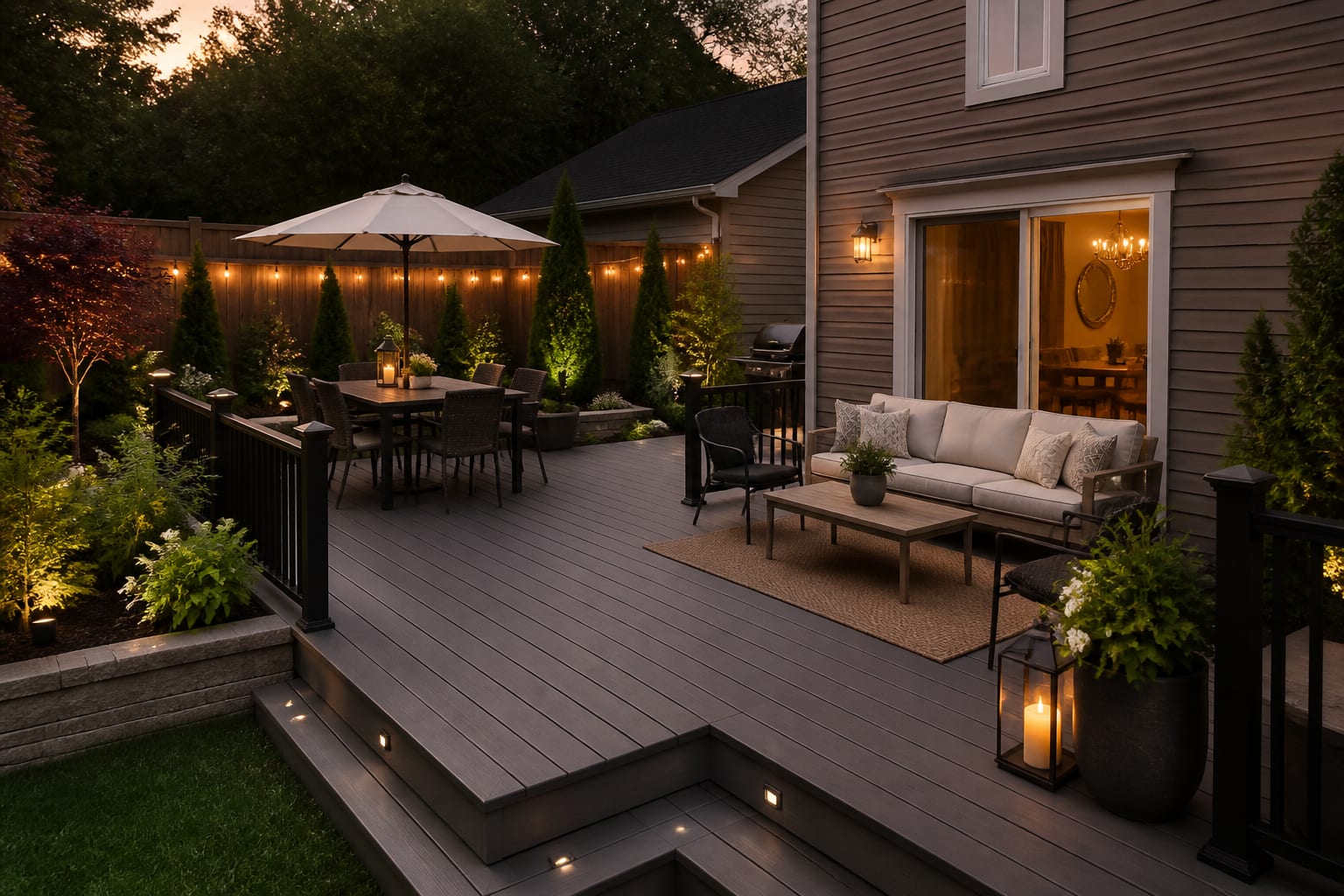
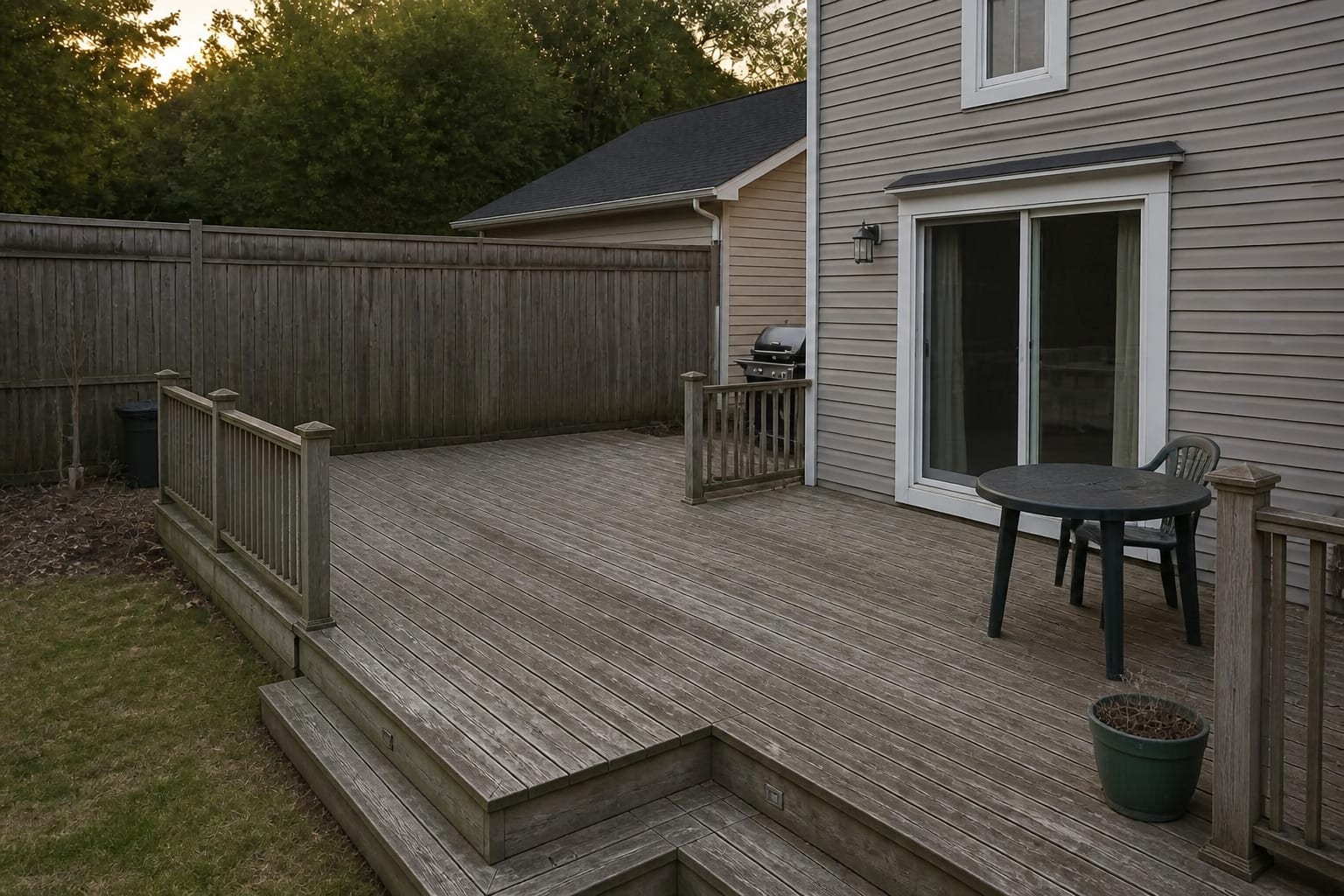
Composite decking at $30-$45 per square foot installed is the best all-around choice for most homeowners, balancing cost against near-zero upkeep. Pine is cheaper but demands frequent staining, ipe looks best but needs yearly oiling, and porcelain tile beats both on maintenance for flat, well-drained decks. The right pick depends on your budget per square foot and how many weekends a year you'll give to upkeep.
How do wood, composite, and tile compare on cost and lifespan?
These are installed costs for a typical 300-square-foot deck, based on contractor mid-range pricing rather than the cheapest big-box quote.
| Material | Cost / sq ft | Lifespan | Upkeep | Look |
|---|---|---|---|---|
| Pressure-treated pine | $15-$25 | 10-15 yrs | Stain every 2-3 yrs | Knotty, ages gray |
| Cedar | $20-$35 | 15-20 yrs | Seal every 2 yrs | Warm, silvers over time |
| Composite | $30-$60 | 25-30 yrs | Wash only | Uniform, matte |
| Ipe hardwood | $40-$70 | 40+ yrs | Oil yearly | Rich, dense grain |
| Porcelain tile | $25-$50 | 50+ yrs | Sweep, rinse | Stone or wood-look |
The lifespan column hides the real cost. Staining a 300-square-foot pine deck runs roughly $250 in materials plus a weekend, repeated ten times over the deck's life. Composite costs more upfront but asks for almost nothing after, which is why busy households usually come out ahead choosing it.
Is wood or composite decking the better choice?
Wood wins on upfront price, easy tool-and-fastener work, and looks: a freshly oiled ipe board beats any composite on the shelf. The catch is the maintenance contract you sign without reading it. Skip sealing for three years and a wood deck checks, cups, and grays, and fixing it means sanding, not just recoating.
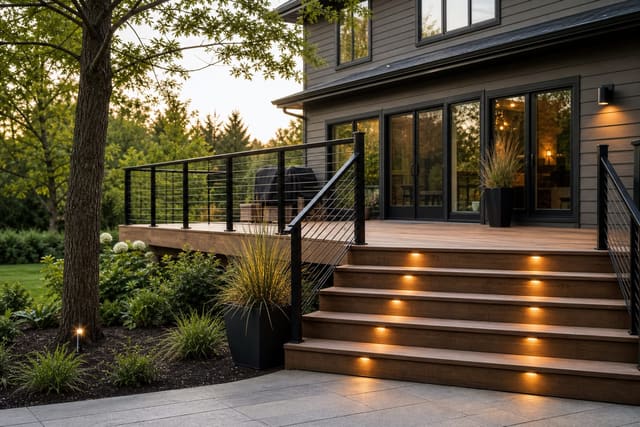
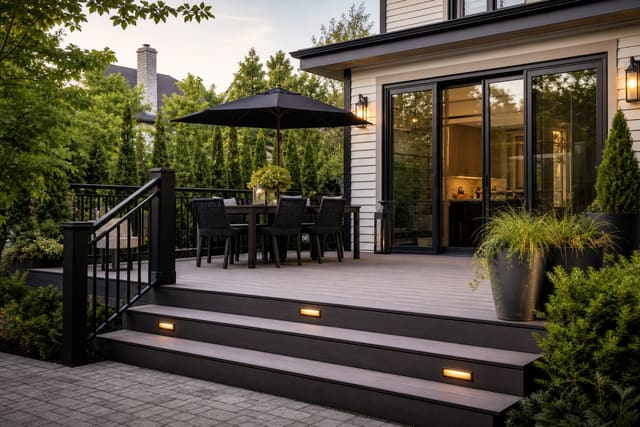
Composite trades that ritual for a higher receipt. Modern capped composite resists stains, fading, and mold, and a hose-down twice a year keeps it looking new for 25 years. It does get hot underfoot in direct sun and costs nearly double pine, though newer capped boards have shed the "plastic" reputation of older uncapped ones. Match your railing material to the boards so the structure reads intentional, as covered in these deck railing ideas.
When does porcelain tile beat wood and composite?
Porcelain tile is the option most homeowners skip, yet it outperforms wood and composite on a rooftop, balcony, or any flat, well-drained frame. Set on adjustable pedestals over a waterproof membrane, 2-centimeter porcelain pavers cost $25-$50 installed and last 50 years with nothing but sweeping. They don't rot, splinter, fade, or stain, and a wood-look glaze fools most guests, but tile needs a dead-level, structurally sound base since a flexing wooden frame will crack grout or rock the pavers.
Consider it when:
- Your deck sits over a roof, garage, or concrete slab that drains well.
- You want the surface to match indoor flooring for a seamless transition.
- You're finished with staining for good.
- Fade resistance matters because the deck bakes in full afternoon sun.
For a fuller layout plan tying the surface to seating and sightlines, these deck design ideas help you decide where each material should go.
Which material fits your deck and climate?
A ground-level deck off a busy kitchen earns composite, since spills and traffic are constant and sanding is never appealing. A remote second-floor deck used twice a month can stay pine, since light use makes both the maintenance burden and the savings real. A rooftop terrace calls for porcelain tile, since rot and standing water are the real enemies up there.
Run the 25-year math before falling for a sample board; multiply upkeep cost and your hourly time across the deck's life, and cheap materials often lose. Climate matters too:
- Hot, dry regions: dark composite can hit 160°F in full sun, so choose a lighter board or add shade.
- Wet, freeze-prone climates: pine that never fully dries between rains rots faster than its rated lifespan, favoring composite or tile.
- Coastal salt air: corrodes fasteners fast, so use stainless or coated hardware regardless of board choice.
Installation labor also changes the math. Ipe is dense enough to dull blades and needs pre-drilled screws, adding hours that raise the per-square-foot install price even though the board itself is reasonable. Composite installs faster with hidden-fastener clips, and pine is quickest of all, so factor the labor line, not just the material line, when comparing quotes.
Use AI design to preview your deck flooring before you buy
A 6-inch sample chip tells you nothing about how a full deck reads in your light. Upload a photo of your existing deck or bare frame to Re-Design's AI design tool and it re-renders the same surface in cedar, gray composite, rich ipe, or wood-look porcelain tile so you can judge the full field at once.
Try several finishes on the same photo, then compare each against your siding and railing. Seeing the whole deck rendered in your own yard keeps you from committing to a board that looked great in the store and clashed at home.
Frequently Asked Questions
What is the cheapest decking material?
Pressure-treated pine is cheapest to install, at $15-$25 per square foot, but it needs restaining every 2-3 years. Factoring in ten restaining cycles over 25 years, its total cost can approach or exceed composite, which costs more upfront but needs only occasional washing.
How long does composite decking last compared to wood?
Composite decking typically lasts 25-30 years with just soap-and-water cleaning, versus 10-20 years for pine or cedar that require regular staining or sealing. Ipe hardwood can outlast composite at 40+ years but needs annual oiling to keep its color.
Is porcelain tile a good option for a deck?
Yes, on flat, well-drained decks like rooftops, balconies, or concrete slabs. Porcelain tile costs $25-$50 per square foot installed, lasts 50+ years, and resists rot, fading, and stains, but it needs a dead-level, rigid base and isn't suited to a flexing wooden frame.
Does composite decking get too hot to walk on?
Dark composite boards can reach up to 160°F in direct summer sun, hotter than most wood. Choosing a lighter-colored composite or adding shade over sun-exposed sections reduces surface temperature significantly.
Which decking material needs the least maintenance?
Porcelain tile needs the least upkeep, just sweeping and occasional rinsing, followed closely by composite, which only requires a hose-down. Wood species like pine, cedar, and ipe need staining, sealing, or oiling every 1-3 years to prevent rot and fading.