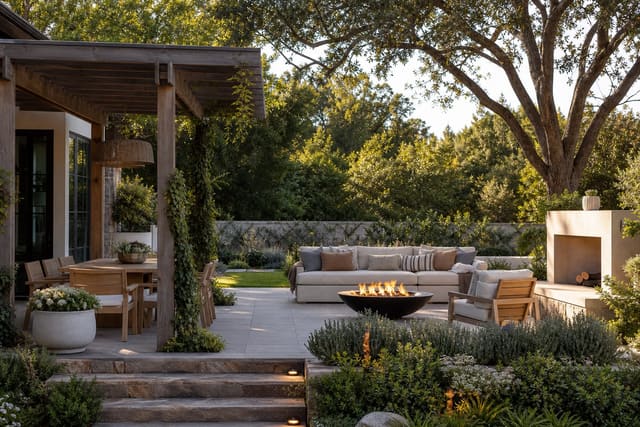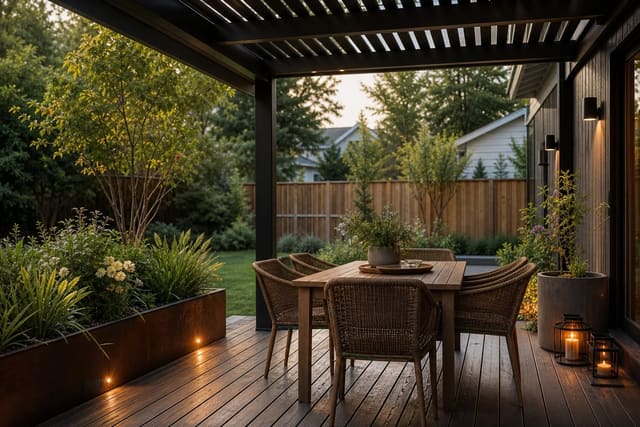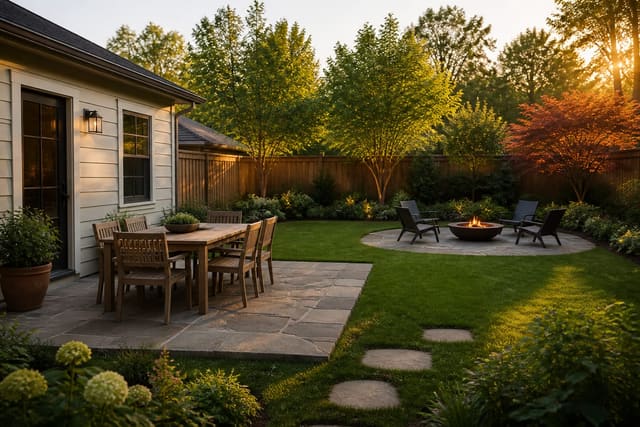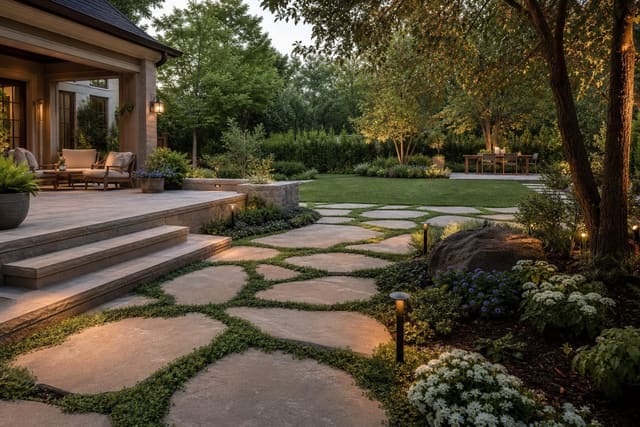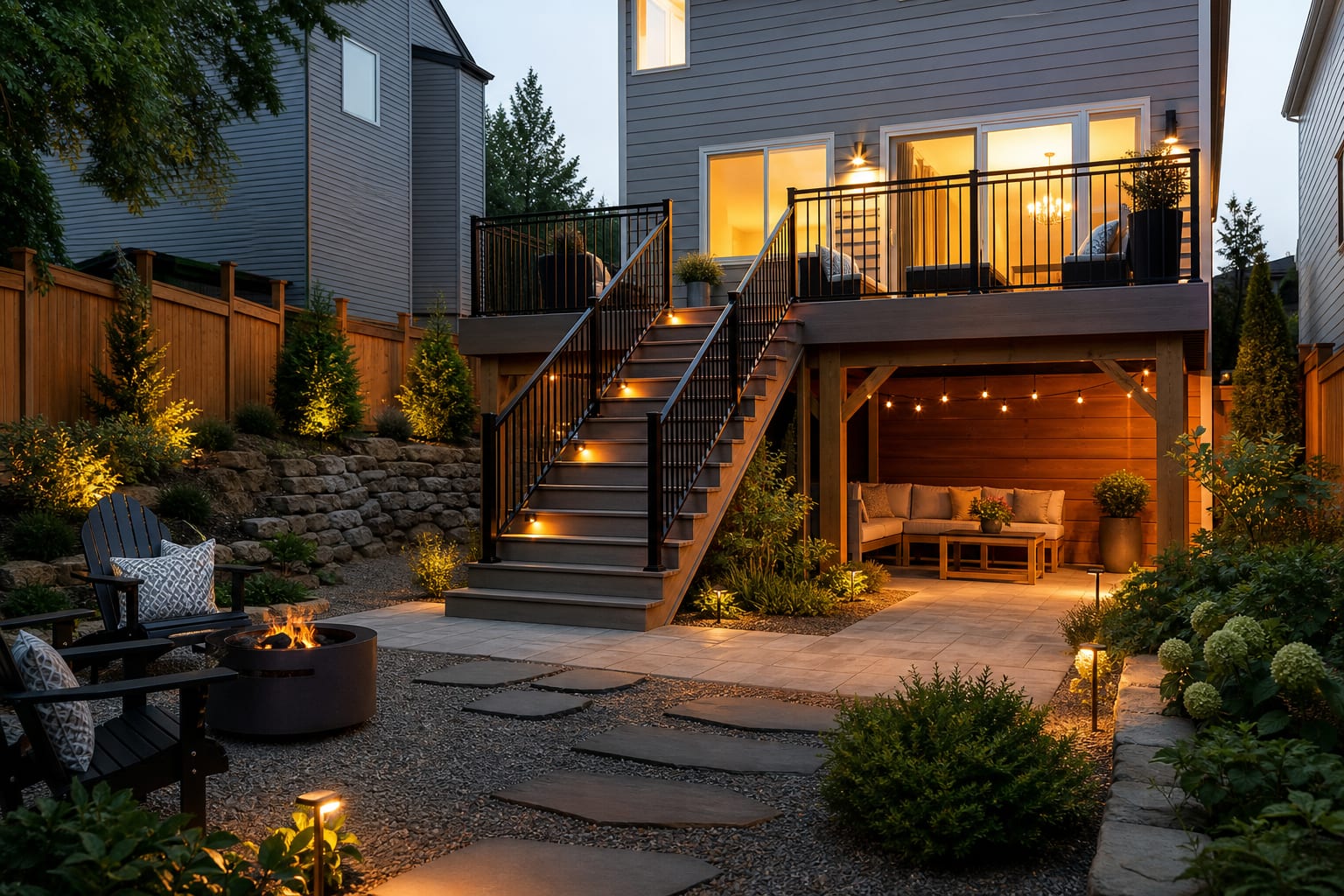
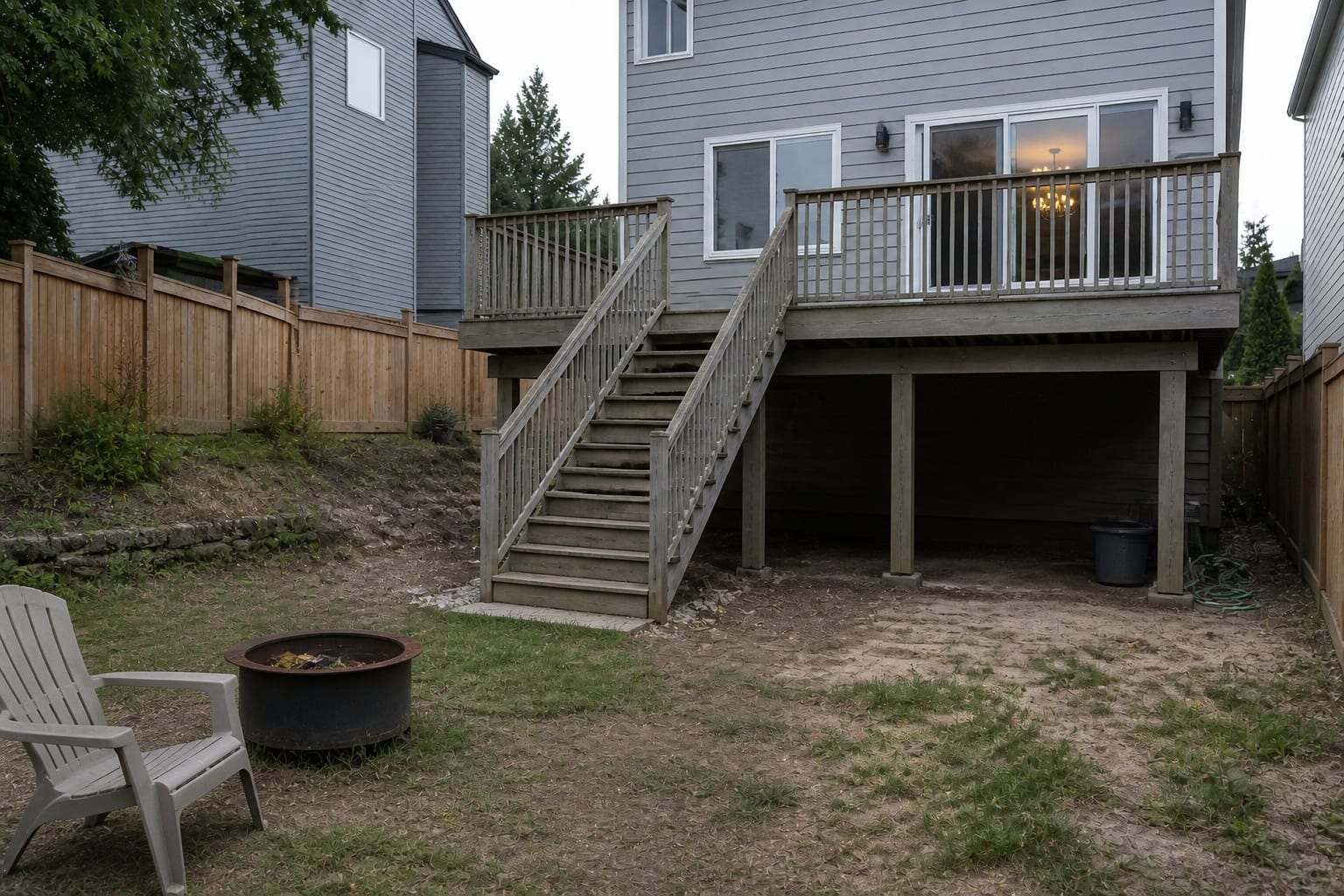
A raised deck looks planned when broad stairs (48in+) drop to a defined patio, posts are clad in stone veneer or hidden by skirting and planting, a slim black metal or cable railing keeps sight lines open, and under-deck drainage delivers a usable dry space instead of mud below.
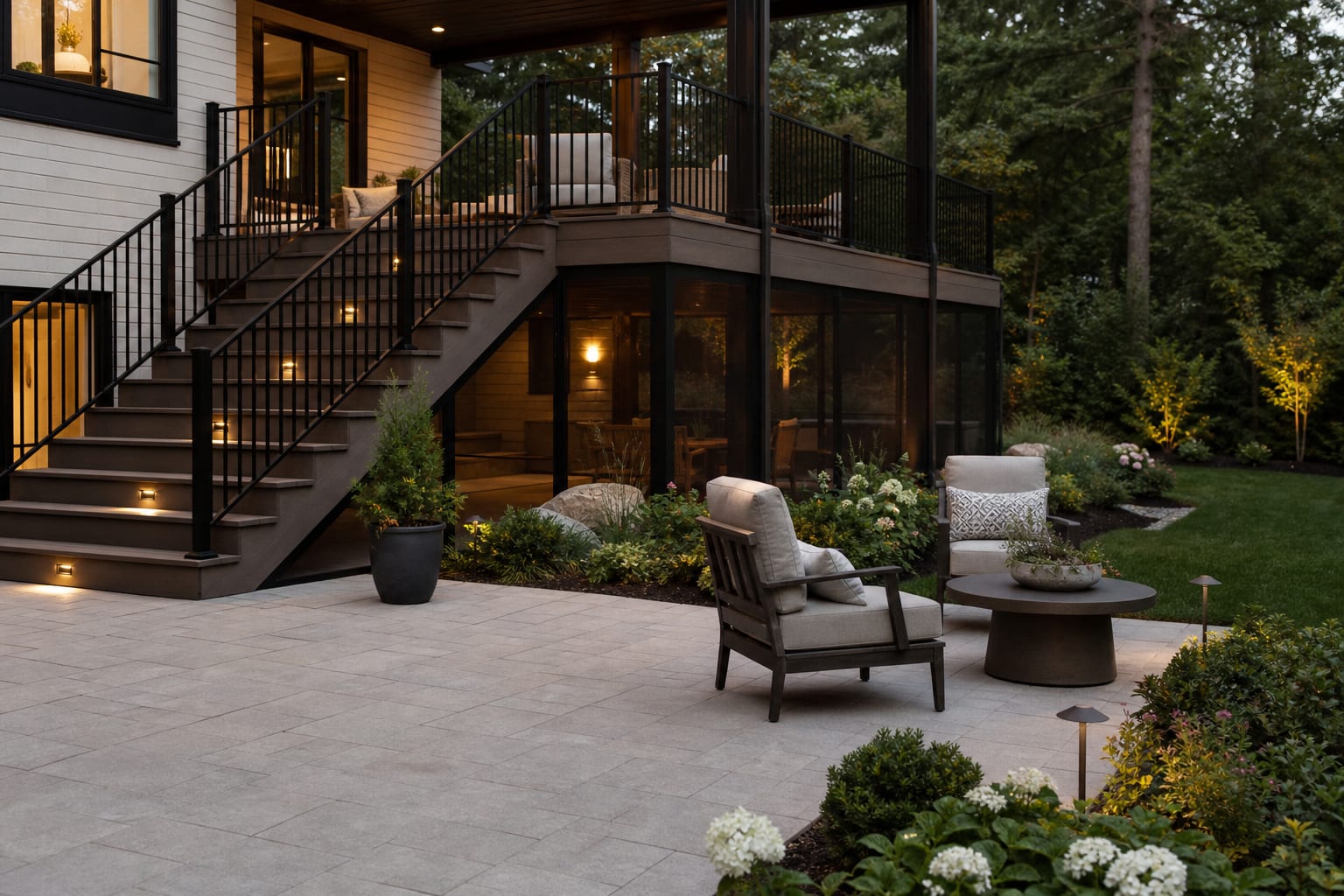
What makes a raised deck look planned from the ground?
A raised deck reads as planned when posts, beams, stairs, railings, and the underside form one composition from the yard. The common mistake is designing only the floor surface, then discovering the view from below is diagonal bracing, clutter, and a stair that lands in the wrong spot.
Align posts with house corners, window bays, or deck edges where structure allows; random spacing makes even a solid build look improvised. Discuss spans, footings, frost depth, and ledger requirements with a qualified builder or engineer before committing to a floating look.
Guardrails set the visual weight at eye level. Many codes require guardrails around 36in high, with some jurisdictions requiring 42in, so confirm local rules first. Slim black balusters or cable preserve the yard view better than bulky wood; glass protects wind-prone dining zones but shows spots near trees and grills.
Give the underside a real material plan. Where the ground is usable, add drainage, gravel, pavers, lighting, or seating instead of leaving mud and stacked tools. Where clearance is too low for people, use vertical slats, lattice, planting, or aligned storage doors. For the ground-level landing, stepping stone patio ideas keep it drained and walkable without paving the whole yard.
Which raised deck layout fits the house and yard?
The right layout depends on where people exit the house, what they look at, and how they move down. A kitchen deck wants a direct dining surface; a bedroom deck needs privacy; a deck above a walk-out basement must coordinate with lower-level doors and seating.
| Raised deck layout | Best use | Spec to copy | Watch out |
|---|---|---|---|
| Straight rectangular | Kitchen doors, simple facades | 10-12ft projection for dining/lounge | Looks like a shelf if underside is ignored |
| L-shaped | Corners, view changes, grill separation | Return at least 6ft deep for seating | Inside corners collect clutter |
| Wraparound | Two strong views | 42in clear route around furniture | Long rail runs dominate the facade |
| With lower patio | Walk-out basements, steep yards | Align stairs to a 4x4ft+ landing | Dark under-deck zones need drainage and light |
| Split-level | Sloped sites, tall entries | 6-7in risers where code allows | Too many levels crowd furniture |
Stairs should land where people actually want to go: lawn, pool gate, garden path, or side yard. A run dropping into a fence or grill smoke zone will feel wrong daily. In a compact lot, apply the same logic as small backyard design ideas: one clear route, one destination, no decorative squeeze points.
Furniture is the final layout test. Leave 30-36in for walking paths, 42in behind dining chairs, and at least 3ft at the top and bottom of stairs. Check grill clearance against the appliance manual and local fire code rather than guessing from a photo.
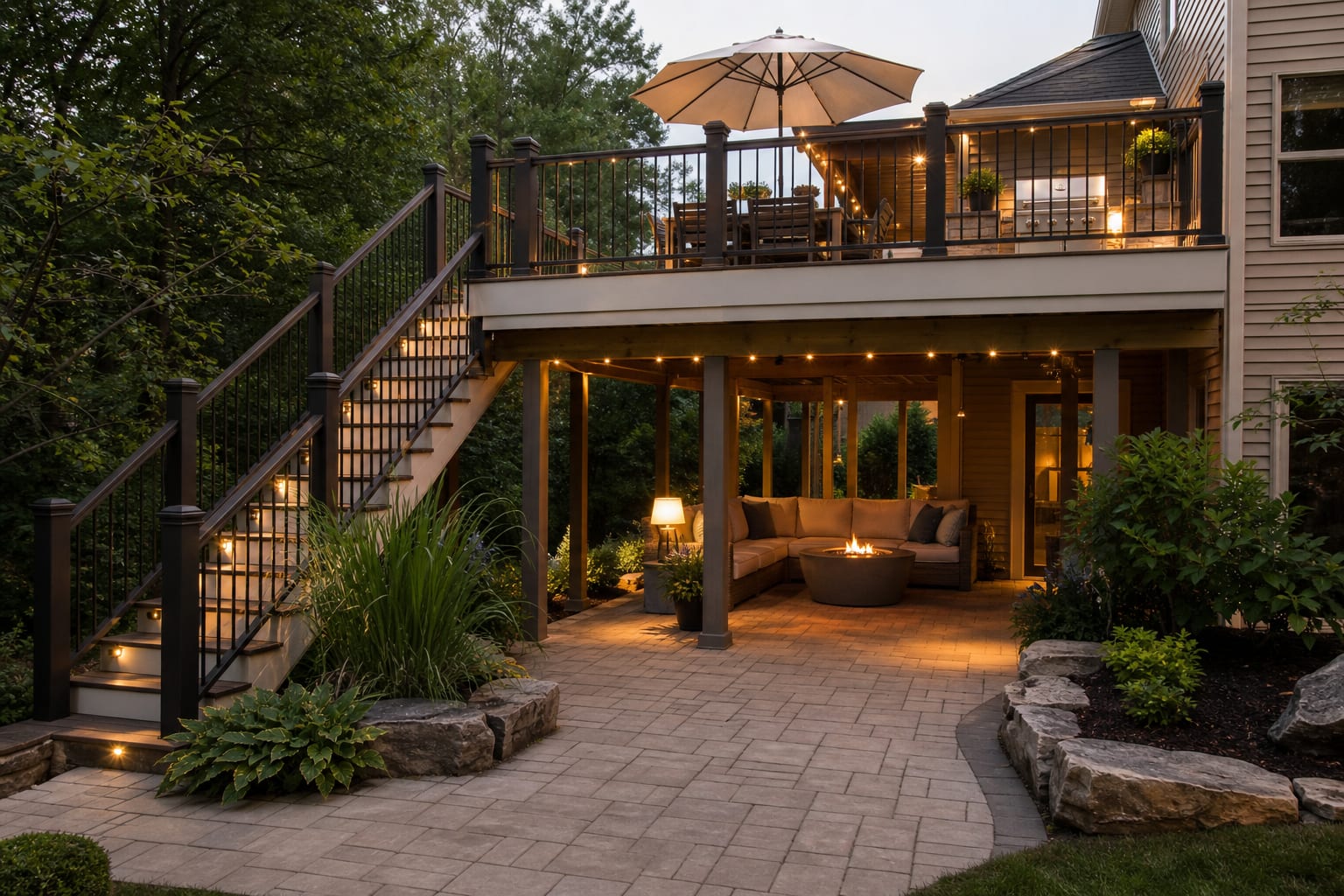
Test this on your own photo with ReDesign before finalizing the direction; keep the house edge, horizon, hardscape, and main path visible so the preview solves your actual space.
Five raised deck ideas that solve the height problem
- Use a turning stair. An L-shaped run with a 42-48in landing breaks up the descent and creates space for a planter, path light, or railing transition.
- Build a real room underneath. With enough head clearance, a dry ceiling, pavers, two sconces, and a 7x9ft seating pad turn shadow space into a covered terrace.
- Match railing to view distance. Cable or slim metal suits a view-focused yard; painted wood suits cottages and farmhouses if proportioned so the top rail doesn't block seated sightlines.
- Soften height with planting. Tall grasses, hydrangeas, serviceberry, dogwood, or layered evergreens 3-6ft from the posts hide the base while preserving airflow and inspection access.
- Add one focal point below. A boulder, water bowl, sculptural planter, or bench pulls the eye into the garden; see garden sculpture ideas for a single calm object instead of more furniture.
Keep lighting quiet: low step lights on risers, warm 2700K exterior fixtures, and no floodlight blasting joists into harsh shadow. On a high deck, safety and atmosphere are the same project.
What raised deck mistakes make the structure feel awkward?
- Stairs placed as an afterthought. They should aim at a path, patio, or gate, not dump people into the least useful corner.
- Oversizing the platform. A 16x24ft deck still fails if furniture floats in the middle; size from activities like dining, grilling, and lounging instead.
- Ignoring water underneath. Gravel, pavers, drainage channels, and proper grading matter more than an extra upstairs pillow.
- Cheap railings after overspending on square footage. The railing is often the most visible element from both levels, so prioritize post spacing and top rail thickness.
- Visible clutter below. Bikes, bins, and firewood make the structure look temporary; use framed storage doors or a slatted screen instead.
Should you preview a raised deck with AI before hiring a builder?
Yes, because the riskiest decision is proportion, not material choice. Upload photos from the yard, the back door, and the side approach, then test a straight stair against an L-shaped one, black metal against wood rails, and an under-deck patio against planted screening. If the underside still looks heavy or dark in the preview, fix stairs, post rhythm, or lighting before increasing deck size.
Frequently Asked Questions
What's the right stair width on a raised deck?
Aim for 48-60in on a primary descent. Wider stairs invite use and can double as informal seating, while 36in stairs read like back-of-house service stairs rather than a real entrance to the yard.
Should raised deck posts be hidden or featured?
Either works. Clad posts in stone veneer for a permanent, solid look, or hide them with timber skirting plus layered planting for a softer reveal. Bare 4x4 posts left exposed read as unfinished.
What railing suits a raised deck?
Black powder-coated metal, cable, or thin-picket railing preserves the view through the structure. Chunky white wood railings read suburban and tend to crowd the sight line from both the deck and the yard below.
Can I use the space under a raised deck?
Yes, if headroom exceeds 7ft. Install a drainage membrane between the joists, finish with gravel or pavers, and add lighting. Lower clearances are better suited to storage and shaded planting only.
Do raised decks need lateral bracing?
Yes. Decks above 6ft typically need knee bracing or full lateral cross-bracing between posts, plus a lateral-load connection from joists to the house ledger; codes have tightened on this requirement since 2015.
> Try this: Ready to see this on your own outdoor space? Open ReDesign and run the preview before you buy materials, plant, drill, or move furniture.
Three transformations to try
1. Raised deck with wide stairs and under-deck patio 2. Raised deck with stone-clad posts 3. Raised deck with cable railing and planters