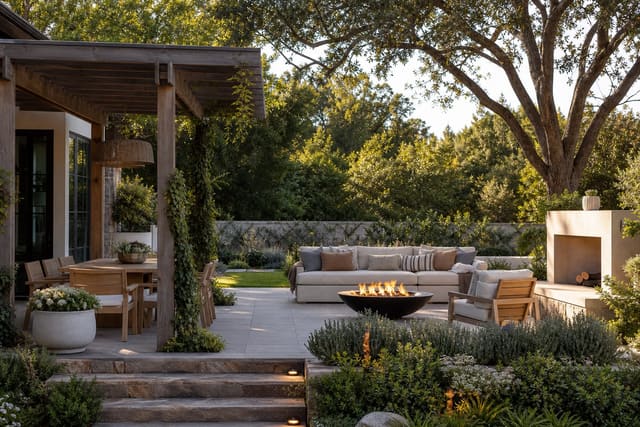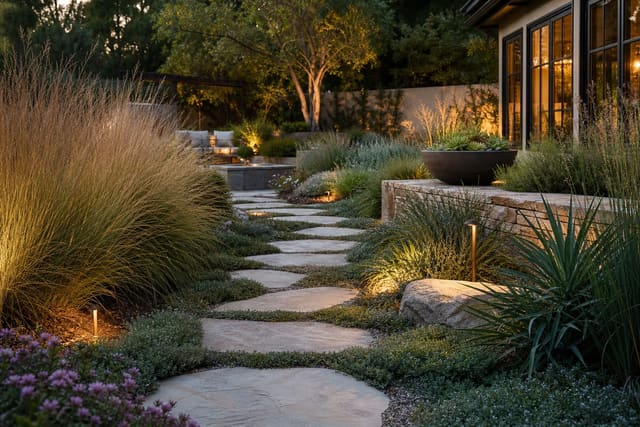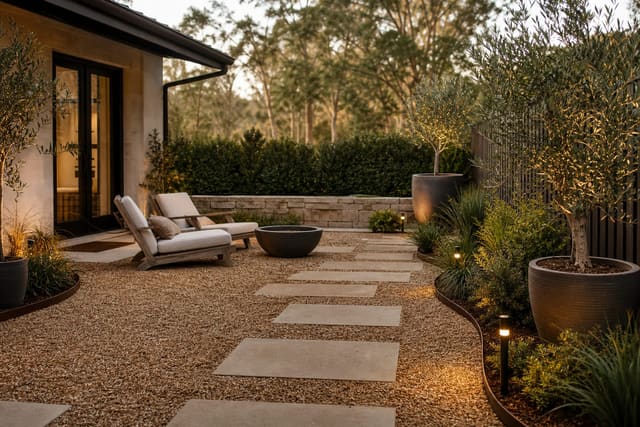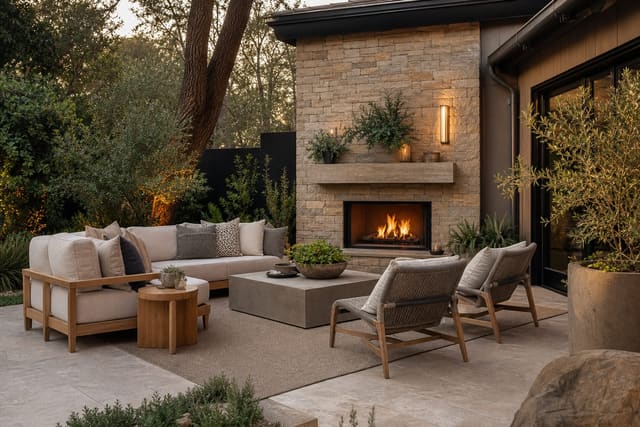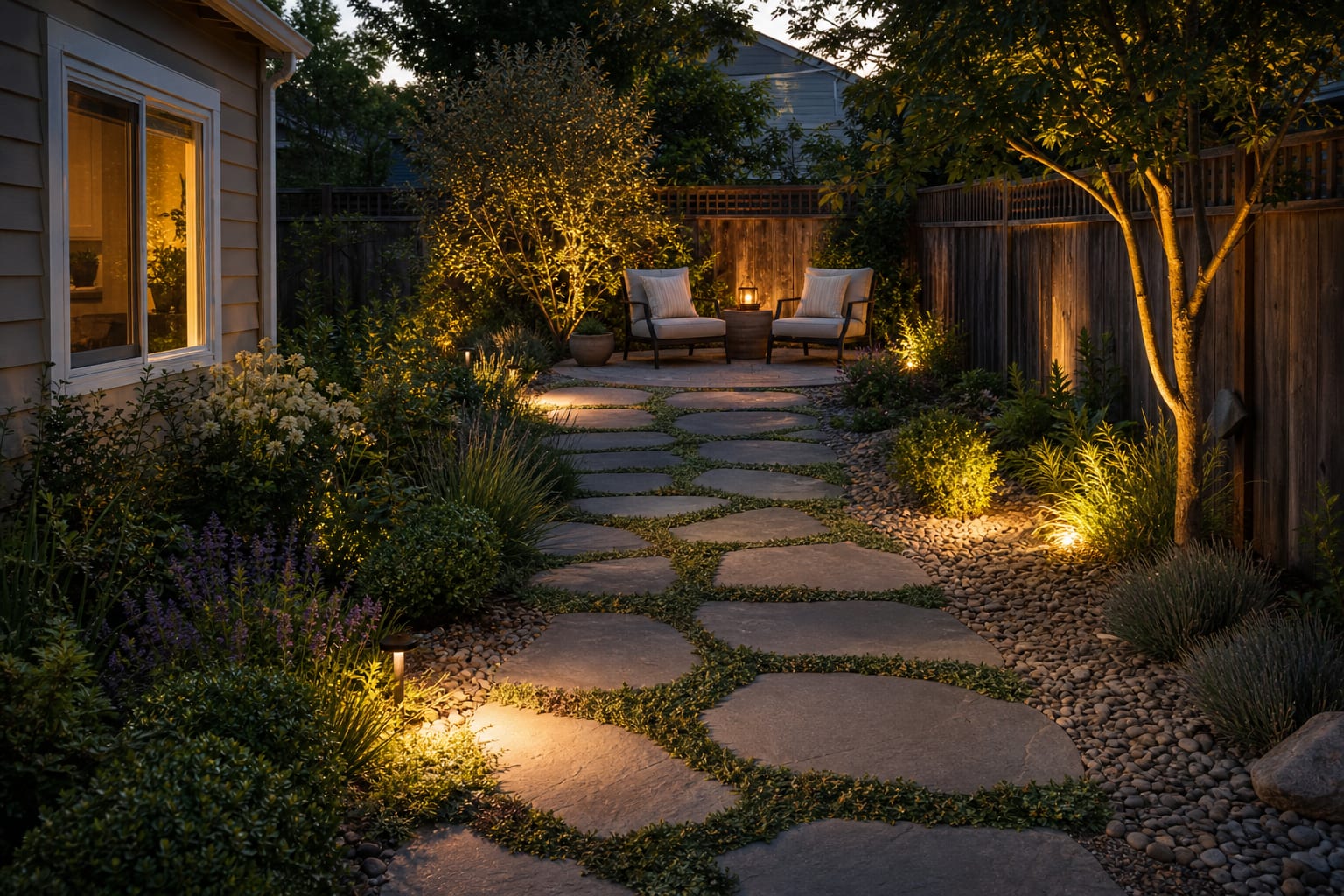
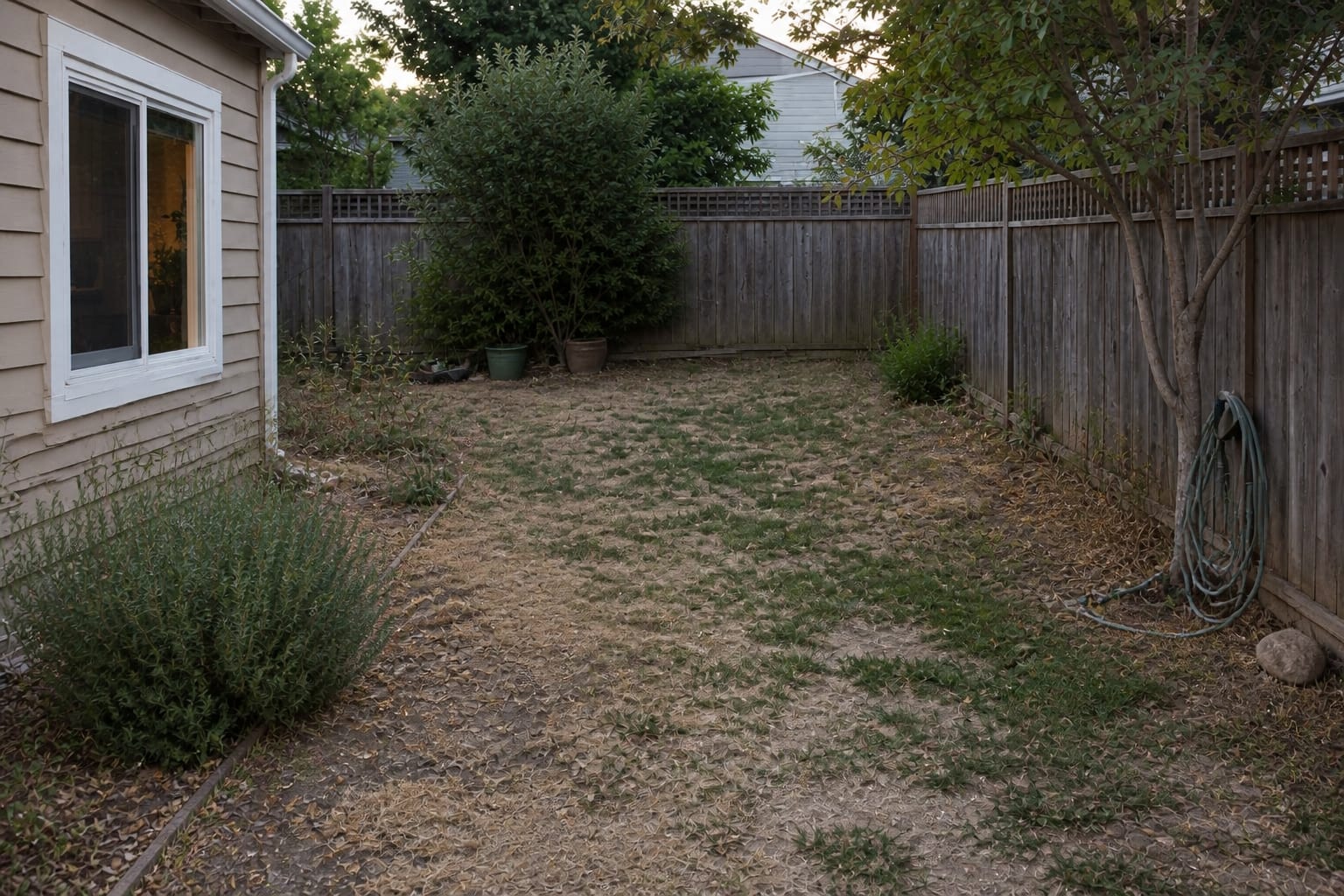
A stepping-stone patio works when 24-36 inch flagstones or pavers sit on a 4 inch compacted base with 2-4 inch planted gaps of creeping thyme, dymondia, or moss, edged with steel or gravel, and laid so stones overlap rather than aligning on a straight grid. Mark the patio shape, excavate for gravel and sand, set stones 24-30 inches on center, level each one, then plant or gravel the gaps so water drains and feet land securely. The gaps are the design, not filler — get spacing, thickness, and ground cover right and the patio feels relaxed instead of unfinished.
What makes a stepping stone patio feel intentional, not temporary?
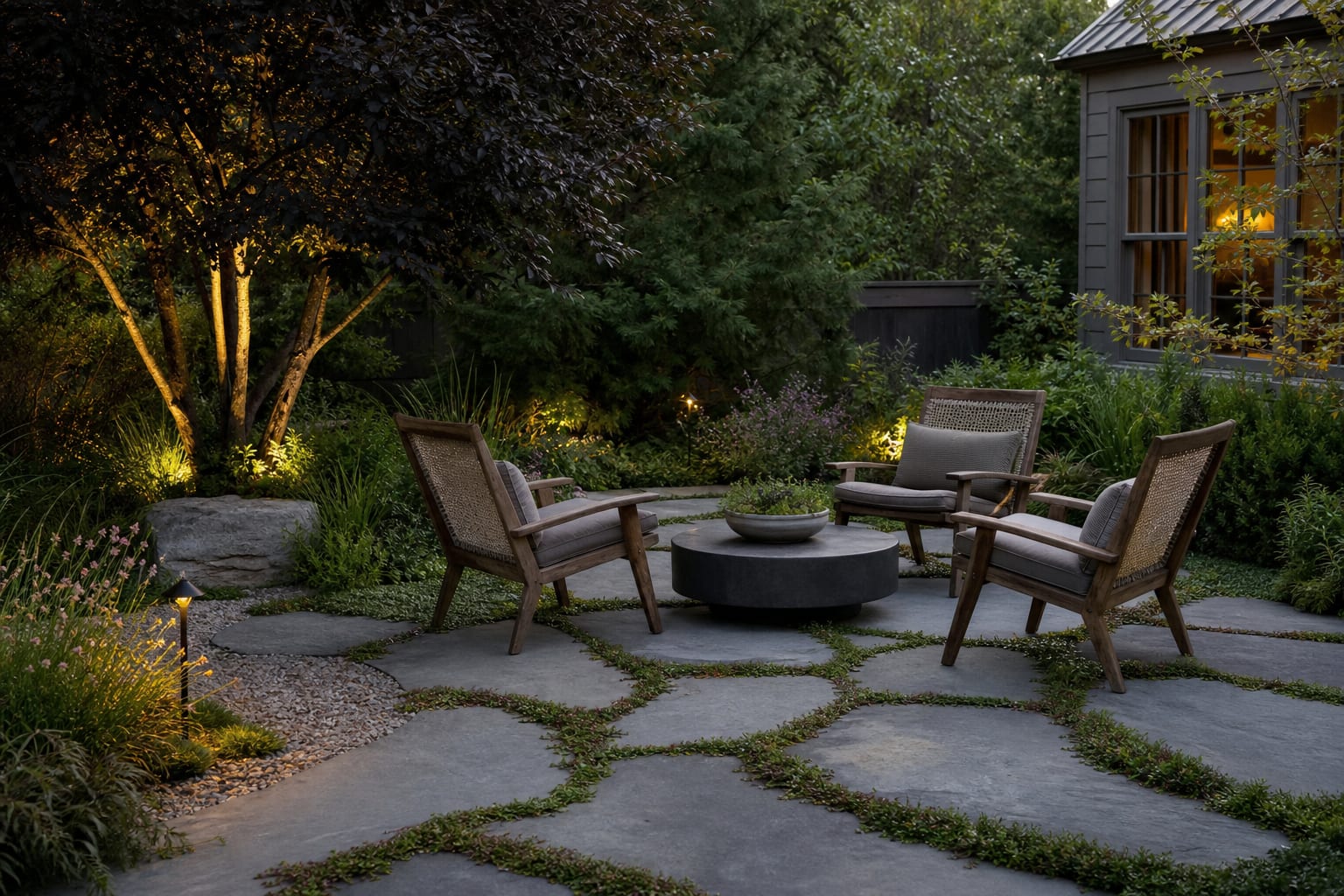
A stepping stone patio feels intentional when the stones form a clear outdoor room rather than a shortcut through mulch. Decide the patio shape before choosing stone: a 9 x 11 foot nook fits two lounge chairs and a small table, while dining needs closer to 10 x 14 feet so chairs can pull back.
A strong edge still matters on a loose surface — steel restraint, a gravel band, low planting, or a run of larger stones tells the eye where the patio starts and stops. Plan surfaces for drinks and lanterns early; see outdoor side table ideas for usable patio seating.
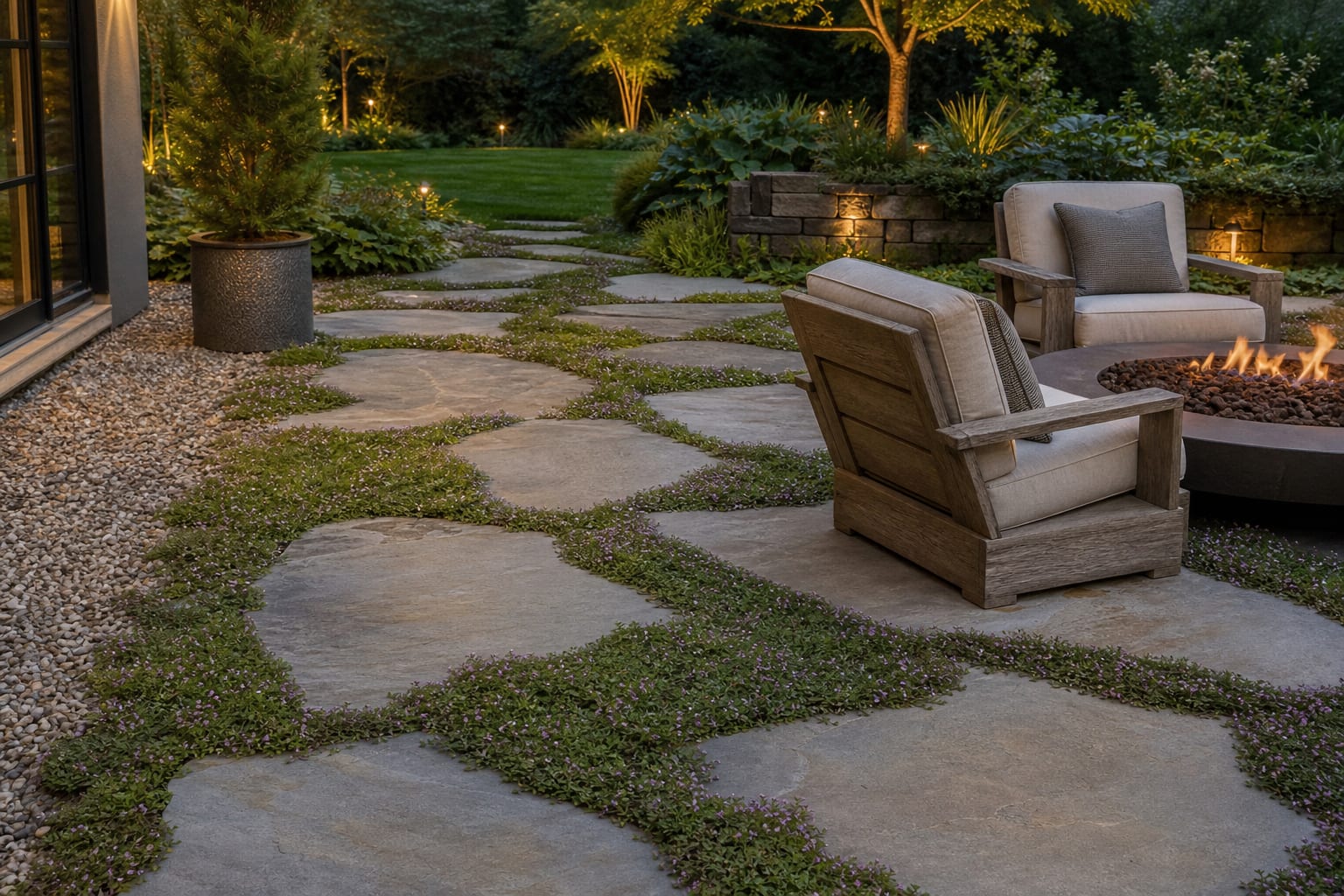
Joint width sets the mood. Tight 1-2 inch joints with swept gravel or decomposed granite read as a paved terrace. Wider 3-6 inch planted joints feel more like a garden, but need tough plants and a watering routine while they establish.
Which stone, spacing, and gap material should you choose?
Choose stone by thickness, texture, and use. Natural flagstone should run 1.5-2 inches thick with broad, flat faces that won't rock. Concrete pavers work well in a quiet color and generous shape — a simple rectangle repeated with confidence beats fake-random pieces.
| Patio surface choice | Best use | Spec to copy | Watch out |
|---|---|---|---|
| Irregular flagstone | planted garden patios and informal paths | 1.5-2 inch thickness, broad flat face | thin stones can crack or wobble |
| Large concrete steppers | modern courtyards and rentals | 18 x 24 inch minimum at seating edges | bright gray can look harsh in full sun |
| Gravel joints | chair zones and dining edges | 3/8 inch angular gravel, lightly compacted | pea gravel rolls under furniture |
| Creeping thyme gaps | sunny, light-traffic patios | 3-6 inch joints, plugs 6-9 inches apart | dislikes soggy shade and heavy use |
| Dwarf mondo grass | part-shade stepping paths | 4-6 inch joints, steady first-season moisture | slow to fill in cold climates |
Drainage is the hidden detail. Excavate for the stone plus 1 inch of bedding sand and 3-4 inches of compacted gravel, keeping the finished stone slightly proud of planted joints so soil doesn't wash over the surface. Near a house, keep a gentle fall away from the wall so the patio drains through it, not toward the foundation.
Test this on your own photo with ReDesign before choosing a final direction; keep the house edge, horizon line, hardscape, beds, and main path visible so the preview solves your actual space.
Five stepping stone patio ideas that keep the garden feeling alive
- Flagstone path into a seating circle. Use larger stones at the sitting area than on the approach, since a chair needs an 18-24 inch stable landing per leg while feet tolerate a looser rhythm.
- Thyme between sunny stones for a coffee spot. Keep joints 3-5 inches wide, water plugs through the first dry season, and gravel the most-walked center line instead of planting it.
- Gravel gaps around a dining table. Chairs move without tearing up ground cover; size the stone cluster with outdoor dining table ideas for patio meals, since a six-person table needs real pullback room.
- Rectangular concrete steppers with ornamental grasses. Set pavers in a grid with 2-4 inch gravel joints, then soften the perimeter with grasses so the geometry doesn't read as a sidewalk sample.
- Stones that widen at the best view. Expand a 30 inch path into an 8 x 10 foot pause point with a bench and durable outdoor cushions for real weather.
Common stepping stone patio mistakes to avoid
- Stones too small. A 12 inch round accent stone can't support a full stride or a patio chair — size up, and go larger where people turn or sit.
- Skipping the base. Informal doesn't mean unstable; stones laid straight on soil shift with freeze-thaw, roots, and rain, creating toe-catchers.
- Delicate ground cover on heavy-use routes. Creeping thyme won't survive a daily dog sprint; save fragile plants for calmer joints and use gravel or tighter spacing where traffic concentrates.
- Ignoring furniture movement. Guests pull chairs back 18-24 inches; size the hard surface larger than the table footprint or planted gaps get shredded fast.
- Messy geometry. Irregular stone still needs a deliberate outline and consistent scale; curves should follow a view, tree, or gate, not leftover pieces.
Use AI to preview your stepping stone patio before you dig
Proportion is hard to judge from loose stones on a driveway. Upload a straight-on photo from the back door or garden path, then preview a flagstone path, planted-gap patio, gravel-jointed dining pad, and wider planted edge before excavating.
Keep the preview honest with real dimensions — don't approve a version that crams a dining table, broad planting, and a lounge chair into a 9-foot-wide strip. Use it to compare shape and material color, then measure, stake the corners, and walk the stride before buying stone.
A preview won't replace a compacted base or a climate check on ground cover, but it catches expensive visual errors early: stones too small from the house, an awkward patio shape, or planted joints too fragile for the furniture zone.
Frequently Asked Questions
How thick should stepping stones be?
Use 2-3 inch thick flagstone or pavers for foot traffic areas. A 1 inch stone reads as a path tile and cracks under chairs, so reserve thin pieces for decorative, non-load-bearing spots only.
What plants fill the gaps?
Creeping thyme, dymondia margaretae, Irish moss, Scotch moss, and elfin thyme tolerate light foot traffic. Turf grass struggles in narrow gaps and quickly looks ragged, so avoid it between stones.
Can chairs and tables sit on a stepping-stone patio?
Yes, if each chair leg group lands on stones at least 24 inches wide. Planted gaps under furniture die out from shade and shoe abrasion, so plan solid stone wherever seating will sit.
Do stepping stones need a base?
Yes — use 4 inches of compacted base or a 1 inch mortar bed for stability. Stones set directly on soil typically tilt within one freeze-thaw cycle without proper support underneath.
How wide should the gaps be spaced?
Keep gaps 2-4 inches wide for natural-looking growth. Smaller gaps can't support plant roots, while larger gaps make the path feel broken and unstable underfoot.
> Try this: Ready to see this on your own outdoor space? Open ReDesign and run the preview before you buy materials, plant, drill, or move furniture.
Three transformations to try
1. Flagstone stepping-stone patio with creeping thyme