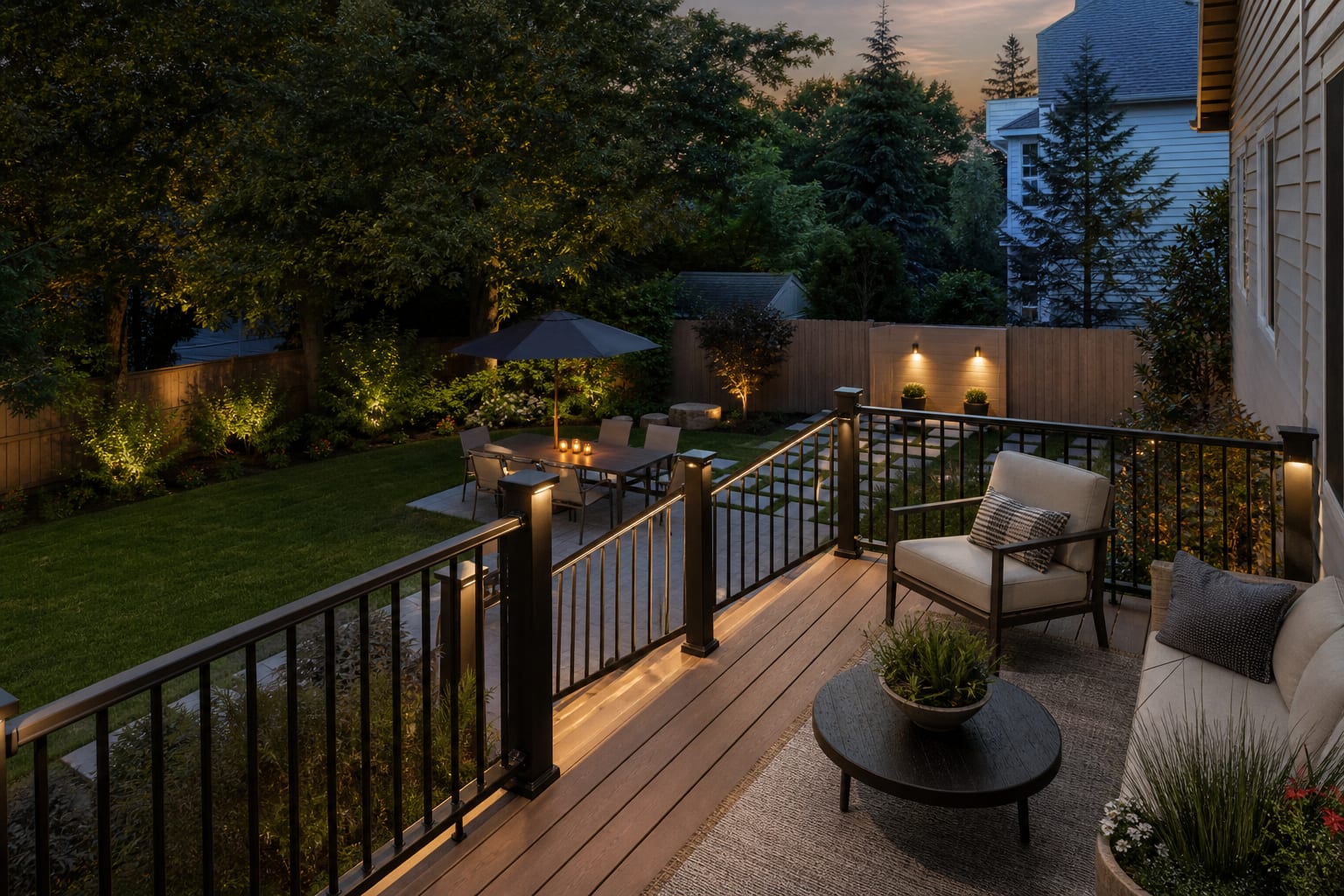
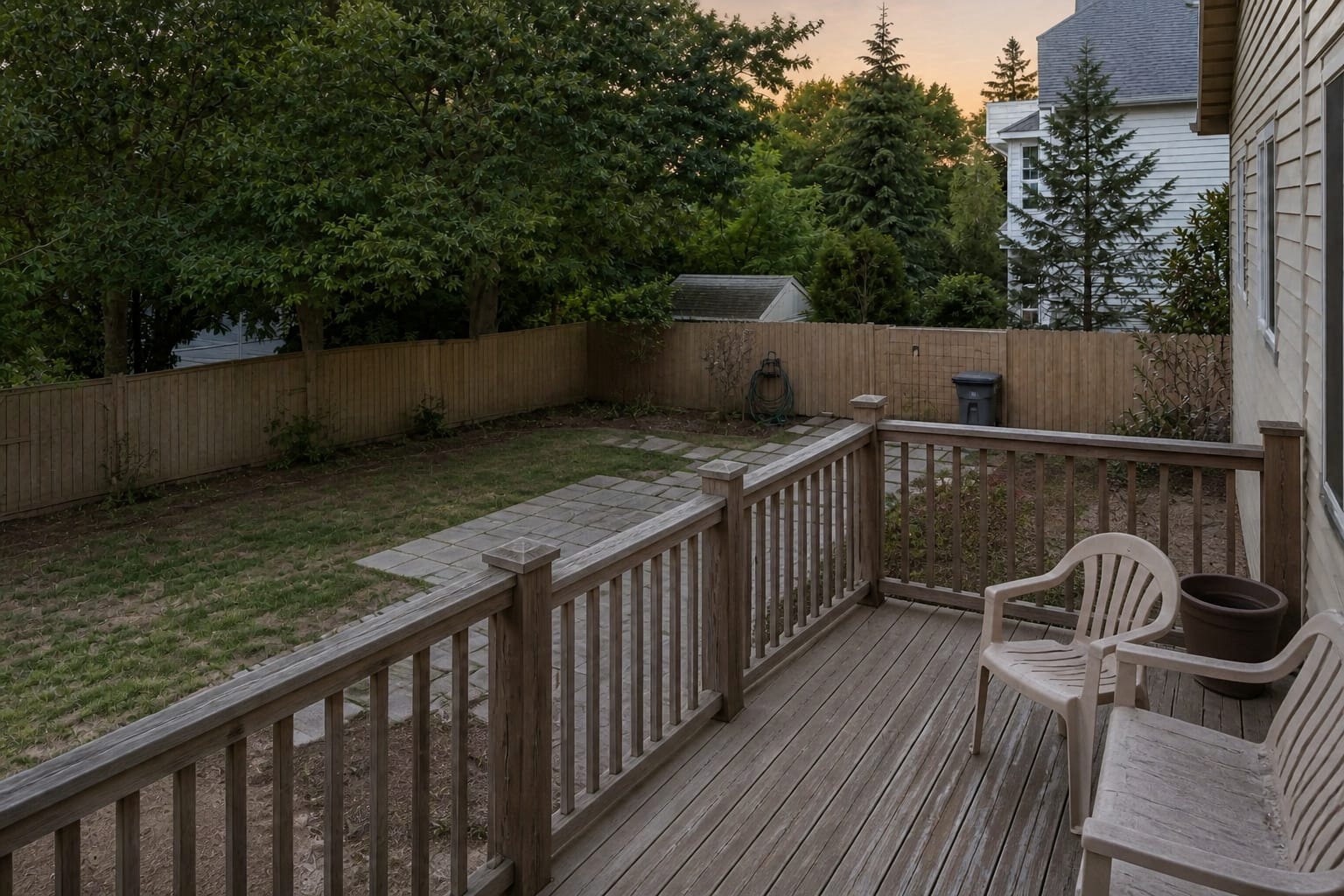
Powder-coated aluminum is the best deck railing material for most homes because it resists rot, needs little upkeep, and keeps views open with slim profiles. Cable, glass, or wood may beat it for specific styles or views. Start every railing decision with code-required height and 4in baluster gaps, then choose material, color, and privacy level.
What is the best deck railing material for most homes?
Aluminum works for most homeowners because it's durable, low-maintenance, lighter-looking than wood, and comes in slim profiles. It pairs well with composite decking, pressure-treated wood, brick houses, and pool-adjacent patios where neglected wood suffers.
That's not the only good answer. A craftsman porch may want stained wood, a lake house may justify cable railing, and a wind-protected modern deck may suit glass panels. Don't pick a railing from a showroom wall without checking the view, stair run, house style, and upkeep tolerance.
Guards are commonly required when the deck surface sits more than 30in above grade, with many jurisdictions using a 36in minimum guard height for one- and two-family homes. Openings are typically limited so a 4in sphere can't pass through, with different rules for stair triangles and handrails. Treat this as a starting point — local code and your inspector control the final build.
For a fuller plan that coordinates stairs, boards, furniture, and rails, see these backyard deck design ideas.
Which railing design choices change the whole view?
The best design makes a deck feel safer without making the yard feel farther away.
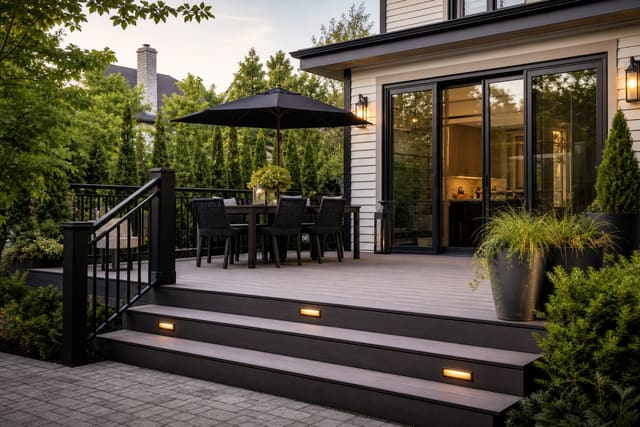
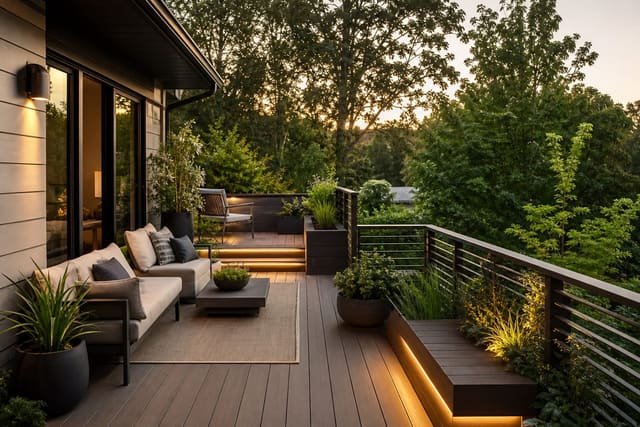
- Go dark for open views. Black or bronze rails recede against trees and shadows; white creates a stronger outline. This is why black aluminum or cable systems often feel calmer on wooded lots.
- Match post rhythm to the house. Traditional homes handle chunkier posts at 6-8ft intervals; modern decks look better with leaner posts and straight lines.
- Make stairs feel intentional. Stair posts and rails are seen from below, so align them with the upper guard instead of using an unrelated kit.
- Add privacy only where needed. A 42in panel beside a neighbor-facing lounge chair solves a real problem; wrapping the whole deck in screening turns it into a box.
- Light posts, stairs, and landings. Low post-cap or stair riser lights around 2700K keep the deck comfortable after dark instead of glaring blue-white.
Furniture matters too — a slim modern rail still feels crowded next to bulky sectionals. Use Deck Flooring Ideas: Wood, Composite, and Tile Options Compared to keep rail, table, chairs, and walking lanes working together.
Test this on your own photo with ReDesign — keep the house edge, horizon, hardscape, and main path visible so the preview solves the space you actually have.
How do railing materials compare before you buy?
Judge materials by exposure, maintenance, sightline, and house style. The cheapest rail isn't cheap if you hate repainting it, and the clearest rail isn't smart if it needs constant cleaning.
| Railing material | Best fit | Spec or detail to check |
|---|---|---|
| Powder-coated aluminum | Most low-maintenance decks with open views | Post spacing, panel width, stair compatibility, finish warranty |
| Cable railing | Modern decks, water views, long horizontal lines | Cable tensioning, post strength, spacing rules, local code acceptance |
| Wood railing | Historic and rustic decks, site-built budgets | Exterior-rated fasteners; plan for staining, sealing, or paint upkeep |
| Composite railing | Decks needing a coordinated composite system | Sleeve sizes, bracket details, color match, heat exposure |
| Glass panels | Windy view decks or pool-facing decks | Cleaning access, panel thickness, clamps, glare in full sun |
| Vinyl railing | Simple budget decks in mild climates | Avoid bulky profiles on small decks; check UV performance |
Cable systems keep the yard visible but aren't invisible — posts and the top rail still create a horizon line, and cables need proper tension. Glass is clearer but fingerprints, pollen, and water spots become the maintenance story.
Around pools, railing must coordinate with gates and slip-resistant, wet-traffic surfaces. See Deck Design Ideas: Wood, Composite, and Multi-Level Configurations to plan circulation before locking the rail layout.
Common deck railing mistakes to avoid
- Replacing old rails with the same visual weight. If existing balusters block the garden view, repeating that layout in a new color preserves the problem — use slimmer infill or a darker finish instead.
- Ignoring the seated view. Sit where furniture will go and tape a temporary stake at rail height; if it slices across the best view, adjust the furniture zone or choose a less bulky system.
- Treating code as an afterthought. Guard height, opening limits, handrail graspability, and post attachment affect the design early — confirm the assembly can pass inspection before ordering panels.
- Mixing too many railing languages. Wood posts, cable infill, white caps, and ornate stair balusters together make a small deck look patched together; repeat one dominant line at stairs, gates, and landings.
- Forgetting water and debris. Planter boxes or rugs pushed tight against posts trap moisture; leave cleaning access and avoid details that hold wet leaves against wood or fasteners.
Use AI design to preview your deck railing before you commit
The expensive surprise with railing is usually proportion. Upload a straight-on photo of the deck from the yard and another from inside looking out, then test black aluminum, cable, wood, composite, and glass from the same angles.
Keep the door, stairs, deck edge, furniture, trees, fence, and best view visible in the photo. The preview should reveal whether a white rail feels too loud, whether cable looks cleaner, or whether glass looks too polished for the house — it should not replace code review, structural detailing, or a qualified deck professional.
The strongest question isn't "Which rail is prettiest?" It's "Which rail makes this deck feel safer, more open, and more connected to the yard I already have?" Once the direction is clear, confirm guard height, post spacing, stair handrails, and local requirements before buying materials.
Frequently Asked Questions
What deck railing height does code require?
U.S. IRC requires a 36in railing for decks 30-72in above grade and a 42in railing above 72in. Baluster gaps must reject a 4in sphere, with a 6in sphere allowance at the triangle below the bottom rail.
Cable, glass, or wood — which lasts longest?
Stainless cable railing lasts 30+ years with no refinishing. Tempered glass panels last 20+ years but show water spotting. Pressure-treated or cedar pickets last 8-12 years before needing stripping and restaining.
Will cable railing sag over time?
Properly tensioned 316 stainless cable on 36in post spacing holds its spec for the life of the railing. Sag is almost always caused by undersized posts or skipped intermediate stiffeners on runs over 5ft.
Are horizontal slat railings code compliant?
Horizontal slats meet code when gaps reject a 4in sphere, but some jurisdictions still flag them as "climbable" for child safety. Confirm with your local inspector before ordering panels.
Can I replace deck railing without re-decking?
Yes. Railing posts mount to the rim joist or surface-mount to the decking with a base bracket, so you can refresh railing as a standalone project for roughly 25-40 percent of a full deck's cost.
> Try this: Ready to see this on your own space? Open ReDesign and run the preview.
Three transformations to try
1. Stainless cable railing on cedar posts 2. Tempered glass panel railing on black aluminum posts 3. Horizontal aluminum slat railing for modern deck