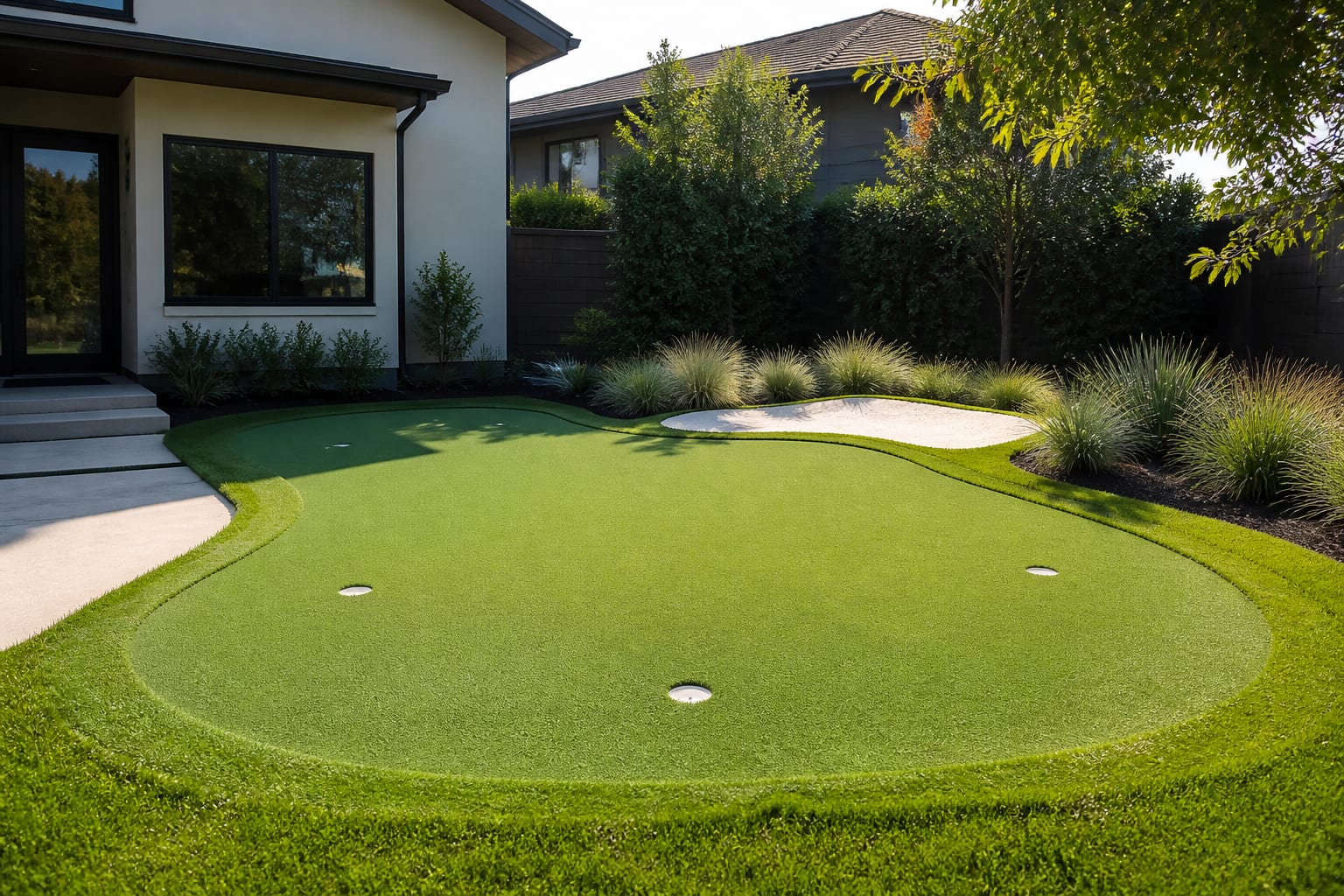
A backyard putting green is a contoured synthetic turf surface — typically 200–800 sq ft — with hole cups and fringe built over a compacted base engineered for true ball roll. Professional installation costs roughly $15–$40 per square foot, and a well-built green can be used year-round, requires virtually no water, and holds its pace for a decade or more with routine brushing.
How much does a backyard putting green cost?
Professional installation of a backyard putting green runs $15–$40 per square foot, meaning a 400 sq ft green costs roughly $6,000–$16,000 fully installed. At the low end you get a basic single-level layout with standard polypropylene turf and a minimal base. At the high end you get premium nylon turf, a deep compacted-aggregate base, custom contouring, multiple cups, fringe turf, and possibly a chipping area or sand bunker.
DIY kits — which include pre-cut synthetic turf rolls, cups, and basic base materials — come in well below the installed range. They are a legitimate option for compact, casual greens but require significant physical labor and attention to base preparation to achieve a true roll.
Cost tiers at a glance
| Tier | Description | Estimated cost | |------|-------------|----------------| | DIY kit (small, ~200 sq ft) | Pre-cut synthetic turf, cups, minimal base prep | Below $15/sq ft | | Entry pro install | Standard polypropylene turf, compacted base, 2–3 cups | $15–$22/sq ft | | Mid-range pro install | Quality nylon turf, engineered base, contouring, fringe | $22–$32/sq ft | | Premium pro install | High-stimp nylon, deep base, custom breaks, bunker, chipping area | $32–$40/sq ft |
What is the best turf for a backyard putting green?
Nylon is the best synthetic turf fiber for a backyard putting green because it holds its upright pile shape through heavy foot traffic and UV exposure, maintaining a consistent stimp speed longer than alternatives. Polypropylene fibers are softer and cost less but flatten more quickly under use, leading to slower, less predictable ball roll over time.
Nylon vs. polypropylene putting green turf
| Factor | Nylon | Polypropylene | |--------|-------|---------------| | Ball roll consistency | Excellent — holds fiber shape | Good initially, degrades faster | | UV and heat resistance | Very good | Moderate | | Lifespan under regular use | 12–20 years | 8–15 years | | Feel underfoot | Firmer | Softer | | Cost | Higher | Lower | | Best for | Serious practice, long-term install | Casual play, budget builds |
Stimp speed — the standard measure of green speed — is determined by both turf fiber and infill density. A low-infill nylon surface will play fast (7–10 stimp range), mimicking a real course green. Adding more infill slows the surface down for beginners. Work with your installer to dial in the speed that matches your game.
What size should a backyard putting green be?
Most residential putting greens are 200–800 sq ft, with 300–500 sq ft being the practical sweet spot for a suburban backyard. A 300 sq ft green gives you room for three or four cup positions, meaningful break putts from multiple angles, and enough fringe to create a realistic approach feel. An 800 sq ft green starts to feel like a genuine short-game facility and can accommodate a chipping area at one end.
Size guide
| Green size | Best for | Approximate dimensions | |------------|----------|------------------------| | 200 sq ft | Compact yard, short stroke practice | ~14 × 14 ft | | 300–400 sq ft | Most homeowners, multiple holes | ~18 × 18 to 20 × 20 ft | | 500–600 sq ft | Serious golfers, break variety | ~24 × 22 ft | | 700–800 sq ft | Full short-game practice zone | ~28 × 28 ft |
Leave a fringe zone of 2–4 ft around the perimeter to create a realistic approach target and to protect the edge of the putting surface from lawn mower contact and edging damage.
How do you build a backyard putting green?
Building a backyard putting green follows a five-step sequence: excavate, grade for drainage, compact the aggregate base, install the turf and cups, and add infill. The base is everything — a properly compacted 4–6 inch layer of crushed granite or decomposed granite, sloped at roughly 1–2% for drainage, is what produces a true roll. Rush or skimp the base and even premium turf will develop soft spots and uneven pace.
For DIY builders, the most common failure point is inadequate base compaction. Renting a plate compactor and working the base in thin lifts — rather than one thick dump — is what separates greens that roll well from greens that feel spongy. Cup installation should happen before the final turf layer goes down so the rings anchor into the base properly.
Where should you put a putting green in the backyard?
Place a putting green where it receives morning sun and afternoon shade wherever possible. Synthetic turf heats dramatically in direct afternoon sun — surface temperatures can become uncomfortable for barefoot use and accelerate fiber breakdown over time. A location that catches light from the east or is sheltered by existing mature trees is ideal. If your yard is fully open, a pergola or shade sail over part of the green extends its usable hours in summer.
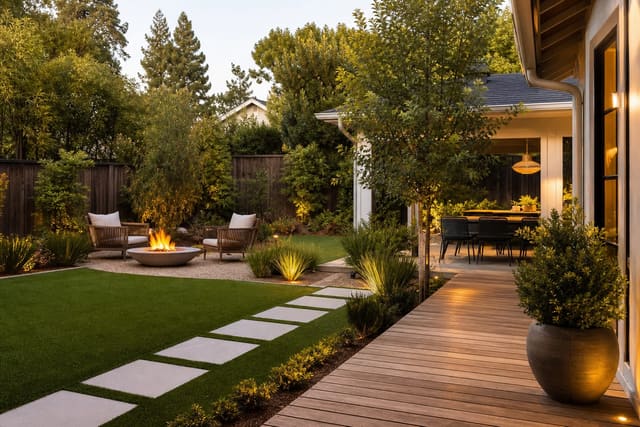
Also consider the viewing line from the house. A putting green tucked into the rear corner of the yard with a fringe border and a few ornamental grasses at the perimeter looks intentional and designed. A flat tile plunked in the middle of an open lawn can look utilitarian without some landscape framing.
How do you maintain a synthetic putting green?
Maintenance for a synthetic putting green is light compared to natural grass. Brush the turf fibers upright with a stiff-bristle broom or power brush every few weeks to maintain pile height and prevent matting in high-traffic areas. Rinse the surface occasionally to clear pollen, debris, and pet waste. Refill infill material annually or as needed — infill compacts over time and can slow the surface if not topped up.
Keep the fringe edge clear of encroaching natural grass using a clean spade or edging tool. Inspect cups seasonally and replace liners if they crack or deform. With this routine, a quality synthetic putting green holds its pace and appearance for many years without reseeding, watering, or mowing.
How do contouring and break design work on a backyard putting green?
Contouring is what separates a genuine practice surface from a flat mat that happens to have holes in it. Breaks — gentle directional slopes that cause the ball to curve as it decelerates — are engineered into the compacted base layer before turf goes down. Once the turf is installed, the shape is fixed, so this is a plan-before-you-build decision, not an afterthought.
A well-designed residential green typically features one dominant slope direction and two or three subtle side-breaks that create multiple distinct putting lines from different cup positions. The goal is that a ball putted straight at the cup from ten feet will curve away unless the player reads and plays the break — exactly what happens on a real course. This is the quality that separates a green a golfer will use daily from one that collects leaves in the corner.
For chipping areas — a flat or gently sloped synthetic turf zone adjacent to the green — a slightly more open pile height than the putting surface mimics a fairway lie and gives realistic chip-and-run practice. Bunkers at the edge of chipping zones can be filled with real silica sand for authentic explosion shot practice, though they require periodic raking and topping up after rain. If you are pairing a putting green with a broader landscape redesign, consider how the green integrates with adjacent hardscape, planting beds, and pathways — a connected design reads as a unified outdoor room rather than a sport insert.
How can you preview a backyard putting green before you install it?
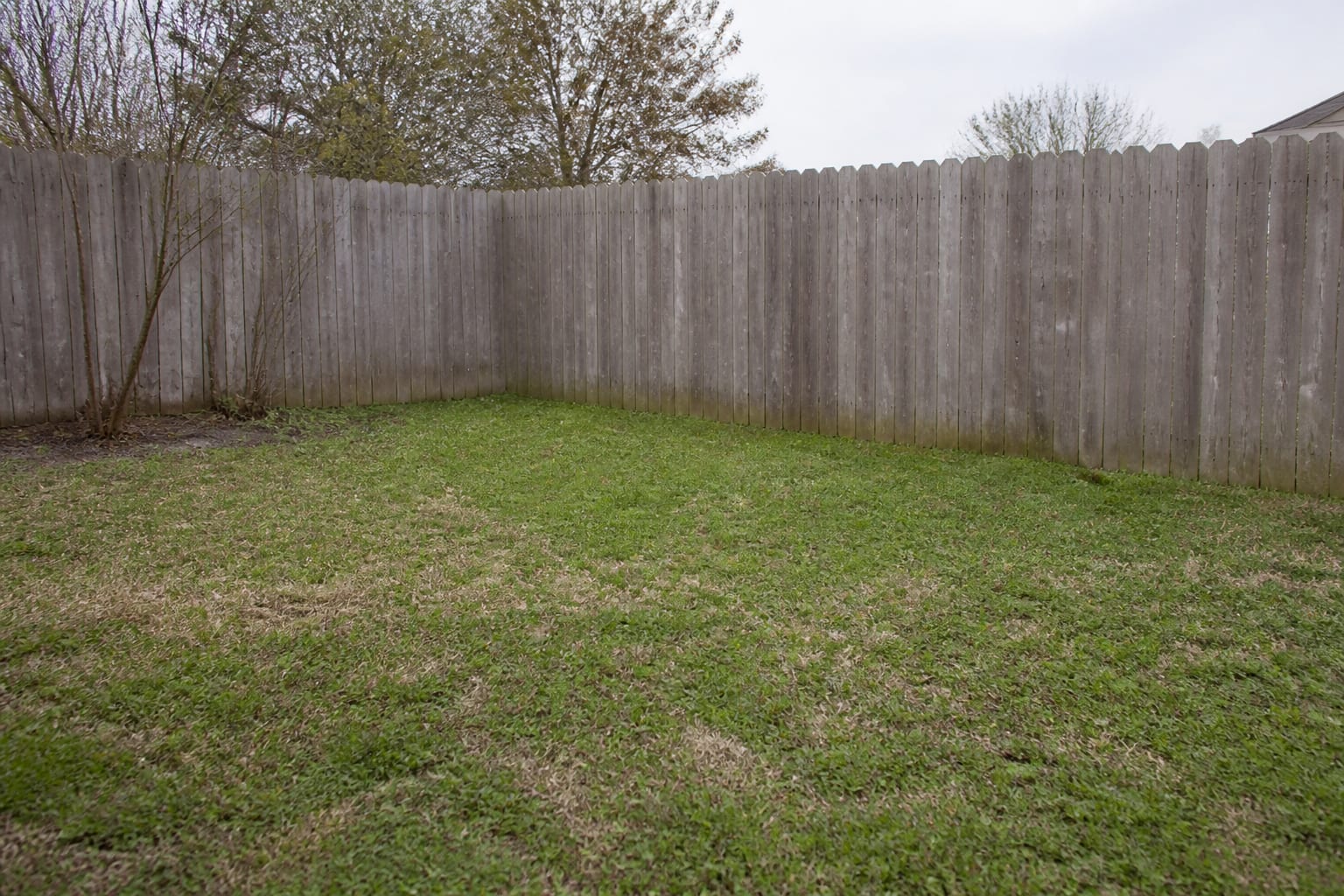
The most common design hesitation is picturing how a green will look in the corner of your lawn — whether it will feel too large, whether the shape will look natural, and whether surrounding plants will frame it well. Re-design.app resolves that uncertainty before you excavate.
Upload a photo of your backyard and try one of these directions:
- Preview a 400 sq ft contoured putting green with fringe and three cups in a lawn corner
- See a larger short-game area with chipping zone and sand bunker
- Visualize a compact 200 sq ft putting green framed by ornamental grasses and landscape lighting
The render shows you shape, scale, fringe color, and the relationship to surrounding lawn and hardscape — so the installer conversation starts from an agreed-on picture, not a vague description.
Frequently Asked Questions
How much does a backyard putting green cost?
Installed costs run $15–$40 per square foot. A 400 sq ft green — a popular size for a suburban backyard — lands at roughly $6,000–$16,000 professionally installed. DIY kits are available below the low end of that range but require significant base preparation labor to roll true.
What is the best synthetic turf for a putting green?
Nylon is the preferred fiber for putting greens because it holds its shape under heavy foot traffic and UV exposure, maintaining consistent ball roll over time. Polypropylene is softer and less expensive but flattens more quickly. For serious practice, nylon is worth the incremental cost.
How do you build a DIY backyard putting green?
Excavate 4–6 inches below finish grade, compact a crushed-aggregate base in thin lifts using a plate compactor, slope 1–2% for drainage, install cup rings, unroll and trim turf to shape, and brush in sand or crumb-rubber infill. The base compaction step is the most critical and most commonly skipped.
How much space do you need for a backyard putting green?
A functional green can fit in as little as 200 sq ft (roughly 14 × 14 ft), though the 300–500 sq ft range gives enough room for multiple hole positions and realistic break putts. Leave a 2–4 ft fringe border around the perimeter for a polished look and surface protection.
Do backyard putting greens require maintenance?
Maintenance is minimal compared to natural grass. Brush the fibers upright every few weeks, rinse occasionally, top up infill annually, and keep the fringe edge clear of encroaching natural grass. No watering, no mowing, and no reseeding.