Cottage garden ideas work best when a firm structure — a clipped hedge, stone edge, or picket fence — holds up soft, overflowing planting above it. Repeat no more than three harmonious colors and add one self-seeder like Alchemilla or Verbena bonariensis. The goal is generous, not chaotic: lush, scented, pollinator-friendly, without becoming a weeding sentence.
What makes a garden feel like an English cottage garden?
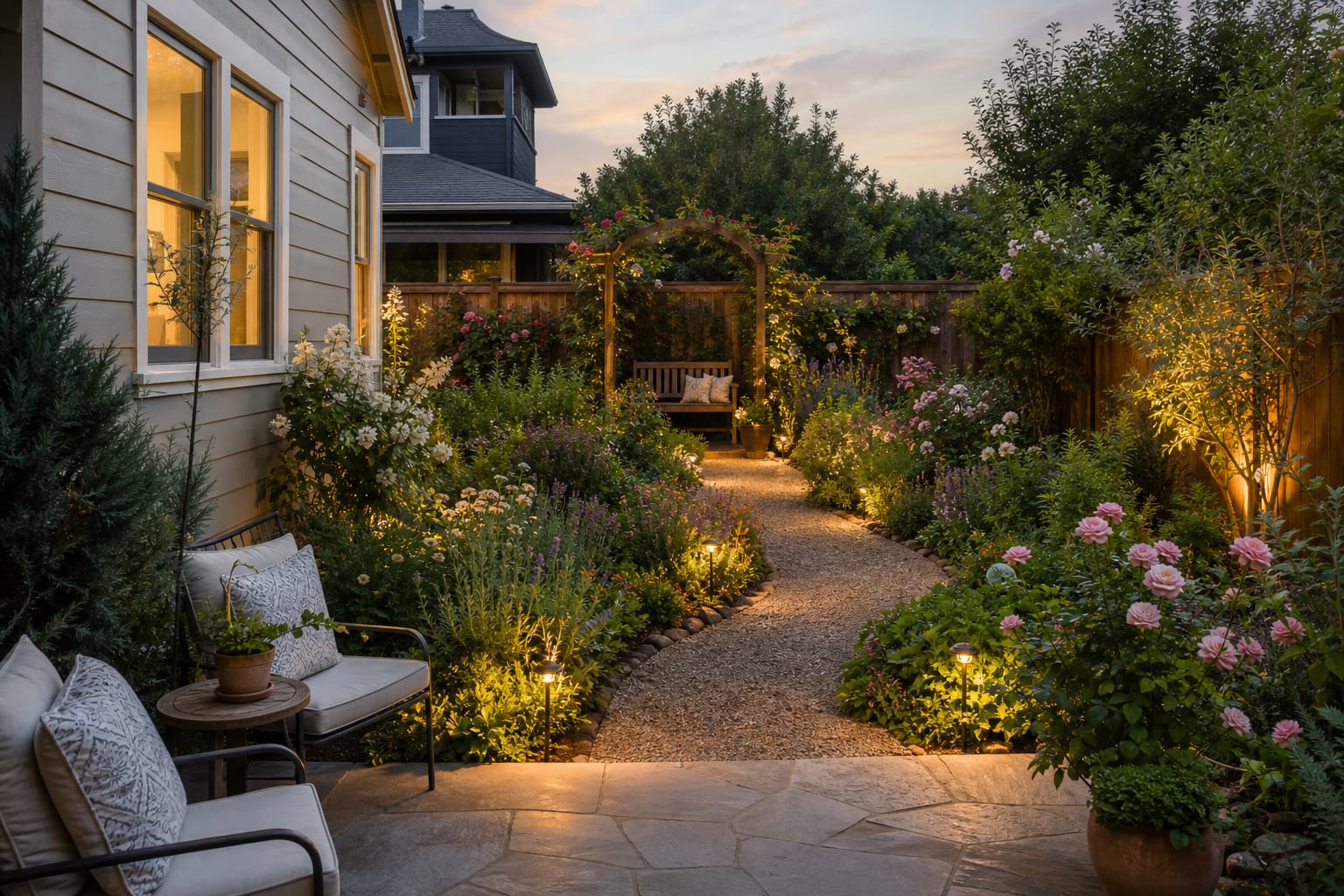
An English cottage garden feels relaxed because the structure is quiet and the planting is full. A narrow path, a gate, a low fence, or a simple arch gives the flowers something to lean against. Without that structure, informal planting tips into a border that looks accidental by July.
The classic formula is vertical, rounded, trailing, and scented: foxgloves, hollyhocks, delphiniums, or verbascum for height; roses, hydrangeas, catmint, and salvias for middle mass; thyme, alyssum, erigeron, or hardy geraniums to soften the edge. Keep the tallest plants toward the back, but let a few stems drift forward so the border doesn't look like a school photo.
Contrast still matters. If you like the restraint of Cottagecore Garden Ideas: Wildflower Beds and Rustic Potting Sheds, apply it here — repeat fewer plants more often, then let their habit feel loose.
Which cottage garden ideas actually work in real yards?
The prettiest cottage gardens use a few repeated moves scaled to the yard, so the planting feels loose while the layout stays readable.
- Plant a deep mixed border along the sunniest fence: at least 4 feet deep, 5–6 foot spires near the fence, 12–18 inch spillers along the front edge.
- Add one small seating pause instead of a full patio. A 48–60 inch bench or bistro table fits beside a path without stealing planting space.
- Use a rose or clematis arch only where it frames real movement — over a 36–42 inch path, with thorny stems clipped 6 inches clear of shoulder height.
- Edge beds with brick, stone, or steel. A single soldier course of reclaimed brick or a 4 inch steel edge keeps gravel and soil apart while still looking handmade.
- Let herbs fill the front third of sunny beds. Thyme, oregano, chives, lavender, and sage want well-drained soil and 6+ hours of light.
- Adapt the mood to your climate rather than forcing an English plant list. In humid climates, AI Cottage Garden Design: Romantic Landscaping AI Results borrows the rhythm with gingers, cannas, salvias, and edible herbs; in dry regions, Japandi Outdoor Spaces softens gravel with santolina, rosemary, agave, and trailing sedum.
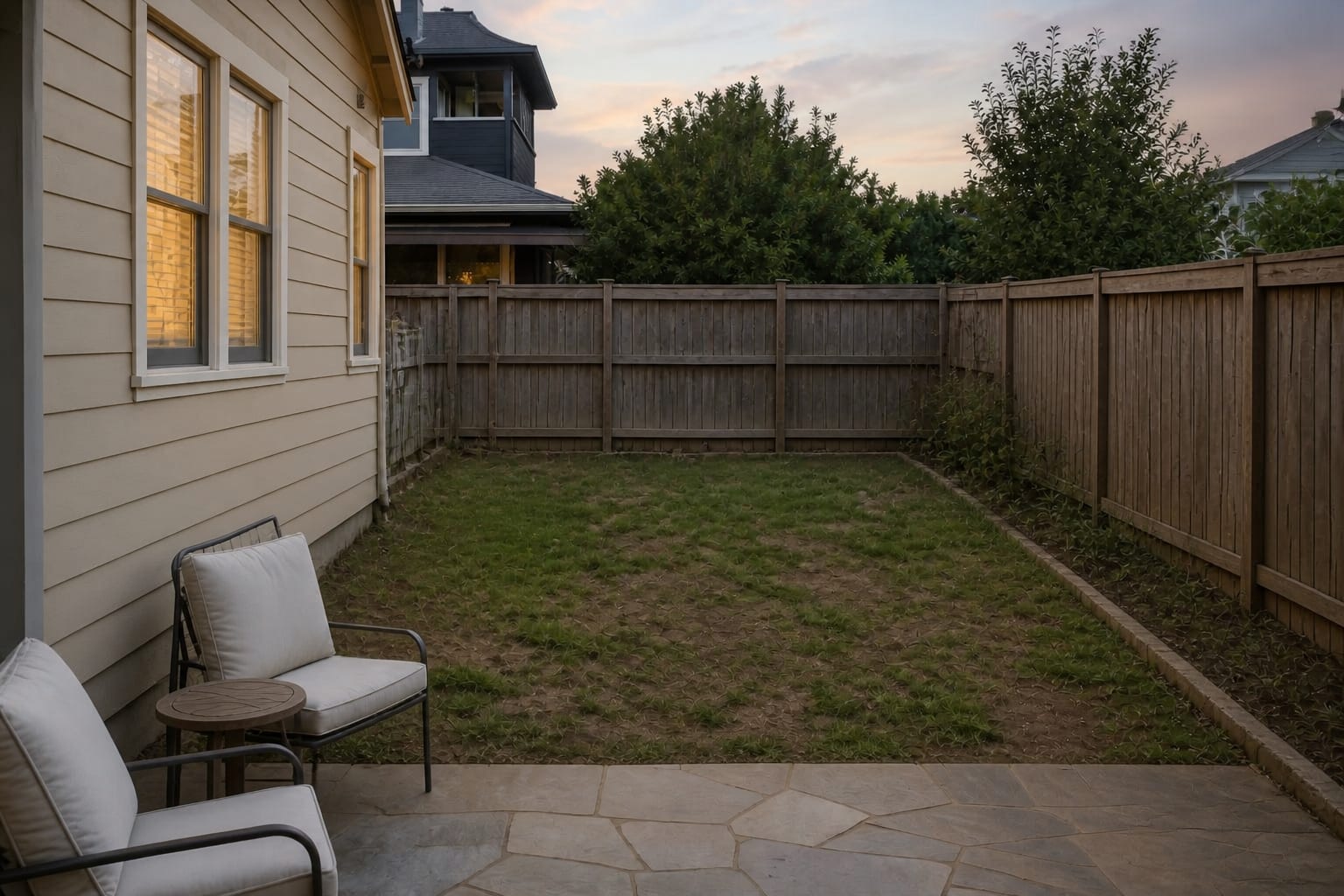
Test this on your own photo with ReDesign before choosing a final direction — keep the house edge, horizon line, hardscape, beds, and main path visible so the preview solves the space you actually have.
How do you plan the beds, paths, and planting layers?
Decide how much garden you can maintain on a normal week, not an optimistic spring weekend. Two 5 by 12 foot beds can feel richer than one huge border that collapses into weeds by midsummer.
| Garden condition | Best cottage move | Concrete spec |
|---|---|---|
| Narrow side yard | One border plus a path | Path 30–36 inches wide, bed 3–4 feet deep |
| Square backyard | Curved central route | Leave 8+ feet of open view from the door to the main planting moment |
| Shady fence line | Green texture over flowers | Ferns, hellebores, hydrangeas, hardy geraniums in 24 inch drifts |
| Rental garden | Removable structure | Trough planters, gravel grids, freestanding arches, pots 16–20 inches wide |
Color needs restraint even in a romantic garden. Pick one dominant color, one supporting color, one cooling neutral. Pink roses, purple salvia, white cosmos, and silver lamb's ear look abundant; five clashing hues in equal amounts look like a seed packet argument.
Common cottage garden mistakes that break the romance
The most common failure is planting only for peak flower. Include evergreen shrubs, clipped herbs, obelisks, or twiggy roses so the bed still holds structure once annuals fade.
- Beds that are too thin leave every plant stranded. Under 18 inches deep, use a simple herb edge or climber-and-groundcover combo instead of forcing tall flowers and shrubs in.
- Buying one of everything breaks the tumbling effect. Repeat each key perennial at least three times in a small yard, five to seven in a larger bed.
- Skipping paths makes maintenance miserable. Leave 18 inches of reach from a path into the bed, plus flat stones inside deep borders for deadheading access.
- Overfeeding makes plants floppy. Use compost for soil structure and stake tall flowers before they lean rather than pushing more growth.
- Weak supports for climbers cause long-term frustration. A rose arch needs firmly set posts, a top rail rated for mature weight, and pruning access from both sides.
Use AI design to preview your cottage garden before you commit
AI design helps with cottage gardens because the style depends on proportion, path curves, and plant massing that are hard to picture from plant tags. Upload a clear photo from the back door, gate, or seat you use most, then test a deeper border, a gravel path, a rose arch, or a bench before digging up lawn.
Ask for a romantic cottage garden with layered beds, repeated herbs, a defined path, and one seating pause. Compare previews for calm abundance — full in the right places, open enough to walk through, believable for your climate.
Frequently Asked Questions
What plants define a cottage garden?
English roses, delphinium, foxglove, larkspur, sweet William, Alchemilla, Aquilegia, and viola form the core cottage palette. Combine returning perennials with self-seeding biennials like foxglove and honesty for a naturalistic, layered effect.
How do I keep a cottage garden from looking messy?
Edge the bed with a clean steel or stone boundary, clip one or two box or santolina mounds mid-border for geometric contrast against soft perennials, and deadhead regularly so bloom continues instead of the garden running to seed by midsummer.
What is the best path surface for a cottage garden?
Brick, reclaimed paving stone, or a mown grass path work best; a slightly formal straight path balances exuberant planting. Avoid loose gravel in a heavily planted cottage garden since it migrates into the beds.
Do cottage gardens need full sun?
Core cottage plants like roses, delphinium, and foxglove need 6 hours of sun, but a shade cottage garden works too, using hellebores, pulmonaria, astrantia, hardy geranium, and climbing hydrangea on a north wall.
How often do cottage gardens need maintenance?
Weekly deadheading during the main flowering period (May–July) plus a twice-yearly structural tidy — a late-autumn cutback and early-spring division — keeps a cottage garden healthy, along with drought watering and annual compost mulching.
> Try this: Ready to see this on your own outdoor space? Open ReDesign and run the preview before you buy materials, plant, drill, or move furniture.
Three transformations to try
1. Rose and Delphinium border with box edging 2. Self-seeding cottage mix in gravel-edged bed 3. Picket fence and gate with climbing rose