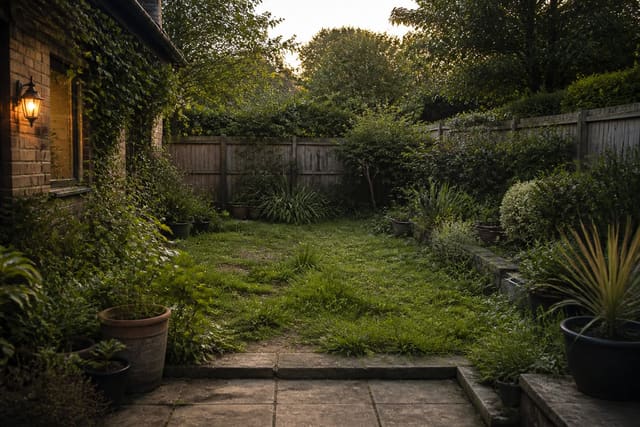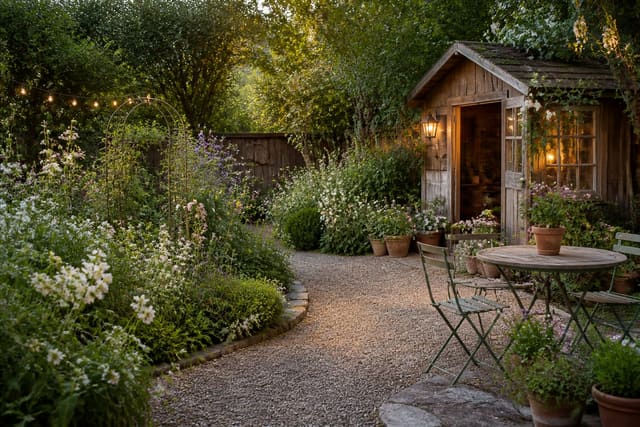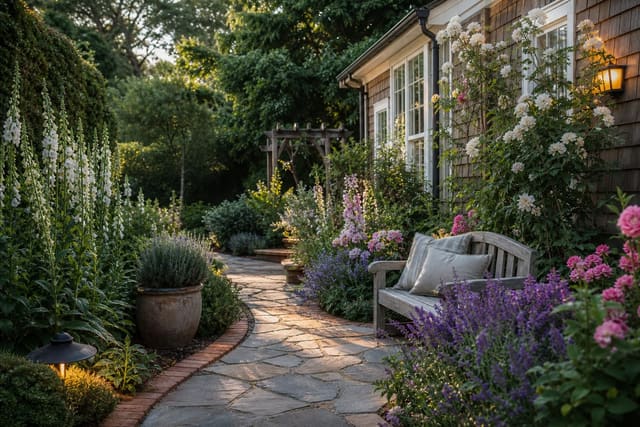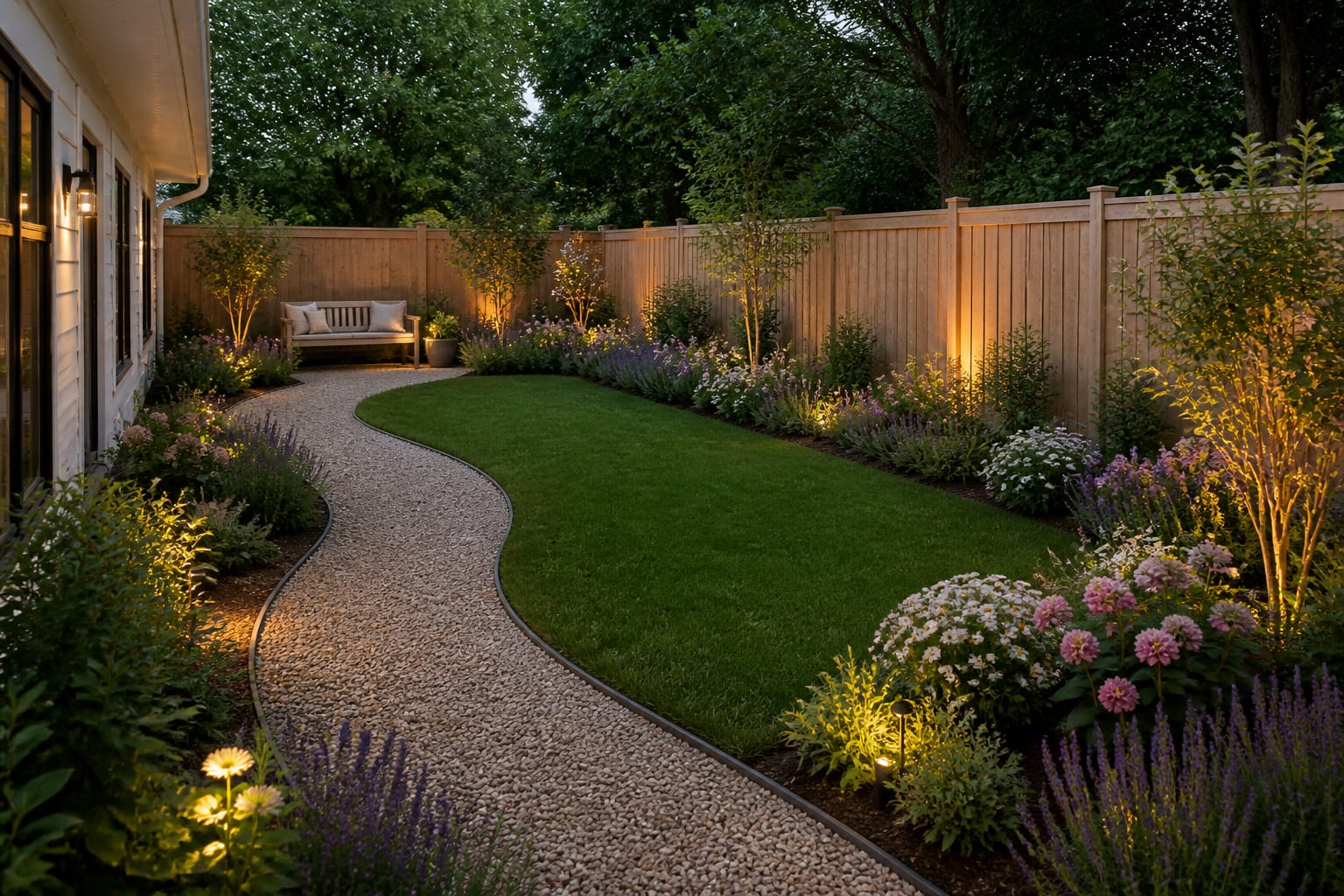
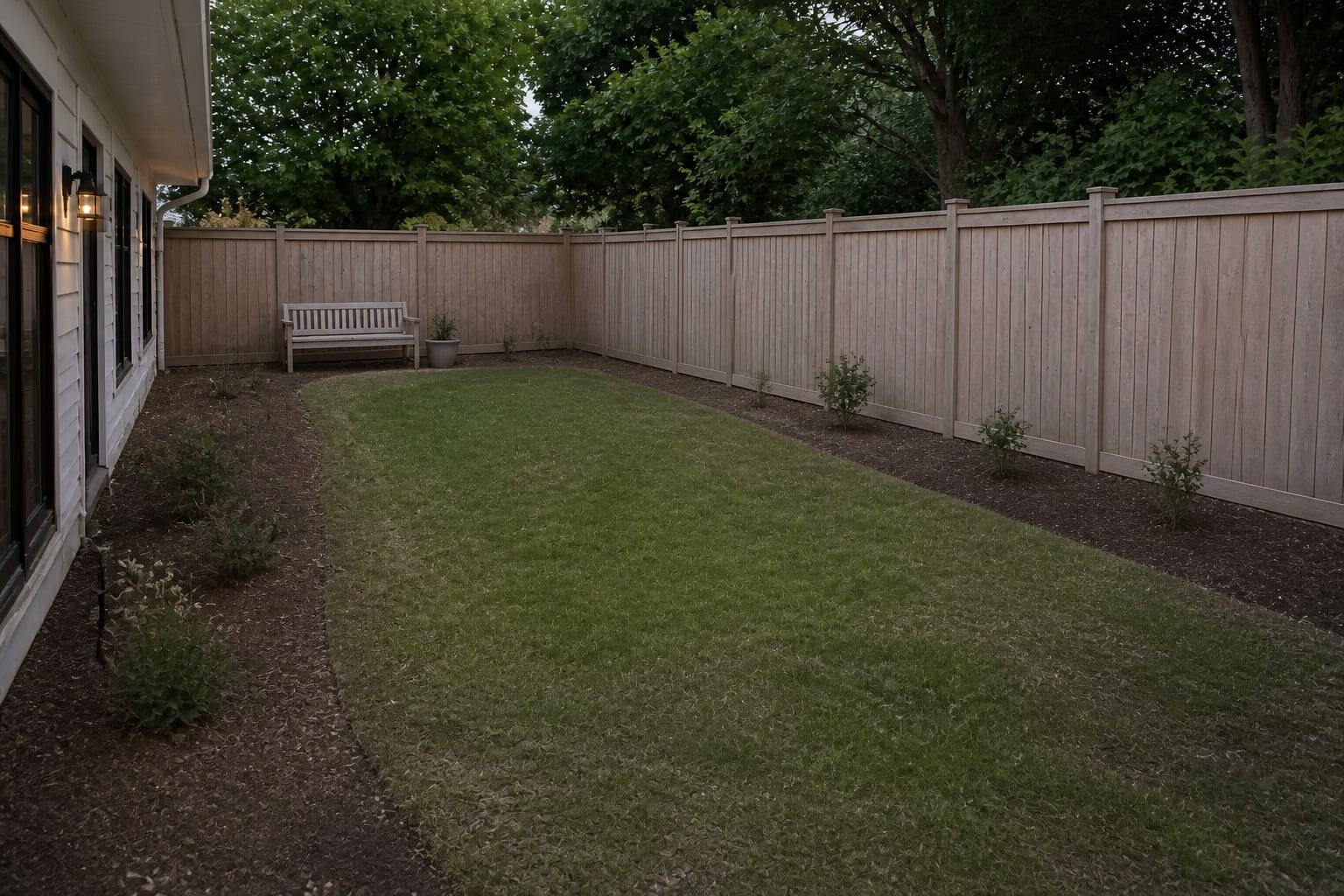
AI cottage garden design turns a phone photo of your yard into a romantic planting preview, testing paths, borders, plant color, and seating before you dig or buy plants. The best results balance loose, abundant flowers against disciplined structure so the garden reads as cottage style, not overgrown.
What Makes a Cottage Garden Feel Authentic, Not Overgrown?
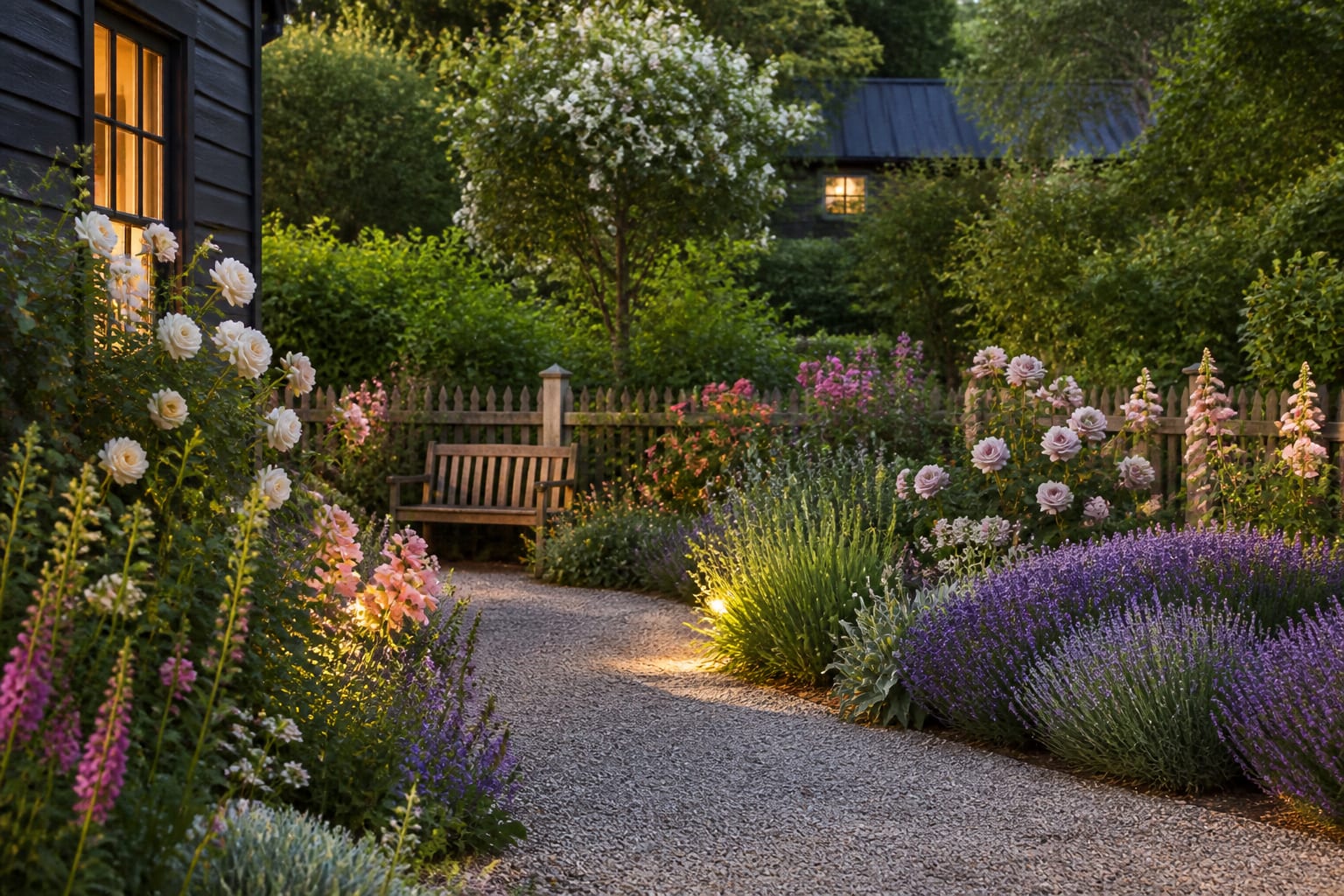
A cottage garden convinces when abundance has a frame: a gravel path, brick edging, a picket fence, a painted gate, or a small tree the eye can rest on. Without that frame, even beautiful flowers read as neglect.
The most reliable layout wraps a soft border around a hard line. A 30 inch path works for one person with a basket or hose; 36 inches is better for a daily route to a shed or door. Borders should run at least 3 feet deep for a layered effect — 18 inches is fine for lavender and edging, but it won't carry roses, salvia, foxgloves, and a shrub with any generosity.
Cottage style also needs an honest relationship with upkeep. Base the planting on sturdy repeaters — lavender, nepeta, hardy geranium, salvia, yarrow, climate-appropriate roses, ornamental grasses, and structural shrubs — so the garden doesn't collapse after the first bloom flush. If you're starting from a plain yard photo, compare results against a focused AI garden design from photo workflow so the preview respects your actual fence, patio, slope, and lawn geometry.
Five Cottage Garden Moves Worth Testing in AI Previews
Run several previews before buying plants, since the first pass often overfills the border and underestimates mature plant width.
- Curve the path instead of running it flat against the fence. Keep it 30 to 36 inches wide, edge it with metal or brick, and let plants spill 4 to 8 inches over the line without swallowing it.
- Build a 3 to 5 foot deep mixed border along the sunniest fence. Low plants near the edge, 18 to 30 inch perennials in the middle, taller roses or hollyhocks at the back.
- Add one small destination. A 4 by 4 foot gravel pad for a bistro table or bench gives the planting a reason to wrap around something.
- Repeat one color family three times. Try blush, cream, and lavender for softness; apricot, burgundy, and sage for warmth; or white, blue, and soft yellow for a cooler palette.
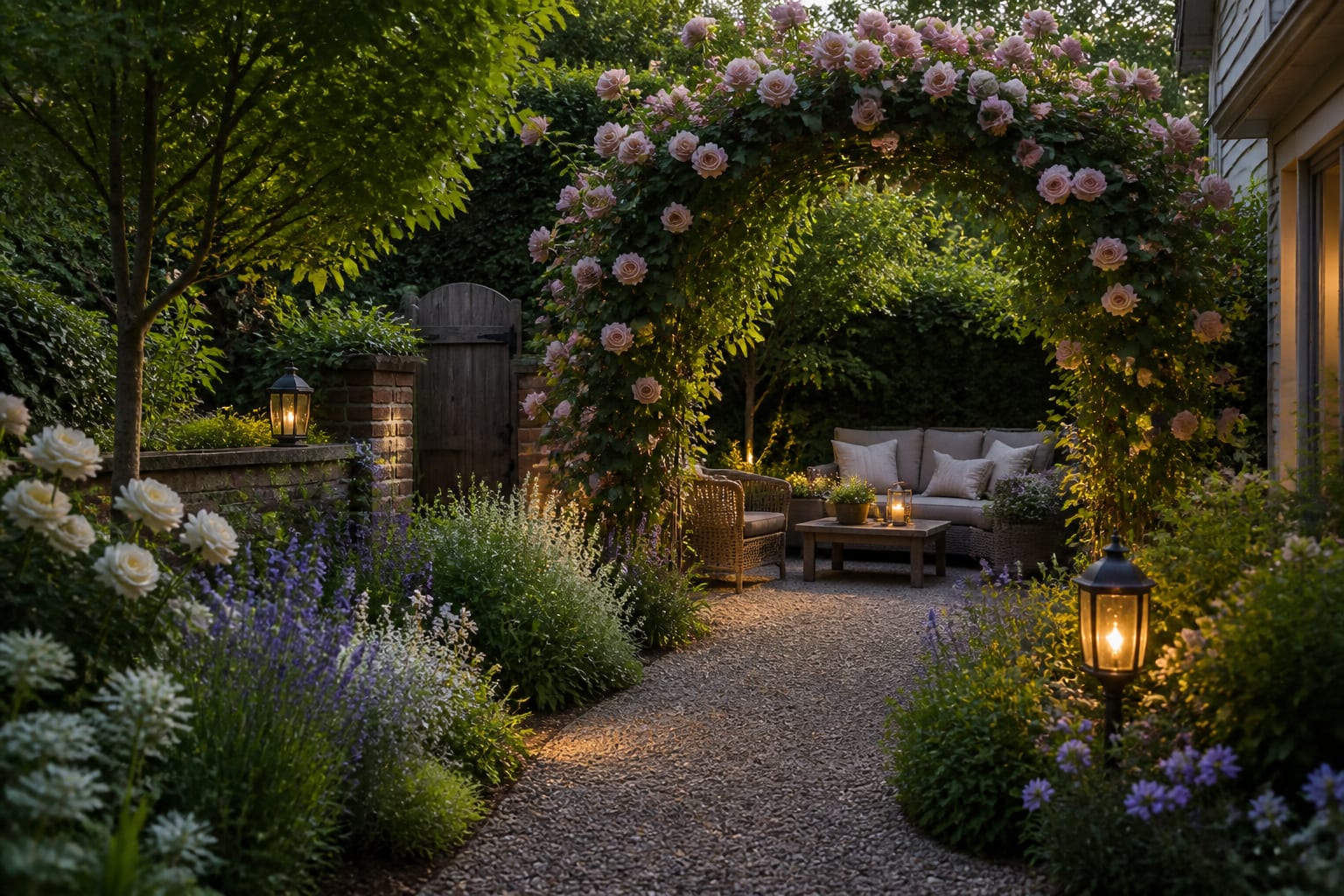
- Only add a gate, arbor, or trellis where it frames a real route. Clear about 84 inches for comfortable passage, and give climbers enough side planting room to look rooted.
For mood-board direction, see cottagecore garden ideas, then translate the prettiest parts into real dimensions, repeat groups, and seasonal maintenance.
Which Planting Decision Actually Makes the Romance Look Intentional?
The key decision isn't the rose variety — it's the repeating structure underneath. Choose three anchors before choosing twenty pretty plants: one evergreen or woody, one long-blooming perennial, one vertical accent.
For a sunny border: clipped lavender along the path, shrub roses through the middle, foxgloves or verbena bonariensis rising above. For part shade: hardy geranium, hydrangea, ferns, astrantia, and a small tree or obelisk for height. Exact species depend on your zone, but the rule holds — low edge, generous middle, taller back, repeated in clusters.
Spacing is where romance loses credibility fastest. New plants look small, so gardens get crowded, then turn into a damp tangle two seasons later. If a tag says 24 inches of spread, give it that room. Handle color like fabric, not confetti — pick one dominant mood and let contrast appear in small notes. For a broader reference set, see this cottage garden ideas plan.
How Do You Use AI to Preview a Cottage Garden Before Committing?
Upload a straight photo from the main viewing point — kitchen door, patio chair, or gate — including the fence, tree shade, hose bib, and existing shrubs. Write the prompt like a garden brief: a romantic cottage garden with a 36 inch curved gravel path, a 4 foot deep sunny border, blush roses, lavender edging, foxglove-like verticals, one small bench, no major grading, and lawn center left partly open.
If the result replaces your fence or invents a larger yard, rerun it with stricter instructions. Judge composition — path shape, border depth, color balance, seating location — not plant availability, since AI may show flowers from different seasons blooming together. Generate three versions of the same photo: one restrained and mostly green, one flower-heavy, one with more structure through hedging or brick. The right answer usually sits between the second and third.
What Mistakes Flatten a Cottage Garden's Charm?
A cottage garden fails by being too empty, too busy, or too themed — the problem is almost always missing hierarchy.
- One of everything. Repeat fewer varieties in larger groups; three clumps of the same salvia look more designed than nine scattered singles.
- No path edge. Lawn, gravel, and soil all compete for the same inch — use brick, steel, or a crisp spade edge, then let plants lean over it slightly.
- Peak-bloom-only planting. Add evergreen mounds, seed heads, and foliage contrast so the garden holds shape after the roses pause.
- No water access plan. If the border sits far from the spigot, plan drip irrigation before adding thirsty plants near a hot fence.
- Too much whimsy. One arbor, one bench, or one pot cluster is enough; let flowers and path carry the story.
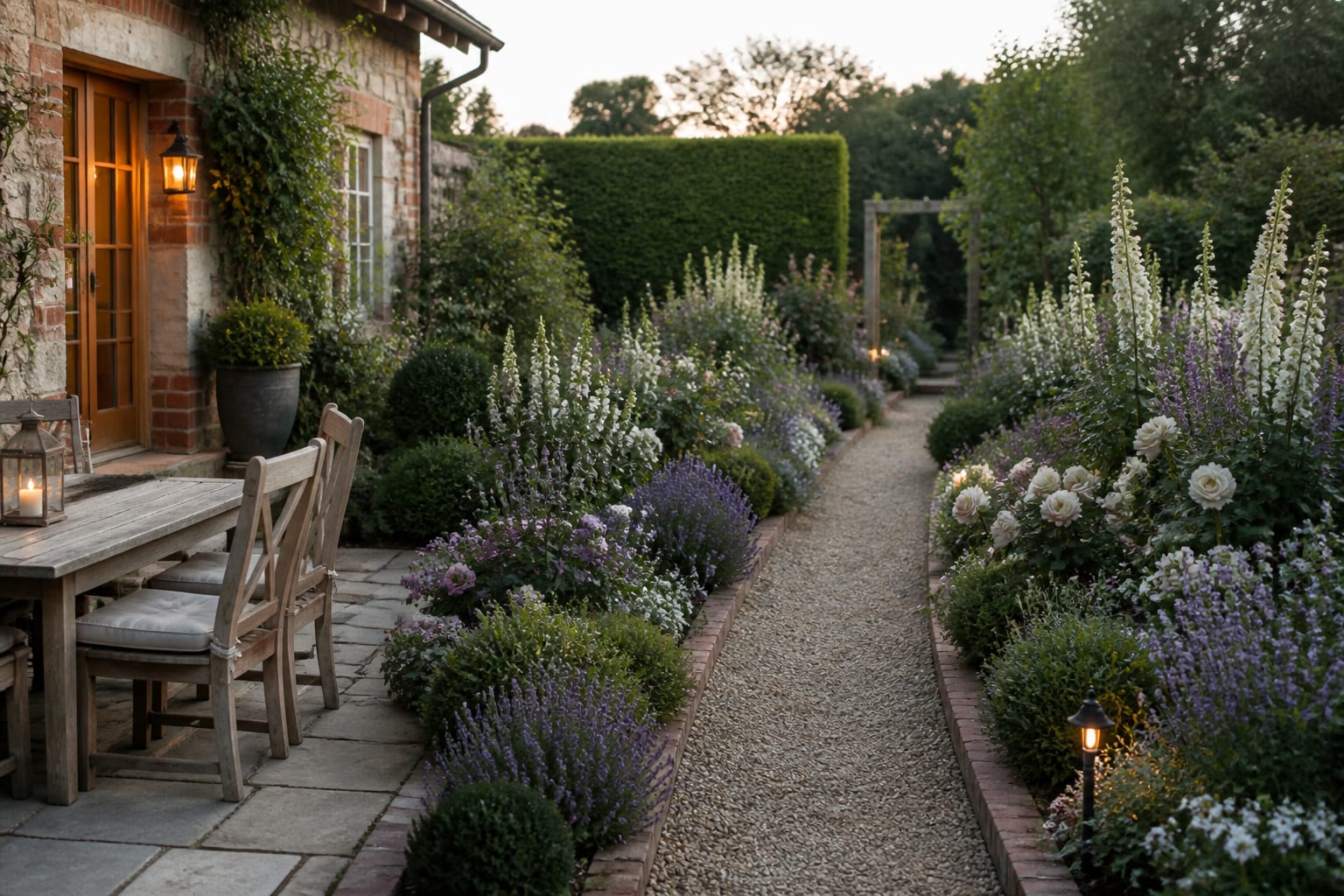
The final check: squint at the garden from the door. If you can still read the path, the main border, the repeated color, and one place to sit, the structure can carry all that softness.
Frequently Asked Questions
How wide should a cottage garden path be?
A minimum of 30 inches works for one person with a basket or hose, while 36 inches is more comfortable for a daily route to a shed, gate, or door. Anything narrower makes the path feel like an afterthought once plants start spilling over the edges.
How deep should a cottage garden border be?
Aim for at least 3 feet to get the layered look of edging, middle perennials, and taller back plants. An 18 inch border can hold lavender or edging plants, but it won't have room for roses, salvia, foxgloves, and a shrub together.
Can AI accurately predict which plants will survive in my garden?
No. AI previews are useful for testing layout, color, and mood, but they can't account for your exact climate, soil, sun hours, or deer pressure. Use the image for composition decisions, then confirm plant choices with local nursery labels and zone information.
How many plants should I repeat for a cohesive look?
Repeat at least three anchor plants or colors across the garden rather than adding one of everything. Grouping the same salvia, rose, or lavender in clusters reads as intentional design, while scattered single specimens tend to look cluttered.
What's the single biggest mistake in cottage garden design?
Skipping structure. Loose, abundant planting without a path, edging, or repeated plant groups turns weedy within a season, so lock in the hard lines and seating first, then let the flowers fill in around them.