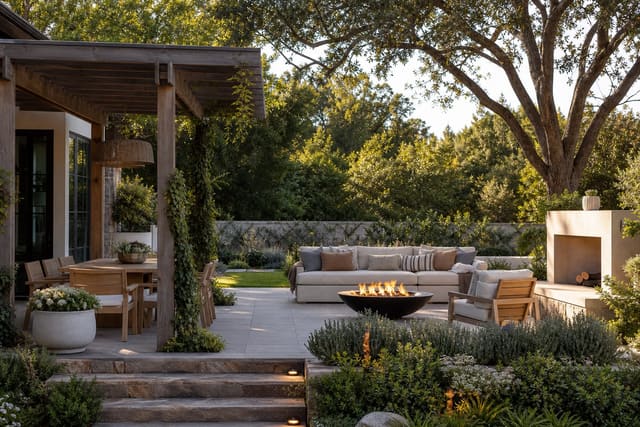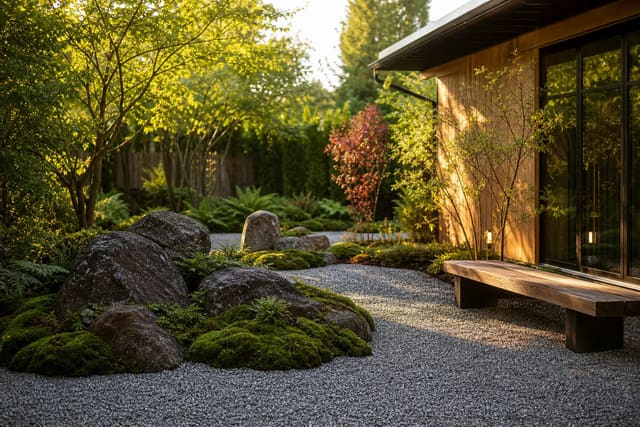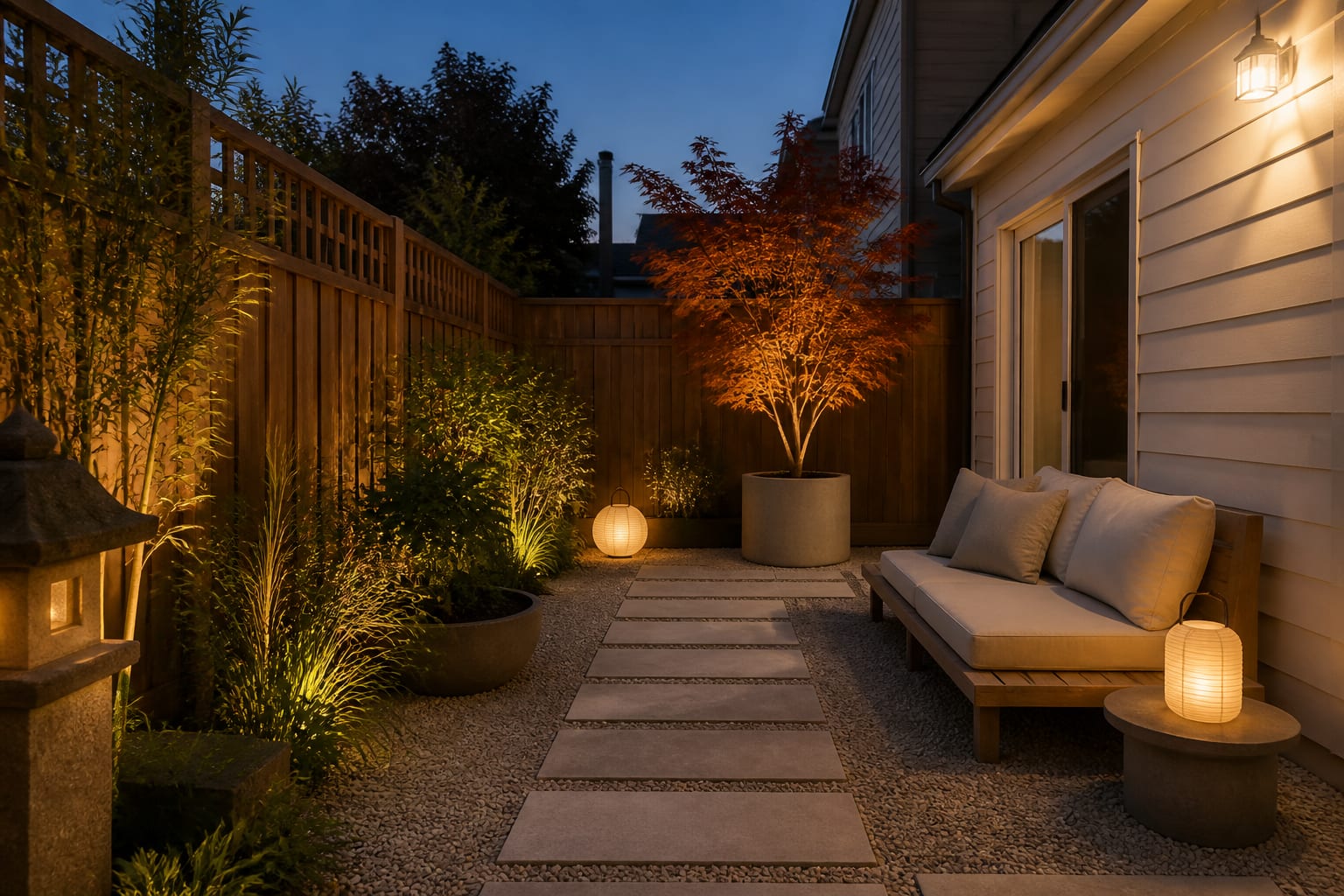
Japandi outdoor design blends Japanese restraint with Scandinavian warmth, replacing bright cushions and bulky furniture with low natural-wood seating, muted textiles, and an uncluttered layout. For a calm patio, use weathered timber, earth tones, simple sculptural greenery, and warm low lighting to create an outdoor room that invites you to slow down and stay a while.
What furniture and materials fit a Japandi patio?
Choose teak, acacia, or another weather-resistant wood that silvers naturally over time. Keep seating low with platform benches, low lounge chairs, or a simple wooden daybed instead of bulky sets. Pair wood with muted cushions in oatmeal, clay, or soft gray, using outdoor-rated linen-look fabric. A matching low coffee table anchors the group without crowding it.
- Solid teak, cedar, or acacia for frames and decking
- Woven rattan or rope for subtle texture
- Muted linen-blend cushions in clay, sage, or oatmeal
- Avoid bright plastics, ornate metalwork, and busy patterns
Fewer, better pieces with room to move between them keep the scheme grounded rather than showy. See Zen Garden Ideas for more on this approach.
How should flooring, plants, and layout work together?
The ground plane sets the mood: gravel, smooth river stones, or wide wood decking all work well. A path of stepping stones through gravel adds a contemplative rhythm. Define one calm seating zone rather than scattering furniture across the yard.
Planting should read curated, not wild. A single maple, a clump of tall grasses, or a potted bamboo carries more impact than crowded beds. Group plants in odd numbers, stick to greens and muted foliage, and leave breathing room around each specimen. Containers in raw concrete, unglazed terracotta, or weathered wood reinforce the natural palette, and a small stone basin or water feature adds gentle sound.
For more on this, read Japanese Garden Design Principles.
How do you light a Japandi patio for evening calm?
Favor warm, low sources over bright floodlights. Paper or metal lanterns, low path lights, and a few candles cast the soft amber glow this style depends on. Warm bulbs around 2700K flatter natural wood and stone, while harsh white light flattens everything.
Layer light at different heights: a hanging lantern over seating, a low fixture along the path, and candles on the table. A small fire bowl or chiminea adds warmth and movement. Keep cabling and hardware hidden so nothing distracts from the materials.
How do textiles keep the space cohesive and comfortable?
Soft outdoor textiles keep a Japandi patio from feeling stark. Layer weather-resistant cushions, a flat-woven outdoor rug, and a chunky knit throw for cooler evenings, all in clay, sage, oatmeal, and charcoal. Repeating materials and tones across furniture, planters, and accessories gives the space its quiet cohesion.
Store cushions and throws when not in use so the look stays intentional. Add a tray with stoneware mugs or a low tea table to make the space usable. The test: does it feel warm enough to linger in, yet uncluttered enough to breathe?
A quick-start layout: - Set low teak benches around a simple wooden table - Lay gravel with stepping stones for a calm path - Place a single sculptural maple in a concrete planter - Hang warm paper lanterns above the seating zone - Layer muted cushions and a chunky outdoor throw - Add a stone basin or small fire bowl nearby
Bring the look home with Re-Design
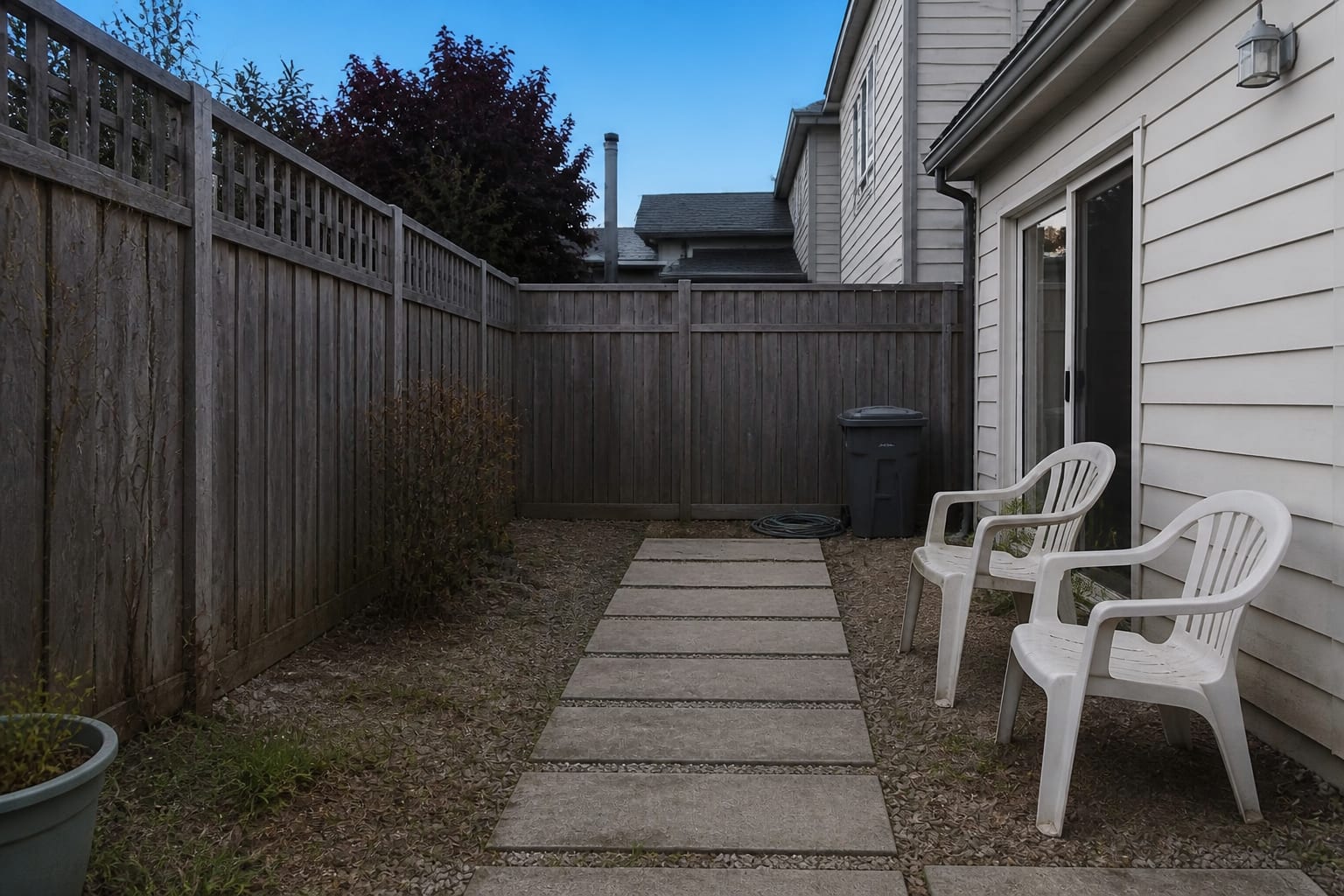
Upload a photo of your patio or backyard to Re-Design and preview it in calm Japandi style before buying anything. The app reimagines the space with low teak seating, gravel and stone, sculptural greenery, and warm lantern light against your real fence, paving, and plants, so you can decide which materials and textiles are worth bringing outside.
Frequently Asked Questions
How do I create a Japandi outdoor space?
Combine Scandinavian function with Japanese calm using teak or untreated cedar seating with clean, low lines, gravel or timber decking, and a tight palette of grays, browns, and greens. Add one sculptural planter and a paper-style lantern for evening light, keeping the layout open so the greenery stands out as the main feature.
What plants suit a Japandi garden?
Choose structural, restrained greenery over showy flowering beds: bamboo, Japanese maple, ferns, moss, and ornamental grasses all bring quiet texture and movement. Limit your varieties so the planting reads calm rather than busy. A single specimen tree in a stone pot often carries more impact than a crowded border.
What materials work for Japandi outdoor furniture?
Favor weather-resistant natural materials with honest finishes, such as solid teak, cedar, matte-black powder-coated steel, and woven rattan. Pair them with linen-blend cushions in muted earth tones and avoid glossy plastic or ornate detailing. Simple, low-slung benches and slatted chairs echo the minimal, warm balance found indoors.
How do I light a Japandi patio at night?
Use soft, warm, low-level lighting rather than floodlighting. Lantern-style fixtures, recessed step lights, and candles create pools of glow that highlight texture and plant silhouettes. Warm-toned bulbs around 2700K suit the mood best; position sources low and spread out so the space stays inviting, shadowed, and calm instead of evenly bright.