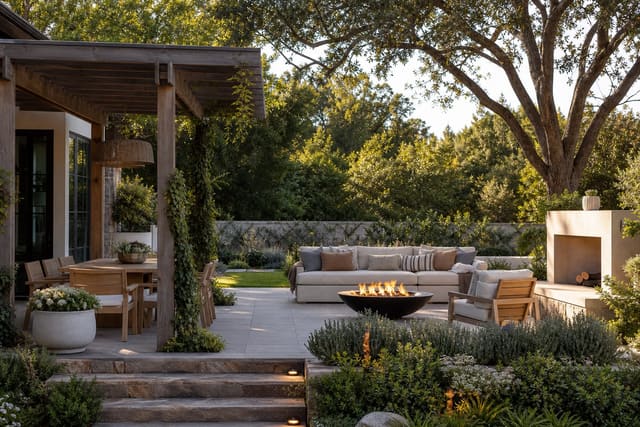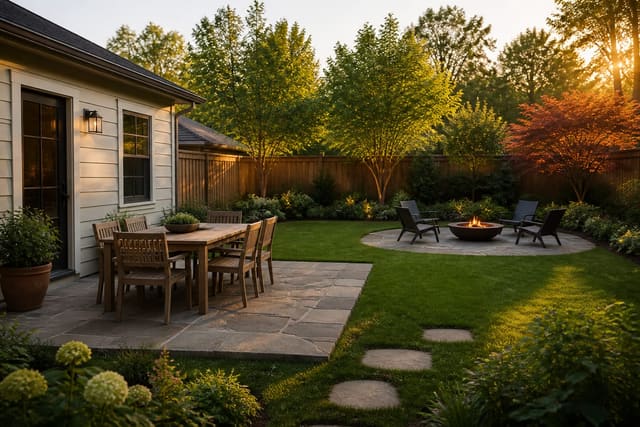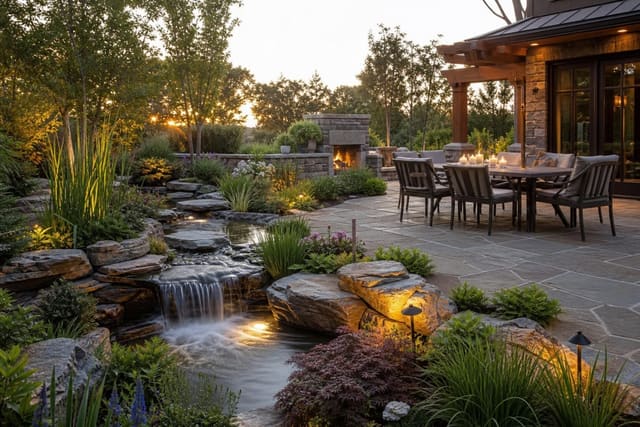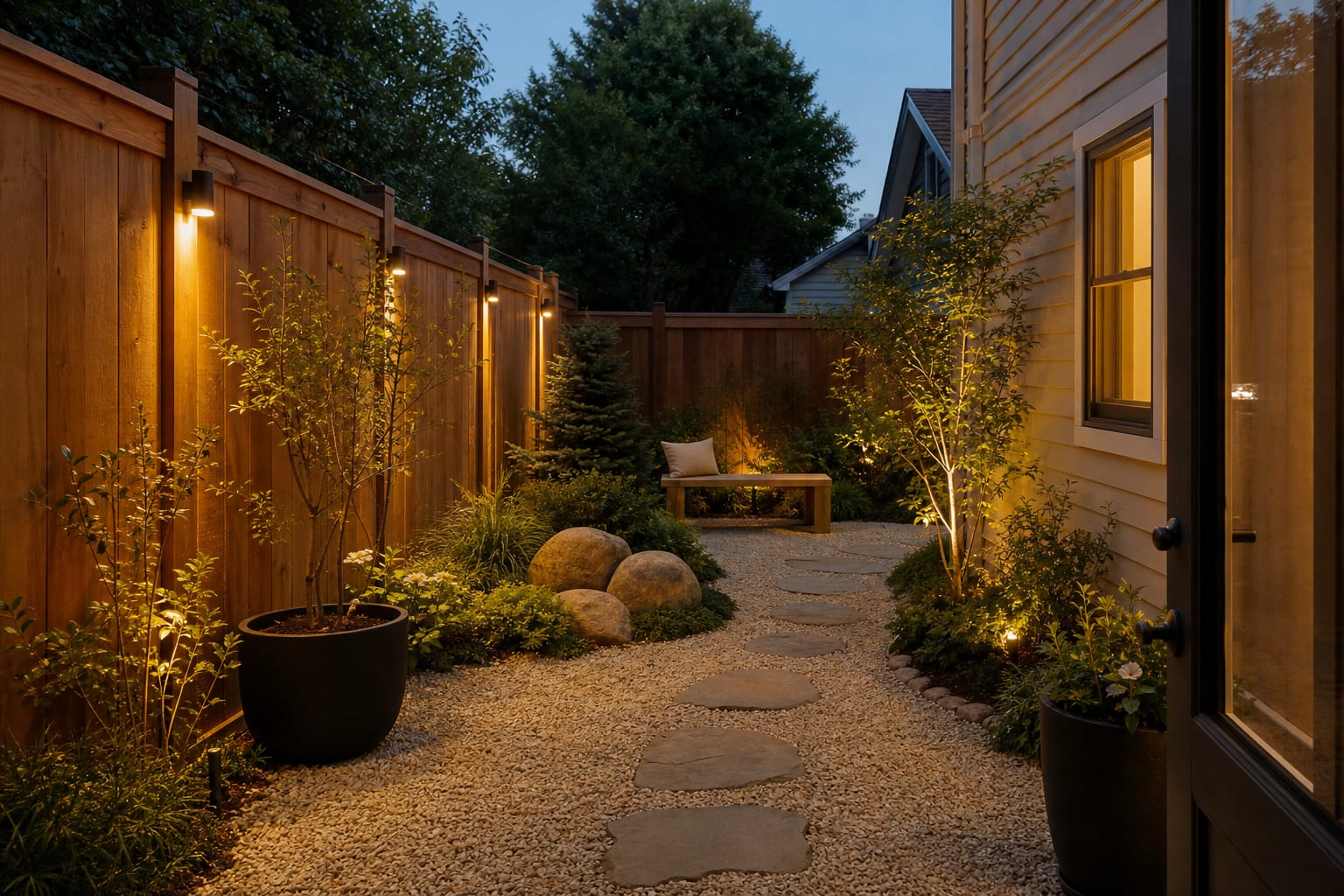
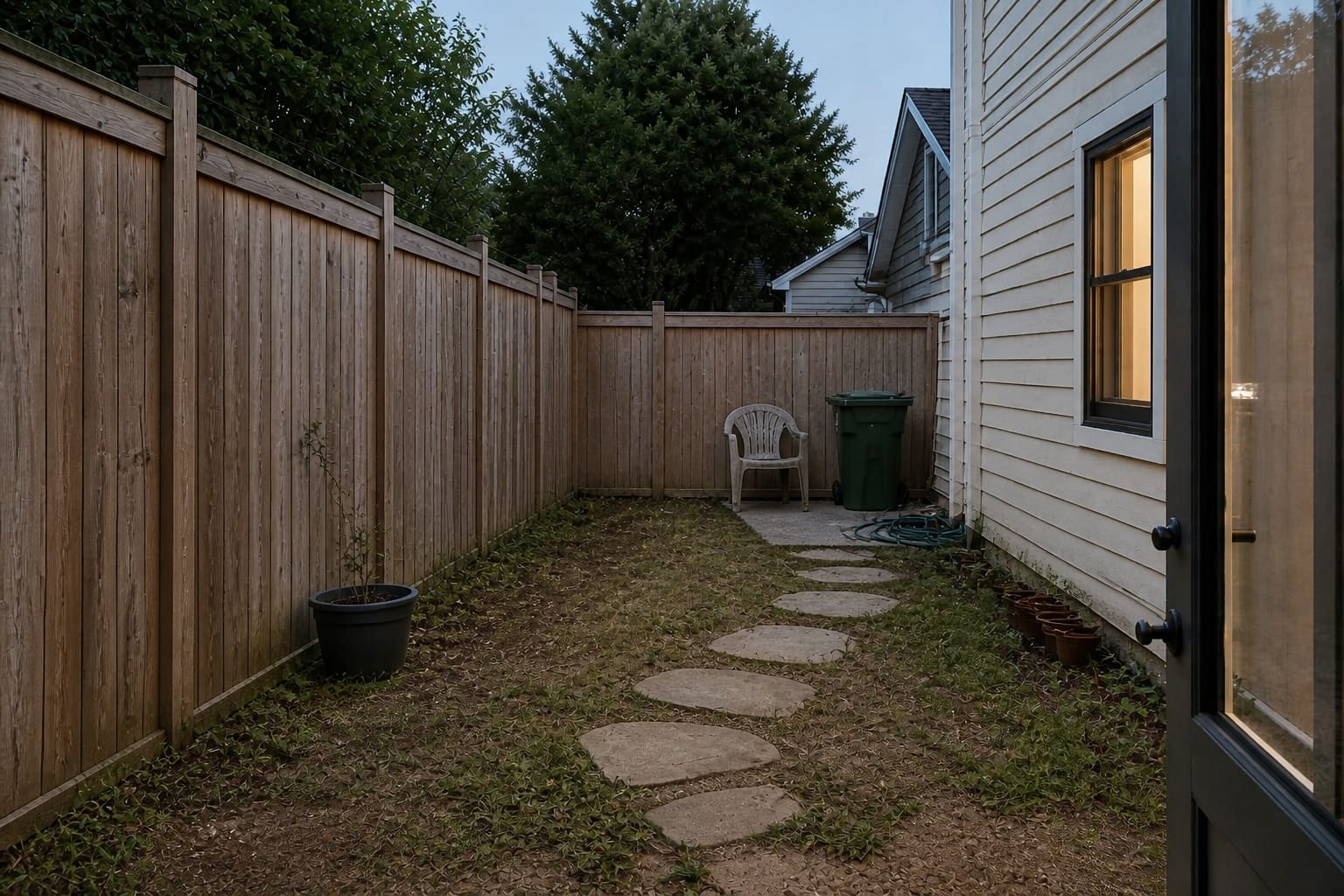
The calmest zen garden ideas simplify the ground plane first: rake a 2–3 inch bed of gravel or crushed granite into a clean field, anchor it with three to five grouped rocks, limit planting to three to five species, and add one comfortable seat so the space invites a daily pause instead of just decoration.
What Makes a Zen Garden Feel Calm?
A calm zen garden depends on contrast, not emptiness: rough stone against fine gravel, clipped evergreens beside loose moss, one slow path through stillness. Set the main gravel field at least 6 feet wide so it reads as a composed surface rather than a leftover strip, and edge it with steel, timber, stone, or a low curb — loose gravel bleeding into lawn looks temporary. For rented spaces, use interlocking gravel grids, a timber sleeper border, and removable stepping stones instead of poured concrete or mortared walls.
Rock placement should look settled, not decorated. Bury one-third of each stone below the gravel line so it appears anchored, group rocks asymmetrically in threes or fives with one dominant stone, and leave at least 18 inches of open gravel around the group so the eye has room to rest.
For contrast, Japandi Outdoor Spaces succeed through abundance while a zen garden succeeds through editing — the shared discipline is repeating a limited palette instead of buying one of everything.
Gravel, Planting, or Water: Which Should Lead?
Decide early whether the garden is a dry rock garden, a planted retreat, or a water-led courtyard. Giving all three equal weight usually makes the space feel like a display area at a garden center.
| Main focus | Best use | Concrete spec |
|---|---|---|
| Dry gravel and stone | Small yards, side gardens, low-water landscapes | Use 1/4–3/8 inch gravel or crushed granite over compacted base, steel edging flush or 1 inch proud |
| Restrained planting | Shadier gardens, softer family yards, fence-heavy spaces | Mass plants in drifts at least 24 inches deep so they read as texture, not dots |
| Water or basin | Courtyards, entry gardens, seating zones near the house | Keep the basin within 6–10 feet of the seat so sound and reflection belong to the pause |
Choose a dry garden for small, exposed, or drought-prone yards. Pale gravel brightens shade, charcoal aggregate cools a sunny courtyard, and decomposed granite feels warmer and less formal; use larger gravel where nearby trees drop heavy leaf litter, since tiny aggregate traps debris.
Planting-led gardens need restraint over rarity: Japanese maple, dwarf pine, boxwood, mondo grass, moss, ferns, sedges, and thyme all work, but not together. In hot climates, Japanese Garden Design Principles borrows the same spare structure using agave, aloe, or stonecrop as sculptural forms against a broad gravel field.
Water is best kept simple. A stone basin, narrow rill, or still bowl reads more zen than a bubbling faux-rock fountain. Place it within earshot of the seat, not hidden behind shrubs where it becomes a mosquito trap.
Test this on your own photo with ReDesign before choosing a direction; keep the house edge, horizon line, hardscape, planting beds, and main path visible so the preview solves the space you actually have.
What Are Some Zen Garden Ideas That Look Intentional?
- Rake a gravel court beside the house with one off-center stone group; keep the rectangle at least 8 by 10 feet so rake lines have room to read as meditative rather than fussy.
- Add a plain, low timber bench — a 16–18 inch seat height feels natural outdoors, and a 48–60 inch length fits one person stretched out or two people sitting.
- Use stepping stones as punctuation, not a full walkway. Space them 24–28 inches apart center to center, with tops about 1/2 inch above the gravel.
- Screen one ugly view with a dark, quiet backdrop like a charcoal-stained fence, bamboo panel, or clipped hedge, especially in gardens only 10–12 feet deep.
- In warm, humid climates, repeat one large-leaf plant for a tropical note without sliding into resort style — the same restraint that keeps Cottagecore Garden Ideas from feeling busy.
The best rock garden ideas fit one sentence: pale gravel, dark fence, three stones, one bench; or mossy ground, stepping stones, maple shade, stone basin. If the concept needs a paragraph, the garden will likely look busy.
What Mistakes Ruin a Zen Garden?
- Stones too small. Pebble piles and fist-sized rocks look decorative because they lack mass; choose fewer, heavier stones and sink them so they look discovered rather than placed.
- Mixed gravel colors. White marble chips, red lava rock, black pebbles, and tan decomposed granite together read like a sample board — pick one aggregate for the field and one edging material.
- Overloaded planting. A zen garden doesn't need every plant associated with Japan; use local plants with similar form if moss or maple won't survive your climate.
- No lighting plan. Use warm 2700K light aimed across gravel or across a stone's textured side, with path lights 6–12 inches high so the garden glows from the ground instead of looking like a runway.
- Ignoring maintenance. Raked gravel needs a rake, deciduous trees drop leaves into every curve, and moss needs shade and moisture — design around the care rhythm you'll actually keep.
How Can AI Design Help Preview a Zen Garden?
Zen gardens depend on proportion, which is hard to judge from a shopping cart. Upload a straight-on photo of the yard, then test pale gravel against darker aggregate, one boulder group against two, and a bench on the left versus the right before anyone hauls stone through the gate.
Photograph the garden from the seat or doorway you use most, include the fence line and ground plane, and clear movable clutter first. Ask for a minimalist gravel garden with restrained planting, a defined path, and one focal stone group, then compare results for calm, not novelty.
Frequently Asked Questions
What plants belong in a zen garden?
Restrict the palette to three to five species — Japanese maple, mounding moss or sedum, an ornamental grass like Hakonechloa, a clipped evergreen such as Japanese holly or pine, and clumping bamboo. Over-planting is what kills the calm, so repeat these forms rather than adding new species.
What kind of gravel works for the raked field?
3/8 inch pea gravel or crushed granite holds rake lines for 2 to 4 weeks before needing a refresh. Avoid colored decorative gravel and large 2 inch stones, since both break the kare-sansui scale that makes the field read as water.
How big should a zen garden be?
10 by 12 feet is the smallest footprint that reads as zen instead of decorative. Below that, rock placement compresses and the gravel field starts to look like filler rather than a composed surface.
Do I need a fence around a zen garden?
A visual enclosure such as a bamboo screen, cedar slat fence, or hedged border helps define the garden as a destination. Without it, open lawn on all sides makes the rocks and gravel read as random yard features instead of a designed space.
How often does a zen garden need maintenance?
Rake the gravel weekly to hold the lines and refresh the field annually. Pruning, weeding, and moss watering run 2 to 3 hours a month — zen gardens stay low-maintenance only after the initial install discipline is in place.
> Try this: Ready to see this on your own space? Open ReDesign and run the preview.
Three transformations to try
1. Raked gravel field with three anchor rocks 2. Moss garden under Japanese maple 3. Bamboo-fenced corner with stone basin