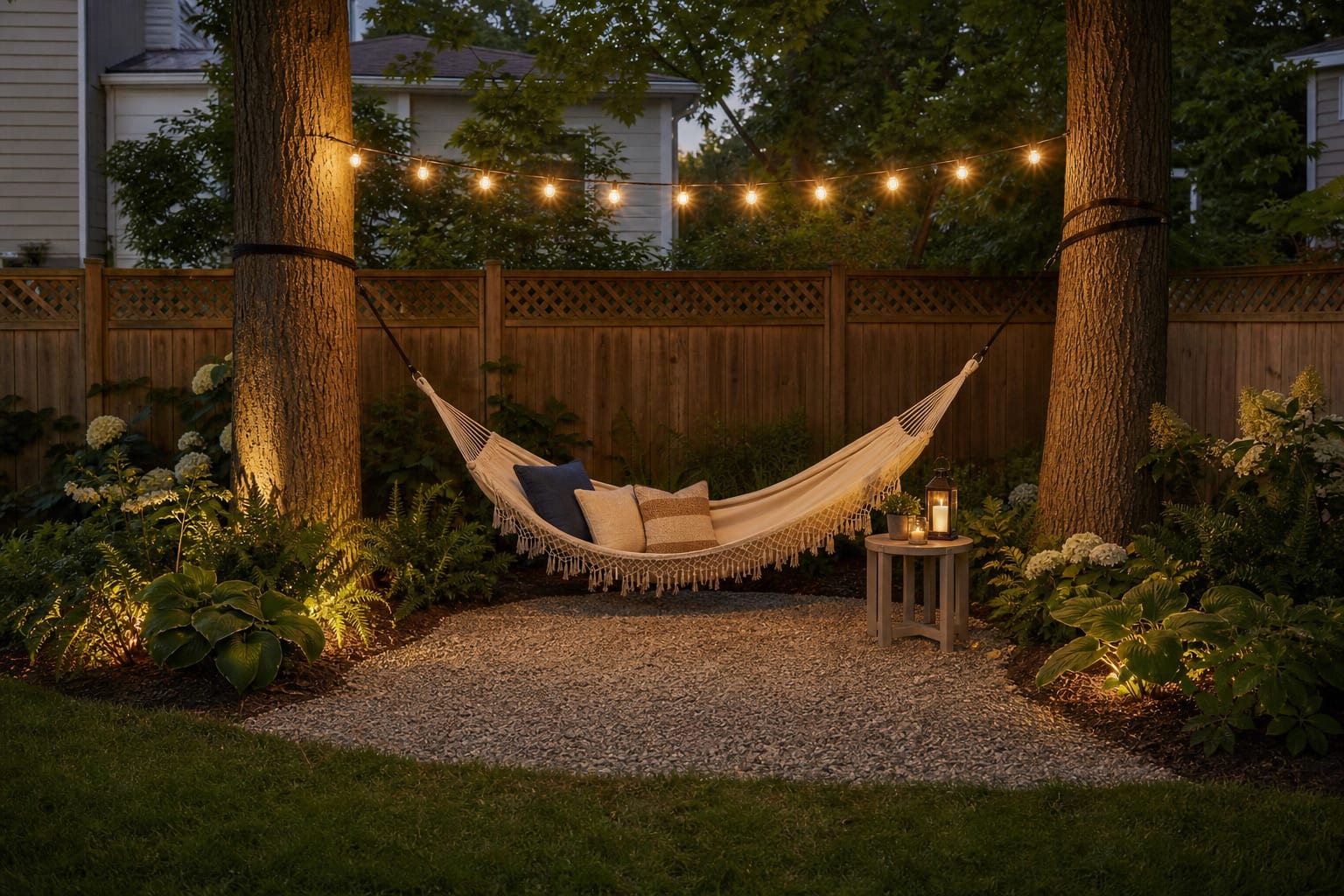
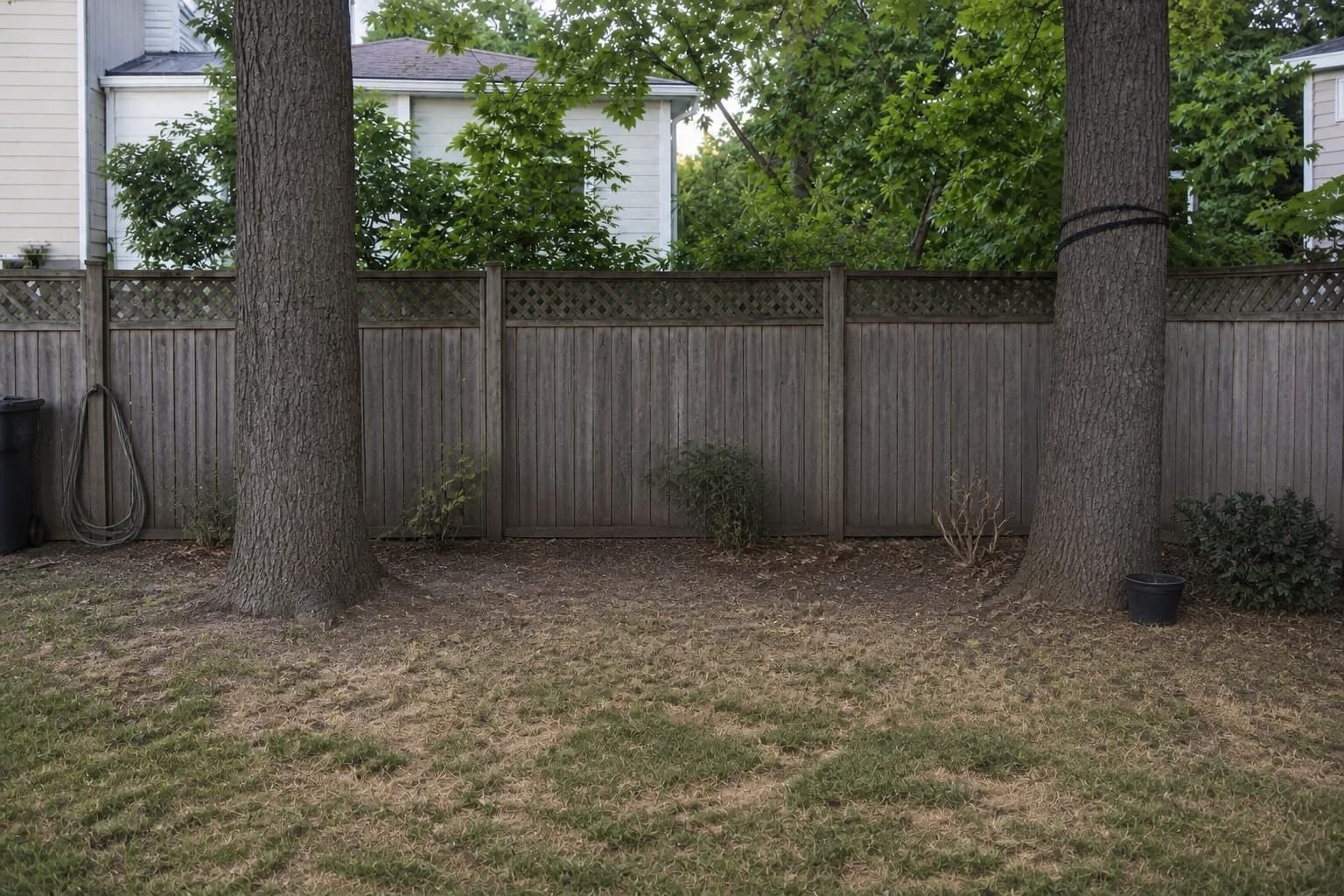
A backyard hammock hangs correctly when it spans 12-15ft between anchor points, sags at roughly 30 degrees (ridge line 18in above body height), and is rigged from 5in+ diameter trees or 4x4 galvanized posts set 3ft in concrete. The lowest point should sit at least 18in above the ground. Add clear landing space, reliable shade, and a defined ground surface, and the hammock stops looking like camping gear and starts feeling like a real outdoor room.
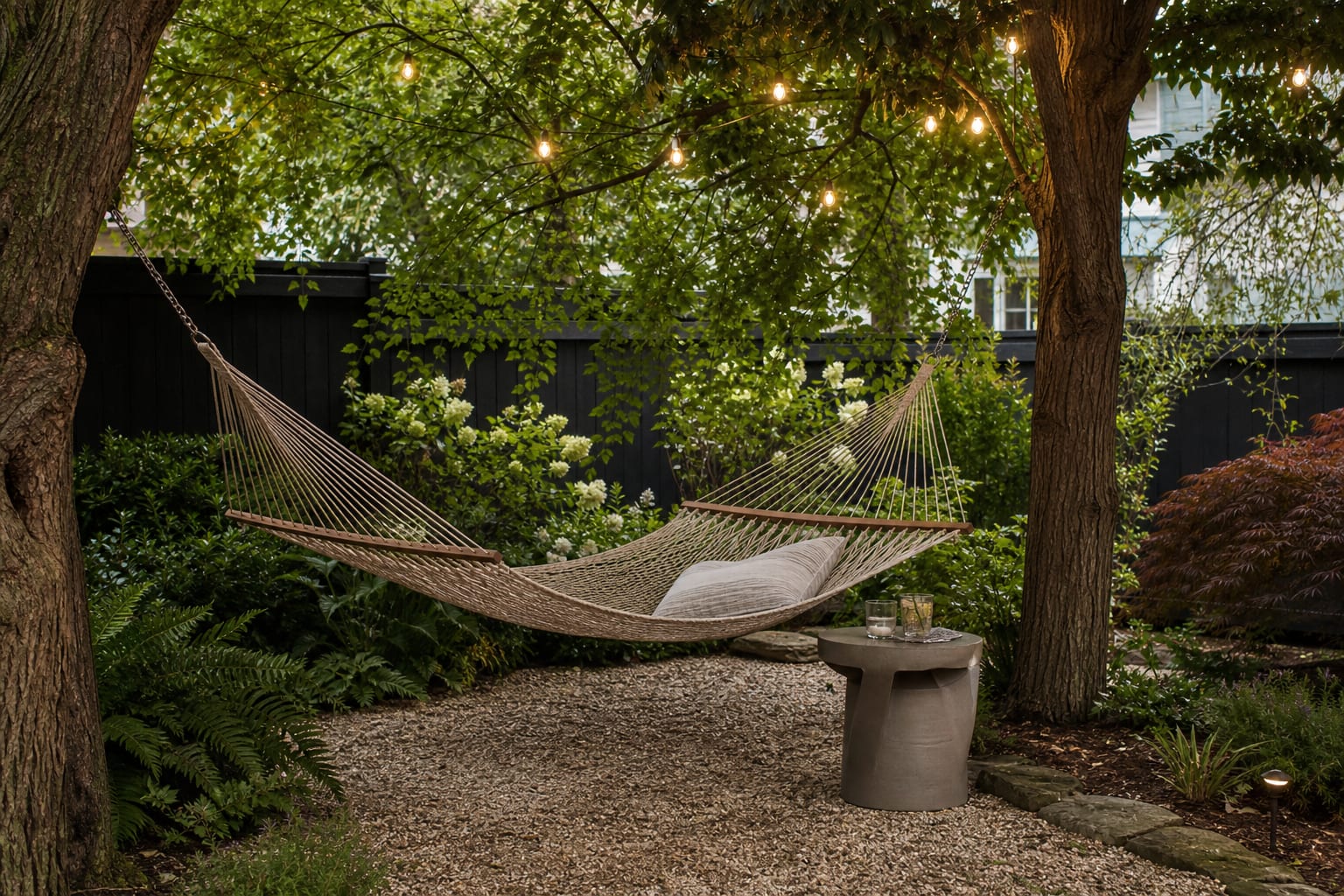
What makes a hammock corner feel like a destination?
A hammock corner works when supports, shade, ground surface, and nearby planting all serve the same purpose: slow sitting. Don't block the path from the back door to the grill, and don't hang it so far away that nobody bothers walking out there.
Design the view from the hammock, not just of it. Face it toward planting, a tree canopy, water, or a fire pit zone — if the only view is a shed wall, fix that with a trellis or tall grasses first.
The ground under a hammock takes heavy abuse from dragging feet and shifted chairs. A 6x8ft gravel pad suits a single hammock and side table; go 8x10ft if you want room for a lounge chair or basket.
Which hanging method should lead the layout?
Choose the method based on what your yard already offers: tree straps for mature healthy trees, posts for a permanent zone, a stand for flexibility, and a pergola beam only when rated for the load. Never guess on structure — a hammock holds moving weight, not a decorative basket.
| Hammock setup | Best backyard use | Spec that keeps it comfortable |
|---|---|---|
| Tree-to-tree | Shaded yards with two healthy trunks | Wide tree straps; avoid trunks under roughly 8in diameter, young, cracked, or leaning. |
| Post-mounted | New hammock zone with no good trees | Set per local soil/hardware code; keep clear of main paths. |
| Freestanding stand | Rentals, patios, decks, flexible layouts | Check footprint — many stands need 9-15ft of length. |
| Pergola-mounted | Covered lounge zones, larger patios | Confirm beam capacity with a qualified builder first. |
Tree straps look softest but only work where trees are actually positioned well; a hammock stretched between back-fence trees can feel isolated if the patio sits 40 feet away. Pull it closer to the social zone without blocking movement — see these outdoor entertaining ideas for balancing seating, shade, and circulation.
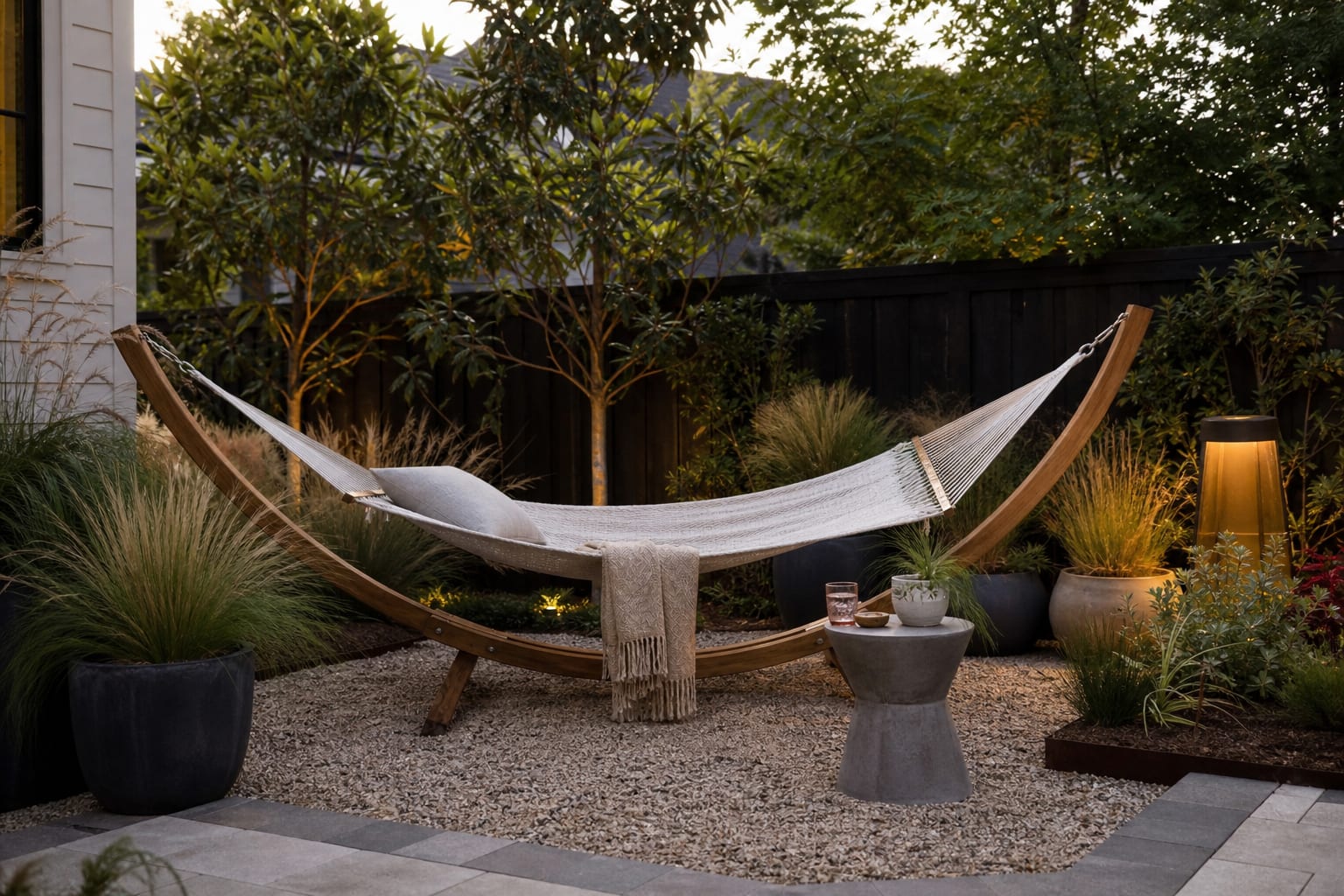
Stands suit renters since the whole setup can move seasonally. Place the stand on a level patio or gravel pad, then soften the frame with pots, a low rug, or nearby planting to hide the temporary look.
Test this on your own photo with ReDesign before committing — keep the house edge, horizon, hardscape, planting beds, and main path visible so the preview solves your actual space.
Five backyard hammock ideas worth testing
- Tree-hung hammock with a gravel pad. Keep the pad at least 2ft wider than the hammock's relaxed width and edge it in steel, brick, or stone.
- Post-and-planting nook. Set posts within a bed, not open lawn, and back them with shrubs or grasses so they read as a garden frame.
- Hammock chair for tight corners. Fits a 5x5ft space with proper overhead support, delivering the same mood without stealing a small yard's diagonal.
- Freestanding stand on a deck. Keep 36in clear from the door to stairs, grill, or dining table so the stand doesn't block traffic.
- One table, one light source. A 16-20in side table plus a low-voltage path light or shielded lantern keeps the spot usable after dark.
- Family-friendly zone with soft boundaries. Keep the swing path away from hard corners and fire features; see kid-friendly outdoor space planning for placement near play areas.
Common backyard hammock mistakes to avoid
Hanging it too tight is the top mistake — a flat, strained hammock strains anchors and feels unstable. Aim for a gentle banana-shaped sag with the low point at chair height.
Ignoring the approach is another failure. If someone must cross wet lawn or duck branches to reach it, the hammock won't get used; add stepping stones or a gravel spur instead.
Full sun exposure kills comfort fast, even if that's where the trees happen to be. Use canopy, umbrella, or sail shade, and keep fabric out of constant harsh sun to slow fading and mildew.
Clutter is a quieter mistake — one hammock, one table, one basket, and strong planting beats four pillows and a tray nobody brings in before rain. Warm 2700K light near the path and table (not directly overhead) keeps the space comfortable after dark.
Use AI design to preview your hammock corner
AI design works well here because the hard choices are visual: location, scale, shade, and whether the yard feels calmer or more cluttered. Upload a straight photo of the tree corner, deck edge, or lawn strip, then test a tree-hung hammock, a post nook, and a stand from the same angle.
Use the preview to judge relationships, not hardware specs. Does the hammock block the route to the dining table? Would darker fabric disappear into shade better than bright canvas? If the image feels thin, add a gravel pad, planters, or a side table before changing the hammock itself.
Contractors and arborists still matter for posts, beams, tree health, and load-rated hardware — the preview just helps you reject the wrong location while the mistake is still cheap.
Frequently Asked Questions
How far apart should hammock posts be?
Set posts 12-15ft apart for a standard 11ft spreader-bar hammock. Brazilian-style rope hammocks need 13-16ft because the body lies at an angle to distribute weight evenly.
What size tree do I need to hang a hammock?
Use a live trunk at least 5in in diameter. Wrap it with 2in-wide tree straps to protect the bark and tie off 6-7ft up so the hammock sags to 18in above the ground.
How do I hang a hammock without trees?
Set two 4x4 galvanized steel posts 3ft deep in an 18in-diameter concrete footing, capped with a hammock hook at 6-7ft. This anchors any hammock style permanently with no tree damage.
What is the best hammock material for outdoor use?
Sunbrella or woven polyester resists UV, mold, and moisture and dries within an hour of rain. Cotton rope hammocks feel softer but mildew in humid climates unless stored under cover.
How high off the ground should a hammock hang?
The center sag should sit about 18in above the ground. That's high enough to enter and exit without ducking, but low enough to land safely if the rigging ever fails.
> Try this: Ready to see this on your own outdoor space? Open ReDesign and run the preview before you buy materials, plant, drill, or move furniture.
Three transformations to try
1. Steel-post hammock with shade sail overhead 2. Tree-hung hammock in garden corner 3. Double hammock with side table and string lights