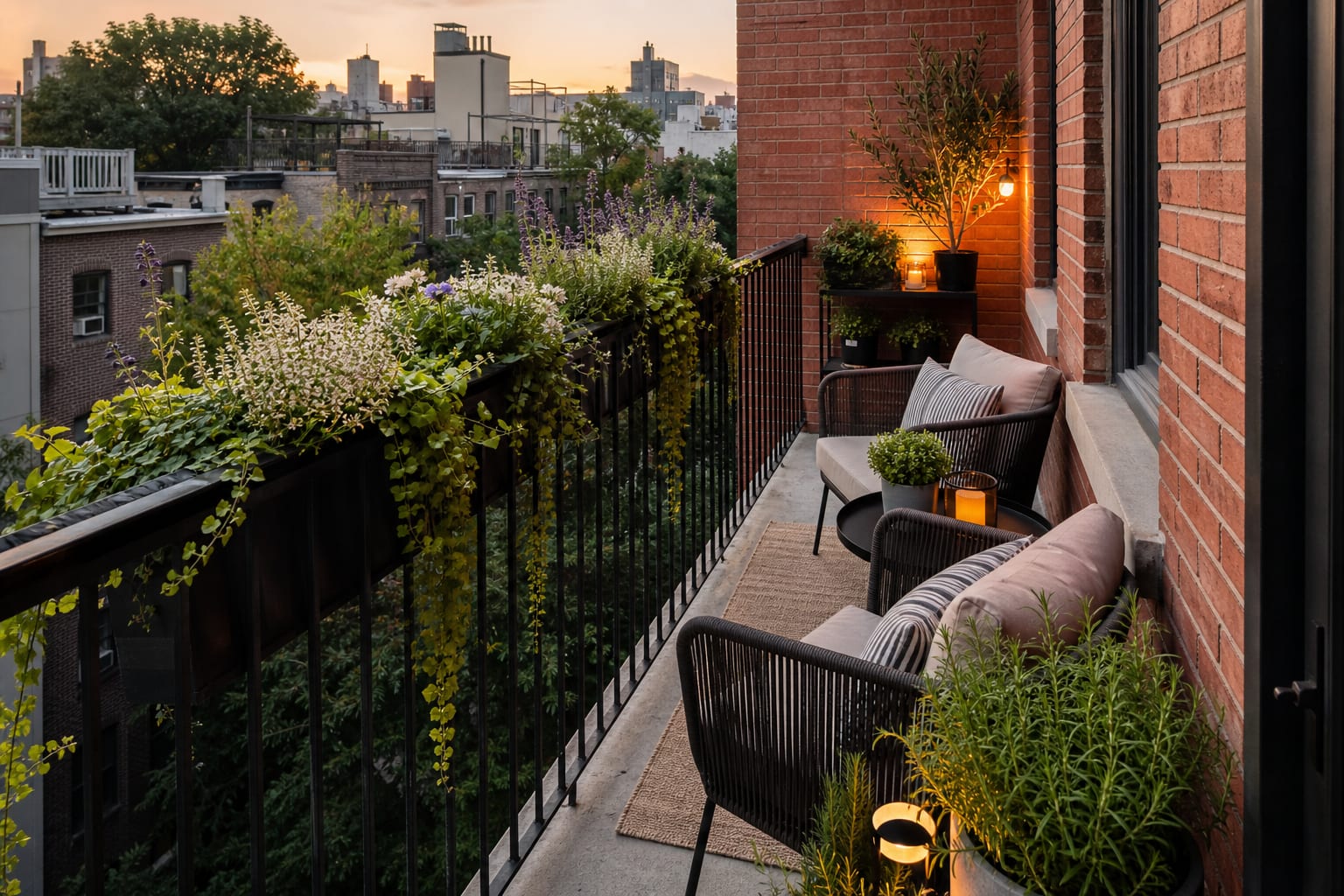
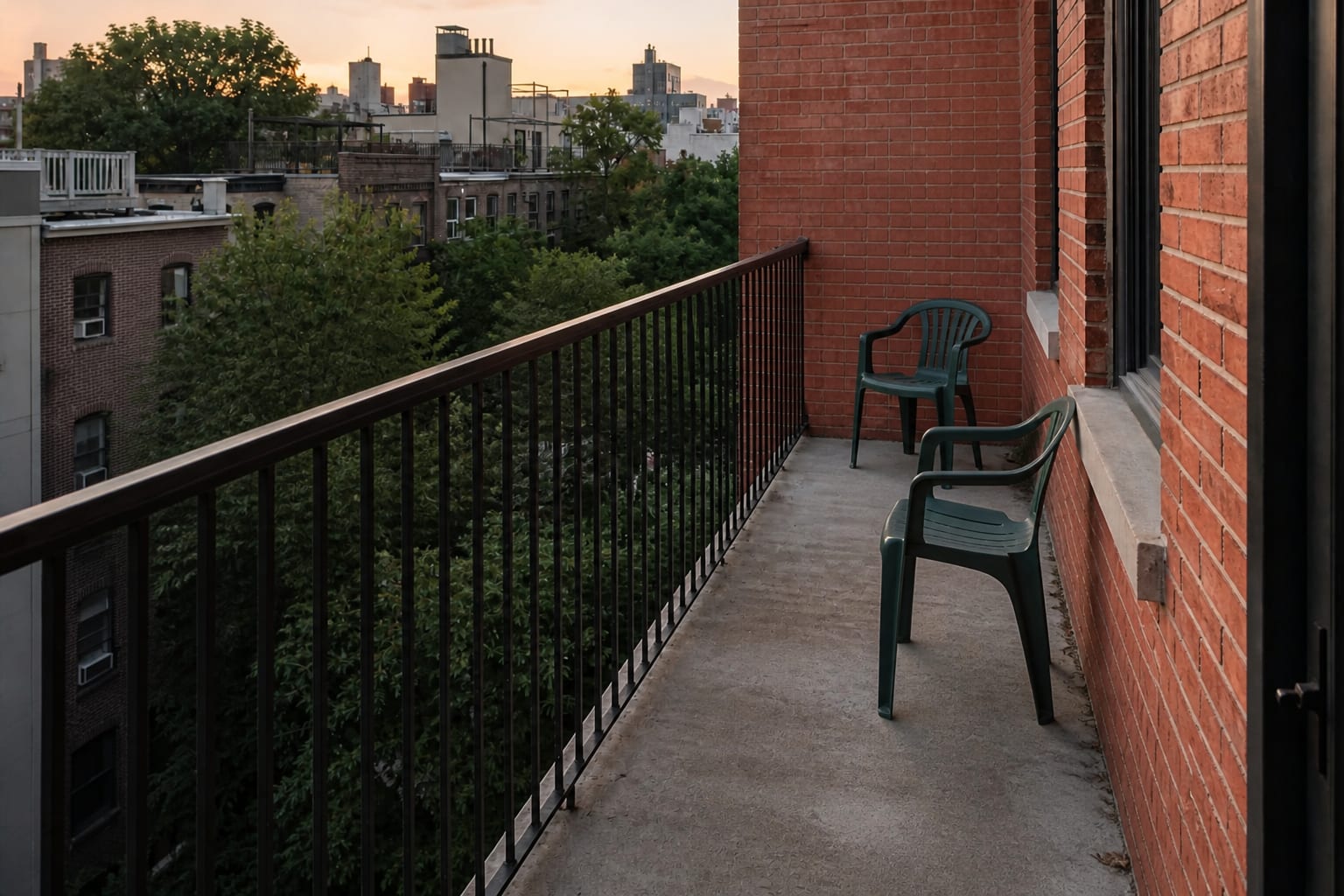
The best railing planter ideas start with the rail itself: match the bracket to the rail profile, keep 8in of soil depth for roots, and leave 18in of clear sightline at standing height. Confirm building rules, control drainage, then build color, herbs, or trailing greenery around that fixed edge on any balcony, deck, or porch rail.
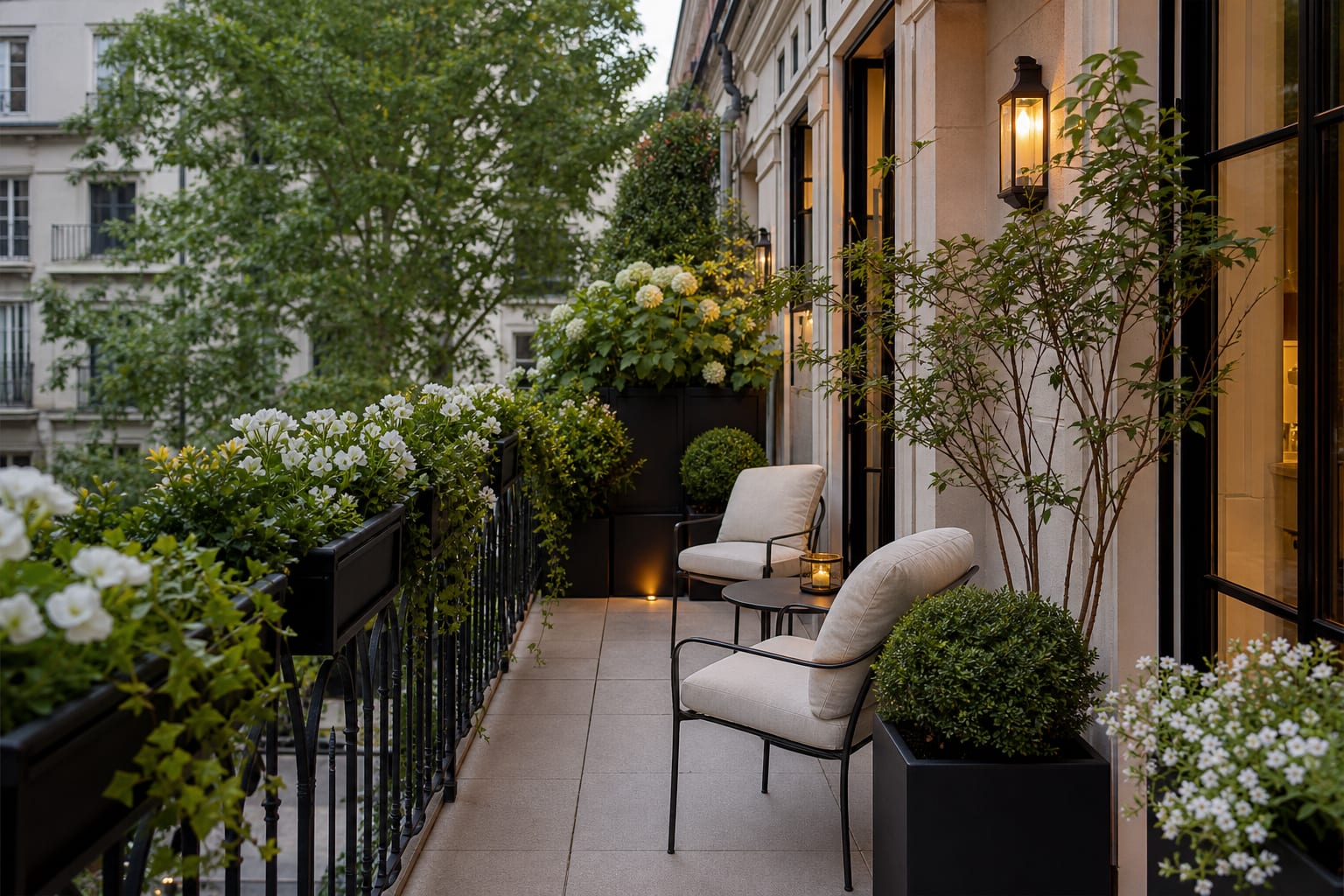
How do I add planters to a balcony railing?
Check the railing shape first. A 2" round metal rail needs a different clamp than a 5" flat wood cap, and a glass balcony usually needs a freestanding planter set just inside the rail rather than anything hung over it. On narrow balconies, keep planter depth around 6" to 8" so greenery does not steal knee room from the seating zone.
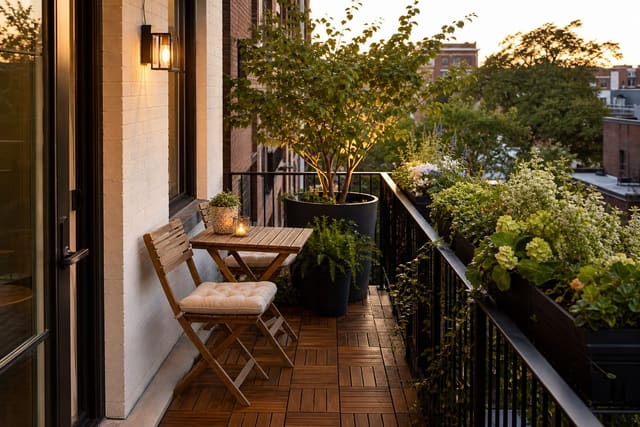
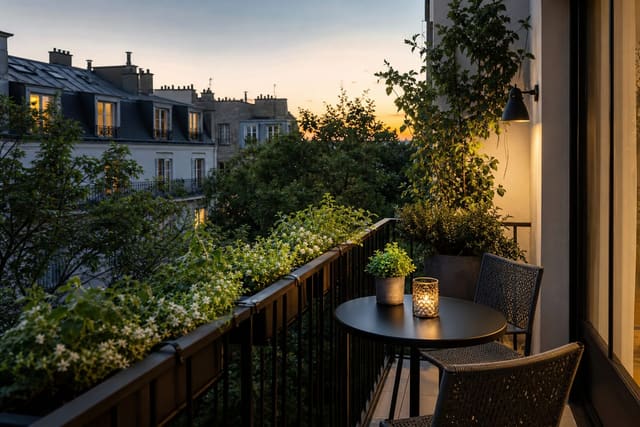
For apartments, mount long rectangular boxes on the inside face of the rail. This keeps weight over your own slab, reduces dropped-object risk, and keeps the outside elevation clean for building rules. If seating is still undecided, solve the planter depth before picking chairs; the spacing logic in small balcony furniture ideas gets easier once the rail zone is claimed.
::beforeafter before: /articles/railing-planter-ideas-before-v2.jpg after: /articles/railing-planter-ideas-after.jpg ariaLabel: "before and after balcony railing planter design with flower boxes and compact seating" ::
Which mounting style keeps a railing planter stable?
The core choice is whether the planter sits over the rail, hangs from brackets, or stands just inside the railing. Saddle planters work on flat wood rails but often fail on narrow, rounded, or exposed metal. Adjustable metal brackets usually work better for deck rails because they grip a specific rail size and support a longer box.
| Mounting style | Best use | Watch point | Practical spec |
|---|---|---|---|
| Saddle planter | Flat wood or composite rails | Can rock on rounded metal | Match channel to rail width, often 4" to 6" |
| Inside-hung bracket | Apartment balconies and shared buildings | Needs secure clamp points | Two brackets for boxes up to 36", three for longer runs |
| Freestanding trough | Glass rails or strict buildings | Takes floor space | Keep depth near 8" to 10" on narrow balconies |
| Over-rail hook basket | Temporary seasonal color | Can look cluttered fast | One basket every 3' to 4', not one per picket |
Check building rules first, then inspect the rail for loose caps, rust, or wobbly posts. A flower box should never hide a failing rail; it only draws attention to the problem as plants grow unevenly. For added privacy, a row of 30in grasses in slim boxes softens sightlines at seated eye level better than a heavy screen, pairing well with balcony privacy screen ideas instead of building a solid wall.
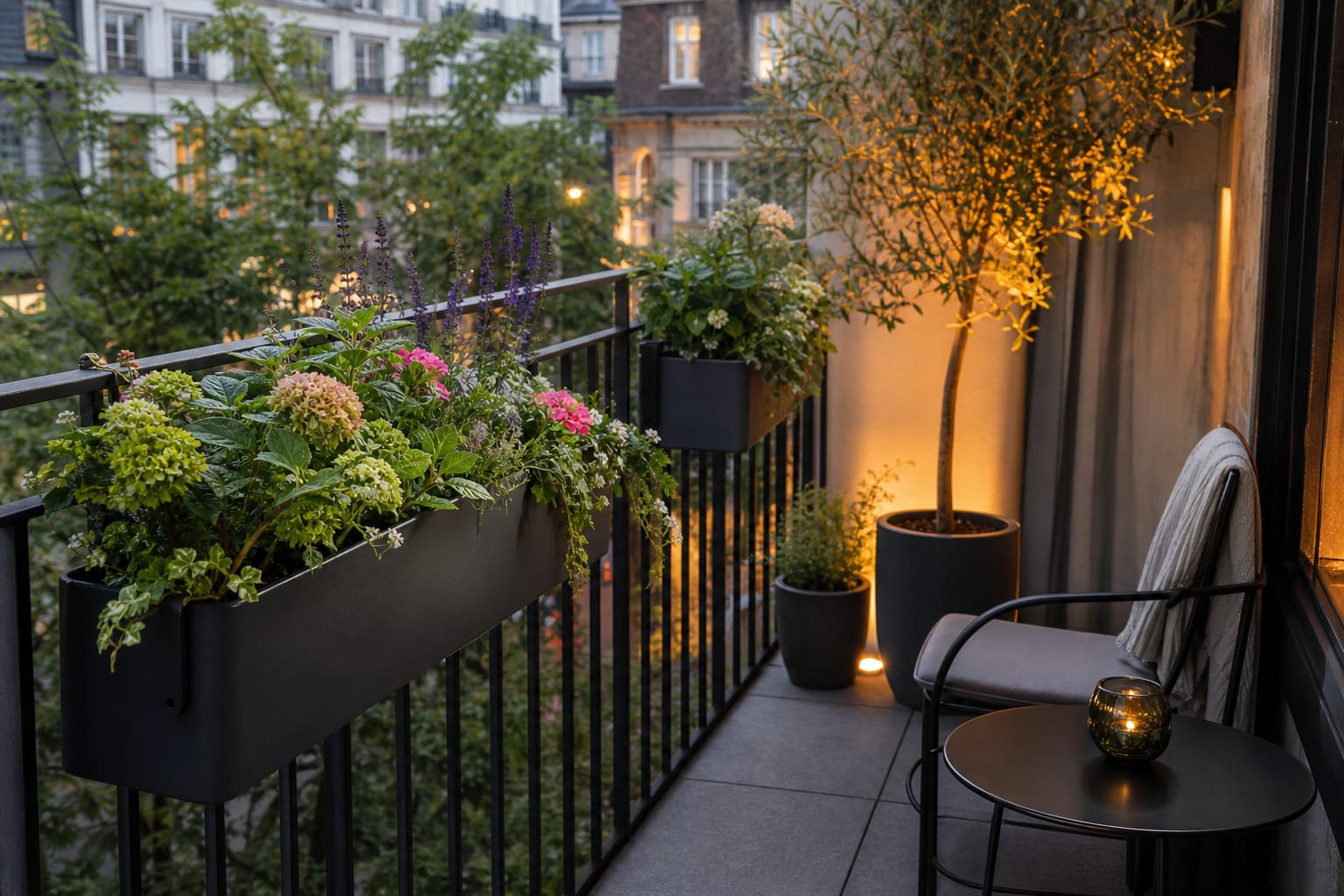
What are the best railing planter ideas for real balconies?
- Run one long flower box instead of many small pots. A continuous line reads as designed; two 36" boxes with a 12" to 18" gap at the corner suits a 10' balcony and still leaves room for a side table.
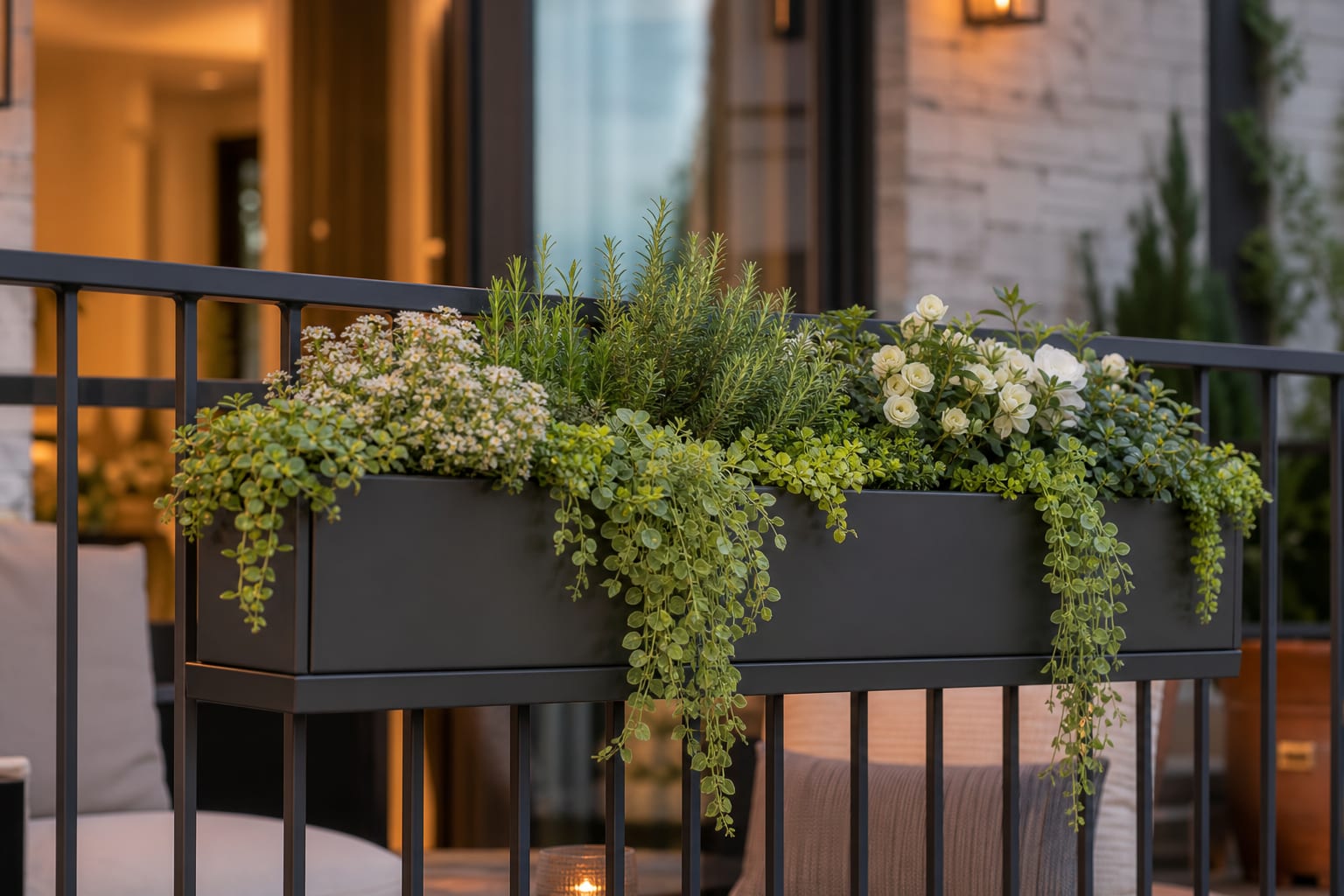
- Plant in three layers. Try compact salvia or lavender upright, calibrachoa or geranium in the middle, and sweet potato vine or trailing thyme over the edge, keeping mature height under 18in where wind is strong.
- Reserve one sunny box for herbs. Basil, thyme, parsley, and chives earn their space near morning coffee or dinner; a 7in deep box handles most herbs with several hours of direct sun.
- Match planter color to the railing on small balconies. Black boxes on black rails or warm gray on weathered wood let the flowers carry the color instead of the hardware.
- Frame the seating spot rather than filling the whole rail. If a bistro table is the main use, place the lushest boxes behind or beside the chairs; see balcony bistro set ideas for matching scale.
Pick two flower colors, one leaf texture, and one trailing habit. In shade, use coleus, ferns, begonias, creeping Jenny, and parsley. In hot sun, use lantana, verbena, rosemary, thyme, lavender, and ornamental grasses that handle drier edges.
What railing planter mistakes should I avoid?
- Hanging boxes outside an upper balcony. Watering, wind, or a loose bracket can turn a pretty detail into a liability; keep planters inside the rail unless hardware is rated for exterior mounting.
- Choosing boxes that are too shallow. Roots dry out fast; aim for at least 6in of soil for annuals and 7in to 10in for herbs and small grasses.
- Mixing every flower color on one rail. Choose a tight palette, like white flowers with silver foliage or coral flowers with deep green herbs.
- Ignoring wind exposure. Skip brittle stems on high balconies, tuck tall plants near corners, and use heavier potting mix only where weight is allowed.
- Letting water fall freely. Use self-watering inserts, saucers, or drain plugs, and water slowly until soil is damp rather than flooding from the top.
Can AI preview a balcony railing before I buy planters?
Yes. Upload a straight photo from the doorway or seating position, then test versions such as black boxes with white flowers, terracotta with herbs, and rail-matched boxes with trailing greenery. Keep the same camera angle so you judge the plant line, not a flattering crop.
Use the preview to check whether planter depth crowds the balcony, whether vines hide too much view, or whether a flower color fights the facade. AI won't confirm bracket strength, lease rules, or drainage, but it shows whether the rail wants a crisp row of boxes or a softer mix near the seating corner. Buy one planter first, test it for a week, and confirm the bracket holds before committing to the full rail.
Frequently Asked Questions
Do railing planters damage the railing?
Saddle-style brackets that wrap a railing without screws do not damage rentals; screwed brackets leave 2 to 4 visible holes per planter and suit owned decks better.
Which plants thrive in railing planters?
Trailing varieties like sweet potato vine, bacopa, and trailing petunia suit designs built around vertical drop; compact herbs like basil, thyme, and parsley suit a usable rail garden.
How deep should a railing planter be?
Use 8in minimum for annual flowers and herbs, 12in for compact tomatoes or peppers, and 15in for dwarf shrubs. Shallower planters dry out by midday in full sun.
Can railing planters hang outside the rail?
Yes on ground-floor or low decks. Above the first floor, mount only on the inside of the rail, since high-wind drop risk is a liability and many HOAs prohibit outside mounting.
How do I water railing planters without a hose?
Use self-watering reservoirs (1 to 2 quart capacity gives 3 to 4 days of summer water), a 1.5-gallon watering can, or a drip line connected to a balcony hose bib if available.
Three transformations to try
- Trailing-vine railing planters on a balcony
- Herb railing planters on a deck
- Mixed-color railing planters on a porch