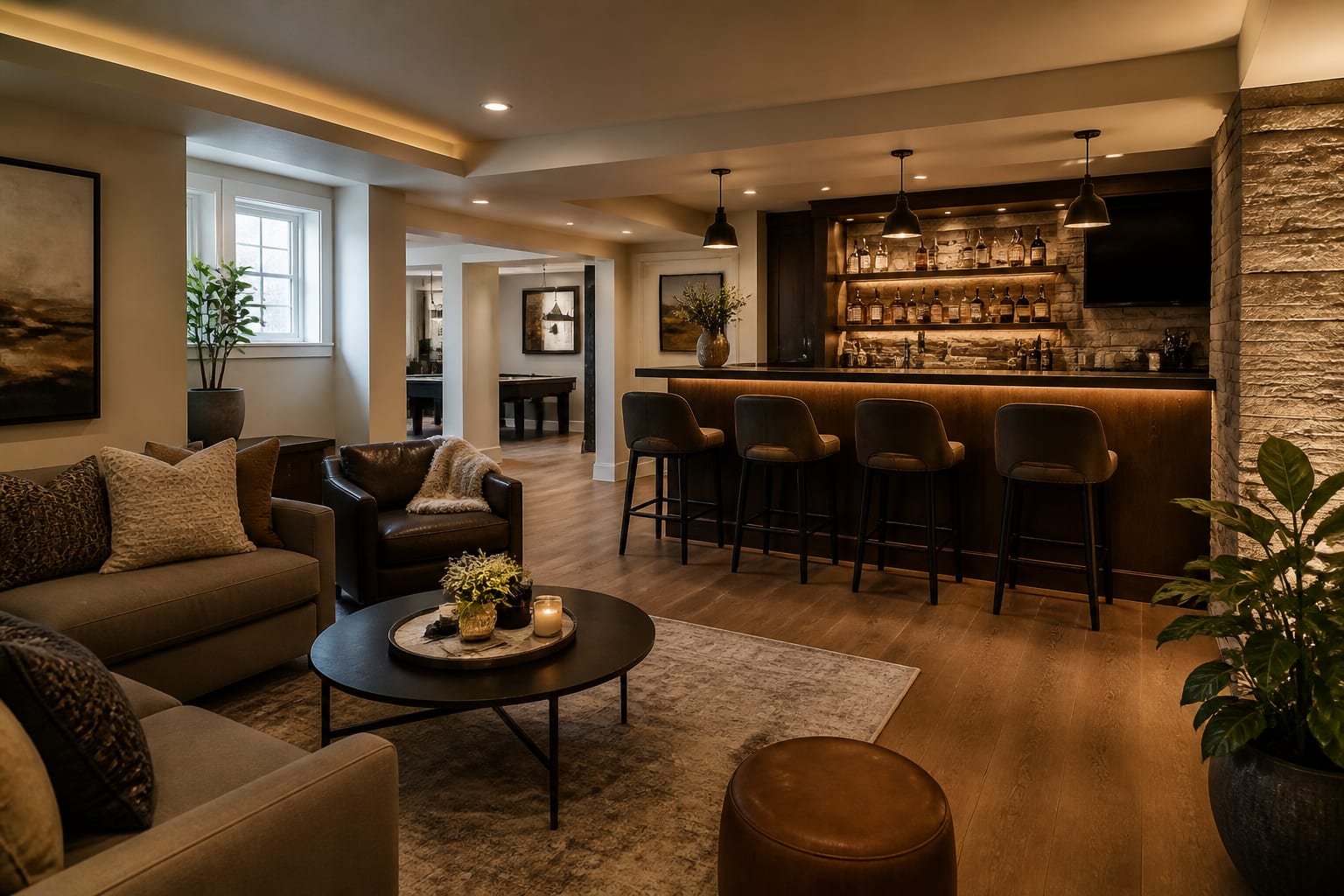
A basement bar is the feature that finally pulls people downstairs, and the best ones are planned around how guests actually move and gather, not just where the cabinets fit. Decide early between a wet bar with a sink and plumbing and a simpler dry bar, because that single choice drives your budget, your layout, and your inspection requirements. From there it is about comfortable stool seating, generous storage, a backsplash that survives splashes, and lighting that sets a relaxed mood. Get those pieces working together and a basement bar becomes the natural center of every party rather than a showpiece nobody uses.
Wet Bar or Dry Bar: Which Should You Build?
The first real decision is whether to plumb the bar, and it shapes everything that follows. A wet bar adds a sink with running water and a drain, which means tapping into supply lines and waste plumbing, often the priciest single line item in the project, plus a permit and inspection in most areas. The payoff is real: rinsing glasses, mixing drinks, and filling an ice well without trekking upstairs makes the bar genuinely functional for entertaining. A dry bar skips the plumbing entirely, relying on an undercounter fridge, an ice bucket, and a nearby utility sink or the upstairs kitchen. It costs far less, installs faster, and frees you to place the bar anywhere rather than near existing drain lines. For most basements, the smart move is to run the bar against a wall that already backs onto plumbing, the laundry or a bathroom, so a wet bar stays affordable. If your budget or layout fights the plumbing, a well-equipped dry bar with a good fridge and generous prep counter serves nearly as well for casual gatherings. Either way, plan electrical for the fridge, a couple of countertop outlets for blenders and chargers, and dedicated lighting circuits. Decide this before you frame anything, because converting a dry bar to a wet bar later means opening finished walls and floors you would rather leave alone.
See also our guide to Basement Playroom Ideas for more on basement bar ideas.
Seating, Layout, and Traffic Flow
A bar lives or dies on how people gather around it, so plan the seating and the space behind it together. For a standard 42-inch-high bar counter, you want stools with a seat height around 30 inches, and you should allow at least 24 inches of width per stool so elbows are not knocking; a generous count is one stool every 26 to 28 inches. Behind the seated guests, leave an aisle of at least 42 to 48 inches so someone can walk past without turning sideways, and give the bartender side a working clearance of around 36 to 42 inches between the counter and the back cabinets. An L-shaped bar tucks neatly into a corner and creates two seating faces, while a straight run suits a long wall and keeps the footprint tight. If space allows, a peninsula lets guests gather on multiple sides and doubles as a room divider that zones the bar away from a media or game area. Position the bar so it does not block the path from the stairs to the rest of the basement; people should arrive into the room, not collide with a counter. Keep a clear sightline from the bar to wherever the action is, the television or the pool table, so whoever is mixing drinks stays part of the party rather than stranded behind a wall.
For a related angle on basement bar ideas, read Wine Cellar Design Ideas.
Materials, Backsplash, and Storage
The surfaces behind a bar take constant abuse from splashes, citrus, and set-down glasses, so choose materials that shrug it off. A durable, non-porous countertop, quartz, sealed granite, or stainless steel, resists stains and stands up to the acid in spilled wine and lime far better than untreated wood or laminate. Run a wipeable backsplash up the wall behind the counter, where tile, a stainless panel, or a slab backsplash catches splatter and wipes clean in a second; this is the detail that keeps a bar looking sharp years in. For storage, mix open and closed: open shelving or a glass-front cabinet shows off glassware and bottles and gives the bar its display appeal, while closed lower cabinets hide tools, mixers, and the clutter you do not want on view. Build in a dedicated spot for an undercounter beverage or wine fridge so cold drinks live at the bar instead of upstairs, and consider a stemware rack mounted under an upper cabinet to free counter space. Add a slim drawer for bar tools and a deeper one for bottles, and leave a clear stretch of counter at least a couple of feet wide as a real prep and mixing zone. A small floating shelf or two flanking the backsplash creates room for a few favorite bottles without crowding the working surface.
Lighting and Mood for a Basement Bar
Lighting is what turns a counter with stools into a place people want to linger, and a bar is the one spot in the basement where moody, layered light beats bright and even. Start with pendant lights over the bar counter, typically two or three spaced evenly and hung so the bottoms sit roughly 30 to 36 inches above the countertop, low enough to define the zone without blocking faces across the bar. Put them on a dimmer so the same fixtures work for an afternoon game and a late-night gathering. Add accent lighting where it earns its keep: LED strip lighting under the upper cabinets and along open shelves makes glassware and bottles glow and gives the back bar real depth. A backlit shelf or a glass-front cabinet with interior lighting becomes a focal point that reads almost like a piece of art. Choose warm bulbs around 2700K so the whole zone feels relaxed rather than clinical, and keep general overhead light separate on its own dimmer for cleanup and prep. If the bar has any open shelving, a few low-wattage accent fixtures aimed at a bottle display add drama without glare. The goal is a pool of warm, controllable light around the bar that contrasts with a dimmer surrounding room, drawing people toward it the moment they reach the bottom of the stairs.
- Decide between a wet bar with a sink and a dry bar early, since plumbing drives budget and layout.
- Place the bar against a wall that already backs onto plumbing to keep a wet setup affordable.
- Allow at least 24 inches per stool and a 42-inch aisle so guests pass without turning sideways.
- Top the bar in quartz, sealed granite, or stainless that resists stains from wine and citrus.
- Hang dimmable pendants 30 to 36 inches above the counter to define the zone without blocking faces.
- Add LED strip lighting under cabinets and along open shelves to make glassware and bottles glow.
- Build in an undercounter beverage or wine fridge so cold drinks live at the bar, not upstairs.
- Mix open shelving for display with closed lower cabinets that hide tools, mixers, and clutter.
Bring the look home with Re-Design
Upload a photo of your basement to Re-Design and preview a finished bar before you commit to a layout or materials. You can compare an L-shaped corner setup against a straight run, test a quartz counter with a stainless backsplash, and see how warm pendant lighting and backlit shelves read in the space. Seeing stool seating, storage, and mood lighting rendered together in Re-Design helps you settle on the wet-or-dry decision and the layout before any framing begins.
Frequently Asked Questions
Should I build a wet bar or a dry bar in my basement?
A wet bar adds a sink and plumbing, which means higher cost and a permit but real convenience for rinsing and mixing. A dry bar skips plumbing, relying on an undercounter fridge and ice, and costs far less. If a wall already backs onto laundry or bathroom plumbing, a wet bar stays affordable; otherwise a well-equipped dry bar serves casual entertaining well.
How much space do I need behind a basement bar?
Leave an aisle of at least 42 to 48 inches behind seated guests so people can pass without turning sideways, and give the bartender's side around 36 to 42 inches between the counter and back cabinets. Allow at least 24 inches of width per stool so elbows are not knocking during a crowded gathering.
What countertop holds up best for a basement bar?
Non-porous surfaces like quartz, sealed granite, or stainless steel resist the stains and acid from spilled wine and citrus far better than untreated wood or laminate. Pair the counter with a wipeable backsplash, tile or a stainless panel, behind it so splashes wipe clean and the bar keeps looking sharp for years.