The mistake most people make with a basement office is treating it like a finished room that happens to be downstairs. It is not. A basement fights you on three fronts at once: thin daylight, a low ceiling, and damp air that can warp a desk and dull your focus by mid-afternoon. Solve those three problems first and the styling falls into place. Ignore them and the prettiest furniture in the world will sit in a space you quietly avoid. The good news is that each problem has a concrete, affordable fix, and none of them require a structural remodel.
Fix the light before you buy a single thing
A basement window, if you have one, delivers a fraction of the daylight an above-grade room gets, and many basement offices have no window at all. That means artificial light is not an accent here, it is the whole game. Plan for three layers. Start with ambient light from recessed cans or a flush-mount fixture at roughly 3000K, warm enough that the room feels residential rather than clinical. Add a dedicated task layer over the desk, a lamp or an under-shelf strip at 4000K, which is the neutral-bright color that keeps you alert without the blue edge of a 5000K bulb.
Then target output, not just fixtures. A desk surface wants somewhere around 50 to 75 lumens per square foot to read and type comfortably, so a 9-by-9 work zone needs well over 4,000 lumens spread across the layers. Put the ambient layer on a dimmer so you can drop it to 30 percent for a video call and bring it up for detail work. If you do have a small egress window, keep the treatment minimal, a simple roller or nothing at all, because every photon counts down here. A mirror on the wall opposite the window doubles the apparent daylight for about $40.
Make a 7-foot ceiling feel taller
Most finished basements land between 7 and 7.5 feet of clearance, well under the 8 to 9 feet of a main floor, and the room feels it. You cannot add height, but you can stop the ceiling from pressing down. Paint the walls a light color with a light reflectance value above 70, and consider painting the ceiling the same shade or even the exposed joists a flat white to blur where the wall stops. Low-profile flush mounts and recessed cans preserve headroom that a hanging pendant would steal.
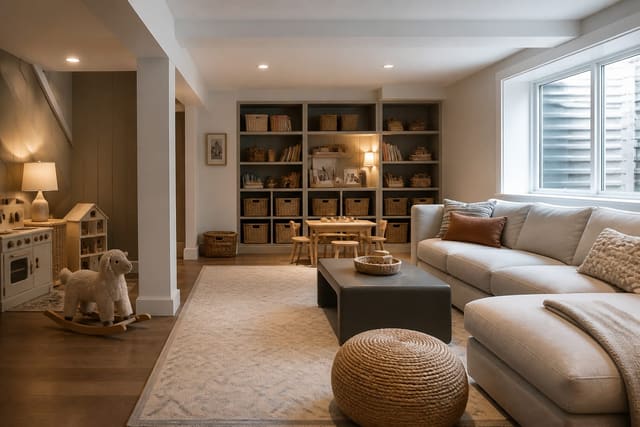
Keep the furniture low and horizontal. A 29-inch desk, a credenza at 30 inches, and seating with low backs all leave more air above them, which tricks the eye into reading the room as taller. Vertical lines help too: a tall narrow bookcase or floor-to-ceiling curtains draw the gaze up. Save the dramatic dark accent wall for a room with height to spare. Down here, contrast and clutter both shrink the space, so lean toward a pale, consistent palette with one or two grounding accents. The same logic that makes a basement playroom feel open works for an office, since both are fighting the same low-slung ceiling.
Beat the damp before it ruins your gear
Basements run humid because they sit below grade against cool, moist soil, and that humidity is the silent killer of a home office. Paper curls, a solid-wood desk can cup, and electronics hate sustained moisture. Run a dehumidifier sized to the square footage and set it to hold relative humidity between 40 and 50 percent; a 30-pint unit covers most finished basements and costs around $200. Pair it with a cheap hygrometer so you are managing a number, not a hunch.
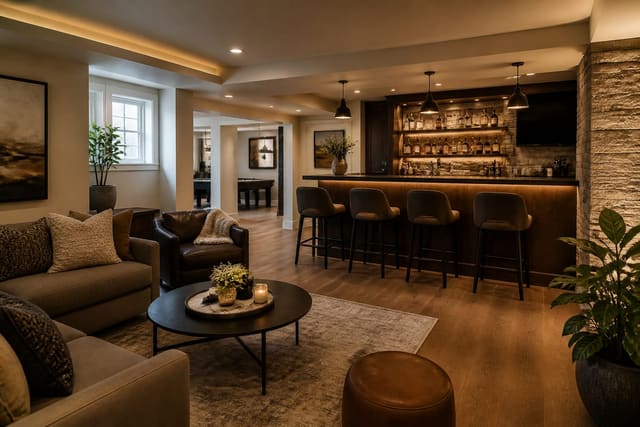
Choose materials that shrug off moisture. Luxury vinyl plank or sealed tile beats solid hardwood on a slab, and a desk with a laminate or metal frame outlasts raw wood in this environment. Keep the desk and any storage 1 to 2 inches off the foundation wall to let air move and to dodge the cold spot where condensation forms. If you smell must, address it before decorating, because no rug or candle covers a moisture problem. The same dehumidifier discipline that protects a basement bar and its stored bottles keeps your office gear safe. Once the air is dry and steady, everything else you put down here lasts the way it should.
Concrete office ideas worth stealing
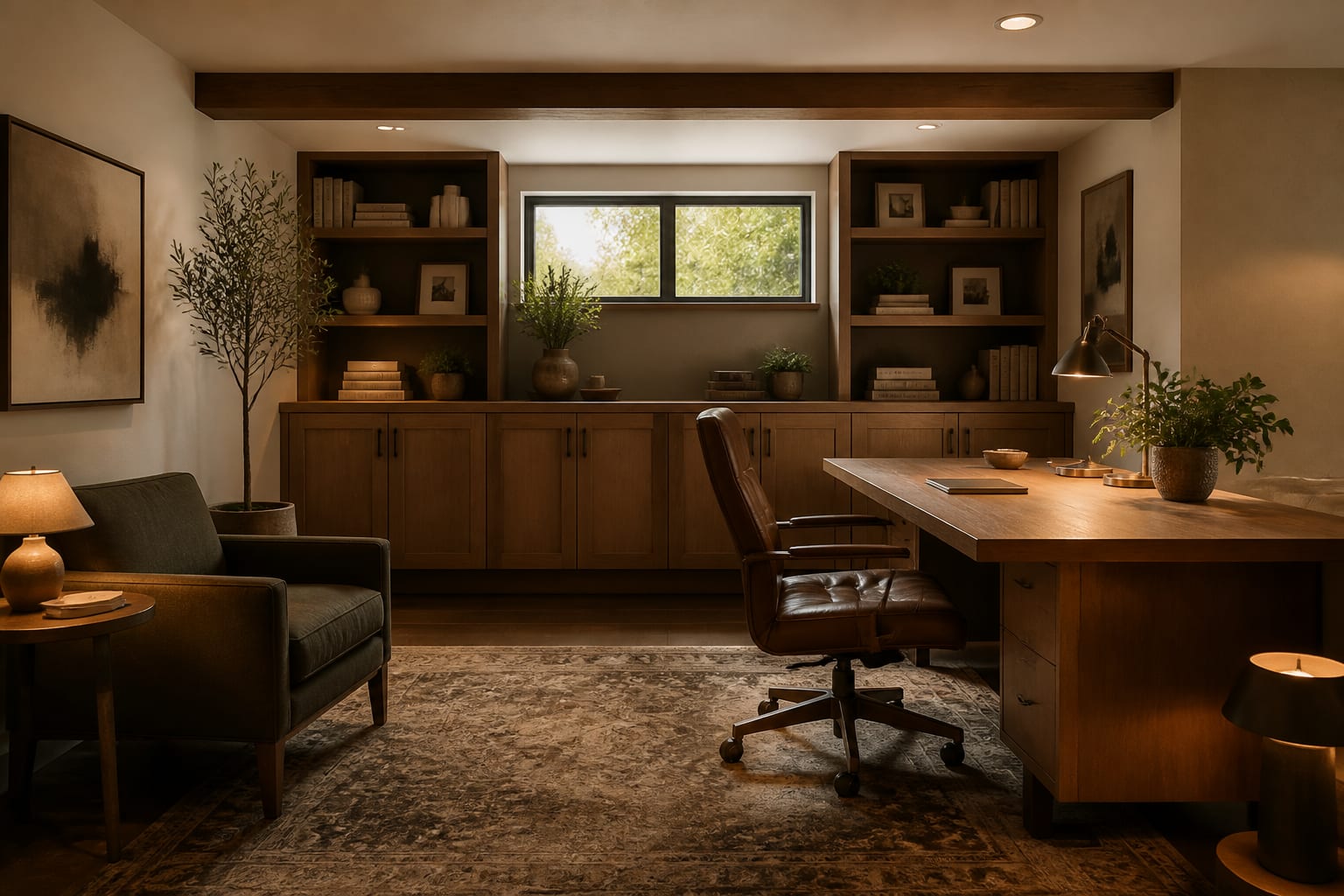
With the light, ceiling, and damp handled, the fun part is layout and character. Here are concrete moves that work in a below-grade office: - Float an L-shaped desk in a corner facing into the room so your back is to the wall and your camera frames a finished backdrop, not bare foundation. - Build a window-free "view" with a large framed landscape print, 36 by 48 inches, lit by a small picture light to fake a focal point. - Run a 6-foot floating shelf at 60 inches for books and plants, keeping the floor clear and the eye traveling upward. - Lay a low-pile 8-by-10 rug under the desk and chair to kill the concrete echo and warm a cold slab underfoot. - Tuck a daybed or a 54-inch loveseat against the far wall so the room doubles as a guest space and a thinking spot. - Mount acoustic felt panels behind the desk, covering about 15 to 20 percent of the wall, to tame the hard-surface reverb on calls. - Add a faux-green wall or three trailing pothos under a grow bulb so something living offsets the bunker feeling.
Preview the room in Re-Design before you commit
A basement is the hardest space to picture finished, because the bare version looks so unpromising that it is hard to trust your imagination. Snap a photo of the room as it stands and upload it to Re-Design, then let the app show you a furnished, lit version of that exact space. You can test a floated desk against a wall-shoved one, compare a pale palette to a moody one, and see whether a light floor really lifts your particular ceiling before you spend a dollar on paint or flooring. Seeing your own concrete box rendered as a real office takes the guesswork out of the only room where guessing wrong is most expensive.
Frequently Asked Questions
How much light does a basement office need?
Aim for roughly 50 to 75 lumens per square foot at the desk surface, layered across ambient and task sources rather than one overhead fixture. Use 3000K for the ambient layer so the room feels warm, and 4000K over the desk to stay sharp. Put the ambient light on a dimmer so you can soften it for calls and brighten it for detailed work, and add a mirror opposite any window to stretch what little daylight you get.
How do I keep a basement office from feeling cramped?
Fight the low ceiling with a light reflectance value above 70 on the walls, low-profile lighting that does not hang down, and furniture under 30 inches tall so there is air above everything. Keep the palette pale and consistent, add one tall vertical element like a narrow bookcase to draw the eye up, and resist dark accent walls, which make a 7-foot ceiling press in even further.
What humidity level should a basement office stay at?
Hold relative humidity between 40 and 50 percent with a dehumidifier sized to your square footage, and verify it with an inexpensive hygrometer. That range protects electronics, keeps paper flat, and stops a wood desk from cupping. Choose vinyl plank or sealed tile over solid hardwood, keep furniture an inch or two off the foundation wall for airflow, and fix any musty smell before you decorate.