A basement is the right place for a playroom precisely because it can take a beating, and the best ones are designed to be re-zoned every few years rather than rebuilt. Toddlers need soft floors and open crawling space; a seven-year-old wants a craft table and a reading nook; a tween wants a hangout with a screen. Plan for that arc now by choosing durable, washable surfaces and flexible storage, and the room earns its square footage for a decade. Build it tough, keep it bright, and make cleanup effortless, and you will actually use it.
Flooring and Surfaces That Survive Real Kids
Flooring is the foundation of a basement playroom, and it has to do two jobs at once: cushion falls and survive whatever gets spilled on it. Interlocking rubber or foam tiles are the classic choice for a toddler zone because they soften tumbles, mute noise on a concrete slab, and lift out individually when one gets ruined by paint or juice. For an older-kid area, waterproof luxury vinyl plank gives a cleaner look that still mops up in seconds and handles ride-on toys and scooter wheels. Float either over a moisture-managing subfloor so the cold slab never telegraphs through, and add a washable low-pile rug to mark a soft reading corner. Walls take just as much abuse, so paint them in a scrubbable satin or semi-gloss finish rather than flat paint, since flat holds onto crayon and fingerprints and cannot be wiped without leaving marks. Consider a wipeable wainscot or a section of chalkboard or magnetic paint that turns one wall into an activity surface. Round or pad any exposed structural column. The guiding test for every surface is simple: can a five-year-old draw on it, spill on it, or crash into it, and can you fix the result with a damp cloth in under a minute? Build the room to pass that test and it stays usable through years of hard play.
See also our guide to Basement Bar Ideas for more on basement playroom ideas.
Storage That Kids Can Actually Use
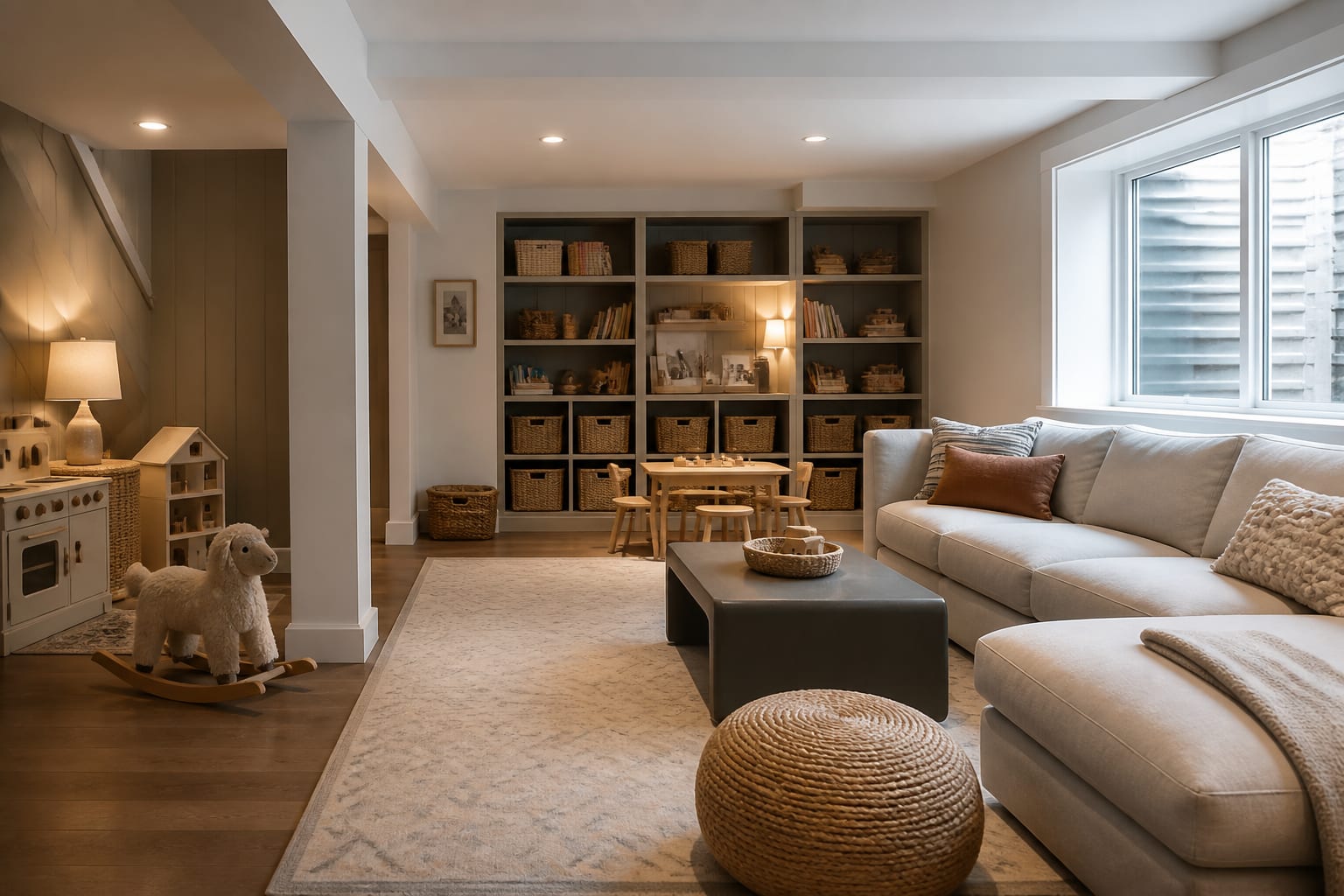
Storage is what keeps a playroom from collapsing into chaos by Tuesday, and the trick is designing it for the child, not the adult. Low, open bins on shelves at 24 to 30 inches high let even small kids see what they own and, more importantly, put it away without help, which is the whole battle. Open cubbies beat doors and lids, because anything that adds a step gets skipped at cleanup time. Sort by category into clearly different bins, blocks in one, art supplies in another, so tidying becomes a quick game of matching rather than a parental chore. Reserve a few high, closed cabinets for the things you control: paint, small choking-hazard pieces, and seasonal overflow you rotate in and out to keep the active toy set fresh. Build in a window seat with storage underneath or run a bench along one wall that doubles as seating and a toy chest. Label bins with pictures for pre-readers and switch to words as they grow. A flat, wipeable craft table with shallow drawers keeps markers and paper corralled and at the ready. Plan for the toys to outgrow the bins; choosing a shelving system you can reconfigure means the same furniture that holds stuffed animals at age three holds books and board games at age nine without a single new purchase.
For a related angle on basement playroom ideas, read Wine Cellar Design Ideas.
Zoning, Lighting, and a Bright Windowless Room
Because a basement starts dark, a playroom has to manufacture the cheerfulness that windows would normally provide. Lean into layered, warm lighting: bright recessed cans for overall fill, plus a softer lamp or string lights over the reading nook so the room has more than one mood. Choose bulbs around 2700K to 3000K for a warm, inviting tone rather than the clinical blue-white that makes a windowless room feel like a basement. Paint walls and ceiling a light, reflective color so the available light bounces and the room reads larger and sunnier than it is. Then zone the open footprint into distinct areas without building walls that would block light and sightlines. Use a soft rug to define an active play zone, a small table for the creative corner, and a beanbag or cushioned nook for quiet reading, so kids learn the room has different gears. Keep a clear sightline from the stairs across the main space so you can supervise from the steps. Leave a generous open stretch of floor, at least a six-by-six-foot clear patch, for fort building, train tracks, and the sprawling games that need room. As kids age, the same zones simply evolve, with the active rug giving way to a gaming spot and the craft table becoming a homework station, so the layout keeps working without a renovation.
Safety and Designing for Every Age
Safety in a basement playroom is mostly about anticipating the hazards specific to below-grade rooms and to the youngest user in the house. Anchor every bookshelf, cubby, and tall cabinet to the wall with anti-tip straps, because climbing furniture is the single most predictable accident in a play space. Cover unused outlets, route cords out of reach, and switch to cordless window coverings on any egress window. Confirm the basement has a working egress window and that the path to the stairs stays clear, since this is a room where kids may play unsupervised for stretches. Add a smoke and carbon monoxide detector, especially if the mechanical room and water heater sit nearby, and keep that utility area behind a latched door kids cannot open. Soften the room's hard edges with corner guards on the craft table and any low masonry ledge. Then design for the long haul by choosing pieces that flex with age: a modular sofa that starts as a soft play platform and later becomes lounge seating, storage that converts from toy bins to book and game shelves, and a craft table at a height that still works for homework. Avoid hyper-themed built-ins a child outgrows in two years. The most economical playroom is the one you set up once and quietly re-arrange as your kids grow into it.
- Lay interlocking rubber or foam tiles in the toddler zone to soften falls and quiet the concrete slab.
- Mount open, low bins at 24 to 30 inches so kids can reach and put away their own toys.
- Turn one wall into chalkboard or magnetic paint for a built-in, wipe-clean activity surface.
- Split the room into active, creative, and quiet zones using rugs and low furniture, not walls.
- Paint walls in scrubbable satin so crayon, fingerprints, and sticky hands wipe off in seconds.
- Build a storage bench or window seat that doubles as seating and a roomy toy chest.
- Anchor every shelf and cabinet to the wall with anti-tip straps to stop climbing accidents.
- Choose modular, reconfigurable furniture that converts from toddler bins to tween book and game shelves.
Bring the look home with Re-Design
Upload a photo of your basement to Re-Design and preview a finished playroom before you buy a single bin or rug. You can test warm light against a bright wall color, see how cushioned flooring and a defined reading nook read in the space, and try zoning an active area beside a craft corner. Seeing the windowless room rendered cheerful and organized in Re-Design helps you commit to a layout that grows with your kids rather than guessing at it.
Frequently Asked Questions
What is the best flooring for a basement playroom?
Interlocking rubber or foam tiles win for toddler areas because they cushion falls, quiet the concrete, and lift out one at a time when ruined. For older kids, waterproof luxury vinyl plank mops up fast and handles ride-on toys. Float either over a moisture-managing subfloor and add a washable low-pile rug for soft reading corners.
How do I keep a basement playroom from feeling dark?
Layer warm lighting around 2700K to 3000K instead of a single cool overhead, paint walls and ceiling a light reflective color, and add lamps or string lights over a reading nook. Keep any egress window clear so it returns daylight, and avoid clinical blue-white bulbs that make a windowless room feel gloomy.
How do I make a playroom grow with my kids?
Design with flexibility instead of fixed themes. Choose modular furniture, a craft table at a height that later works for homework, and storage that converts from toy bins to book and game shelves. Define zones with rugs rather than walls so the active area can become a gaming spot as your kids age without a renovation.